
The Man Who Refused to Be One Country
You land in a city that is not yours and something in your chest loosens. The streets are wrong in exactly the right way — the signs in a language you had to earn, the smell of bread from a bakery whose name you cannot pronounce, the particular grey of a sky that owes you nothing. And yet. There is a freedom in this wrongness that your actual home never gave you, a freedom that comes precisely from not being expected to be anyone recognizable here. You have noticed this. Most people have, and then quickly suppressed the noticing, because what it implies is uncomfortable: that the place which formed you may also be the place that most completely imprisoned you.

Carlos Fuentes knew this sensation not as a revelation that arrived once but as the permanent climate of his existence. He was born in Panama City in 1928 to a Mexican diplomat father, Rafael Fuentes Boettiger, and the family’s itinerary across the following two decades reads less like a childhood than like a seminar in radical displacement. Washington D.C., where he attended school and learned English before he could properly write Spanish. Buenos Aires, where he absorbed Borges from the air itself, where the Southern Cone’s literary seriousness pressed against him like a physical force. Santiago, Quito, Montevideo, Geneva — each city a new grammar for understanding what a country could mean, each departure a small lesson in how identity is never soil or blood but always, stubbornly, a story someone chose to tell.
The critical insight here belongs to Edward Said, who argued in his 1993 Culture and Imperialism that the exile develops what he called a contrapuntal consciousness — an awareness that no culture is monolithic, that every dominant narrative contains within it the suppressed voices of other possible narratives, and that only the person who has lived across multiple systems of meaning can hear both the melody and its buried counterpoint simultaneously. Said was speaking from his own condition of Palestinian displacement, but the architecture of the idea fits Fuentes with an almost alarming precision. The boy who was Mexican in Washington, and American in Mexico City, and somehow neither in Buenos Aires, was developing, without anyone naming it as such, exactly this double-hearing. He was learning to read cultures the way a musician reads a score — not living inside the sound but tracking its internal contradictions from a position of productive estrangement.
When Fuentes finally settled long enough to write — his first major collection of stories, Los días enmascarados, appeared in 1954, and his breakthrough novel La región más transparente arrived in 1958 when he was just thirty — what emerged was not the literature of someone describing a known country from the inside. It was the literature of someone inventing a country they had only ever seen from departing trains and embassy windows. The Mexico of those early works is too intensely imagined to be merely documented. It has the quality of a place reconstructed from longing and fury in equal measure, a place that the writer needed to exist in order to have somewhere to return to, even if the return was always only on the page.
This is not a merely biographical observation. It is the central mechanism of his entire literary project. The permanent foreigner — and Fuentes would remain one all his life, moving between Mexico City, London, Paris, Cambridge where he eventually held a distinguished chair — is not handicapped by his lack of roots. He is freed by it into a kind of vision that pure belonging systematically prevents. You cannot see the architecture of a house you have always lived inside. You need to have stood on the street, in the rain, looking up at it from the outside, before the structure of the thing becomes legible to you at all.
Don Barry: A Quixotic Exploration
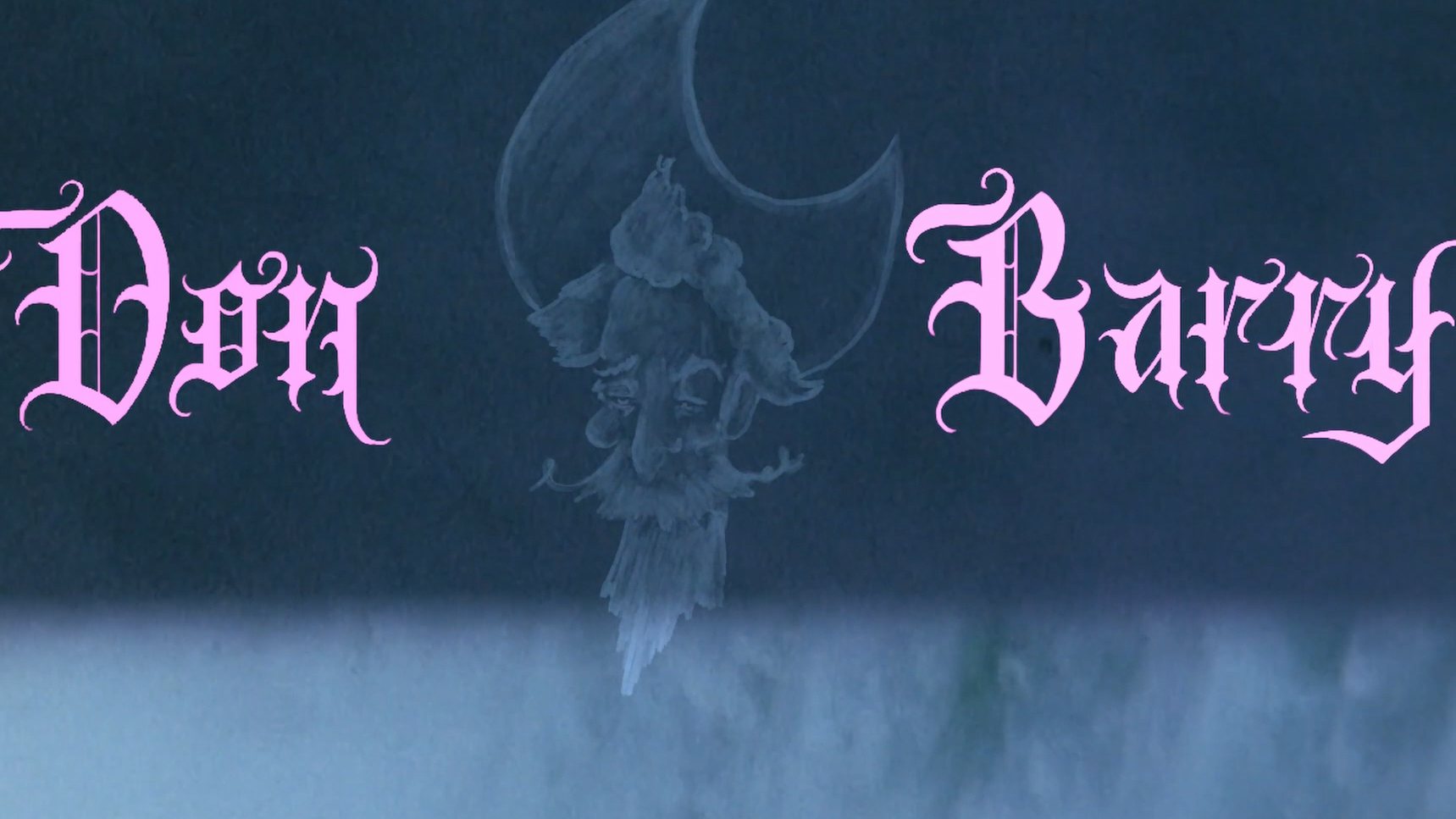
Docufiction, Experimental, by Paul Smart, Mexico, 2026.
Don Barry: A Quixotic Exploration is a debut feature that places the biography of an eighty-year-old experimental filmmaker and artist, Barry Gerson, within the metanarrative of Miguel de Cervantes’ Don Quixote. Don Barry was filmed in the city of Guanajuato during the 51st edition of the Cervantino Festival, as well as during the vibrant Day of the Dead celebrations held in the city’s UNESCO-listed tunnels. The film honors the director’s long friendship with artist Barry Gerson, drawing inspiration from Cervantes’ Don Quixote. Paul Smart’s directorial choices create something new that celebrates life and goes beyond conventional storytelling. A search for magic in our real lives. A moving film about the meaning of life, art, and death. Not to be missed.
Paul Smart is a proud outsider filmmaker with a long history of film screenings. In the 1980s, he emerged in New York’s vibrant youth art scene, working in theater production and later filmmaking, before retreating to rural upstate New York, in the Catskill Mountains, where he made a living writing and screening independent films in old parish halls for rural audiences, many of whom had never seen a film.
LANGUAGE: English
SUBTITLES: Spanish, French, German, Portuguese
The City as a Body That Remembers
You walk through a neighborhood that has been torn down and rebuilt so many times that the buildings themselves seem confused about what they are supposed to be — glass towers where tenements stood, a shopping arcade where a market used to breathe, a parking structure occupying the footprint of a church that occupied the footprint of a temple. And yet your feet know. The street curves slightly to the left before the intersection, the way it always has, the way it curved when there was nothing here but mud and merchant cries and the memory of water, because this entire city was once a lake and the ground still shifts under the weight of everything built on top of forgetting. Your body carries the map that the architecture has abandoned.
This is the sensation that drives La región más transparente, published in 1958, when Carlos Fuentes was twenty-nine years old and detonated something in the middle of Mexican literature that had never quite been detonated before. The novel has no single protagonist in any conventional sense. Mexico City itself is the protagonist — not as backdrop, not as setting, but as a living organism with strata, with scar tissue, with the particular kind of memory that belongs to places that have been violated repeatedly and have learned to absorb each violation into their structure without ever fully healing. Fuentes was mapping a city that contained, simultaneously, the Aztec world drowned under Spanish stone, the colonial order drowned under liberal reform, the revolutionary promise drowned under the emerging bourgeoisie of mid-century capitalism. Every layer still pressing against every other layer. Every ghost still paying rent.
Walter Benjamin spent more than thirteen years assembling his Arcades Project, that vast unfinished cathedral of thought about Paris, arguing that the city is a dream-space where historical time does not move forward in a clean line but accumulates, folds, erupts without warning into the present. The iron and glass arcades of nineteenth-century Paris were, for Benjamin, unconscious archives — spaces where collective desire had crystallized into architecture, where the commodity form had taken on the texture of mythology. Fuentes was doing something structurally similar in a city with an incomparably more violent and layered history, and he was doing it through fiction rather than philosophical fragments, which meant the dream-logic had to be carried by voice, by rhythm, by the collision of registers — indigenous myth pressing against stock market slang, pre-Columbian ritual pressing against Hollywood aspiration — within a single paragraph, sometimes within a single sentence.
Fernand Braudel, writing his monumental work on the Mediterranean in 1949, had insisted that the most important historical forces were the slowest ones — the geographical, the climatic, the structural, what he called the longue durée, the long duration that operates beneath the surface of events and individual decisions. Political revolutions happen in years. The deep patterns of how a society organizes land, labor, and belonging take centuries to shift. Fuentes understood this instinctively, and La región más transparente is saturated with it: the Revolution of 1910 appears not as liberation but as a convulsion that reshuffled the surface while leaving the deep architecture of exploitation essentially intact. The characters who clawed their way upward through revolutionary violence now inhabit the same structures of privilege that their rhetoric condemned. The city absorbed the revolution the way it absorbed everything else — into its body, into its streets that still curve the way they always curved, regardless of what stands along them.
What Fuentes grasped, and what the novel enacts rather than argues, is that you cannot understand a present moment in a city like Mexico City without understanding that the present moment is always also several other moments occurring simultaneously, each one unresolved, each one still making demands.

The Revolution That Ate Its Children
There is a specific kind of nausea that arrives not with betrayal but with understanding. You have spent years defending something — a party, a cause, a founding story — and then one afternoon, without drama, without a single new fact, you simply see it. The architecture was always there. The exclusion was always the point. The language of liberation was the most elegant mechanism of capture ever devised, because it made you complicit in your own diminishment while you applauded.
This is the vertigo Carlos Fuentes anatomized in 1962 with a precision that has not aged a single day.
The novel moves through a dying man in fragments. Artemio Cruz lies in a Mexico City bedroom, surrounded by family members who are already calculating the inheritance, and the text refuses him the mercy of a single, coherent self. He is approached from three directions simultaneously: the first person that feels and evades, the second person that accuses and cannot look away, the third person that records what history will pretend was inevitable. Fuentes did not choose this structure as a formal experiment. He chose it because a man who has betrayed everything he once was cannot occupy a single grammatical position. The self that fought in the Revolution cannot share a sentence with the self that bought judges and silenced journalists and married money. The only honest syntax is fracture.
William Faulkner‘s shadow falls across these pages openly, and Fuentes never denied it — the compression of time, the way the past does not recede but accumulates pressure, the sense that consciousness is a house where all the rooms are open simultaneously and every door leads to something unfinished. But Faulkner was writing about a South that knew it had lost. Fuentes was writing about a revolution that believed it had won, and that is an entirely different moral catastrophe. Defeat at least clarifies. Victory allows the victors to rewrite the terms of what the struggle was ever for.
Octavio Paz had already mapped the psychological terrain in 1950, when he argued in El laberinto de la soledad that the Mexican identity was structured around the figure of the chingón — the one who opens, who penetrates, who dominates — and the chingada, the violated, the passive, the betrayed. Paz was describing a psychic wound that predated the Revolution and that the Revolution did nothing to heal, because the men who made it were formed inside the same wound. What Fuentes understood, and what gives Artemio Cruz its particular horror, is that this is not a cultural curiosity to be observed from outside. It is a political and psychological machine. The macho as a structure of power does not merely oppress women, though it does that with extraordinary efficiency. It also cannibalizes men, demanding they perform an invulnerability that makes solidarity impossible, that transforms every ally into a potential rival, that makes the revolutionary into the oligarch not through corruption but through the internal logic of a self that was trained from birth to survive by dominating.
Cruz is not a villain who abandoned his ideals. He is a man who had exactly the ideals his formation allowed him to have, and who lived them out to their structural conclusion. The revolution that made him also made his betrayal inevitable, because the revolution never dismantled the psychic architecture it inherited. It simply changed who was standing at the top of it.
You watch him refuse his son’s political commitment with the same contempt that was once aimed at him. You watch the second-person voice in the text address him as “you” and refuse to let him dissociate into the third person of history, refuse to let him become a force rather than a man who chose, again and again, in specific rooms on specific mornings, to close his fist rather than open his hand.
What the Mirror Knows That You Don’t
You find an old photograph — not ancient, just fifteen or twenty years old — and the face looking back at you is technically yours. Same bone structure, same eyes. But there is something in the expression, in the way that person holds their jaw or looks slightly past the camera, that you cannot claim. You do not recognize the interior of that face. You know intellectually that time passed, that you changed, but the photograph refuses to make that change feel gradual or earned. It confronts you with a discontinuity you had been successfully ignoring: that the self is not a continuous thread but a series of performances, and that something underneath those performances persists without your permission, indifferent to your narrative about who you have become.
This is precisely the sensation that Fuentes spent an entire novella building from the inside out. A young historian, ambitious and broke, answers a newspaper advertisement offering good pay for archival work on the memoirs of a retired general. He arrives at a house in Mexico City that seems to exist outside the city’s chronology — shuttered against daylight, smelling of herbs and old wax, governed by an ancient widow named Consuelo. And then he sees Aura: young, green-eyed, moving through the dim corridors with an unsettling grace that seems less like the movement of a living person and more like the movement of something remembered. He falls in love immediately, the way you fall into a dream before you understand you are sleeping.
What Fuentes understood, and what makes the novella still feel like a hand closing around your throat, is that the love story and the horror are not two different things happening simultaneously. They are the same thing. Freud, writing in 1919, located the uncanny — das Unheimliche — not in the foreign or the strange but in the familiar made suddenly, wrongly visible. The German root is precise: unheimlich is the negation of heimlich, which means both homely and secret, both domestic and concealed. The uncanny is not the monster at the door. It is the realization that the monster was already inside the house, that the house was built around it. What disturbs the historian is not that Aura is strange. It is that she is recognizable — that her gestures echo something he cannot name, that loving her feels like remembering rather than discovering.
Julia Kristeva, in Powers of Horror published in 1980, developed what she called abjection: the psychic violence of encountering what the self has had to expel in order to constitute itself as coherent. The abject is not outside you. It is the border, the thing you cast away to have a shape at all — the maternal body, the corpse, the blurring of self and other. When the historian finally sees what Aura truly is, when the temporal layers collapse and young and old, living and dead, beloved and ancient widow become a single impossible figure, what he experiences is not revelation. It is recognition. He has always been here. He is the general whose memoirs he is editing. He is repeating a loop that has already consumed him entirely. The mirror does not show him someone else. It shows him that there was never a someone else to begin with.
Fuentes chose the second person — you enter this house, you climb these stairs, you reach for her in the dark — not as a stylistic flourish but as a structural argument. The fantastic in his hands is not escapism. It is the only grammar adequate to the parts of identity that realist prose cannot hold without flinching: the parts that are not individual, not chronological, not chosen. The parts that a photograph can expose in an instant, in the gap between the face you perform and the face that was always there, waiting with extraordinary patience for you to stop pretending you did not know it.
The Baroque as Political Resistance
You open an official history textbook — the kind bound in institutional green, the kind that smells of bureaucratic certainty — and somewhere around the third chapter you feel it. Not an absence exactly. Something more violent than absence. A surface too smooth, too composed, as if someone had worked it deliberately, sanding down the grain until nothing catches your fingers. That is what erasure actually feels like from the inside: not a hole but a scar that has been polished.
Carlos Fuentes understood this sensation with the precision of someone who had spent decades pressing his thumb against exactly that kind of surface. Terra Nostra, published in 1975, is his answer to the polished scar — a novel of approximately eight hundred pages that refuses, on every single one of them, to be smooth. It reconstructs the entire architecture of Spanish imperial civilization: the Conquest, the Counter-Reformation, Philip II building the Escorial as a monument to a God who demanded suffering, the three civilizations — indigenous, European, African — colliding in a space that produced something none of them had anticipated and none of them could control. It is not a historical novel in any conventional sense. It is closer to what happens when history itself is put on trial and the evidence turns out to be cosmological.
The baroque had always been understood, in the European tradition, as excess — ornament for its own sake, a kind of aesthetic self-indulgence that serious thought should discipline into clarity. Alejo Carpentier had already begun dismantling this reading, proposing instead the concept of lo real maravilloso, the marvelous real, as the condition of Latin American experience: not magical thinking imposed on reality but reality itself arriving in forms that European rationalism had declared impossible. José Lezama Lima went further. In his theoretical writings, particularly in La expresión americana published in 1957, Lezama Lima argued that the American baroque was not imitation or excess but survival — that the indigenous and mestizo craftsmen who covered colonial churches with an overwhelming density of forms were doing something politically precise. They were refusing simplification. The ornament was the resistance. The surplus of image was the refusal to be reduced to a single, administrable meaning.
Fuentes absorbed both of these thinkers and built Terra Nostra on their foundation, then detonated the foundation itself. The novel received, upon publication, the kind of critical reception that very ambitious books tend to receive: awe, incomprehension, and a certain relieved condescension from reviewers who noted its difficulty as evidence of its failure rather than its argument. It won the Xavier Villaurrutia Prize in Mexico, and it has been cited consistently by scholars as the most formally radical product of the Latin American Boom — that extraordinary concentration of novelistic energy between roughly 1962 and 1975 that included García Márquez, Vargas Llosa, Cortázar, and Fuentes himself, a moment when Latin American fiction stopped apologizing for its complexity and began exporting it. Yet Terra Nostra remains the least-read of the major Boom texts, which is itself a kind of meaning. The books that most accurately describe how power operates are often the ones that power’s casual readers find too exhausting to finish.
What Fuentes understood — and what makes reading even fragments of Terra Nostra feel like something is being pressed against a bruise you did not know you had — is that the Spanish imperial project was not only a political and economic enterprise but a war against proliferation. A war against too many meanings, too many gods, too many ways of organizing time and the body and the sacred. The Counter-Reformation and the Conquest shared a grammar: the grammar of the single correct answer. And the baroque, in Fuentes’s hands, becomes the grammar of everything that answer tried to eliminate — still present, still excessive, still refusing the smooth surface that official history keeps trying to impose over the place where it was scraped away.
A vision curated by a filmmaker, not an algorithm
In this video I explain our vision
The Boom, the Brotherhood, and the Myth of the Movement

There is a particular kind of grief that arrives not when friendships end but when you understand, standing somewhere in the middle of your life, that what you took for a shared vision was actually a shared moment — that the four of you sitting around that table, convinced you were rewriting the terms of the possible, were also simply young, and lucky, and briefly positioned at the same crossroads of history. The intimacy was real. The revolution, in the sense you imagined it, was not.
Carlos Fuentes understood this earlier than most, which is perhaps why he theorized the movement before it had finished happening. La nueva novela hispanoamericana, published in 1969, is one of those books that performs the very act it describes: it constructs a literary tradition in the gesture of surveying one. Fuentes names Carpentier, Rulfo, García Márquez, Cortázar, Donoso, Vargas Llosa as co-inheritors of a continental rupture, a decisive break from the realism of social obligation toward a language that could hold myth, history, and the unconscious simultaneously. The argument is brilliant. It is also, as Pierre Bourdieu would recognize immediately, a field-defining operation — the act of a consecrated agent drawing the map in a way that places himself at the center of the territory.
Bourdieu’s analysis in The Rules of Art, published in 1992, insists that literary fields do not emerge from the spontaneous combustion of genius. They are produced by the convergence of institutions, economies, and agents who share an interest in the field’s existence and prestige. The Latin American Boom was, in this sense, a structure before it was a story. Carmen Balcells, the Barcelona literary agent who represented virtually the entire generation, was not merely a facilitator — she was an architectural force, negotiating contracts and positioning her writers within a European publishing appetite that was hungry, in the Cold War’s cultural theater, for voices that seemed to offer a third alternative: neither Soviet realism nor American genre fiction, but something that felt ancient and experimental at once. Seix Barral, the Spanish publisher whose Biblioteca Breve prize in 1962 went to Vargas Llosa’s The Time of the Hero, functioned as a kind of launching mechanism, and the fact that the prize operated from Franco’s Spain while honoring Latin American dissidence is not an irony but a logic — the field required a consecrated European center to legitimize what it was producing at the periphery.
The correspondence between Fuentes and García Márquez, between Fuentes and Cortázar, reads like the minutes of a revolutionary council — full of urgency, solidarity, the conviction that literature was doing the work that politics kept failing to do. They debated the writer’s responsibility with the seriousness of men who believed the answer had consequences. Fuentes argued, consistently, that the Latin American novel had to reclaim the language stolen by colonialism and return it transformed, charged with everything the colonial project had suppressed. This was not metaphor for him. It was program.
And yet the Boom fractured, as all brotherhoods do, along the fault lines that were always there beneath the solidarity. Vargas Llosa’s trajectory toward liberalism and eventually the Peruvian presidency moved him in directions that Fuentes, a lifelong man of the democratic left, found increasingly uncomfortable. Cortázar died in 1984, before the full dispersal. García Márquez and Fuentes remained close, but even their friendship was threaded through with the awareness of difference — two men who had chosen different countries of exile, different relationships to their own governments, different theories of what the writer owes the world outside the page.
What Fuentes never quite relinquished was the myth he had partly constructed. La nueva novela hispanoamericana is a document of belief as much as analysis, and perhaps that is its deepest honesty — because every generation that changes something does so partly by believing, against the evidence, that the change is total.
What America Does to the Bodies That Cross It
There is a form. You have filled out forms before, but this one is different because it asks you to declare your origin in a box too small for what origin actually means, and the fluorescent light above you hums at a frequency that seems designed to remind you that you are being processed, not received. The person behind the glass does not look at you. They look at the document that is supposed to be you, and you understand in that moment that the document will always be more legible than you are.
This is the border Fuentes was writing about long before anyone built a wall tall enough to photograph. Not the dramatic crossing at night through scrub desert, not the river, not the wire — though those too — but this one, the administrative border, the one made of categories and boxes and the particular violence of being asked to summarize yourself in a language that was constructed entirely without you in mind. His 1985 novel arrived into the American literary market with the full awareness that it was itself a kind of crossing, that a Mexican writer addressing North American readers was already performing an act of translation that the categories could not contain.
The story he told was deceptively simple in its scaffolding: an aging American journalist disappears into the Mexican Revolution, a young schoolteacher, a general whose personal myth is larger than any historical fact. But the real collision in the novel is not between characters. It is between two incompatible imaginative structures. The American protagonist carries within him the entire mythology of heroic individualism — the self-made man, the lone figure who writes his own ending, who chooses his death as the final assertion of autonomous will. Against this, Fuentes places the Mexican collective memory, which does not believe in individual endings because it does not believe history ends at all. The dead return. The past is not past. Time folds. Gloria Anzaldúa, writing two years later in Borderlands/La Frontera, would describe the border as “una herida abierta,” an open wound where the Third World grates against the first and bleeds. But Fuentes had already anatomized the wound from the inside, showing how each side of it carries its own epistemology, its own way of knowing what is real, and how those epistemologies do not negotiate — they collide, and one of them is always expected to dissolve.
What Anzaldúa theorized as the new mestiza consciousness — the capacity to hold contradiction without resolving it, to live in the borderlands as a permanent ontological condition rather than a transitional state — Fuentes had been dramatizing in fictional form across three decades. By the time borderlands studies became an academic field with its own journals and syllabi, he had already written its primary texts in the form of novels that the academy initially did not know how to classify.
His political essays from the 1990s were more direct, and more furious. On NAFTA he was precise in the way that only someone who distrusts economic optimism can be precise: the treaty that was sold to both populations as integration was in fact a mechanism for the managed movement of capital across a border that would simultaneously become more militarized against the movement of bodies. The goods would cross freely. The people who made the goods would be criminalized for following them. He wrote this before the numbers confirmed it, before the detention centers filled, before the vocabulary of “illegal alien” calcified into policy. He wrote it because the logic of the arrangement made it inevitable, and because he had spent forty years studying what happens when one civilization decides another civilization’s people are resources rather than persons.
The form in the waiting room does not ask what you have survived. It asks what you are, as though those were different questions.
The Writer Who Wanted to Be the Conscience of a Continent
There is a specific kind of impotence that lives inside a standing ovation. You have seen it, or you have been inside it: a room full of people applauding something they already believed before they walked through the door, a speaker saying the necessary things about justice and history and the rights of the dispossessed, every sentence landing exactly where the audience expects it to land. No one is disturbed. No one leaves with a splinter lodged somewhere they cannot reach. The conviction in the room is real, and yet it changes nothing, because conviction without friction is finally a form of theater, and the speaker has become a mirror rather than a mind.
This is the trap Edward Said named with surgical precision in Representations of the Intellectual, delivered as the 1993 Reith Lectures and published in 1994. Said’s argument was not that intellectuals are useless but that they face a constant gravitational pull toward accommodation — toward the position that earns them their audience, their invitations, their legitimacy. The intellectual who speaks truth to power eventually risks becoming a brand of truth-speaking, a figure whose appearances are programmed in advance by their own accumulated reputation. The role of conscience, Said understood, requires the writer to remain legible, translatable, safe enough to be heard. And the moment you are safe enough to be universally heard, you have already compromised the most dangerous thing you had to say.
Carlos Fuentes spent the last three decades of his life navigating this trap with uneven results. The public feuds accumulated: with Octavio Paz over politics, with Mario Vargas Llosa over what literature owed to ideology, the two of them exchanging positions across decades until what had been a genuine intellectual disagreement calcified into tribal loyalty tests. The Nobel Prize was predicted for him so many times and by so many serious people that its perpetual absence became its own narrative, a story about what the Swedish Academy rewards and what it quietly punishes — too political, too polemical, too insistently the voice of a Latin American cause rather than a universal one, as if universality were not itself a political category. He wrote more than twenty novels, traveled constantly, delivered lectures on every continent, appeared at every summit of world literature where someone needed to represent the conscience of the Spanish-speaking world.
And yet. The question that settles underneath all of this, uncomfortable in the way that only honest questions are, is whether Fuentes said everything essential at thirty-three. La muerte de Artemio Cruz was published in 1962, when the century still had its ambiguities intact, before the positions were fixed, before the public intellectual had absorbed the novelist. The novel does not give you a conscience to admire. It gives you a dying man whose entire life has been a series of betrayals so thoroughly rationalized that they no longer feel like betrayals, a man who built himself from the rubble of the Mexican Revolution and in doing so became exactly what the Revolution was supposed to destroy. The technical audacity — the fractured time, the shifting pronouns, the second person that makes the reader inhabit Cruz’s moral wreckage from inside — is not decoration. It is the argument. You cannot maintain comfortable distance from a man whose corruption the grammar forces you to speak in your own voice.
None of the subsequent novels, for all their ambition and erudition, quite reproduce that quality of implication, that refusal to let the reader stand safely outside the indictment. Terra Nostra reaches further but grips less. The later works perform the conscience rather than enacting it. Which raises the possibility that what Fuentes lost was not talent but danger — the specific danger of a young writer who has not yet learned which risks his audience will forgive, and who therefore takes all of them at once, not out of courage, but out of not yet knowing the difference.
🌀 The Labyrinth of Latin American Imagination
Carlos Fuentes stands as one of the towering figures of Latin American literature, his works deeply intertwined with Mexican history, identity, and myth. To fully appreciate his literary universe, it helps to explore the broader cultural and literary landscape that shaped and surrounded him.
Mexican Literature: History and Main Authors
Mexican literature forms the rich soil from which Fuentes drew his most powerful themes and obsessions. This overview of its history and main authors traces the lineage of voices — from pre-Hispanic oral traditions to the explosive boom generation — that gave Fuentes both his inheritance and his rivals.
GO TO THE SELECTION: Mexican Literature: History and Main Authors
Octavio Paz: Life and Thought
Octavio Paz, Nobel laureate and contemporary of Fuentes, explored Mexican identity with philosophical and poetic intensity. His meditations on solitude, masks, and the labyrinthine nature of the Mexican soul profoundly resonated with Fuentes’s own novelistic preoccupations.
GO TO THE SELECTION: Octavio Paz: Life and Thought
Juan Rulfo: Life and Works
Juan Rulfo, author of Pedro Páramo, transformed Mexican narrative with his sparse, ghostly prose and his vision of a land haunted by the dead. Fuentes openly acknowledged Rulfo’s influence, and the echoes of Comala can be heard throughout much of his own fictional Mexico.
GO TO THE SELECTION: Juan Rulfo: Life and Works
Juan Rulfo’s Pedro Páramo: Meaning and Analysis
Pedro Páramo is the mythical novel that redefined what Latin American fiction could be, weaving together the living and the dead in a landscape of silence and memory. Understanding its structure and meaning illuminates the techniques of temporal fragmentation and mythic realism that Fuentes later pushed to new extremes.
GO TO THE SELECTION: Juan Rulfo’s Pedro Páramo: Meaning and Analysis
Discover World Cinema on Indiecinema
If the labyrinthine worlds of Carlos Fuentes stir your appetite for depth and storytelling, Indiecinema streaming is your next destination — where independent and auteur cinema from Latin America and beyond awaits to take you further into the heart of human experience.
👉 EXPLORE THE CATALOG: Watch Indie Films in Streaming
A vision curated by a filmmaker, not an algorithm
In this video I explain our vision

