
The Son Who Returns to a Dead Father
You arrive in a town and the first thing you notice is the silence. Not the pleasant silence of countryside or early morning, but something denser — the silence of a place that has stopped expecting anyone. The streets are empty in a way that feels deliberate, as though the emptiness itself is a position taken, a refusal. You were told to come here. Someone, before dying, made you promise. They said there was a father here, a name, a history that belonged to you whether you wanted it or not. And now you are standing in dust and heat with nothing but that name in your mouth, and the name feels like a stone you have been carrying so long you forgot it was not part of your body.

This is the geography Juan Rulfo builds in Pedro Páramo, published in 1955, a novel so compact it fits in a single afternoon and so dense it occupies years. But to call it a novel feels insufficient — it is more like a territory you enter and cannot fully exit, a place that rearranges something in the architecture of how you understand time, inheritance, and the dead weight of those who came before you. Rulfo wrote it in a country still metabolizing its own catastrophes: the Mexican Revolution had ended barely three decades earlier, the Cristero War had torn through his home state of Jalisco in the late 1920s, and the landscape of his childhood was already a landscape of absences. He carried that in him. It shows on every page.
The premise is almost unbearable in its simplicity. A man named Juan Preciado travels to the village of Comala because his dying mother extracted a promise from him — go find your father, Pedro Páramo, claim what is yours. The mother’s final wish is the engine of the entire narrative, and it is worth sitting with how recognizable that engine is. Not everyone has a father in a ruined village, but nearly everyone has been handed a debt they did not incur, a loyalty they did not choose, a name that arrived before they did and has been shaping the terrain of their life ever since. The inherited promise is one of the oldest and least examined forms of coercion. We call it love. We call it family. We call it duty. Rulfo calls it what it is: a gravity field from which escape is not simply difficult but structurally impossible.
Juan Preciado arrives in Comala and discovers almost immediately that everyone he is looking for is dead. The people he meets are dead. The father he was sent to find is dead. The village itself is, in some sense, dead — or rather suspended in a state that refuses the clean boundary between living and extinguished. There is a scene of arriving at dusk, of a man leading a mule through streets that feel like the inside of someone else’s memory, and the wrongness of it registers before any explanation is offered. You feel it as a reader the way you feel it in your own life when you return to a place from childhood and realize the place you remember never exactly existed — that you were, all along, moving through a version constructed from someone else’s telling.
This is what Rulfo understood that most writers of his generation were still circling: that the past does not recede. It accumulates. It stands in the street dressed as the present and watches you arrive with your inherited name and your mother’s instructions and your absolute certainty that you are moving forward through time, when in fact you have been moving through the sediment of everything that happened before you were born, every promise made without your consent, every debt left unpaid by people who are now entirely unavailable to settle it.
Don Barry: A Quixotic Exploration
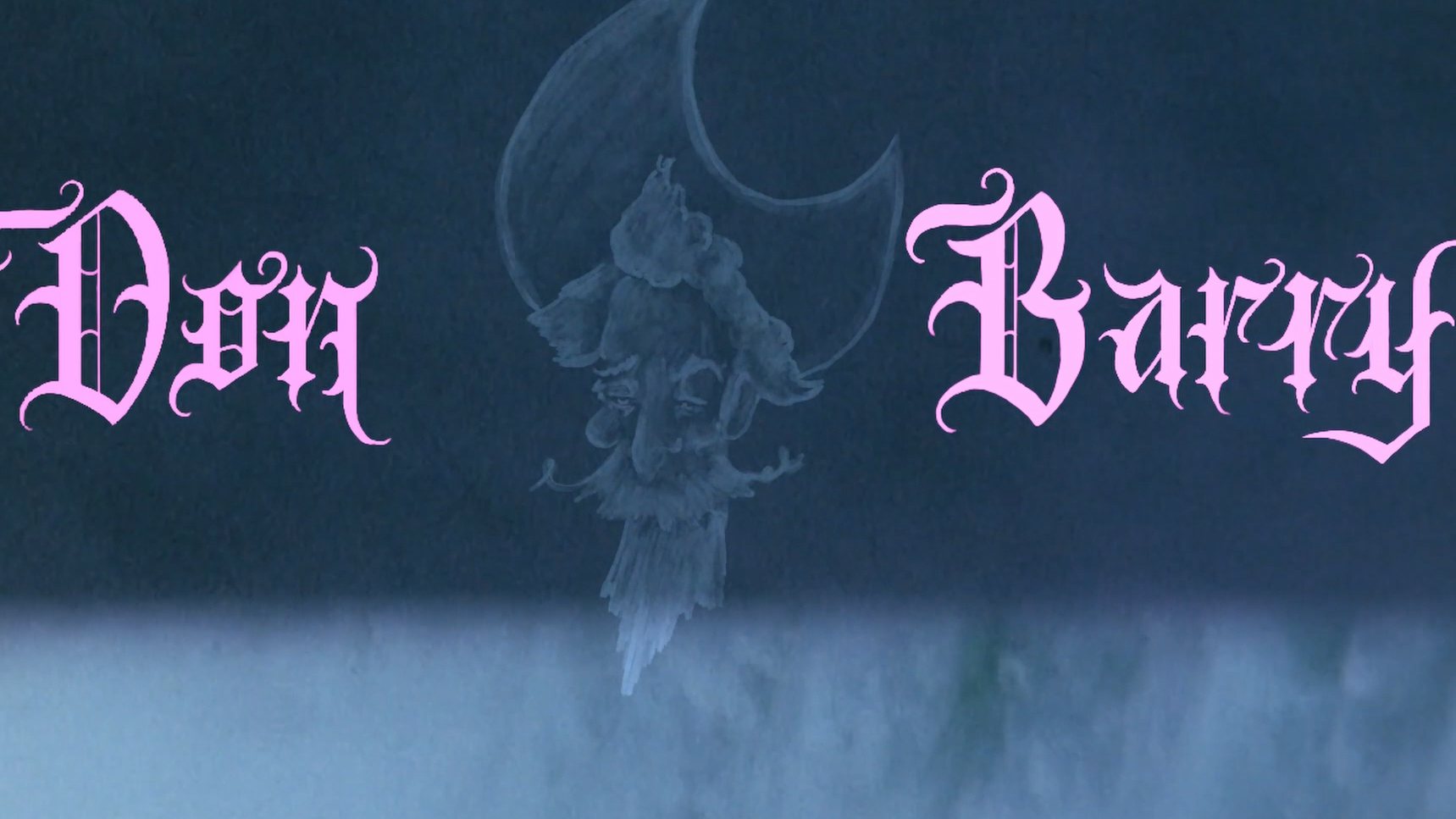
Docufiction, Experimental, by Paul Smart, Mexico, 2026.
Don Barry: A Quixotic Exploration is a debut feature that places the biography of an eighty-year-old experimental filmmaker and artist, Barry Gerson, within the metanarrative of Miguel de Cervantes’ Don Quixote. Don Barry was filmed in the city of Guanajuato during the 51st edition of the Cervantino Festival, as well as during the vibrant Day of the Dead celebrations held in the city’s UNESCO-listed tunnels. The film honors the director’s long friendship with artist Barry Gerson, drawing inspiration from Cervantes’ Don Quixote. Paul Smart’s directorial choices create something new that celebrates life and goes beyond conventional storytelling. A search for magic in our real lives. A moving film about the meaning of life, art, and death. Not to be missed.
Paul Smart is a proud outsider filmmaker with a long history of film screenings. In the 1980s, he emerged in New York’s vibrant youth art scene, working in theater production and later filmmaking, before retreating to rural upstate New York, in the Catskill Mountains, where he made a living writing and screening independent films in old parish halls for rural audiences, many of whom had never seen a film.
LANGUAGE: English
SUBTITLES: Spanish, French, German, Portuguese
Comala as Architecture of Forgetting
You walk into a village and every door is shut. Not locked against you specifically — shut against everything, against time itself, against the particular quality of afternoon light that makes absence look inhabited. And yet you hear them: voices threading through the walls, fragments of argument and prayer and something that might be laughter, rising from houses where no smoke comes from the chimneys and no shadow crosses the threshold. You stand in the middle of the street and feel, with horrible clarity, that you are the intruder here. That whatever is happening behind those walls has been happening long before you arrived and will continue long after you leave, and that your living, breathing, shadow-casting presence is the anomaly, the interruption, the thing that does not belong.
This is Comala. Not a metaphor for it. Comala itself, exactly this.
What Rulfo understood, and what makes his novel so structurally radical even seventy years after its publication in 1955, is that forgetting is not an absence of construction. It is a construction of its own — meticulous, load-bearing, architectural in the most literal sense. Comala does not represent decay. It performs it, with the precision of a building designed specifically to crumble in a particular direction. Every shuttered house, every echo that precedes the footstep that causes it, every woman glimpsed and then not-glimpsed — these are not symbols of loss. They are the materials of a specific kind of social memory that has decided, collectively and without announcement, to stop distinguishing between the living and the dead.
Maurice Halbwachs, writing in Les cadres sociaux de la mémoire in 1925 and completing his theoretical arc in La mémoire collective, published posthumously in 1950, argued something that still unsettles those who prefer their sociology clean: memory is not individual. It never was. What we call personal memory is almost always a community product, assembled from shared frameworks, social calendars, spatial anchors. Remove the community and the memory does not survive intact inside the individual — it mutates, collapses, begins to confuse tenses. Halbwachs demonstrated that the past exists because groups agree to maintain the infrastructure that keeps it present. Churches, roads, family names on property, the particular way a plaza is swept in the morning. When that infrastructure fails, the past does not recede. It invades.
Comala’s infrastructure has not merely failed. It has been deliberately abandoned by the man whose will once organized it entirely. And here is what Rulfo grasps with the instinct of someone who grew up in the Jalisco highlands watching towns empty after the Cristero War gutted entire communities through the 1920s and early 1930s — when a place is organized around a single dominating will and that will withdraws, what remains is not freedom. What remains is the shape of the domination, still standing, still determining movement and breath and the direction of sound, but now hollow at its center. The house is the same house. The walls are the same walls. But whatever used to anchor meaning inside them has dissolved, and so everything echoes differently.
Juan Preciado arrives in Comala searching for his father and finds instead a village that has already completed the process of becoming its own memorial. The inhabitants he encounters do not experience themselves as ghosts. They experience themselves as residents. The haunting, in Rulfo’s architecture, is entirely a matter of perspective — which means it is also a matter of who arrived after whom, who carries the living world in their lungs and who has slowly, across decades, exhaled it entirely.
Halbwachs died in Buchenwald in 1945, which gives his theories about collective memory and the communities that sustain it a weight that pure theory cannot produce. He knew what happened to memory when the community was destroyed by force. Rulfo knew what happened when it was destroyed by indifference. The difference between those two kinds of destruction is precisely the difference between a massacre and a slow erasure — and the slow erasure leaves no bodies to count.

Power That Outlives the Powerful
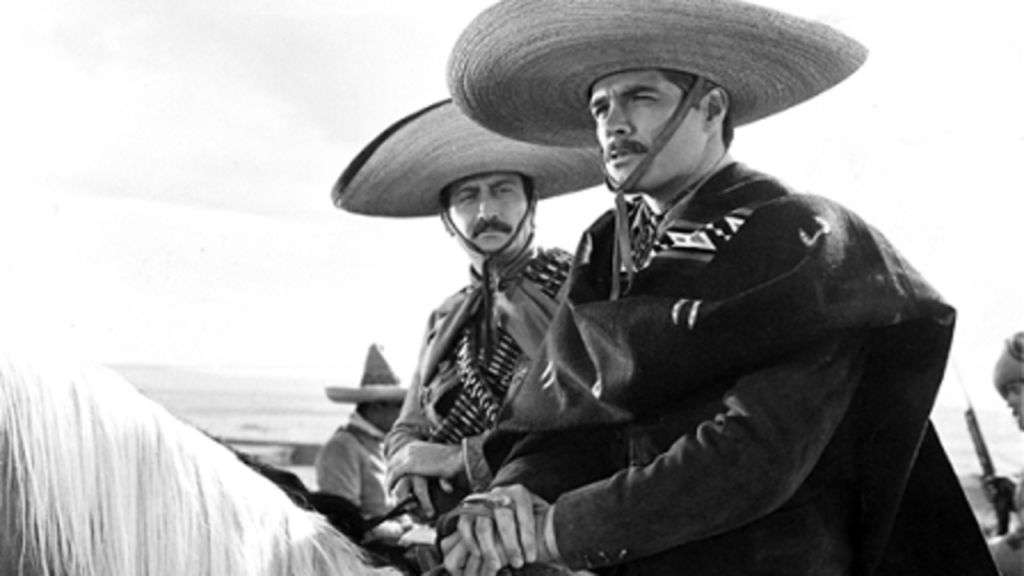
There is a moment when a woman walks across a courtyard to deliver a message she received the day before, except the man who sent it has been dead for three years. She does not pause. She does not reconsider. She crosses the dust and delivers the message as though the gap between the living and the dead were merely a scheduling inconvenience, a slight delay in correspondence. What holds her in that motion is not fear of a living man’s reprisal. It is something older and less visible — the grooves worn into her by decades of a will that no longer needs a body to enforce itself.
This is what distinguishes Pedro Páramo from every tyrant who merely controls. He has accomplished something rarer and more terrible: he has made his authority structural, environmental, atmospheric. By the time the novel opens, he is already dead, and yet the entire landscape of Comala obeys the logic he installed in it. The hacienda system that dominated Mexico for centuries before and after the 1910 revolution operated by precisely this mechanism. Land reform — the central promise of the revolution — was systematically subverted by the latifundistas who simply redistributed paper titles while retaining the actual relationships of dependency. By the 1930s, despite Cárdenas-era agrarian reform distributing nearly eighteen million hectares, vast stretches of rural Mexico still functioned within feudal patterns of obligation and submission that had nothing to do with legal ownership and everything to do with what we might call habituated subordination.
Hannah Arendt, in her 1970 essay On Violence, made a distinction that cuts directly to this condition. Power, she argued, is never the property of an individual — it belongs to a group and remains in existence only so long as the group keeps together. Violence, by contrast, can be enacted by one person, but it is always instrumental, always in need of implementation. What Arendt recognized, and what Rulfo understood in his bones, is that the most durable form of domination is one that has already converted violence into power — that has already become the grammar of social life rather than a sentence imposed upon it. Pedro Páramo did not need to threaten anyone by the end of his life. He had already rewritten the syntax of Comala. The orders he gave before dying were not orders anymore. They were simply the way things were done.
The woman crossing the courtyard does not obey a dead man. She obeys a world he authored. This is the ontological dimension of caciquismo that conventional political analysis misses entirely. The cacique does not govern territory in any administrative sense — he colonizes time. He installs himself as the premise rather than the conclusion of every decision made in his domain, so that even his absence is a form of presence, even his death a form of continuation. The hacienda was not primarily an agricultural enterprise; it was a machine for producing this kind of temporal colonization, ensuring that the debt peon of 1880 would still be, in some psychic and procedural sense, the corn farmer of 1950, living inside a contract his grandfather signed.
Rulfo spent years working for the National Indigenous Institute and the Papaloapan Commission, traveling through exactly these landscapes, watching how official modernity floated over an unchanged substratum of power relationships. He was not writing allegory. He was transcribing a structure he had seen operate in real time, in real dust, among people who knew perfectly well that the master was dead and who delivered his messages anyway, not out of stupidity or blindness, but out of something that had long since moved below the level of conscious choice into the body itself, into the particular angle at which a person crosses a courtyard when there is a message to be delivered and nowhere else to take it.
The Sands
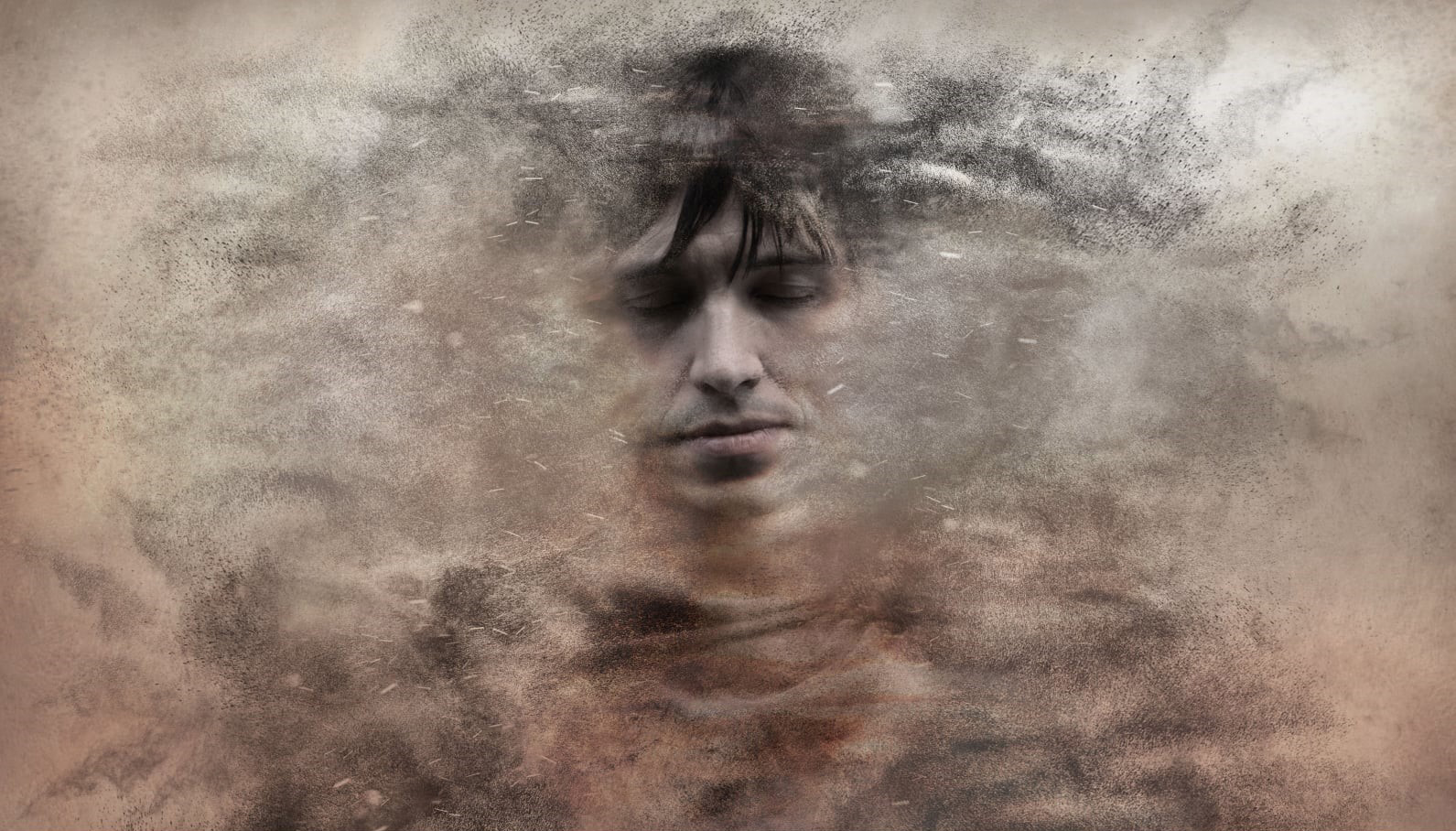
Science fiction, by Noah Paganotto, Argentina, 2022.
In an undetermined location on planet Earth, in an unknown time, Zoilo lives with his family in a wasteland surrounded by ruins. They live uprooted, without mothers, knowing that pregnancy for women is synonymous with death. For them there is only one collective routine; keep the fire alive. Only Zoilo escapes this logic, observing, intrigued, details that others do not see and therefore do not appreciate. Zoilo's personal search for answers will increase the differences with his relatives, increasingly revealing an empty world of interiority.
Avant-garde film that burns slowly in the first part and then reveals in the second the profound conflicts of a family prisoner of archaic beliefs. It is a dystopian and visionary work, with wonderful photography and images of rare power that allow us to grasp the depth of the story and its poetic potential. The faces of the actors, especially the protagonist boy, are perfect. The Sands metaphorically represents the world we live in: an alienated society, where what keeps us alive is demonized and blamed for death. In opposition to the fast pace of the typical mainstream film, The Sands is a meditative journey into the depths of images. The film was shot in natural environments in the city of Necochea, Buenos Aires province, Argentina.
LANGUAGE: Spanish
SUBTITLES: English, Spanish, French, German, Portuguese
The Whisper Structure: Fragments as the Only Honest Form
There is a moment when you sit across from the last person who knew your father, and you realize they are describing someone you have never met. The voice is calm, even fond. The details are specific — a particular laugh, a habit of touching the brim of a hat before speaking, a generosity that surprised everyone. And yet none of it assembles into the man you buried. You go home and call his oldest friend, and that man gives you another stranger entirely. Harder. More calculating. Someone who understood power and never flinched from using it. You sit with both testimonies and understand, perhaps for the first time, that the truth of a life is not something hidden beneath contradictions, waiting to be recovered. The contradictions are the truth. There is nothing underneath.
This is the structural logic of a novel that arrived in 1955 with the force of something that had always existed but had never been said. One hundred and twenty-four pages. A young man walking toward a dead town to find a father he never knew, only to discover that the town is already dead too, populated entirely by voices that bleed into one another without warning, without transition, without the courteous architecture of chapters that tell you where you are and when. Readers in Mexico initially did not know what to do with it. Gabriel García Márquez reportedly read it twice in one night and then started over. Carlos Fuentes called it one of the greatest novels ever written in the Spanish language. It sold less than two thousand copies in its first year.
The fragmentation is not a stylistic choice in any decorative sense. It is an epistemological position. Walter Benjamin, writing his Theses on the Philosophy of History in 1940 while Europe was collapsing around him, argued that history is not a continuous river but a series of crystallized moments, each of which contains the whole of a particular truth compressed inside it. His concept of the tiger’s leap — the Jetztzeit, the now-time — proposed that the revolutionary act of historical understanding is not the patient reconstruction of sequence but the sudden, violent recognition of a moment that illuminates everything at once, across centuries, cutting through linear time like a blade. Benjamin understood that the official narrative of history is always the narrative of the victors, and that the only honest account of what actually happened must be assembled from fragments, from the suppressed, from the testimonies of those who were not permitted to write the record themselves.
The dead, by definition, are not permitted to write the record.
What the voices in Rulfo’s novel do — layering over each other, contradicting, remembering different men and different weathers — is not a representation of confusion. It is a representation of how memory actually functions when it has been denied the organizing fiction of a single authorized version. Each fragment carries its own timestamp, its own emotional climate, its own version of who held power and who did not. They cannot be reconciled because they were never meant to be reconciled. They were meant to coexist in the way that the sediment of a riverbed coexists — layers that tell different geological stories, none of which cancels the others.
The man trying to reconstruct his father from contradictory witnesses is not failing at a task that was possible. He is discovering that the task itself was built on a false premise, the premise that a life, especially a life wielded like a weapon over others, resolves into a single coherent truth if you gather enough evidence. But power leaves behind not a portrait but a series of wounds, and each wound remembers the hand that made it differently.
The whisper is the only honest register because the shout was always someone else’s instrument.
Desire as the Original Catastrophe

There is a particular kind of man who, when refused the thing he wants most, does not mourn. He calculates. He waits with the patience of stone, and then, when the refusal becomes permanent — when it becomes a death, a finality beyond appeal — he does not weep so much as he redirects. The grief curdles into something architectural. It becomes policy.
Pedro Páramo never stops wanting Susana San Juan. This is the fact around which everything else in the novel orbits, the gravitational anomaly that explains why a village dies, why the land dries, why children are born into silence and old men into debt. He loved her as a boy with the irrational totality that only boys can sustain, and then she was taken away, and the wanting never transformed into something else. It calcified. When he finally possesses her — brings her back to the Media Luna through the force of money and threat — she is already elsewhere, already mad or already enlightened, depending on how you read her, already living inside a private cosmos he cannot enter. She is present in his house and entirely absent from him. And when she dies, he does not grieve the way men grieve. He decides that if the world could not give him what he wanted, the world would simply stop.
René Girard, writing in Violence and the Sacred in 1972, argued that desire is never original, never truly about its object. Desire is triangular, mediated, mimetic — we want what others want, or what we believe others have access to, and the real violence of desire lies not in its frustration but in its fundamental structure, which is rivalrous, which tends toward annihilation. But Rulfo seems to be working with something even more primitive than Girard’s model allows. Pedro Páramo’s desire for Susana is not mimetic in any social sense — there is no rival he is imitating, no mediator between him and his object. It is closer to what Freud understood as the death drive in its most literal expression: Eros and Thanatos not as competing forces but as the same force wearing different faces, desire and destruction already fused at the root.
What Rulfo understands, with the clarity of someone who watched this kind of man operate across the landscape of Jalisco, is that this fusion is not pathological in the clinical sense. It is structural. In a social world built on the absolute power of the cacique, desire and its denial produce the same outcome: domination. Pedro Páramo wants Susana and cannot truly have her, and so he burns the whole field. He withdraws from the town’s commerce, refuses to pay wages, lets the crops fail, watches the people leave or starve with the same flat expression he wore when he looked at Susana through her window as a boy. Their suffering is entirely incidental to his grief. They are not even characters in his mourning. They are weather.
This is what makes the novel so precise about rural Mexican power and so unsettling as a moral document. The people of Comala do not die because of war or famine or drought in any meteorological sense. They die because one man’s erotic fixation was never metabolized into something bearable. The town is the ash of his wanting. And the cruelest detail is that Susana herself never knew the scale of what her existence — and then her absence — had cost everyone around her. She was inside her madness, or her freedom, talking to a dead husband, feeling the warmth of a body that no one else could see. She was, perhaps, the only person in Comala who was not crushed by Pedro Páramo’s desire. She had already escaped into somewhere he could not follow, and that escape was precisely what he could never forgive.
A vision curated by a filmmaker, not an algorithm
In this video I explain our vision
The Church’s Complicity and the Sacred as Weapon
Father Rentería knows exactly what he is doing. That is what makes him unbearable. He stands at the deathbed of Miguel Páramo, the cacique’s son, a man who raped and killed without consequence for years, and he speaks the words of absolution. He performs the ritual. He grants passage. Then, days later, a poor woman comes to him asking the same mercy for her dead, and he refuses. Not because the theology differs. Because the coin is absent. He carries this knowledge through every page he appears in, and it does not break him into rebellion. It curls him inward into something worse than hypocrisy — a lucid, functioning complicity that he occasionally confesses to his own confessor without ever changing a single thing about how he lives.
This is not a portrait of one corrupt priest in a fictional village. It is an anatomy of what Michel Foucault called the confessional mechanism — that structure described in the first volume of The History of Sexuality, published in 1976, where he demonstrates how the act of confession is never simply a spiritual transaction but always a relationship of power. The confessor holds the capacity to grant or withhold, to validate or condemn, to translate private truth into social consequence. The one who confesses surrenders their interiority to an institution. Foucault’s argument is not that confession is meaningless but that it is too meaningful — it is a machine for producing subjects who understand themselves only through the lens of authorized interpretation. In Comala, Father Rentería controls not just the afterlife but the present tense. He decides who dies in grace and who dies as waste. He decides whose grief is legitimate and whose is unrecognized. The sacred, in his hands, is not a balm. It is a sorting mechanism.
What grounds this in something beyond literary metaphor is the specific, blood-soaked history of the place Rulfo was writing from. Jalisco, his home state, was the geographic and spiritual heart of the Cristero War, the armed Catholic uprising that erupted in 1926 and lasted until 1929, killing somewhere between seventy thousand and ninety thousand people depending on which accounting you follow. The immediate cause was the Mexican government’s enforcement of the anticlerical provisions of the 1917 constitution — restrictions on Church property, bans on religious education, limits on the number of ordained priests allowed to operate publicly. The Cristeros fought under the banner of Cristo Rey, Christ the King, convinced they were defending the sacred from a secular state. And in a technical sense, perhaps they were. But the Church they were defending was not separable from the social order that Pedro Páramo represents. The hacienda system, the debt peonage, the absolute authority of men like Páramo over the bodies and futures of everyone beneath them — all of this had been blessed, administered, and spiritually legitimized by exactly the kind of priest that Rentería embodies. The Cristero War was, among other things, a war to preserve the institutional conditions that made Father Rentería’s moral calculus possible.
Rulfo was a child during those years. His father was killed when Juan was six. Several of his uncles died in the violence. He grew up inside the aftermath of a war fought in the name of a Church that had spent centuries fusing spiritual authority with landowner interests so thoroughly that the two had become indistinguishable. When he writes Rentería as a man who knows he is damned and continues anyway, he is not inventing a character. He is remembering a structure. He is naming the mechanism by which entire communities were taught to locate their suffering inside themselves — as sin, as unworthiness, as the will of God — rather than in the material conditions that produced it. The whisper of the dead in Comala is not just grief. It is what happens when a people has been told so persistently that their pain is metaphysical that they begin to haunt the very ground that starved them.
Murmurs, Not Ghosts: What the Dead Are Really Saying
You press your ear against the wall and hear them talking. Two voices, maybe three, the words dissolving before they fully form, the cadence familiar in that unbearable way that family resemblance is familiar — not because you can name it but because your body already knows it. You cannot tell if they are your dead grandmother and her sister, still quarreling over something that happened before you were born, or whether the voices are your own thoughts finally breaking free of the silence you have imposed on them for decades. The wall does not clarify. The wall vibrates.
This is precisely what Comala is. Not a haunted place in any Gothic or theatrical sense, but a place where the unfinished sentences of the living have outlasted the living themselves. The murmurs Juan Rulfo fills his novel with are not supernatural emissions. They are the acoustic residue of everything that was never allowed to be said out loud — confessions swallowed before the priest could hear them, accusations buried alongside the bodies that made them necessary, love declarations that died in the throat because the social architecture of rural Mexico under cacique rule made tenderness a form of vulnerability that could be exploited. What reverberates through Comala’s dust is not the paranormal. It is the political.
Svetlana Boym, writing in The Future of Nostalgia in 2001, drew a distinction that cuts directly into the marrow of Rulfo’s novel. She separated what she called restorative nostalgia — the desire to rebuild a lost home, to resurrect the past as if it had never been interrupted — from reflective nostalgia, which dwells in the longing itself, which understands that the home cannot be rebuilt and finds meaning precisely in that impossibility. Restorative nostalgia, Boym argued, is always potentially authoritarian. It requires a single narrative of origin, a mythic wholeness that justifies any violence committed in the name of its recovery.
Pedro Páramo is a monument to restorative nostalgia. His entire dominion over Comala is structured around the recovery of Susana San Juan — not Susana as she actually is, a woman who has her own interior life, her own relationship to grief and to the body, her own irreducible separateness — but Susana as the fixed point of a past that Pedro has decided was the only moment his life held meaning. He does not love her. He loves the idea of having once stood close enough to her that he could have loved her. The distinction is everything. His power over an entire region, the lives extinguished and deformed by his will, the land accumulated and withheld — all of it is the infrastructure of a man trying to rebuild something that never existed in the form he remembers it.
The dead of Comala practice something closer to what Boym meant by reflection. They do not want to return. They cannot return, and somewhere beneath the murmuring they know this. What they do instead is repeat — not to restore, but because repetition is the only form of honesty available to those who were never permitted to speak once when it mattered. Dorotea, Susana, the nameless voices filtering through adobe walls at midday — they are not haunting anyone. They are completing sentences. They are saying the thing that the living refused to say, in rooms where the living once chose silence because silence was safer, or because no one was listening, or because the man with the power had already decided what the story would be.
When you overhear yourself through a wall — when you cannot distinguish your own suppressed voice from the voice of someone long dead — the question is not whether you believe in ghosts. The question is what you left unfinished, and whether the place you left it still holds the shape of what you abandoned there, waiting in the way that only neglected truths wait: without patience, without mercy, without any intention of becoming quiet on your behalf.
Juan Rulfo‘s Silence and What It Costs a Culture to Speak Plainly
There is a particular kind of silence that is not absence but completion — the silence of someone who has said the one true thing and knows, with absolute certainty, that saying it again would only diminish it. After two books totaling barely three hundred pages, Juan Rulfo stopped. Not slowed. Not paused between projects. Stopped. And a continent that had been waiting for its literature to finally tell the truth about itself was left holding two slim volumes like a man holds a wound — carefully, with both hands, unable to decide whether he has been saved or destroyed.
Roland Barthes, writing in 1953 — the same year Rulfo published El llano en llamas — argued in Writing Degree Zero that literary form is never innocent, that every stylistic choice carries a political weight whether the writer acknowledges it or not. Barthes understood that language is not a transparent vessel carrying meaning from one mind to another; it is already contaminated, already complicit, already bearing the fingerprints of every institution that ever used it to maintain power. The writer who wants to speak a suppressed truth must therefore do something to the language itself — must break it, thin it, push it toward what Barthes called a degree zero of writing, a neutral style that refuses the comfort of inherited eloquence. Rulfo did not just approach that degree zero. He inhabited it so completely that the form and the content became indistinguishable. The fragmentation was not a technique. It was the only honest shape that history could take.
What Rulfo understood, and what makes his silence afterward so logical rather than tragic, is that the unsayable does not become sayable simply because you have found the right words. It becomes visible once, in one configuration, under conditions that cannot be manufactured twice. Juan Preciado walks into Comala already dead, looking for a father who owed him nothing but a name, and what he finds is not a man but an aftermath — a town populated entirely by voices that cannot stop confessing because confession is the only activity left when the living have abandoned you. That image contains the entire colonial and post-revolutionary history of rural Mexico not because Rulfo planned it that way but because he was honest enough to write from inside the damage rather than above it. You cannot do that twice without it becoming performance. You cannot repeat the gesture without it curdling into style.
There is something Borges once observed about writers who produce enormous bodies of work — that quantity becomes its own kind of dishonesty, a way of hiding behind productivity, of mistaking accumulation for meaning. Rulfo’s two books refuse that hiding. They are not the beginning of a conversation. They are the conversation, entire, offered once and then withdrawn into the same silence that produced them. This is not creative failure. It is the logical consequence of having written from a place where literature and lived suffering are not analogous but identical.
What it costs a culture to speak plainly is rarely discussed, because the culture that benefits from the speaking rarely pays the price. The voices of Comala kept talking after death because they had no other way to exist. Rulfo gave them the page, and then, having given them that, had nothing left to give that would not be lesser. The murmur was always the right register for a suppressed history — not a manifesto, not a declaration, but a dead man walking into a dead town, carrying a name he was promised and a father he never received, and finding only echoes that confirm what he already suspected: that the debt was real, that no one will ever settle it, and that the most honest literature can do is make you stand in that unpayable place long enough to feel its full, permanent weight.
🌀 Voices from the Labyrinth of the Dead
Juan Rulfo‘s Pedro Páramo inhabits a literary space where the dead speak, time dissolves, and myth bleeds into history. To fully grasp its depth, it helps to explore the wider literary and symbolic traditions that gave it life — from the Spanish narrative heritage to the archetypal landscapes of the unconscious.
Don Quixote: Meaning and Analysis
Don Quixote stands as one of the foundational pillars of the Spanish-language literary imagination, exploring the tension between illusion and reality in ways that echo through centuries of Latin American fiction. Rulfo’s Pedro Páramo inherits this tradition of fragmented perception and unreliable worlds, where the boundary between the living and the dead mirrors Quixote’s blurred line between fantasy and truth. Reading both works together reveals how Spanish literature has always been haunted by its own ghosts.
GO TO THE SELECTION: Don Quixote: Meaning and Analysis
The Spanish Picaresque Novel: History and Meaning
The Spanish Picaresque Novel gave birth to a narrative voice defined by marginality, survival, and ironic distance from power — themes that resonate deeply in Rulfo’s portrayal of Comala’s forgotten souls. Like the pícaro wandering through a corrupt social landscape, Juan Preciado descends into a world where power has rotted from within, leaving only echoes and dust. Understanding the picaresque tradition illuminates the social and literary soil from which Pedro Páramo grew.
GO TO THE SELECTION: The Spanish Picaresque Novel: History and Meaning
Alchemy in Literature: From Dante to Goethe
Alchemy’s presence in Western literature — from Dante’s infernal transformations to Goethe's Faust — reveals how writers have long used the language of spiritual transmutation to encode journeys through death and rebirth. Pedro Páramo can be read as a kind of literary nigredo, a descent into darkness and decomposition that paradoxically seeks a hidden essence buried beneath the ruins of Comala. This article traces the thread of alchemical symbolism woven through the canon that invisibly connects to Rulfo’s masterwork.
GO TO THE SELECTION: Alchemy in Literature: From Dante to Goethe
The Unconscious and its Relationship With Cinema
Cinema and literature share a deep kinship with the unconscious, and few works demonstrate this as vividly as Pedro Páramo, whose non-linear structure and spectral voices mirror the logic of dreams. The relationship between the unconscious and narrative art reveals how storytelling becomes a space where repressed memory, guilt, and desire return in distorted, haunting forms. Exploring this connection helps decode not only Rulfo’s novel but the entire tradition of oneiric storytelling it inspired.
GO TO THE SELECTION: The Unconscious and its Relationship With Cinema
Discover the Cinema of the Labyrinth on Indiecinema
If Pedro Páramo’s world of whispers, memory, and mythic darkness has stirred something in you, Indiecinema is the streaming space where that feeling finds its moving image. Explore a curated selection of independent and visionary films that share the same spirit of depth, poetry, and bold storytelling. Let the labyrinth continue — one film at a time.
👉 EXPLORE THE CATALOG: Watch Indie Films in Streaming
A vision curated by a filmmaker, not an algorithm
In this video I explain our vision

