
What lies beyond the grave has captivated human imagination across millennia, shaping how we live, love, and find meaning in our finite existence. Cinema has become one of our most powerful vessels for exploring this primal question, transforming abstract theological concepts into visceral, intimate narratives that speak directly to the anxieties and hopes of contemporary audiences. From the compensatory afterlife where moral standing determines eternal reward or punishment, to the cyclical return of karmic rebirth, to the secular uncertainty of consciousness itself, filmmakers have grappled with death’s ultimate mystery in ways that reflect not just theological doctrine but the cultural values and philosophical preoccupations of their time and place.

The afterlife cinema explores profound themes that transcend mere supernatural spectacle. These films ask us to reconsider what it means to be human: Are we immortal souls inhabiting temporary bodies, as so many classical narratives suggest? Or are we merely patterns of consciousness, fragile and fleeting, that dissolve into nothing at death’s threshold? The most compelling afterlife films recognize that our beliefs about what comes after profoundly shape how we choose to live now. A character who discovers they have unfinished business on earth, a soul granted one final chance to set things right, or a consciousness confronting its own mortality—these scenarios force both protagonist and viewer to confront questions of legacy, love, redemption, and purpose that otherwise remain dormant in our daily routines.
Throughout cinema history, afterlife narratives have functioned as mirrors reflecting each culture’s deepest values and anxieties. Whether depicting corporate America’s pragmatic spirituality, Japanese concepts of domesticity and duty, post-war European existentialism, or contemporary secular postmodernism, these films reveal what societies treasure and what they fear most about death and the beyond. The visual language of the afterlife—its architecture, its inhabitants, its moral economy—tells us as much about the living world as about the imagined one. This interplay between theology and aesthetics, between timeless human questions and historically specific anxieties, is what makes afterlife cinema such a rich and enduring genre, one that bridges the sacred and the profane, the philosophical and the intimate, the universal and the particular.
R.I.P.D. 2: Rise of the Damned (2022)

R.I.P.D. 2: Rise of the Damned (2022) plunges into the afterlife with a Wild West prequel twist, where gunslinger Roy Pulsipher meets his end at the hands of demon-possessed outlaws and joins the Rest In Peace Department. Paired with sword-wielding Jeanne, he returns to Earth as a spectral lawman to seal a hellish gateway unearthed in Red Creek, Utah. This low-budget Netflix outing blends undead policing with frontier grit, chasing “deados” who threaten to unleash infernal hordes on the living world.
Though it nods to afterlife bureaucracy and demonic incursions, R.I.P.D. 2: Rise of the Damned falters in exploring the theme’s deeper resonances, settling for rote buddy-cop antics amid cheap effects and limp action. The old-west setting promises mythic reckonings between life and damnation, yet a weak script and forgettable cast deliver only superficial thrills, burying any potential insight into mortality beneath formulaic demon hunts unworthy of the afterlife’s vast cinematic mysteries.
Don Barry: A Quixotic Exploration
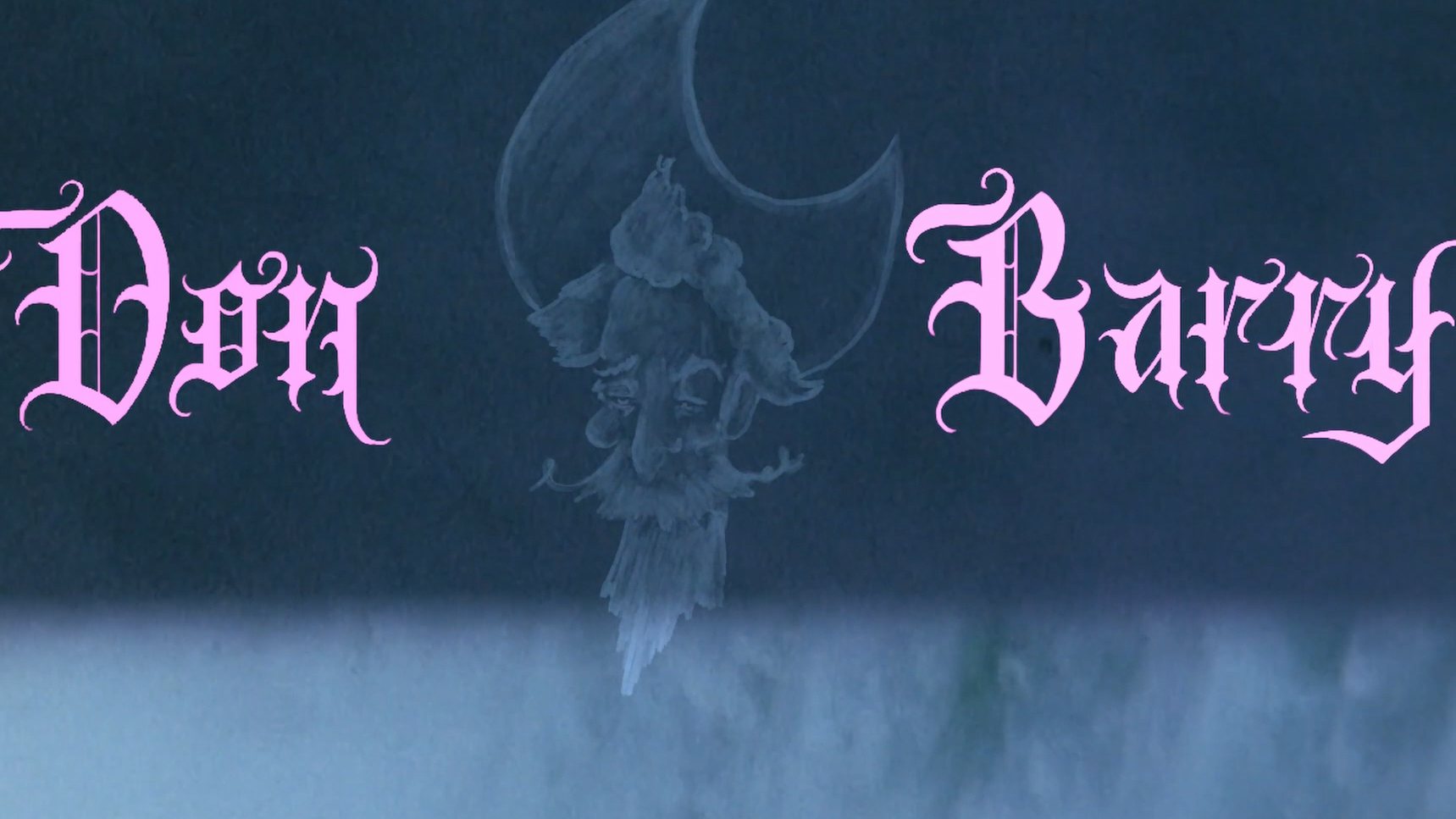
Docufiction, Experimental, by Paul Smart, Mexico, 2026.
Don Barry: A Quixotic Exploration is a debut feature that places the biography of an eighty-year-old experimental filmmaker and artist, Barry Gerson, within the metanarrative of Miguel de Cervantes’ Don Quixote. Don Barry was filmed in the city of Guanajuato during the 51st edition of the Cervantino Festival, as well as during the vibrant Day of the Dead celebrations held in the city’s UNESCO-listed tunnels. The film honors the director’s long friendship with artist Barry Gerson, drawing inspiration from Cervantes’ Don Quixote. Paul Smart’s directorial choices create something new that celebrates life and goes beyond conventional storytelling. A search for magic in our real lives. A moving film about the meaning of life, art, and death. Not to be missed.
Paul Smart is a proud outsider filmmaker with a long history of film screenings. In the 1980s, he emerged in New York’s vibrant youth art scene, working in theater production and later filmmaking, before retreating to rural upstate New York, in the Catskill Mountains, where he made a living writing and screening independent films in old parish halls for rural audiences, many of whom had never seen a film.
LANGUAGE: English
SUBTITLES: Spanish, French, German, Portuguese
A Ghost Story (2017)

David Lowery‘s A Ghost Story (2017) transforms the afterlife into a haunting vigil of quiet despair, where a sheet-draped ghost—Casey Affleck‘s spectral remnant—lingers in his earthly home, witnessing time’s inexorable march. Rooney Mara‘s grieving widow embodies raw loss amid long, unbroken takes that stretch minutes into eternities, like her silent pie-eating sequence, forcing viewers to confront the void left by death.
This minimalist meditation on the afterlife rejects tidy resolutions, probing legacy’s futility as the ghost endures house parties, demolitions, and epochs, from pioneer settlers to futuristic ruins. Lowery’s boxy 1.33:1 frame and sombre score evoke existential dread, questioning immortality’s illusion in a cosmos indifferent to human striving, making it an essential, unsettling portrait of eternal unrest.

Hereafter (2010)

Clint Eastwood‘s Hereafter weaves three tales of mortality—a reluctant psychic (Matt Damon), a French journalist (Cécile de France) revived from a tsunami-induced near-death vision, and twin brothers shattered by loss—culminating in fragile convergence on the afterlife’s enigma. The film’s opening tsunami sequence mesmerizes with visceral realism, thrusting viewers into death’s raw brink, yet it pivots to contemplative restraint, probing the veil between worlds without supernatural spectacle.
Though Eastwood’s classical precision crafts poignant grief and human yearning for what lies beyond, Hereafter falters in evoking profound catharsis on the afterlife, burdened by expository plotting that stifles reflection. Peter Morgan‘s script, diverging from his political incisiveness, integrates psychic glimpses and spectral encounters earnestly, yet the resolution feels emotionally distant, leaving audiences to ponder mortality’s mysteries amid Eastwood’s assured, if uneven, meditation on eternal unknowns.
Katabasis
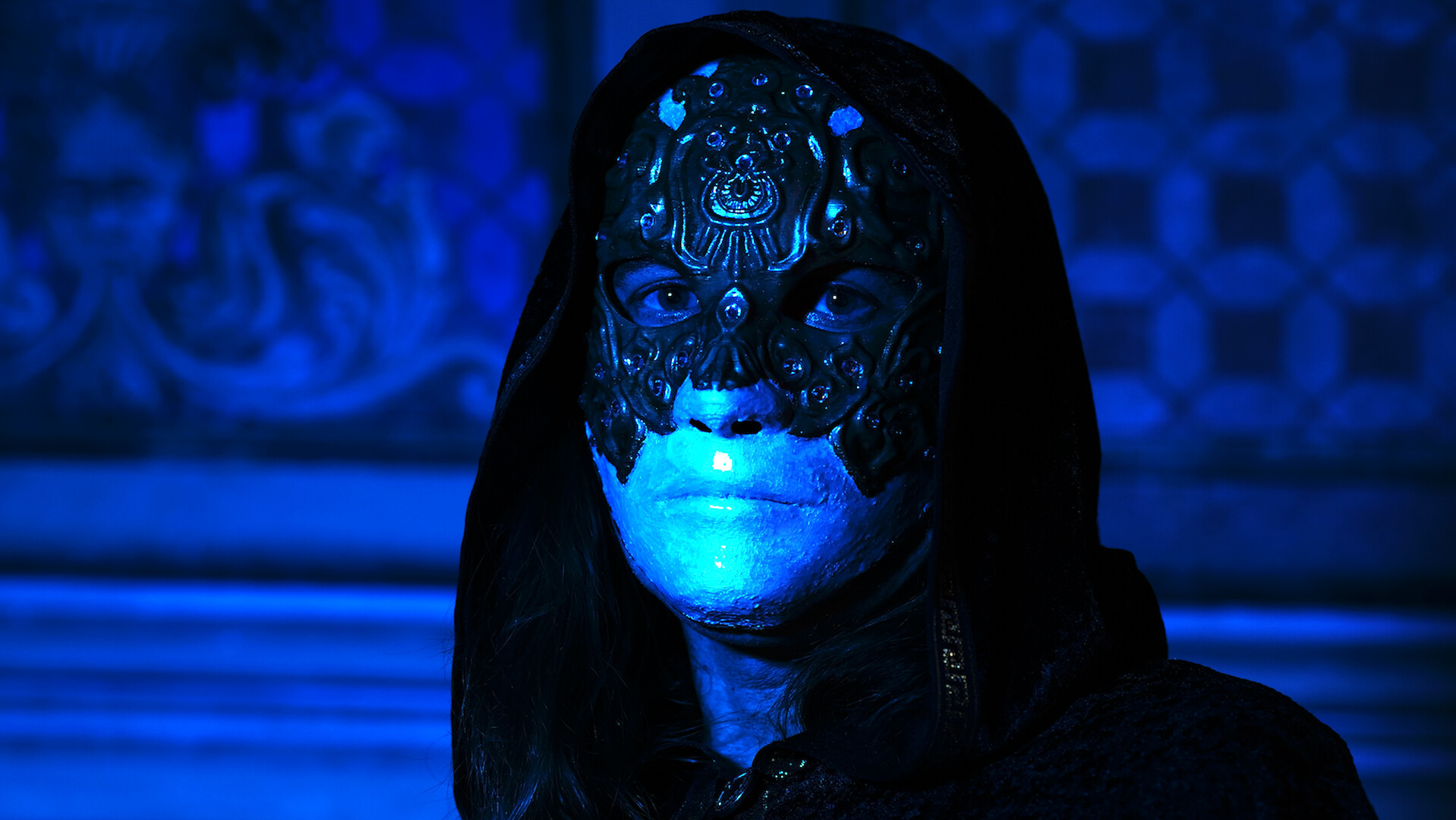
Drama, Mystery, by Samantha Casella, Italy, 2025.
“Katabasis” is a journey into the underworld. Nora experienced that dark realm as a child, when she suffered abuse. This marked her, shaping her into an ambiguous and manipulative woman, dangerous in her inscrutability, constantly seeking disturbing situations to relive the only condition she has profoundly internalized: pain. And the love story between Nora and Aron is tormented, strictly secret. Aron is a young orphan oppressed by the star system which, orchestrated by Jacob, a cynical manager, made him a star and imposes another façade of life on him. In fact, only the people who revolve around the house-prison where the couple lives are aware of Nora's existence. That majestic villa is the stage for secrets, lies, deceit, as well as unsettling episodes, since Nora is able to communicate with the souls from the beyond.
Director Biography – Samantha Casella
Samantha Casella studied various aspects of cinema, including screenwriting, directing, cinematography, and acting, across Turin, Florence, Rome, and Los Angeles. Her directing thesis, the short film "Juliette," won 19 awards, including the "European Massimo Troisi Award." She continued her path directing surreal short films including "Silenzio Interrotto," "Memoria all'Isola dei Morti," and "Agape." In 2019, she directed "I Am Banksy." At the charismatic TCL Chinese Theater in Los Angeles, at the Golden State Film Festival, she won the award for Best International Short Film. In 2020, she directed the short film "A un Dio Sconosciuto." "Santa Guerra" is her feature film debut.
LANGUAGE: Italian
SUBTITLES: English, Spanish, French, German, Portuguese
The Lovely Bones (2009)

Peter Jackson‘s The Lovely Bones crafts a haunting vision of the afterlife as an ethereal limbo, where murdered teen Susie Salmon lingers in a surreal in-between, observing her family’s unraveling grief. This purgatorial realm, bursting with fantastical transformations like fields morphing into oceans, symbolizes stalled healing and the soul’s reluctance to depart, yet its overwrought CGI splendor often dilutes the raw emotional intimacy of loss, turning Susie’s otherworldly gaze into mere spectacle rather than profound transcendence.
Stanley Tucci‘s chilling portrayal of the killer anchors the film’s mortal coil, contrasting the afterlife’s whimsy with predatory reality, while Susie’s narration bridges realms, underscoring themes of unfinished business and posthumous agency. Though narratively meandering and heavy on montages, it poignantly explores how the dead’s watchful presence nudges the living toward justice and release, making it a flawed but visually arresting entry in afterlife cinema that prioritizes mourning’s messy evolution over tidy closure.
The Others (2001)

The Others masterfully subverts afterlife conventions through Grace Stewart‘s isolated existence in a fog-shrouded Jersey mansion, where she enforces strict rules to shield her photosensitive children from light, believing intruders haunt their home. As spectral occurrences escalate, the film blurs the veil between the living and the dead, culminating in a devastating twist that redefines their reality as unwitting ghosts trapped in denial.
Alejandro Amenábar’s restrained horror, inspired by classics like The Innocents, probes the afterlife not as ethereal reward but as a purgatorial echo of unresolved guilt—Grace’s smothering of her children and subsequent suicide binding her family in eternal limbo. Nicole Kidman‘s brittle intensity anchors this existential dread, transforming a ghost story into a haunting meditation on repression, fanaticism, and the terror of self-revelation in the beyond.
A vision curated by a filmmaker, not an algorithm
In this video I explain our vision
What Dreams May Come (1998)

Vincent Ward‘s What Dreams May Come (1998) presents an imaginative yet philosophically troubled meditation on the afterlife. Robin Williams delivers a profoundly emotional performance as Chris Nielsen, a man navigating heaven and hell after death to rescue his suicidal wife. The film’s visualization of the afterlife—rendered as subjective, painterly realms where souls create their own paradise—attempts bold theological speculation. However, its internal logic remains contradictory, particularly regarding how souls traverse between heavens and the nature of divine judgment itself.
The film’s greatest weakness lies in its relativistic cosmology, which undermines its spiritual inquiry. By suggesting that reality is entirely self-created and that heaven operates as isolated “private universes,” What Dreams May Come abandons meaningful exploration of transcendence in favor of New Age fantasy. Its controversial treatment of suicide as a pathway to spiritual redemption raises troubling questions about the film’s moral framework. While visually breathtaking and emotionally manipulative, the movie ultimately fails to deliver genuine philosophical resolution, ending on a conventionally sentimental note that contradicts its earlier daring ambitions regarding mortality and the afterlife’s nature.
The Rapture (1991)

The Rapture charts Sharon’s harrowing odyssey from hedonistic emptiness to fervent faith, culminating in an apocalyptic vision of the afterlife that defies easy redemption. Mimi Rogers delivers a raw, unflinching performance as a woman who murders her daughter in obedience to divine command, only to face eternal separation in the post-Rapture wasteland. Michael Tolkin‘s script literalizes eschatological terror, blending psychological horror with biblical literalism to probe the afterlife’s unforgiving finality.
This bold exploration of the afterlife refuses irony, demanding the audience’s leap of faith in Sharon’s visions amid moral ambiguity. Unlike Abraham’s reprieve, her act yields no mercy, underscoring God’s inscrutable justice and the soul’s isolation beyond death. Tolkin’s vision grips through its fearless confrontation of spiritual malaise, making The Rapture a provocative must-see that lingers as a stark meditation on eternal damnation and divine caprice.
Bill & Ted’s Bogus Journey (1991)

When Bill and Ted are murdered by their evil robot doppelgängers, they awaken as spirits in the afterlife, embarking on a surreal journey through heaven and hell guided by Death himself. This genre pivot from the first film’s time-travel comedy transforms the narrative into an exploration of mortality and redemption, using the protagonists’ physical death as the catalyst for their spiritual adventure across celestial and infernal realms.
The film’s treatment of the afterlife operates as both comedic deconstruction and genuine philosophical inquiry. William Sadler‘s scene-stealing performance as Death—portrayed as a charming, absurdist figure—reframes traditional underworld mythology through a lens of absurdist humor, while the celestial landscapes and encounters with spiritual entities anchor the narrative firmly within afterlife cinema conventions. The film’s willingness to juxtapose ridiculous situations with existential stakes creates an unexpected resonance with how cinema grapples with mortality and the unknown beyond death.
Defending Your Life (1991)

Albert Brooks‘ Defending Your Life (1991) ingeniously reimagines the afterlife as Judgment City, a bureaucratic purgatory where souls like ad executive Daniel Miller defend their earthly fears in a trial determining reincarnation or ascension. Amid pastel hotels and no-calorie feasts, Daniel confronts life’s timid choices, from stage fright to dodged confrontations, while romancing the fearless Julia. This whimsical setup blends romantic comedy with existential scrutiny, satirizing self-actualization as the key to eternity.
The film’s afterlife vision critiques fear’s grip on human potential, positioning judgment not on sins but neglected bravery, echoing reincarnation tropes with a wry Californian gloss. Brooks’ detached neuroticism clashes with Meryl Streep‘s radiant poise, yielding uneven chemistry yet poignant pathos in their cosmic romance. Though softened by a tidy happy ending, it lingers as a must-see for probing mortality’s humor and the soul’s quiet rebellions against cowardice.
Ghost (1990)
![Ghost (1990) Original Trailer [FHD]](https://blog.indiecinema.co/wp-content/plugins/wp-youtube-lyte/lyteCache.php?origThumbUrl=https%3A%2F%2Fi.ytimg.com%2Fvi%2FcapS3yV9eY8%2F0.jpg)
Ghost (1990) masterfully intertwines romance and the supernatural, following banker Sam Wheat, murdered by his corrupt partner Carl, who lingers as a spirit to protect artist lover Molly. Enlisting reluctant psychic Oda Mae Brown, Sam navigates the afterlife’s liminal space, confronting shadowy demons that drag souls to hellish realms amid light symbolizing heavenly grace. This blend of thriller tension and heartfelt yearning captures the afterlife as a realm of unfinished earthly bonds.
Whoopi Goldberg‘s Oscar-winning Oda Mae injects vital humor into the spectral drama, balancing schmaltzy pathos with genuine pathos, while subtle visuals—like eerie moans from hellbound shadows and Sam’s futile punches—evoke the terror and isolation of ghostly existence. Jerry Zucker‘s direction, though cheesy by modern standards, endures for its poignant exploration of love transcending death, making Ghost a must-see for its vivid portrayal of the afterlife as both haunting barrier and redemptive passage.
Truly, Madly, Deeply (1990)

In Truly, Madly, Deeply, Anthony Minghella‘s debut feature, Nina grapples with the raw devastation of losing her lover Jamie to a sudden illness, her grief manifesting as his ghostly return to their London flat. What begins as a comforting reunion evolves into a haunting exploration of the afterlife’s liminal space, where Jamie’s spectral presence—complete with other lingering spirits—disrupts her path toward healing and new love. This intimate portrayal sidesteps supernatural spectacle, grounding the otherworldly in profound emotional realism.
Minghella masterfully uses the afterlife as a metaphor for unresolved mourning, with Juliet Stevenson‘s visceral performance capturing grief’s ugly, snot-clogged authenticity, far beyond Ghost’s polished tears. Alan Rickman‘s Jamie, both tender and intrusive, forces Nina to confront love’s enduring capacity post-death, questioning what becomes of the heart’s remnants in the beyond. The film’s quiet cello motifs and ambiguous spirituality elevate it as a thinking person’s meditation on letting go, blending humor and heartbreak into a timeless afterlife elegy.
Field of Dreams (1989)

Field of Dreams (1989) weaves a mystical narrative around Iowa farmer Ray Kinsella, who hears a spectral voice urging him to plow under his cornfield for a baseball diamond. Ghosts of legendary players, including Shoeless Joe Jackson, emerge to play under the floodlights, drawing Ray into a quest that summons writer Terence Mann and promises reconciliation with his estranged father. This ethereal field becomes a liminal space, blurring the veil between the living and the dead, where unresolved regrets manifest as second chances.
In the pantheon of afterlife cinema, Field of Dreams transcends sports allegory to probe the soul’s yearning for posthumous redemption, portraying the diamond as a purgatorial realm where spirits linger, forgiven and forever young. Director Phil Alden Robinson crafts a poignant metaphor for the afterlife’s allure—faith in the unseen heals generational wounds, culminating in that cathartic catch between father and son, affirming baseball’s diamond as heaven’s gateway for the American spirit.
Heaven Can Wait (1978)

Warren Beatty‘s romantic fantasy explores the afterlife through a playful yet surprisingly philosophical lens. When quarterback Joe Pendleton dies prematurely and is reincarnated into a wealthy businessman’s body, the film interrogates fundamental questions about destiny, identity, and the nature of existence beyond death. The film’s treatment of heavenly bureaucracy—with its caseworkers and procedural absurdities—transforms the afterlife from a place of judgment into a space of cosmic correction and second chances.
What elevates Heaven Can Wait within the afterlife cinema tradition is its emotional depth beneath the comedy. By film’s end, Joe’s sacrifice and loss reveal that the afterlife’s true meaning lies not in supernatural mechanics but in how mortality shapes human connection and love. Beatty’s nuanced performance captures the bittersweet recognition that death forces us to choose between earthly attachments and spiritual transcendence, making the film’s meditation on the hereafter distinctly humanistic rather than dogmatic. The film achieves what few afterlife narratives accomplish: treating eternal questions with both levity and genuine tenderness.
Jesus of Nazareth (1977)

Franco Zeffirelli‘s Jesus of Nazareth (1977) culminates in a profound meditation on the afterlife through its resonant final sequence, where Jesus breaks the fourth wall, gazing directly at the audience amid his disciples. This open-ended image masterfully fuses the human and divine, leaving the promise of resurrection tantalizingly uncertain, inviting viewers to ponder eternal life as an act of personal faith rather than dogmatic certainty.
In the context of afterlife cinema, Zeffirelli’s epic distinguishes itself by grounding New Testament promises of salvation in naturalistic realism, with Robert Powell‘s portrayal harmonizing Jesus’ gentle humanity and transcendent power. The film’s reverent expanse builds inexorably toward that climactic ambiguity, transforming a life story into a theological gateway to the beyond, where belief bridges mortality and immortality.
Carousel (1956)

Carousel (1956) opens in a celestial realm where Billy Bigelow, a flawed carnival barker played by Gordon MacRae, polishes stars after his untimely death during a botched robbery. Flashbacks reveal his whirlwind romance with innocent Julie Jordan (Shirley Jones), marked by passion, abuse, and regret, before he returns to Earth for one redemptive day to connect with his estranged daughter Louise. This Rodgers and Hammerstein musical daringly frames the afterlife as a bureaucratic waystation for moral reckoning.
The film’s afterlife motif elevates it beyond typical musical fare, probing redemption’s fragility through Billy’s ghostly intervention at Louise’s graduation, underscored by the soaring “You’ll Never Walk Alone.” Yet, its unflinching portrayal of domestic violence tempers heavenly grace with earthly scars, questioning whether spectral atonement can heal the living. In this must-see exploration of posthumous second chances, Carousel blends operatic spectacle with poignant nihilism, revealing the afterlife as both judgment and unfulfilled longing.
Orpheus (1950)

Jean Cocteau‘s Orpheus reimagines the ancient myth as a haunting descent into a post-war afterlife, where poet Orphée, entranced by the Princess embodying Death, crosses into a bombed-out netherworld via shimmering mirrors and tilted realms. This surreal limbo, alive with human desires and bureaucratic judgments, blurs the veil between life and oblivion, transforming the underworld into a zone of erotic longing and poetic torment that captivates with its dreamlike illogic and inventive visual poetry.
The film’s genius lies in humanizing the afterlife, portraying Death not as abstract horror but as a stoic seductress whose realm pulses with forbidden passions, forcing Orphée to confront the unattainable pull of imagination over mundane reality. Through back-projection wizardry and mercury-slicked mirror portals, Cocteau crafts a mesmerizing meditation on mortality’s allure, where resurrection demands impossible sacrifices, making Orphée an indelible vision of the beyond as both wasteland and wonder.
Stairway to Heaven (1946)

Squadron Leader Peter Carter survives a fatal jump from his burning Lancaster bomber during World War II, defying death due to a celestial oversight amid thick English fog. Falling instantly in love with American radio operator June over their poignant final transmission, he awakens on a beach, bridging the earthly realm and the afterlife. This bureaucratic blunder in the vast Other World bureaucracy sets the stage for a heavenly trial, where love challenges cosmic law, rendered through Powell and Pressburger’s visionary escalator linking mortal coils to ethereal bureaucracy.
Stairway to Heaven masterfully probes the afterlife not as divine judgment but as a flawed, trial-bound administration, where Peter’s visions blur hallucination from brain injury with genuine otherworldly intervention. Its Technicolor heavens contrast stark black-and-white earth, symbolizing love’s transcendent power over mortality’s rigid hierarchies. In this must-see afterlife odyssey, Anglo-American tensions underscore universal romance’s victory, affirming that earthly passion can rewrite the stars’ decree.
It's a Wonderful Life (1946)

It’s a Wonderful Life (1946) masterfully engages the afterlife theme through its guardian angel Clarence, who intervenes on Christmas Eve to prevent George Bailey‘s suicide, revealing an alternate reality where he never existed. This supernatural vision plunges George into a harrowing Bedford Falls transformed by greed, underscoring the profound ripple effects of one life on eternity. Frank Capra‘s direction blends celestial whimsy with existential dread, making the afterlife not a distant paradise but an active force affirming human worth.
The film’s afterlife motif transcends sentimentality, probing sacrifice and redemption as George witnesses the void his absence creates—lost loved ones, a corrupted town—echoing divine judgment on a life of quiet heroism. Jimmy Stewart’s raw portrayal captures George’s despair turning to gratitude, with Clarence’s wing-earning as a metaphor for communal salvation. In this afterlife odyssey, Capra affirms that true wonder lies in earthly bonds, rendering the divine intimately human and eternally resonant.
Blithe Spirit (1945)
![Blithe Spirit (1945) ORIGINAL TRAILER [HD 1080p]](https://blog.indiecinema.co/wp-content/plugins/wp-youtube-lyte/lyteCache.php?origThumbUrl=https%3A%2F%2Fi.ytimg.com%2Fvi%2Fwu-kkkiDnT0%2F0.jpg)
David Lean‘s Blithe Spirit (1945) transforms Noël Coward’s wartime play into a shimmering Technicolor reverie on the afterlife, where author Charles Condomine summons the ghost of his deceased first wife, Elvira, during a séance gone awry. Only Charles perceives her ethereal form, sparking chaos with his living second wife, Ruth, as the spectral rival weaves pranks and seduction from beyond the grave. Madame Arcati’s bungled mediumship unleashes this supernatural farce, blending ghostly mischief with marital discord in a realm where death proves no barrier to earthly desires.
The film’s Oscar-winning effects—ingenious in-camera illusions rendering Elvira in luminous green—masterfully evoke the afterlife’s capricious veil, turning spectral intrusion into comic gold. Lean’s precise direction elevates Coward’s witty barbs on infidelity and eternity, questioning marital vows “til death do us part” through flawed souls trapped in limbo. Margaret Rutherford‘s eccentric medium and Rex Harrison‘s bemused everyman anchor this afterlife romp, proving the thin line between comedy and the uncanny endures, a must-see for its playful demystification of the great beyond.
Between Two Worlds (1944)

Between Two Worlds (1944) presents the afterlife as a moral reckoning ship where diverse souls confront their earthly failings. Set during WWII London’s bombing raids, the film follows Henry and Ann Bergner, who unknowingly board a vessel after a suicide pact. Director Edward A. Blatt transforms Sutton Vane‘s play into wartime allegory, where each passenger’s judgment becomes a meditation on redemption, faith, and spiritual consequence within a Christian cosmology.
The film’s examination of the afterlife transcends mere fantasy by grounding existential questions in intimate character arcs. As Sidney Greenstreet’s Examiner delivers individual verdicts, some passengers find renewed faith, others confront lifelong regrets, and a few discover unexpected happiness in eternity. This nuanced approach to posthumous consequence—where fate reflects how one lived—elevates Between Two Worlds beyond melodrama into genuine philosophical inquiry about mortality, making it essential viewing for cinema exploring the afterlife’s psychological and spiritual dimensions.
Cabin in the Sky (1943)

Cabin in the Sky (1943) unfolds as a vibrant musical fantasy where Little Joe Jackson, a gambling everyman, dies prematurely and receives six months from heaven to redeem his soul, caught between his pious wife Petunia’s prayers and Lucifer Jr.’s temptations. Angels and devils manifest in earthly forms, pulling at his conscience in a battle for his afterlife fate, culminating in a dreamlike vision that blends divine intervention with infernal scheming.
This afterlife allegory elevates Cabin in the Sky through Vincente Minnelli‘s seamless integration of song and story, where numbers like “Taking a Chance on Love” propel Joe’s moral wrestling without halting the narrative flow. Ethel Waters‘ soulful Petunia embodies redemptive faith against Rex Ingram‘s booming General and Louis Armstrong‘s sly demonic boardroom, infusing the celestial bureaucracy with warmth and wit, though a dream-reveal coda softens its punch.
Here Comes Mr. Jordan (1941)
![Here Comes Mr. Jordan (1941) ORIGINAL TRAILER [FHD]](https://blog.indiecinema.co/wp-content/plugins/wp-youtube-lyte/lyteCache.php?origThumbUrl=https%3A%2F%2Fi.ytimg.com%2Fvi%2FBb5PkS4CULg%2F0.jpg)
Here Comes Mr. Jordan (1941) unfolds as a whimsical supernatural comedy where boxer Joe Pendleton meets an untimely end due to a bureaucratic error by heavenly messenger Messenger 7013. His soul, guided by the enigmatic Mr. Jordan, finds refuge in the body of a murdered financier, allowing Joe to pursue love, boxing glory, and justice. This afterlife mishap blends screwball antics with poignant reflections on mortality, turning celestial oversight into a fable of redemption.
The film’s genius lies in its light-hearted dissection of the afterlife’s arbitrariness, where Mr. Jordan embodies wry equanimity amid life’s chaos, challenging simplistic notions of fate and the soul. Through body-swapping and romantic rebirth, it meditates on second chances beyond death, presciently echoing wartime disruptions while sidestepping solemn theology for witty humanism. Claude Rains elevates this must-see afterlife romp into timeless philosophical charm.
Topper (1937)

Norman Z. McLeod’s Topper transforms the afterlife into a comedic proving ground where spiritual redemption hinges on earthly transformation. George and Marion Kerby, killed in a car accident, discover they cannot ascend to heaven without performing a good deed. Their solution—corrupting the uptight banker Cosmo Topper into a life of joy and spontaneity—subverts traditional afterlife mythology by suggesting that moral salvation requires embracing chaos rather than conformity, making heavenly entry conditional on disrupting earthly order.
The film’s ingenious use of invisibility as a supernatural device explores the afterlife’s unique freedom and power. The Kerbys’ ghostly state allows them to intervene without consequences, staging elaborate pranks and drunken escapades that expose the arbitrary constraints of respectable society. Through invisible meddling, Topper proposes that the afterlife grants perspective unavailable to the living, positioning the dead not as passive spirits but as active agents capable of reshaping the moral landscape they’ve left behind, ultimately suggesting that heavenly acceptance depends less on virtue than on facilitating others’ liberation from prescribed lives.
🔄 Infinite Maze of Themes
Dive into the ‘Infinite Maze’ where cinematic explorations of the afterlife intersect with profound existential journeys, mystical visions, and spiritual awakenings. These curated articles echo the enigmatic paths beyond death, inviting you to wander through Indiecinema’s vast catalog of thought-provoking films. Discover hidden connections that mirror the eternal quests depicted in must-see afterlife movies.
Spirituality: Movies to Watch
Spirituality: Movies to Watch offers a gateway to films that delve into the soul’s odyssey, paralleling afterlife narratives with transcendent visions of existence. These selections capture the divine encounters and rebirths akin to those in classics like What Dreams May Come, blending faith and fantasy. Perfect for cinephiles seeking spiritual depth beyond the veil of mortality.
👉 GO TO THE SELECTION: Spirituality: Movies to Watch
Mystical Films not to Be Missed
Mystical Films not to Be Missed unveils cinematic wonders that evoke otherworldly realms and enigmatic forces, resonating with the surreal afterlives in Beetlejuice and The Seventh Seal. This collection highlights movies where reality blurs into the ethereal, much like the infinite mazes of the beyond. An essential path for those navigating cinema’s mystical corridors.
👉 GO TO THE SELECTION: Mystical Films not to Be Missed
Must-See Movies About the Meaning of Life
Must-See Movies About the Meaning of Life probes profound questions of purpose and eternity, echoing the existential dilemmas faced in afterlife tales such as Eternity. These films challenge viewers to confront mortality and legacy, weaving narratives of redemption and cosmic insight. A reflective journey through cinema’s deepest philosophical mazes.
👉 GO TO THE SELECTION: Must-See Movies About the Meaning of Life
Ghost Films to Watch: Haunted Houses and Spirits
Ghost Films to Watch: Haunted Houses and Spirits immerses in spectral encounters and liminal spaces, directly tying into afterlife adventures filled with restless souls and ghostly realms. From haunted apparitions to vengeful spirits, these stories mirror the grim, inescapable afterworlds of iconic movies. Traverse this haunted wing of the infinite cinematic maze.
👉 GO TO THE SELECTION: Ghost Films to Watch: Haunted Houses and Spirits
Explore More on Indiecinema
Wander deeper into the infinite maze of independent cinema on Indiecinema streaming, where untold stories of the afterlife and beyond await. Uncover rare gems that challenge perceptions of life, death, and everything in between. Start your journey today and let indie films redefine eternity.
👉 EXPLORE THE CATALOG: Watch Indie Films in Streaming
A vision curated by a filmmaker, not an algorithm
In this video I explain our vision

