
The Roulette Wheel as Mirror
You are standing at the table and your hands are completely still. That is the first lie your body tells you — the stillness, the composure, the way your fingers rest flat against the green felt as though you are a man who has made a considered decision and arrived here in full possession of himself. The chip sits between your fingers. The wheel is already turning. And in the half-second before the ball loses momentum and begins to fall, something extraordinary happens to time: it does not slow down, it does not speed up, it simply stops being continuous. You are not waiting. You are suspended in a moment that has the density of an entire life compressed into a single heartbeat, and every nerve in your body is awake in a way that your morning coffee, your work, your relationships, your ambitions have never once managed to produce. You are, for the first time in hours or perhaps days, completely here.

Fyodor Dostoevsky wrote The Gambler in 1866 in twenty-six days, dictating it to a stenographer named Anna Snitkina under the pressure of a contract that would have cost him the rights to his complete works if he missed the deadline. He was himself a compulsive gambler who had lost fortunes at the roulette tables of Wiesbaden and Baden-Baden, pawning his wife’s jewelry, his coat, the earrings from her ears. The novel’s protagonist, Alexei Ivanovich, is transparently autobiographical — a young tutor in the retinue of a Russian general abroad, a man of intelligence and self-awareness who watches himself destroy everything with the precise clinical detachment of a surgeon operating on his own chest. What makes the novel devastating is not the destruction. It is the honesty with which Dostoevsky refuses to make the gambling pathological in any simple sense. Alexei does not gamble because he is weak. He gambles because at the roulette table, he is more fully alive than anywhere else his world has offered him.
This is the trap that most moral frameworks built around addiction cannot process. The Diagnostic and Statistical Manual of Mental Disorders, in its fifth edition published in 2013, reclassified gambling disorder for the first time alongside substance-use disorders, acknowledging that the neurological signature of a gambling compulsion — the dopaminergic flood, the activation of the nucleus accumbens — is structurally identical to the brain’s response to cocaine. But neuroscience, for all its precision, still cannot answer the question Dostoevsky was already asking in 1866: what does it mean that the brain’s reward system responds most violently not to the win, but to the moment just before the outcome is known? The research of neuroscientist Wolfram Schultz at Cambridge, whose work on reward prediction and dopamine became foundational to behavioral economics, showed that dopamine surges most intensely in the anticipation phase — the gap between the signal and the result. The gambler is not chasing the prize. He is chasing the state of pure potential, the instant in which every outcome still exists simultaneously and the world has not yet collapsed into the disappointment of the actual.
Dostoevsky understood this before the vocabulary existed to name it. Alexei watches himself at the table the way a man watches himself in a dream — present, conscious, and utterly unable to stop, not because his will is broken but because the will has found, in this particular theater of chance, its only arena of total expression. Every other domain of his life is mediated by class, by language, by the humiliations of being a Russian intellectual in the employ of a man he despises. At the roulette table, none of that architecture exists. There is only the decision, the irreversibility of the placed bet, and the spinning of a wheel that does not know his name or his debts or his longing.
Arte

Drama, thriller, by Stefano Scala, Simone Arcidiacono, Italy, 2023.
In a secret and fascinating world, four people meet every week at the mysterious "The Circle" for a gripping game, knowing nothing about each other. However, fate has a different plan for them. As the game progresses, their lives begin to intertwine in unpredictable ways. The boundaries between the game and reality start to blur, revealing buried secrets and creating unthinkable connections. In the heart of "The Circle," the masks fall, and the players' lives will be forever changed.
LANGUAGE: Italian
SUBTITLES: English, Spanish, French, German Portuguese
Dostoevsky's Debt and the Manuscript Written in 26 Days
You are thirty-four days from losing everything. Not metaphorically — legally, contractually, in the kind of language that strips a man down to his last functional asset, which in your case is your name on a title page. That is where Fyodor Dostoevsky stood in October 1866, bound by a predatory contract with the publisher Fyodor Stellovsky that stipulated, with the cold precision of a trap designed by someone who understood desperation, that if Dostoevsky failed to deliver a complete novel by November 1st of that year, Stellovsky would own the rights to everything he had written or would write for the next nine years. Nine years. For a man who had already survived a mock execution and four years in a Siberian labor camp, this particular form of annihilation — the erasure of authorship itself — carried a specific and unbearable weight.
He hired Anna Grigoryevna Snitkina, a twenty-year-old stenographer, on October 4th. She arrived at his apartment to find a man visibly coming apart at the seams, not from theatrical suffering but from the kind of exhaustion that accumulates when a person has been running from their own choices long enough that the running becomes its own compulsion. Dostoevsky dictated. She transcribed. They worked in sessions of several hours, day after day, and in twenty-six days — not a month, not a season, twenty-six days — The Gambler existed as a manuscript. The speed alone is disorienting until you understand that he was not inventing the material so much as evacuating it. The novel was not research. It was confession at dictation speed.
What made this possible, and what made it devastating, is that Dostoevsky had already lived Alexei Ivanovich. He had spent weeks in Wiesbaden in 1863 and again in 1865 at the roulette tables, not as a curious observer of human behavior but as a man who genuinely believed, against all arithmetic, that he was one spin away from the reversal that would settle everything. He wrote letters from those visits to his sister-in-law Varvara Konstant and to his friend Ivan Turgenev — from whom he had borrowed money he could not repay, a humiliation that fermented into mutual contempt — describing his losses with a mixture of shame and renewed calculation that is itself the signature symptom of compulsive gambling: the loss reframed immediately as data, as the necessary precondition for the next, corrective bet. His debts were not abstract figures. They were creditors at the door, letters with specific sums, the pawnbroker’s assessment of a winter coat.
The scholar Joseph Frank, whose five-volume biography of Dostoevsky remains the most rigorous account of the writer’s inner and outer life, documents how the gambling was tangled with something deeper than financial desperation — a need to inhabit extreme states, to press against the outer membrane of experience where ordinary cause and effect seem to dissolve. Frank traces this to the years of imprisonment and to the epilepsy that had restructured Dostoevsky’s relationship to time and consciousness, but what emerges from the historical record is something Frank observes without fully naming: the roulette wheel offered Dostoevsky a secular version of the divine unpredictability he was simultaneously theorizing in his fiction. The arbitrary fall of the ball was a kind of providence stripped of meaning, which for a man obsessed with the problem of a God who permits suffering, held a specific and terrible fascination.
Anna Snitkina would later become Anna Dostoevskaya, his second wife, and her memoirs record that even as he dictated scenes of Alexei’s ruin, Dostoevsky’s hands trembled — not from cold. She interpreted this as artistic intensity. It was also something a person does when they are describing a room they have not yet fully left.

Alexei Ivanovich and the Grammar of Self-Destruction
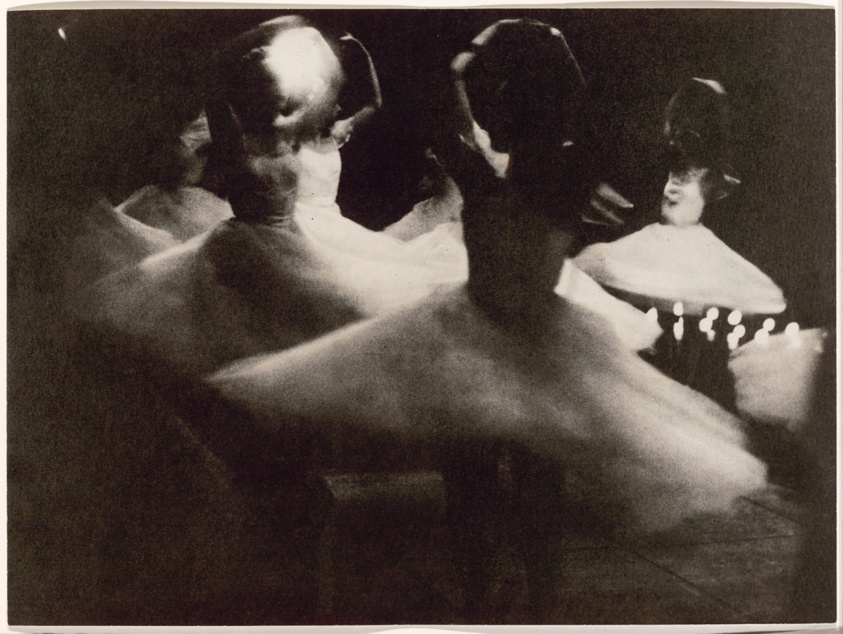
You are sitting at a roulette table with enough money to leave forever, and you stay. Not because you forgot what leaving feels like, but because leaving requires a version of yourself you have never actually inhabited. The money is real. The exit is real. The paralysis is not a failure of will — it is the operating logic of a self that was constructed, piece by piece, to confirm its own destruction.
Alexei Ivanovich is not a weak man who stumbles into gambling. He is a precisely engineered consciousness for whom the casino is the only environment that makes his internal architecture legible to himself. Dostoevsky wrote The Gambler in 1866 in twenty-six days, dictating it under debt pressure to a stenographer he would later marry, and the speed shows not in carelessness but in a kind of feverish clarity — the novel has the unmediated quality of a wound that has not yet been dressed. Alexei works as a tutor in the household of a Russian general abroad, occupying the exact social position that would have been most familiar to Dostoevsky himself: educated, intelligent, dependent, and therefore perennially humiliated in the manner that educated dependent men in the nineteenth century were humiliated, which is to say without acknowledgment, as though the humiliation were simply the atmosphere.
What the casino offers him is not the fantasy of escape from this condition but a theater in which the condition can be dramatically resolved or dramatically confirmed. Georg Simmel, writing about the sociology of adventure in 1911, described the gamble as a structure that compresses contingency into a singular moment, making chance feel like fate — and fate, crucially, is something that happens to a self that exists. Alexei’s problem is prior to gambling: he is not certain he has a self at all outside the coordinate system of other people’s contempt. The roulette wheel does not create his crisis. It simply agrees to adjudicate it every few minutes.
His relationship with Polina is not a love story that gambling corrupts. It is a second circuit of the same logic. Polina holds him in suspension through a mechanism of erotic withholding that functions identically to the casino: the outcome is uncertain, the waiting is humiliating, the occasional concession feels like proof that the suffering was meaningful. When she finally comes to him after his large win, the sequence is exact — he wins, she arrives, and he immediately begins to lose her. The novel does not present this as ironic coincidence. It presents it as structural necessity. A man who has organized his desire around the experience of being refused cannot tolerate the moment of fulfillment because fulfillment would dissolve the architecture that makes him feel real.
The colonial dimension of this psychology is not incidental. Alexei watches German burghers accumulate steadily at the tables and despises them for it, constructing an entire racial and national mythology in which Russian recklessness is spiritual superiority over German parsimony. This is the exact inversion Frantz Fanon would identify a century later in The Wretched of the Earth — the colonized consciousness that transforms its own dispossession into evidence of a secret grandeur the colonizer is too small to perceive. Alexei cannot simply want money. He must want it catastrophically, all at once, as proof that he is constituted differently from those who accumulate it slowly and safely, which is to say he must lose it in a way that feels chosen.
What distinguishes this from ordinary self-sabotage is the absence of self-pity in the novel’s internal accounting. Alexei does not experience his losses as punishment. He experiences them as confirmation — and confirmation, even painful confirmation, is a form of comfort available to a person who has never been certain enough of his own existence to risk having that existence contradict his expectations of it.
When Winning Becomes the Catastrophe
You are winning. The chips pile toward you with a logic that feels, for the first time in your life, like confirmation — not of strategy, not of skill, but of something older and more dangerous: that the universe has been watching you specifically, and has finally decided to agree. Alexei Ivanovich stands at the roulette table in Roulettenburg and wins enormously, and in that single hour Dostoevsky executes what no moralist writing about gambling had dared to attempt before him — he makes the triumph the catastrophe.
The structure of compulsive behavior, as the psychiatrist Mark Griffiths documented across decades of clinical research in the 1990s, depends on a particular ratio of loss to reward. Intermittent reinforcement — the unpredictable schedule of occasional wins nested inside sustained losing — produces attachment more durable than any consistent reward could generate. The gambler’s psychology is not simply built to survive losing; it is architecturally dependent on it. Losing gives the system its reason to continue. What the system cannot process, what it has no internal mechanism to absorb, is conclusive, undeniable success. The win that arrives too large and too real does not satisfy the hunger — it amputates the only justification for its existence.
Alexei does not become free when the money arrives. He becomes groundless. Every story he had told himself about his relationship to the table — that he was controlled, that he would stop at a certain point, that the winning was always on the horizon and would restructure everything — collapses the instant those conditions are met. He has spent the entire novel constructing a self whose coherence depended on proximity to the edge. Edvard Bibring, the psychoanalyst who in 1953 proposed that depression is fundamentally a state of helpless ego confronting its own unattainability, would have recognized in Alexei something adjacent but inverted: a man who built his ego entirely around the drama of not yet arriving, and who shatters precisely because the destination materialized.
What makes Dostoevsky’s rendering so forensically accurate is that Alexei does not pause. There is no scene of relief, no interval of ordinary satisfaction, no moment where the money rests in his hands long enough to feel real. He returns to the table. Immediately. Not because he is stupid, not because he has lost self-control in the crude sense a moralist would diagnose — but because the money was never the point, and on some level he always knew it, and the win has now stripped him of the protective fiction that it was. Rainer Maria Rilke wrote in a 1903 letter to Franz Xaver Kappus that most human fears are not fears of what will harm us but fears of what will force us to change — and Alexei, in winning, has been handed the one thing he could never safely want: the end of the waiting.
There is also something specifically violent in how the novel treats money as a substance with moral weight of its own. The hundred thousand florins Alexei wins are not neutral. They arrive contaminated by the logic that produced them — by desperation, by performance, by the complete subordination of his identity to the table’s verdict. Nineteenth-century capitalism had already begun producing what Georg Simmel, writing in The Philosophy of Money in 1900, called the tragedy of culture: the condition in which the objective products of human striving outgrow and overwhelm the subjective life that generated them. The money Alexei wins is too large for the person who won it. It does not fit inside the life he actually has. And so it passes through him — almost instantaneously, almost gratefully — back into the system that knows what to do with it.
What remains is not poverty. What remains is a man who has now proven, to himself and irrevocably, that the prize was never what the game was about.
The Grandmother's Ruin as Structural Argument
She arrives in Baden-Baden like a force of nature wearing a bonnet, wheeled in on a chair pushed by servants, and within hours the entire social architecture of the novel shudders. Grandmother Antonida Vasilyevna Tarasevicheva was supposed to be dead. The General had been waiting for her death the way men wait for an inheritance — quietly, decently, with manufactured grief already rehearsed. Instead she arrives alive, imperious, and within a single afternoon she is leaning over the roulette table with the focused intensity of someone who has never wasted a moment of her seventy-five years on hesitation.
What makes her entrance philosophically devastating is precisely what it dismantles. Every theory of gambling addiction that preceded Dostoevsky — and most that followed him — anchored the compulsion in specific social conditions: youth, masculine restlessness, financial desperation, moral weakness bred by idleness. The Enlightenment moralists who wrote about games of chance, figures like Bernard Mandeville cataloguing human vices in the early eighteenth century, assumed that the susceptibility to ruin was a product of character flaws that education and station could, in principle, correct. Dostoevsky places an elderly Russian aristocrat at the wheel and watches the entire corrective architecture collapse.
The Grandmother does not gamble from desperation. She has money — substantial money, the very money the General’s household has been circling like vultures. She does not gamble from boredom, or from the restless masculine ego that drives Alexei. She gambles because the table presents her, for perhaps the first time in a life structured entirely around social obligation, with a direct and unmediated relationship to outcome. There is no intermediary, no hierarchy, no performance of femininity or rank required. The wheel turns and the result is absolute. For a woman who has spent decades navigating the elaborate protocols of Russian noble society — a social architecture that Ivan Goncharov was simultaneously excavating in his novels of the same period — the roulette table is not a corruption of order but a violent and honest alternative to it.
She wins at first, as nearly everyone does, and Dostoevsky understands that the initial win is not luck but mechanism. The psychologist Daniel Kahneman, writing in Thinking, Fast and Slow in 2011, would formalize what Dostoevsky had already dramatized in 1866: that the mind overweights the vivid, recent, and emotionally charged event, and that a first win at a table creates a narrative of personal agency so cognitively seductive it becomes almost impossible to dislodge. The Grandmother wins and immediately concludes that she has understood something. This is the trap’s true hinge — not greed, but the intoxication of apparent comprehension. She believes she has cracked a pattern. She has instead cracked open.
What follows is not a moral decline but a structural demonstration. Dostoevsky strips away her money in stages, methodically, almost clinically, as if he is conducting an experiment whose hypothesis he already knows is correct. The servants watch. Alexei watches. The General watches his inheritance evaporate in real time. And the Grandmother keeps playing, not because she cannot stop, but because stopping would mean acknowledging that the comprehension was false, that the sense of mastery was an illusion manufactured by the table itself. To leave is to confess. So she stays, and the confession she refuses to make in words is made instead by her diminishing pile of coins.
By the time she finally departs Baden-Baden — poorer, reduced, her authority over the General restored in humiliation rather than death — she has functioned less as a character than as Dostoevsky’s embedded proof. The compulsion she exhibited required no youth, no masculine ego, no particular social vulnerability. It required only a human mind encountering a system that mimics meaning while producing only randomness, and finding that mimicry more bearable than the alternative.
A vision curated by a filmmaker, not an algorithm
In this video I explain our vision
Chance, Freedom, and the Theology of the Arbitrary

You are standing at the edge of a table, chip in hand, and for one suspended second the world has not yet decided what it will do. No one can take that moment from you. Not your employer, not your family, not the slow administrative grind of a life arranged by other people’s decisions. The chip leaves your fingers and the future splits open — and whatever comes next, you caused it. Or rather, nothing caused it. That is the whole point.
William James, writing in 1884 in his essay “The Dilemma of Determinism,” made an argument that most readers filed under philosophy and forgot to apply to their own hands. He insisted that a world of pure determinism — every event chained to prior causes stretching back to before you were born — is not just intellectually unsatisfying but morally uninhabitable. Without genuine chance, without what he called “the ambiguous future,” regret becomes incoherent and agency becomes theater. James needed the universe to contain real forks in the road, not merely the illusion of them. The gambling table is perhaps the only place in ordinary life where that fork is architecturally guaranteed. The roulette wheel does not know your name, your history, your intentions. It owes you nothing and remembers nothing. For a mind suffocating under the weight of causality — of being the product of a particular childhood, a particular failure, a particular diminishment — this is not a vice. It is oxygen.
Nietzsche’s assault on causality cuts from the other direction. In “Beyond Good and Evil” and scattered through the notebooks collected posthumously, he argued that causality is not something we discover in the world but something we project onto it — a grammatical habit, a subject demanding its verb. We say “the lightning flashes” as though lightning and flashing were separable things, as though there were an agent behind the act. The gambler, by this reading, is not deluded but is performing a kind of crude epistemological honesty: refusing the fiction that outcomes are explained, that consequences are deserved, that the universe distributes its results according to any legible logic of merit. The house has no theology. The number has no memory. To bet is to act in a world stripped of the comforting lie that cause and effect are just.
What makes Dostoevsky’s Alexei so precisely observed is that his gambling is never really about money, even when he talks about nothing else. It is about authorship. He is a man who has been made into an object — by his employer General Zagoryanski, by his love for Polina who uses him, by the social architecture of Russian émigrés performing European respectability in German spa towns. Every wager is a small declaration that he can still initiate something, that the next event in his life can originate from his own gesture rather than from the slow pressure of other people’s arrangements. The bet is the one act in his life that feels genuinely uncaused by anyone but himself — which is, of course, a feeling, not a fact, and feelings of this particular texture tend to be the most adhesive.
Secular modernity produced this problem at scale. Once divine providence was no longer a convincing architecture for why things happen to specific people, the question of agency became vertiginous. You cannot appeal to God’s plan when the card falls wrong. But you also cannot live indefinitely in a universe that feels entirely authored by forces indifferent to your interiority. The casino, which industrialized in Monte Carlo in 1863 and became a cathedral of the arbitrary, offered something churches were increasingly unable to provide: a ritual in which your choice visibly, immediately, irrevocably mattered — even if only to prove that mattering and winning have nothing to do with each other, and that the hunger for the first can be so absolute it swallows any concern for the second.
The Casino as Social Laboratory of Modernity
You walk into a room where nothing is produced, nothing is built, nothing is grown, and yet fortunes change hands with the quiet efficiency of a well-run exchange. The green baize tables, the spinning wheel, the stacked chips — none of it resembles labor, and that is precisely the point. The casino does not disguise its nature. It advertises it.
Baden-Baden in the 1860s was not a den of vice hidden from respectable society. It was respectable society. At its peak, the Kurhaus casino drew the crowned heads of Europe, Russian aristocrats flush with serf-emancipated anxiety, and Prussian industrialists who had made their money in iron and now wanted to lose it in style. The numbers were staggering: by 1864, the year before Dostoevsky wrote his novella from the city’s margins, Baden-Baden welcomed over 70,000 visitors annually — a figure that dwarfed its permanent population of fewer than 10,000. The infrastructure of pleasure was more developed than the infrastructure of governance. This was not incidental. It was the organizing principle of a town that had understood, before the economists caught up, that speculation and leisure were the same animal wearing different clothes.
Thorstein Veblen named the mechanism in 1899 with the clinical precision of someone who had watched a society worship itself. In The Theory of the Leisure Class, he introduced the concept of conspicuous consumption — the idea that wealth in modern industrial society is not displayed through productivity but through its theatrical waste. The gentleman does not work; the gentleman spends. And the highest form of spending is the form that produces nothing, returns nothing, and requires the most elaborate ritual to execute. The roulette wheel, in Veblen’s framework, is not an aberration from the economic order. It is that order stripped of its pretense, running on pure display, pure risk, pure status anxiety dressed as entertainment.
What this means for Alexei is something the novel’s moralistic readers consistently refuse to absorb: he is not a man who has fallen outside the system. He is a man who has taken the system at its word. The speculative logic underpinning nineteenth-century capitalism — buy cheap, sell dear, risk capital for exponential return, repeat — is indistinguishable in its emotional structure from what happens at a roulette table. The difference between a railroad bond and a red-or-black bet is not one of principle. It is one of paperwork and social legitimacy. Alexei has simply removed the paperwork.
The sociology of this distinction matters enormously. When a financier loses his investors’ capital on a bad position in 1865, he is unfortunate. When Alexei loses his at the wheel, he is degenerate. The same economic behavior receives opposite moral verdicts depending on the costume in which it appears — which tells you that the moral judgment is never really about the behavior at all. It is about maintaining the fiction that one form of speculation is rational and another is pathological, that one class of risk-taker deserves a seat at the table of civilization while another deserves a diagnosis.
The casino also does something more insidious than simply mirror capitalism’s logic. It accelerates it into a timeframe the body can feel. The normal rhythms of market speculation operate across quarters, fiscal years, decades of compound interest — slow enough that the gambler can believe he is an investor. At the roulette wheel, compression is total. A man can lose an inheritance in forty minutes. The wheel makes visible what the ledger book obscures: that the outcome was always largely arbitrary, that the sophisticated vocabulary of risk management is a sedative administered to keep the participant from recognizing what kind of room he is actually in.
Alexei recognized the room. That was his crime. Not that he played — but that he could not pretend the game was something else.
The Identity That Requires the Loss
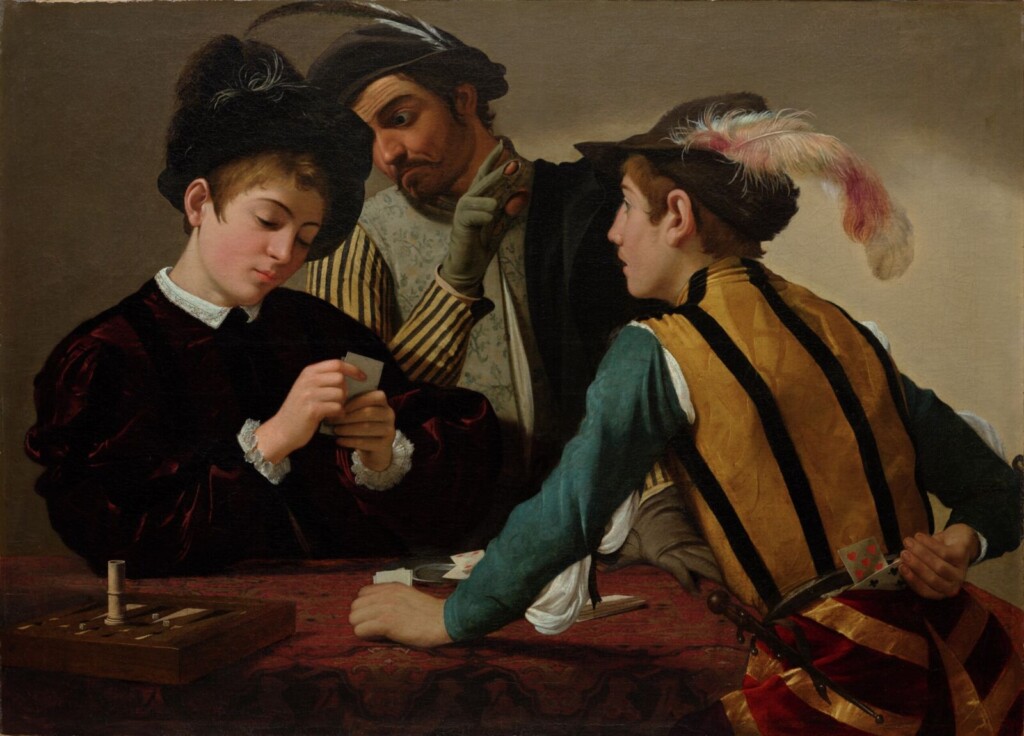
You are sitting across from someone who has just lost everything — not for the first time, but for the fourth — and what strikes you is not the devastation on their face but the strange, almost imperceptible relief. The shoulders drop. The jaw unclenches. Something in the posture says: here we are again, exactly where I belong.
This is the detail that every moralistic account of gambling addiction gets catastrophically wrong. The framework of compulsion, of pathology, of dopaminergic hijacking — all of it accurate as far as it goes, and all of it stopping precisely at the point where the real question begins. Natasha Schüll’s fieldwork in Las Vegas, published in 2012 as Addiction by Design, documented how machine gamblers describe their ideal state not as winning but as staying “in the zone” — a condition of suspended selfhood where the outcome becomes almost irrelevant. What they were engineering, session after session, was not profit but the annihilation of the interval between desire and result, the obliteration of ordinary time. The machine gave them a self that was entirely organized around a single, repeating axis, and that self, however brutal its demands, was at least legible.
Alexei Ivanovich, the narrator-gambler at the center of Dostoevsky’s 1866 novel, is not a man destroyed by roulette. He is a man who discovered in roulette the only grammar through which he could be a coherent subject. Before the wheel, he is a tutor, a dependent, a man of subordinate status in a household that regards him as furniture. At the table, he becomes the protagonist of a story with genuine stakes, where his next move carries consequence, where he is not peripheral but central to whatever happens next. The game does not give him an escape from his life — it gives him the only version of his life in which he is the one who acts rather than the one who is acted upon.
Erik Erikson, writing in Identity: Youth and Crisis in 1968, argued that the self is not a fixed entity but a narrative achievement — something that must be continually authored through choices that feel as though they matter. When the available social structures deny a person access to meaningful agency, they will construct that agency wherever the materials allow. What the gambler constructs is not irrational: it is the most available architecture of consequence in a life that has been stripped of other legitimate arenas for self-authorship. The bet is not a symptom of disorder. It is the load-bearing wall of the only house he knows how to live in.
This is what makes cessation feel not like recovery but like erasure. To stop gambling is not to return to some prior, healthier self — it is to dissolve the only self that has been coherently maintained. The ordinary days that await on the other side are not relief; they are a kind of white noise, an undifferentiated flatness in which nothing pivots, nothing turns, nothing declares itself as the moment on which everything else depends. Dostoevsky understood this with the precision of someone writing from the inside: he composed The Gambler while himself drowning in debt to roulette tables across Europe, dictating it in twenty-six days to meet a deadline that would otherwise cost him the rights to his entire future work. The novel is not a cautionary portrait observed from a safe distance. It is the sound of a man describing the walls of a room he cannot leave because leaving would require him to become someone he has no instructions for being.
The gambler who cannot stop is not weak, not stupid, not simply addicted in the pharmacological sense. He is loyal — ferociously, devastatingly loyal — to the only story in which he has ever been the person at the center of the sentence, the one whose next move the whole structure waits to see.
🎰 The Abyss of Obsession: Passion, Ruin, and the Human Soul
Dostoevsky’s The Gambler plunges into the darkest corridors of human desire, where compulsion erases reason and self-destruction becomes a form of ecstatic freedom. These related articles illuminate the psychological, literary, and philosophical dimensions of obsession, addiction, and the irresistible pull of the abyss.
The Obsession with Success in Contemporary Culture
The obsession with success in contemporary culture mirrors the gambler’s feverish logic: the pursuit of an elusive prize that always recedes on the horizon. Dostoevsky understood that compulsion is never truly about winning—it is about the intoxicating feeling of being in play. This article explores how modern society has internalized that same restless hunger for more.
GO TO THE SELECTION: The Obsession with Success in Contemporary Culture
The Double in Literature: From Dostoevsky to Stevenson
The figure of the double haunts Dostoevsky’s entire literary universe, from the split psyche of the underground man to the compulsive gambler who becomes a stranger to himself. Literature has long used the doppelgänger to map the terrifying distance between who we are and who our desires transform us into. This article traces that uncanny tradition from Dostoevsky to Stevenson and beyond.
GO TO THE SELECTION: The Double in Literature: From Dostoevsky to Stevenson
Greed in Eastern Philosophy: Buddhism and Desire
Buddhism identifies desire as the root of all suffering, a teaching that resonates powerfully with the portrait of addiction Dostoevsky paints in The Gambler. The compulsive gambler does not seek pleasure but annihilation of the self in the pure flame of craving. This article explores how Eastern philosophy diagnoses the mechanism of greed and the path toward liberation from it.
GO TO THE SELECTION: Greed in Eastern Philosophy: Buddhism and Desire
Franz Kafka and Urban Alienation
Kafka’s urban alienation and Dostoevsky’s gambling fever share a common existential architecture: the individual trapped in a system that devours identity and offers no exit. Both writers portray a modern self imprisoned by forces it cannot name, spiraling deeper into repetition and helplessness. This article examines how Kafka’s labyrinthine city becomes a metaphor for the psychological cage of compulsion.
GO TO THE SELECTION: Franz Kafka and Urban Alienation
Discover the Cinema That Dares to Look Into the Abyss
If these themes of obsession, desire, and self-destruction stir something in you, Indiecinema is the streaming platform where independent and auteur cinema explores the human soul without compromise. Discover films that Dostoevsky himself might have recognized—raw, unsparing, and profoundly alive.
👉 EXPLORE THE CATALOG: Watch Indie Films in Streaming
A vision curated by a filmmaker, not an algorithm
In this video I explain our vision

