
The phrase “based on a true story” is a fundamental narrative device, reconfiguring the viewer’s relationship with drama. It transforms viewing into an active confrontation with the tangible horrors or triumphs of human history, forcing us to recognize that the events on screen really happened. The collective imagination is marked by grand reconstructions, monumental works that have transformed chronicle into epic.

But cinema, in its essence, is not a window onto reality; it is a frame. The most powerful films are those that do not hide this artifice, but use it to reveal a deeper truth—what Werner Herzog would call “ecstatic truth.” These directors are not content to reproduce facts; they dismantle them, interrogate them, filtering them through an artistic sensibility that turns chronicle into art.
This is not a ranking, but a curated journey through fundamental works that demonstrate how cinema tackles the material of reality. It is a path that unites the most celebrated masterpieces with the undergrounf films. These are films that do not provide easy answers, but ask powerful questions, make us feel the weight of that reality, and force us to question its representation.
American Animals

Four young men, bored with their ordinary lives in Kentucky, decide to shake things up by planning a daring heist: stealing some of America’s rarest and most valuable books from the Transylvania University library. What begins as a desire for adventure quickly turns into a clumsy and desperate undertaking, with consequences none of them could have foreseen.
Bart Layton’s film is a brilliant and subversive deconstruction of the heist movie genre and a sharp reflection on the unreliable nature of memory. Instead of simply dramatizing the real 2004 robbery, Layton blends the narrative with documentary-style interviews with the real protagonists, who comment on, contradict, and sometimes question the version of events we are watching. This formal choice transforms the film into an investigation of storytelling itself. We are not just witnessing a true story, but the painful and confusing construction of that story, where truth is a mosaic of subjective memories and self-justifications. American Animals thus becomes a powerful portrait of a masculinity in crisis, of a generation raised on the idea that life should be a movie and tragically unprepared when reality proves to be far more chaotic and unscripted.
Return to Planet Underground
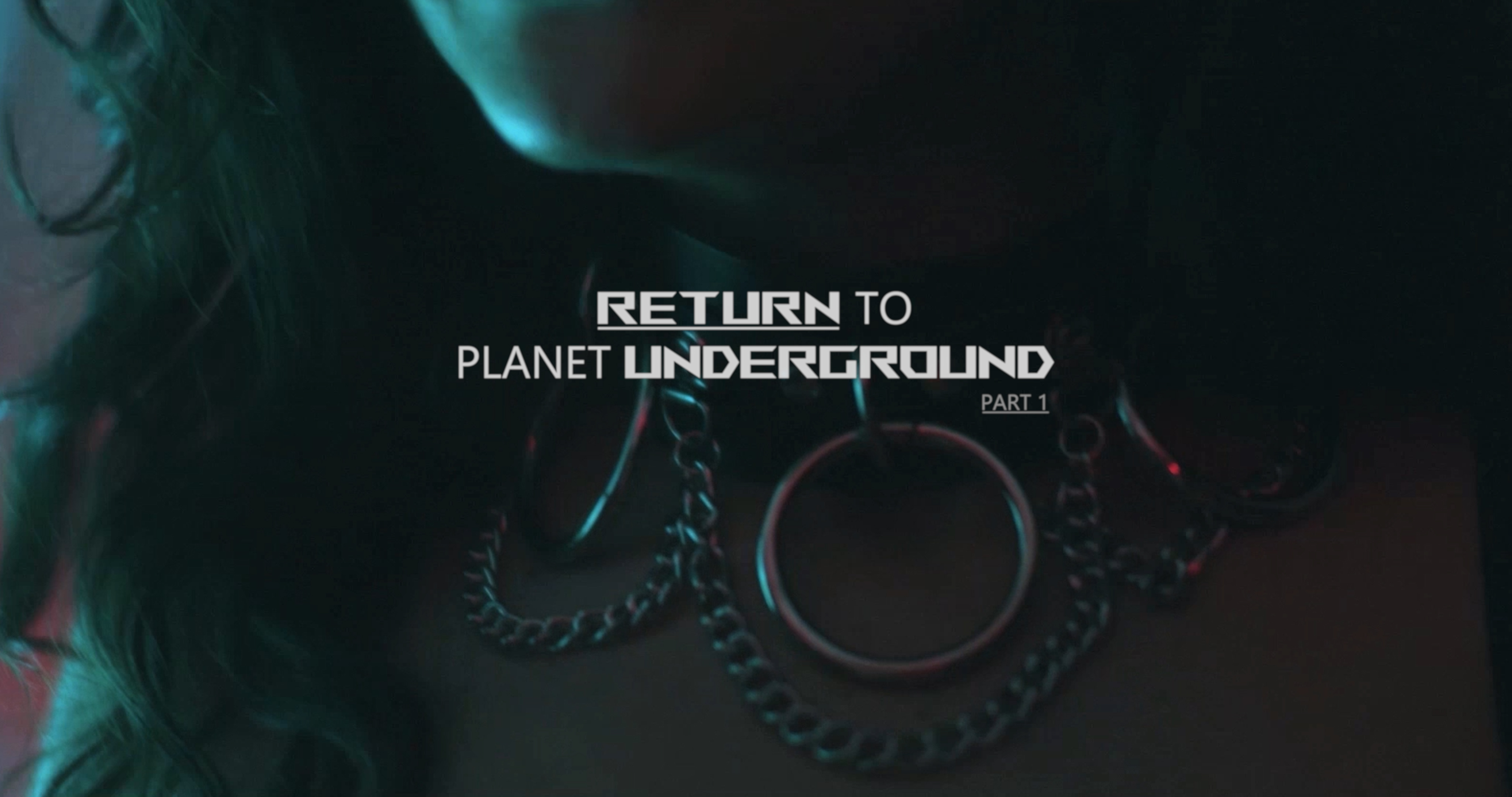
Drama, Thriller, by Gideon Homes, Netherlands, 2025.
A former underground techno DJ working in a large and famous law firm delves into the dark side of society. With one eye on the past and one on the future, he stirs up the ashes of the true underground. The demand of society to function superficially and deliver top performance increasingly clashes with the protagonist's questioning of his own life reality and the values of his past. After being employed for almost six years and being a respected employee, Tyrel falls ill. On top of that, he witnesses a fraud within the company and asks to leave. But the illness creates a complex situation in which his employer starts playing a game of chess with Tyrel.
In "Return To Planet Underground", director Gideon Homes gives the audience a gripping insight into the Dutch underground techno scene, offering a gripping drama set in a dark world, full of intense moments and touching human tragedies. This film is not just a visual feast; it is a gripping exploration that immerses viewers in the lives of its protagonists. Set to a backdrop of thumping techno beats, "Return To Planet Underground" takes audiences on a rollercoaster ride through the highs and lows of human desires, drug-fueled escapades, societal pressures and the pursuit of perfectionism. Drawing inspiration from iconic films such as Trainspotting, Berlin Calling and Human Traffic, Gideon Homes' work stands out for its unique stylistic devices and unconventional storylines. Based on real events and personal experiences, "Return To Planet Underground" faced numerous lawsuits before finally conquering audiences around the world. Prepare yourself for an immersive dive into a world where music, morality and the human spirit collide.
LANGUAGE: English, Dutch
SUBTITLES: Spanish, French, German, Portuguese
Waltz with Bashir

Director Ari Folman meets an old army friend who tells him about a recurring nightmare related to their experience in the 1982 Lebanon War. Folman realizes he has no memory of that period. Thus begins a journey to reconstruct his own past, interviewing other soldiers and friends, in an attempt to recover the lost memories of the Sabra and Shatila massacre.
Waltz with Bashir is a revolutionary work that demonstrates how animation can be the most powerful tool for exploring the inner landscapes of trauma and memory. Folman’s choice is not a stylistic whim, but an expressive necessity. Animation allows for the visualization of the invisible: the dreams, nightmares, fragmented memories, and hallucinations that constitute the post-traumatic experience. The film is a psychological investigation that lays bare the mechanism of dissociation, the way the mind protects itself from unspeakable horrors by erasing them. The climax, in which the animation gives way to real, heartbreaking archive footage of the massacre, is one of the most devastating moments in cinema history. It is a gut punch that nullifies all aesthetic distance, forcing the viewer to confront a reality that no art form can truly contain.

I, Tonya

The film traces the turbulent life of figure skater Tonya Harding, from her childhood marked by the abuse of her mother LaVona, to her rise as one of America’s most talented but controversial athletes. The narrative culminates in the infamous 1994 “incident,” when her rival Nancy Kerrigan was attacked, an event that turned a sports competition into a global media scandal.
Craig Gillespie directs a fierce and brazen biopic that uses a fragmented narrative style, with mockumentary interviews and constant fourth-wall breaks, to reflect the chaotic and contradictory nature of the story itself. I, Tonya does not seek to establish an objective truth, but explores how narratives are constructed, manipulated, and sold by the media and the protagonists themselves. It is a film about social class, prejudice, and the brutality with which public opinion can create and destroy an icon. Margot Robbie‘s performance is extraordinary, but it is the film’s structure that is truly radical: it presents us with a symphony of unreliable voices, leaving us to navigate a sea of half-truths and blatant lies. In this, the film is less a portrait of Tonya Harding and more a merciless X-ray of celebrity culture and tabloid journalism.
American Splendor

The life and thoughts of Harvey Pekar, a file clerk at a Cleveland hospital who becomes an unlikely icon of the underground comics scene. Pekar transforms the frustrations and small observations of his daily life into a series of autobiographical comics, “American Splendor,” finding the sublime in the banal and the heroic in the ordinary.
This film, directed by Shari Springer Berman and Robert Pulcini, is a miracle of biographical invention. Instead of following a linear narrative, it masterfully mixes fiction (with a superb Paul Giamatti as Pekar), documentary (with the real Harvey Pekar commenting on his own story), and animation (which brings his comics to life). This hybrid structure is not a simple trick, but a profoundly honest way of capturing the essence of Pekar’s work: the constant interaction between lived life and its artistic representation. American Splendor explores the curious paradox of a man who becomes famous by recounting his own normality, questioning the boundaries between the individual and the character he himself has created. It is a moving and intelligent tribute to art as a tool for making sense of the chaos of life, a celebration of the ultimate anti-hero.
Mishima: A Life in Four Chapters
![Mishima: A Life in Four Chapters (1985) ORIGINAL TRAILER [HD 1080p]](https://blog.indiecinema.co/wp-content/plugins/wp-youtube-lyte/lyteCache.php?origThumbUrl=https%3A%2F%2Fi.ytimg.com%2Fvi%2FLzaXtBr5210%2F0.jpg)
The film explores the life and work of the controversial Japanese writer Yukio Mishima, focusing on his last day, November 25, 1970, when he attempted a coup d’état before committing ritual suicide (seppuku). The narrative intertwines this event with flashbacks of his life and stylized representations of three of his novels.
Paul Schrader‘s work is one of the most audacious and conceptually rigorous biopics ever made. Instead of a conventional biography, Schrader creates a visual and thematic collage that mirrors Mishima’s own philosophy: the total fusion of art, life, and action. The film’s structure is divided into four chapters, which alternate between three distinct styles: the almost documentary-like realism of the last day (in color), the black-and-white flashbacks of his upbringing, and the magnificent, theatrical, and hyper-stylized stagings of his novels. This formal choice is not random; it is a cinematic thesis on Mishima’s search for an impossible harmony between beauty, body, and ideology. Supported by the hypnotic and pulsating score by Philip Glass, Mishima does not just tell a life story, but attempts to penetrate the complex and obsessive aesthetic of an artist for whom death was the ultimate creative act.
A vision curated by a filmmaker, not an algorithm
In this video I explain our vision
Hunger

Set in the Maze Prison in Northern Ireland in 1981, the film documents the last months of the life of Bobby Sands, an IRA member who led the hunger strike to protest the British government’s revocation of political prisoner status. The narrative focuses on the “blanket protest” and the “dirty protest,” before culminating in Sands’ fatal fast.
Steve McQueen’s directorial debut is a work of disconcerting formal rigor and visceral power. Hunger is not a political film in the traditional sense; it is an almost abstract exploration of the body as the last bastion of resistance. McQueen avoids all rhetoric and focuses on the physicality of the protest with an almost sculptural gaze. Through long takes, minimal dialogue, and an obsessive attention to sensory details (the filth, the pain, the physical decay), the film forces the viewer into an immersive and almost unbearable experience. The heart of the film is an extraordinary 22-minute scene, shot in a single fixed take, in which Sands (an incredible Michael Fassbender) discusses the morality of the strike with a priest. It is a moment of the highest philosophical density that precedes the final descent into the silence and sacrifice of the body, establishing McQueen as one of the most important contemporary filmmakers.
The Diving Bell and the Butterfly

Jean-Dominique Bauby, the charismatic editor of the French magazine Elle, suffers a devastating stroke that leaves him completely paralyzed, afflicted with “locked-in syndrome.” The only part of his body he can move is his left eyelid. Through this single means of communication, he will dictate an entire memoir, letter by letter.
Julian Schnabel, a painter before he was a director, achieves a miracle of subjective cinema. The Diving Bell and the Butterfly does not just tell Bauby’s story, but transports us directly inside his consciousness. Through blurry photography, first-person narration, and an editing style that alternates between the claustrophobic hospital reality and soaring flights of imagination and memory, the film manages to translate into images the experience of being a vibrant mind trapped in a motionless body. It is a work of poignant beauty, a hymn to the resilience of the human spirit and the power of memory and fantasy as the only true forms of freedom. The film shows that even when the body is a “diving bell,” the mind can soar as lightly as a “butterfly.
My Left Foot

The story of Christy Brown, an Irish man born with severe cerebral palsy that leaves him almost completely paralyzed. Given up for lost by many, Christy, with the help of his tenacious mother and his working-class family, learns to write and paint using the only part of his body he can control: his left foot.
Directed by Jim Sheridan, My Left Foot is a film that transcends the clichés of the inspirational drama thanks to its brutal honesty and the legendary performance of Daniel Day-Lewis. The film does not sanctify its protagonist; on the contrary, it shows us Christy Brown in all his complex humanity: an irascible, stubborn, at times cruel man, but endowed with a prodigious intelligence and willpower. Day-Lewis’s performance is more than a technical feat; it is the physical embodiment of the struggle for expression, the film’s central metaphor. My Left Foot is a raw and moving portrait of creativity as an act of pure defiance against an adverse fate, and a powerful tribute to the resilience of a working-class family.
The Elephant Man

In Victorian London, surgeon Frederick Treves discovers John Merrick, a severely deformed man exhibited as a freak show attraction. Treves brings him to the London Hospital, initially for scientific study, but soon discovers that behind the monstrous appearance lies a gentle, intelligent, and sensitive soul.
David Lynch‘s second feature film, shot in breathtaking expressionistic black and white, is much more than a biopic. It is a dark and heartbreaking fable about the nature of beauty, cruelty, and human dignity. Lynch uses the true story of Joseph Merrick to orchestrate a powerful meditation on the duality of society: on one hand, the brutality of the “freak show,” on the other, the voyeuristic hypocrisy of high society, which treats Merrick as an object of charitable curiosity. The film is an investigation of surface and depth, of outer horror and inner beauty. Merrick’s famous, desperate cry, “I am not an animal! I am a human being!”, resonates as the beating heart of a work that challenges the viewer to look beyond appearances and recognize humanity in the most unexpected places.
Christiane F.

West Berlin, late 1970s. Thirteen-year-old Christiane, bored with her life in a gray suburb, seeks refuge in the city’s vibrant music scene. Soon, however, her search for escape leads her down a tunnel of heroin addiction and prostitution, with the Berlin Zoo station as the epicenter of her descent into hell.
Based on the investigative book Wir Kinder vom Bahnhof Zoo, Uli Edel‘s film is a punch to the gut, a document of social realism of almost unbearable rawness. Far from any moralism or sensationalism, the film adopts an almost documentary-like style to immerse us in the squalid and desperate daily life of young drug addicts. The Berlin portrayed is a cold and indifferent city, magnificently captured by the cinematography and made iconic by the soundtrack of David Bowie, who also appears in a cameo. Christiane F. is a film that offers neither redemption nor easy explanations, but shows with ruthless clarity the body as a battlefield, a place of ephemeral pleasure and inexorable decay. Its cult status derives precisely from this shocking authenticity, which at the time represented a radical break with the sanitized depictions of adolescence.
Gomorrah

Through five intertwined stories, the film offers a glimpse into daily life under the rule of the Camorra in the provinces of Naples and Caserta. From power struggles between rival clans to the management of toxic waste, from the recruitment of young teenagers to the work of a high-fashion tailor, the narrative shows how the criminal system pervades every aspect of society.
Matteo Garrone, based on the investigative book by Roberto Saviano, demolishes the romantic imagery of mafia cinema. Gomorrah has no charismatic protagonists or epic plot; it is a choral work, shot with an almost ethnographic style, that exposes the Camorra not as an organization, but as an ecosystem. The use of non-professional actors, some with real ties to crime, and authentic locations gives the film an atmosphere of oppressive authenticity. Garrone does not judge, he observes. The result is a ruthless analysis of power, money, and violence as the engines of a savage capitalism. It is not a gangster film; it is a film about the economy, politics, and geography of a territory devoured by an invisible but omnipresent cancer.
Memories of Murder

In a small province of South Korea in 1986, two crude and brutal local detectives find themselves investigating a series of heinous murders of young women. They are joined by a more methodical detective from Seoul, but the investigation clashes with the incompetence, corruption, and lack of resources of an unprepared police force, against the backdrop of a military dictatorship.
Bong Joon Ho‘s masterpiece is much more than a procedural thriller. It is a sharp and devastating social critique that uses the “true crime” framework to expose the wounds of an entire nation. Bong orchestrates an incredible mix of tones, effortlessly shifting from black comedy to heartbreaking drama, from suspense to political satire. The real culprit in the film is not just the serial killer (who had not yet been identified at the time of the film’s release), but the system itself: a repressive and patriarchal society, represented by a police force that prefers to extract confessions through torture rather than follow the evidence. The famous final gaze into the camera by Detective Park is a moment of pure cinema, a breaking of the fourth wall that seeks no answers but leaves us suspended in an abyss of uncertainty, an indelible image of the failure and unresolved trauma of a country.
Badlands

South Dakota, 1950s. Fifteen-year-old Holly is seduced by twenty-five-year-old Kit, a rebellious misfit who looks like James Dean. After Kit kills Holly’s father, who opposed their relationship, the two begin a flight across the desolate “badlands” of Montana, leaving a trail of casual and senseless violence in their wake.
Terrence Malick‘s stunning debut is a lyrical and disturbing work that subverts the myth of the lovers on the run. Inspired by the true story of Charles Starkweather and Caril Ann Fugate, the film is characterized by a dreamy and detached tone that contrasts chillingly with the brutality of the events. The narration is provided by Holly’s voice-over, who describes the murders with the same naivety and banality with which she would comment on a teen magazine. Malick is not interested in the psychology of his characters, but portrays them as almost mythical figures, lost in a spiritual and moral void. Badlands is a visual poem about the loss of innocence and the disconnection from a world that has lost its bearings, a seminal masterpiece of the New Hollywood.
My Friend Dahmer
![My Friend Dahmer Official Trailer #1 (2017) -- Regal Cinemas [HD]](https://blog.indiecinema.co/wp-content/plugins/wp-youtube-lyte/lyteCache.php?origThumbUrl=https%3A%2F%2Fi.ytimg.com%2Fvi%2FxsZHcOmGgAI%2F0.jpg)
Ohio, late 1970s. Jeffrey Dahmer is a clumsy and lonely teenager, tormented by a dysfunctional family and dark, unspeakable impulses. The film, told from the perspective of his friend and future cartoonist Derf Backderf, follows Dahmer’s last year of high school, showing the slow and disturbing formation of one of America’s most notorious serial killers.
Unlike countless films and series that focus on the more macabre aspects of his crimes, My Friend Dahmer chooses a more subtle and therefore even more terrifying approach. Marc Meyers’ film is a chilling portrait of the normality that surrounds the origin of evil. It does not seek to explain or justify, but observes with a cold and almost empathetic gaze the loneliness, alienation, and nascent pathology of a boy who is about to cross a point of no return. Shot in the real locations of Dahmer’s adolescence, including his childhood home, the film is pervaded by a sense of inevitability and sadness. It is a work that forces us to confront an uncomfortable truth: monsters are not born from nothing, but grow in silence, often under everyone’s noses.
The Magdalene Sisters

Ireland, 1964. Four young women are locked up against their will in the “Magdalene laundries,” institutions run by Catholic nuns intended to “redeem” girls considered “sinners.” Their offenses range from being rape victims to being too beautiful or simply unwed mothers. Inside, they suffer physical and psychological abuse in a regime of forced labor.
Peter Mullan‘s film is a powerful and necessary indictment of a dark and long-silenced chapter of Irish history. With a direct and unadorned style, Mullan exposes the hypocrisy and cruelty of a theocratic system that punished women for their very existence. The film is a choral tale of suffering, but also of resilience and friendship. The performances of the young actresses are of heartbreaking intensity. The Magdalene Sisters is not an easy film to watch; it is a tough work that provokes anger and indignation, but it plays a fundamental role in giving a voice to the thousands of women whose dignity was trampled in the name of a perverse morality.
Fruitvale Station
![Fruitvale Station Official Movie Trailer HD]](https://blog.indiecinema.co/wp-content/plugins/wp-youtube-lyte/lyteCache.php?origThumbUrl=https%3A%2F%2Fi.ytimg.com%2Fvi%2Ff9k16TPV5jw%2F0.jpg)
The film reconstructs the last 24 hours in the life of Oscar Grant, a 22-year-old from the Bay Area, on December 31, 2008. The narrative follows Oscar in his attempts to be a better son, partner, and father, before an altercation on a subway train culminates in his tragic and senseless murder at the hands of a police officer.
Ryan Coogler‘s debut feature is a film of devastating power and urgency. Instead of focusing on the trial or the investigation, Coogler makes a choice that is as simple as it is radical: to restore humanity to a victim that the media had reduced to a statistic. Through small gestures and daily interactions, the film builds an intimate and multifaceted portrait of Oscar Grant, played with extraordinary sensitivity by Michael B. Jordan. This choice makes the inevitable ending even more unbearable. Fruitvale Station is a prime example of how independent cinema can address issues of social justice with an emotional impact that no news report or documentary could ever match. It is a film that does not shout its anger, but lets it grow silently in the viewer, leaving an indelible mark.
The Class (Entre les murs)
![The Class (Entre les murs) (Trailer) [Oscar's Best Foreign Movie]](https://blog.indiecinema.co/wp-content/plugins/wp-youtube-lyte/lyteCache.php?origThumbUrl=https%3A%2F%2Fi.ytimg.com%2Fvi%2FnUMcSb9UHhA%2F0.jpg)
A school year in a middle school class in a multi-ethnic neighborhood of Paris. Professor François Marin and his teenage students confront, clash, and dialogue, creating a microcosm that reflects the tensions, hopes, and contradictions of contemporary French society.
Winner of the Palme d’Or at Cannes, Laurent Cantet‘s film is an experiment in realism almost without precedent. Based on the autobiographical book by the teacher and protagonist François Bégaudeau, the film was shot with real students who improvise their reactions and dialogues within a predefined narrative structure. The result is a work of astonishing authenticity, capturing the chaotic, frustrating, and at times exhilarating dynamic of a classroom. Entre les murs is not a thesis film; it offers no solutions or heroes. It is a patient and complex observation of language as a tool of power, inclusion, and exclusion, and of the school as a laboratory where the very concept of citizenship is forged, with difficulty.
No

Chile, 1988. Under international pressure, dictator Augusto Pinochet is forced to call a plebiscite on his future in power. The opposition leaders hire a young and brilliant advertiser, René Saavedra, to lead the “No” campaign. René, against the advice of his own clients, decides to apply the techniques of consumer marketing to sell an idea of the future and happiness, instead of focusing on the horrors of the past.
Pablo Larraín’s film is a sharp and ironic reflection on the power of images and politics in the age of mass media. Shot with U-matic cameras of the era to perfectly blend fictional material with archive footage, No has a unique aesthetic that gives the story an incredible sense of authenticity. Gael García Bernal is perfect in the role of the apolitical advertiser who finds himself shaping the destiny of a nation. The film explores the paradox of how the same techniques used to sell soft drinks can be employed to overthrow a dictatorship, raising complex questions about the relationship between democracy, consumerism, and spectacle.
The Rider

Brady, a young cowboy and rising rodeo star, suffers a serious head injury that ends his career. Back home on the Pine Ridge reservation in South Dakota, he must confront a new reality and search for a new purpose in life, fighting against the feeling of having lost his own identity.
Chloé Zhao’s film is a work of rare beauty and sensitivity, a perfect example of docu-fiction. The protagonist, Brady Jandreau, and much of the cast play fictionalized versions of themselves, bringing their real experiences, their wounds, and their world to the screen. This fusion of reality and fiction creates an extraordinary intimacy and authenticity. Zhao captures the breathtaking landscapes of the American West with a lyrical gaze, but her real interest is Brady’s inner landscape. The Rider is a poignant meditation on masculinity, identity, and the difficult search for a new beginning when a lifelong dream is shattered. It is a visual poem that honors the dignity of its characters without ever falling into sentimentality.
Control

The story of Ian Curtis, the enigmatic and tormented frontman of the post-punk band Joy Division. The film follows his life in Macclesfield, his early marriage, the formation of the band, his struggle with epilepsy, and an extramarital affair, up to his suicide on the eve of the band’s first American tour, at the age of 23.
The directorial debut of the famous photographer Anton Corbijn is a biopic of austere and melancholic beauty. Shot in a grainy black and white that evokes Corbijn’s own iconic photographs, Control perfectly captures the gray and oppressive atmosphere of late 1970s Manchester. Based on the memoirs of Curtis’s widow, Deborah, the film focuses more on the man than the myth, exploring the inner conflict of an artist crushed by the weight of fame, illness, and responsibility. Sam Riley gives a mimetic and extraordinary performance, embodying the spectral gestures and deep voice of Curtis. It is an intimate and respectful portrait, which avoids mythologizing to give us back the tragic humanity of an icon.
Crumb

An intimate and unfiltered portrait of the legendary underground cartoonist Robert Crumb. The documentary explores not only his controversial art and sexual obsessions but also delves into his complex and tormented family history, interviewing his two brothers, both talented artists but crushed by severe mental disorders.
Terry Zwigoff‘s documentary is one of the most profound and unsettling explorations of an artist’s psyche ever made. Filmed over nine years, Crumb goes far beyond a simple portrait, becoming an investigation into the roots of creativity and neurosis in post-war America. The film is not afraid to show the most unpleasant and controversial aspects of Crumb’s work and personality, but it does so with an honesty that generates a form of disturbing empathy. The encounter with his brothers Charles and Maxon is heartbreaking and revealing, suggesting how the same source of distress that destroyed them, in Robert, transformed, by a sort of dark miracle, into artistic genius. It is an essential work on family, madness, and art as a desperate survival mechanism.
Grey Gardens

The Maysles brothers point their camera at “Big Edie” and “Little Edie” Beale, the aunt and cousin of Jacqueline Kennedy Onassis. The two women, former high-society socialites, live in self-imposed isolation in their dilapidated East Hampton mansion, surrounded by cats, garbage, and memories of a glorious past.
Grey Gardens is a masterpiece of direct cinema and a human document of staggering power. Albert and David Maysles capture with almost embarrassing intimacy the symbiotic and conflictual relationship between mother and daughter, a world apart made of recriminations, songs, dances, and surreal dialogues. The film raises complex ethical questions about the role of the documentarian and the fine line between observation and exploitation. However, its strength lies in the extraordinary personality of the two Edies, who perform for the camera, transforming their decay into an eccentric and unforgettable art form. It is a fascinating and melancholic portrait of memory, illusion, and the tenacity with which one clings to one’s identity.
The Motorcycle Diaries

In 1952, two young Argentine students, Ernesto Guevara and Alberto Granado, set off on a motorcycle trip across South America. What begins as a carefree adventure gradually transforms into a formative experience that opens Guevara’s eyes to the social injustices and poverty of the continent, planting the seeds of his future revolutionary consciousness.
Directed by Walter Salles, The Motorcycle Diaries is a lyrical and touching road movie that captures a crucial moment of transformation. Based on the diaries of the real protagonists, the film avoids political hagiography to focus on the human and personal journey. The magnificent cinematography enhances the beauty and vastness of the South American landscapes, which become a mirror of the characters’ inner evolution. Gael García Bernal and Rodrigo de la Serna have an extraordinary chemistry, which makes their friendship believable and moving. The film is a delicate coming-of-age story that shows how an encounter with reality can change the course of a life, transforming a young doctor into a 20th-century icon.
Still Mine

Craig Morrison, an elderly and stubborn farmer in New Brunswick, decides to build a new, smaller, and more suitable house for his wife Irene, whose health is deteriorating. Despite his experience as a builder, he runs into a wall of bureaucracy and government inspectors who threaten to stop his project and even send him to prison.
Still Mine is a small and precious film, a quiet and deeply moving drama about dignity, love, and the fight against a senseless system. James Cromwell gives one of the best performances of his career, embodying with stoic grace the determination of a man who fights not on a whim, but to honor a promise made to the woman he has loved for a lifetime. The film, directed by Michael McGowan, is a delicate portrait of old age and a marital bond that has stood the test of time. It is a true story that celebrates individual resilience and the value of manual labor in an increasingly regulated and impersonal world.
Infinitely Polar Bear

Boston, 1970s. Cam Stuart, a father with bipolar disorder, finds himself having to care for his two young daughters alone after his wife Maggie moves to New York to study. Between euphoric highs and depressive lows, Cam tries to create a loving and stable environment for the girls in a chaotic and completely unconventional way.
Inspired by the childhood of director Maya Forbes, Infinitely Polar Bear is a bittersweet and heartfelt film that addresses the theme of mental illness with sensitivity and humor. Mark Ruffalo is extraordinary as Cam, a complex character who is both exasperating and irresistibly charming. The film manages to balance moments of comedy with the harsh reality of a family struggling to stay together. It is an honest and non-judgmental portrait that celebrates family love as a force capable of overcoming even the greatest challenges, showing how normality is a relative and often overrated concept.
Can You Ever Forgive Me?

New York, early 1990s. Lee Israel, a once-acclaimed biographer, finds herself broke and unable to find work. To make ends meet, she begins to forge letters from deceased literary celebrities, discovering an unexpected talent for deception. With the help of her hedonistic and equally desperate friend Jack Hock, she turns her fraud into a profitable business.
Directed by Marielle Heller, Can You Ever Forgive Me? is a melancholic and witty portrait of loneliness, failure, and friendship. Melissa McCarthy abandons her usual comedic roles to deliver an extraordinary, measured, and deeply human performance as a sour and misanthropic woman who finds a strange form of creative redemption in forgery. The film is an intelligent reflection on the value of authenticity and the desperation that can lead to moral compromises. The chemistry between McCarthy and Richard E. Grant (nominated for an Oscar for his role) is the beating heart of a film that is as funny as it is moving, a little gem about life on the margins of the literary world.
A vision curated by a filmmaker, not an algorithm
In this video I explain our vision

