The Parlor and the Precipice
You already know this room. You have stood in it, glass in hand, nodding at something someone has just said that required no response and will produce no memory. The conversation moves around you like furniture being rearranged in the dark — everyone certain of their purpose, no one admitting the purpose is purely ceremonial. Someone laughs at precisely the right moment. Someone else changes the subject with the practiced ease of a surgeon closing an incision before the patient can see what was removed. You smile. You are, in this moment, performing the single most exhausting act a civilized person can be asked to perform: you are pretending that what is happening is what is happening.

This is the room Henry James never left. Not because he lacked the imagination to escape it, but because he understood, with a precision that bordered on the surgical and the obsessive, that this room was not a social setting. It was a moral universe. The small calibrations of a dinner party — who speaks first, who defers, who redirects, who withholds — these were not the decoration of life but its actual substance. The violence, in James’s world, is never the raised voice or the slammed door. It is the pause before someone answers. It is the thing said so carefully that its opposite rings through the air like a bell that was never struck.
To read James as a writer of the past, as a chronicler of drawing rooms and transatlantic fortunes and the quaint social machinery of the late nineteenth century, is to commit exactly the misreading he spent his entire career warning you against. His subject was never manners. His subject was power — specifically, the power that operates through the performance of powerlessness, through the theater of refinement, through the extraordinary violence of those who smile while they take everything from you. Erving Goffman, writing in The Presentation of Self in Everyday Life in 1956, gave a sociological name to what James had been anatomizing in fiction since the 1870s: the self as performance, social interaction as a stage on which identity is not expressed but manufactured, negotiated, sometimes brutally controlled. James understood this before the vocabulary existed. He built an entire literary architecture around the gap between what people say and what they mean, and more devastatingly, around the gap between what they mean and what they allow themselves to know they mean.
He was born in New York in 1843 into a family so intellectually saturated that his father, Henry James Sr., was a Swedenborgian theologian who corresponded with Emerson, and his brother William would become the foundational figure of American pragmatism. To grow up in that household was to grow up in a permanent seminar on the nature of consciousness, on the slippage between perception and reality, on what it meant to know something versus to merely believe it. Henry took these questions and embedded them not in philosophy but in the texture of daily life — in the way a young woman receives a piece of news, in the way two people in a garden manage not to say the thing that would change everything between them.
And the young woman receiving the piece of news — you have been her. Not because you are a character from another century, but because the structure of that moment is timeless. The information arrives. You process it. You smile or you do not smile. And somewhere in the half-second between receiving it and responding to it, you perform a calculation so rapid and so deeply conditioned that you will not even remember having made it: what can I afford to understand right now? James spent fifty years asking that question. He never once pretended the answer was simple. He never once pretended the room you were standing in was safe.
A Man Between Two Worlds
You know the feeling. You are at a dinner table surrounded by people who share your last name, who laugh at references you grew up with, who move through the room with the ease of those who have never once questioned whether they belong there — and yet something in you sits slightly outside the frame. Not unhappy, exactly. Not estranged in any dramatic way. Just watching. Registering the warmth without quite inhabiting it.
Henry James lived that sensation for seventy-two years, and then he made it into an entire architecture of consciousness.
He was born in New York in 1843 into a family of extraordinary intellectual restlessness. His father, Henry James Sr., was a Swedenborgian theologian with a distrust of fixed institutions so profound that he moved his children across continents and school systems as though stability itself were a form of spiritual mediocrity. William James, the brother who would become one of America’s greatest philosophers, grew up in the same atmosphere of perpetual transit. By the time Henry was twelve, he had lived in Geneva, London, Paris, and Newport, Rhode Island, absorbing languages and social codes the way other children absorb neighborhood geography. He never had a neighborhood in the ordinary sense. He had coordinates.
This is not a metaphor for cosmopolitanism. It is something harder and less flattering. The sociologist Richard Sennett, writing in The Fall of Public Man in 1977, described the nineteenth-century city as a theater of masks, a space where public identity had become performance precisely because private identity had become unreadable. James, raised between performances, never fully trusted the mask — his own or anyone else’s. He watched people the way you watch someone across a room who doesn’t know you’re looking, cataloguing the small betrayals between what they say and how their hands move when they say it.
He settled in England definitively in 1876, in Rye and then in London, and became in some sense the most English of American writers — and yet England never entirely received him as one of its own. Think of a man who returns after years abroad to a city he once called home, walking through streets that remember him differently than he remembers himself. The city hasn’t changed, or not enough. The problem is internal, a slight but permanent miscalibration between the self that left and the self that came back, the two never quite overlapping again. James carried that miscalibration as a permanent condition, not a wound to be healed but a vantage point to be used.
The philosopher Simone Weil, in The Need for Roots, written in 1943, argued that uprootedness is the most dangerous disease of modern civilization, a severing not just from place but from the accumulated meaning that place carries. James would have understood her diagnosis while resisting its prescription. He was not looking to be rooted. He was investigating what rootlessness reveals — the assumption, so deep it becomes invisible, that identity is a place you occupy rather than a story you keep revising.
He became a British citizen in 1915, just one year before his death in London in February 1916, an act often read as a political gesture of solidarity with England during the First World War. It was that. It was also something else: a man in his final year finally signing a document that confirmed what he had long known — that belonging, when it comes at all, comes late, provisional, slightly formal, never quite the warm unconscious thing other people seem to simply possess.
What James understood, and what he spent his entire literary life making visible, is that the person watching from the edge of the frame is not deficient. They are simply awake to something the others have agreed, quietly and without discussion, not to see.

The Architecture of What Is Not Said
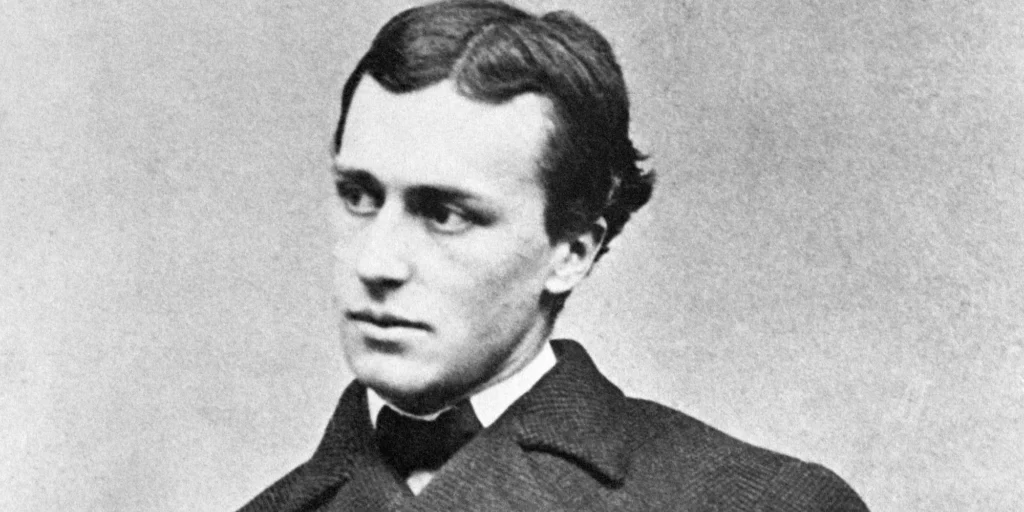
There is a kind of conversation you have had, probably more than once, in which everything important is understood and nothing important is said. Someone stands at a window while you speak. The pauses carry more weight than the sentences. You leave the room knowing exactly what was communicated and unable to quote a single word of it. This is not a failure of language. This is language operating at its most precise.
James understood this. More than understood it — he built an entire architectural system around it in the final decade of his writing life, producing between 1902 and 1904 three novels that constitute one of the most demanding and rewarding structures in the English language. The prose of these books does not circle its subject out of confusion or excess. It circles because the subject cannot be named directly without destroying the very social fabric that makes the subject possible. The sentence that refuses to arrive is not lost. It knows exactly where it is going and has decided, deliberately, that arrival would be a kind of violence.
Take the moment when a woman realizes her husband has been unfaithful with her closest friend, and she says nothing, does nothing, simply repositions a golden bowl on a table. The action is everything. The silence around it is the indictment, the grief, the dignity, and the calculation — all at once, inseparable. To have written that scene in direct emotional language would have been to flatten it, to reduce a multi-dimensional social catastrophe into a single register of feeling. Instead the prose holds all of its contradictions simultaneously, the way the bowl itself holds its crack — invisibly, until the light changes.
The philosopher Charles Sanders Peirce, writing in roughly the same period, argued that meaning is never contained in a sign alone but in the relationship between signs, in what he called the chain of semiosis. James had arrived at something structurally similar through pure narrative instinct. His late sentences are themselves that chain — each subordinate clause deferring to the next, each qualification opening onto another qualification, until the reader understands that the meaning lives in the accumulation of deferrals rather than in any terminal point. The sentence enacts what the society it describes enacts: a perpetual postponement of the real.
Scholars have sometimes treated this style as a symptom of James’s own psychological evasiveness, and there is probably something to that reading. He was a man constitutionally disinclined to declaration, personally or professionally. But to reduce the late style to biography is to miss what it diagnoses socially. What James captured in those spiraling paragraphs is the grammar of a class — specifically the Anglo-American upper bourgeoisie at the precise historical moment of its maximum self-consciousness, when it had accumulated enough cultural capital to weaponize ambiguity itself. In the world of Milly Theale or Lambert Strether or Maggie Verver, cruelty is administered through the perfectly placed hesitation. Desire is communicated and simultaneously deniable. Power moves not through declaration but through the sentence that stops one word short of its object.
This is what makes James’s late style something more than an aesthetic experiment. It is social documentation of the highest order. The famous complaint that he writes whole pages without saying anything is, in a precise sense, exactly right — and exactly beside the point. The nothing that is said is the thing itself. The gap between what is meant and what is spoken is not incidental to these novels; it is their subject, their method, and their moral argument. Every qualifying clause is a act of social conformity. Every unfinished thought is a boundary enforced by invisible hands. You read the sentences and feel, somewhere below conscious understanding, the weight of a world organized around the discipline of not knowing what you know.
Consciousness as the Only Territory
There is a moment in any serious conversation when you realize the other person is not listening to what you are saying but to what they feared you might say. The words land differently because the ear receiving them is already full of something else — anticipation, dread, the residue of a previous wound. This is not a failure of attention. It is attention itself, operating as it always operates, filtered through the entire sediment of a life. Henry James spent forty years writing novels and stories and then, between 1907 and 1909, sat down to explain what he had actually been doing. The result was the eighteen prefaces he composed for the New York Edition of his collected works, documents so dense and so self-aware that they constitute a separate philosophical achievement alongside the fiction they were meant to introduce.
What James articulated in those prefaces, with a precision that anticipates by decades what phenomenology would later attempt in academic language, is that the novel has no legitimate subject except consciousness. Not events. Not social arrangements. Not the collision of forces that nineteenth-century realism had treated as the real substance of narrative. Consciousness. The register in which experience is received, distorted, partially understood, and never fully recovered. He called it the central consciousness, and the term was technical but the insight behind it was visceral: reality, for any living person, is not the thing that happens but the thing that is perceived happening, and those two are never identical.
Edmund Husserl, writing his Logical Investigations in 1900, was arriving at a structurally similar conclusion from the opposite direction, arguing that consciousness is always intentional, always directed toward an object, never a neutral mirror but an active constitution of what it encounters. James did not read Husserl and did not need to. His brother William had already in 1890, in The Principles of Psychology, described the stream of consciousness as a continuous flowing where no two states are ever identical and where the self is not a fixed observer but a participant in perpetual modification. The family resemblance between William’s psychology and Henry’s narrative method is not incidental. It is the same mind working on the same problem through different instruments.
What the central consciousness technique actually does in practice is refuse the comfort of omniscience. A woman stands at a window watching a man cross a courtyard below, and she interprets his pace, his posture, the angle of his hat, reads into that small theatre everything she needs and fears to know — and the reader watches her watching, aware that the interpretation is as much about her as about him. What she perceives is real. It is also profoundly, perhaps fatally, compromised. Desire shapes it. Class shapes it. The fear of having been wrong before shapes it. There is no clean version of the scene available, no authoritative angle from which the truth could be extracted and handed over. This is not James being difficult. This is James being honest about what perception actually is.
Simone de Beauvoir, in The Second Sex published in 1949, would describe how women are systematically trained to see themselves as they are seen, to internalize the gaze of others as the primary fact of their existence. James’s female characters — Isabel Archer, Milly Theale, Maggie Verver — live precisely inside this trap, perceiving themselves through the consciousness of those who want something from them, never quite able to distinguish their own desire from the desire they have absorbed from others. The central consciousness is not a technical solution to a narrative problem. It is a diagnosis of the condition in which all his characters, and most of his readers, actually live.
To enter a James novel through this understanding is to understand why the sentences are so long, so full of qualification and reversal. He is not being ornate. He is being accurate.
The Trap of Refinement
You are at a dinner party, and someone says something cruel with such perfect timing, such musicality of phrase, that you laugh before you realize what happened. By the time the recognition arrives, the moment has passed, and to name it now would be to appear graceless, oversensitive, unworthy of the company. This is the trap. Not the cruelty itself, but the aesthetic packaging that makes your own perception feel like the problem.
Henry James spent forty years mapping this mechanism with the precision of a surgeon who is also, somehow, the patient. His greatest characters do not fall because they are naive or foolish. They fall because they are exquisitely, fatally attuned to the beautiful. Isabel Archer, arriving in Europe with what James called “the desire to see, to try, to know,” carries within her a conviction that has never been examined: that a refined consciousness is a protected one, that someone who feels as deeply as she does cannot be deceived by the merely coarse. Osmond recognizes this instantly. He does not seduce her with passion. He seduces her with taste. His villa, his objects, his way of holding silence — all of it speaks to the part of Isabel that believes aesthetic discernment and moral discernment are the same faculty. They are not. They have almost nothing to do with each other.
The philosopher Charles Taylor, in Sources of the Self, identifies what he calls the “expressivist” tradition — the modern belief that authentic selfhood is achieved through the cultivation of inner life, sensitivity, perception. James inherited this tradition and then proceeded to dismantle it from inside. His novels are the long, slow demonstration that refinement, taken as an end in itself, becomes a kind of narcissism that leaves you perfectly defenseless. Milly Theale, in The Wings of the Dove published in 1902, is perhaps the purest instance. She is dying, she is rich, she is generous to a degree that approaches the saintly, and she is surrounded by people who have learned to weaponize precisely those qualities. Her goodness is not exploited despite her sensitivity. It is exploited through it. Kate Croy and Merton Densher do not bully her. They aestheticize her, they make her feel seen, they offer her the one thing her refinement craves above survival itself: to be truly, beautifully understood.
There is a scene — a man at a long table, in a house full of objects chosen with visible deliberateness, listening to a woman he has brought there speak about painting. His attention is total, focused, almost reverent. And she opens. You watch her open. What she does not see, because she is inside the experience of being seen, is that his attention is a technique. He has done this before. The room is a set, the listening is a performance, and her response — her flowering — is exactly what was being cultivated. Nothing in her education prepared her for this, because everything in her education taught her that such attention was valuable, that being truly seen was the highest exchange two people could offer each other. She was right about that. She was simply wrong about what she was being shown.
Lambert Strether arrives in Paris in The Ambassadors, published in 1903, already fifty-five years old, already late, carrying the weight of a life lived in careful, dutiful narrowness. Paris undoes him in the specific way Paris undoes people who have starved themselves aesthetically: he falls in love with the surface of things and calls it a moral awakening. “Live all you can,” he tells a young man in a garden, and it is the most quoted line in James, and it is also, if you read what surrounds it, a confession of defeat dressed as wisdom. Strether mistakes the fact of feeling more for the fact of seeing more clearly. They are not the same. Europe has not liberated him. It has simply given his old obedience a more beautiful costume.
A vision curated by a filmmaker, not an algorithm
In this video I explain our vision
Women, Wealth, and the Elegant Machinery of Ruin

There is a particular kind of dinner party where the women are the décor. You have been to one. The conversation moves around them rather than through them, their opinions are received with that particular smile that means nothing will be retained, and their presence — elegant, costly, carefully assembled — functions as evidence of someone else’s taste and financial standing. Nobody calls it what it is. It doesn’t need a name to operate perfectly.
Henry James spent a career naming it anyway, with the quiet ferocity of someone who had watched it happen in too many drawing rooms across two continents to pretend the mechanism was accidental. What he saw, and what he rendered in prose of almost unbearable precision, was that women in the world he inhabited were not participants in an economy but instruments of it — objects through which men displayed accumulation, through which families negotiated ascent, through which the social order reproduced itself with a smile and a glass of sherry.
Thorstein Veblen, writing in 1899 in “The Theory of the Leisure Class,” gave this mechanism its clinical name: conspicuous consumption. Women, he argued, were among the primary sites of this display — their idleness, their ornamentation, their cultivated uselessness all serving as proof of a husband’s or father’s capacity to waste productively. The well-dressed woman who does nothing is not a failure of ambition. She is a success of signaling. James had understood this intuitively for decades before Veblen formalized it, and his novels are the lived interior of what Veblen described from the outside.
Isabel Archer in “The Portrait of a Lady,” published in 1881, arrives in Europe trailing what everyone around her immediately recognizes as possibility — which is to say, money. Her inheritance of seventy thousand pounds does not liberate her. It marks her. Gilbert Osmond does not fall in love with her; he acquires her, with the same deliberate connoisseurship he applies to his medieval coins and his Florentine views. James makes the transaction legible without ever making it explicit, which is precisely the point. The horror is in the refinement, in the fact that Osmond’s cruelty is indistinguishable from his taste.
Then there is the image of a woman standing at the top of a great staircase in a house that is not hers, watching guests move through rooms she has been permitted to inhabit but never to own, understanding in a single suspended moment that her entire function has been ornamental — that she has been arranged, like the flowers, like the lighting, like the art on the walls. The recognition arrives without drama, without tears. It arrives as a kind of internal settling, the body accepting what the mind has been refusing. James knew that the most devastating realizations are the quiet ones, the ones that don’t announce themselves.
Milly Theale in “The Wings of the Dove,” from 1902, is perhaps his most excruciating study. She is dying and she is rich, and everyone around her is simultaneously moved by her fragility and calculating its value. Mertonand Kate’s plan — to let Milly love Merton, to let her die believing herself loved, to inherit what her love leaves behind — is not presented as monstrous. It is presented as reasonable, as the kind of thing people do when they are poor and she is rich and life is short and the social machinery needs feeding.
What James understood, and what remains almost intolerable to acknowledge, is that this machinery has no villain. It runs on incentive structures so deeply embedded in the organization of wealth, gender, and social aspiration that removing any single person from the equation changes nothing. Veblen’s analysis is now well over a century old. The dinner parties continue. The women are still the décor.
The Observer Who Cannot Act
There is a particular kind of person you have probably known — maybe been — who watches a situation deteriorate with extraordinary clarity, names every dynamic at work, traces every fault line with precision, and does nothing. Not from ignorance. From something far more troubling than ignorance.
Lambert Strether arrives in Paris to retrieve Chad Newsome from what his benefactress considers a corrupting entanglement, and within weeks he has seen so deeply into the beauty of what Chad has become that retrieval becomes unthinkable. He perceives everything. He understands the cost of every choice. He delivers, in a garden in Gloriani’s courtyard, one of the most luminous speeches in all of James — live, live all you can, it is a mistake not to — and then proceeds, methodically, to live nothing. He returns to Woollett. He relinquishes Maria Gostrey, who loves him, because to accept anything for himself would compromise the purity of his seeing. His consciousness has become a cathedral he will not allow himself to inhabit.
William James, Henry’s brother, spent decades wrestling with precisely this pathology. In his 1890 Principles of Psychology, he identified what he called the sentiment of rationality’s dark twin: the habit of treating perception as a substitute for decision, of mistaking the richness of one’s inner map for actual movement through the world. The person who sees everything and acts on nothing has not achieved superior wisdom. They have achieved a sophisticated form of paralysis.
John Marcher sits with May Bartram for years, decades really, sustained by the shared knowledge of his special destiny, the great thing that is coming for him. She watches him. She loves him. She sees, long before he does, that the beast in the jungle is not coming — that it has already passed, that it was always the very act of waiting itself, the refusal to love, to risk, to be claimed by another human being. When she dies, he understands. The understanding arrives complete, devastating, and entirely useless. This is James at his most pitiless: knowledge that comes too late is not knowledge at all. It is the autobiography of a missed life.
A man sits beside a woman in a car, somewhere in a landscape that keeps moving, and he recognizes with complete intellectual clarity that he loves her and that something irreversible is about to happen, and he says nothing. He has been saying nothing for years in exactly this articulate, comprehensive way. The silence is not mysterious. It is the product of total consciousness deployed in perfect service of total inaction.
Susan Sontag, writing in Against Interpretation in 1966, argued that the obsession with meaning could itself become an evasion of experience. She did not have James specifically in mind, but she might have. The governess in The Turn of the Screw constructs an interpretation of such baroque, suffocating completeness that by the time she is done the child Miles is dead in her arms. She saw too much, or she saw nothing and called it everything — James refuses to resolve the ambiguity, which is the point. Interpretation, carried far enough, becomes its own form of violence.
Erik Erikson, in his 1950 Childhood and Society, described what he called identity foreclosure: the state in which a person has decided so firmly who they are, what they observe, what role they occupy, that no new experience can actually land on them anymore. Strether is a foreclosed man. He has decided he is the one who watches. May Bartram’s tragedy is that she loved a man who had decided the same thing and dressed it in the most elegant possible language.
The question James keeps asking, without ever quite answering, is whether exquisite consciousness without the courage to act upon it is a moral achievement or a more refined variety of cowardice.
What the Late Style Was Actually Saying
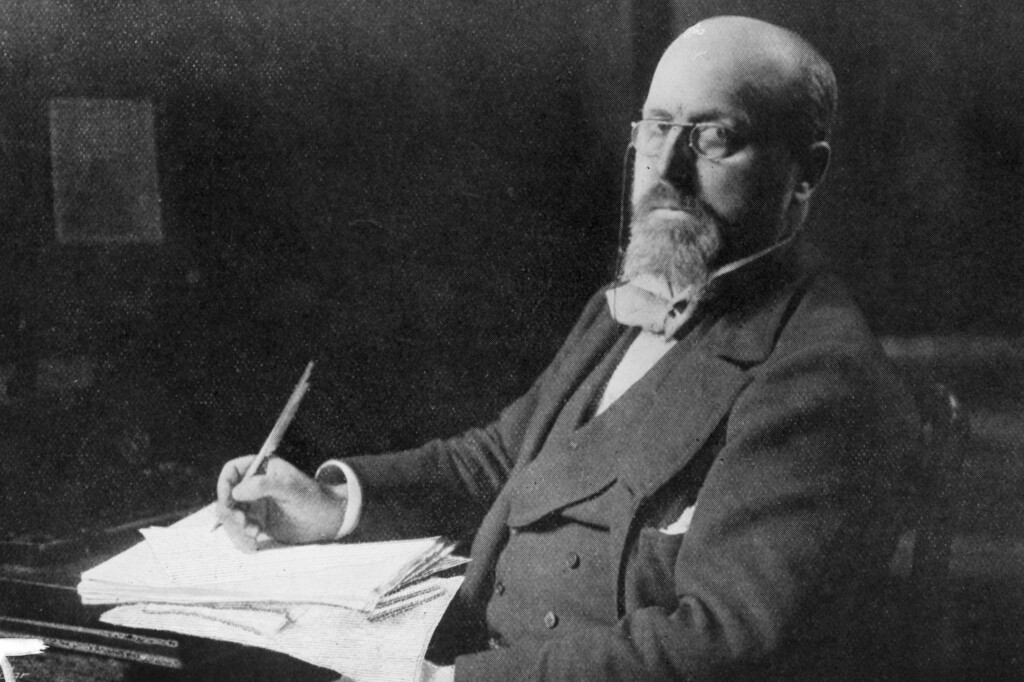
There is a moment — you have lived it — when you understand something about another person that they have not said and will never say, and the understanding arrives not through their words but through the precise architecture of their evasion. The way a sentence trails off. The way a question gets answered with a different question. The way someone agrees with you so completely that you know, with sudden certainty, that they are lying. This is the grammar of James’s late prose, and it is not a stylistic affectation. It is the transcription of a world in which the truth can only be spoken sideways, if it can be spoken at all.
The spirals, the qualifications, the parenthetical asides that swallow the original thought and replace it with something more precise and more painful — these are not obscurantism. They are the shape that honest perception takes when it has nowhere clean to land. The philosopher Charles Sanders Peirce, James’s close contemporary, argued that meaning is never a fixed point but always a process, always deferred through a chain of interpretations that never finally closes. James had arrived at the same conclusion not through semiotics but through the experience of watching people talk around the only things that matter. His sentences do not arrive at their destinations because the destinations themselves are unstable, because the person being observed is changing under the pressure of being observed, because the moment you name something in direct language you have already falsified it.
He was sixty-two when he published The Golden Bowl in 1904, and the novel’s central act — a wife choosing to know, and then choosing how to use what she knows — unfolds almost entirely in implication. Maggie Verver understands that her husband and her friend have been lovers. She understands it the way you understand, in a dream, something that you cannot quite see but that fills the entire field of vision. And the novel refuses to let her say it plainly, not because James is being coy, but because saying it plainly would be its own kind of violence, its own destruction of the social membrane through which these people continue, somehow, to breathe. The difficulty of the prose is the difficulty of the situation. To simplify the writing would be to lie about the world.
Theodor Adorno, writing in Minima Moralia in 1951, made an observation that reads like a description of James’s method without knowing it was one: the splinter in your eye is the best magnifying glass. The very thing that makes seeing painful is the thing that makes seeing accurate. James’s late style is that splinter. It hurts to read because it refuses the comforts that prose usually offers — the declarative sentence, the clean arrival, the sense that something has been settled. Nothing is ever settled. The golden bowl has a crack in it before the story begins.
What the late style was actually saying, underneath all its ceremony, is this: you cannot look at how people truly live together and then write sentences that go in straight lines. The form must bear the weight of what it knows. And James knew — had always known, from the Boston drawing rooms of his childhood through the London dinner parties of his middle age to the dictated manuscripts of his final decade, when his hands failed him and he spoke his novels into existence from a wheelchair — that the room is always full of things no one is saying. He had spent a lifetime learning to hear them. The question his late prose finally asks, in every labyrinthine turn, in every clause that opens onto another clause the way a corridor opens onto a room that opens onto another corridor, is whether it is possible to see all of that, to hold all of that in careful, unflinching attention, and still remain inside the room, still sit at the table, still belong, however partially, to the world that has made honest speech so very nearly impossible.
🌀 The Inner Life: Consciousness, Literature, and the Modern Mind
Henry James’s fiction is inseparable from the philosophical and literary currents that defined the modern exploration of consciousness and subjectivity. These related articles trace the intellectual world surrounding James, from the psychology of his brother William to the literary techniques that transformed the novel into a mirror of the mind.
William James and Consciousness: The Stream of Thought
William James, Henry’s brother and one of the founders of modern psychology, developed the revolutionary concept of the ‘stream of thought’ to describe the continuous, flowing nature of conscious experience. His philosophical pragmatism and psychological insights deeply influenced the way Henry James constructed his characters’ inner lives. Understanding William’s work illuminates the intellectual atmosphere in which Henry’s introspective narrative technique took root.
GO TO THE SELECTION: William James and Consciousness: The Stream of Thought
Stream of Consciousness in Literature and Cinema
The stream of consciousness technique, pioneered in literature and later embraced by cinema, owes much to the psychological realism that Henry James helped inaugurate in the Anglo-American novel. This article traces how the interior monologue evolved from James’s subtle free indirect discourse into the bold stylistic experiments of Woolf, Joyce, and Faulkner. It also explores how filmmakers translated this inward gaze into visual and temporal form.
GO TO THE SELECTION: Stream of Consciousness in Literature and Cinema
Virginia Woolf: Life and Works
Virginia Woolf acknowledged Henry James as one of the central ancestors of the modern psychological novel, admiring his commitment to capturing the elusive texture of perception and social consciousness. Her own fiction extended James’s preoccupation with point of view, interiority, and the ambiguity of human relations into a more lyrical and experimental register. Exploring Woolf’s life and work deepens our appreciation of the literary tradition James helped define.
GO TO THE SELECTION: Virginia Woolf: Life and Works
American Transcendentalism: History and Thought
American Transcendentalism forms an essential backdrop for understanding the cultural and philosophical world from which Henry James emerged, even as he distanced himself from its optimistic idealism. The movement’s emphasis on individual consciousness, moral earnestness, and the tension between the self and society resonates throughout James’s novels and stories. This article maps the broader intellectual landscape of nineteenth-century American thought that shaped James’s literary sensibility.
GO TO THE SELECTION: American Transcendentalism: History and Thought
Discover the Cinema of Depth on Indiecinema
If Henry James’s exploration of the inner life and the complexity of human experience speaks to you, Indiecinema is your next destination. Our streaming platform is dedicated to independent and auteur cinema that shares James’s passion for nuance, subjectivity, and the unseen dimensions of human existence. Explore our curated catalog and find films that see the world as a place of infinite, labyrinthine meaning.
👉 EXPLORE THE CATALOG: Watch Indie Films in Streaming
A vision curated by a filmmaker, not an algorithm
In this video I explain our vision