
The Inherited Wound
You are seven years old and someone uses a word you don’t fully understand yet, and your body understands it before your mind does. It lands somewhere below the sternum, not as an insult exactly, more like a diagnosis delivered without a doctor present. The adults around you don’t correct it. Some of them laugh. One of them is your father. You file the word away not because you plan to use it but because something animal in you recognizes that it describes something — and that something, you are beginning to suspect, might be you.

This is how the wound opens. Not with a declaration or a confrontation, but with ambient noise that slowly becomes the furniture of an interior world. Long before a child has the vocabulary to name their own desire, the culture has already constructed an elaborate architecture of shame around it. The hatred arrives as infrastructure. It is already in the classroom, in the punchline, in the particular disgust that colors an adult’s voice when they say the word wrong. The child does not yet know they are gay, or bisexual, or transgender. They only know that whatever they are, there exists a category for it, and that category is treated like a disease.
The psychologist Ilan Meyer, whose minority stress model published in the American Journal of Public Health in 2003 mapped the specific psychological burden carried by sexual minorities, demonstrated something that sounds obvious once stated but had never been measured so precisely: that chronic exposure to stigma produces measurable physiological stress responses independent of any single traumatic event. The damage is not episodic. It is atmospheric. Meyer’s work revealed that the harm done to queer people is not primarily the product of violence — though violence exists and is catastrophic — but of sustained, low-grade social hostility that the body registers as a permanent threat environment. Growing up in that environment does something to the nervous system before it does anything to the mind.
What makes this particular wound so difficult to treat is that it is almost never recognized as an injury when it is being inflicted. No one calls it an education in shame, but that is precisely what it is. Between 1952 and 1973, the American Psychiatric Association classified homosexuality as a mental disorder, and although that classification was removed after sustained pressure from activists and the work of researchers like Evelyn Hooker, whose 1957 study demonstrated no measurable psychological difference between gay and heterosexual men, the clinical stigma had already done decades of work. It had given institutional authority to what children were absorbing in playgrounds and at dinner tables across the country. The APA’s diagnosis wasn’t the origin of the prejudice, but it was its most powerful amplifier.
What gets inherited is not just a wound but a framework — a way of organizing one’s sense of self around concealment, around the labor of not being found out. Eve Kosofsky Sedgwick wrote in Epistemology of the Closet, published in 1990, that the closet is not simply a metaphor for hiding but a fundamental structuring principle of modern Western culture, one that shapes what can be said, what can be known, what can be desired without consequence. The closet is not a refuge the queer child chooses. It is a room they are placed in before they know there are other rooms.
And the cruelest mechanics of this arrangement are its timing. The absorption happens in the years when identity is most plastic, when the self is being assembled from whatever materials the environment provides, and what the environment provides is a mirror that reflects something monstrous back. The child does not know yet that the mirror is defective.
Self Defence
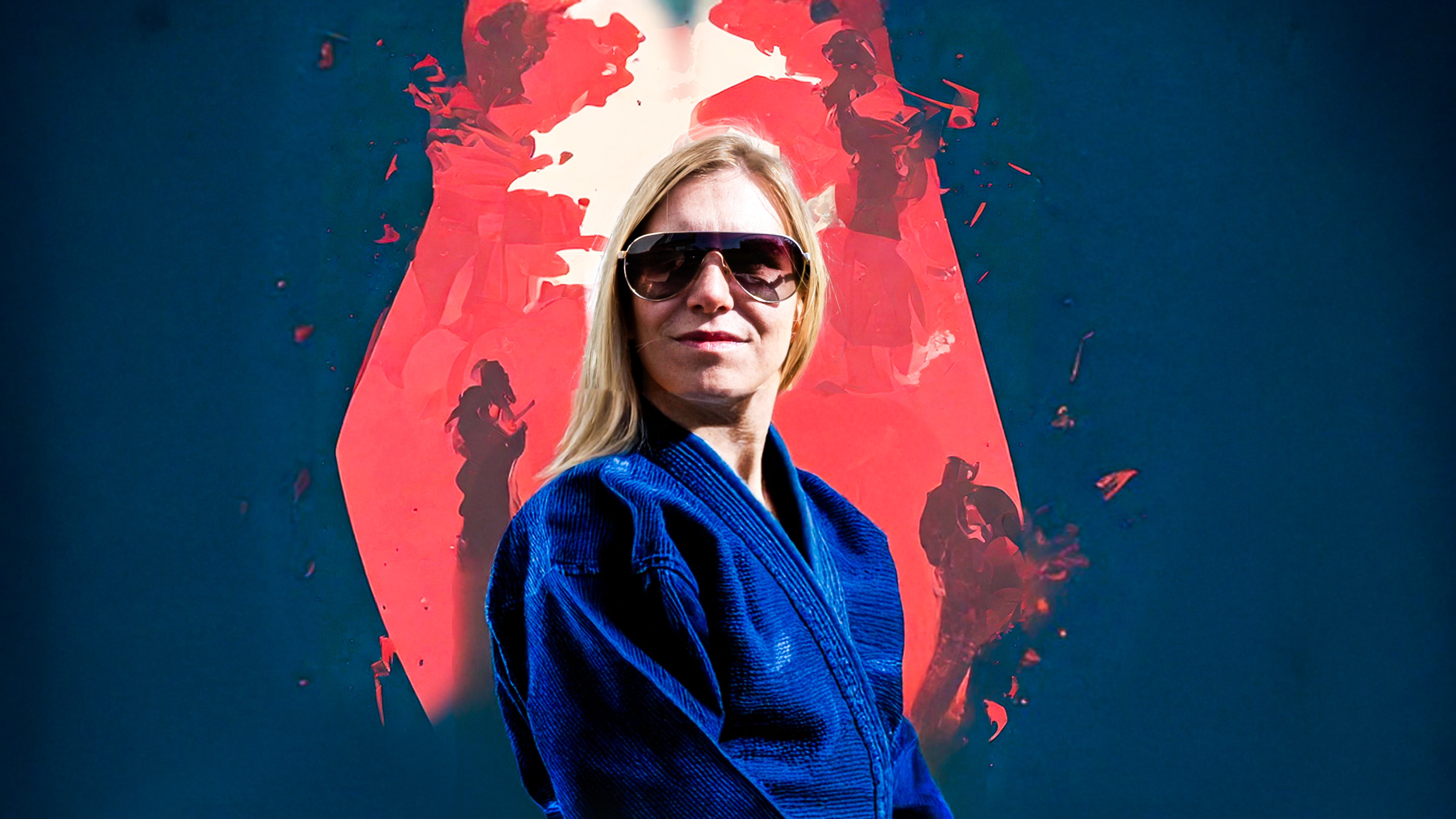
Documentary, by Olaf de Fleur, Iceland, 2025.
Self-Defence follows the story of Imma Helga, a self-defence instructor in Iceland who turned her teenage struggles with prejudice, homophobia, and depression into a mission of empowerment. Together with her brother Jón Viðar, she teaches a practical, real-world approach to self-defence, helping women feel more aware, capable, and confident. Through classes, testimonies, and their social media presence with over a million followers, the film shows how self-defence is not a heroic act but a basic, accessible skill: a way to protect oneself, reclaim space, and affirm presence. By weaving together teaching moments and Imma’s personal journey, Self-Defence explores the connection between inner growth and physical protection, revealing how learning to stand your ground also means regaining strength, self-respect, and freedom.
LANGUAGE: Icelandic
SUBTITLES: English, Spanish, French, German, Portuguese
Shame as Social Architecture
You are sitting across from someone at a family dinner, and the question arrives wrapped in the syntax of concern — “Are you seeing anyone special?” — and before your mouth opens, something in your chest has already calculated the distance between what is true and what is safe to say. That calculation happens in under a second. You have been running it since you were old enough to read a room.
That speed is not instinct. It is training. And the trainer is not any individual person at that table — it is a system so old and so thoroughly internalized that it no longer needs enforcers, because the surveilled have become their own surveillance. Erving Goffman mapped this architecture with almost clinical precision in his 1963 study Stigma: Notes on the Management of Spoiled Identity, where he demonstrated that stigma is not primarily about the stigmatized individual at all. It is a relational mechanism — a tool for maintaining categorical order. The person marked as deviant is not the object of the system. They are the instrument by which the unmarked majority reasserts its own coherence.
What Goffman exposed is that societies require their outsiders. The concept of the normal cannot sustain itself without constant reference to its edges, and those edges must be populated, visible, and periodically punished. This is not metaphor — it is function. When Howard Becker published Outsiders in 1963, the same year as Goffman’s study, he formalized what sociologists now call labeling theory: deviance is not an inherent property of any act or identity, but a classification imposed by those with the power to make their classifications stick. Homosexuality was listed as a mental disorder in the Diagnostic and Statistical Manual of Mental Disorders until 1973 — not because of any clinical evidence of pathology, but because the diagnostic apparatus was built by and for a culture that needed the category to exist.
The removal of that classification did not dissolve the shame it had manufactured across decades. This is the part that gets skipped in liberal narratives of progress — that institutional legitimacy can be revoked in a vote while the psychological residue it produced continues compounding across generations. Children who grew up after 1973 still absorbed the structure of abjection from parents who had grown up inside it, from religions that never updated their taxonomies of sin, from the persistent grammar of slurs that converts a human being into a category error. Shame is not passed down as a belief. It is passed down as a reflex.
Pierre Bourdieu spent much of his career trying to articulate how social structures become embodied — how class, gender, and sexual normativity stop being external rules and begin operating as what he called the habitus: a set of durable dispositions that feel like personal style, personal preference, personal character, when in fact they are the sediment of power relations deposited in flesh and behavior. The gay teenager who learns to walk differently, to modulate his voice, to choose different words, to laugh at different volumes — he is not failing to be himself. He is successfully becoming what the field requires for minimum survivability. That adaptation is not weakness. But calling it strength would also be a lie, because strength implies choice, and the child learning to disappear did not have one.
What makes shame particularly durable as a technology of control is that it does not require ongoing external pressure to function. Once installed at sufficient depth, it operates autonomously — which is why so many adults who have not faced overt discrimination in years still flinch before speaking certain truths in certain rooms. The architecture does not announce itself. It simply makes certain movements feel naturally impossible, certain words feel naturally too loud, certain loves feel naturally like something that should be handled carefully, privately, with apology already prepared.

The Violence Hidden Inside Tolerance
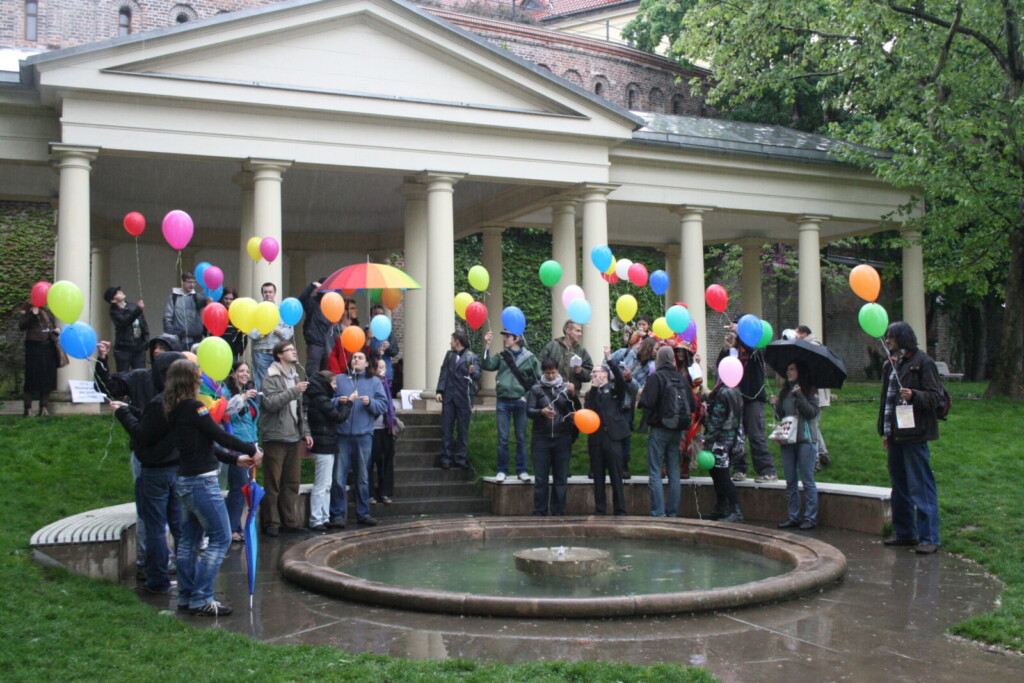
You are handed a kind of permission slip, and you are supposed to be grateful for it. The language has softened, the laws have shifted in certain latitudes, and somewhere between a pride parade permitted by municipal authorities and a television character allowed to be gay as long as he is never too gay, a deal was struck — and you were not at the table when it happened.
Herbert Marcuse saw this mechanism operating long before the rainbow flag became a corporate logo. In “One-Dimensional Man,” published in 1964, he described how advanced industrial societies neutralize dissent not by crushing it but by absorbing it, by making just enough space for opposition that the opposition exhausts itself in the gesture of being tolerated. He called a related process repressive desublimation — the granting of libidinal freedoms that feel like liberation but function as pressure valves, releasing exactly enough tension to prevent structural challenge. The sexuality that is permitted is the sexuality that has been domesticated first. What enters the mainstream enters on the mainstream’s terms, and those terms are written by the forces that controlled the mainstream before any permission was granted.
This is why the most socially legible gay identity in the early twenty-first century tends to be white, coupled, property-owning, and interested in institutions like marriage — not because queer people are naturally drawn to bourgeois arrangements, but because those are the contours of the shape that was cut out for them. The 2015 Obergefell decision in the United States, celebrated as a landmark of equality, was also the moment when the most radical legal demand of the mainstream gay rights movement became the most conservative possible aspiration: the right to replicate a heterosexual institution that feminists, queers, and anarchists had been dismantling theoretically for decades. The victory was real. The cost embedded inside it was rarely named aloud.
Conditional acceptance is a technology of erasure that does not announce itself as such. It presents as generosity. The person who says “I don’t care what you do in your bedroom” believes sincerely that they are being progressive, and in the same breath they have confined an entire dimension of human existence to a private room with the door closed. Visibility granted only in spaces designated for it — the parade, the bar, the approved narrative arc of the prestige drama — is a form of zoning. It tells you where you are permitted to exist and implies, without stating, that everywhere else you should fold yourself smaller. The sociologist Erving Goffman, writing in “Stigma” in 1963, described how stigmatized individuals learn to manage their presentation to protect those around them from discomfort — a labor that is entirely invisible precisely because it is so effectively performed. Decades of legal progress have not ended that labor. They have simply raised the threshold at which it is required.
There is a particular exhaustion that comes from existing inside tolerance rather than inside acceptance, though the two words are rarely distinguished in ordinary speech. Tolerance maintains the tolerator in a position of power — it is extended, it is granted, it can be revoked. The person being tolerated is structurally a guest in a space that was not built for them, permitted to remain as long as they do not rearrange the furniture. The emotional cost of this arrangement accumulates in ways that aggregate mental health data makes visible: a 2020 study published in the American Journal of Psychiatry found that LGBTQ+ individuals in high-stigma environments showed elevated rates of mood disorders even when they had access to legal protections, suggesting that the formal architecture of rights does not reach the informal architecture of daily social reality.
What tolerance cannot touch is the texture of a Tuesday — the small, unremarkable moments in which a person decides, again, whether to reach for their partner’s hand in a grocery store and what they calculate before doing it.
What the DSM Removed and Left Behind
You sit in a room that smells of vinyl chairs and fluorescent light, and a man with credentials on his wall tells you that what you feel is a disease. He does not raise his voice. He is calm, even kind. That is the most devastating part — the clinical neutrality with which a person can be unmade.
In 1973, the American Psychiatric Association voted to remove homosexuality from the Diagnostic and Statistical Manual of Mental Disorders. It was a vote — 5,854 to 3,810 — which is the only fact you need to understand that what preceded it was never science. Diseases are not repealed by ballot. Tuberculosis did not disappear because a committee found it inconvenient. What the DSM had classified as “sociopathic personality disturbance” since its first edition in 1952, and then recategorized under “sexual deviation” in 1968, was not a clinical observation but a consensus about social acceptability dressed in medical language. The psychiatrists who built those categories were not measuring suffering — they were codifying disgust.
Evelyn Hooker understood this before almost anyone else with institutional power was willing to say it. Her 1957 study, published in the Journal of Projective Techniques, compared psychological test results from gay and heterosexual men and found that trained clinicians could not distinguish between them. The data was precise and the conclusion was unambiguous: there was no measurable pathology. For sixteen years, that finding sat in the literature while the apparatus of diagnosis continued operating at full force — conversion therapies, aversion treatments, electroshock applied in the service of a cure for something that required no curing. The machinery did not pause for evidence because it had never been driven by evidence in the first place.
What the 1973 decision could not do was reach backward. The men and women who had been institutionalized, chemically treated, subjected to the judgment of courts that deferred to psychiatric opinion — they did not receive a retroactive restoration of dignity. The British mathematician Alan Turing, chemically castrated by court order in 1952 and dead by cyanide poisoning two years later, was not rehabilitated by a vote that came two decades after his death. The psychological architecture that those decades of official diagnosis constructed inside the people who lived through them — the internalized conviction that desire itself was evidence of disorder — that did not dissolve the moment the manual was revised.
What psychology gave with one hand it continued to withhold with the other. “Ego-dystonic homosexuality” replaced the original diagnosis in 1980, in the very DSM-III that was supposed to mark the liberation. This new category pathologized not homosexuality itself but the distress caused by it — a maneuver of extraordinary cynicism, because the distress it measured was largely the product of the stigma that psychiatric authority had spent three decades manufacturing. The patient was handed a mirror in which his own pain appeared as the proof of his deficiency, and the institution that had broken the mirror in the first place was nowhere in the reflection.
There is a concept in trauma theory, developed at length by Judith Herman in her 1992 work Trauma and Recovery, concerning the social conditions necessary for psychological harm to persist: perpetrators require the silence and collaboration of bystanders, and institutions are the most effective bystanders of all. The harm inflicted through diagnosis was not incidental to the institution — it was delivered through the institution’s highest register of authority, which is the authority to name what is real. When that naming changed, the harm it had already done acquired a new quality: it became officially unspeakable, because the framework that would have made it legible as harm had been quietly retired along with the diagnosis that produced it.
The wound, in other words, was reclassified out of existence before anyone was required to account for it.
Strength as Misreading
You have heard it so many times it no longer sounds like a demand. It sounds like a compliment. They call you resilient, and somewhere inside you something tightens, because resilience is what you call a material that bends without breaking — not a person, not a life, not a decade of nights spent recalculating your own worth from scratch.
The cultural script around marginalized suffering follows a grammar so well-rehearsed that most people inside it cannot hear its syntax. Pain arrives, pain is survived, and then — crucially, obligatorily — pain is converted. Into art, into advocacy, into the kind of story that can be told at a fundraiser or a corporate diversity panel. The conversion is not optional. A person who survives homophobic violence and simply continues to live, quietly, without producing anything legible as growth or inspiration, is not celebrated. They are invisible. The system does not reward survival. It rewards the performance of survival in a form the system can consume.
Audre Lorde wrote in 1977 that the master’s tools will never dismantle the master’s house, and the sentence has since been quoted so often in progressive spaces that it has been almost entirely defanged — turned into a poster, a caption, an affirmation. But what Lorde was describing was precisely this mechanism: the way dominant structures absorb the language of resistance and repurpose it as decoration. The resilience narrative is that absorption in its most intimate form. It does not silence the person who was harmed. It gives them a microphone — and hands them a script.
Silvia Federici, working through the history of unpaid reproductive labor in Caliban and the Witch, published in 2004, identified the way capitalism requires bodies to process their own damage without compensation and then return to productivity. What she traced in the figure of the witch — the body punished for refusing to be useful in sanctioned ways — reappears in the figure of the traumatized queer person who is expected to metabolize violence and emerge enlightened. The enlightenment is not for them. It is for the audience. The labor of transformation is extracted the same way any other labor is extracted: by making the worker believe it is their own desire.
There is a man sitting across a desk from a therapist in the late 1990s, somewhere in a mid-sized American city, and the therapist is asking him what he has learned from everything he has been through. The question is gentle. The office is tasteful. And the man, who has lost friends, who has been disowned, who has rebuilt himself from materials no architect would recommend, begins to answer — and in the act of answering, begins to perform. He finds the narrative shape the room is waiting for. He delivers it. He leaves feeling, briefly, like he has done something. He has. He has done the emotional labor the cultural machinery requires of him, and he has done it for free, and he will be asked to do it again.
Frank Wilderson III, in Afropessimism from 2020, argues that certain kinds of structural violence cannot be resolved by resilience because resilience presupposes a return to a prior state of wholeness that never existed for the person targeted. The same logic fractures the gay resilience story at its foundation. If the homophobic environment was not an interruption of an otherwise intact life but the very water the person grew up breathing, then recovering from it is not a return — it is the construction of something entirely new, on ground that was never stable, using tools that were never designed for this purpose. Calling that process resilience is not just imprecise. It is a way of refusing to name what actually happened, which is that a person had to build a self that the world was actively trying to prevent from existing — and that the world would now like to take credit for having forged.
A vision curated by a filmmaker, not an algorithm
In this video I explain our vision
The Body That Remembers What Culture Forgets

You are standing in a room full of people who love you, and your body does not believe it. Your shoulders stay elevated, your breath stays shallow, your eyes track the exits without your permission. The mind has updated its files — these people are safe, this decade is different, that law has changed — but the nervous system is running older software, and it does not accept patches from the conscious mind the way we wish it would.
Bessel van der Kolk spent decades documenting precisely this gap. His clinical work, consolidated in The Body Keeps the Score published in 2014, demonstrated that trauma does not live in the narrative cortex where we store our explanations of ourselves. It lives in the subcortical structures — the amygdala, the brainstem, the autonomic nervous system — that operate below the threshold of language and therefore below the threshold of argument. You cannot reason your way out of a threat response. The body learned its fear through experience, and it will only unlearn through experience. This is not metaphor. This is neuroscience, and it has specific and devastating consequences for anyone who spent their formative years reading the cultural atmosphere as a place that wanted them either invisible or corrected.
What the clinical literature rarely acknowledges is that the threat environment for queer people was not merely interpersonal. It was institutional, rhythmic, and long. It did not arrive as a single traumatic event that could be located on a timeline and worked through. It arrived as weather — the cumulative atmospheric pressure of a culture that legislated disgust. In the United States, consensual same-sex intimacy between adults remained a criminal offense in fourteen states until 2003, when Lawrence v. Texas finally struck down those laws. That is not ancient history. That is the childhood of people in their thirties today. The nervous system that formed under those conditions did not form in a neutral environment. It formed in a state of chronic low-grade emergency.
José Esteban Muñoz, writing in Cruising Utopia in 2009, introduced a concept he called queer futurity — the idea that queerness is fundamentally oriented toward a horizon that has not yet arrived, that queer life is lived in anticipatory relation to a world that does not yet exist. He was writing against the political tendency to celebrate the present moment as arrival, as if legal recognition or cultural visibility constituted the completion of a project. His argument was ontological before it was political: queer experience carries a different relationship to time itself, one in which the past is not past and the future is not guaranteed. The body knows this even when the politics forgets it.
What these two frameworks produce together is something the official discourse around progress cannot accommodate. Progress is linear, cumulative, graphable. But the body is not a graph. It is a living archive that stores time non-chronologically, that holds 1986 and 2024 in the same tissue simultaneously, that responds to a tone of voice in a meeting room with a reaction calibrated to a schoolyard thirty years ago. The man who has built a life of radical openness and self-acceptance still flinches at certain registers of male laughter. The woman who marched in last year’s pride parade still freezes when her mother pauses before answering a question. The freeze is not regression. It is historical fidelity. The body is being accurate about something the culture has agreed to call resolved.
This is what makes the transformation of pain into strength so much more demanding than motivational language suggests. It is not a matter of reframing the narrative or choosing a different story. It requires engaging with a layer of self that predates language, that operates through sensation and autonomic rhythm rather than through meaning, and that holds within it not only personal memory but something closer to inherited orientation — the posture of a people who learned early that the world had terms and conditions attached to their existence.
Identity Forged Under Prohibition
Picture a man in a city that no longer exists as it was — London, 1953, the year the British government commissioned Sir John Wolfenden to investigate “homosexual offences,” a bureaucratic euphemism for the lives of men who loved men. He is a postal worker. He memorizes routes not by street names but by which doorways are safe, which pubs have a back room where a certain kind of silence is permitted, which parks at which hours transform into parliaments of the unspeakable. He does not think of himself as building a culture. He thinks of himself as surviving Tuesday.
What he was actually doing, without the vocabulary to name it, was constructing an epistemology — a whole system of knowing, reading, and transmitting knowledge — that operated entirely beneath the threshold of legibility to those who held power over him. The handkerchief codes, the subtle inflections in speech, the loaded double meanings embedded in otherwise innocent phrases: these were not mere camouflage. They were a parallel infrastructure of meaning, as sophisticated as any academic tradition, except that it was built not in libraries but in the space between words, in the half-second pause before a reply, in the knowing angle of a glance across a room that both parties would deny if asked. Eve Kosofsky Sedgwick, in her 1990 work “Epistemology of the Closet,” argued that the inside/outside binary of the closet did not describe a marginal experience but actually organized the central categories of modern Western culture — knowledge, secrecy, public and private, speech and silence. She was right, but her insight arrived forty years after the postal worker had already been living it as operational reality.
Prohibition, when it does not destroy, tends to produce density. When a community cannot advertise itself, it learns to concentrate meaning — to pack into a single word, a single gesture, an entire network of implication that the uninitiated walk straight through without sensing. Polari, the argot spoken in British queer subcultures through the mid-twentieth century, was not slang in the diminutive sense. It was a functional language with grammar, registers of formality, and an internal logic. “Bona” for good, “eek” for face, “naff” for heterosexual and then, by extension, for anything tedious and conformist — this vocabulary did not merely describe the world, it reordered its values, placed different things at the center. Naff became the judgment passed on the dominant culture by the people that culture had criminalized. That is not survival. That is philosophical reversal.
The Stonewall uprising of June 1969 is remembered as a riot, but its cultural preconditions were decades of exactly this kind of underground architecture — bar networks, coded publications, mutual-aid systems among drag queens, sex workers, and transgender women of color who had long understood that the police were not a protection but a variable in a calculation of risk. What the mainstream historical record tends to flatten into a single dramatic night was actually the visible surface of an entire invisible continent of collective intelligence. And when that visibility expanded, when the 1970s brought Gay Liberation and its demand for open identity rather than concealed epistemology, something happened that tends to go unremarked: the dominant culture began consuming the products of that underground without acknowledging their origin in prohibition.
Camp as aesthetic, irony as mode of social critique, the particular relationship to artifice and performance that Susan Sontag tried to codify in her 1964 “Notes on ‘Camp'” — all of this circulated back into mainstream entertainment, advertising, and fashion stripped of the specific historical violence that had produced it. The wit was retained. The wound that sharpened the wit was quietly set aside. A sensibility born from the necessity of encoding one’s entire inner life into deniable signals became, in the hands of the market, a style choice available to anyone with sufficient cultural literacy and disposable income, which is precisely the kind of laundering that looks like celebration while functioning as erasure.
The Unfinished Reckoning
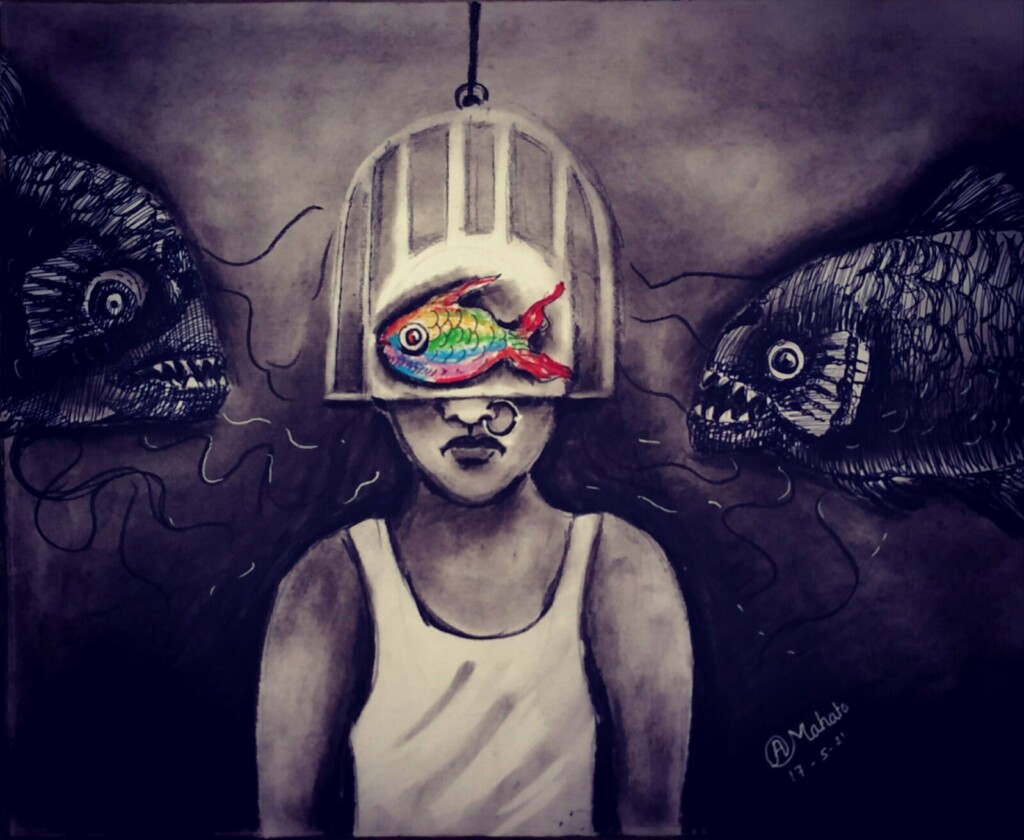
You are watching someone explain, with genuine calm, that everything is fine now. They have the certificate. They have the joint tax filing. They have the legal next-of-kin status that, twenty years ago, would have required a notarized letter and a sympathetic doctor and still might not have worked. They say this is everything they fought for, and they mean it, and it is also not enough, and they know that too, in a place they do not name out loud.
The 2015 Supreme Court decision in Obergefell v. Hodges was a structural event of real magnitude — a formal redistribution of legal personhood that altered the material conditions of millions of lives. It was not symbolic. But the decade that followed produced data that should be deeply uncomfortable for anyone who believed that recognition was the final frontier. Studies published between 2016 and 2023, including longitudinal work from researchers at Columbia’s Mailman School of Public Health, showed that LGBTQ+ adults continued to report rates of depression and anxiety two to three times higher than heterosexual counterparts — not because their legal circumstances had failed to change, but because the psyche does not update itself on the timeline of legislation. The minority stress model, developed rigorously by Bruce Link and Jo Phelan and later applied specifically to sexual minorities by Ilan Meyer in his foundational 2003 paper in Psychological Bulletin, demonstrates that chronic exposure to stigma produces internalized self-surveillance that persists long after the external threat diminishes. You carry the checkpoint inside you even after the border is abolished.
What makes this particularly difficult to sit with is that the pain becomes harder to justify in a culture that has decided the problem is largely solved. There is a specific cruelty in being told that your distress is now statistically inconvenient — that it sits awkwardly against a progress narrative that needs its victories clean. The Trevor Project’s 2022 National Survey on LGBTQ Youth Mental Health found that 45 percent of LGBTQ young people seriously considered suicide in the previous year, a figure that does not soften with proximity to a pride flag on a corporate logo or a marriage equality anniversary editorial. The gap between ceremonial inclusion and psychological safety is not a gap that closes through representation alone; it requires something harder and less photogenic, which is why it rarely receives sustained attention.
Erving Goffman, writing in Stigma in 1963, described the way a discredited identity produces a constant labor of management — the exhausting calculation of what to reveal, to whom, in which register of safety. That calculation did not end in 2015. It reorganized. It became more subtle and therefore more difficult to name, which is its own form of harm. When the law says you are equal and your nervous system says you are not yet safe, the contradiction does not resolve in favor of the law. The nervous system is older, faster, and less impressed by jurisprudence.
What remains, then, is a reckoning that the culture has collectively agreed to defer. The legal architecture is real. The psychological residue is equally real. They coexist without canceling each other, and any honest account of homophobia’s long aftermath has to hold both without collapsing one into the other. The strength that many LGBTQ+ people have forged from decades of navigating that residue — the particular acuity, the hard-won capacity for self-definition against institutional indifference — is genuine, and it was never supposed to be necessary, and the fact that it became necessary does not make it beautiful in the way the progress narrative requires. It makes it true in a way the progress narrative cannot quite afford, which is perhaps the most honest place to end: not at the resolution, but at the cost of what it took to get this far, and the question of what we are still quietly asking people to pay.
🌈 Pain, Identity, and the Courage to Be Free
Homophobia is not only an external wound — it shapes identity, silences voices, and demands a profound inner reckoning. These articles explore the psychological, social, and cultural dimensions of stigma, shame, and the long journey toward self-affirmation.
Didier Eribon: Life and Works
Didier Eribon‘s intellectual memoir confronts the violence of social shame head-on, tracing how class and homosexuality intertwine to produce a double stigma that marks the body and the mind. His return to Reims becomes a meditation on survival, distance, and the cost of becoming someone else to escape a world that rejects you. Understanding Eribon means understanding how systems of contempt operate — and how naming them is already an act of resistance.
GO TO THE SELECTION: Didier Eribon: Life and Works
Masculinity and the Inability to Express Emotions
The cultural expectation that men suppress vulnerability lies at the heart of much homophobic violence — directed both outward and inward. This article examines how rigid masculinity norms create an emotional prison that damages everyone, regardless of sexual orientation. Recognizing the cage is the first step toward dismantling it.
GO TO THE SELECTION: Masculinity and the Inability to Express Emotions
Repressed Desire: When Society Stifles Feelings
When society systematically stifles desire and identity, the psychological consequences can last a lifetime, manifesting as internalized shame, repression, and invisible suffering. This article explores how repression functions not just individually but as a structural mechanism of control over bodies and identities. The story of suppressed desire is ultimately always a story about power.
GO TO THE SELECTION: Repressed Desire: When Society Stifles Feelings
Problematic Adolescence is Not a Developmental Disorder
Adolescence is a time of identity formation that becomes especially fraught when a young person’s emerging self collides with a rejecting social environment. This article challenges the pathologizing of difficult adolescence, arguing instead that many struggles are rational responses to hostile conditions — including homophobia. Seeing clearly what young people are actually navigating is essential to offering genuine support rather than false diagnoses.
GO TO THE SELECTION: Problematic Adolescence is Not a Developmental Disorder
Discover Stories That Dare to Tell the Truth
On Indiecinema you will find independent films that give voice to the stories society too often silences — stories of identity, courage, and transformation. Explore our streaming catalog and let cinema become a space for empathy, recognition, and liberation.
👉 EXPLORE THE CATALOG: Watch Indie Films in Streaming
A vision curated by a filmmaker, not an algorithm
In this video I explain our vision

