
The Comfortable Unfreedom
You open the app before you are fully awake. Not because you decided to — the decision happened somewhere below decision, in the warm animal dark before your eyes adjusted to the light of the room. The phone was already in your hand. The feed was already moving. And for approximately forty seconds, something in your nervous system that evolved to scan horizons for predators was scanning instead for — what exactly? You are not sure. You finish and put the phone down and the sensation is not satisfaction. It is the specific hollowness of having consumed something that had no nutritional value, except that you will do it again in eleven minutes, and you know this, and the knowing changes nothing.

This is not a story about addiction, though the architecture of that experience borrows freely from addictive design. It is not a story about weakness of will, though the self-help industry has made a fortune telling you it is. What is happening in those forty seconds is something considerably older and considerably more structural than a personal failing. What is happening is that you are living inside a system that has solved a problem it was never supposed to solve, which is the problem of your desire — not by fulfilling it, but by replacing it with something more manageable, more profitable, and almost indistinguishable from the real thing.
Herbert Marcuse published One-Dimensional Man in 1964, when the machinery of consumer capitalism was still new enough to feel like a miracle and old enough to be studied. He was writing about television sets and automobiles and the postwar American suburb, but the diagnostic instrument he was building was precise enough to describe the phone in your hand sixty years later with uncomfortable accuracy. His central provocation was not that modern society oppresses people in the traditional sense — through violence, deprivation, or obvious coercion — but that it had developed a far more elegant mechanism: it integrated them. It gave them enough comfort, enough stimulation, enough identity-through-purchase, that the very capacity to imagine a different arrangement of life began to atrophy. The oppression was not felt as oppression. It was felt as satisfaction, or at least as the perpetual approach toward satisfaction, which amounts to the same thing functionally and is perhaps more durable.
What made this argument radical was not its pessimism but its precision about where the damage actually occurred. Marcuse was not lamenting luxury or condemning pleasure — he was identifying a specific mechanism by which the culture industries of advanced capitalism had colonized the interior space where critical thought is generated. The Frankfurt School, of which Marcuse was the most incendiary American-exile product, had been developing this line since Theodor Adorno and Max Horkheimer wrote Dialectic of Enlightenment in 1944, arguing that the standardization of culture was not a side effect of industrial production but its logical extension into consciousness itself. Marcuse took that argument and made it political in the most urgent sense: if the system has successfully administered your desires, your language, and your imagination, then the traditional site of political resistance — the feeling that things should be otherwise — has been neutralized before it can form.
The particular genius of this condition, and what makes it so difficult to argue against at a dinner table or in a comment section, is that it presents itself as the opposite of what it is. It presents itself as freedom. You chose this. You downloaded the app voluntarily. No one forced you to buy the thing, watch the thing, eat the thing, vote for the thing. The market merely made it available, and you reached for it freely, and the reaching felt like agency, and it was agency, technically, in the same way that choosing between two doors in a corridor is agency, while the corridor itself was built without your input and leads where it was always going to lead.
Mystery of an Employee

Drama, thriller, by Fabio Del Greco, Italy, 2019.
Someone wants to control the life of the employee Giuseppe Russo: the products he buys, his political and religious faith, his private life, even his dreams. But he will do anything to escape control and find his true self. Giuseppe is a man of around 45, married, with a stable job and a home of his own. His life flows seemingly peacefully when he meets a mysterious tramp who gives him some old VHS video cassettes. Giuseppe begins to see video tapes in which he is filmed in some moments of his life since he was a child, then as a teenager and as a young man. Who shot those videos that he remembers nothing about? Giuseppe has the strange sensation of being constantly observed and begins to investigate what is happening. Through his investigation of him, he begins to rediscover his true identity and become aware of who he truly is.
Employee's Mystery is a film that highlights the danger of social control and shows a society where everyone is constantly monitored and conditioned in their deepest selves. The film is also an analysis of human nature and identity. Fabio Del Greco, who plays Giuseppe, gives an engaging performance. Equally good is Chiara Pavoni, in the role of Giada Rubin and Roberto Pensa in the role of the tramp. Employee's Mystery is a film that addresses important themes in an original way, a psychological thriller that keeps the viewer glued to the screen until the end: a metaphor for contemporary society, in which people are increasingly monitored and conditioned by the media and technologies . It is a courageous and provocative work, which addresses important themes in an original way.
LANGUAGE: Italian
SUBTITLES: English, Spanish, French, German, Portuguese
Marcuse’s Diagnosis and the One-Dimensional Man
You are sitting in a room full of things you chose. The coffee maker you researched for three weeks, the streaming service whose algorithm knows your Tuesday evenings better than your closest friend, the political opinions you assembled from sources that already agreed with you before you arrived. Nothing was forced on you. No one held a gun to your head. And yet, if someone asked you to name a desire that was entirely your own — unmediated, unsponsored, unconfirmed by the market — you would find the silence arriving faster than you expected.
Herbert Marcuse published One-Dimensional Man in 1964, and the book landed in a society that believed itself to be the living proof of freedom’s success. The Cold War had organized the entire moral vocabulary of the West around a single opposition: here, liberty; there, coercion. Americans were buying cars and refrigerators and suburban houses at a rate that seemed to settle every philosophical argument in advance. The gross national product was the rebuttal to Marx. Marcuse, a German-Jewish intellectual who had fled National Socialism and spent years working for the Office of Strategic Services before landing at Brandeis and then UC San Diego, looked at this prosperity and saw something that disturbed him more than poverty ever could. He saw a population that had been made incapable of imagining an alternative.
The argument he constructed was not about manipulation in the crude sense — not propaganda posters, not censorship, not the midnight knock on the door. What Marcuse identified was a structural process by which advanced industrial society dissolved the very capacity for negation. He called it one-dimensionality: the collapse of the tension between what exists and what could exist, between the actual and the possible. Every previous form of domination had produced its own opposition, and that opposition carried within it the seed of transformation. Slaves dreamed of freedom. The industrial proletariat, at least in theory, stood outside the system that exploited it, and that exteriority gave critique its leverage. What Marcuse saw in postwar consumer capitalism was something categorically different — a society that had learned to absorb its opposition, to metabolize dissent and sell it back as a lifestyle.
The mechanism worked through what he called repressive desublimation. Classical psychoanalytic theory, following Freud’s Civilization and Its Discontents from 1930, had argued that culture required the suppression of instinctual drives — that civilization was built on renunciation, and that this renunciation produced both neurosis and the sublimated energy that drove art, religion, and political imagination. Marcuse inverted the diagnosis. The consumer society did not repress desire; it released it, but in directions so narrow, so pre-channeled, that the release itself became a form of control. Sexual imagery flooded advertising. Entertainment promised endless stimulation. The libido was not denied but administered. And a desire that has been satisfied on the system’s own terms cannot generate the restlessness that might otherwise turn critical.
What made this analysis so uncomfortable in 1964 — and what makes it structurally unresolvable today — is that the people living inside this system are not deceived in any simple sense. They are not ignorant of its mechanics. They can watch a documentary about sweatshop labor while ordering the shoes being discussed. The knowledge is present; the negation is absent. Marcuse borrowed from Hegel the concept of determinate negation — the idea that genuine critique must be grounded in a real contradiction, a real outside. His terror was that the system had engineered the elimination of that outside, not by destroying it but by making it unthinkable, by filling every moment of consciousness with a noise so total that silence — the silence in which an alternative might take shape — became intolerable rather than generative.
The book sold over 100,000 copies in its first years of publication, which is precisely the kind of irony Marcuse would have noted without smiling.

The Abolition of the Negative
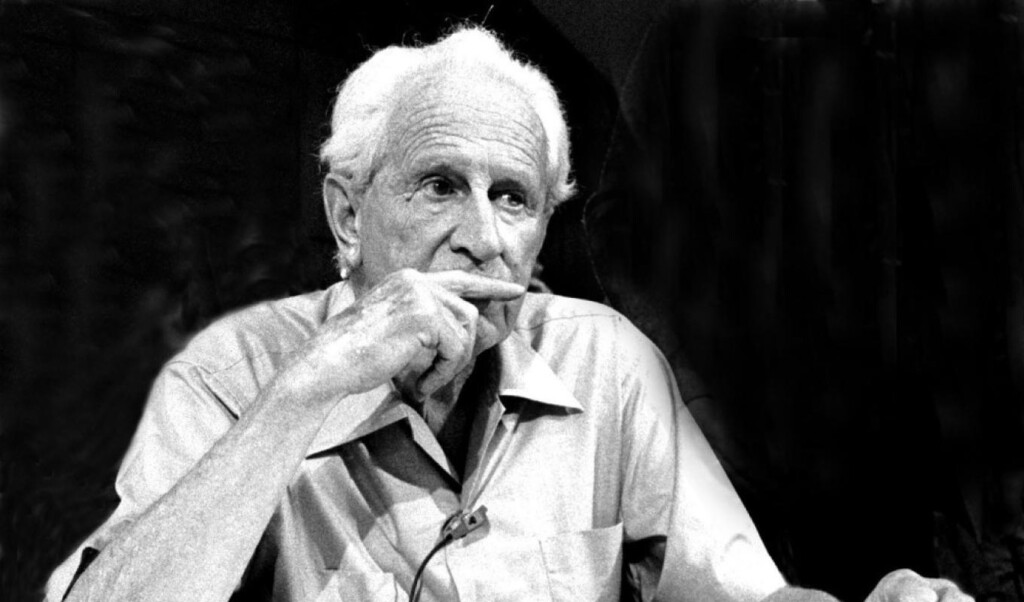
You scroll past the protest, the war footage, the grief — and then the sponsored post for noise-cancelling headphones, and you buy them. Not because you are callous. Because the architecture of the feed has abolished the distance between outrage and commerce, and in that abolition something very specific has died: the gap in which a reaction could become a thought.
Herbert Marcuse named this mechanism with surgical precision in “One-Dimensional Man,” published in 1964, at the exact moment when American consumer culture was completing its postwar expansion into every corner of private life. He called it the closing of the universe of discourse — the systematic elimination of the tension between what is and what could be. Classical critical thought, from Hegel onward, had depended on negation: the recognition that reality contains its own contradictions, that the present order carries within it the seeds of its own refutation. What Marcuse observed was a culture that had learned to absorb those seeds before they could germinate, to metabolize opposition as product.
The concept that carries the sharpest edge in his analysis is repressive desublimation. Freudian theory had long understood civilization as a structure built on sublimation — the redirection of raw instinctual energy, sexual and aggressive, into socially sanctioned forms: art, labor, religious devotion, intellectual ambition. Sublimation was costly. It produced neurosis, repression, the discontents that Freud catalogued with such clinical exactness. But it also produced, as a byproduct of its very frustration, a certain productive tension — the sense that something was being withheld, something more was possible. Marcuse’s insight was that advanced industrial society had devised a more elegant form of control: not the repression of libidinal energy but its managed release. Permissiveness, sexual openness, the softening of censorship, the proliferation of erotic content in advertising and entertainment — these did not represent liberation. They represented the domestication of the libido into a consumer act.
The radical impulse, in this reading, is not destroyed but satisfied at the wrong level. A hunger that might have driven someone toward genuine transformation — toward art that ruptures convention, toward politics that imagines structural change, toward intimacy that demands real vulnerability — is instead fed a processed substitute that mimics satisfaction while foreclosing the deeper appetite. The entertainment industry did not need to ban subversive desire. It needed only to offer it back, repackaged, at a price point accessible to the middle class. By 1964, it had become very good at this. By the time streaming platforms arrived, it had perfected it.
What makes this particularly difficult to see from inside is that it presents itself as freedom. The expansion of sexual representation in popular culture over the second half of the twentieth century was genuinely experienced by millions of people as a loosening of constraint, a defeat of puritanical repression. And it was — at one level. Marcuse was not arguing that sexual freedom was illusory or that permissiveness was simply propaganda. He was arguing something more precise and more unsettling: that a liberation which leaves the underlying structure of domination intact is not liberation but its continuation by other means. The chains become invisible precisely because the prisoner is no longer uncomfortable.
Consider what gets called transgressive in mainstream culture: a pop star’s costume, a streaming series that depicts explicit violence or sexuality, a comedian who crosses a line. The transgression is announced, celebrated, immediately monetized. The infrastructure that produces and distributes it remains entirely unquestioned. This is not an accident of market logic — it is market logic achieving its highest function, which is to simulate the experience of crossing a boundary while reinforcing the boundary’s actual location. Genuine negation would not be celebrated. It would be inaudible, or it would arrive in a form so strange that the apparatus of culture would not know what to do with it before it had already done its work.
Altin in the City

Drama, thriller, by Fabio Del Greco, Italy 2017.
Altin, aspiring Albanian writer arrived in Italy aboard a large ferry in the 90‘s, works in a butcher shop when he’s selected to audition for a reality of writers and finally sees a chance to be successful with his book “the journey of Ismail.” Unfortunately, this is the begin of the adventures which will lead him to learn about revenge, loneliness and extreme poverty, to the dark side of wealth and success.
The theme of Altin in the City should not lead to the assumption that it is merely the story of a young immigrant trying to integrate. In reality, it is a tale where greed, thirst for power and success, cynicism, and ambition intertwine, creating a sort of modern-day Faust and a new "pact with the devil" belonging to the 22nd century, which we could summarize as: show business. The reality show becomes the Mecca, the keystone, and the springboard for those who wish to achieve success without effort. Del Greco presents this world with subtle irony, characterized by kitsch nuances and parodic tones. However, success without effort comes at a price: Altin has sold his soul to the devil and, from being an easy prey of television showbiz, will soon become a victim of himself.
LANGUAGE: Italian
SUBTITLES: English, French, Spanish, German.
False Needs and the Architecture of Desire
You are already tired, but you open the app anyway. Not because you decided to. Because the phone was there, and your thumb already knew what to do before the thought arrived. This is not weakness. This is architecture.
Herbert Marcuse drew a line in 1964 that most economists and psychologists were professionally motivated not to see: the distinction, elaborated across the opening chapters of One-Dimensional Man, between needs that emerge from within a person’s genuine development and needs that are implanted from without, then made to feel internal. The category he called “false needs” was not a moral judgment about what people should want. It was a structural diagnosis about who is doing the wanting — or rather, who profits from the wanting being done. A need manufactured by an external apparatus and then experienced as private desire is not liberation through consumption. It is the most efficient form of control ever devised, because the subject polices herself.
The empirical ground beneath this argument was specific and dateable. Between 1945 and 1960, American advertising expenditure grew from approximately 2.9 billion dollars annually to over 12 billion. This was not simply more of the same persuasion. This was the moment when the industry absorbed the findings of Vance Packard‘s 1957 exposé The Hidden Persuaders and, rather than being embarrassed by them, used them as a manual. Motivational research, pioneered by Ernest Dichter throughout the late 1940s and 1950s, relocated the target of advertising from the rational consumer to the unconscious one. Dichter understood that a convertible automobile sold not transportation but a mistress; that baking a cake from a mix felt hollow to women until the recipe required cracking a real egg, restoring the performance of creation while eliminating its labor. The product was never the object. The product was the feeling of being the kind of person who owns it.
Planned obsolescence made this architecture permanent rather than episodic. General Motors under Alfred Sloan had already institutionalized annual model changes by the 1930s, but the postwar acceleration transformed the principle into a metabolic rhythm. Brooks Stevens, the industrial designer who formalized the term in 1954, was frank: the goal was to instill in the consumer “the desire to own something a little newer, a little better, a little sooner than is necessary.” The machine did not break. The self broke — the version of the self attached to last year’s machine. Identity was synchronized to the production cycle, which meant identity was perpetually provisional, perpetually repairable through purchase.
Marcuse’s deeper claim was that this process did not merely satisfy existing desires efficiently. It colonized the very formation of desire, making it nearly impossible to locate a wanting that had not been seeded by the system producing the goods. Sigmund Freud had theorized sublimation as the painful redirection of drives toward socially permissible forms; Marcuse’s 1955 work Eros and Civilization had already argued that advanced capitalism demanded surplus repression beyond what civilization structurally required. By the time One-Dimensional Man arrived, the argument had sharpened: the consumer economy did not simply redirect energy — it generated pseudo-satisfactions precise enough to prevent the dissatisfaction that might otherwise accumulate into refusal. The television set in the living room, the refrigerator stocked beyond need, the car replaced on schedule — each object absorbed a quantum of frustrated longing and neutralized it before it could become political.
What makes this genuinely unsettling is not the cynicism of the advertisers. It is the sincerity of the consumers. The woman who feels genuinely happier after the purchase, the man who experiences authentic pride in the new model — their feelings are real. Marcuse was not calling them stupid. He was saying that a system sophisticated enough to manufacture real feelings through artificial needs has already operated at a depth where the usual instruments of critical self-examination cannot easily reach.
The Disappearing Proletariat and the Crisis of Revolutionary Theory
You are standing in a kitchen in Warren, Michigan, sometime in the spring of 1965. The linoleum is clean. The refrigerator hums. Through the window, a Chevrolet sits in the driveway with two years left on its payments, and through the wall comes the sound of a television set narrating a world that requires no participation from you. You work the line at a plant that stamps sheet metal into car doors. You are not miserable in any way that feels political. You are tired, sometimes, and you want the weekend, but you do not want revolution. You have never wanted revolution. You want your son to go to college, your roof to stop leaking, and the Tigers to win the pennant. Marx looked at a man like you and saw the historical agent of transformation. Marcuse looked at you and felt the cold vertigo of a theory dissolving.
The expectation that industrial workers would become the revolutionary subject of history was not a peripheral hypothesis — it was the structural spine of classical Marxist thought. Friedrich Engels had watched Manchester in the 1840s and seen a class forged in deprivation, structurally positioned against capital, destined by its very material conditions to become conscious of itself and act. The prediction was not sentimental. It was grounded in the logic that those with nothing to lose but their chains would, eventually, lose their willingness to wear them. What no one fully calculated was the extraordinary adaptive capacity of the system to manufacture something to lose.
By the time Marcuse published One-Dimensional Man in 1964, median family income in the United States had nearly doubled since 1947. Union membership had peaked at thirty-five percent of the workforce. Suburban homeownership was not a dream deferred but a statistical reality for millions of working-class families. The chains had been replaced with mortgages, and mortgages created a new kind of subject — one with an acute interest in the stability of the very system that exploited him, because that system was now also the guarantor of his property. Antonio Gramsci had theorized hegemony as the process by which a ruling class secures the active consent of those it dominates, but even Gramsci, writing from a Fascist prison in the 1930s, could not have anticipated how thoroughly consumer prosperity would do the work that coercion once required.
What Marcuse diagnosed was not false consciousness in the blunt, patronizing sense — the idea that workers were simply deceived and, once undeceived, would awaken. That framing had always underestimated people. What he identified was something more structurally insidious: a form of satisfaction that was real, that genuinely met real needs, but that simultaneously foreclosed the imagination of alternative arrangements. The worker in Warren was not brainwashed. His comfort was authentic. His preference for stability over upheaval was rational given everything he stood to lose. This is precisely what made it a crisis rather than merely an error. A theory can survive being wrong. It cannot as easily survive being made irrelevant by a condition it never anticipated.
The New Left absorbed this rupture differently depending on who was doing the absorbing. Some refused it entirely, insisting the working class remained the revolutionary subject and that appearances of integration were surface phenomena masking deeper contradictions. Others — and Marcuse gave them a theoretical framework, however unstable — began looking elsewhere: to students, to racial minorities, to the populations of the Global South, to those the system had not successfully absorbed because it had never needed to offer them anything. The proletariat had not betrayed the revolution. It had been purchased out of it, incrementally, appliance by appliance, and the receipt was the mortgage statement arriving every month like a small, domestic verdict on the limits of historical inevitability.
A vision curated by a filmmaker, not an algorithm
In this video I explain our vision
Art as the Last Enclave

You are standing in a gallery where someone has hung a urinal on the wall and called it art, and around you, people are nodding with the practiced confidence of those who have learned to perform understanding. A gift shop near the exit sells miniature replicas for thirty-two dollars.
What happened in that room is not a failure of art. It is a precise demonstration of how completely the system has learned to metabolize its own negation. The provocateur gesture, the object stripped from utility and placed inside the frame of contemplation, once carried within it a genuine act of estrangement — a demand that the viewer stop moving through the world on automatic pilot and feel the strangeness of what they had agreed to call normal. By the time it arrives in the gift shop, that demand has been converted into a product, and the product has been converted into a personality accessory, and the personality accessory has been converted into a form of belonging. The critical charge has been neutralized not by rejection but by embrace.
Herbert Marcuse spent the final years of his life arguing, against the grain of his own political reputation, that the revolutionary potential of art was not located in its content, not in socialist realism or agitprop murals or protest songs with correct messaging, but precisely in its formal capacity to make the world feel wrong. In The Aesthetic Dimension, published in 1978, the year before his death, he pushed against the Marxist orthodoxy that demanded art serve the revolution by depicting it. Authentic art, he insisted, operates by estrangement — by holding up a version of reality so intensely rendered that the reader or viewer is forced to experience the familiar as alien, to feel the weight of what has been suppressed in the ordinary organization of daily life. The beautiful and the terrible, in great literature, coexist without resolution. They do not teach you what to think. They make thought necessary by refusing to close.
This is precisely what Theodor Adorno had mapped in the late works of Beethoven — the refusal of synthesis, the insistence on rupture, the late style that would not soothe — and what he argued in Aesthetic Theory, published posthumously in 1970, made genuine art structurally incompatible with the culture industry not because it was difficult or inaccessible but because it refused the one thing the industry required of everything it touched: the promise of resolution. The commodity must satisfy. The authentic work must leave something unresolved, must leave the body slightly unsettled, must install a question that does not dissolve over the following hour.
The culture industry does not destroy this by burning books. It operates far more elegantly, by absorbing the gesture of transgression into the economy of attention and selling it back as sophistication. What was once a rupture becomes a brand. The poet who wrote from the edge of breakdown finds their work assigned in university syllabi with study questions designed to generate discussable answers. The novelist who spent seven years constructing a sentence that could not be paraphrased without losing everything it said is quoted in motivational contexts on platforms designed for the monetization of mood.
Marcuse understood that this was not a corruption of an otherwise intact system. It was the system functioning exactly as designed. The administered society does not leave pockets of resistance uncolonized; it colonizes them by reclassification, by reframing the wound as a feature, the dissent as a variety of content. The only art that escapes, temporarily and partially, is the art that refuses to be legible on the terms the market sets — not because it is obscure for the pleasure of obscurity, but because what it carries cannot survive translation into the currency of reassurance.
Whether such art can still be made inside the infrastructure that must produce, distribute, and monetize it is the question the gift shop has already answered, silently, in thirty-two-dollar increments.
The Great Refusal and Its Limits
You are twenty-two years old, and you have finally done it — quit the job, joined the movement, painted something on a wall that will be photographed and reproduced on a tote bag within eighteen months. The feeling is real. The rupture feels total. And that feeling of totality is precisely the problem.
Herbert Marcuse did not invent the idea of radical refusal — he sharpened it into a diagnosis. In his 1955 work Eros and Civilization, and then more surgically in the 1964 One-Dimensional Man, he argued that the system’s deepest achievement was not repression but integration: the capacity to absorb every gesture of negation and neutralize it by making it visible, purchasable, aspirational. The Great Refusal he called for was not a political program. It was an ontological stance — a refusal of the entire grammar of need and desire that advanced industrial capitalism had installed in the human body itself. He was describing something closer to a change in the nervous system than a change in government.
What made 1968 seismic was not its victories, because there were almost none in any durable legislative sense. What made it seismic was the simultaneity — Paris, Berlin, Mexico City, Chicago, Prague, Tokyo, all within the same calendar year, all producing the same imagery of young bodies against institutional force. The French students occupied the Sorbonne and declared, on walls that still exist in photographs, that beneath the cobblestones lay the beach. That image is now a screensaver. The slogan did not die from suppression. It died from reproduction.
The New Left that Marcuse championed — and that championed him in return, making him the unlikely grandfather figure of a generation he had not fathered — understood itself as categorically different from the Old Left precisely because it rejected the party structure, the vanguard model, the Leninist discipline of deferred gratification. It wanted liberation now, sensory, immediate, embodied. This was philosophically serious. It drew on Wilhelm Reich‘s work on the body as a site of political formation, on the Frankfurt School’s reading of authoritarianism as a psychological structure before it was ever a governmental one. But the very qualities that made the New Left philosophically rich — its emphasis on personal transformation, lifestyle, desire, authenticity — made it metabolically compatible with consumer capitalism in ways that took only a decade to become fully visible.
By the mid-1970s, the counterculture had been disaggregated into market segments. The music was a catalog. The fashion was a reference. The language of liberation had migrated into advertising copy with a fluency that should have been alarming but instead felt like validation — as if the market recognizing your values confirmed that your values were real. Luc Boltanski and Eve Chiapello documented this mechanism in The New Spirit of Capitalism, published in 1999, showing how management literature of the 1980s and 1990s systematically cannibalized the vocabulary of 1968 — autonomy, creativity, authenticity, self-realization — and redeployed it as the ideological foundation for flexible labor, the gig economy, the entrepreneurial self. The refusal had been eaten and excreted as a new form of compliance.
Marcuse saw the outline of this coming, and it made his later writings genuinely melancholic in a way that his admirers sometimes found inconvenient. He never rescinded the call for refusal. But he grew increasingly precise about what made refusal so difficult to sustain: not external suppression, but the internal architecture of desire that the system had already constructed before you arrived at consciousness. You do not rebel against what you need. And if the system has shaped what you need, then your rebellion will tend, with terrible reliability, to reproduce the structure it claims to oppose — louder, more colorful, better photographed, but structurally identical in every way that matters to the people who profit from your energy.
The Subject Who Cannot See the Cage
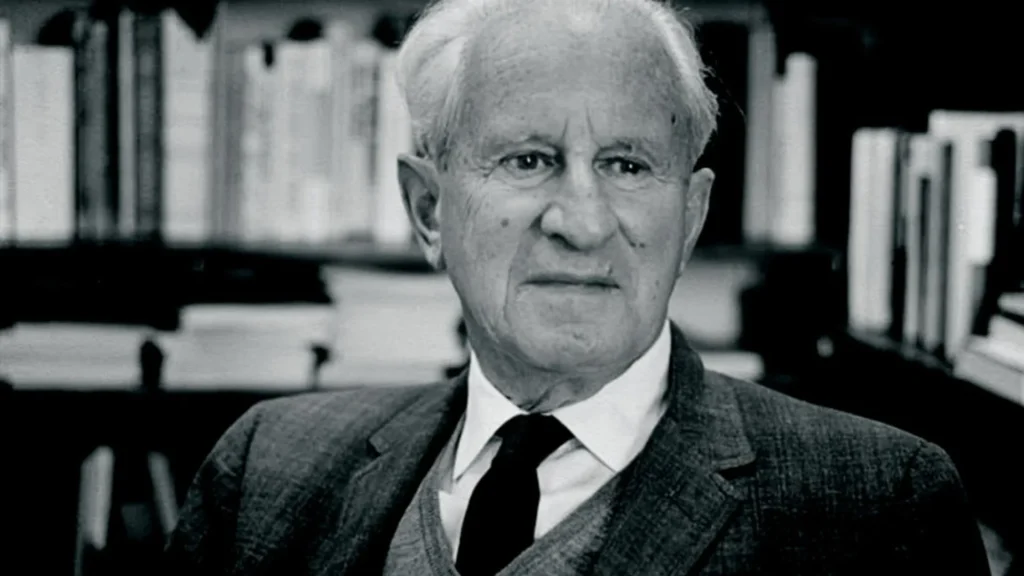
You are standing in a room you have lived in for so long that you no longer see the walls. Not because they have disappeared, but because the eye stops registering what it has learned to expect. The room becomes the definition of space itself, and the question of whether other rooms exist ceases to feel urgent, or even coherent.
This is the phenomenological core of what Herbert Marcuse diagnosed in One-Dimensional Man, published in 1964 at the precise historical moment when American consumer capitalism had achieved sufficient saturation to begin reproducing itself through desire rather than coercion. The book sold over 100,000 copies in its first years and became something of an ironic artifact — a critique of administered culture absorbed smoothly into administered culture, purchased, shelved, and cited without rupturing the conditions it described. Marcuse understood this would happen. He had watched the Frankfurt School’s earlier generation, Adorno and Horkheimer in particular, theorize the culture industry in Dialectic of Enlightenment in 1944, and he had watched those theories become academic commodities. The machine digests its own x-rays.
What Marcuse added, and what still cuts deeper than his predecessors, was his insistence that the damage is not primarily ideological but ontological. It is not that the subject believes the wrong things. It is that the subject has been restructured at the level of inner life such that the cognitive operation required to imagine genuine alternatives — what he called negative thinking, borrowed from Hegel’s dialectical negation — has been rendered functionally inoperable. Negative thinking is not pessimism. It is the capacity to hold the present against the measure of what is not yet real but remains possible. When that capacity atrophies, the present seals itself. It becomes self-evidencing. The cage does not need a lock if the prisoner has forgotten the concept of outside.
Sigmund Freud‘s later work, particularly Civilization and Its Discontents from 1930, had already mapped the psychological cost of social conformity in terms of repression and sublimation — the libido redirected, the drives tamed. Marcuse radicalized this by arguing in Eros and Civilization, in 1955, that advanced industrial society had achieved something Freud had not fully anticipated: surplus repression, a quantity of instinctual renunciation exceeding what social life actually requires, administered not through visible prohibition but through the structuring of pleasure itself. You are not forbidden from enjoying yourself. You are given an endless, pre-formatted menu of enjoyment specifically calibrated to absorb the energy that might otherwise become refusal. The satisfaction is real. That is what makes it effective.
What emerges from this is a subject who does not feel unfree because freedom has been redefined from within the terms of their own experience. The person who reports contentment is not lying. Their contentment is genuine — and that is precisely the problem that no ordinary political program can address, because ordinary political programs appeal to felt suffering, to recognized grievance, to a desire for something different that the subject can already name. When Georg Lukács wrote about reification in History and Class Consciousness in 1923, he still believed that the proletariat contained within itself a latent consciousness capable of recognizing its own situation. Marcuse, writing four decades later in a society that had materially incorporated the working class into its own reproduction, no longer had that confidence. The historical subject capable of negation had not been defeated. It had been administered into a different shape.
The question this leaves is not rhetorical. If the critical faculty is itself a product of the conditions it seeks to criticize, if the language available for negation has been pre-processed by the same apparatus that produces the thing being negated, then the essay you are reading right now — and the mind assembling it, and the mind receiving it — may already be performing a kind of containment rather than a breach, turning unease into content, transforming the recognition of the cage into one more thing the cage can hold.
🔴 Rebellion, Culture, and the Administered World
Herbert Marcuse’s critique of mass culture cuts to the heart of modern society: a one-dimensional world where even dissent is absorbed and neutralized by the system. The articles below trace the intellectual landscape surrounding Marcuse’s thought, from the aesthetics of liberation to the mechanics of manufactured consent.
Herbert Marcuse and Art: The Aesthetic Dimension
Marcuse argued that authentic art retains a utopian charge capable of negating the established order, preserving a vision of what society could become. This companion piece on Marcuse’s aesthetic theory explores how he saw art not as decoration but as a subversive force capable of awakening critical consciousness in individuals dulled by consumer culture.
GO TO THE SELECTION: Herbert Marcuse and Art: The Aesthetic Dimension
Erich Fromm and the Sane Society
Erich Fromm, like Marcuse, was shaped by the Frankfurt School’s urgent question: why do human beings consent to their own unfreedom? His vision of a ‘sane society’ diagnoses modern capitalist culture as a pathological structure that produces conformist, alienated personalities unable to love or think independently.
GO TO THE SELECTION: Erich Fromm and the Sane Society
Bernays’s Propaganda: Analysis
Edward Bernays translated Freudian psychology into a practical toolkit for manipulating mass behavior, laying the groundwork for the culture industry Marcuse would later so vehemently critique. His foundational text on propaganda reveals the deliberate engineering of desire and opinion that Marcuse saw as central to the repressive tolerance of liberal democracies.
GO TO THE SELECTION: Bernays’s Propaganda: Analysis
Postman’s Amusing Ourselves to Death: Analysis
Neil Postman‘s devastating analysis of television culture converges with Marcuse’s warnings about a society sedated by entertainment and spectacle. Postman argued that the medium of television restructures public discourse into pure amusement, eroding the very capacity for critical thought that Marcuse considered the last bulwark against total social control.
GO TO THE SELECTION: Postman’s Amusing Ourselves to Death: Analysis
Discover Cinema That Thinks Against the Current
If Marcuse’s ideas about mass culture and liberation resonate with you, independent cinema is one of the last spaces where genuine critical art still breathes. On Indiecinema streaming you can explore films that refuse the logic of the culture industry and dare to imagine otherwise — come discover them.
👉 EXPLORE THE CATALOG: Watch Indie Films in Streaming
A vision curated by a filmmaker, not an algorithm
In this video I explain our vision

