
Before the Veil Was Lifted
You are standing at the edge of something that has no clean name. The bog stretches before you in the failing light, its surface neither solid nor liquid, a kind of held breath between states. The rushes are perfectly still. There is no wind, and yet you feel — this is the only word — watched. Not threatened. Not welcomed. Watched, in the way that a threshold watches: neutrally, completely, without blinking. Your feet know better than your mind does, and they have stopped moving.

This is not metaphor. This is the specific phenomenological texture of a place that millions of people across centuries have recognized as charged — not haunted, which implies something wrong, but charged, which implies something present. The distinction matters enormously, because the entire architecture of Irish fairy belief rests on it. The Sidhe — pronounced roughly shee, a word whose orthography already signals that ordinary phonetic rules do not apply here — are not the dead. They are not demons. They are not hallucinations produced by hunger or isolation or the particular alkaloids that certain bog plants release at dusk. They are something else, and the most honest intellectual position available to you is to sit with that something else without immediately reaching for a category to dissolve it into.
Ireland’s relationship with what scholars of folklore call the Otherworld reaches back further than Christianity, further even than the earliest written records that monks began producing in the sixth and seventh centuries CE. The mythological material preserved in manuscripts like the Lebor Gabála Érenn — the Book of Invasions, compiled in its surviving form around the eleventh century but drawing on oral traditions of incalculable age — describes a sequence of supernatural peoples who inhabited Ireland before the Gaels arrived. The last and most luminous of these were the Tuatha Dé Danann, the people of the goddess Danu, who were defeated in battle but refused annihilation. Instead they retreated beneath the surface: into the hills, the mounds, the hollow places of the earth. The sídhe, originally, was not the being but the place — the fairy mound, the underground palace, the world adjacent to this one. The people who lived there absorbed the name of their dwelling until the word became them.
What the medieval scribes recorded with extraordinary fidelity was not a children’s story. It was a cosmology. The Tuatha Dé Danann in early Irish literature possess a moral complexity that is genuinely unsettling: they are not good, they are not evil, they are powerful in ways that make human ethical categories slide off them like water off stone. They abduct. They bless. They curse bloodlines for reasons that seem arbitrary until you understand that their sense of time and obligation operates on a scale entirely different from the human one. The folklorist Katharine Briggs, whose 1976 work A Dictionary of Fairies remains one of the most rigorous taxonomies of fairy tradition in the British Isles, noted that across Celtic tradition the most consistent characteristic of fairy beings is not glamour or malice but a quality she described carefully as otherness — a difference in kind rather than degree.
That quality is what you feel standing at the bog’s edge. Not danger exactly, though danger is available as a subset of it. Something more foundational: the sensation that the world you were operating inside, the one with predictable edges and explicable causes, has become thinner here, more permeable, and that whatever presses against the other side of it is neither sleeping nor unaware of you. The peasant farmers of Connacht and Munster who left offerings at fairy thorns — solitary hawthorn trees that stood in the middle of fields, which no one would cut even at great practical inconvenience — were not being superstitious in any dismissive sense. They were being precise.
Cathnafola - A Paranormal Investigation
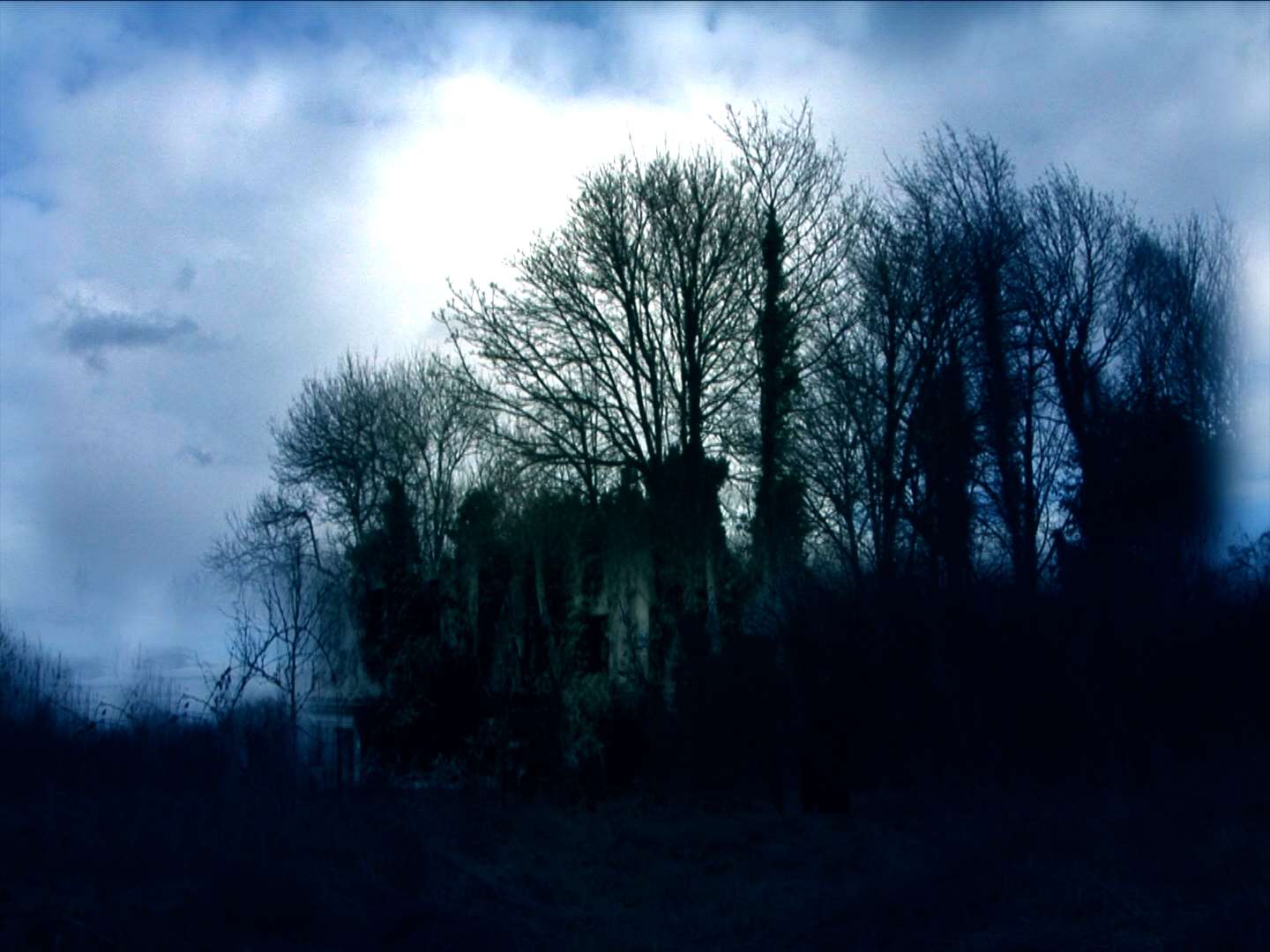
Documentary, horror, by Jason Figgis, USA, 2014.
In "Cathnafola", everything begins when renowned paranormal investigator Chris Halton of Haunted Earth UK receives footage filmed by three teenagers at the ruins of Cathnafola House in Ireland. Determined to unearth the truth behind the location’s bloody past, Halton embarks on a nighttime exploration of the infamous ruins—and soon uncovers terrifying and disturbing revelations.
LANGUAGE: English
SUBTITLES: Spanish, French, German, Portuguese
The Dispossessed Gods
You do not find the Sidhe by looking under hills. You find them by asking who used to own the sky.
Before the fairies were fairies, they were gods. The Tuatha Dé Danann — the People of the Goddess Danu — arrived in Ireland shrouded in cloud and fire, according to the Lebor Gabála Érenn, the Book of the Taking of Ireland, compiled by medieval Irish monks around the eleventh century from far older oral traditions. They were beings of impossible competence: masters of craft, magic, healing, and war. Lugh was the god of light and skill. The Dagda commanded the seasons with a club that killed with one end and restored life with the other. The Morrigan moved through battlefields as a crow, deciding who would live and who would fall before the first sword was raised. These were not gentle, luminous creatures. They were the architecture of the world.
What undoes them is not a greater power but a political one. The Milesians — mythologized as the ancestors of the Gaelic Irish, arriving from Spain, from the edge of the known world — defeat the Tuatha Dé Danann in a war that the Lebor Gabála frames as legitimate succession. A treaty follows, and it is the kind of treaty that victors write. Ireland is divided horizontally: the Milesians take the surface, the visible world of soil and harvest and sunlight. The Tuatha Dé Danann are given what lies beneath, the interior of the hollow hills, the sídhe, the mounds that dot the Irish landscape like old punctuation marks. Newgrange, Knocknarea, Knockainey — these were not merely burial sites in the mythological imagination. They were embassies to a dispossessed civilization.
The mechanism is precise and worth holding. When a new theology displaces an older one, the former gods do not simply vanish. They shrink. They are not destroyed but demoted, their portfolios reclassified, their sovereignty reframed as something local, hidden, and potentially dangerous. Historians of religion have tracked this pattern with uncomfortable consistency. The interpretive tradition known as Euhemerism — named for the Greek scholar Euhemerus of Messene around 300 BCE — argued that gods were originally human heroes mythologized over time. Irish monastic scholars did something subtler and more consequential: they ran the process in reverse, taking actual gods and reclassifying them as ancient kings and supernatural beings, powerful but bounded, present but underground. The Tuatha Dé Danann survived the arrival of Christianity not through resistance but through renegotiation.
What makes the Irish case unusual is the degree to which this renegotiation preserved the emotional weight of the original theology. Most of Europe’s pre-Christian divine figures were either absorbed directly into saint veneration or erased by concerted ecclesiastical effort. In Ireland, the monks who compiled the Lebor Gabála were simultaneously recording and domesticating a cosmology they could not quite bring themselves to abandon. The result is a text that reads like scripture and elegy at once — a formal account of conquest that barely conceals its grief at what was lost. The Tuatha Dé Danann are defeated, yes, but they are never made contemptible. They retreat with dignity into the earth, and the earth, in the Irish imagination, remembers them.
This is where the Sidhe as a category of being emerges — not from primitive superstition or decorative fancy, but from the wreckage of a displaced cosmology. The fairy mound is not a poetic image. It is a precise theological statement about where power goes when it loses a war. It goes underground. It does not die; it waits. And the people living on the surface above it continue to leave offerings, to avoid certain hills at dusk, to speak carefully near the old earthworks — not out of charming rural habit, but because some part of cultural memory understands that the beings below were not always below, and that the terms of the treaty were never really final.

Hollow Hills and the Architecture of Exclusion
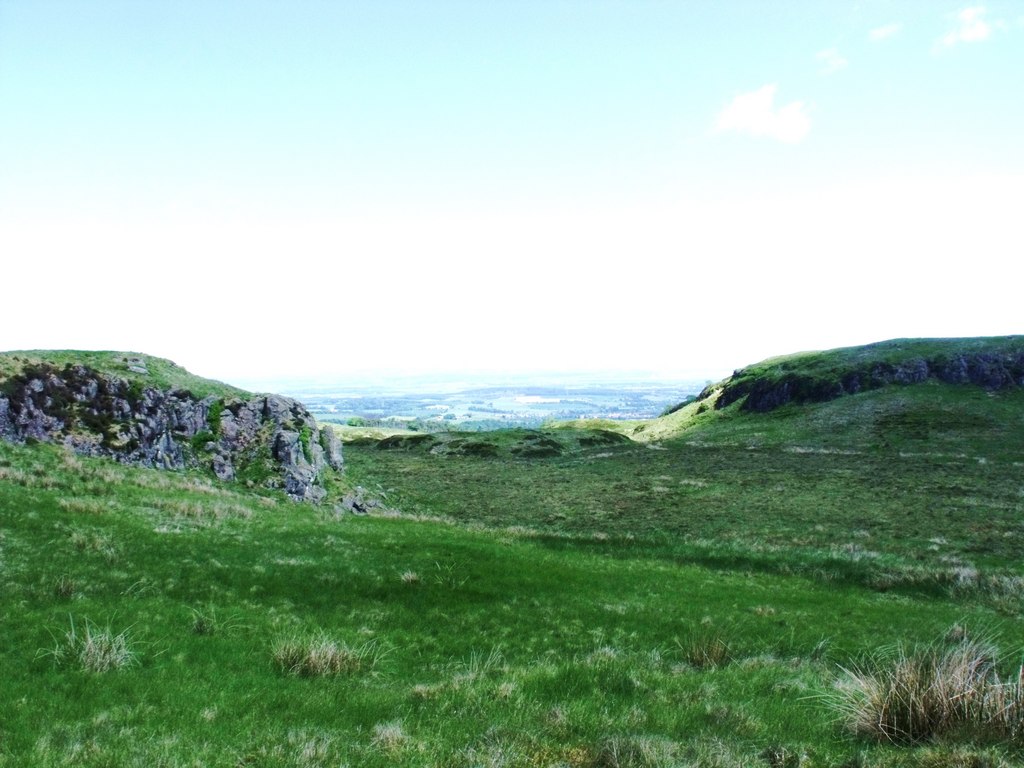
You have walked past a hill that breathes. Not metaphorically — in the old Irish imagination, the mounds scattered across the midland plains and river valleys were understood as inhabited, pressurized, alive with interior weather. The síde were not ruins. They were residences with the doors shut.
What makes this architecturally strange is that the doors were shut by someone else entirely. Newgrange, constructed around 3200 BCE in the Boyne Valley, predates the Egyptian pyramids by roughly six centuries and Stonehenge by a thousand years. The people who aligned its entrance passage with the winter solstice sunrise, who calculated the precise nineteen-minute annual illumination of its inner chamber, had been dead for millennia before the Celts arrived in Ireland. The Celts did not build the mounds. They inherited them, misread them, and then, in that misreading, accidentally preserved something the builders themselves never intended: a living sense of sacred geometry encoded in stone.
The act of renaming is never innocent. When medieval Irish scribes, most of them ecclesiastically trained, began committing oral tradition to vellum in manuscripts like the Lebor Gabála Érenn — compiled in its current form around the twelfth century CE — they performed a theological maneuver so elegant it barely registers as violence. The Tuatha Dé Danann, the divine race displaced by the Gaels in the mythological invasion sequence, were not destroyed. They were diminished and relocated underground, into the very mounds that had already been standing for three thousand years. The pre-Christian sacred was not abolished. It was rezoned.
This is what institutional power does when it cannot erase: it reclassifies. The historian Ronald Hutton, in his 2014 study Pagan Britain, documents the consistent Christian strategy of converting rather than demolishing sacred sites — a directive articulated explicitly by Pope Gregory I in 601 CE, who instructed Augustine of Canterbury to repurpose pagan temples rather than destroy them. In Ireland, the logic extended underground. What could not be sanctified was submerged. The mounds became the dwelling places of beings who were powerful but diminished, numinous but no longer worshipped, present but no longer sovereign.
The psychological consequence of this architecture of exclusion is rarely examined with sufficient seriousness. A culture does not simply stop believing because its official theology changes. It continues believing in the grammar of the new vocabulary. The fairy faith documented by Lady Augusta Gregory in her 1920 collection Visions and Beliefs in the West of Ireland — drawn from interviews with rural Connacht communities — reveals a population that maintained absolute conviction in the síde not as folklore but as operational reality. Farmers left offerings. Paths were altered to avoid disturbing mounds. Illness was attributed to fairy interference, and specific ritual responses were culturally encoded. This was not nostalgia. It was a parallel epistemology running alongside Christianity, largely untroubled by the contradiction.
What that parallel system preserved, beneath its narrative surface, was a relationship to the land as inhabited by intelligence that did not originate with human beings. The mounds are not empty. Archaeologically, they contain the cremated remains of the Neolithic dead, arranged with a spatial intentionality that implies cosmological belief systems still only partially understood. The passage tomb builders left no written record. What they left was orientation — a word that contains within it the point toward which one turns. The Irish tradition, without ever accessing the original builders’ intentions, intuited that these structures demanded orientation, that you did not stand beside them neutrally.
Georges Dumézil argued across decades of comparative work, particularly in his 1958 examination of Indo-European religious structures L’idéologie tripartite des Indo-Européens, that sacred geography functions as social memory made spatial. The mound does not merely mark where something happened. It insists that something continues to happen there, invisibly, whether or not the living have the perceptual equipment to witness it.
The Good Neighbors and the Grammar of Fear
You leave a bowl of cream on the doorstep before bed, not because you believe in anything, but because you are not entirely sure you don’t. That hesitation — that gap between skepticism and performance — is precisely where an entire grammar of social survival has lived for centuries, passed down not as superstition but as manners, encoded into the language long before anyone thought to write it down.
The Irish called them the Good People. They called them the Good Neighbors. They called them the Gentry, the Fair Folk, the Gentle Ones. Not one of these names describes what anyone actually believed them to be. Every name is a negotiation, a verbal bow, a small sacrifice of accuracy made in exchange for something far more valuable: distance. When Lady Augusta Gregory spent years in the early twentieth century moving through the cottages and small farms of County Galway, collecting testimony for what would become her 1920 publication Visions and Beliefs in the West of Ireland, she encountered this linguistic pattern at every threshold. The people she interviewed did not call these beings dangerous. They called them proud. They did not say they feared them. They said one had to be careful. The flattery was structural, grammatical, built into every sentence like a load-bearing wall.
Gregory was working, largely without knowing it, inside a tradition that ethnographers would later recognize as a near-universal feature of subordinated communities living in proximity to unpredictable power. When the source of harm is also the source of potential protection — when the entity that can destroy you is the same one you must petition for relief — direct language becomes a liability. The anthropologist James C. Scott, writing in 1990 in Domination and the Arts of Resistance, called this the hidden transcript: the private account of power that communities maintain behind the public performance of deference. In rural Ireland, the hidden transcript was not hidden at all. It was the cream on the doorstep. It was the turn of phrase that praised where it feared, that named beauty where it meant danger. The Sidhe were good the way a flooded river is good when you say nothing to antagonize it.
What makes Gregory’s fieldwork so structurally revealing is the consistency of reported reasoning. Again and again, her informants describe encounters in terms of offence given and punishment received. A man crossed a fairy path at the wrong hour. A woman spoke too directly about a neighbor’s health. A child was admired without the protective formula that deflects envy. The logic running beneath all of these accounts is not magical — it is precisely the logic of any community that has learned, across generations, that visibility invites loss. Colonial Ireland had been teaching this lesson in its political register for centuries by the time Gregory arrived with her notebook. The linguistic treatment of the Sidhe simply formalized in mythological language what daily life had already made instinctive.
There is something worth sitting with in the fact that the protective names — Good People, Good Neighbors — are grammatically indistinguishable from actual praise. The language of appeasement and the language of genuine admiration use the same words. This is not coincidence but design, because genuine admiration is, structurally, safer than irony. If the words you use to placate a dangerous force are identical to the words you would use to praise something genuinely beloved, then you can never be caught in the wrong register. The flattery becomes unsearchable. It looks, from any angle, like sincerity. Communities that have lived under scrutiny — whether from landlords, from the church, from forces that could interpret meaning against the speaker — develop precisely this kind of language: words that pass every inspection because they have been engineered to carry two meanings simultaneously while committing to neither.
Changelings, Consumption, and Colonial Medicine
You wake one morning and the child in the bed is not quite the child you left there. The face is the same, the hair, the small curve of the jaw — but something behind the eyes has gone quiet in a way that didn’t exist yesterday, and you have no language for what you are seeing except the language your grandmother gave you.
The changeling is not, at its root, a superstition. It is a diagnostic system. When a previously thriving child began to waste — losing flesh, losing speech, losing the ordinary hungers of childhood — the community needed a framework that could hold the horror of watching someone disappear from inside their own body. Tuberculosis, which killed approximately one in four people across Ireland and Britain throughout the eighteenth and nineteenth centuries, produced exactly this spectacle: the slow hollowing of a person, the replacement of vitality with something pale and insistent and wrong. The fairy substitution narrative gave that process a grammar. The real child had been taken; what remained was a simulacrum, a stock of wood or enchanted elder animated just enough to deceive, consuming resources without growing, present without truly being there.
What the myth also encoded, quietly, was the community’s recognition of neurological and developmental difference. Children who did not speak on schedule, who did not make eye contact, who moved their bodies in unfamiliar ways, or who raged without apparent cause — these children had always existed, and the changeling framework absorbed them. The Reverend Robert Kirk, whose 1691 manuscript The Secret Commonwealth attempted a near-ethnographic account of fairy belief in the Scottish and Irish Gaelic world, described the Sidhe as capable of inhabiting bodies without displacing the soul entirely, producing something like dual occupancy, a self divided from itself. Kirk was writing theology, but he was also writing phenomenology, attempting to describe dissociation, possession, and radical inner absence in the only available vocabulary.
What British colonial administration did in the nineteenth century was perform a deliberate misreading. Researchers and medical officers dispatched to document rural Irish life — men like George Cornewall Lewis, whose 1836 report on the Irish poor shaped parliamentary opinion for decades — encountered these belief systems and treated them not as functional frameworks for managing unbearable experience but as evidence of an irreducible primitivism. The argument, made with bureaucratic patience and the full authority of published medical literature, was that a population which explained disease through fairy intervention was constitutionally incapable of rational self-governance. The 1843 Devon Commission on Irish land use made adjacent claims: that Irish agricultural failure was not a function of rack-renting or enforced monoculture but of the peasant’s cognitive relationship to the land, which remained mystical and therefore inefficient.
This move — converting a coping mechanism into a character flaw — is one colonialism performs with extraordinary consistency. The Bridget Cleary case of 1895, in which a twenty-six-year-old woman in County Tipperary was burned to death by her husband and family who believed she had been replaced by a fairy, was immediately seized by the English press as confirmation of the Irish peasant’s dangerous irrationality. What the press did not report with equal energy was that Bridget Cleary had been acutely ill with bronchitis and a possible nervous episode, that she had been refused adequate medical care, that the local dispensary doctor had visited her briefly and without proper equipment in a rural area with no transport, and that the violence done to her was the violence of people trapped between a vanishing traditional framework and a colonial medical system that treated them as unworthy of its serious attention.
The fairy belief did not kill Bridget Cleary. The fairy belief was what filled the vacuum left by every structure that had already failed her before her husband ever lit the match.
A vision curated by a filmmaker, not an algorithm
In this video I explain our vision
W.B. Yeats and the Romanticism Trap

You are reading Yeats the way he wanted to be read — as a custodian, a reverent hand lifting fragile things from the dark. His 1888 collection Fairy and Folk Tales of the Irish Peasantry arrives dressed in exactly that posture: the careful editor, the sympathetic outsider, gathering the whispered cosmology of cottages and bogs before modernity swallows it whole. The book sold. It was praised. It made the Sidhe legible to London drawing rooms, to American parlors, to anyone who wanted Ireland mythic and manageable at the same time. That is precisely the problem.
Yeats belonged to the Protestant Ascendancy, the Anglo-Irish landowning class whose relationship to Gaelic culture was structurally one of displacement. His family did not speak Irish. His education was English. His literary ambitions were oriented toward a metropolitan audience that found Celtic mysticism decorative, pleasantly melancholic, safely remote from the actual political emergency of tenant evictions and famine memory. When he combed through oral accounts and regional folklore to assemble his collection, he was not recovering a living tradition — he was performing an extraction. The materials he lifted from informants like Lady Wilde’s compilations, from the work of Jeremiah Curtin, and from regional collectors existed inside communities where the Sidhe functioned as a live explanatory and protective system. Yeats reframed them as literature. That reframing was not neutral.
The philosopher Walter Benjamin, writing decades later in his 1936 essay “The Work of Art in the Age of Mechanical Reproduction,” argued that reproduction strips an object of its aura — the singular, contextual presence that gives it weight inside a specific place and time. Something adjacent happens when oral cosmology gets anthologized. The belief does not travel with the text. What travels is the image of belief, cleaned of its social function, its ethical stakes, its community obligations. A story about the Sidhe stealing a child was not merely atmospheric in a Connacht household in 1840. It carried instructions about how to protect infants, how to read illness, how to negotiate with forces that exceeded human control. Printed in London and bound in cloth boards, it became evidence of Irish quaintness.
This is the mechanism of what the postcolonial theorist Homi Bhabha would later describe as cultural ambivalence — the colonized subject produced as simultaneously familiar and strange, knowable and exotic, worth preserving and incapable of self-preservation. Yeats did not invent this dynamic, but his work reproduced it with unusual elegance. The very beauty of his prose, the lyricism he brought to editorial framing, functioned as a kind of aesthetic anesthesia. Readers encountered fairy lore as poetry, which meant they encountered it as already past. The Sidhe became heritage before the communities housing that belief had consented to its museumification.
What makes this genuinely difficult is that Yeats was not cynical. He believed, or half-believed, or wanted to believe, which is its own kind of epistemological trap. His later engagement with occultism, automatic writing, and the elaborate symbolic architecture of A Vision in 1925 suggests a man genuinely desperate for a cosmology that could hold. That desperation is legible in the 1888 collection too, if you read against the editorial grain — the slightly too-eager framing, the moments where his voice edges toward longing rather than documentation. But sincerity does not neutralize structural effect. A well-meaning hand can still pin a butterfly.
The communities who carried these traditions into the nineteenth century were not fragile archives waiting for a literary rescuer. They were functional epistemic worlds, capable of internal contradiction, adaptation, and survival, as the persistence of Sidhe belief through successive catastrophes of famine, emigration, and colonial suppression makes plain. The Ascendancy gaze that Yeats brought to bear was not the first threat those worlds had faced, but it was among the more seductive — because it arrived wearing the face of admiration, and admiration is the slowest kind of erasure.
The Wild Hunt and the Psychic Life of Liminal Time
You hear it before you see it — a roar moving through the upper air on a November night, shapeless and pressurized, the kind of sound that makes animals go still and people close their shutters without knowing why. In the Irish tradition, that sound has a name: the Sluagh Sídhe, the fairy host, the aerial procession of the restless dead and the displaced supernatural riding hard across the sky between Samhain and the deep of winter. What communities across centuries of Atlantic Ireland were mapping, in that sound and that dread, was not superstition in the dismissive sense but something far more structurally honest — a collective phenomenology of the psychic pressure that accumulates precisely at the hinge points of the year, when the light fails catastrophically and the boundaries between the living and everything else become, if not permeable, then at least unconvincing.
Claude Lecouteux, in his 1999 study Phantom Armies of the Night, demonstrated with exhaustive cross-cultural rigor that the Wild Hunt — in its dozens of regional incarnations across Germanic, Slavic, Celtic, and Romance traditions — cannot be explained as local folklore that happened to rhyme across Europe by coincidence. The structural skeleton is too consistent: a leader figure of ambiguous divinity or damnation, a retinue of the dead or the marginal, movement through the sky or at ground level with terrifying speed, and a temporal logic that locks the phenomenon almost exclusively to the liminal seasons, the ember days, the Twelve Nights, the windows between agricultural cycles when normal time pauses and something older seeps through. Lecouteux’s argument is that these traditions preserve, under centuries of Christian overpainting that reframed the host as demonic, a stratum of pre-Christian European belief in which the dead did not rest but rode, and in which the boundary between human community and its uncanny remainder was negotiated seasonally rather than permanently settled.
What makes the Irish Sluagh Sídhe distinctive within this pan-European structure is the degree to which it refuses to fully demonize its participants. Unlike the Christianized Wild Hunt of continental traditions, where the riders are unambiguously damned or punished souls, the fairy host in Irish lore carries a more uncomfortable ambivalence — these are beings who may take the living with them, who may have once been human, who operate according to an internal logic that is neither merciful nor malicious but simply other. The terror is not moral but ontological. The host does not punish wickedness. It moves, and if you are standing in its path on the wrong night in the wrong state of openness, it takes you, and the taking is described not as violence but as a kind of involuntary enrollment, a conscription into a collective that was already in motion before you had any say.
Psychologically, what the Sluagh externalizes is the experience of being overwhelmed by forces that feel simultaneously internal and collective — the way grief, mania, or certain forms of despair do not feel like personal states but like weather that passes through entire communities at once. The liminal calendar is not arbitrary decoration around these experiences. Agricultural societies in Ireland knew, viscerally and economically, that the transition into winter was a genuine threshold of survival. The psychic intensity of that threshold needed a form, and the roaring aerial host gave it one that was social rather than private — something heard together, something that organized collective anxiety into a shared narrative shape rather than leaving each person alone with unnameable dread.
The Church spent considerable institutional energy between the ninth and thirteenth centuries attempting to strip these processions of any dignity or autonomy, insisting through canon law and theological commentary that what people were hearing was demonic illusion rather than genuine supernatural traffic. The Canon Episcopi, drafted around 906, specifically targeted beliefs in night-riding women following a goddess figure, declaring such visions the devil’s fabrications in minds weak enough to mistake dreams for reality. What the Church was actually confronting was not delusion but a competing cosmological system with its own calendar, its own population of the dead, and its own account of where the edges of the human world actually fall.
What the Land Remembers When People Forget
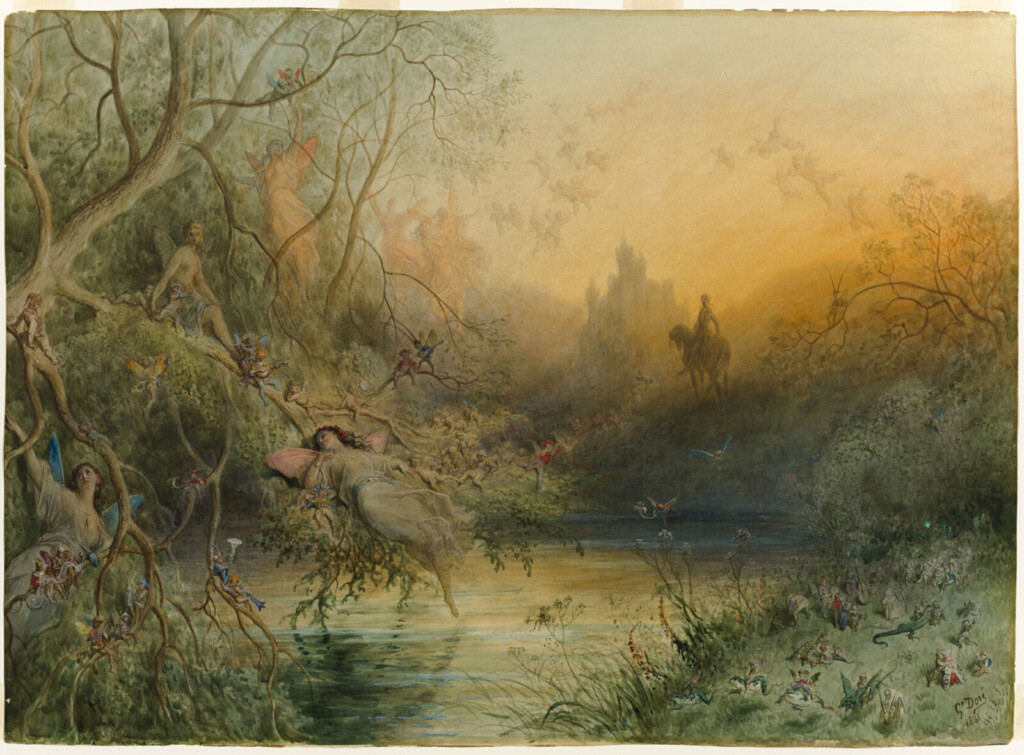
You have driven past that thorn tree on the N18 without knowing what it cost to leave it standing. In 1999, the Clare County Council rerouted a major road improvement scheme around a single hawthorn growing in a field outside Lahinch because the construction crew refused, flatly and without embarrassment, to cut it down. Engineers adjusted their plans. The tarmac curved. The tree remained. The Irish Times covered it with a tone caught somewhere between amusement and unease, and the international press picked it up as a charming oddity, evidence that the old island still harbored its picturesque irrationalities. What none of the coverage could quite process was that the workers who refused were not performing folklore. They were making a risk calculation rooted in a knowledge system that the language of cost-benefit analysis has no vocabulary to accommodate.
The anthropologist Robin Wall Kimmerer, writing in a different context entirely, observed that indigenous plant knowledge encodes millennia of ecological observation in the grammar of relationship rather than the grammar of extraction. The fairy thorn tradition in Ireland functions along precisely this axis. The lone hawthorn standing in a field is almost always a remnant of a boundary marker, a species indicator for subsurface water, or a node in what pre-enclosure agriculture treated as a semi-sacred network of hedge and scrub that served as windbreak, livestock shelter, and corridor for pollinating insects. To destroy it was not merely to offend the invisible; it was to unravel a set of practical consequences that had been translated, over generations, into the sturdier and more emotionally compelling currency of supernatural danger. The warning survived because the narrative form that carried it was more durable than any agricultural manual.
This is what the ethnographic record quietly insists upon when you read it with patience. The Irish Folklore Commission, founded in 1935 under the direction of Séamus Ó Duilearga, gathered over a million manuscript pages of testimony from ordinary people across the country before its formal archive was transferred to University College Dublin in 1971. What those pages show is not a population of believers in the folkloric sense — credulous, passive, performing received tradition. They show people actively negotiating between two epistemic registers, the official and the embodied, and choosing, often tactically, which to deploy in which moment. The fairy belief was not separable from land tenancy disputes, from famine memory, from the specific grief of a community that had watched its neighbors die in mass quantities while the language of rationalism was used to justify governmental inaction. When Charles Trevelyan administered British relief policy during the famine of the 1840s, he described the catastrophe as a providential correction of Irish overpopulation, a statement that used the full apparatus of educated, modern, secular reasoning to arrive at a conclusion that murdered approximately one million people and drove another million into exile within five years. The Sidhe were not responsible for that. The rational administrators were.
What a civilization loses when it pathologizes distributed, narrative, embodied knowledge is not sentiment. It is redundancy. Every epistemological system has blind spots, and the blind spots of the quantifying, extractive, progress-oriented mind are vast and well-documented by now — not by romantics, but by systems ecologists, trauma researchers, and historians of colonial science who have spent the last half century mapping precisely where the official confidence went catastrophically wrong. The fairy tradition carried within it a fear of hubris toward the nonhuman world that had no other institutional container in a society that had been stripped of its formal knowledge structures by three centuries of legal suppression, its bardic schools dissolved, its learned classes scattered or killed. The stories were the institution. They were the library that looked like superstition to anyone who had never needed to hide a library inside a story.
The thorn tree outside Lahinch is still standing.
🍀 Spirits, Myths and the Enchanted Celtic World
The Sidhe, the fairy folk of Irish legend, dwell at the crossroads between the visible and invisible worlds, carrying with them centuries of myth, mystery, and cultural memory. To understand them is to enter the deep roots of Irish identity, where folklore, Gothic imagination, and the supernatural intertwine. These related articles illuminate the many dimensions of that haunted, enchanted landscape.
Dark Ireland in Literature and Folklore
Ireland’s literary and folkloric tradition has long embraced darkness, ambiguity, and the presence of otherworldly forces lurking beneath the surface of everyday life. From ancient Celtic myth to Victorian Gothic fiction, the island’s creative imagination has never shied away from the uncanny. This article explores how darkness shapes Irish storytelling, providing essential context for understanding the Sidhe’s place in the cultural psyche.
GO TO THE SELECTION: Dark Ireland in Literature and Folklore
Contemporary Ireland in Culture and Literature
Contemporary Ireland continues to wrestle with its mythological inheritance even as it modernizes at a rapid pace. The tension between ancient belief systems and modern secularism is one of the defining threads of Irish cultural life and literature. Understanding today’s Ireland means reckoning with the ancestral voices — including those of the fairy folk — that still echo through its stories.
GO TO THE SELECTION: Contemporary Ireland in Culture and Literature
Sheridan Le Fanu: Irish Gothic and Domestic Horror
Sheridan Le Fanu, one of Ireland’s greatest Gothic writers, drew deeply from the well of Irish folklore and domestic terror to craft his unsettling tales. His work is steeped in the atmosphere of a land where the boundary between the living and the dead, the human and the supernatural, remains dangerously thin. Le Fanu’s fiction is among the most direct literary expressions of the world the Sidhe inhabit.
GO TO THE SELECTION: Sheridan Le Fanu: Irish Gothic and Domestic Horror
Invisible Dublin: The Irish Capital Beyond the Postcards
Dublin, Ireland’s capital, carries within its streets and stones a layered history that tourist imagery rarely captures — a city shaped by colonialism, rebellion, folklore, and invisible presences. Beyond the postcards lies a metropolis where the mythological and the modern coexist in uneasy tension. Exploring invisible Dublin offers a compelling geographic and cultural companion to the legends of the Sidhe.
GO TO THE SELECTION: Invisible Dublin: The Irish Capital Beyond the Postcards
Discover the Magic of Independent Cinema on Indiecinema
If the world of the Sidhe has stirred your curiosity for myth, mystery, and the hidden dimensions of culture, Indiecinema is your portal to films that dare to explore the same territories. Our streaming platform gathers the finest independent and art-house cinema from around the world, where storytelling goes beyond the surface and into the soul. Join us and let the journey continue.
👉 EXPLORE THE CATALOG: Watch Indie Films in Streaming
A vision curated by a filmmaker, not an algorithm
In this video I explain our vision

