
The Bog as Archive
You step into the bog and the ground gives way beneath you — not catastrophically, but deliberately, as though the earth is deciding how much of you it wants. The water is the color of black tea, stained by centuries of decomposing sphagnum, and the smell is ancient in a way that is not poetic but physical, something that enters the lungs and registers in the body as a warning. People have been swallowed by places like this and returned thousands of years later with their skin preserved, their last meal still identifiable in their stomachs, the rope that killed them still knotted at the throat. The bog does not decay things. It suspends them. It is the closest thing the earth has ever produced to a hard drive.

Ireland’s relationship to darkness is not a literary invention. It is not the romantic projection of nineteenth-century antiquarians searching for Celtic twilight, though they certainly helped calcify the image. It is structural, geographic, and cosmological — woven into the way pre-Christian Irish society understood the boundaries between the living and everything else. The ancient Irish did not organize time and space the way that later Christian frameworks would insist upon: a clean division between this world and the next, the sacred and the profane, the dead and the living. In the pre-Christian cosmology that survives in fragments across the mythological cycle and the earliest saga literature, the dead were not elsewhere. They were displaced. The sídhe — the burial mounds, the hollow hills, the places where the earth folds inward — were understood as inhabited, not as metaphor but as geography. Newgrange, constructed around 3200 BCE, predating the Egyptian pyramids by roughly six centuries, is oriented so that sunlight enters its inner chamber for exactly seventeen minutes at the winter solstice. This was not decoration. It was communication with something that had not left.
The otherworld in Irish tradition, the place known variously as Tír na nÓg, Tech Duinn, Mag Mell, does not operate as a heaven or a hell. It runs parallel to this world, accessible through water, through mist, through certain hills at certain hours. What makes it unsettling is not its distance but its proximity. The scholar Máire Herbert, writing on early Irish narrative theology, observed that the permeable membrane between these realms produces not comfort but constant cognitive instability — the living cannot be certain what category of being they are encountering at any given moment. A woman met on a road might be a woman. The dogs that follow a traveler home might not be dogs. This is not superstition. It is an epistemological condition, a systematic uncertainty about the nature of the visible world that shaped Irish narrative from the earliest recorded texts through to the folk traditions that oral collectors like Douglas Hyde and Lady Augusta Gregory were still transcribing in the 1890s, often from people who had received these stories entirely outside the written tradition.
What Gregory documented in her 1920 collection Visions and Beliefs in the West of Ireland was not mythology safely enclosed in the past. It was a living ontology in which the dead moved through fields at dusk, in which certain families were known to carry obligations to the otherworld that no amount of baptism had cancelled. The Catholic church had been layered over these structures for more than a millennium, but the layering was never complete. The church gave the feast of Samhain a Christian name and moved it one day forward, but the night itself, the 31st of October, the threshold when the boundary thinned, continued to be treated with the specific caution reserved for things that are genuinely dangerous rather than merely symbolic.
The darkness in Irish cultural memory is not an aesthetic. It is a residue of a worldview in which the ground beneath your feet was never entirely yours.
The Ecstasy of Isabel Mann
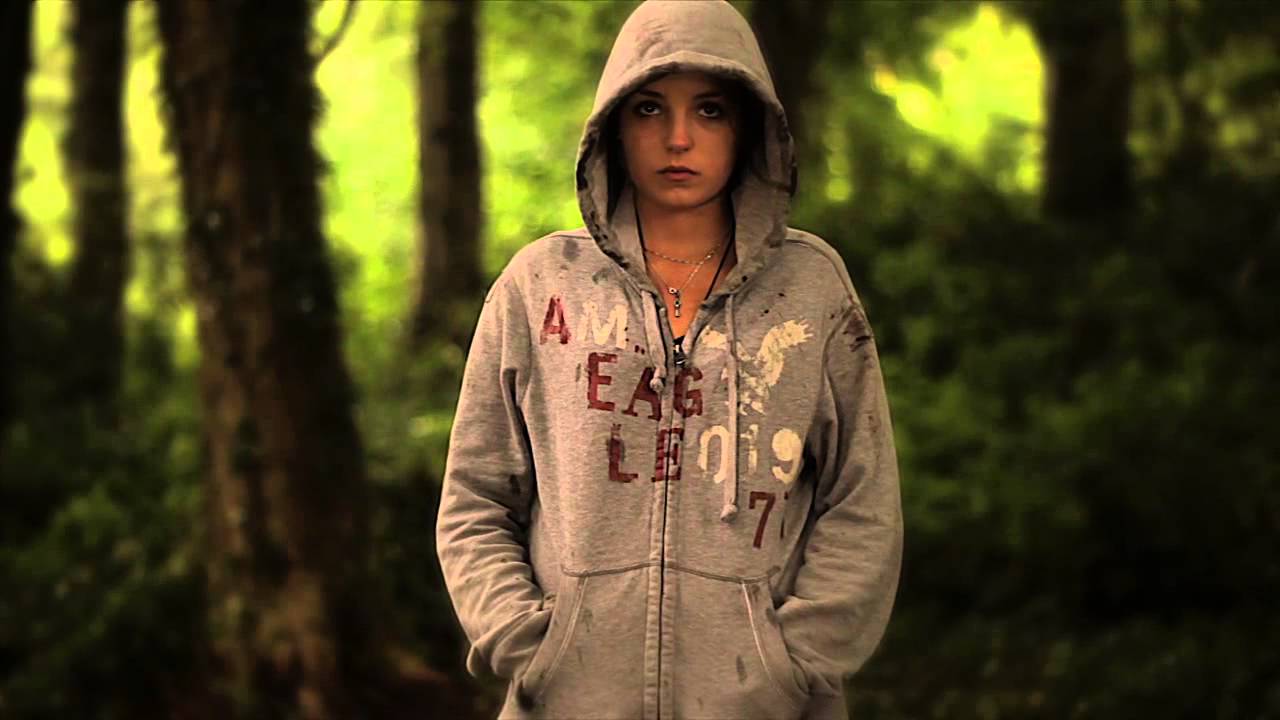
Horror, thriller, by Jason Figgis, United States, 2016.
Set in Ireland, the film tells the story of Isabel Mann, an introverted and lonely teenager who is drawn into a dark and seductive world of blood, violence, and vampirism. As the story unfolds, Isabel undergoes a disturbing transformation—from a vulnerable young girl to a ruthless creature—guided by a group of vampires who pull her into a spiral of murder and ritual. At the same time, a team of detectives attempts to shed light on a series of brutal killings that seem to be connected. However, their investigation leads them toward a truth far more unsettling than they could have anticipated.
The film stands out for its cold, disturbing atmosphere and a slow, reflective narrative that favors psychological depth over action. Vampirism here is not just a genre element, but takes on a symbolic meaning tied to adolescent alienation, the search for identity, and the longing to belong. *The Ecstasy of Isabel Mann* embraces an auteur style and carries the emotional intensity of Ellen Mullen’s lead performance. It’s a different kind of horror film—intimate and melancholic—capable of blending teenage tragedy with the vampire myth in a modern, introspective way.
LANGUAGE: English
SUBTITLES: Spanish, French, German, Portuguese
Folklore as Counterhistory
You are standing in a courtroom in Tipperary in 1895, and the man on trial insists his wife was a fairy. Not metaphorically. Not as a defense strategy conjured by a desperate solicitor. Michael Cleary burned Bridget Cleary to death because he was convinced the woman in his house was a changeling — a substitute left by the fairy host after they carried off the real Bridget — and the ritual he performed, forcing herbs and urine down her throat before holding her over the fire, was not madness but procedure. The Crown prosecutor called it superstition weaponized into murder. The Irish countryside called it something more ambiguous.
Angela Bourke’s reconstruction of this case in The Burning of Bridget Cleary, published in 1999, refuses the comfortable verdict that Michael Cleary was simply deluded. What Bourke locates in the changeling belief is an entire epistemological infrastructure — a way of naming the unnameable, of saying that the person in front of you has been hollowed out, replaced, evacuated of whoever they were before some unnamed violence passed through the household. The fairy abduction narrative was, in this reading, a technology for processing disappearance when no official language existed to describe what disappearance actually meant in a country where eviction, famine, and forced migration had been draining communities of their people for generations. The folklore was doing archival work that the colonial state had no interest in performing.
What gets called superstition is almost always a counter-archive. The banshee — the bean sí, the woman of the fairy mound — was not a ghost story for children. Her cry preceded death in specific families, specific bloodlines, and to encounter her was to receive information about mortality that traveled outside the channels of church and landlord and court. She was attached to Gaelic surnames, to the old aristocracy dispossessed after Cromwell’s campaigns of the 1650s, which resulted in the forced transplantation of Catholic landowners to Connacht under the policy colloquially rendered as “to Hell or to Connacht.” The banshee, in this context, was grief personified and gendered, circling the ruins of a social order that had been systematically dismantled and was forbidden from mourning itself in public.
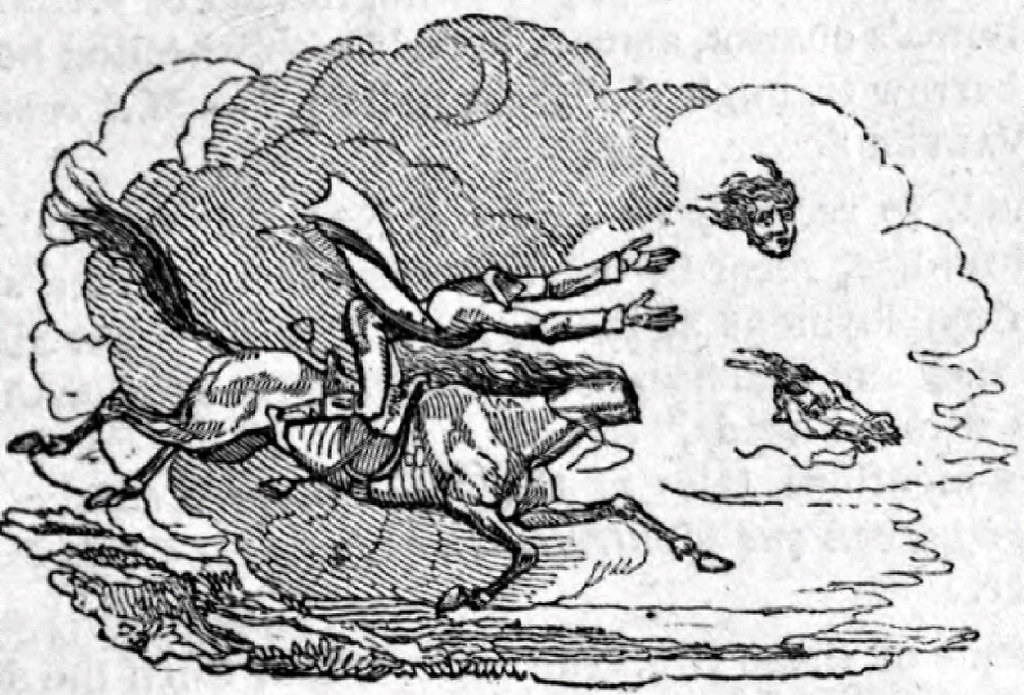
The cursing stones found at Inishmurray and other sites along the western seaboard represent a different vector of the same pressure. These were physical objects — rounded stones turned counterclockwise on a stone altar — used to call harm onto enemies when no legal recourse existed. To curse someone with the stones was to access a juridical system that predated English common law and had survived its suppression not in texts but in bodies, in the memory of gesture. The Wild Hunt, which rides through the folklore of every Atlantic fringe culture but in Ireland takes the specific shape of the sluagh, the unforgiven dead traveling in violent formation, carries within it the trace of all those who died without rites, without witnesses, without records — the anonymous dead of famine roads and coffin ships who could not be integrated into any official account of what had happened.
The epistemic conflict Bourke identifies in that Tipperary courtroom was not a clash between enlightened modernity and peasant ignorance. It was a confrontation between two incompatible archives: one backed by state power and print, the other stored in oral transmission, ritual, and the kind of knowledge that lives below literacy’s threshold. When the British press covered the Cleary case with barely concealed contempt for Irish irrationality, what they were actually encountering was a system of record-keeping they lacked the categories to read — and that, precisely because it was unreadable to them, had survived everything their administration had done to silence it.

The Gothic and the Colonized Imagination
You are handed a key to a house you already own, and when you turn it the lock opens onto a room that was never yours.
That precise sensation — of inhabiting a property whose logic refuses to recognize you — is what Sheridan Le Fanu spent the better part of the 1860s and 1870s transcribing into fiction. His novel Uncle Silas, published in 1864, is formally a Gothic mystery about inheritance and imprisonment, but the architecture of its dread is not supernatural at all. It is juridical. The terror lives in paperwork, in the transfer of title, in the cold grammar of wills and estates. Le Fanu, a Protestant Anglo-Irishman watching his class begin its slow hemorrhage of legitimacy, understood that the most effective horror was not a creature but a clause. The house in his work is never simply a house. It is a site of contested possession, and the thing that haunts it is not a ghost but the unresolved question of who the land actually belongs to.
By the time Bram Stoker published Dracula in 1897, that question had been sharpened into crisis. The Land War of the 1880s had convulsed Ireland, peasants refusing rents, landlords evicting tenants by the tens of thousands, the Land League organizing resistance with a ferocity that terrified Westminster. Stoker, also Anglo-Irish, a product of the Protestant Dublin bourgeoisie, constructed a monster who is above all a landlord — ancient, foreign-born, legally untouchable, surviving on the blood of those beneath him. The Count arrives in England with boxes of his native soil, cannot exist without this carried earth, must return to it to regenerate. The critics who have read Dracula since Terry Eagleton and Declan Kiberd began seriously examining Irish Gothic in the late twentieth century have noted what earlier readers, trained to treat the novel as pure fantasy, consistently missed: that the relationship between Dracula and his victims is a precise inversion of the landlord-tenant dynamic, with the moral valence reversed but the structure identical. The aristocrat who cannot be removed, who drains life and remits nothing, who holds power through documents and ancient title — this is not a metaphor invented for the novel. It is a sociological fact Stoker absorbed from the landscape of his childhood.
What Gothic fiction permitted these writers was a kind of honest dishonesty — the ability to say exactly what they meant while maintaining the alibi of fantasy. The horror genre in Ireland was never primarily about the supernatural. It was a literature of dispossession operating in costume. The haunted estate, the ruined castle, the creature sustained by others’ vitality — these are the material conditions of colonial Ireland rendered in a register that neither censor nor class loyalty could easily prosecute. Realism, with its obligation to name names, was a more dangerous mode. Gothic offered the screen of the unreal behind which the real could be said plainly.
This dynamic explains something that purely aesthetic readings of Irish Gothic always fail to account for: why the dread in these texts is so fundamentally spatial. The terror clusters around property lines, around rooms within rooms, around the question of who may enter and who may not. In Sheridan Le Fanu‘s “Carmilla,” published in 1872, the predator does not break down doors — she is invited in, she seduces through social access, her horror is the horror of the class that presents itself as intimacy while practicing extraction. The female vampire in that text is not a figure of foreign threat. She is the internal logic of the Big House finally made visible, its appetite stripped of the manners that usually conceal it, moving through the drawing room without its customary disguise.
Cathnafola - A Paranormal Investigation
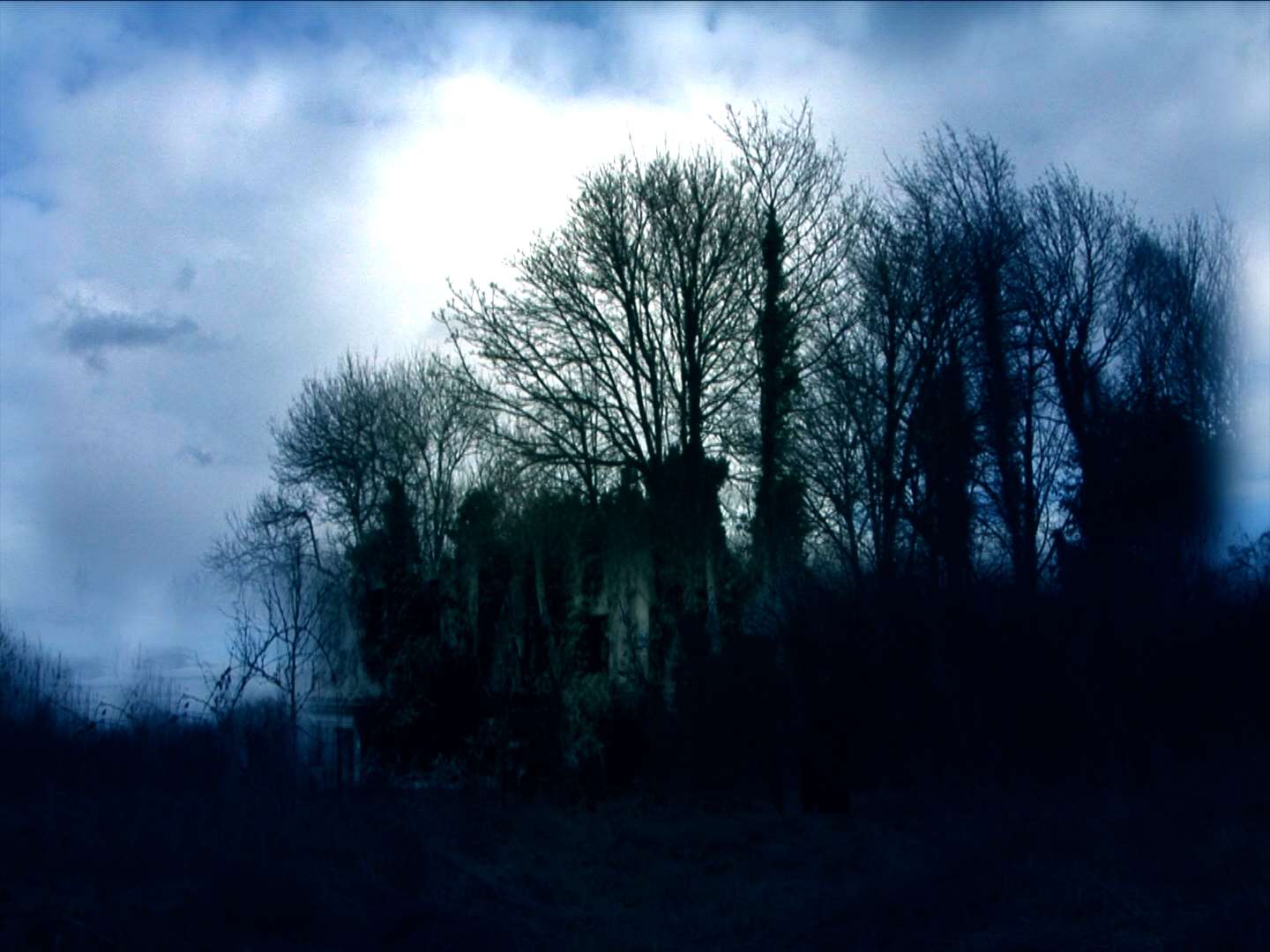
Documentary, horror, by Jason Figgis, USA, 2014.
In "Cathnafola", everything begins when renowned paranormal investigator Chris Halton of Haunted Earth UK receives footage filmed by three teenagers at the ruins of Cathnafola House in Ireland. Determined to unearth the truth behind the location’s bloody past, Halton embarks on a nighttime exploration of the infamous ruins—and soon uncovers terrifying and disturbing revelations.
LANGUAGE: English
SUBTITLES: Spanish, French, German, Portuguese
Silence as Literary Form

You are standing in a room where something enormous happened, and no one mentions it. The furniture is arranged normally. Someone offers you tea. The window looks out onto the same field it always has. And yet the air has a particular density, a pressure just below the threshold of speech, and you understand without being told that the silence itself is the event.
Between 1845 and 1852, somewhere between one million and one and a half million people died of starvation and related disease on an island that was, technically, part of the wealthiest empire in the world. Another million fled. The population collapsed by roughly twenty percent in under a decade. What followed in Irish literary culture was not elegy, not testimony, not the furious reckoning one might expect from such a catastrophe. What followed, for decades, was an almost complete absence. The Famine did not produce a literature. It produced a hole where literature might have been.
Nuala O’Faolain, writing in her 1996 memoir Are You Somebody, returned to this absence not as a historian but as a woman trying to understand why her own family, and Irish families broadly, had seemed to live without full access to their own interiority — why feeling had been dammed, why self-narration felt like a foreign practice, why tenderness between people was so often strangled before it reached the surface. She did not call this a political problem. She called it something more intimate and more devastating: a failure of inheritance. The generation that survived had survived by a specific psychological contraction, and that contraction became the template for what it meant to be a person in Ireland. You did not speak the worst thing. You organized your entire inner life around its concealment.
Cathy Caruth, in her 1996 study Unclaimed Experience: Trauma, Narrative, and History, articulated something that sharpens this considerably. Trauma, she argued, does not fail to be represented because survivors choose silence or lack the vocabulary. It fails because the event itself, at the moment of its occurrence, cannot be fully known by those inside it. The wound and the inability to witness the wound are simultaneous. This means that what is transmitted across generations is not a memory but a structural gap — not the thing that happened but the shape of its absence, the silhouette burned into the wall after the explosion. Irish writers in the late nineteenth and early twentieth centuries were not avoiding the Famine out of shame alone. They were working within a narrative architecture that had been built around a void, and the void was load-bearing.
This produces a particular kind of darkness in the literature that followed — not gothic, not melodramatic, but formal. It is the darkness of what cannot find its grammar. W.B. Yeats, building his mythological Ireland in the 1890s, reached backward past the Famine toward Celtic heroism and fairy sovereignty as if the intervening decades had not occurred, and this was not evasion so much as the operation of cultural necessity: the myth had to be constructed precisely because the historical ground had become uninhabitable for narrative. The peasant in Yeats is ancient and mystical and untouched by modern catastrophe because a peasant touched by modern catastrophe would require a different kind of writing entirely, one that the culture was not yet structurally capable of producing.
What emerged instead was indirection elevated to aesthetic principle. Grief surfaced as landscape. Loss became weather. The west of Ireland, in decades of writing and visual art, acquired a quality of brooding immanence that critics often mistook for romanticism but that functions more accurately as displaced mourning — the land holding what the sentence could not.
The Living Darkness of Contemporary Irish Writing
You are reading a sentence that does not know how to end, and somewhere in that grammatical hesitation is the whole inheritance of Irish darkness made new. Eimear McBride’s 2013 novel A Girl Is a Half-formed Thing does not describe trauma — it performs it at the level of the word, fragmenting syntax the way a mind fragments under unbearable pressure, so that the reader does not observe suffering from a comfortable distance but inhabits its broken rhythm from the inside. The sentence itself becomes the wound. This is not a stylistic experiment in the postmodern sense, not a formal game played from safety — it is a formal argument that coherence was never available in the first place, that the smooth declarative sentence belongs to a world Irish women, Irish bodies, Irish histories were systematically denied.
Sebastian Barry operates differently but reaches toward something similarly unresolvable. In The Secret Scripture, published in 2008, he excavates the life of Roseanne McNulty, a hundred-year-old woman confined to a psychiatric institution, reconstructing a story that the official record of twentieth-century Ireland deliberately buried. What Barry understands — and what gives his prose its particular ache — is that memory does not restore what was lost. It reorganizes absence. His sentences are long, elegiac, circling around facts they cannot quite reach, because the facts were destroyed by priests and state officials who understood that controlling narrative meant controlling reality. The Magdalene Laundries, the mother-and-baby homes, the institutional Catholic machinery that processed women into silence: these are not his explicit subject so much as the atmospheric pressure under which every sentence in the novel labors to breathe.
Colin Barrett arrives from a different angle entirely, stripping the Gothic countryside and the historical weight and relocating the darkness inside the texture of ordinary provincial boredom. His 2013 collection Young Skins takes place in a fictional County Mayo town called Glanbeigh, where young men drink and drift and occasionally erupt into violence that nobody can quite explain and nobody fully recovers from. There is no mythology here, no banshee, no ancestral curse to organize the suffering into meaning. The darkness in Barrett is administrative, almost banal — it lives in the fluorescent light of a nightclub at closing time, in the silence between two people who cannot say what they need, in the repetition of days that offer no forward motion. He inherited something from Raymond Carver in his precision with working-class interiority, but what he does with that inheritance is distinctly Irish: the trap is not poverty or bad luck but the complete absence of a narrative that would allow escape to feel real rather than merely geographic.
What these three writers share, despite the distances between their forms, is a refusal of resolution that is not pessimism but precision. Irish literary darkness in its contemporary form has abandoned the romance of the blasted heath and the wailing spirit, not because the culture has healed, but because the culture has learned to locate its damage somewhere harder to point at. The Commission to Inquire into Child Abuse, whose Ryan Report landed in 2009 across nearly 2,600 pages of documented institutional violence, confirmed what literature had been circling for decades — that the darkness was never supernatural, never landscape, never the property of some ancient and untameable island spirit, but something manufactured inside institutions, inside families, inside the grammatical structures of a language trained to omit what it could not afford to say. What McBride and Barry and Barrett have done, each in their own irreconcilable way, is make the omission visible by writing around its exact shape, so that the reader feels the presence of what is absent the way you feel a missing tooth with your tongue — insistently, involuntarily, unable to stop returning to the gap.
A vision curated by a filmmaker, not an algorithm
In this video I explain our vision
🌿 Shadows and Spirits: Ireland's Dark Literary Soul
Ireland has long been a land where myth bleeds into reality, where the landscape itself seems haunted by centuries of grief, rebellion, and supernatural dread. From ancient folklore to modern fiction, darkness runs like an underground river through Irish culture and storytelling. These related articles illuminate the deeper currents that feed the dark Irish imagination.
Contemporary Ireland in Culture and Literature
Contemporary Ireland is a place of profound cultural tension, where the wounds of history — famine, colonialism, religious repression — continue to shape literature and identity. This article explores how modern Irish writers navigate between ancestral trauma and a rapidly changing society. The result is a literary landscape that is restless, urgent, and impossible to look away from.
GO TO THE SELECTION: Contemporary Ireland in Culture and Literature
Sheridan Le Fanu: Irish Gothic and Domestic Horror
Sheridan Le Fanu stands as one of the great architects of Irish Gothic fiction, a tradition that transforms the domestic and familiar into sites of creeping, inexplicable dread. His work is saturated with the particular melancholy of Irish history, where the ghost is never simply supernatural but always carries the weight of dispossession and loss. Le Fanu’s dark imagination laid the foundation for much of what we recognize today as Gothic horror.
GO TO THE SELECTION: Sheridan Le Fanu: Irish Gothic and Domestic Horror
Invisible Dublin: The Irish Capital Beyond the Postcards
Beneath the tourist-friendly surface of Dublin lies a city scarred by poverty, addiction, and social exclusion — a shadow city that literature has always known better than the postcards. This article ventures into the invisible geography of the Irish capital, tracing the streets and communities that official narratives prefer to forget. It is an essential companion for anyone seeking to understand the real Dublin that haunts Irish writing.
GO TO THE SELECTION: Invisible Dublin: The Irish Capital Beyond the Postcards
Contemporary Irish Cinema: Between Violence and Identity
Contemporary Irish cinema has become one of the most vital arenas for confronting the darker truths of Irish identity — violence, trauma, silence, and the long afterlife of historical wounds. This article maps the territory of a national cinema that refuses easy consolation, drawing on folklore, realism, and genre to tell stories that cut close to the bone. It is an indispensable guide to understanding how Ireland sees and represents itself on screen.
GO TO THE SELECTION: Contemporary Irish Cinema: Between Violence and Identity
Discover the Cinema That Dares to Go Deeper
If these dark currents of Irish literature and folklore stir something in you, Indiecinema is the streaming destination where independent cinema meets the stories that mainstream screens overlook. Explore films rooted in myth, shadow, and cultural memory — the kind of cinema that, like the best Irish storytelling, never lets you go untouched.
👉 EXPLORE THE CATALOG: Watch Indie Films in Streaming
A vision curated by a filmmaker, not an algorithm
In this video I explain our vision

