
You Open a Book and Lose Yourself Before Reading a Word
There is a moment before you read that is almost more honest than reading itself. You have the book in your hands, you have chosen a chair or a corner of a bed, you have adjusted the light, perhaps made something warm to drink, and now you are holding it — this object, this promise — and you are not yet anywhere. You are suspended between your own life, which is right there behind you like an unpaid bill, and the life that is about to begin on the other side of the first sentence. That suspension is not nothing. It is, in fact, everything you came for.

Think about what you are actually doing in that moment. You are not seeking information. You are not pursuing culture in any serious or dignified sense of the word. You are preparing to disappear. The ritual you have constructed around this act — the chair, the light, the drink, the careful closing of the door — is not the ritual of someone who is about to learn something. It is the ritual of someone who is about to leave. And the extraordinary thing is that no one finds this strange. We have decided, collectively and without much discussion, that this particular form of departure from one’s own life is not only acceptable but admirable. We call it a passion. We call it a love of literature. We decorate our walls with the books that have helped us vanish and feel, somehow, elevated by the collection.
Roland Barthes, in his 1973 meditation on pleasure, made a distinction that still cuts cleanly: there is the text of pleasure, he wrote, which confirms your world and your language, and there is the text of bliss, which unsettles you, which makes you question the very ground you stand on. Most people, he argued, do not actually want the second kind. They think they do. They say they do. But what they are reaching for, in that chair, with that warm drink, is the first kind — the text that creates a comfortable fold in reality, a place to rest inside someone else’s sentences. The text of bliss is uncomfortable. It does not let you disappear cleanly. It brings you back to yourself in ways you did not expect and did not request.
There is something almost embarrassing about admitting this. The cultural story we tell about reading is a story about expansion — you read to become larger, more empathetic, more complex, more alive to the texture of human experience. And there is truth in this. But it is not the whole truth, and it is certainly not the truth of that moment before the first sentence, when you are adjusting the light and settling into the chair and hoping, on some level that you would probably not confess to anyone, that the book will be good enough to make you forget yourself for a while. That is not expansion. That is relief.
What Italo Calvino understood — and what makes his 1979 novel such a strange and disorienting gift — is that the act of reading is already a trap before you have read a single word. The desire you bring to the book is not a neutral desire. It is loaded with expectation, with habit, with a particular kind of passive hunger that has been shaped by every book you have ever read and every way you have ever been told that books are supposed to work. You sit down believing you know what is about to happen. You believe you know your role. You are the reader. The book will unfold. You will follow. This is the contract, ancient and unspoken, and it feels so natural that questioning it would seem almost perverse.
That is exactly where Calvino begins.
Eve of the Irises
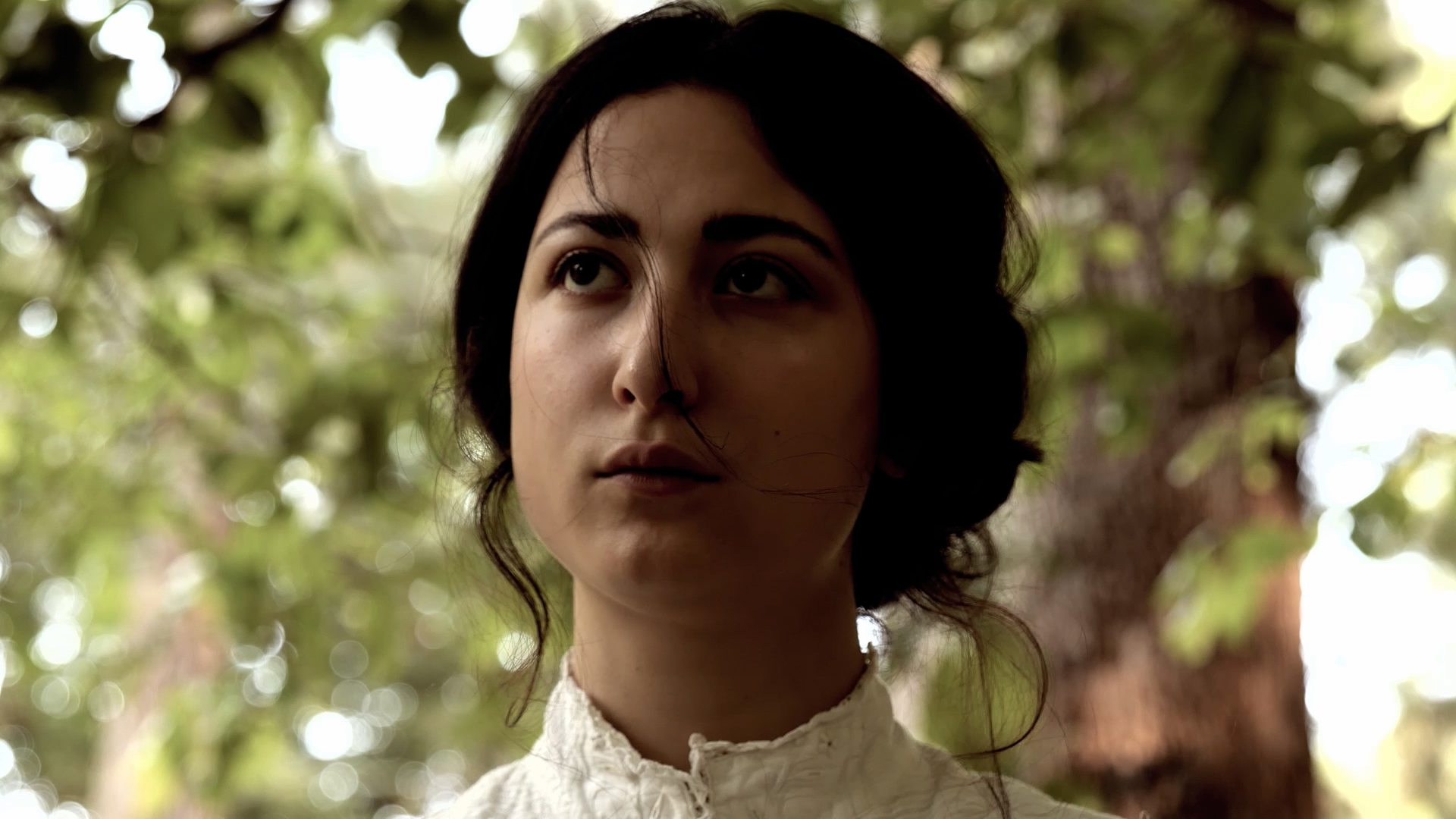
Documentary, by Isabel Russinova, Rodolfo Martinelli Carraresi, Italy, 2026
Eva of the Irises is a historical biographical docu-film about the scientist Eva Mameli Calvino, a botanist and pioneer of environmentalism in Italy, mother of the writer Italo, born in Sassari in 1886. The film, based on a multidisciplinary approach that combines several genres—such as theatre, documentary, cinema, and research—moves between memories, reflections on life, as well as the goals and missions the scholar still wished to achieve.
The multifaceted artistic sensibility of Isabel Russinova is expressed across many fields, from writing to acting, from directing to civic engagement, and finds one of its highest expressions in the docu-film Eva of the Irises, created with Rodolfo Martinelli Carraresi. The film blends scientific rigor and poetic refinement to portray the extraordinary figure of the botanist Eva Mameli Calvino, mother of Italo Calvino but above all an independent protagonist of 20th-century scientific culture. It is told through a combination of archival materials, interviews, and evocative staging capable of elegantly and profoundly conveying her intense human and professional story.
LANGUAGE: Italian
SUBTITLES: English, Spanish, French, Portuguese
Calvino’s Machine: What the Novel Actually Does
You open it expecting to read. That is the first trap.
The book begins with an instruction: you are about to begin reading Italo Calvino‘s new novel. Not a character reading. You. The second person settles over you like a hand on the shoulder, familiar and slightly too close, and before you have processed the strangeness of being addressed directly, you are already inside the mechanism. You have already consented to something you did not fully understand.
What Calvino built in 1979 was not a novel in any conventional sense, and calling it a postmodern experiment — that comfortable academic cage — is a way of neutralizing it, of making it safe to admire from a distance. The structure is clinical in its precision and savage in its effect: ten novels begin and none of them end. Each opens with enough momentum to hook you, enough texture and atmosphere to make you lean forward, and then it stops. Printing error, missing pages, wrong binding. You are handed a beginning and immediately deprived of everything that follows. Then another beginning. Then another deprivation. Ten times. The book you are holding is, in the most literal sense, a machine for producing the sensation of interrupted desire.
The protagonist — if that word still applies — is a Reader, capital R, who is you, who is searching for the continuation of a novel that keeps becoming a different novel. He is always on the threshold of something. He never crosses it. Roland Barthes, writing six years before Calvino published this book, drew a distinction that cuts directly to what is happening here. In The Pleasure of the Text, Barthes separates plaisir from jouissance — two French words that English collapses into the single inadequate word pleasure, losing the distinction that makes the whole argument live. Plaisir is comfort: the satisfaction of expectation fulfilled, the warm recognition of a text that confirms what you already know, that moves at the pace you anticipated, that ends where it promised to end. Jouissance is something closer to rupture, to the text that unsettles your position as reader, that cuts the ground from under the reading self. Barthes calls it a crisis of relation with language. It is not pleasant. It is, in the precise sense, disturbing.
Calvino’s book is a machine for producing jouissance and disguising it as plaisir. You think you are chasing the pleasure of narrative completion. You think the next chapter will deliver what the last one withheld. But the structure is designed so that completion never arrives, and what you are actually experiencing — page after page, beginning after beginning — is the exposure of your own dependency. The interrupted novel does not frustrate you the way a bad book frustrates you. It frustrates you the way an addiction frustrates you: because you already need the next dose before you have finished mourning the last one.
This is not decoration or intellectual game. Calvino understood something about what novels do to readers that most novelists prefer not to examine too closely, because examining it means admitting that the relationship between a book and its reader is not entirely innocent. The second-person address is not a stylistic flourish. It is a structural claim: that the reader is not outside the text observing it but inside it, constituted by it, produced by the act of reading itself. Every time the text says you, it is not describing someone. It is making someone. And the someone it makes is defined entirely by lack, by the gap between what was promised and what arrives, by the forward lean of a desire that the book is specifically engineered never to satisfy.
The Reader in the novel falls in love. With another reader, with the idea of reading, with the endless horizon of beginnings. It would be almost tender if it were not so precise a diagnosis of what you were already doing before you ever opened the book.

The Reader as Character, the Character as You
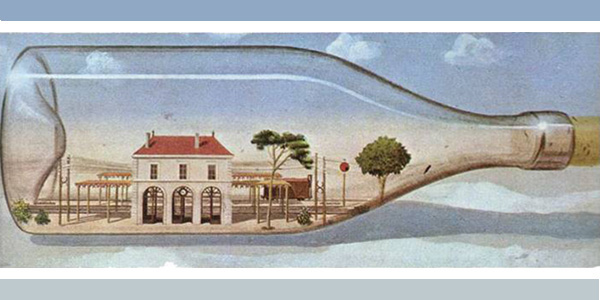
You open the book and the book opens you back. Not metaphorically. Grammatically. The first word of the novel is not a name, not a scene, not an atmosphere — it is a command directed at your body. You are about to begin reading. Present tense. Second person singular. And before you have had time to decide whether you consent to this, you have already been absorbed into the sentence, made into its subject, assigned a posture, a chair, a lamp, a silence around you. You did not choose to become a character. It happened while you were still thinking you were a reader.
This is not a stylistic trick. Stylistic tricks can be detected and kept at arm’s length. What Calvino performs here is something closer to what Paul Ricœur, writing in Oneself as Another in 1992, called narrative identity — the idea that the self is not a fixed substance but a configuration, something that emerges in the act of telling and being told. Ricœur argued that we know who we are the way we know who a character is: through the coherence of a story, through the thread of events that gives shape to what would otherwise be pure dispersal. You are, in this account, the protagonist of a narrative you are always in the middle of composing. Identity is not possessed. It is narrated.
Calvino takes this idea and turns it into a trap. Because if you are a character constituted by the narrative you inhabit, what happens when the narrative refuses to cohere? What happens when the story that is supposed to construct you keeps dissolving before the construction is complete? The novel does not give you a continuous arc. It gives you ten beginnings and no middles and no ends. The “you” that was summoned so forcefully on the first page is never allowed to solidify into anything. You remain suspended in a grammatical promise that the text perpetually withholds.
There is a particular kind of horror in discovering you are being watched without having been told. A man realizes, slowly, that the conversations happening around him are not coincidental — that someone has been narrating him, assembling his gestures and words into a portrait he never sat for. The recognition arrives not as revelation but as nausea. He had thought he was the one observing. He had not understood that observation was a reciprocal act, that every story has an author who precedes the character’s awareness of being written. Calvino’s reader lives inside exactly this nausea. You were already a “you” before you knew you were being named.
What makes this philosophically violent rather than merely playful is the precision of its targeting. Calvino does not address a general reader. He addresses you — and the second person singular in Italian, the tu, carries an intimacy that implies knowledge of the person being spoken to. You are not a demographic. You are a specific instance of someone sitting somewhere with this book in your hands. The novel claims to know this. It proceeds from that claim. And you, in reading it, retroactively confirm it, which means you are cooperating in your own inscription.
Ricœur believed that narrative gave the self its temporal unity — that without story, the “I” would fragment across time into a series of unconnected moments. But Calvino’s novel suggests a darker possibility: that the story can be used against you. That narrative is not only a shelter for identity but also its most efficient instrument of capture. The character who discovers she has been written by someone else — that her memories, her choices, her loves have been arranged by a hand she never saw — does not gain freedom by knowing this. She gains only the unbearable clarity of having been someone else’s sentence all along.
And you are still reading. Which means you are still inside it.
Interrupted Desire: The Erotics of the Unfinished
There is a particular kind of hunger that grows sharper the moment you reach for the food. You know this. You have felt it in the gap between wanting something and having it, that electric suspension where the object of desire seems most real, most charged, most worth possessing. And then the having arrives, and something quietly deflates. Calvino understood this mechanism with almost surgical cruelty, and he built an entire architecture around it: every story in the novel begins, accelerates into genuine narrative heat, and then stops. Not ends. Stops. The reader is left mid-breath, mid-sentence almost, holding a tension that has nowhere to discharge.
This is not a formal trick. It is a phenomenological trap, and one we walk into willingly because we have been trained to. Zygmunt Bauman, writing in Liquid Modernity in 2000, identified what he called the central paradox of consumer culture: desire must never be satisfied, because a satisfied desire is a dead market. The system does not run on fulfillment. It runs on the perpetual production of wanting. What capitalism perfected, Bauman argued, was not the art of delivering pleasure but the art of deferring it just long enough to keep the consumer reaching. The commodity exists not to resolve the longing but to intensify it, to transform it into a new and slightly differently shaped longing that demands a new purchase, a new episode, a new beginning.
Every interrupted chapter in Calvino’s structure is that purchase. You read the opening of a story set on a train crossing a border at night, a man carrying something he should not be carrying, a woman whose face appears and disappears in the corridor. The prose is taut, genuinely gripping. Then the pages go blank. What you are left with is not frustration exactly but something closer to amplified appetite. The next embedded story offers itself as compensation, and you enter it with a hunger sharpened by the previous deprivation, which means you are now more available to it, more porous, more easily hooked. Bauman would recognize this immediately as the consumer loop made literary.
Think of a man watching a woman across a crowded train platform, her face turned just slightly away, the train departing before she turns fully toward him. He will spend years constructing her. The real woman, whoever she was, would have been insufficient. Absence is the engine. Or think of those pursuit sequences where a figure chases another through streets that seem to extend perpetually ahead of them, the distance never closing, the quarry always visible but never graspable, and the chaser’s desire growing more violent and more clarified with every stride. What those sequences understand is that arrival would destroy the chase. The emotional energy does not survive contact. It requires the gap.
Georges Bataille, approaching this from a different angle in his work on eroticism, wrote that desire is fundamentally transgressive, that it depends on a barrier to charge itself against. Remove the barrier and desire collapses into mere satisfaction, which is to say into something dull and quickly forgotten. Calvino builds barriers structurally. The interruption is the barrier. Each cut is the locked door that makes you want the room on the other side more than any room you have ever entered.
What this means for the Reader in the novel, and for you reading alongside them, is that you are never actually pursuing a story. You are pursuing the feeling of pursuit. The novels-within-the-novel are not destinations. They are promissory notes, and the currency they promise is always deferred to the next exchange. Whether that constitutes a critique of consumer desire or a seduction into it is a question the text refuses to answer for you, because answering it would require the very resolution it has decided, with perfect consistency, never to provide.
The Author Who Disappears and the Reader Who Panics
There is a moment when you sit down to write something — a letter, a message, even a thought you meant to keep private — and you notice, with a faint nausea, that the sentence forming in your mind sounds like something you have already read. Not plagiarism. Something worse. The suspicion that the thought was never yours to begin with, that it arrived pre-assembled from somewhere upstream, and you are merely the location where it chose to surface.
This is precisely the condition of a writer who keeps a journal in a mountain chalet, watching through a telescope for a woman who reads in a deckchair below, and who has begun to suspect that the novel he is writing is not being invented but received. He does not feel like a creator. He feels like a radio antenna picking up a frequency he cannot identify. He writes sentences and immediately doubts their origin. He wonders whether originality is even a coherent category, or whether every text is simply the place where other texts temporarily converge and slow down.
Michel Foucault, in his 1969 lecture “What Is an Author?”, argued that the author is not a source but a function — a classificatory device that culture uses to organize, distribute, and authorize discourse. The author’s name, Foucault wrote, does not designate a real individual so much as it designates a position within a system of ownership and interpretation. What we call a voice is really a slot. The terror this produces is not academic. It means that the thing you believe is most intimately yours — the way you think, the specific texture of your inner life — is structurally produced, not individually generated.
Walter Benjamin had arrived at something adjacent thirty years earlier, in 1936, in his essay on the storyteller. He argued that the art of storytelling was dying not because people had stopped narrating, but because experience itself had become incommunicable. The First World War had returned men from the trenches who had nothing to say — not from trauma alone, but because the shared fabric that makes experience transmissible had been destroyed. The storyteller, for Benjamin, was someone embedded in a community of living tradition. Once that community dissolves, what remains is information — isolated, sourceless, perishable. The writer in the chalet is Benjamin’s nightmare made literal: a man who has lost access to the tradition that would give his words weight, and who now produces text the way a machine produces output, uncertain whether the signal originates inside or outside the apparatus.
You have felt this. Not in a chalet, not with a telescope. But in the middle of a conversation where you stated an opinion with confidence and then, seconds later, could not remember whether you actually believed it or had simply absorbed it from the last persuasive thing you read. The contemporary information environment has industrialized this condition. You are exposed, before breakfast, to dozens of fully formed perspectives on every conceivable subject, each delivered with the rhetorical texture of personal conviction. By the time you formulate what feels like your own view, it has been pre-shaped by an invisible editorial process you did not consent to and cannot fully trace.
The writer in the chalet begins to fantasize about a machine that could generate endless opening sentences, so that the true novel — the one that precedes all novels — might finally surface. This fantasy is not madness. It is the logical conclusion of taking authorship seriously enough to see through it. If every sentence is inherited, if every structure is borrowed, if the self that writes is itself a palimpsest of everything it has consumed, then the honest position is not to claim originality but to become transparent to the transmission.
What the reader in this story never quite grasps is that their own panic — the missing chapters, the interrupted narratives, the authors who vanish — mirrors exactly this. They are not searching for a book. They are searching for the assurance that someone, somewhere, actually wrote it.
A vision curated by a filmmaker, not an algorithm
In this video I explain our vision
Forgery, Identity, and the Market for Authenticity

There is a moment when you realize the signature on the painting is not a guarantee of anything — not genius, not origin, not even intention. It is a brand. And brands are manufactured.
In the novel’s deeper architecture, what appears to be a conspiracy of forgers turns out to be something far more banal and therefore far more disturbing: the ordinary machinery of literary production laid bare. Translators who invent authors. Publishers who commission voices and then name them. A man who discovers that the books attributed to him were written by someone else, or perhaps by no one, assembled from fragments, styles borrowed and recombined until the original becomes untraceable. The conspiracy, when it finally surfaces, does not feel like crime fiction. It feels like a documentary about the publishing industry with the euphemisms removed.
Fredric Jameson, writing in 1984 in Postmodernism, or, the Cultural Logic of Late Capitalism, argued that late capitalism does not merely produce goods — it produces the image of goods, the aura of authenticity as a commodity in itself. The genuine article becomes indistinguishable from its simulation not because forgery has become more sophisticated but because the original was always already a construction. What Jameson called the “waning of affect” — the flattening of cultural production into style without depth, surface without referent — describes precisely what happens when a literary voice becomes a brand. The author is no longer a person. The author is a logo.
Think of how celebrity authorship actually functions. The name on the cover sells the book before a single sentence is read. Readers do not choose a novel; they subscribe to a persona. Publishers know this, which is why the “literary voice” of a successful author is documented, studied, and in some cases replicated by ghostwriters, editors, and marketing departments working in careful coordination. The question of who actually wrote the sentences becomes, at a certain level of commercial success, genuinely difficult to answer — and nobody in the industry considers that a scandal.
This is the world the novel was excavating in 1979, before the internet made the scaffolding even more visible. Calvino understood that the forger and the legitimate publisher differ only in their relationship to legal protection, not in their relationship to truth. Both are selling you someone else’s experience dressed as your own discovery.
There is a scene — it belongs to no screen, only to the grammar of recognition — where a man sits across from someone who wears his face, speaks his cadences, has apparently lived a version of his life with minor variations. He is not horrified. He is relieved, because the other man seems more convincing in the role. The forgery is more authentic than the original, not because it is better crafted, but because it arrived without the original’s self-doubt. Identity, it turns out, is largely a performance of consistency, and the impostor is simply more committed to the role.
This is what the market for authenticity produces: not genuine voices but voices that have learned to sound genuine. The rough edges, the hesitations, the inconsistencies that mark actual human thought are edited out in favor of a recognizable texture that the reader has already learned to trust. You do not want to read a mind. You want to read the idea of a mind — curated, coherent, delivered on schedule.
Jameson’s analysis cuts precisely here: when authenticity becomes a style, it loses its only interesting property, which was its resistance to commodification. The literary voice that markets itself as raw and unfiltered is indistinguishable from the one that was engineered to sound raw and unfiltered in a focus group somewhere in a midtown office.
The conspiracy in the novel is not hidden. It is the publishing catalogue, openly distributed, waiting for you to look at it without the mythology intact.
The Other Reader: Ludmilla and the Impossible Encounter
She reads on her side of the bed, and you cannot see her face. This is not a metaphor. This is the precise arrangement of the scene — two people in the same room, the same light falling across both of them, and yet the interior country she has entered by opening a book is as unreachable to you as the far side of a planet. You could ask her what she is feeling. She might even tell you. And still you would not be there.
Ludmilla is the woman in the novel who reads for pleasure, who refuses to be explained, who slips out from under every attempt to theorize her relationship to the text. The narrator pursues her the way you pursue someone who always seems to be arriving just as you are leaving. She is not mysterious in the gothic sense. She is mysterious in the only sense that finally matters: she is genuinely other. Not other as in strange, but other as in unreducible — a person whose interiority cannot be absorbed into your own without remainder.
Emmanuel Levinas spent most of his philosophical life trying to articulate why this is not a failure of communication but a structural condition of ethics itself. In Totality and Infinity, published in 1961, he argued that the encounter with the Other is always an encounter with what resists totalization — the face of another person calls you into responsibility precisely because it cannot be converted into an object of knowledge. You cannot know the Other the way you know a theorem. The Other looks back. That looking-back is the ethical event. Levinas called it the face-to-face, and he meant it almost literally: the nakedness of an expression that cannot be fully captured, categorized, possessed.
Ludmilla’s pleasure in reading is exactly this kind of nakedness. She reads without wanting to master the text, without wanting to be seen reading it correctly. She reads the way someone breathes — privately, necessarily, without theory. And this is precisely what makes her unreachable. A man in a train station watches a woman across the platform read a letter, her expression shifting through something he cannot name, and the train moves before he can decide whether to speak. The letter’s contents are irrelevant. What arrests him is the evidence of an inner life he has no access to, proceeding entirely without his participation.
Two people lie awake in the dark, not touching, having just told each other something true. The silence afterward is not empty. It is full of the gap — the space where translation failed, where the word that was offered arrived as a slightly different word on the other side, and both of them know it, and neither of them says so, because to say so would be to acknowledge that the gap does not close. It only sometimes gets smaller.
Calvino understands this with the precision of someone who has thought carefully about what fiction is actually promising when it opens. The novel promises contact — you will meet someone, you will understand, the loneliness of private consciousness will briefly suspend itself. But what you actually meet, in Ludmilla as in any reader you watch reading, is the proof that the promise is structurally unfulfillable. Not because people are closed or unwilling, but because subjectivity is not transferable. You can send a signal. You cannot send the receiver.
What Ludmilla represents, then, is not a love interest or a symbolic counterpoint to the intellectual machinery of the text-within-texts. She is the horizon. She is what reading has always been oriented toward and never arrived at — genuine contact with another interiority, sustained long enough to matter. The You of the novel reaches toward her the same way you reach toward anyone whose inner life has ever seemed, for a moment, almost legible.
Almost.
What You Are Really Looking for When You Begin a Book
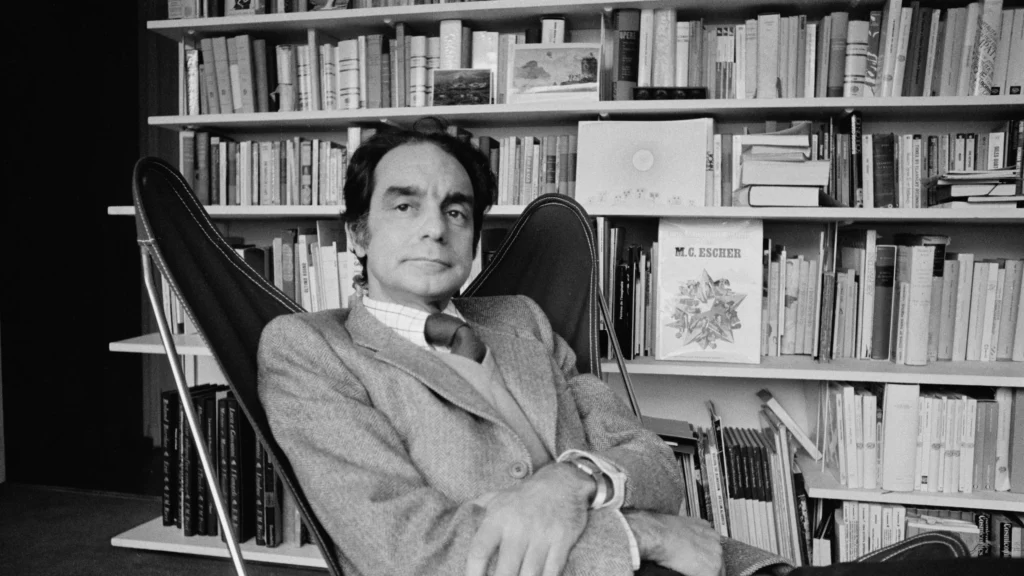
You came back to the beginning. Not because you forgot where you were, but because something in the act of starting a book has always felt more necessary than the act of finishing one. The first page opened, the spine cracked just enough, the world outside briefly suspended — this ritual is not about literature. It never was.
Ernest Becker argued in 1973 that everything human beings build — their religions, their monuments, their love affairs, their careers — is a response to a single intolerable awareness: that they are going to die. Culture itself, in Becker’s reading, is an elaborate system of immortality symbols, structures designed to make the individual feel that they participate in something that outlasts the body. The hero-system, he called it. The need to matter beyond the span of one’s own breathing. What Becker did not say, but what follows from his logic with uncomfortable precision, is that reading — especially the kind of reading that feels urgent, private, almost secretive — belongs to the same system. You open a book because somewhere beneath the pleasure of narrative you are rehearsing continuity. You are practicing the sensation of a self that persists.
This is why the unfinished novel is not merely frustrating. It is frightening in a way that irritation cannot fully account for. When the story breaks off mid-sentence, what breaks is not just a plot but the implicit promise that experience can be shaped into something with edges, something retrievable and whole. The man who walks into a bureaucratic void searching for a manuscript he knows exists somewhere, certain that meaning is being withheld from him by a system he cannot name — he is not chasing a book. He is chasing proof that the self seeking the book is real enough to deserve its ending.
Calvino understood this with the precision of someone who had spent decades thinking about structure as a philosophical problem rather than a technical one. By making “you” the permanent protagonist, by refusing resolution, by looping the novel back toward its own opening, he did something more unsettling than postmodern play. He enacted the terror he appeared to be anatomizing. You are not reading about a reader who cannot find completion. You are that reader, and you cannot find completion, and the book in your hands is the evidence. The form does not illustrate the argument. The form is the argument made inescapable.
This is the move that cannot be undone. Other novels can be finished and set aside. This one contaminates the gesture of beginning itself. Every novel you pick up afterward carries the faint trace of the question Calvino lodged inside the ritual: what exactly are you hoping this will do for you? Not what story do you want to hear, but what wound are you pressing the story against?
Becker believed that the confrontation with mortality, when it cannot be denied, produces either paralysis or transformation. What he did not account for is the possibility that some cultural objects refuse to let you choose between the two. They hold you in the confrontation without releasing you into either outcome. They make the anxiety productive not by resolving it but by making it so precisely visible that you cannot pretend it was never there.
You came back to the beginning because the beginning is the only place where the self that reads still believes, for a moment, in the self that will finish. The novel knows this. It has always known this. It was built around that belief the way a trap is built around the thing the animal cannot stop wanting, and the pages keep turning not because the story compels you forward but because somewhere in the motion of turning them you are still trying to prove that you are the kind of person who arrives.
📖 Labyrinths of Reading, Identity & Narrative
Calvino’s ‘If on a Winter’s Night a Traveler’ is a hall of mirrors that questions authorship, readership, and the nature of fiction itself. These related articles trace the intellectual threads that run through Calvino’s metafictional labyrinth — from the author’s own life and literary universe to the philosophical and literary traditions that shaped his restless imagination.
Italo Calvino: Life and Works
Italo Calvino remains one of the most inventive and cerebrally playful writers of the twentieth century, and understanding his biography is essential to grasping the structural games of ‘If on a Winter’s Night a Traveler.’ This overview of his life and works traces his journey from neorealism to combinatory literature and the Oulipo movement, illuminating the obsessions that gave birth to his most radical novel.
GO TO THE SELECTION: Italo Calvino: Life and Works
Don Quixote: Meaning and Analysis
Cervantes’ Don Quixote is one of the earliest and most celebrated examples of metafiction in the Western tradition, a novel that constantly interrogates its own status as a text and blurs the boundary between author, character, and reader. Calvino was deeply aware of this legacy, and reading Don Quixote alongside ‘If on a Winter’s Night a Traveler’ reveals a shared delight in narrative self-consciousness and the unstable nature of storytelling.
GO TO THE SELECTION: Don Quixote: Meaning and Analysis
Montaigne’s Essays: Guide to Reading
Montaigne's Essays represent one of the founding gestures of writing as self-investigation, a form where the author becomes both subject and object of the text. This guide to reading the Essays helps illuminate the long tradition of literature that foregrounds the act of reading and interpretation — a tradition Calvino both honors and radically subverts in his labyrinthine novel.
GO TO THE SELECTION: Montaigne’s Essays: Guide to Reading
The Unconscious and its Relationship With Cinema
The relationship between the unconscious mind and cinema offers a rich parallel to Calvino’s exploration of reading as a dreamlike, identity-dissolving experience. This article examines how filmmakers have tapped into subterranean psychological structures to disorient and transform their audiences — a project strikingly analogous to Calvino’s second-person narrative strategy that makes the Reader both protagonist and mirror.
GO TO THE SELECTION: The Unconscious and its Relationship With Cinema
Discover the Cinema of the Infinite Maze on Indiecinema
If Calvino’s novel taught you that every story is a threshold to another world, then independent cinema is the natural next frontier. On Indiecinema you will find films that share the same metafictional courage, narrative daring, and philosophical depth — films that, like Calvino, refuse to let you remain a passive spectator. Step inside and let the labyrinth unfold.
👉 EXPLORE THE CATALOG: Watch Indie Films in Streaming
A vision curated by a filmmaker, not an algorithm
In this video I explain our vision

