
The Ghost at the Edge of the Map
You are reading a story and something is wrong with the geometry. The room described has four walls but the character keeps walking in a direction that should not exist. No one in the text remarks on this. The narrative continues as though the impossible corridor were simply another passage, its existence unremarkable, its logic internally sound. You read faster, not from excitement but from a kind of vertigo, the sensation of a floor that does not quite hold your weight, and you realize with some discomfort that you have been trying to orient yourself by rules that were never in effect here.

This is where Japanese fantastic literature begins — not in wonder, not in the pleasurable shiver of the supernatural, but in the deliberate withdrawal of the ground beneath reason. The fantastic in Japan did not emerge as an alternative to seriousness. It emerged as the only register capable of holding what seriousness, in its conventional form, was structurally forbidden from naming. To understand this is to understand why the tradition runs so deep and so strangely continuous, from the eleventh century through the atomic age and into the present, without ever becoming merely ornamental.
The earliest sustained work of prose fiction in any language, Murasaki Shikibu’s Genji Monogatari, written around 1008, already understands that the psychological truth of a character — Lady Rokujō’s jealousy so intense it detaches from her body and attacks her rivals while she sleeps — cannot be rendered through what happened but only through what the narrative allows to be real. The living spirit, the ikiryo, is not a metaphor in that text. It is the only accurate account of what jealousy of that magnitude actually does to a person and to everyone near them. Realism, had it existed as a formal category then, would have produced a lesser document.
The concept of mono no aware, articulated by the scholar Motoori Norinaga in the eighteenth century in his commentaries on Genji, describes a sensitivity to the pathos of things, a grief at impermanence that is simultaneously beautiful and unbearable. What matters here is that Norinaga was not describing an aesthetic preference. He was identifying the load-bearing emotional structure of an entire literary culture, one in which the most honest response to existence is not mastery or resolution but a kind of lucid sorrow that does not resolve into lesson or consolation. The fantastic, in this context, is not a departure from the real. It is what the real looks like when you stop lying about it.
The Meiji Restoration of 1868 forced a violent epistemological rupture. Japan did not simply industrialize; it was required to adopt Western rationalism as proof of equivalence, to perform modernity in a specific European idiom or be categorized as backward. The effect on literature was immediate and strange. A realist tradition emerged that was genuinely brilliant and genuinely constrained, capable of anatomizing the self but unable to speak honestly about the self’s relationship to what the Meiji rationalist framework had officially declared nonexistent. Writers who wanted to tell the truth about experience in Japan — about the presence of the dead in daily life, about the logic of obligation that can feel more real than physical law, about the specific violence of a social order that demands the erasure of inner life — had to find a language the censors of the plausible could not easily reach.
What developed was not escapism. Escapism moves away from pressure. What developed moved directly into it, using the impossible as a precision instrument, the way a surgeon uses a blade that looks nothing like a hand and yet accomplishes exactly what a hand cannot.
A Literature Born from Rupture, Not Imagination
You are handed a country that has decided to become a different country overnight. Not metaphorically — in 1868, the Meiji government dismantled a cosmological order that had organized Japanese life for centuries, replacing feudal spiritual geography with Western legal codes, Prussian military structures, and a bureaucratic rationalism imported wholesale from nations that had never seen a fox spirit dissolve into morning fog or a river dragon negotiate with a village elder. The speed was violent. Within two decades, Japan had a constitutional monarchy, a national railway system, compulsory Western-style education, and an official cultural policy that treated the Edo-period imagination as embarrassing residue to be swept away before foreign observers could notice it.
What got swept away was not superstition. It was an entire architecture of the real. The Edo cosmology was densely populated — with yokai wandering the margins of inhabited space, with the dead maintaining active relationships with the living, with objects accumulating spiritual weight over time and eventually becoming animate. The scholar Noriko Reider, writing on supernatural beings in premodern Japanese narrative, has documented how these entities were not allegorical decorations but structural elements of how causality itself was understood. A drought was not a meteorological event. It was a failure of reciprocity between human communities and non-human presences. When the Meiji state reclassified these presences as folklore, it did not merely change the taxonomy — it amputated an entire sensory apparatus.
The Western realist novel arrived into this wound. It came bearing specific epistemological assumptions: the individual as the unit of social meaning, psychology as the engine of plot, the external world as stable backdrop against which human drama unfolds. Tsubouchi Shoyo’s 1885 tract Shōsetsu shinzui, translated as The Essence of the Novel, argued explicitly that Japanese fiction had to abandon its “low” traditions and adopt the psychological interiority of European realism to become a serious modern art form. This was not an aesthetic preference. It was a program of cognitive colonization, and its architects knew it. To write like Balzac was to accept Balzac’s world — a world where the dead stay dead, where objects do not watch you, where the boundary between the animate and the inanimate is firm and uninteresting.
Writers bent this form because the form did not fit the available experience. Not the experience of poverty or desire or ambition — those translated easily enough. What did not translate was the texture of interiority itself, the specific quality of Japanese consciousness moving through a landscape still haunted by what the government had declared officially non-existent. Izumi Kyoka, writing at the turn of the twentieth century, produced stories in which the realist surface kept tearing open. His 1900 novella Koya hijiri sends a monk through a mountain wilderness that behaves according to rules no imported rationalism could contain. The women Kyoka’s characters encounter are never quite women. The landscape is never quite landscape. He was not choosing the fantastic as a stylistic register — he was reporting accurately on what happened when a modern Japanese self tried to move through a world the modern categories could not fully close.
The rupture generated a formal necessity. When the available literary tools cannot describe what the writer actually perceives, the tools must be broken and reassembled into something capable of doing the work. This is not a romantic narrative about artistic rebellion. It is closer to what happens structurally when two incompatible systems of knowledge are forced to occupy the same body simultaneously — the psychic pressure finds release through forms that Western critics would later label magic realism, surrealism, or the uncanny, without recognizing that these labels were being applied retroactively to a crisis those same Western traditions had helped to create.

Izumi Kyoka and the Debt We Owe the Uncanny
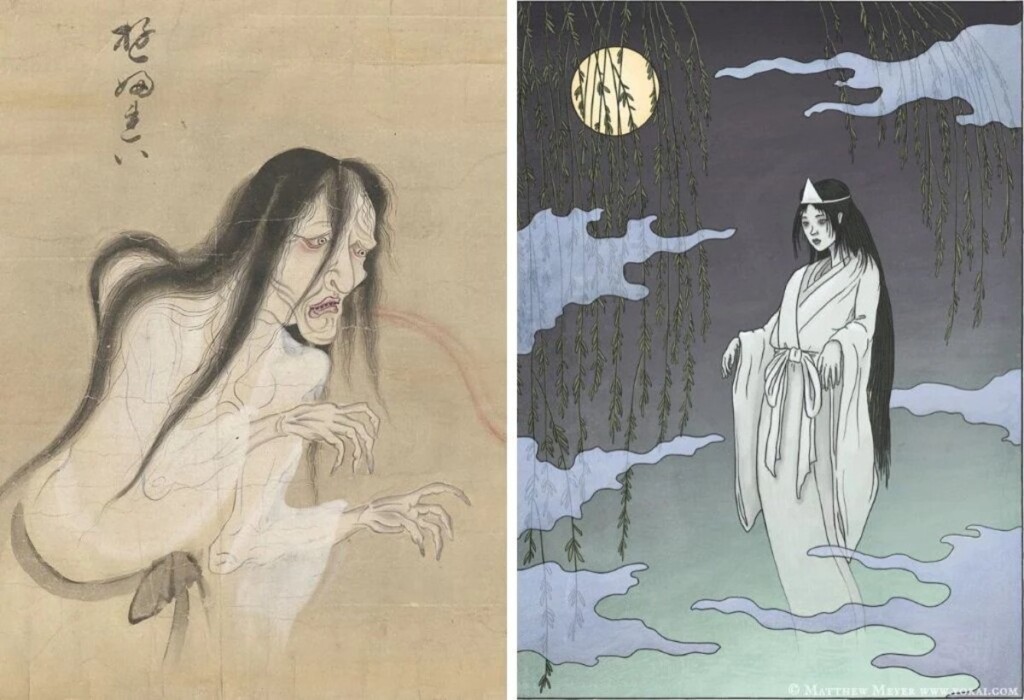
You are reading a ghost story, and you have been reading one your entire life, and the moment you realize it is also the moment you understand why certain images — a woman standing at the edge of water, a house that should not still be standing, a debt that no document recorded — have never fully left you.
Izumi Kyoka was born in Kanazawa in 1873, two years after the Meiji government abolished the domain system and began its furious experiment in institutional reinvention. He died in 1939, by which point Japan had electric railways, a conscript army modeled on Prussian lines, a civil code borrowed from Napoleon, and a literature that had largely decided the supernatural was embarrassing. Kyoka never agreed. He published obsessively — novels, plays, short fiction — for over four decades, and the thing that remained constant across all of it was his insistence that the world visible to reason was not the only world operative on human beings. His 1900 novella “The Operating Room” places a surgeon and a woman in a clinical, modern space — the operating theater, that cathedral of Meiji rationalism — and proceeds to detonate it from within. The scalpel does not cure. The modern instrument opens something the modern mind cannot name.
What Kyoka understood, and what his critics who dismissed him as a romantic throwback could not see, was that modernization is never total. Sigmund Freud, working in Vienna during precisely the same years Kyoka was producing his early fiction, published “The Uncanny” in 1919, identifying the particular dread that arises not from the foreign but from the familiar-made-strange, the heimlich that becomes unheimlich. Kyoka did not need the clinical vocabulary because he was already living inside the phenomenon. Japan had modernized its postal service, its military conscription, its banking system — it had not modernized the psychic weight of maternal obligation, of spiritual debt, of the female body as either sacred vessel or dangerous threshold. Kyoka’s supernatural women are not decorative. They are the return of everything the Meiji project had officially declared resolved.
The drowned spaces in his work are worth pausing over. Water in Kyoka recurs not as romantic backdrop but as an alternative jurisdiction, a place where the rules of Meiji civil society — property, contract, rational personhood — simply do not apply. His 1910 story “The Holy Man of Mount Koya” moves its protagonist through a landscape that keeps threatening to dissolve, where the distinction between the living woman who shelters him and something older and less human grows progressively less stable. This is not nostalgia for pre-Meiji Japan. It is a diagnostic reading of what Meiji Japan had failed to do: it had changed the surface and left the depths untouched, which meant the depths would keep surfacing.
His mother died when he was nine. Kyoka spent the rest of his life writing her in displaced forms — the woman of preternatural power, the figure who stands between the protagonist and annihilation, the one whose protection costs something that cannot be itemized. The psychoanalytic reading is available and not wrong, but it is incomplete without the social dimension. In a society that had just handed women a civil code that classified them alongside minors and the mentally incompetent, the image of the woman as the locus of genuine supernatural authority is not escapism. It is a correction. It is the literature insisting on a power that the law had just officially denied.
Kobo Abe and the Architecture of Disappearance
You wake up one morning and your name means nothing. Not because you have forgotten it, but because the systems that gave it weight — the employer, the address, the family registry, the neighborhood association that filed your existence in triplicate — have all burned down overnight. You are not liberated. You are simply unreadable.
This is the operative condition of Kobo Abe’s fiction, and it did not emerge from imagination alone. Abe was born in 1924, raised partly in Manchuria, and returned to a Japan in 1945 that had ceased to exist as the country that had sent him there. The defeat was not merely military. It was ontological. The imperial mythology that had organized selfhood — the idea that individual identity was meaningful insofar as it fed into a collective body with the Emperor at its center — was formally dismantled by American occupation decree. What remained was a population that had to rebuild not just cities but the very grammar of who they were. The cities got rebuilt faster.
The Woman in the Dunes, published in 1962, places an amateur entomologist in a coastal village where he is trapped by sand and by villagers who need a man to shovel the dunes back each night. He resists. He schemes. He eventually stops resisting, not because he is broken but because the category of self that motivated his resistance — the identified citizen with a train ticket and a school job and a name registered somewhere — has quietly dissolved beneath him. Abe does not dramatize this as tragedy. The sand is indifferent, which is worse than hostile. Identity, the novel implies, was never a possession. It was a maintenance contract, and when the contract lapses, the person does not die. They simply become continuous with the environment that was always threatening to absorb them.
By 1973, when The Box Man appeared, Abe had moved from metaphor into something rawer. A man abandons his life and takes up residence inside a cardboard box, observing the city through a hole cut at eye level. He is not homeless in any conventional sense. He has chosen a different relationship to visibility — specifically, he has chosen to see without being catalogued. The horror of the novel is that other people know exactly what he is doing and are half-envious. The box is not a shelter from society. It is a confession about what social existence actually requires: the constant performance of locatability, the obligation to remain findable by institutions that need your data more than they need you.
There is a sociological framework for this that Erving Goffman outlined in The Presentation of Self in Everyday Life in 1959, arguing that the self is not an entity but a series of performances regulated by the expectations of audiences. Abe radicalized this by removing the audience. Without witnesses who enforce the script, the performance does not become authentic. It simply becomes incoherent, which is more frightening than inauthenticity ever was.
What postwar Japan experienced structurally — and what Abe transformed into literature — was the revelation that a highly organized society had built its interior life on a mythology so total that its collapse left nothing behind worth inheriting. Between 1945 and 1955, Japan’s GDP contracted and then expanded with a speed that economic historians still cite as one of the fastest recoveries in industrial history. Infrastructure, exports, manufacturing capacity — recoverable. The interior architecture of a person who had been told their death served a divine purpose and who woke up the following Tuesday to find that purpose voided by a radio broadcast from a man whose voice turned out to be human — that was not recoverable on any timeline that postwar economic data could measure.
Abe wrote characters who have survived this voiding and who do not know what survival means when the self that was supposed to survive never quite cohered into something that could be lost or saved.
Mishima’s Body and the Fantastic as Political Weapon
You are standing in front of something so beautiful it makes you want to destroy it. Not metaphorically. The young monk Mizoguchi, in Mishima’s 1956 novel, cannot look at the Golden Pavilion without feeling the architecture of the world tilt toward an unbearable edge — and so he burns it. The act is not madness. It is the only logical conclusion of a mind that has understood beauty as an aggression, as something the world commits against the inadequate, and the only possible response is annihilation.
Mishima understood that postwar Japan had made a bargain. The country that emerged from 1945 reconstruction operated on a principle of productive forgetting: dismantle the aesthetic and mythological scaffolding of imperial culture, accept the new industrial grammar of the American-administered present, and the trauma would eventually metabolize into prosperity. By 1956, the year The Temple of the Golden Pavilion appeared, Japan’s GDP was already recovering beyond prewar benchmarks, and the psychic contract was holding. Mishima refused it. Not nostalgically, and not as a reactionary — or rather, reactionary in a sense so precise that the word barely contains what he was doing. He chose the fantastic and the mythological not to restore a lost world but to expose the violence of the world that had replaced it.
The Sea of Fertility tetralogy, completed between 1965 and 1970, operates as a kind of philosophical time bomb. The four novels — Spring Snow, Runaway Horses, The Temple of Dawn, and The Decay of the Angel — trace the theory of metempsychosis across the twentieth century, following a single soul reincarnated through bodies that the modern Japanese state systematically destroys or renders obsolete. The structure borrows from classical Buddhist cosmology not as ornament but as epistemological framework: if the soul migrates across historical ruptures, then the rupture itself — the forced discontinuity of 1945 — is not a liberation but a murder. The fantastic here does not create an escape hatch from reality. It makes reality’s violence legible in a register that realism cannot reach.
This is where Mishima diverges from every therapeutic use of myth that the twentieth century produced. Carl Jung‘s 1951 Aion theorized the archetypal image as a stabilizing force, something the psyche mobilizes to survive fragmentation. Mishima weaponizes the same materials in the opposite direction — not toward integration but toward rupture. Beauty, in his logic, is always a threat because it reveals the gap between what a culture claims to value and what it has actually agreed to sacrifice. The Golden Pavilion is beautiful in the novel precisely because its survival would be a lie — it would stand as evidence that something sacred had been preserved when everything sacred had in fact been exchanged for tractors and television sets.
The fantastic register also functions as a kind of temporal sabotage. When Mishima invokes the imagery of the warrior traditions, the noh theater’s ghostly doubles, the Shinto cosmogony of cyclical destruction and return, he is inserting into the accelerated linear time of reconstruction a set of frequencies that refuse to be absorbed. Georges Sorel, writing in Réflexions sur la violence in 1908, argued that myth functions not as description but as mobilization — it does not explain the world, it propels people through it. Mishima read Sorel. The mythological fantastic in his work is not decoration applied to political thought; it is the political thought, expressed in the only form capable of bypassing the rational censorship that reconstruction culture had installed in its citizens.
On November 25, 1970, Mishima stood on a balcony at the Japan Self-Defense Forces headquarters in Tokyo and delivered a speech to soldiers who mostly laughed. Then he went inside and died by ritual suicide. The last pages of The Decay of the Angel, which he had submitted to his publisher that same morning, end not in revelation but in a void — the protagonist looks at a garden and realizes nothing was ever transmitted, no soul ever migrated, perhaps there was never anything to carry forward at all.
A vision curated by a filmmaker, not an algorithm
In this video I explain our vision
The Feminine Uncanny: Enchi Fumiko and the Revenge of the Suppressed

You are sitting across from a woman at a dinner party, and she is smiling, and you cannot tell — not with any certainty — whether she wants to destroy you or whether she simply finds you mildly interesting. The ambiguity is not accidental. It has been cultivated over decades, possibly over a lifetime, because the direct route was never available to her.
Enchi Fumiko understood this ambiguity not as a character trait but as a structural condition. Her 1957 novel The Waiting Years follows Tomo, a wife who spends her life procuring concubines for her husband under the Meiji civil code — a legal architecture that treated married women as juridically equivalent to minors, stripping them of property rights, the right to sue, the right to exist contractually outside male guardianship. The Meiji Civil Code of 1898 was not metaphor. It was statute. Women could not initiate divorce without demonstrating fault that courts routinely refused to recognize. What Enchi perceived was that this compression of legal personhood did not extinguish interiority — it rerouted it. Tomo’s revenge accumulates not through action but through silence, through the slow architecture of waiting itself, which becomes in Enchi’s hands something almost geological in its patience and its violence.
In her 1958 novel Masks, the supernatural enters not as decoration but as the operative mechanism of the plot. The protagonist Mieko does not haunt metaphorically — she engineers possession literally, or near-literally, using the ancient Noh masks of Rokujo and Hannya as instruments of a design so subtle it borders on the imperceptible. What Enchi is drawing on here is the classical figure of the living spirit, the ikiryo, documented in the Heian court literature she spent years translating — a form of haunting produced not by the dead but by the murderous emotional intensity of the living, specifically of women whose attachment or rage had nowhere legitimate to go. She translated the complete Tale of Genji over fourteen years, finishing in 1972, and that labor was not scholarly neutrality. It was excavation. She was recovering the record of a social system in which women of the Heian aristocracy wielded considerable cultural authority, and comparing it, unfavorably and silently, to what the modernizing state had subsequently done.
The psychoanalytic tradition would call what Enchi depicts the return of the repressed, but that framing is too comfortable — it implies a hydraulic system that restores equilibrium once the pressure releases. What Enchi shows is not release but redirection, a permanent rerouting that transforms suppressed agency into something that operates beneath visibility, that cannot be prosecuted because it leaves no fingerprints that law recognizes. Mieko does not commit violence. She creates conditions. The distinction is the entire point, and it mirrors precisely the conditions under which real women inside Meiji and Taisho civil structures were forced to operate: indirectly, deniably, through the management of appearances rather than the assertion of will.
This is why categorizing Enchi’s work as simply “feminist Gothic” forecloses what makes it disturbing. The supernatural in her fiction is not a symbol for female anger — it is the most accurate available description of how that anger actually moved through a society that had legally foreclosed its direct expression. Possession, illusion, the long patience of a curse: these are not exotic literary devices imported from folklore. They are precise accounts of the only technologies available. The woman who cannot own property, cannot appear in court, cannot refuse, cannot leave — she does not disappear. She learns to operate in the registers that power does not monitor, because power has decided those registers are not real.
The Taisho period, running from 1912 to 1926, produced a brief loosening — literary women’s magazines, the beginnings of a suffrage movement that would be legally crushed under the Peace Preservation Law of 1925 — and then the contraction returned, harder.
Murakami, the Fantastic Domesticated and Sold Back
You have read him on a long flight, probably, or in a café where the espresso cost too much and the light was exactly right — that particular slant of afternoon that makes solitude feel chosen rather than imposed. The prose arrived clean, the strangeness arrived manageable, and you closed the book with the sensation of having understood something profound about loneliness without ever being asked to locate that loneliness in a specific history or a specific wound.
This is precisely the mechanism worth examining. Haruki Murakami‘s ascent to global literary celebrity rests on a calibration so precise it functions almost as engineering: the fantastic is present, but it has been denatured. In Kafka on the Shore, published in 2002, fish rain from the sky and a character converses with the ghost of a soldier frozen in 1944. The war surfaces — but only as atmosphere, as the faint perfume of an unfinished dream. The soldier’s stasis is aesthetic, not accusatory. There is no demand that the reader reckon with what happened in the Pacific, no echo of the violence that Masuji Ibuse had made structurally unavoidable in Black Rain decades earlier. The fantastic in Murakami is always amnesia rendered beautiful.
What Murakami understood — perhaps intuitively, perhaps with considerable commercial intelligence — is that the Western literary market in the late twentieth century had developed a specific appetite: it wanted the exotic made intimate, the foreign made melancholy in a register it already recognized. Norwegian Wood, published in 1987 and selling more than ten million copies in Japan within months, is technically not a fantastic novel at all, yet it established the emotional template that his later supernatural fiction would inhabit. The Beatles reference in the title performs an immediate function of domestication: this is Japan, but it is also already yours. The grief inside it is universal — which is to say, it has been made legible by stripping away the cultural specificity that would have made it genuinely demanding.
The theorist Fredric Jameson, writing in The Political Unconscious in 1981, argued that aesthetic form is never innocent — that the way a narrative organizes its materials is always also a position on the social contradictions it cannot directly name. By that measure, Murakami’s formal choices are revealing. His protagonists are almost constitutionally unanchored: they have no strong family ties, no political commitments, no relationship to collective memory that they take seriously. They move through a Japan that looks like a backdrop. The uncanny events that break into their lives — the talking cats, the disappearing women, the wells that lead to other worlds — never force a confrontation with anything systemic. They individualize every rupture. The strange becomes a metaphor for the protagonist’s inner life, and the protagonist’s inner life is carefully curated to be globally relatable.
This is not a failure of craft. Murakami writes with genuine precision, and the longing his prose generates is real. The problem is what that longing is made to do. Japan in the postwar decades produced writers — Kōbō Abe among them — who understood that the disorientation of modernity was not a private emotional weather but a structural condition with identifiable causes. Abe’s fantastic was abrasive because it refused to resolve into feeling. Murakami’s fantastic consistently resolves into feeling, and feeling, once isolated from its material causes, becomes indistinguishable from brand.
By the time Kafka on the Shore was translated and marketed globally, the critical apparatus surrounding Murakami had already learned to describe his work using words like “magical,” “mysterious,” and “dreamlike” — adjectives that close inquiry rather than open it. A literature genuinely rooted in the uncanny, in the tradition that runs from Izumi Kyōka’s ghost-soaked meiji landscapes forward, refuses comfort as a structural principle. It insists that what cannot be named in daylight still has consequences in the dark.
The Digital Uncanny and the New Fantastic
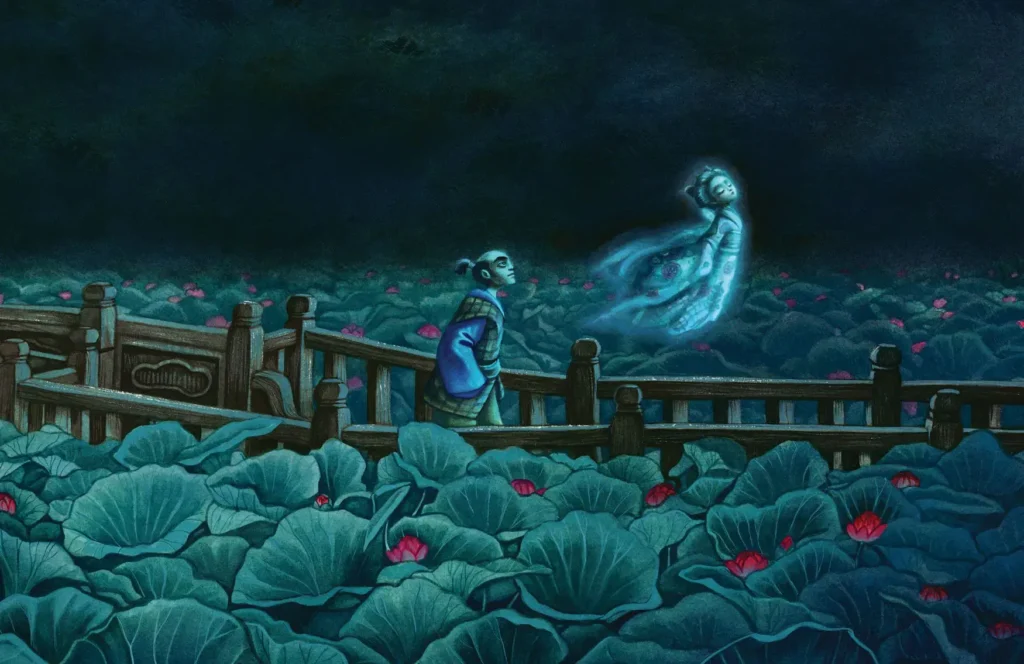
You wake one morning and the birds are gone. Not dead — gone. No one can explain it, and more troublingly, no one seems particularly disturbed. The island where you live has always functioned this way: things vanish, memory follows shortly after, and the population adjusts its grammar accordingly, pruning the words for absent objects from daily speech as if language itself were a bureaucratic ledger being quietly audited.
This is the precise texture of Yoko Ogawa’s world in The Memory Police, published in 1994, and what makes it unbearable is not the strangeness but the familiarity. The disappearances do not arrive with thunder or violation. They arrive with the quiet efficiency of a system performing its intended function. The secret police who enforce forgetting are not monsters; they are administrators. They carry clipboards. They follow procedures. The horror Ogawa engineers is not that something evil has taken over the island, but that the island is operating exactly as designed.
This marks a genuine rupture in the genealogy of Japanese fantastic literature. Where earlier writers reached backward into Shinto animism, wartime trauma, or the hallucinatory logic of modernization, Ogawa reaches into the operating system of contemporary life and finds that disappearance has been outsourced. The supernatural is no longer necessary when the administrative is sufficiently thorough. In a world structured by databases, recommendation algorithms, and soft forms of behavioral compliance, the self does not need to be destroyed dramatically — it can simply be deprecated, version by version, until nothing functional remains.
Hiromi Kawakami works a different register of the same unease. Her fiction operates in intimate domestic spaces — a bar, an apartment, a slow walk through a neighborhood — where time has become structurally unreliable. In The Nakano Thrift Shop and elsewhere, her characters do not confront the uncanny as an intrusion; they cohabit with it the way one cohabits with a slow leak in a ceiling, noticing the stain but continuing to eat dinner beneath it. The supernatural in her work is not dramatic revelation but chronic condition. This is important because chronic conditions do not demand response the way crises do. They are absorbed, normalized, worked around.
What both writers illuminate, from their distinct angles, is a transformation in how contemporary Japan — and by extension any highly administered society — stages the erosion of interiority. The novelist Natsume Soseki diagnosed in 1914, in his lectures collected as My Individualism, the peculiar violence of a modernity imported faster than the psychological infrastructure to sustain it. A century later, the modernity in question is no longer arriving from outside; it has colonized the inside entirely. The fantastic, in this context, is no longer a way of expressing what official history suppresses. It is a way of tracing what algorithmic culture quietly removes — memory, singularity, the capacity to be witnessed by another person.
The scholar Sharalyn Orbaugh, writing on Japanese science fiction and gender, identified a persistent tendency in Japanese popular fantastic literature to locate anxiety not in external threat but in the instability of the body as a reliable container of selfhood. What Ogawa and Kawakami do is extend this instability from the body to the record. The self that cannot be remembered by anyone, including itself, is not destroyed but rendered statistically irrelevant — a data point that has ceased to generate signal. This is a more contemporary terror than anything a ghost could manage, because it requires no malevolent intent, only indifference and sufficient processing power.
Japanese fantastic literature began by asking what spirits inhabit the world alongside us. It has arrived at a question that is quieter, more corrosive, and arguably more urgent: what happens to a person when the infrastructure of recognition fails, not violently, but simply by moving on to other data.
🌀 Labyrinths of the Imagination: Fantastic Worlds and Their Authors
Japanese fantastic literature draws from a deep well of supernatural tradition, uncanny transformation, and the blurring of reality and dream. To fully appreciate its origins and meanings, it helps to explore the broader landscape of the literary fantastic and its key theorists and practitioners worldwide. The following articles illuminate the thematic corridors that connect Japanese imaginative fiction to the global tradition of the strange and the marvelous.
The Literary Fantastic: Todorov and the Theory of the Fantastic
Tzvetan Todorov‘s foundational theory of the fantastic defines the genre as a moment of hesitation between natural and supernatural explanations, a tension that runs through Japanese fantastic literature from Ueda Akinari to Izumi Kyōka. This article examines how Todorov’s framework helps us understand the uncanny power of ghost stories, shape-shifting creatures, and liminal spaces in literary tradition. It is essential reading for anyone seeking a theoretical grounding in the fantastic as a narrative mode.
GO TO THE SELECTION: The Literary Fantastic: Todorov and the Theory of the Fantastic
Ueda Akinari: Life and Works
Ueda Akinari is the undisputed forefather of Japanese fantastic literature, and his collection Ugetsu Monogatari remains one of the most haunting works in the world canon of supernatural fiction. This article traces his life, his deep immersion in classical Chinese and Japanese literary sources, and the way he transformed folk legend into refined, psychologically complex narrative. Understanding Akinari is indispensable for any serious engagement with the Japanese fantastic tradition.
GO TO THE SELECTION: Ueda Akinari: Life and Works
Jorge Luis Borges: Life and Works
Jorge Luis Borges and Japanese fantastic literature share a profound fascination with labyrinths, mirrors, infinite libraries, and the dissolution of the boundary between dream and waking life. This article explores Borges’s universe of paradox and metaphysical imagination, revealing how his work resonates with the aesthetic sensibility found in Japanese authors like Kobo Abe and Yasutaka Tsutsui. The parallels between these traditions illuminate the universal architecture of the fantastic imagination.
GO TO THE SELECTION: Jorge Luis Borges: Life and Works
H.P. Lovecraft: Life and Works
H.P. Lovecraft‘s cosmic horror, with its emphasis on ancient forces beyond human comprehension and the fragility of rational knowledge, offers a compelling parallel to the darkness lurking in Japanese kaidan and weird fiction. This article examines Lovecraft’s life and works, situating his mythology of nameless dread within the wider tradition of supernatural literature that influenced writers around the world, including in Japan. The encounter between Lovecraftian horror and Japanese fantastic sensibility reveals how different cultures construct their deepest fears.
GO TO THE SELECTION: H.P. Lovecraft: Life and Works
Discover the Cinema of the Fantastic on Indiecinema
If the worlds of Japanese fantastic literature have sparked your curiosity, Indiecinema is the streaming platform where literary imagination meets the moving image. Explore our curated selection of visionary, independent, and avant-garde films that venture into the uncanny, the supernatural, and the dreamlike — stories that, like the best fantastic fiction, refuse to leave you unchanged.
👉 EXPLORE THE CATALOG: Watch Indie Films in Streaming
A vision curated by a filmmaker, not an algorithm
In this video I explain our vision

