
The Architecture of Induced Confession
You are already inside a system designed to produce your guilt before it has been decided. The room is small. The questions are not questions — they are the architecture of an answer someone else has already written, and your body is being asked to sign it. This is not a modern aberration. This is the oldest administrative technology the Western legal tradition ever perfected.

Roman law did not invent torture as cruelty. It institutionalized it as epistemology. Under the Digest of Justinian, compiled in 533 CE, the quaestio per tormenta was codified as a legitimate instrument of judicial inquiry — not punishment, but procedure. The logic was precise and, in its own terms, coherent: a slave’s testimony was inadmissible unless extracted under physical duress, because only pain could guarantee that the body would not protect its master’s interests. Truth, in this framework, was not something a witness carried in their memory or conscience. It was something lodged deeper, behind the will, accessible only when the will had been broken. The body became the final archive.
What the medieval inquisitorial system inherited from Rome was not the whip or the rack as isolated instruments of cruelty — it was this underlying conviction, a metaphysics of suffering as disclosure. When Pope Innocent IV issued Ad extirpanda in 1252, authorizing the use of torture in heresy proceedings, he was not departing from legal tradition. He was extending it into a new domain with theological precision. The inquisitor’s manual, the Practica Inquisitionis Heretice Pravitatis compiled by Bernard Gui around 1323, outlines the gradations of pressure with the same bureaucratic care a tax assessor might bring to property valuation. There are stages, thresholds, limits — torture was not supposed to maim permanently, not supposed to draw blood in excess. These constraints were not mercy. They were quality control, ensuring the confession extracted remained legally usable, the product undamaged by its own production process.
What makes this structure philosophically staggering is the circular logic it rested upon and which no one at the time found circular. Confession was required for conviction in the most serious cases — it was, in canonical jurisprudence, the regina probationum, the queen of proofs, considered more reliable than witness testimony or physical evidence. But because confession was so prized, its absence became itself suspicious. A person who refused to confess despite strong circumstantial evidence was not demonstrating innocence — they were demonstrating obstinacy, which implied a will hardened against truth, which justified the application of further pressure to break that will. The refusal to confess became evidence of the need to extract a confession. The system had no exit.
This architecture did not survive only because of institutional inertia or clerical sadism. It survived because it solved a genuine epistemological problem in a way that felt satisfying to its operators. Before forensic science, before reliable documentation, before the investigative infrastructure that modern states take for granted, the inner life of the accused was often the only place where certainty seemed to reside. To compel access to that inner life was not perceived as a violation of the self — it was perceived as a necessary crossing of a threshold that voluntary testimony refused to cross. Pietro de Castrensis, a fifteenth-century jurist, argued explicitly that torture was philosophically justified because it moved the process of truth-finding from the uncertain surface of speech to the involuntary depths of physical response. The screaming body, in his framework, could not lie the way the composed face could.
What no one in this tradition paused to examine was the possibility that pain does not unlock truth — it manufactures consent to whatever proposition will end the pain.
The Witches of Mount Sciliar

Docufiction, by Andrea Dalfino, 2022, Italy.
The Witches of Scillar is a documentary that delves deeply into the trials that took place in Alto Adige, in Castel Presule and surrounding areas at the beginning of the 16th century, following which more than 10 were condemned to the stake on charges of witchcraft, becoming the real and precursors of the infamous Witch Hunt. Starting from the analysis of the historical context and intertwining local legends with actual events and analyzing the locations of the events with the help and guidance of experts, this film offers a new historical perspective on what happened, culminating with the exposition of what remains of the witches in South Tyrol today and how the crimes of the inquisition are judged in retrospect today.
Alto Adige is a land full of mystery, where history and legend are intertwined, with its magical and fascinating scenarios that push the mind and imagination to wander, investigate, discover. Here is the Sciliar, a suggestive mountain massif located in the natural park of the same name against the backdrop of the Dolomites, and no other mountain is so full of myths and legends as this one, on which it is said that fairy creatures and spirits of all sorts live , and in the Middle Ages it was held up as a meeting place for witches and devils. Here, during the time of the Inquisition, 10 women accused of witchcraft were tried and killed. Director Andrea Dalfino made the documentary The Witches of the Sciliar, enriching the film with fictional scenes that retrace the intricate events of the Fiè trial.
LANGUAGE: Italian
SUBTITLES: English, Spanish, French, German, Portuguese
Pain as Epistemology
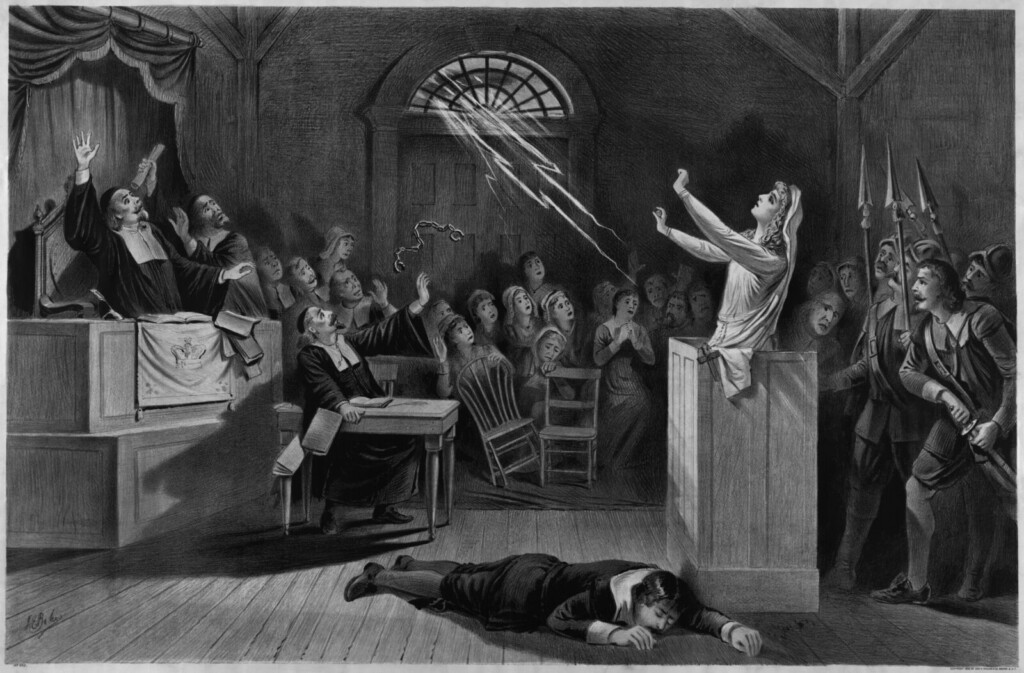
You are already confessing before anyone has touched you. The room is prepared, the instruments arranged with a kind of professional tidiness that suggests expertise rather than cruelty, and somewhere in the mind of the magistrate overseeing the proceedings lives a genuine conviction — not sadistic fantasy, but epistemological faith — that what is about to happen constitutes a method of inquiry. This is the part that history tends to suppress in favor of simpler horror: judicial torture was not merely punishment wearing the mask of investigation. It was, at its foundation, a theory of knowledge.
Aristotle treated testimony extracted under compulsion as a distinct category of proof in his Rhetoric, neither fully reliable nor fully dismissible, but occupying an uneasy middle ground where the body’s extremity was assumed to dissolve the will’s capacity for deception. The logic was seductive in its simplicity: a person comfortable enough to lie will lie, but a person in sufficient agony will surrender the lie along with everything else. Pain was imagined as a solvent, burning away the protective layers of self-interest until some naked, unmediated truth was exposed beneath. What this framework could not account for — and what practitioners in the torture chambers of medieval and early modern Europe slowly discovered and then systematically ignored — is that pain does not dissolve the will. It reorganizes it entirely around a single imperative: make this stop.
Michel de Montaigne, writing his Essais in the 1570s and 1580s during a period when judicial torture was routine across France and most of Europe, identified the contradiction with the kind of quiet precision that makes a reader feel slightly ashamed for not having seen it themselves. He observed that torture proves nothing about guilt and everything about endurance — that the strong-bodied innocent man who survives the ordeal without confessing is set free, while the physically fragile innocent man who breaks and confesses is executed. What the system was actually measuring, Montaigne understood, was biological fortitude dressed in the language of moral truth. The court believed it was extracting confession; it was conducting an involuntary contest of pain tolerance.
What makes this philosophically grotesque rather than merely cruel is the self-sealing logic the system constructed around its own failures. When a confession extracted under torture later proved false, the explanation was never that the method was epistemologically unsound — it was that the subject had been insufficiently tortured, or had been protected by diabolical assistance, or had retracted the confession out of subsequent cowardice. The system had built itself a closed loop in which no evidence could challenge the premise. Psychologists studying coerced confessions in the twentieth century — most consequentially Gisli Gudjonsson in his 1992 work The Psychology of Interrogations, Confessions and Testimony — would later give clinical vocabulary to what Montaigne had intuited rhetorically: that extreme stress does not produce accurate memory retrieval but degrades it, that compliance and confession are behavioral responses to perceived threat rather than outputs of honest recall.
The institutions that practiced judicial torture were not populated exclusively by cynics. Many of the magistrates, inquisitors, and legal theorists who defended the procedure were men who had read Roman law carefully, who cited the Digest of Justinian with genuine reverence, who believed they were operating within a sophisticated and humane framework that distinguished between legitimate and illegitimate degrees of suffering. The Roman law tradition they inherited had itself inherited the Greek philosophical assumption that the tortured body could not successfully maintain falsehood. Centuries of jurisprudential authority had crystallized what was essentially a hypothesis into something that felt like demonstrated fact. And this is where the trap closes most tightly — not around the prisoner in the chamber, but around the intellectual tradition that had convinced itself, through the accumulated weight of precedent, that a screaming human being in unbearable pain was finally, for the first time, telling the truth.

The Sovereign's Need and the Confessor's Destruction
You are already guilty before you open your mouth. The interrogator knows this. The magistrate knows this. Even the clerk transcribing your words in a cold stone room knows this. The confession they are about to extract from you is not evidence — it is ceremony, and you are its necessary object.
Michel Foucault, in Discipline and Punish published in 1975, identified something that legal historians had long obscured beneath procedural language: the confession in early modern European law was not a mechanism for discovering truth but a ritual of sovereignty. The accused’s broken voice, their capitulation to the accusation, was the moment power made itself visible. It was theatre requiring a specific ending, and the ending was always the same. What the rack and the strappado produced was not information but submission — the body of the accused becoming the medium through which the authority of the sovereign, of the church, of the court, was publicly confirmed. The confession said nothing about what happened. It said everything about who held power over life and death.
In the witch trials that swept across German-speaking territories, France, Scotland, and Scandinavia between roughly 1560 and 1680, the evidentiary structure collapsed into something close to pure circular logic. An accusation was made. The accused denied it. The denial was itself interpreted as evidence of guilt — only a compact with the devil would give a person the strength to resist confession. Torture was then applied to overcome this diabolical resistance. The confession obtained under torture was taken as confirmation of the original accusation. Estimates from historical research, including work by Brian Levack in The Witch-Hunt in Early Modern Europe first published in 1987, place the total number of executions across European territories at approximately 60,000, with the most intense periods of killing concentrated in the fragmented political landscape of the Holy Roman Empire, where local jurisdictions competed in their prosecutorial zeal. The number itself is not the horror — the horror is the mechanism that produced it with such systematic efficiency.
What sustained this machinery was not mass hysteria, as popular accounts have often framed it, but something more structurally coherent: the confession served both theological and political functions simultaneously. Theologically, it demonstrated that the devil was real, active, and defeatable — each confession named accomplices, described sabbaths, confirmed a cosmology that the church needed to remain authoritative. Politically, accusation and extraction served as instruments of social control directed with measurable precision against women living outside male household authority, against property owners in communities where their land was coveted, against midwives and healers whose local power challenged clerical hierarchy. Johann Jakob Wecker’s natural magic texts, circulated widely in the sixteenth century, blurred the line between legitimate knowledge and demonic knowledge in ways that made expertise itself suspicious — meaning that competence became a liability, and the person most likely to be accused was often the person most trusted by their community before the accusation landed.
The accused entered the interrogation chamber already dead in the eyes of the law. The confession was simply the paperwork of an execution that had been decided before the first question was asked. What is genuinely difficult to absorb — what resists the comfortable distance of historical retrospect — is that the judges were not always cynical. Many believed sincerely in what they were doing. The procedural violence was not merely cover for cruelty; it was administered with the conviction that the soul of the accused might yet be salvaged even as the body was destroyed. This is the detail that keeps the historical record from becoming a simple story about monsters: the torturer who believed he was offering mercy, the magistrate who wept and signed the death warrant.
Beccaria's Rupture and Its Incomplete Revolution

You are handed a slim pamphlet in Milan, 1764, and within its pages a twenty-six-year-old aristocrat dismantles three centuries of legal doctrine with the precision of someone who has never actually been inside a torture chamber. Cesare Beccaria’s argument in Dei delitti e delle pene is not primarily a humanitarian one, though it is remembered that way. It is an epistemological indictment: the confession extracted under pain tells you nothing about guilt and everything about the body’s threshold for suffering. The stronger man lies convincingly and walks free; the weaker man confesses to anything and hangs. The instrument, Beccaria demonstrates, sorts by physiology, not by truth.
The speed at which his argument traveled was extraordinary and should itself disturb us. Frederick II of Prussia had already abolished torture in 1754, a decade before the pamphlet, acting less from philosophical conviction than from a sovereign’s contempt for unreliable intelligence — a general does not want tactical information extracted at knifepoint because screaming men invent what their interrogators need to hear. Catherine II of Russia incorporated Beccaria directly into her Nakaz of 1767, the legislative instruction she presented to her commission as if abolition were an act of enlightened generosity rather than an administrative correction of an epistemically broken procedure. France formally abolished judicial torture in 1780 under Louis XVI, then again in 1788 when the pre-trial variety was removed, a repetition that inadvertently revealed how the first abolition had not abolished much. The law had moved. The practice had shifted registers.
What institutional abolition actually produced was not the elimination of coercion but its reclassification. The physical methods that had required judicial authorization were reconstituted as administrative procedures, disciplinary measures, or simply as the informal customs of holding facilities that no statute specifically governed. Michel Foucault’s Discipline and Punish, published in 1975, traced this transformation with archaeological patience, showing how punishment moved inward, from the spectacular destruction of the body to the meticulous management of the soul, but his analysis perhaps obscured something cruder: the body never fully left the room. It was merely unwatched by the people who wrote the reports.
The twentieth century provides the evidence with bureaucratic thoroughness. The French military’s documented use of the gégène — field telephone generators applied to detainees — during the Algerian war between 1954 and 1962 involved officers who had studied republican law and knew the prohibition by name. The 2014 Senate Intelligence Committee report on CIA detention and interrogation programs described waterboarding, sleep deprivation extended beyond eleven days, and “rectal feeding” administered without medical necessity, each technique defended internally through a legal architecture of redefinition: the procedure did not constitute torture because the intent was informational, because the subject’s suffering did not reach a specified threshold, because a memo had authorized it. Beccaria’s dismantling of the epistemological case for confession had been absorbed into legal culture as rhetoric and then circumvented by renaming the thing being done.
The interrogators in those programs were not medieval inquisitors operating without theory. They had access to the SERE training manuals, to behavioral science consultants, to a post-Enlightenment vocabulary of psychological pressure — and yet the underlying logic was structurally identical to what Beccaria had anatomized: impose sufficient suffering, or its credible threat, until language is produced, then treat that language as actionable. The centuries between the strappado and the stress position are filled with genuine legislative victories, sincere moral revulsion, and real philosophical labor, and none of it relocated the epistemological gamble at the center of the procedure, which remains the belief that extreme duress is a reliable pathway to something true rather than a reliable pathway to something spoken.
Coercion Without Instruments

You are sitting in a room with no windows. You do not know what time it is. You have not slept in eighty-three hours. A man across the table asks you, again, the same question. You are no longer certain of anything — not of your own name, not of what you did last Tuesday, not of the boundary between what happened and what you have been told happened. At some point, the confession is not extracted. It is simply the only sentence left in you.
The Senate Intelligence Committee’s 2014 report on CIA detention and interrogation practices documented in clinical language what had been done in black sites across multiple countries: detainees subjected to walling, sleep deprivation extending past one hundred hours, confinement in boxes, waterboarding applied in sequences of up to 183 pours in a single month. The report’s most devastating finding was not the catalog of techniques but the institutional claim that accompanied them — that these methods worked, that they produced reliable intelligence, that the suffering was epistemically productive. The investigators found the opposite. The confessions obtained were largely inaccurate, often fabricated, frequently mirroring the very narratives interrogators had introduced into the room. The subject had not revealed the truth. He had constructed a truth capable of making the room stop.
Saul Kassin, a psychologist at John Jay College of Criminal Justice, spent decades documenting false confessions in civilian criminal proceedings, publishing landmark findings in works such as his 1997 analysis of confession evidence and later in research appearing in Psychological Science that demonstrated how ordinary people, under sufficiently sustained psychological pressure, will confess to acts they did not commit — not because they are weak, but because the interrogation environment systematically dismantles the architecture of self-trust. The Reid Technique, used in American police interrogations throughout the twentieth century, operates by convincing the suspect that resistance is futile, that evidence already condemns them, that cooperation is the only rational path. It does not use pliers. It uses epistemology. It makes the subject doubt the evidentiary value of their own memory.
What this means is that the abolition of formal instruments did not reorganize the relationship between the state and the body it wants to speak. It relocated the pressure from the peripheral nervous system to the prefrontal cortex, from bone and tendon to the cognitive architecture of personal identity. A person deprived of sleep long enough enters a physiological state that neurologists describe as functionally indistinguishable from acute psychosis — hallucinations, temporal disorientation, the collapse of executive function. The signature on the document at the end of that process is not a legal act performed by a legally cognizant subject. It is the residue of a demolished mind, which is precisely what the rack was designed to produce by a different anatomical route.
There is a concept in moral philosophy called the integrity of testimony — the idea that a statement carries epistemic weight only if the speaker possesses the cognitive sovereignty to have made it otherwise. Aristotle’s distinction between voluntary and involuntary action in the Nicomachean Ethics already gestured toward this problem: an act performed under compulsion so severe that the agent’s will is effectively replaced by external force is not the agent’s act at all. The confessor under torture is not a witness. He is a surface. And when the coercion is psychological rather than physical, when the surface is the mind itself rather than the skin, the distinction between witness and surface does not clarify — it disappears entirely into a procedural record that the court then reads as speech.
The rack was visible. You could see what it did. The room with no windows is invisible precisely because what it destroys cannot be photographed, because the bruise it leaves is inside the very faculty we use to recognize bruises.
A vision curated by a filmmaker, not an algorithm
In this video I explain our vision
⚖️ Power, Confession, and the Machinery of Violence
The extortion of confessions and the practice of judicial torture reveal the darkest intersection of law and power, where the state becomes an instrument of violation rather than protection. These phenomena cannot be understood in isolation — they are rooted in broader systems of psychological manipulation, institutional corruption, and the systematic suppression of human dignity. The articles below illuminate the cultural and philosophical forces that make such abuses not only possible, but historically recurrent.
Psychopathy: History and Diagnosis in Contemporary Psychology
Psychopathy as a clinical and cultural concept illuminates how certain personalities are drawn to positions where power over others can be exercised without remorse. Understanding the psychological profile of those who design and administer systems of coercive interrogation is essential to grasping why judicial torture persists even within ostensibly rational legal frameworks. The history of psychopathy research forces us to confront the uncomfortable truth that cruelty is often not the exception but a structural feature of certain institutions.
GO TO THE SELECTION: Psychopathy: History and Diagnosis in Contemporary Psychology
The Psychology of Power: History and Theory
The psychology of power examines how authority transforms individuals and institutions, often normalizing acts of violence that would otherwise be considered unconscionable. From Milgram’s obedience experiments to Zimbardo’s prison studies, research consistently shows that hierarchical structures can turn ordinary people into perpetrators of systematic abuse. Judicial torture and forced confessions are, in this light, not aberrations but predictable outcomes of unchecked institutional power.
GO TO THE SELECTION: The Psychology of Power: History and Theory
Sciascia’s The Day of the Owl: Analysis
Leonardo Sciascia‘s The Day of the Owl offers one of Italian literature’s most unflinching portrayals of a justice system corroded by complicity, silence, and the manufactured truth. Through the figure of Captain Bellodi confronting the Mafia’s shadow within the very institutions meant to combat it, Sciascia exposes how confession and evidence can be shaped, extorted, or suppressed to serve those in power. His work remains a foundational text for understanding how legal violence operates beneath a veneer of legitimacy.
GO TO THE SELECTION: Sciascia’s The Day of the Owl: Analysis
Kafka and Bureaucracy: The Trial and The Castle
Kafka’s The Trial and The Castle construct literary labyrinths in which the individual is subjected to an opaque and omnipotent bureaucratic apparatus that renders resistance futile and guilt pre-determined. These works resonate profoundly with the experience of those trapped in coercive legal systems, where confession is not the outcome of truth-finding but of exhaustion and existential collapse. Kafka’s vision anticipates the logic of judicial torture with terrifying precision: the system does not seek the truth, it manufactures it.
GO TO THE SELECTION: Kafka and Bureaucracy: The Trial and The Castle
Discover Cinema That Does Not Look Away
If these themes stir something in you — a need to see power exposed, justice questioned, and human dignity defended — Indiecinema is the streaming platform that speaks your language. Explore a curated selection of independent and auteur films that dare to confront the darkest corners of history and society. Join the Indiecinema community and let cinema be your most honest witness.
👉 EXPLORE THE CATALOG: Watch Indie Films in Streaming
A vision curated by a filmmaker, not an algorithm
In this video I explain our vision

