
The Surveillance Gesture
You are standing in the kitchen at two in the morning, the refrigerator light the only thing between you and the dark, and the phone in your hand belongs to someone else. You are not a monster in this moment. You are not even, in your own assessment, doing something wrong. You are doing what feels like the only available answer to a question that has been eating through you for three weeks, a question you cannot ask out loud because asking it would make you the problem. So instead you swipe. You scroll. You read words that were never meant for you, and you are looking — with the particular desperation of someone who already half-knows — for the thing that will either confirm the fear or dissolve it. What you find is ambiguous, and ambiguity at two in the morning is its own kind of verdict.

This is where possessive behavior actually lives. Not in the dramatic confrontation, not in the raised voice or the slammed door, but here, in the refrigerator light, in the gesture that feels like self-protection. The architecture of jealousy is built almost entirely from moments that look, from the inside, like reasonable responses to genuine uncertainty. The person checking the phone does not think of themselves as controlling. They think of themselves as frightened. And they are right — they are frightened. What they cannot see yet is that the fear and the surveillance have entered a loop, each one feeding the other, and that the loop will not close no matter how many times they check, because the thing they are actually looking for cannot be found in a message thread.
Evolutionary psychology has spent considerable energy arguing that jealousy is adaptive, that it served a reproductive function in ancestral environments where paternity uncertainty had real consequences for resource allocation. David Buss laid this out in his 1992 research on sex differences in jealousy, arguing that men and women fear different kinds of infidelity for reasons tied to their respective biological investments. The framework is not wrong exactly, but it is radically incomplete, because it describes the origin of a mechanism without accounting for what happens when that mechanism gets lodged inside a human relationship in the twenty-first century, where the threat is almost never biological fitness and almost always something far more corrosive: the terror of not being chosen.
What makes possessiveness so difficult to identify from the inside is that it wears the costume of love almost perfectly. The surveillance gesture feels like care. The interrogation about whereabouts feels like investment. The anger that follows unexplained silence feels like proof of how much the relationship matters. John Bowlby’s work on attachment, developed across the three volumes of his Attachment and Loss series between 1969 and 1980, traced how early experiences of inconsistent caregiving produce what he called anxious attachment — a relational mode defined by hypervigilance to signs of abandonment and compulsive attempts to restore proximity. The child who learned that closeness was unreliable becomes the adult standing in the kitchen at two in the morning, not because they are broken but because they are running an old and very practiced program.
The particular cruelty of this dynamic is that the behavior designed to secure the bond is precisely what begins to corrode it. Every act of surveillance communicates, beneath the words, a fundamental message: I do not trust you. And the person on the receiving end of that message — even if they have given no cause for it, even if they have been transparent and available and genuinely present — begins to feel the weight of being permanently suspected. They start to edit themselves. They hesitate before answering a message from a friend. They feel a small contraction in the chest when they laugh too loudly at something that has nothing to do with their partner. The relationship has not yet broken. But something in it has started breathing differently.
Ownership as a Cultural Inheritance
You inherit the language before you inherit the feeling. By the time you first say “mine” to another person, that word has already passed through centuries of legal architecture, theological doctrine, and literary convention that you will never consciously examine. It arrives in your mouth worn smooth, like a stone carried by a river so long its edges have disappeared. You do not notice that you are wielding an instrument of ownership because the instrument has been polished to feel like tenderness.
Roman law did not use metaphor. The institution of manus marriage, codified in the Twelve Tables around 450 BCE, transferred a woman from the legal authority of her father directly into the legal authority of her husband — not symbolically, but as a matter of property succession. She could not own, inherit, or contract independently. What is significant is not the cruelty of this arrangement, which has been noted sufficiently, but its grammar: the husband’s jealousy was not a psychological disorder but a property right. To feel possessive of a wife was structurally identical to feeling possessive of land. The emotion and the institution shared the same root, and that root was not love.
Christianity complicated the architecture without dismantling it. Augustine of Hippo, writing in the early fifth century, introduced a theological framework in which marital fidelity became tied to the salvation of souls, which effectively transferred the possessive logic from the realm of property to the realm of the sacred. The exclusive claim a husband exercised over his wife’s body was no longer merely civil — it was cosmological. Jealousy, in this reframing, began its long career as a virtue. Paul’s first letter to the Corinthians had already described God himself as a jealous force; human spouses who guarded their unions with obsessive vigilance were, in this reading, imitating the divine. The pathology was being given a halo.
What the nineteenth century contributed was sentiment. The Romantic movement, erupting across European literature and art between roughly 1780 and 1850, fused the possessive structure inherited from law and theology with an entirely new emotional register: interiority, longing, the suffering beloved as proof of love’s depth. Goethe’s Werther, published in 1774 and widely credited with triggering a European fashion for melancholic obsession, placed the suffering of the excluded lover at the center of the moral universe. The man who could not possess the woman he wanted became not pathetic but heroic. His anguish was his credential. By the mid-nineteenth century, this had migrated from literature into the normative expectations of courtship: jealousy no longer needed justification because it had become the very evidence that love was real.
Sociologist Eva Illouz, in her 2012 work Why Love Hurts, demonstrated with uncomfortable precision how the capitalist reorganization of emotional life in the nineteenth and twentieth centuries turned romantic love into a competitive market — one in which the fear of losing a partner to another became structurally indistinguishable from the fear of losing market position. The jealous lover was not malfunctioning; he was responding rationally to a system that had designed intimate relationships as sites of scarcity and rivalry. Illouz’s data, drawn from advice literature, court records, and popular fiction across two centuries, shows that jealousy intensified historically in direct proportion to the cultural valorization of romantic love as the primary source of personal identity.
What this genealogy reveals is not that some people love badly but that the institution of romantic couplehood was engineered, across centuries and through multiple ideological systems, to produce possessiveness as a feature rather than a flaw. The jealous partner is not deviating from the model — he is fulfilling it with a completeness that simply makes visible what the model always contained.

The Psychological Architecture of Pathological Jealousy
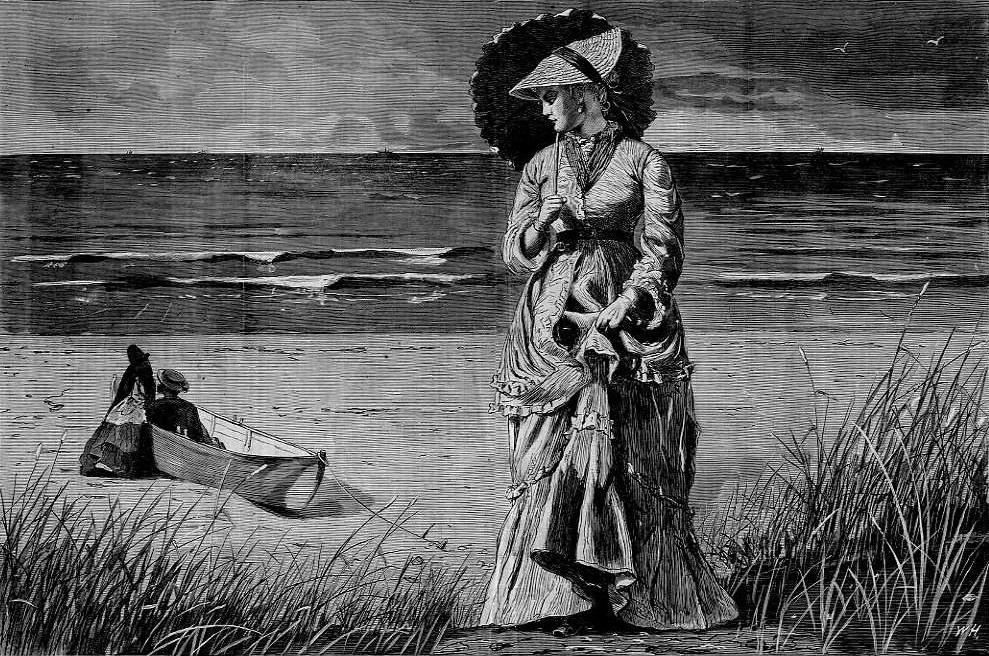
You check their phone while they sleep. Not because you found something. Because you found nothing last time, and that absence felt like a trap.
The mind that performs this ritual is not malfunctioning. It is executing a program written long before this relationship existed, in rooms you no longer remember clearly, with people who taught you, without meaning to, that closeness precedes abandonment. John Bowlby spent decades mapping this architecture. His three-volume work Attachment and Loss, completed between 1969 and 1980, demonstrated that the infant’s relationship to its primary caregiver does not simply shape emotional life — it constructs the operating model through which all subsequent intimacy is processed. The anxiously attached child, denied consistent responsiveness, learns a specific equation: love is unreliable, and hypervigilance is the only rational response to that unreliability. Decades later, that child monitors a sleeping partner’s screen with the same neurological urgency once directed at a door that didn’t open.
What makes this particularly difficult to see from the inside is that it does not feel like fear. It feels like love. It feels like care so intense it cannot tolerate ambiguity, like a devotion so complete it demands proof. The vocabulary of jealousy has always borrowed from the vocabulary of passion — Shakespeare’s Othello does not describe himself as frightened, he describes himself as consumed — and this borrowing is not accidental. It is the primary mechanism by which anxious attachment escapes recognition: it disguises surveillance as tenderness, interrogation as concern, control as protection.
David Buss, whose 2000 work The Dangerous Passion examined jealousy through an evolutionary lens, argued that jealousy itself is not a pathology but an adaptive system, a biological alarm evolved to detect threats to reproductive partnerships. In controlled studies, he demonstrated that men and women respond to different jealousy triggers with measurable physiological intensity — sexual infidelity producing stronger stress responses in men, emotional infidelity in women — findings that have been contested but never entirely displaced. The problem his framework exposes is not that jealousy exists, but that an adaptive system calibrated for ancestral environments now runs inside social structures of radical intimacy, individual autonomy, and psychological complexity it was never designed to navigate. A smoke detector is not malfunctioning when it responds to toast. But a detector that triggers on the smell of rain, or on silence, or on the particular way someone laughs at a text message, is no longer detecting smoke.
Clinical psychiatry draws a line here that most people never hear about. Reactive jealousy refers to responses proportionate to real or plausible evidence — the emotional turbulence following a discovered affair, the tension after a partner’s repeated secretiveness. It is painful, often destructive, but it maintains contact with reality. Delusional jealousy, formally classified and sometimes called Othello syndrome, is something else entirely: a fixed, unshakeable conviction of infidelity that resists all counter-evidence, that re-interprets every reassurance as further proof of conspiracy, that finds the partner’s innocence more suspicious than their guilt would have been. It appears in isolation or as a feature of schizophrenia, bipolar disorder, alcohol-related neurological damage, and certain dementias. It destroys relationships not through conflict but through a closed interpretive loop that no external reality can penetrate.
Between these two poles lives the territory most people actually inhabit — neither clinically delusional nor proportionately reactive, but something murkier: a jealousy that feeds on ambiguity, that grows in direct proportion to the intimacy it claims to protect, that cannot be satisfied by evidence because it was never really about evidence. This is the jealousy that presents itself as love’s most honest expression, that insists its own intensity proves the depth of feeling, that mistakes the wound for the wound’s cause.
The attachment system does not distinguish between a genuine threat and the memory of one.
When Control Becomes the Relationship
You wake up one morning and realize you have spent the last six months negotiating your own existence — what you wear, who you text back, how long you take at the grocery store. Not because someone issued commands, but because the air in the apartment has slowly pressurized to the point where spontaneity feels dangerous. You have not been imprisoned. You have been replaced, gradually and with great tenderness, by a version of yourself that requires less explanation.
This is the structural heart of possessive love: it does not destroy the relationship from outside. It hollows it from within, substituting the living person for a manageable image of that person. Erich Fromm saw this with clinical precision in 1956, when he argued in The Art of Loving that most of what passes for love in Western culture is actually a sophisticated form of acquisition — the beloved treated not as a subject to be encountered but as an object to be secured. The distinction he drew was between love as a mode of being, which tolerates otherness and remains in permanent contact with change, and love as a mode of having, which requires the other to stay fixed, predictable, contained. The tragedy he identified is that the having mode does not feel like possession to the person practicing it. It feels like devotion.
What the controlling partner is actually managing is not the relationship but their own internal experience of uncertainty. This is the paradox that gets buried under the language of loyalty and protection: the obsessive surveillance, the interrogations, the quiet punishments for unapproved friendships — none of these behaviors are directed at the partner as a human being. They are directed at the unbearable gap between what is known and what cannot be known. The other person becomes a site where anxiety is temporarily discharged, then reloads. Every reassurance given is a debt that compounds. The demand is never satisfied because the demand was never about reality.
Sociologist Anthony Giddens, writing in The Transformation of Intimacy in 1992, described how modern romantic relationships have become the primary arena where individuals negotiate identity, security, and self-worth in the absence of older collective structures. When a person has no stable ground outside the couple — no community, no ideology, no coherent sense of self that predates the relationship — the partner becomes load-bearing in a way no single human being can sustain. Jealousy under these conditions is not a reaction to a threat. It is the continuous symptom of a structural dependency, and it escalates not because the partner behaves badly but because the architecture was unstable from the first stone.
The relationship, in this state, has already ended in the only sense that matters. What continues is a control mechanism wearing the costume of intimacy. The conversations are real, the physical proximity is real, the occasional warmth is real — but the actual encounter between two separate, irreducible people has been foreclosed. The controlling partner does not want to lose the person; they want to eliminate the conditions under which loss would be possible. These are not the same project, and pursuing the second one guarantees the destruction of whatever the first one was protecting.
Psychoanalytic literature on object relations, particularly the work of Melanie Klein in the 1940s on the paranoid-schizoid position, suggests that this dynamic originates in an early terror of the object’s autonomy — the infant’s catastrophic discovery that the source of comfort is also a separate entity with its own will. Most people metabolize this over time. Some carry it forward intact into adult intimacy, and when they find someone they love, they respond to that love by attempting to make the loved one’s independence disappear, because independence is precisely what makes the loss imaginable.
What remains when independence has been successfully suppressed is not a relationship. It is a controlled environment, and the person living inside it has learned to call that safety.
The Gaslit Interior: How the Possessive Partner Internalizes the Logic
You start editing yourself before you even speak. Not because you’ve done anything wrong, but because you’ve learned, through a hundred small corrections, that the unedited version of you causes pain — and pain, in this architecture, is always your fault.
This is not a dramatic revelation that arrives all at once. It accumulates the way sediment does: imperceptibly, layer by layer, until the riverbed has shifted and you no longer remember what the original current felt like. A glance held a half-second too long at a stranger. A laugh that sounded, apparently, too intimate. A text message you didn’t answer quickly enough, or answered too quickly, which proved — somehow — the same thing. Each of these micro-events becomes a data point in someone else’s case against you, and because you love this person, because you are committed to the premise that their suffering is real, you begin examining the data yourself. You become the prosecution’s most willing witness.
Arlie Hochschild, in her 1983 work “The Managed Heart,” identified emotional labor as the largely invisible work of managing one’s feelings to fulfill the emotional requirements of a role — work she observed primarily in flight attendants trained to smile against their own exhaustion. What happens inside a relationship corroded by pathological jealousy is emotional labor pushed past its outer boundary, into a territory where the labor is no longer about performing warmth for strangers but about performing innocence for someone who has already decided you are guilty. The flight attendant can go home. You live there.
The internal reorganization this demands is profound. You begin maintaining a running audit of your own behavior — not to improve yourself, but to preempt accusation. You stop telling certain stories because they contain characters your partner doesn’t like hearing about. You dress differently, not because you want to, but because wanting things for yourself has been reclassified, somewhere along the line, as a form of aggression. Your autonomy doesn’t disappear; it gets reframed. Every exercise of it is now legible, to both of you, as provocation. And so you shrink it. You shrink yourself to fit the container someone else’s fear has built around you.
What makes this particularly difficult to name is that the jealous partner rarely presents the demand as a demand. It arrives as suffering. And suffering, especially the suffering of someone who loves you, carries enormous moral weight. Psychologist Lundy Bancroft, in his 2002 book “Why Does He Do That?”, noted how the fusion of control and emotional expression creates a situation in which the controlled partner experiences their own resistance as cruelty. To push back against the audit is to cause pain. To maintain a boundary is to wound. The geometry of guilt inverts: the person being surveilled begins to feel like the one doing harm.
This inversion is not accidental, and it does not require conscious engineering on the jealous partner’s part. It is a structural feature of the dynamic itself — one that becomes self-reinforcing because the more the surveilled partner self-censors, the more their partner’s vigilance appears to them to be working, which intensifies it, which produces further self-censorship, in a loop that tightens almost imperceptibly over months and years. By the time the person being monitored has lost significant ground — friendships quietly abandoned, ambitions softened, a voice turned down so gradually they no longer remember it as theirs — the loss feels less like something done to them than something they chose, step by careful step.
This is the full achievement of the gaslit interior: not that you believe your partner’s accusations, necessarily, but that you have absorbed their interpretive framework so completely that you can no longer generate your own. You look at your own actions through their eyes, and what you see there is always slightly suspect.
A vision curated by a filmmaker, not an algorithm
In this video I explain our vision
Romantic Mythology and the Normalization of Obsession

You have been trained, long before you could read, to recognize obsession as love’s most credible proof. Not the quiet constancy of someone who shows up reliably, who holds space without drama — but the pursuit, the refusal to accept distance, the lover who cannot stop. This was the grammar of desire handed to you through every story that mattered, and it entered you so early that dismantling it now feels less like correction and more like amputation.
The nineteenth century did not invent romantic obsession, but it gave it a formal language that proved almost indestructible. When Emily Brontë published Wuthering Heights in 1847, she constructed a figure in Heathcliff whose love is indistinguishable from violence — he digs up a grave to hold the body of the woman he wanted, he destroys families across generations, he treats proximity to Catherine as a biological imperative that supersedes every ethical constraint. Generations of readers have called this the most passionate love story in the English language. They were not wrong that it was passionate. They were, however, performing a category error that culture had made almost invisible: confusing intensity with depth, compulsion with devotion, the inability to relinquish with the capacity to love.
This error was not accidental. The Romantic movement needed suffering to authenticate feeling — suffering was the evidence that something real was at stake, that the lover was not merely comfortable but consumed. What began as an aesthetic choice calcified into a diagnostic criterion: love that does not wound is not serious love. Lord Byron made this architecture flesh. His life and his verse became a single argument that destruction was the cost of genuine passion, and the cult that formed around him during his lifetime — young men imitating his limp, his brooding, his serial devastation of women — represents one of the earliest documented cases of a culture teaching itself to perform pathology as romance.
What the twentieth century added was scale. Popular media industrialized the myth with an efficiency that Brontë and Byron could never have imagined. In 1995, researchers Timothy Levesque and Robin Bhatt conducted an analysis of popular romantic films and found that behaviors legally classifiable as stalking — following without consent, repeated unwanted contact, surveilling a partner’s movements — were portrayed positively in the vast majority of cases, framed not as violations but as romantic gestures that the target would eventually come to appreciate. More damaging still: audiences absorbed this framing. A 2002 study by Julia R. Lippman at the University of Michigan demonstrated that exposure to these narratives directly impaired viewers’ ability to identify stalking in real-life scenarios, with subjects rating persistent, unwanted pursuit as more romantic and less threatening after consuming media that aestheticized identical behavior. The fiction was not merely reflecting a cultural bias — it was actively producing one.
What makes this machinery so effective is that it works on desire and fear simultaneously. The fantasy of being pursued obsessively carries within it a reassurance about one’s own value: someone wants you so much they cannot stop. In a culture that teaches people — women especially, but not exclusively — to earn their worth through desirability, the obsessive lover arrives as confirmation rather than threat. To recognize the pursuit as dangerous requires first accepting that the intensity of someone else’s wanting tells you nothing reliable about your own worth, and that is a thing most people are not prepared to believe.
Maria de la Paz Toldos Romero, working within the field of victimology in the early 2000s, documented how survivors of stalking frequently delayed identifying their experience as harmful precisely because the behavior matched scripts they had internalized as romantic. The delay was not stupidity. It was the logical consequence of decades of narrative conditioning that had taught them to read exactly these signals as love. The mythology had been installed so completely that it functioned as a perceptual filter, making the evidence of danger look like the evidence of being chosen.
The Bond That Cannot Survive Being Owned
You reach a point, somewhere in the middle of a relationship you thought you were building, where you realize you have stopped being curious about the other person. Not because they have become boring. Because you have decided, somewhere below the level of conscious thought, that you already know them — that you have, in effect, completed them, filed them, contained them within a version you can monitor and predict. The curiosity dies not from satiation but from possession. And with it, something far more essential.
Emmanuel Levinas spent the better part of his philosophical career arguing that the face of another human being constitutes an ethical summons precisely because it cannot be reduced to your categories. In Totality and Infinity, published in 1961, he called this the “infinite” quality of the Other — not infinite in the mystical sense, but infinite in the precise sense that the other person always exceeds whatever concept you form of them. They overflow your representation. This overflow is not a problem to be solved. It is the very condition of genuine encounter. When you stand before someone and feel that you cannot fully grasp them, that slight vertigo is not a failure of knowledge — it is the beginning of actual relation.
Possessive love treats that vertigo as a malfunction. It interprets the irreducible otherness of the beloved as a threat, a gap that must be closed through surveillance, interrogation, and control. Every demand for account — where were you, who texted you, why did you laugh at that — is an attempt to eliminate the excess, to flatten the infinite into something manageable. The possessive partner is not, despite appearances, obsessed with the other person. They are obsessed with their own image of that person, and increasingly desperate to make the real individual conform to it.
What gets destroyed in this process is not merely the other person’s autonomy, though that destruction is real and often violent. What gets destroyed is the relational encounter itself. You cannot truly meet someone you own. Ownership forecloses the surprise, the revelation, the specific quality of attention you pay when you accept that the other remains genuinely other. Martin Buber distinguished between I-Thou and I-It relationships — the first being encounters between subjects, the second the treatment of a person as an object to be used. Possessive love begins as I-Thou and transforms, through the progressive elimination of the beloved’s otherness, into something worse than I-It: a relationship with a projection, a ghost assembled from anxiety.
The cruelest paradox embedded in this dynamic is that desirability itself depends on otherness. What draws one person toward another is never mere familiarity — it is the sense that something in them remains just beyond reach, that they contain an interior life you have not yet fully seen. Psychoanalytic literature has long noted that desire requires a gap; it cannot survive the abolition of distance. When the possessive partner succeeds in narrowing that gap — through control, isolation, the erosion of the beloved’s independent life — they do not achieve the closeness they wanted. They achieve something that looks like closeness from the outside but feels, from the inside, like slow suffocation beside a stranger.
The beloved, in such a relationship, faces an impossible situation. To remain fully themselves is to become, in the possessor’s eyes, a source of constant provocation. Every sign of interiority — a private thought, a friendship the partner cannot monitor, a preference that did not originate in the relationship — reads as evidence of betrayal. Authenticity becomes dangerous. And so the beloved begins to edit themselves, to perform a smaller, safer version of who they are. This is not compromise. It is the methodical erasure of the very self that the other once loved, carried out not by malice but by the relentless gravitational pressure of someone who cannot tolerate being faced with what they cannot own.
Violence at the End of the Grip
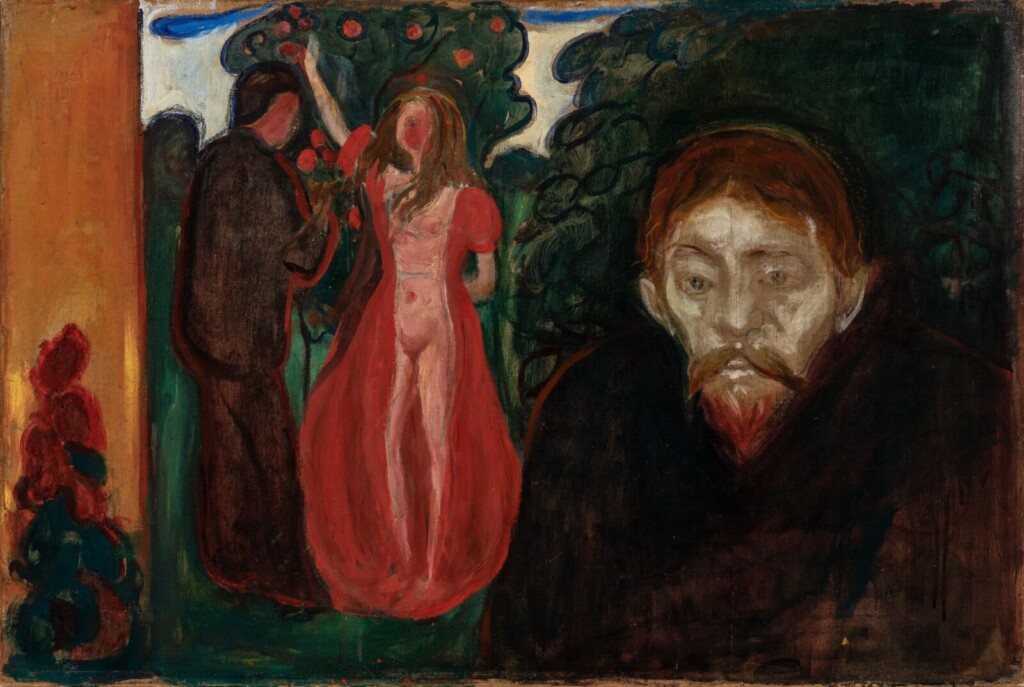
She packs a bag in the early morning while he sleeps, moving with the particular economy of someone who has rehearsed this moment a thousand times in her mind and is now finally, irreversibly, performing it. The door closes. That sound — not a slam, a controlled click — is the most dangerous moment in the entire architecture of a possessive relationship, more dangerous than any of the arguments that preceded it, more dangerous than the surveillance, the isolation, the slow erosion of her separate selfhood. The danger does not live in the grip. It lives in the release.
The data is not ambiguous, and it has not been ambiguous for decades. Studies consolidated by the World Health Organization and corroborated by national crime surveys across France, Germany, the United Kingdom, Canada, and the United States consistently show that the majority of intimate partner homicides — in some datasets, between 60 and 75 percent — occur not during the relationship but at the moment of separation or in the weeks immediately following it. The European Institute for Gender Equality’s 2021 report documented that in EU member states, a woman is killed by a current or former partner every single day. The operative word in that statistic is former. The lethality peaks precisely when the bond is severed, when the logic of possession collides with the irreducible fact of another person’s autonomy.
What this reveals is something criminologists like Neil Websdale identified in his 2010 work on domestic homicide reviews: the killing is not an explosion of passion but the terminus of a system. Websdale’s research, conducted through exhaustive case reviews of intimate partner fatalities in the United States, found that perpetrators rarely acted impulsively — they acted conclusively. The homicide was, in the internal logic of the possessive person, a resolution. If the other cannot be owned, they can at minimum be prevented from belonging to themselves. The destruction of the bond, when possessive logic reaches its absolute limit, becomes literal destruction of the person who embodied that bond.
This is where the psychological architecture of jealousy as control completes its most grotesque circuit. The possessive relationship was never organized around love for a person — it was organized around the elimination of a threat: the threat of the other’s independence, the threat of their future absence, the threat of their continuing existence beyond the relationship’s frame. What appeared to be devotion was in practice a quarantine. When the quarantine fails, the quarantine keeper does not grieve — he escalates.
Evan Stark’s concept of coercive control, developed over thirty years of forensic work and formalized in his 2007 book Coercive Control: How Men Entrap Women in Personal Life, reframes the entire trajectory of such relationships as a form of liberty deprivation. Stark argues that the physical violence, when it occurs, is less about harm in the conventional sense and more about the enforcement of a sovereignty claim — the body of the other as governed territory. Separation is then not a personal loss but a political act, a declaration of independence that the possessive partner experiences as an existential assault on his own coherence. The violence that follows is not disproportionate within his framework. It is, by his internal logic, proportionate and even defensive.
What societies have consistently failed to absorb is that the risk does not diminish when the door closes — it concentrates there. Legal systems that treat a restraining order as a solution rather than a displacement of danger, communities that interpret departure as the end of the story rather than its most acute chapter, frameworks that locate the threat inside the relationship rather than in the relationship’s ending, are all misreading the map at exactly the moment when accurate reading is the only thing that saves a life.
Infinite Maze: Further Explorations
Tribalism and group identity: social psychology
GO TO THE SELECTION: Tribalism and group identity: social psychology
Slow and contemplative cinema: the aesthetic of slow cinema
GO TO THE SELECTION: Slow and contemplative cinema: the aesthetic of slow cinema
The patriarchy: history, structures, and social impact of male dominance
GO TO THE SELECTION: The patriarchy: history, structures, and social impact of male dominance
The instinct for self-preservation: the psychology of survivalism
GO TO THE SELECTION: The instinct for self-preservation: the psychology of survivalism
Stream Independent Cinema
👉 EXPLORE THE CATALOG: Watch Indie Films in Streaming
A vision curated by a filmmaker, not an algorithm
In this video I explain our vision

