
The Invisible Architecture of Dominance
You are in a meeting. You have said something — a proposal, an observation, a correction — and the room has acknowledged it the way rooms do when they are not really listening: a brief nod, a slight pivot, and then the conversation continues as though your words dissolved on contact with the air. Three minutes later, a man restates what you said. Not differently. Not better. Nearly verbatim. And the room responds. People lean forward. Someone writes it down. Nobody notices the repetition because nobody registered the original, and you sit there holding the specific, private violence of being erased without anyone having lifted a hand.

This is not an accident of personality or a failure of communication. It is architecture. Patriarchy does not announce itself with a manifesto or a locked door. It furnishes the room — the chairs, the sightlines, the acoustics, the unwritten protocols about whose voice carries weight before a single syllable is spoken. It is the oldest operating system in human civilization, running beneath every interface, shaping every output, and almost never appearing in the error log.
The word itself comes from the Greek patriarkhes, combining pater, father, and arkhein, to rule. But naming the etymology does not explain the machinery. What the French sociologist Pierre Bourdieu documented in his 2001 work Masculine Domination is something far more unsettling: that the most effective power structures are those that have been so thoroughly internalized by both the dominant and the dominated that they no longer require enforcement. They require only repetition. The woman who apologizes before she disagrees, the man who assumes the apology is courtesy rather than armor — both are performing scripts written long before either of them entered the scene.
Historians of the ancient world have traced institutionalized male authority to at least the third millennium BCE, to Sumerian legal codes that classified women alongside cattle as transferable property under the management of male household heads. By the time the Roman Twelve Tables were codified around 450 BCE, the patria potestas — the absolute legal authority of the father over every person and object within his household, including the right to sell his children into slavery — had been formalized into the architecture of Western jurisprudence. These were not fringe customs. They were the load-bearing walls of civilization as it defined itself, and every subsequent structure was built on top of them without tearing out the foundation.
What makes this inheritance particularly difficult to excavate is that it does not look like inheritance. It looks like nature. The anthropologist Gayle Rubin, in her 1975 essay The Traffic in Women, identified how kinship systems across cultures have systematically used women as exchange currency between men — not metaphorically, but operationally — transforming female bodies into the medium through which male alliances were sealed, territories consolidated, and bloodlines legitimized. The shock of Rubin’s analysis was not that it described ancient practices. The shock was that it described the logic still animating contemporary negotiations about whose daughter marries whom, whose name survives, whose labor inside the home counts as contribution and whose counts as nothing at all in the formal ledgers of economic productivity.
In 1993, the International Labour Organization estimated that unpaid domestic and care work, performed overwhelmingly by women, represented roughly half of all global economic activity — work that remained invisible to GDP calculations precisely because the framework measuring economic value had been designed by and for the productive activities already assigned to men. The invisibility was not a flaw in the measurement. It was the measurement working exactly as intended, confirming what the architecture had already decided: that the labor holding everything else together does not officially exist.
And the room, still not listening, writes down the man’s idea.
The Sands

Science fiction, by Noah Paganotto, Argentina, 2022.
In an undetermined location on planet Earth, in an unknown time, Zoilo lives with his family in a wasteland surrounded by ruins. They live uprooted, without mothers, knowing that pregnancy for women is synonymous with death. For them there is only one collective routine; keep the fire alive. Only Zoilo escapes this logic, observing, intrigued, details that others do not see and therefore do not appreciate. Zoilo's personal search for answers will increase the differences with his relatives, increasingly revealing an empty world of interiority.
Avant-garde film that burns slowly in the first part and then reveals in the second the profound conflicts of a family prisoner of archaic beliefs. It is a dystopian and visionary work, with wonderful photography and images of rare power that allow us to grasp the depth of the story and its poetic potential. The faces of the actors, especially the protagonist boy, are perfect. The Sands metaphorically represents the world we live in: an alienated society, where what keeps us alive is demonized and blamed for death. In opposition to the fast pace of the typical mainstream film, The Sands is a meditative journey into the depths of images. The film was shot in natural environments in the city of Necochea, Buenos Aires province, Argentina.
LANGUAGE: Spanish
SUBTITLES: English, Spanish, French, German, Portuguese
Origins Beyond the Myth of Nature
You were taught, before you could question anything, that this is simply how things are — that men lead and women follow the way water runs downhill, because gravity does not negotiate.
The problem with that image is not that it is cruel. The problem is that it is recent. Friedrich Engels, writing in 1884 in “The Origin of the Family, Private Property and the State,” made an argument that still unsettles people who have never read a word of it: that the subordination of women was not an eternal condition but a specific historical rupture, what he called “the world historical defeat of the female sex.” He was working from Lewis Henry Morgan’s ethnographic research into Iroquois kinship structures, and his central claim was that the shift from communal property to private property — from clans organized around female lineage to households organized around male inheritance — produced patriarchy as a functional economic arrangement, not a biological destiny. The family, in this reading, was not a natural unit. It was a technology for managing assets across generations.
His analysis was incomplete and in places wrong, particularly where it romanticized pre-state societies as egalitarian by default. But the core insight survived its own weaknesses: domination has a history, and things with histories have origins that could have gone differently.
The archaeological record at Çatalhöyük in modern-day Turkey does something stranger and more difficult to dismiss. This Neolithic settlement, inhabited continuously from approximately 7500 to 5700 BCE, housed somewhere between three and eight thousand people at its peak and left behind almost no architectural evidence of hierarchy. Buildings were accessed through roof openings rather than doors; there were no palaces, no temples elevated above the rest, no burial sites that concentrated wealth in a single lineage. Skeletal analysis of human remains conducted by researchers at Stanford and published in the early 2000s showed nearly identical rates of mobility-related joint wear between male and female skeletons, suggesting both sexes performed similar physical labor. This is not a small detail. It means the story about men as natural hunters and providers and women as natural gatherers and dependents cannot be read backward into all of human prehistory without falsifying the evidence.
What changed was not biology. What changed was the control of grain. The transition to sedentary agriculture created surpluses that could be stored, and stored surpluses created the problem of succession — of who owns what when the person who accumulated it dies. Lineage became a legal question. Paternity became a political one. The female body did not become property because men were stronger; men had always been, on average, physically stronger, and that had not produced the same arrangements in the twelve thousand years before. The body became property because inheritance required certainty, and certainty required control of reproduction, and control of reproduction required enclosure — of land, of women, of children, of the future.
Gerda Lerner documented this transition with forensic patience in “The Creation of Patriarchy,” published in 1986, tracing the legal codes of ancient Mesopotamia to show how the veiling of women in Assyrian law circa 1200 BCE functioned not as modesty but as a class marker: respectable women — meaning women whose sexual activity was legally bound to one man — were veiled; enslaved women and prostitutes were forbidden from covering themselves on penalty of flogging. The veil was not fabric. It was a record of ownership written on the body in public space.
What this means is that every time someone tells you patriarchy is rooted in nature, they are making a historical claim disguised as a biological one, and the disguise has been extraordinarily effective precisely because it forecloses the question before it can be asked — because if something is natural, there is nothing to explain, and nothing to answer for.

Property, Lineage, and the Domestication of Women
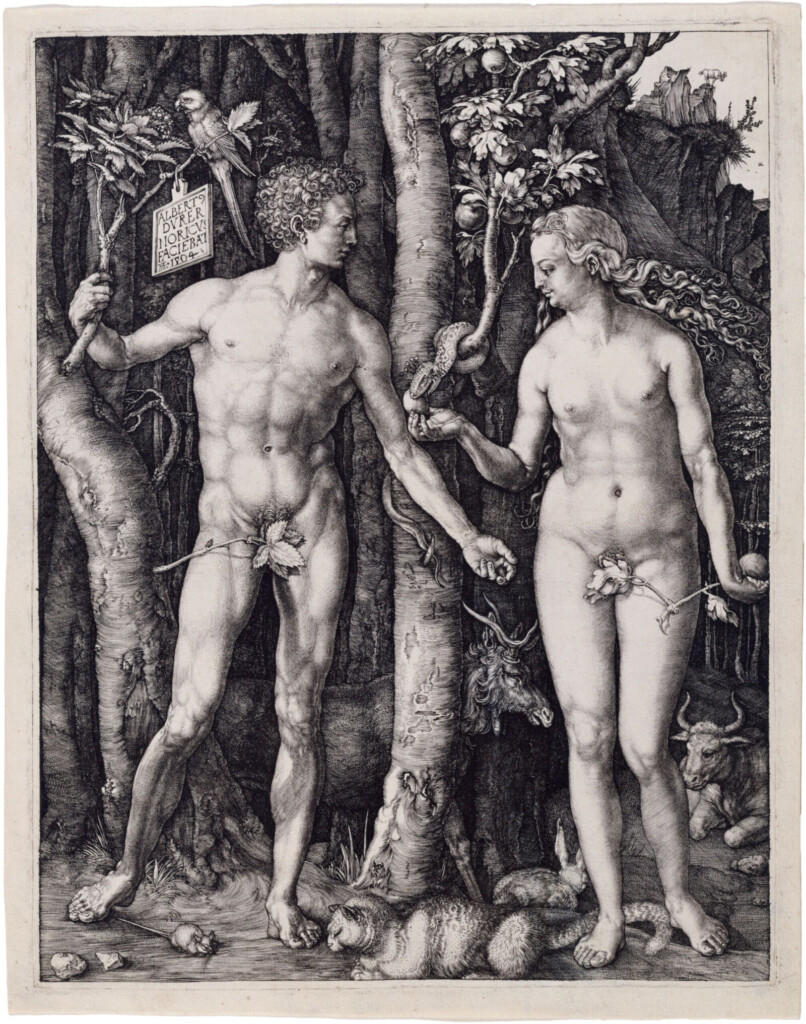
You are handed a plot of land. Not given — handed, the way a judge hands down a sentence, with all the authority of an institution behind the gesture and none of the pretense of choice. The question no one asks in that moment is: how did the land come to be something that could be handed to you, and not to the woman standing beside you?
Gerda Lerner spent years inside that question. In The Creation of Patriarchy, published in 1986, she argued that the subordination of women was not a biological inevitability but a historical construction, assembled piece by piece over millennia, beginning roughly with the transition to sedentary agriculture in the ancient Near East around 3100 BCE. When human communities stopped moving and started accumulating — grain stores, livestock, terraced fields — they created something that had not meaningfully existed before: heritable wealth. And heritable wealth created an immediate, urgent, practical problem. If a man could not be certain which children were biologically his, he could not control where his accumulated property went after his death. The solution societies reached for was not philosophical. It was gynecological.
Control over female sexuality became, in this reading, essentially an accounting problem. Virginity before marriage and fidelity within it were not moral achievements spontaneously valued by communities; they were mechanisms for guaranteeing paternity, and therefore for guaranteeing clean lines of inheritance. The womb became a kind of title deed, and what was inscribed on it — or rather, who had access to it — determined the legitimacy of claims across generations. Roman law made this architecture almost embarrassingly explicit through the concept of patria potestas, the absolute legal authority of the paterfamilias over every person in his household: wife, children, slaves, and daughters-in-law. A Roman woman under classical law existed, in a formal sense, as a legal extension of a male — first her father, then her husband. She could not independently own property, initiate contracts, or appear in court as an autonomous agent. The law did not ignore her; it incorporated her, which is a more thorough form of erasure.
The dowry system, practiced across Europe, South Asia, the Middle East, and parts of Africa in various forms, translated this logic into the language of commerce. When a family transferred wealth to a daughter at marriage, they were not making a gift — they were making a transfer of liability. The daughter moved from one household’s ledger to another, and the dowry was the settlement fee. In medieval and early modern Europe, the parallel mechanism of coverture achieved the same effect through common law: upon marriage, a woman’s legal identity was absorbed entirely into her husband’s. She could not sue, could not be sued, could not own property in her own name. The English jurist William Blackstone, writing in his Commentaries on the Laws of England in 1765, described this fusion with a serenity that should disturb anyone reading it now — husband and wife are one person in law, he wrote, and that person is the husband.
What Lerner identified, and what these legal structures confirm, is that patriarchy was never primarily about hatred of women. It was about management of women, which is a colder and more durable thing. Hatred can be resisted, argued with, occasionally shamed into retreat. Management operates below the threshold of feeling; it presents itself as administration, as tradition, as simply the way things work. A coverture law does not announce itself as an act of domination. It presents itself as a clarification of household order, a resolution of legal complexity, a protection of the family unit. The violence it enacts is entirely invisible inside its own logic, the way a fence does not announce itself as a boundary but simply stands there, making certain movements unthinkable before they are even attempted.
The State as Patriarchal Instrument
You sign a contract, and the law recognizes you. You enter a courtroom, and the law sees you. You own property, you vote, you sue, you testify. These acts feel so elementary that they seem to precede politics itself, as if they were simply what it means to be a person. But personhood, in the legal sense, was never distributed neutrally. It was allocated deliberately, and the allocations followed a very old logic.
When Napoleon’s Civil Code came into force in 1804, it did not merely organize French civil life — it codified a philosophy of the human. Under Articles 213 through 226, a married woman became legally incapacitated: she could not sign contracts, appear in court, manage property, or exercise any civic function without her husband’s explicit authorization. She was, in the precise language of jurisprudence, an incapable — placed in the same legal category as minors and the mentally incompetent. The Code Napoléon was not a provincial experiment. It became the template exported across Europe and Latin America through conquest and colonial administration, shaping legal systems that governed hundreds of millions of people well into the twentieth century. France itself did not grant married women the right to work without spousal permission until 1965. What Napoleon drafted in the early nineteenth century was still structuring the daily existence of women a hundred and sixty years later.
The standard account of liberalism positions the state as a neutral arbiter, a structure that rises above private interest to protect individual rights. What Carole Pateman demolished in The Sexual Contract, published in 1988, was precisely that neutrality. Pateman’s argument cuts through the contractarian tradition — Hobbes, Locke, Rousseau — to expose a foundational sleight of hand: the social contract that supposedly constitutes civil society rests on a prior sexual contract that is never acknowledged. Men contract with each other to establish public order, but the terms of that contract presuppose women’s exclusion from the contracting parties and their incorporation into the private sphere as sexual and reproductive bodies. The individual who signs the original contract, who possesses natural rights, who enters the market and the polity — that individual was always implicitly male. Liberalism did not forget women. It built itself around their absence.
This is not a matter of historical oversight that later reforms corrected. The structural grammar of the state — who counts as a rights-bearing subject, whose labor is visible to the economy, whose body is regulated by public law and whose by private arrangement — was laid down in that gendered foundation. Even as formal barriers were dismantled through the suffrage movements of the early twentieth century, the architecture persisted. Women entered institutions that had been engineered for a different subject. The workplace assumed a worker with no domestic obligations, because that worker’s domestic needs were invisibly serviced by a wife. The legal system assumed a claimant who controlled her own assets and testimony, long after the formal prohibition was lifted but before the cultural and economic conditions making that control real had materialized.
There is something almost surgical about how state power managed this arrangement: it rendered it invisible by calling it natural. The law did not say that women were subordinate because men had decided so. It said that the family was a private domain, that marriage was a union, that the husband’s authority was a protection. The vocabulary of protection has always been the vocabulary of control wearing a more presentable coat. When a legal system defines the home as outside its reach, it does not leave that space ungoverned — it leaves it governed by whoever holds power within it, and then declines to name that governance as governance at all.
What the state institutionalized was not simply the exclusion of women from public life but the philosophical insistence that this exclusion required no justification, because it was not an exclusion — it was merely the shape of things.
Symbolic Violence and the Grammar of the Ordinary
You notice it in the way she apologizes before speaking in a meeting, the slight downward inflection at the end of a sentence that should be declarative, the laugh that arrives too quickly after an assertion — not because she is uncertain, but because the room has trained her, over years, to cushion the weight of her own presence.
Pierre Bourdieu spent decades trying to name what happens in that room. His 2001 work “Masculine Domination” — built from earlier ethnographic research among the Kabyle people of Algeria and then turned ruthlessly back on French society — argues that the most durable form of power is the kind that needs no enforcement. Symbolic violence, as he defines it, is a violence exercised with the tacit complicity of those who undergo it, a domination that works precisely because it has been encoded into the bodily hexis, the posture, the gesture, the tone, the very grammar by which a person organizes their experience of the world. It is not ideology in the sense of a lie told to the weak. It is something more intimate and more structural: it is the transformation of historical contingency into apparent necessity, the conversion of what was constructed into what feels simply given.
The consequences of this are stranger and more destabilizing than most political critique can accommodate. Because if domination reproduces itself through the perceptual categories of both the dominant and the dominated, then resistance that remains within those categories is not resistance at all — it is the system metabolizing its own critique. A woman who believes she does not want the promotion, who genuinely feels she prefers the support role, who experiences her own ambition as unfeminine and therefore uncomfortable, is not being deceived. She is being herself, which is the point. Her preferences are real. They are also produced. Bourdieu understood that this does not make her a dupe. It makes her a human being who has been thoroughly shaped by an order that preceded her birth, that saturated her childhood, that organized her access to language, to esteem, to the experience of her own body.
What makes this particularly difficult to think through is that merit, one of the central legitimating concepts of liberal modernity, is not immune to this production. Studies in cognitive psychology, including Claude Steele’s research on stereotype threat from the 1990s, demonstrate measurably that performance itself — in mathematics, in leadership tasks, in negotiation — changes when identity categories are made salient. The gap is not innate. It is activated. Which means the outcomes used as evidence of natural difference are themselves artifacts of the social conditions that symbolic violence has organized. The meritocracy reads its own output as proof of an input it has manufactured.
Gender is not the only axis along which this grammar operates, but it is one where the encoding runs particularly deep because it attaches to the body at the most foundational level — to sexuality, to reproduction, to the experience of physical space. The sociologist Erving Goffman, in his 1977 essay “The Arrangement Between the Sexes,” identified how the division of social space into gendered territories creates not just behavioral norms but ontological ones — ways of being, not just ways of acting. A girl who learns that certain rooms, certain volumes of voice, certain forms of physical confidence are not hers, learns something about the structure of reality, not merely about etiquette. That lesson requires no lesson plan. It travels through imitation, through the texture of approval and its withdrawal, through the thousand small calibrations by which a child discovers which version of herself earns warmth.
The horror, if you want to call it that, is not that this system is maintained by monsters. It is that it is maintained by ordinary people doing what the situation makes obvious, what feels appropriate, what seems natural — and feeling, in doing so, entirely free.
A vision curated by a filmmaker, not an algorithm
In this video I explain our vision
Psychoanalysis, Desire, and the Patriarchal Unconscious

You are six years old and you already know, without anyone having told you, that your mother belongs to a different category of person than your father. Not inferior, not superior — different in a way that feels structural, load-bearing, like the difference between a wall and a window. You don’t have language for it yet. But the knowledge sits in your body, shaping what you reach for, what you fear, what you will one day call love.
Nancy Chodorow spent the 1970s trying to give that knowledge its precise anatomy. Her 1978 work The Reproduction of Mothering argued something that sounds simple until you follow it to its full depth: because women are the primary caregivers in infancy, the psychological development of boys and girls diverges along lines that are not biological but structural. Girls individuate while remaining in relational continuity with their mothers; boys are compelled toward a sharper, more violent separation, severing the maternal bond in order to secure a masculine identity that is defined precisely by what it has renounced. The consequence is that masculinity becomes a performance of distance — from dependency, from vulnerability, from the feminine as such. What gets called male autonomy is often the scar tissue left by a necessary amputation that was never mourned.
What Chodorow exposed was not a personal pathology but a social machine. The nuclear family, as it has been organized across modern Western societies, does not merely house children — it produces psychic structures that replicate the conditions of their own production. The man who cannot ask for help, the woman who cannot stop offering it, the couple who will raise another generation inside the same invisible architecture: none of this is nature. It is a self-copying system, and its engine is not malice but the quiet compulsion of the unexamined.
Luce Irigaray pushed the critique further back, into the very language through which desire is named. Reading Freud against himself in Speculum of the Other Woman, published in 1974, she argued that psychoanalytic theory does not describe the human psyche — it describes the male psyche and universalizes it. The famous concept of penis envy is not a discovery about women’s psychology; it is a projection, a way of reading female desire as fundamentally organized around lack, around the absence of something that belongs to the masculine. Within this framework, woman is not a subject of desire but a mirror for male desire — the surface against which he confirms his own coherence. Irigaray’s point was not merely polemical. She was identifying something structurally catastrophic: that the symbolic order through which Western civilization organizes meaning, language, and identity was built for one sex and handed to both as a universal inheritance.
The violence of this inheritance is that it operates below the threshold of choice. It does not require that anyone consciously intend domination. A boy who learns that tenderness makes him suspect, a girl who learns that her worth is relational rather than intrinsic — these are not victims of individual cruelty. They are the outputs of a system that encodes its hierarchies at the level of affect, long before reason arrives to question them. By the time a person is old enough to think critically about gender, the foundational grooves have already been cut into the self, and what feels like authentic desire is often a desire shaped by a structure that predates you by centuries.
What is most disturbing is not that these patterns persist, but that they persist as intimacy. The place where the patriarchal unconscious does its most durable work is not in boardrooms or legal codes but in the texture of love — in who comforts whom at 3 a.m., in who apologizes first, in the particular silence that falls between two people when one of them realizes that the other’s need has no name yet because the language to name it was never built.
Economic Subordination as Structural Design
You have probably never been paid for the hours you spent keeping another person alive. Not the meals, not the emotional labor of managing someone’s anxiety at midnight, not the invisible administration of a household that runs on your attention the way an engine runs on fuel — silently, and only noticed when it stops. The unpaid work that sustains human societies does not appear in GDP calculations. It does not generate pensions, unemployment benefits, or professional recognition. It generates, instead, the conditions under which paid work becomes possible for someone else.
The United Nations has estimated the annual value of unpaid care and domestic labor at $10.8 trillion — a figure that dwarfs the revenues of the world’s largest corporations combined, and yet occupies no line in any national budget. That number is not a curiosity. It is the exposed edge of a mechanism. The question is not why this labor goes uncompensated, but why its systematic assignment to women was never treated as the foundational economic arrangement it actually is, rather than a natural expression of femininity.
Silvia Federici’s 2004 work Caliban and the Witch dismantles the myth that capitalism and patriarchy evolved as separate systems that occasionally intersect. Her argument, rooted in close historical analysis of the transition from feudalism to early modern capitalism in Europe, is that the dispossession of women — their exclusion from the waged labor force, the criminalization of their reproductive autonomy through the witch hunts, the legal reduction of their bodies to instruments of demographic production — was not incidental to the rise of capitalism. It was its precondition. The primitive accumulation that Marx identified as capital’s violent origin required a second, parallel expropriation: the seizure of reproductive labor from women and its reclassification as a natural duty rather than productive work. Between the fifteenth and seventeenth centuries, tens of thousands of women were executed across Europe, and the populations most targeted were those who had maintained autonomous knowledge — of herbal medicine, of contraception, of communal land rights. The destruction of that autonomy was not hysteria. It was policy.
The gender pay gap, in this light, is not an anomaly that diversity initiatives will gradually correct. In 2023, women globally earned on average 20 percent less than men for comparable work, according to International Labour Organization data — a figure that has narrowed by only a few percentage points over four decades of formal equality legislation. What the statistic conceals is the occupational segregation beneath it: the fact that entire professional sectors feminize and then devalue simultaneously, as though the presence of women in a field triggers a recalibration of its worth. When teaching, nursing, and social work became female-dominated professions in the twentieth century, their wages stagnated relative to male-dominated sectors of equivalent skill and social necessity. The causality is not incidental. Sociologist Paula England documented this pattern across decades of American labor data, finding that jobs move downward in pay precisely as women enter them in majority, a phenomenon she termed the devaluation hypothesis, published in research spanning from her 1992 book Comparable Worth through subsequent empirical studies.
The most durable feature of this architecture is its invisibility to those it benefits. A man whose career was possible because a woman managed the domestic infrastructure required for him to leave the house each morning does not experience that arrangement as subsidy. He experiences it as normal life. The normalization is not accidental — it was constructed through legal frameworks, religious doctrine, and scientific language that classified dependence and service as expressions of female nature rather than as labor extracted under conditions that were never freely negotiated. Blackstone’s Commentaries on the Laws of England, the foundational legal text of the common law tradition published between 1765 and 1769, codified the doctrine of coverture, under which a married woman’s legal identity was entirely absorbed into her husband’s — she could not own property, sign contracts, or appear in court as an independent party.
The law did not reflect an existing reality. It produced one.
Male Domination as a Trap for Men

You are sitting in a car in a parking lot after something went wrong — a conversation that collapsed, a silence you could not break, an emotion you felt rise and then swallowed back down before it could become visible. You are not crying. You are not sure what you would even call what is happening inside you. You sit there with the engine off and wait for it to pass, because that is what you have always done, because that is the only instruction you were ever given.
Michael Kimmel spent years documenting the architecture of this moment. In Manhood in America, published in 1996, he traced how the American model of masculinity was not inherited from some primordial warrior code but manufactured, systematically, across the nineteenth century, as industrialization displaced men from artisanal and agricultural labor and left them with nothing to prove their worth except competitive performance. The “self-made man” was not a liberation — it was a sentence. A man who is entirely responsible for his own success is also entirely responsible for his own failure, and that formula leaves no room for grief, confusion, or asking for help without self-indictment.
The data that accumulates around this structure is not abstract. In virtually every Western country, men die by suicide at rates between three and four times higher than women — in the United States, the ratio has held near 3.5 to 1 for decades, a figure the Centers for Disease Control has tracked with remarkable consistency. The conventional interpretation frames this as a mental health problem, which it is, but only partially. It is equally a problem of legibility: men in distress lack a culturally sanctioned language for their own interior states. The emotional vocabulary available to them was systematically narrowed during childhood, and what remains — anger, stoicism, irony — does not map onto the actual texture of what they experience when they are drowning.
Pierre Bourdieu, writing in Masculine Domination in 2001, made an observation that unsettled both feminist and conservative readers: that the masculine order is a trap with no outside, a symbolic structure that dominates its supposed beneficiaries with the same efficiency that it dominates women, only differently. The man at the top of a hierarchy is not free — he is the most imprisoned of all, because the entire architecture of his identity depends on remaining there. Every descent is experienced not as circumstance but as annihilation of the self. Bourdieu called this the “double bind” of virility: masculinity must be endlessly proven, which means it is never securely held, which means the labor of maintaining it is infinite and invisible.
What makes the trap so durable is that it does not feel like a trap from the inside. It feels like reality. The boy who learns not to flinch, not to ask, not to name what he feels, does not experience those lessons as constraints — he experiences them as competence. He is good at endurance. He is efficient at suppression. He arrives at adulthood believing he has developed strength, when what he has actually developed is a highly specialized disability: the inability to locate himself emotionally in real time, to report accurately on his own condition, to reach toward another person without it feeling like a form of defeat.
Societies lose something measurable when this is the template. Not only in the lives ended too soon, but in the relationships that calcify, the children raised by fathers who were never taught to be present, the institutions governed by men performing certainty they do not feel, making decisions that cannot be revised because revision would require admitting the original error. The patriarchal structure promised men power, and it delivered a version of it — but the price was interiority, and very few men were ever asked whether they wanted to pay it.
⚖️ Power, Gender, and the Architecture of Domination
The patriarchy is not an abstract concept but a living structure woven into history, culture, and everyday relationships. To understand it fully, we must trace its roots across social systems, literary traditions, philosophical debates, and feminist resistance. These articles illuminate the many faces of male dominance and the forces that have challenged it.
Gender Equality: History and Current State in the World
Gender equality is one of the central battlegrounds of modern civilization, with roots stretching back centuries of legal exclusion, social subordination, and cultural erasure. This article maps the historical arc of equality struggles and surveys the current global landscape, revealing how much has been won and how much remains contested. Understanding this history is essential to grasping the full weight of patriarchal structures.
GO TO THE SELECTION: Gender Equality: History and Current State in the World
The Contemporary Feminist Movement: History and Key Figures
The contemporary feminist movement did not emerge from nowhere but was built on generations of activists, theorists, and writers who refused to accept male dominance as natural or inevitable. This article profiles the key figures and turning points that have shaped modern feminism, from second-wave radicalism to intersectional theory. Their collective work represents the most sustained intellectual and political challenge to patriarchal power in history.
GO TO THE SELECTION: The Contemporary Feminist Movement: History and Key Figures
Witch hunts as an archetype of gender control
Witch hunts were not simply episodes of religious hysteria but calculated mechanisms for controlling women who stepped outside the boundaries defined by patriarchal society. This article examines how the persecution of so-called witches served to discipline female autonomy, sexuality, and knowledge across centuries. It reveals a chilling continuity between historical gender violence and the structural logic of male dominance.
GO TO THE SELECTION: Witch hunts as an archetype of gender control
Wollstonecraft’s A Vindication of the Rights of Woman
Mary Wollstonecraft‘s landmark text stands as one of the earliest and most powerful systematic critiques of the patriarchal order, arguing that women are rational beings denied their rights by a society designed to keep them dependent. This analysis of her vindication unpacks the philosophical foundations of her argument and its enduring relevance to contemporary debates about gender and power. Wollstonecraft gave feminism its first great theoretical voice.
GO TO THE SELECTION: Wollstonecraft’s A Vindication of the Rights of Woman
Explore the Cinema of Resistance on Indiecinema
If these themes resonate with you, Indiecinema streaming is home to a curated selection of independent films that confront power, gender, and social justice with uncompromising vision. Discover documentaries, fiction, and auteur cinema that dare to ask the questions mainstream culture avoids. Join us and let cinema be your compass through the labyrinth of the contemporary world.
👉 EXPLORE THE CATALOG: Watch Indie Films in Streaming
A vision curated by a filmmaker, not an algorithm
In this video I explain our vision

