
The Ritual of the Open Tab
You have seventeen tabs open and you have not moved in forty minutes. Not because you are tired, not because you are distracted in any simple sense, but because something in the architecture of your attention has quietly, methodically refused to commit. The tabs glow at the top of your screen like unanswered questions you have already decided not to answer. One of them is the form you were supposed to file three weeks ago. Another is an article you bookmarked to read later, which is to say never. A third is a conversation thread you opened, read the first line of, and minimized before the meaning could fully land. You are not doing nothing. You are doing something extraordinarily precise: you are maintaining the sensation of proximity to action while engineering the impossibility of it.

This is not laziness. Laziness is a posture, a kind of horizontal refusal, the body declining to participate. What you are performing is far more demanding. It requires sustained cognitive effort to remain this suspended, this available-yet-absent. The psychologist Piers Steel, who spent over a decade synthesizing procrastination research into his 2011 work The Procrastination Equation, estimated that chronic procrastination affects roughly 20 percent of adults globally and has tripled in prevalence since the 1970s. But the number that matters more than any percentage is the energy cost — because avoidance is metabolically expensive. The mind must continuously deflect, reframe, and generate alternative micro-tasks to prevent itself from confronting the one thing it has already decided carries too much weight.
The crucial distinction that most popular accounts of procrastination collapse is the one between delay and avoidance. They look identical from the outside — nothing is getting done in either case — but they are structurally different operations running on entirely different psychological fuel. Delay is temporal: you will do the thing, but not now, because conditions are not optimal, because you need more information, because another task has legitimate priority. Delay is rational and often adaptive. A surgeon who postpones a procedure because the patient’s blood pressure is unstable is not procrastinating. Avoidance, by contrast, is not about time at all. It is about the emotional valence of the task itself — the feeling the task carries, not the task’s actual difficulty or duration. When you avoid, you are not managing a schedule. You are managing a feeling, and the feeling is almost never what you think it is.
Timothy Pychyl at Carleton University spent years documenting the affective core of procrastination, and his findings, consolidated in research published across the 2000s and 2010s, converge on a counterintuitive point: the tasks people avoid most aggressively are rarely the hardest ones. They are the ones most densely loaded with identity. The tax return is not avoided because it is complicated. It is avoided because completing it would mean becoming the kind of person who has their finances in order, and somewhere beneath the surface that transition feels dangerous, or fraudulent, or final. The open tab is not an organizational failure. It is a philosophical holding pattern — a way of remaining in the anteroom of a self you have not yet decided to inhabit.
What the seventeen tabs actually represent, then, is a highly efficient system for the preservation of possibility. As long as the form is not submitted, the course not enrolled in, the call not made, the future remains technically open. Nothing has been foreclosed. The tabs are not chaos — they are insurance against the irreversibility of choice, which is to say, insurance against the irreversibility of growing up. The browser is not where your work lives. It is where your ambivalence lives, organized into columns, quietly humming.
Adulthood as a Historical Construct
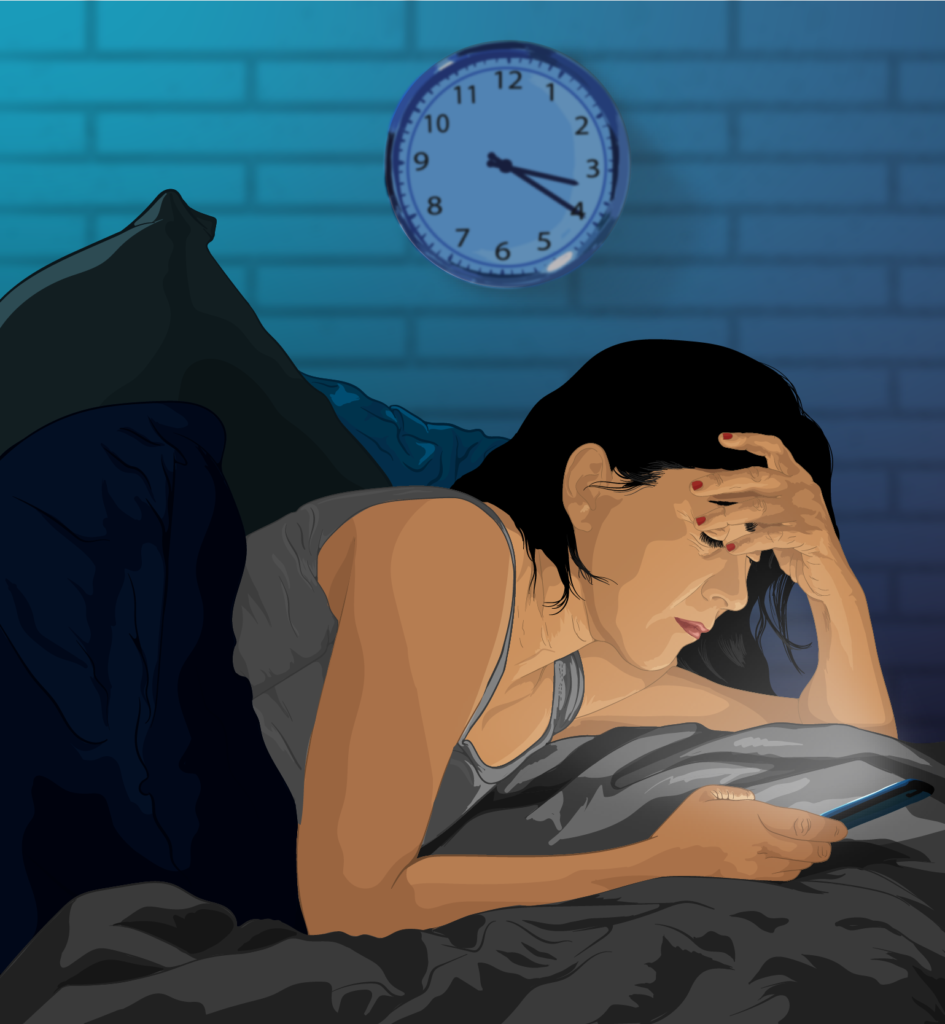
You already know what the accusation sounds like from the inside. Someone — a parent, a manager, a version of yourself at two in the morning — delivers the verdict: you are not where you should be. The word “should” does the real work here, and almost nobody stops to ask who built the timetable it refers to.
Philippe Ariès demonstrated in his 1960 Centuries of Childhood that childhood, as a distinct and protected phase of human life, was not a biological discovery but a cultural invention — one that emerged slowly across early modern Europe as families became smaller, domestic space became more private, and mortality rates dropped enough to make emotional investment in individual children feel survivable. Before roughly the sixteenth century, children in Western Europe entered the adult world of labor, sexuality, and legal responsibility at ages we would now find scandalous, not because people were cruel, but because the conceptual partition between childhood and adulthood did not yet exist with any institutional force. Ariès was not romanticizing that earlier world; he was exposing the machinery behind our own.
What Ariès identified at the beginning of the modern period, industrialization then weaponized. The factory system of the nineteenth century required a disciplined, legible workforce, and that workforce needed to be produced in predictable batches. Compulsory schooling laws — enacted across Britain, France, Germany, and the United States between roughly 1850 and 1920 — did not emerge from a sudden enlightenment about child development. They emerged from the structural need to segregate populations by age, to hold children in supervised formation until they were ready for insertion into the labor market, and then to release them at a standardized moment into standardized roles. The sociologist John Meyer, writing in the 1970s on the relationship between mass schooling and the modern state, showed that what gets called education is often better understood as credentialing: a system for certifying that a person has crossed a threshold, regardless of what they actually learned while crossing it.
Once you have a threshold, you have the possibility of failing to cross it on time. This is the origin of the specific anxiety that attaches to adult procrastination — not the anxiety of someone who has failed to accomplish something genuinely important to them, but the anxiety of someone who has internalized a schedule they never authored. The normative life-course — education, employment, partnership, property, reproduction, in roughly that sequence and within roughly those decades — was assembled across the late nineteenth and early twentieth centuries from the institutional requirements of industrial capitalism, bourgeois property law, and actuarial insurance logic. It was not handed down from any mountain. Erik Erikson‘s stage theory of psychosocial development, published in Childhood and Society in 1950, gave this sequence a veneer of developmental necessity by mapping it onto a biological vocabulary of crises and resolutions, but Erikson was describing a mid-century American norm and calling it a universal maturational arc.
The person who is accused of procrastinating on their adult life is almost never accused of failing to pursue their own vision of flourishing. They are accused of failing to hit marks set by a system that has every interest in disguising its own contingency as nature. The accusation works precisely because it arrives dressed as concern — for the person’s wellbeing, for their future, for their potential — and this compassionate costume makes it nearly impossible to examine what the accusation is actually protecting. Every culture naturalizes its own timeline. The remarkable thing is not that some people fall behind on this one, but that so many submit to it without ever having consciously agreed to run.

The Anxiety Beneath the Delay
You are standing at the edge of a task that has no clear boundary, no legible finish line, and the kind of urgency that feels manufactured rather than real. The document is open. The cursor blinks. And something in you, something below the level of conscious resistance, simply will not move. Most people will read this as laziness, as weakness of character, as the familiar enemy called procrastination. What they miss is what that stillness is actually doing — what it is holding at bay.
Roy Baumeister and John Tierney, in their 2011 synthesis of decades of self-control research, demonstrated something that flatly contradicts the moralized narrative of willpower as a virtue that some people possess and others lack. Ego depletion — the measurable deterioration of executive function after sustained acts of decision-making — means that the self is not an infinite resource. Every choice draws from the same reservoir. A person who has spent the morning navigating ambiguous professional hierarchies, parsing contradictory feedback, and managing social performance is not the same person who sits down at their desk in the afternoon. The tank has been drawn down. What looks like avoidance in the evening is frequently the arithmetic result of a day that demanded too much of a system with hard biological limits.
But Baumeister’s framework, precise as it is, still operates within a model of failure — a resource that runs dry, a mechanism that breaks down. It does not fully account for the cases where the delay begins before depletion has even had time to occur, where the task is avoided from the first moment it appears, not after a long day but at the very instant it announces itself. For this, something older and stranger is required. Søren Kierkegaard, writing in 1844 in “The Concept of Anxiety,” described a particular experience he called Angest — a dread that is not fear of any specific thing but rather the vertigo that accompanies the recognition of freedom itself. Standing before a genuinely open choice, the self does not feel liberated. It feels unmoored. The dizziness is not from height but from depth — the infinite downward pull of possibility with no ground beneath it.
What procrastination often enacts is precisely this Kierkegaardian vertigo made behavioral. When the task is not just complex but genuinely open — when it requires the person to commit to a version of themselves, to foreclose other possibilities, to become legible — the delay is not irrational. It is, in a very precise sense, a response to an incoherent demand. To ask someone to produce work that will define their professional identity while simultaneously insisting that identity is still forming, still provisional, still subject to revision, is to ask them to stand on water. The delay purchases time in which the self does not yet have to be one thing. It is an act of ontological caution.
Cognitive behavioral research adds a further layer. When psychologists Fuschia Sirois and Timothy Pychyl analyzed procrastination not as a time-management problem but as an emotion-regulation strategy — their work consolidated across multiple studies through the early 2010s — they found that the primary function of delay was the short-term reduction of distress. Not pleasure-seeking. Not sloth. Distress reduction. The task generates a negative emotional forecast — shame at likely failure, anxiety at exposure, grief at the gap between aspiration and capacity — and the mind, operating with its own ruthless efficiency, eliminates the threat by eliminating the encounter with the task. It is not a failure of discipline. It is discipline of a different kind, aimed at a different object: the protection of a self that has been told, in a thousand quiet ways, that what it produces is what it is worth.
Productivity Culture and the Colonization of Time

You open your calendar app on a Sunday evening and feel, before you have even looked at a single entry, a faint but unmistakable guilt. Nothing has happened yet. The week has not begun. And yet the very act of opening the application carries with it a tribunal — some internal auditor who has already begun tallying what you owe.
This sensation is not accidental, and it did not arrive from nowhere. In 1911, Frederick Winslow Taylor published The Principles of Scientific Management, a text that would quietly rewrite the moral grammar of Western civilization. Taylor was not a philosopher — he was an engineer obsessed with waste, and his fundamental argument was that every moment of a worker’s time that was not optimized toward measurable output was a form of theft. He studied bricklayers with stopwatches. He broke the movement of human limbs into units of efficiency. He was looking at bodies, but the ideology he seeded was about souls. Once you convince an industrial workforce that idle time is stolen time, you do not need to watch them with a clock forever — they will eventually do it to themselves.
What Taylor formalized in the factory, the twentieth century’s therapeutic and self-help industries domesticated into the home. The jump from Taylorist time-motion studies to Stephen Covey’s 1989 framework of urgency and importance matrices in The 7 Habits of Highly Effective People is not a rupture but a translation — the same logic migrating from the shop floor to the bedroom, from the assembly line to the morning routine. By the time productivity became a consumer identity rather than an industrial demand, the colonization was complete. People were not simply working efficiently; they were performing efficiency as proof of their character. The word “lazy” ceased to be a description of behavior and became a diagnosis of moral worth.
The self-optimization industry, now valued at over ten billion dollars annually, does not sell tools. It sells absolution from the terror of unstructured time. Every app, every journal template, every five-AM-routine manifesto is a response to the same underlying anxiety: that time without measurable output is time that disqualifies you from belonging to the category of serious human beings. The philosopher Byung-Chul Han, writing in The Burnout Society in 2010, identified this as the shift from a disciplinary society to an achievement society — a world where the cage is no longer external coercion but internal compulsion. The modern subject does not need a supervisor; they have metabolized the supervisor entirely and wear them on the inside like a second skeleton.
What this creates, paradoxically, is a population that procrastinates more acutely the more it is surrounded by productivity infrastructure. When every moment is theoretically optimizable, any moment that is not being optimized becomes unbearable to inhabit consciously. The procrastinator scrolling through a phone is not resting — they are fleeing a standard of engagement that has become impossible to meet, choosing numbness over the specific shame of sitting still in a culture that has decided stillness is failure. Researchers at the University of Zurich published findings in 2023 showing that individuals in high-optimization work environments reported significantly greater procrastination on personal tasks than those in less structured professional contexts — not because they lacked discipline, but because the vocabulary of discipline had made ordinary inaction feel catastrophic.
The tragedy is architectural. When you build a civilization in which time is a moral substance — in which how you spend your hours is evidence of who you are as a person — you do not produce a population of dynamos. You produce a population in a permanent, low-grade relationship with shame, negotiating endlessly between the life they are living and the optimized life that hovers just above it like a judgment that never quite lands and never quite lifts.
The Self That Cannot Commit
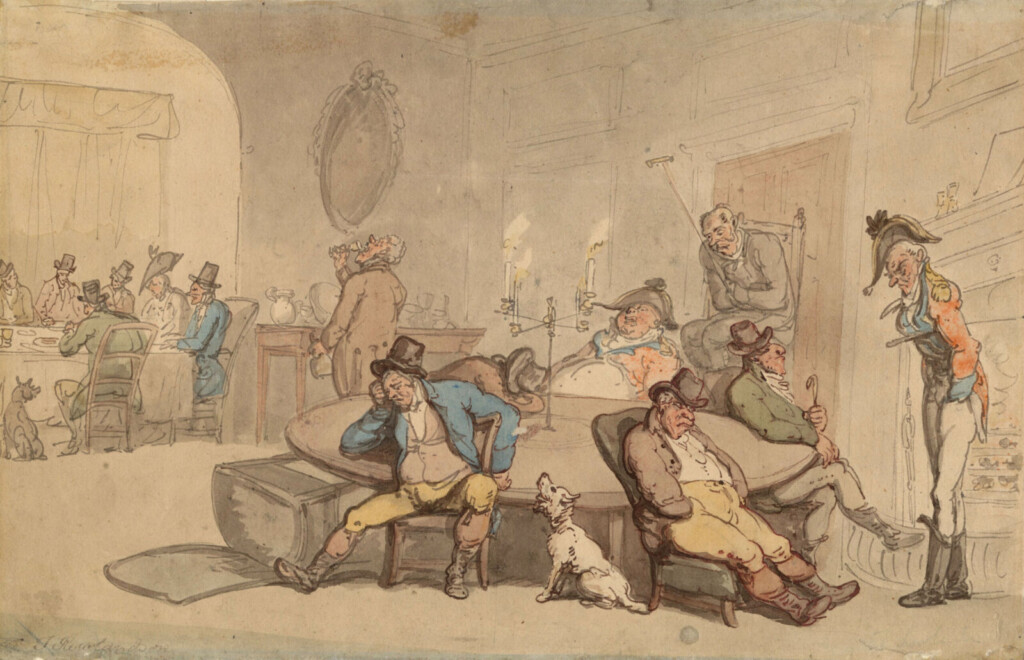
She has three browser tabs open with half-completed graduate school applications, a journal full of career pivots sketched in careful handwriting, and a bookshelf organized by the person she keeps meaning to become. Nothing is submitted. Nothing is closed. The applications will expire quietly in six weeks, and she already knows she will not notice until it is too late, because not noticing is the point.
Zygmunt Bauman spent the last decades of his life arguing that liquid modernity had dissolved the stable containers — institutions, vocations, marriages, ideologies — within which identity once solidified. His 2000 work “Liquid Modernity” diagnosed a culture that celebrated flexibility as freedom while quietly engineering a condition in which nothing ever sets, nothing hardens into the permanent shape of a self. What Bauman saw structurally, clinical researchers began measuring individually: by 2011, Roy Baumeister and his collaborators had accumulated enough evidence to establish that the act of deciding is metabolically expensive, that each choice depletes a cognitive resource that does not replenish itself simply through rest. The person who keeps all options open is not resting. She is making the same impossible decision ten thousand times a day without ever finishing it, and the exhaustion this produces is indistinguishable from the paralysis she mistakes for caution.
What the therapeutic literature rarely confronts directly is that keeping options open is not a neutral act. It is a position. The psychoanalyst Christopher Bollas introduced the concept of the unthought known — the vast territory of what a person understands about themselves before language arrives to name it. Chronic postponement often lives precisely there: in the unthought known that committing to one life means mourning every other life, that the self who submits an application is already a narrower self than the one who dreamed about it, that actualization is always also a form of amputation. The open tab is not laziness. It is a grief-avoidance strategy so sophisticated it disguises itself as ambition.
The developmental psychologist James Marcia, building on Erik Erikson’s framework in 1966, identified what he called identity foreclosure and identity diffusion as distinct failure modes of selfhood — but the mode that defines this particular historical moment is neither. It is something closer to identity suspension: the studied refusal to foreclose, the performance of perpetual becoming as a substitute for arrival. A culture that monetizes personal branding, that rewards the aesthetics of aspiration over the evidence of commitment, makes this suspension not just psychologically available but socially legible as a lifestyle. You can build a substantial audience documenting the life you are about to live.
The unbearable weight underneath all of this is not failure. Failure is survivable and, more importantly, interpretable — it gives the self a story to carry. What chronic postponement protects against is something more vertiginous: the discovery that you are the author of your own life and that authorship, unlike spectatorship, cannot be undone. Every sentence written forecloses the sentences that will never now be written. Sartre’s formulation that existence precedes essence was not a liberation but a sentence — it places the full burden of meaning-making on a self that modernity has simultaneously told is sovereign and shown is contingent, free and structurally overwhelmed, responsible for everything and equipped with nothing stable enough to stand on while bearing that responsibility.
The applications will expire. She will feel something she cannot quite name — not quite relief, not quite regret — and she will open a new tab, because the self that cannot commit is not broken, it is doing exactly what it learned to do in a world that made incompletion feel safer than the irreversible fact of having chosen to be someone in particular.
A vision curated by a filmmaker, not an algorithm
In this video I explain our vision
🌀 The Art of Not Starting: Psychology of Delay and Avoidance
Procrastination is rarely about laziness — it is a complex defense mechanism rooted in fear, self-doubt, and the terror of confronting adult life head-on. The articles below explore the psychological, social, and philosophical landscapes that feed the impulse to postpone, avoid, and remain perpetually on the threshold of a life not yet lived.
The impostor syndrome: when success always seems out of reach
Impostor syndrome and procrastination share the same dark root: the conviction that one is never truly ready, never truly enough. This article unpacks how the persistent feeling of being a fraud quietly paralyzes action, turning every opportunity into a threat. Understanding this mechanism is the first step toward dismantling the internal wall that keeps us from beginning.
GO TO THE SELECTION: The impostor syndrome: when success always seems out of reach
Precarious work and dreams on hold: a generation in waiting
When an entire generation finds itself suspended between precarious contracts, deferred dreams, and a future that refuses to solidify, procrastination becomes more than a personal failing — it becomes a rational response to structural instability. This article examines how economic uncertainty has transformed postponement from a bad habit into a generational condition. The waiting room of adulthood has never felt so permanent.
GO TO THE SELECTION: Precarious work and dreams on hold: a generation in waiting
The rejection of the future and the dynamics behind the fear of change
The fear of change and the rejection of the future are among the deepest engines of chronic procrastination, turning the present into a fortress rather than a launching pad. This article explores the psychological mechanisms behind avoidance, revealing how clinging to the familiar is often a sophisticated form of self-sabotage. To understand why we delay is to begin to understand what we are truly afraid of losing.
GO TO THE SELECTION: The rejection of the future and the dynamics behind the fear of change
The Obsession with Success in Contemporary Culture
The obsession with success in contemporary culture paradoxically fuels procrastination by raising the stakes of every action to an unbearable height. When nothing short of excellence is acceptable, the safest move becomes doing nothing at all — preserving the illusion of untested potential. This article traces how the cult of achievement has quietly become one of the most powerful engines of paralysis in modern life.
GO TO THE SELECTION: The Obsession with Success in Contemporary Culture
Discover the Cinema That Dares to Show What We Avoid
On Indiecinema you will find a curated selection of independent films that dare to portray the inner landscapes of stalled lives, hidden fears, and the quiet courage it takes to finally begin. Stream the films that ask the questions mainstream cinema refuses to face — because sometimes a story seen in the dark is the first step toward the light.
👉 EXPLORE THE CATALOG: Watch Indie Films in Streaming
A vision curated by a filmmaker, not an algorithm
In this video I explain our vision

