The Visceral Encounter With an Altered World
You walk into the office on a Monday morning and the chairs have been rearranged. That is all. No one has been fired, no policy has shifted, no authority has issued a verdict on your worth or your future. The chairs are simply in a different configuration — the long table now oriented perpendicular to the window, the whiteboards pushed to the far wall, the ergonomic chair you had quietly claimed as yours sitting three positions to the left of where it belonged. And something in your chest does something that has no clean name. Not panic. Not grief. Something older and less articulate than either, a low-frequency alarm that the body sounds before the mind has had time to construct a reason.

Most people will spend the rest of that morning slightly off-balance. They will make a small joke about it, or they will say nothing and feel vaguely irritable at lunch, or they will compose a two-line complaint in their heads that they will never send. The chair arrangement will be forgotten by Wednesday. But the reaction — that nameless, disproportionate friction — will not have been irrational. It will have been a signal from a system operating exactly as designed, a system that predates the office, predates the city, predates language itself.
The human nervous system was not built for a world where change is ambient and continuous. It was built for a world where change was almost always a threat — where a shift in the landscape meant predation, where a different smell meant danger, where the unexpected was not an inconvenience but a potential terminus. The neuroscientist Joseph LeDoux, in his 1996 work on the emotional brain, traced the amygdala’s threat-response architecture back to survival circuits so ancient they operate beneath the threshold of conscious decision-making. What fires in that Monday-morning chest is not weakness or neurosis. It is millions of years of calibrated alarm that never received the update memo informing it that the threat is a chair.
But the evolutionary explanation, while precise, does not fully account for the cultural weight that loads the resistance to change with something beyond mere survival calculation. Zygmunt Bauman spent the last decades of his career describing what he called liquid modernity — the condition in which institutions, relationships, and identities no longer solidify into stable forms, where everything flows and nothing settles. Writing in 2000, he identified not just anxiety but a specific kind of grief in contemporary subjects: the grief of people who were promised a solid world and received instead a world of permanent transition. The chairs being moved is trivial. What is not trivial is that they represent the ten-thousandth small displacement in a life that has been told, repeatedly, that stability is both possible and deserved.
This is where the personal and the political begin to breathe together. Because resistance to change is never purely private. It is always also a statement about what was supposed to remain fixed, which is always also a claim about who had the right to make that fixity. The workers who rioted against mechanical looms in England between 1811 and 1816 — the Luddites, so casually invoked now as a synonym for ignorance — were not afraid of machines in any simple sense. They were defending a social contract, a set of arrangements that had given their labor meaning and their families income, and they were reading, with considerable accuracy, that the machine was not just a tool but a transfer of power dressed in iron. Their resistance was diagnostic, not pathological.
What gets called fear of change is often a remarkably clear-eyed reading of what the change actually means — who wins, who disappears, whose knowledge becomes suddenly obsolete, whose body becomes suddenly disposable. The irrationality is not in the resistance. The irrationality is in the story that frames resistance as irrationality in the first place.
The Sands

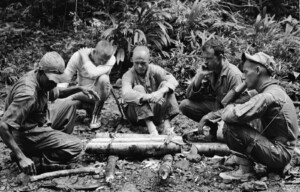
Science fiction, by Noah Paganotto, Argentina, 2022.
In an undetermined location on planet Earth, in an unknown time, Zoilo lives with his family in a wasteland surrounded by ruins. They live uprooted, without mothers, knowing that pregnancy for women is synonymous with death. For them there is only one collective routine; keep the fire alive. Only Zoilo escapes this logic, observing, intrigued, details that others do not see and therefore do not appreciate. Zoilo's personal search for answers will increase the differences with his relatives, increasingly revealing an empty world of interiority.
Avant-garde film that burns slowly in the first part and then reveals in the second the profound conflicts of a family prisoner of archaic beliefs. It is a dystopian and visionary work, with wonderful photography and images of rare power that allow us to grasp the depth of the story and its poetic potential. The faces of the actors, especially the protagonist boy, are perfect. The Sands metaphorically represents the world we live in: an alienated society, where what keeps us alive is demonized and blamed for death. In opposition to the fast pace of the typical mainstream film, The Sands is a meditative journey into the depths of images. The film was shot in natural environments in the city of Necochea, Buenos Aires province, Argentina.
LANGUAGE: Spanish
SUBTITLES: English, Spanish, French, German, Portuguese
Stability as a Constructed Mythology
You already know what stability feels like. It feels like the particular weight of a Wednesday afternoon when nothing is wrong, when the same coffee cup sits in the same spot on the same table, and the world contracts to the size of a room that has stopped asking anything of you. That feeling is not peace. It is a performance of peace, and you have been rehearsing it so long that you have forgotten the script was handed to you.
Ernest Becker argued in 1973, in a book that won the Pulitzer Prize and was largely ignored by the culture it described, that human civilization is not primarily a system of production or meaning-making or social cooperation. It is a defense mechanism. The Denial of Death proposes that every institution, every ritual, every ideological architecture humans have ever built is fundamentally a response to one unbearable datum: that the self is mortal, porous, and contingent. The permanence we construct around ourselves — in laws, traditions, national narratives, family structures, religious cosmologies — is not a natural outgrowth of human wisdom. It is a very sophisticated form of terror management.
What Becker revealed, and what took the psychological community another two decades to begin measuring empirically, is that the desire for continuity is not culturally neutral. Terror management theory, developed by Jeff Greenberg, Sheldon Solomon, and Tom Pyszczynski in the late 1980s, ran over four hundred experiments across multiple countries demonstrating that when subjects were primed with thoughts of death, they became measurably more hostile to people who held different worldviews, more attached to their cultural identities, and more resistant to change in any domain. The mind, when reminded of its own fragility, does not reach for growth. It reaches for the familiar and weaponizes it.
This pattern did not begin with modern psychology. The ancient Roman concept of mos maiorum — the way of the ancestors — functioned as a political instrument for centuries precisely because it transformed the preferences of the dead into a moral obligation binding the living. To deviate from ancestral custom was not merely unconventional; it was impious, dangerous, a rupture in the fabric of what held the world together. The ancestors, conveniently, could not be cross-examined. Stability, in that framing, was not a choice to be evaluated but a sacred debt to be honored, and any future that looked different from the past was already guilty before it arrived.
The Confucian concept of li, ritual propriety, performed an analogous function across East Asian cultures for over two millennia, encoding the existing social hierarchy as a cosmological given rather than a human construction. The emperor’s position mirrored the position of heaven; the son’s deference to the father mirrored the subject’s deference to the ruler; the entire arrangement presented itself as discovered rather than invented. To question any one node of the structure was implicitly to question the whole, which is why such systems are so extraordinarily durable — not because they are true, but because they are total.
What makes the mythology of stability so difficult to examine is that it does not announce itself as myth. It arrives dressed as common sense, as moderation, as the hard-won knowledge of those who have lived longer. It speaks in the language of caution and calls recklessness anything that threatens to move. Societies have always had mechanisms for pathologizing the appetite for change — diagnosing it as naivety, ingratitude, hubris, or instability of character — because a population that questions the permanence of arrangements is a population that has begun to notice the arrangements were arranged by someone, for reasons, in conditions that no longer exist.
The terror is not that the future will be worse. The terror, the one that Becker located beneath every cultural monument ever erected, is that the future proves the past was not inevitable.

The Historical Invention of Tradition

You are standing in a cathedral that took three hundred years to build, watching a ceremony that feels older than memory itself — robes, incense, words spoken in a language most attendees cannot understand — and somewhere in your chest a feeling rises that you might call reverence, or belonging, or the weight of something permanent. That feeling is real. What it is attached to is not.
In 1983, the British historian Eric Hobsbawm published a collection of essays alongside Terence Ranger that would quietly detonate under the foundations of everything people call heritage. The central argument of “The Invention of Tradition” was precise and devastating: the majority of customs, ceremonies, symbols, and social rituals that Western societies treat as ancient inheritances were deliberately manufactured between roughly 1870 and 1914, a period of intense industrialization, nationalism, and imperial expansion. The Scottish Highland tradition of tartans and clan kilts, presented as Gaelic heritage stretching into prehistory, was largely the invention of two brothers in the early nineteenth century — one of whom, James Macpherson, had already demonstrated considerable skill at fabricating ancient texts. The British monarchy’s elaborate ceremonial culture, which audiences across the globe now experience as timeless constitutional gravity, was in practice assembled during the Victorian and Edwardian periods, most of it unrecognizable to anyone who had attended a royal event a century earlier. Hobsbawm estimated that the volume of invented traditions produced in those four decades exceeded anything the previous millennium had generated organically.
This is not a quirk of British imperial culture. It is the structural logic of modernity itself. When rapid social transformation destabilizes existing hierarchies and kinship networks, the groups losing authority do not surrender quietly — they reach backward and construct a past that justifies their present claims. The Zulu royal ceremony described by Hobsbawm, the German nationalist festivals of the Wilhelmine period, the invented continuity of newly formed nation-states across Eastern Europe after 1848 — all of them operated on the same mechanism: manufacture the illusion of depth, and the present arrangement appears inevitable rather than chosen. What looks like reverence for the past is almost always a political argument about who gets to control the future.
The psychological hook is the word “always.” Whenever someone defends a practice by saying it has always been this way, the historically literate reader should feel a small alarm. The sociologist Pierre Nora spent much of the 1980s and 1990s documenting what he called “lieux de mémoire” — sites of memory — in his monumental seven-volume project published between 1984 and 1992, arguing that modern societies build memory monuments precisely because living memory has already died. Communities that genuinely carry tradition in their bodies, in their daily rhythms, do not need museums, national days, or official ceremonies to remember who they are. The monument appears at the exact moment the living continuity is severed. Which means that the more aggressively a tradition is performed and defended, the more recently it was probably invented.
What makes this hard to see is that invented traditions are emotionally indistinguishable from genuine ones. The body does not process authenticity — it processes repetition, collective participation, sensory cues, and social reinforcement. A ritual practiced three times generates something neurologically similar to one practiced three hundred years. This is why people will defend with extraordinary ferocity customs that are, historically speaking, younger than their grandparents. The fury is not about the past. It is about identity — and identity, once it has anchored itself to a particular set of symbols, reads any challenge to those symbols as an existential threat rather than a factual correction.
The category of “tradition” is therefore not a description of age but a claim to legitimacy wearing age as its costume.
Fear Dressed in the Language of Prudence
You have been in that meeting, or one exactly like it. Someone younger brings a proposal — concrete, tested elsewhere, slightly uncomfortable in its implications — and the room shifts. Not into argument. Into a particular kind of stillness, followed by a voice, measured and slow, that begins with the words “I just think we need to be careful here.” Nothing in the proposal has been refuted. Nothing specific has been named as dangerous. The caution itself becomes the content, and because caution sounds like wisdom, the conversation ends before it begins.
This is not accidental. The conflation of resistance with maturity has a long institutional history, and it operates through a rhetorical mechanism precise enough to deserve dissection. Edmund Burke, in his 1790 “Reflections on the Revolution in France,” gave the modern world its most elegant template: the argument that inherited arrangements encode the accumulated wisdom of generations, that any single mind proposing a reform is necessarily more ignorant than the centuries of trial and error embedded in existing institutions. The argument is seductive because it contains a kernel of truth — complex systems do carry tacit knowledge — but Burke weaponized that kernel into a general prohibition against deliberate change. What he actually produced was not a theory of caution but a theory of paralysis dressed in epistemological humility.
The vocabulary that followed proved remarkably durable. By the mid-twentieth century, the same architecture had migrated from political philosophy into organizational culture, corporate governance, and everyday social negotiation. It shed its explicit ideological content and became purely procedural: risk assessment, stakeholder alignment, phased implementation, responsible stewardship. The words themselves are not dishonest; the dishonesty lies in their selective deployment. Studies on organizational decision-making, including research by Harvard Business School’s Amy Edmondson on psychological safety published in her 2018 book “The Fearless Organization,” consistently find that the language of caution is not distributed randomly across proposals. It clusters around changes that would redistribute power, alter status hierarchies, or make existing expertise obsolete. The proposals that sail through without risk assessments are typically those that reinforce existing structures, even when those structures are demonstrably failing.
What this reveals is not irrationality but a specific and coherent rationality: the rationality of the person for whom the current arrangement is working. Sociologist Pierre Bourdieu spent decades documenting how the social field rewards those who have already accumulated capital within its rules, and how those individuals develop an investment in the perpetuation of those rules that feels — from the inside — like commitment to quality, tradition, and legitimate standards. His 1979 work “La Distinction” showed that aesthetic preferences, professional judgments, and institutional conservatism are not neutral assessments of quality but enactments of position. The person who insists that things have always been done a certain way for good reason is often reporting, accurately, that things have been done that way for their benefit.
The deepest function of prudential language is not to prevent bad outcomes but to prevent the conversation about whose outcomes are being protected. When a policy reform aimed at closing a structural gap is described as “moving too fast,” the speed is not the actual object of concern — what accelerates dangerously in that framing is the rate at which one group’s advantage is being eroded. The word “responsible” in “we need to be responsible about this” almost never appears in sentences about maintaining the status quo. It appears in sentences about changing it. Responsibility, in this usage, has been quietly reassigned: it no longer means accountability to outcomes but loyalty to inertia.
Cognitive science adds a layer that makes this more uncomfortable. Daniel Kahneman’s work on loss aversion, formalized across decades of research culminating in his 2011 “Thinking, Fast and Slow,” demonstrated that losses feel roughly twice as powerful as equivalent gains. This means the person invoking prudence is not lying about their emotional experience — they genuinely feel the proposed change as a threat of loss, and that feeling is neurologically more intense than any abstract future benefit.
The Neuroscience of Predictive Collapse
You are standing in a room you have lived in for twenty years, and someone has moved a single piece of furniture three inches to the left. You do not notice it consciously. But your body notices — your hip turns slightly wrong as you pass, your hand reaches for a surface that has migrated just beyond its expected coordinates, and for a fraction of a second your nervous system fires something that registers not as inconvenience but as threat. This is not metaphor. This is the operating system running beneath every opinion you have ever held about progress, tradition, and the direction of the world.
Karl Friston’s work on predictive processing, developed across a series of papers beginning in the mid-2000s and consolidated in his formalization of the free energy principle, offers one of the most unsettling models of mind produced in contemporary neuroscience. The central claim is deceptively simple: the brain does not perceive the world. It generates predictions about the world and then compares incoming sensory data against those predictions, updating its models only when the error signal becomes too large to suppress. Perception itself is a controlled hallucination, a constant negotiation between what the brain expects and what the world insists upon. What Friston called “free energy” — a measure of surprise, of the gap between prediction and reality — the brain spends enormous metabolic resources trying to minimize. The entire architecture of cognition is, at its root, an uncertainty-reduction machine.
The political consequence of this model has rarely been stated with sufficient bluntness. When a person encounters a proposal for social change — a restructured institution, a redistributed hierarchy, a new category of legal personhood — the discomfort they report is neurologically indistinguishable from the discomfort of a violated prediction. The moral language arrives after the fact, a post-hoc rationalization produced by the prefrontal cortex to give narrative coherence to what the body has already decided. Disgust, which Jonathan Haidt documented in The Righteous Mind as a primary driver of conservative moral reasoning, operates through circuits evolutionarily older than language, older than culture, older than the very concept of a political position. To feel that something is wrong is frequently to feel that it did not match the model.
This reframes the entire question of who resists change and why. The resistance is not primarily ideological. Ideology is the costume the resistance wears after it has already assembled itself in the body. Research in personality psychology consistently shows that the trait dimension of openness to experience — one of the five major factors identified across decades of cross-cultural study — predicts political orientation with a reliability that embarrasses most purely economic or sociological explanations. High openness correlates with tolerance for ambiguity, appetite for novel stimuli, lower disgust sensitivity. Low openness correlates with a preference for closure, for established categories, for worlds that behave according to their prior predictions. Neither is a moral failing. Both are distributions across a population that evolution has kept in tension precisely because stability and exploration represent genuinely competing survival strategies.
What becomes ethically complicated is the moment when a metabolic preference dresses itself as a transcendent principle. When the nervous system’s demand for predictability translates into a theological claim, a natural law argument, a civilizational warning — the person making the argument has almost certainly lost track of where the argument originated. They experience themselves as reasoning. They are, in the most precise neurological sense, confabulating: constructing a coherent post-hoc story around a decision the body made milliseconds before conscious deliberation began. Benjamin Libet’s famous experiments in the 1980s demonstrated that the brain’s readiness potential precedes conscious awareness of intention by up to half a second — and that gap, trivially small in time, is catastrophically large in its implications for how we understand conviction, will, and the stories people tell themselves about why they believe what they believe.
A vision curated by a filmmaker, not an algorithm
In this video I explain our vision
The Second Scene: A Society That Rehearsed Its Own Stagnation

You have seen it in the meeting room of an institution that has existed for longer than anyone present can remember — not a museum, not a government office, though it could be either. The people seated around the table are not stupid. They hold advanced degrees, they have read widely, they speak in complete sentences. But watch what happens the moment someone younger raises a proposal that would alter the workflow, shift the budget allocation, change the fundamental rhythm of how the place operates. The room does not erupt in anger. It does something far more sophisticated: it performs consideration. Heads nod. Someone asks a clarifying question. Another person mentions a pilot program from several years ago that tried something adjacent and produced ambiguous results. The proposal is absorbed into the bureaucratic tissue of the institution and quietly suffocated, not by hostility but by procedure.
This is what sociologist Robert Michels described in 1911 in “Zur Soziologie des Parteiwesens in der modernen Demokratie” — his iron law of oligarchy — though his argument went further than most people remember. Michels was not simply saying that organizations concentrate power at the top. He was saying that organizations, regardless of their founding ideals, develop a structural interest in their own perpetuation that eventually overrides every other interest, including the one that justified their existence. The institution ceases to serve its stated purpose and begins instead to serve the continuation of itself. What looks like conservatism is not really ideological — it is metabolic. The organization has learned to treat its own survival as identical with the survival of the cause.
What makes this so difficult to see from inside is that the language of progress is still in full circulation. The institution holds retreats about innovation. It commissions reports on transformation. It hires consultants who produce diagrams showing dynamic feedback loops and agile response frameworks. None of this disturbs the underlying inertia because the language of change has been successfully domesticated — turned into a ritual that satisfies the demand for forward motion without producing any. The German sociologist Hartmut Rosa developed this into a formal concept in “Beschleunigung” in 2005, arguing that modern societies accelerate in speed while remaining structurally static, generating the sensation of movement through turnover, novelty, and restless activity, while the fundamental power arrangements and value hierarchies stay fixed. The treadmill moves faster; the runner goes nowhere.
What is at stake in these institutional performances of continuity is not merely efficiency or wasted resources. Something more psychologically precise is happening. When a group of people collectively chooses, through a thousand small procedural decisions, to maintain the current configuration of reality, they are making a statement about what they believe the future deserves. Not consciously. Not as a declared position. But in aggregate, through every postponed decision and every proposal that dies in committee, they are enacting a verdict: the present is preferable to any future that would require us to become different people. This is the collective version of what individual psychology calls identity-protective cognition — the tendency documented by Dan Kahan at Yale to reject evidence not because it fails on empirical grounds but because accepting it would threaten the self-concept. At institutional scale, the self-concept being protected is not a person’s but a culture’s.
The decay that results is rarely dramatic enough to force a reckoning. Institutions do not usually collapse in a single visible moment; they thin out. The most capable people leave first, because they have the options to do so. What remains is a progressively more homogeneous group, more invested in the existing structure because they have fewer alternatives to it, more convinced that stability is wisdom because instability has become genuinely threatening to them.
Progress as Threat to Complicit Identities
You are sitting across from someone who has spent thirty years explaining, with quiet authority, why the thing you want cannot be done. Not because they have tried and failed. Because the impossibility is the point. The impossibility is what they are made of.
Frantz Fanon understood this before most people were willing to say it plainly. In “The Wretched of the Earth,” published in 1961, he described how colonized people internalize not just the conditions of their subjugation but its logic — how the cage becomes, over time, the architecture of the self. The bars are not experienced as bars. They are experienced as the walls of home. To remove them is not liberation. It is demolition. What Fanon was tracking was not mere psychological damage but something more structurally sinister: the construction of an entire identity out of the materials of constraint, so that the constraint and the person become genuinely indistinguishable.
This is not an observation that applies only to the extreme historical theater of colonial violence. It operates in every social formation where limitation has been long enough in place to become definitional. A working-class community that has organized its solidarity, its humor, its marriages, its moral vocabulary around the shared fact of scarcity does not simply welcome the arrival of prosperity. Prosperity arrives like a foreign language — technically available, experientially unintelligible, and somehow insulting. The sociologist Richard Sennett, writing in “The Hidden Injuries of Class” in 1972 with Jonathan Cobb, documented precisely this: how dignity under conditions of deprivation becomes its own closed economy, and how mobility threatens not just the position of the individual but the entire relational structure through which they have been seen and recognized. To leave is, in some non-metaphorical sense, to betray the grammar everyone around you uses to be human.
The identity built around limitation is not passive. It is actively maintained, socially policed, and morally justified. Communities under chronic constraint develop extraordinarily sophisticated internal languages for discrediting those who escape or improve — languages of authenticity, loyalty, betrayal, pride. The person who leaves for the university, who accepts the grant, who declines the inherited narrative of impossibility, gets named: arrogant, lost, pretentious, no longer one of us. This naming is not incidental cruelty. It is survival behavior. The community is protecting its own coherence, which is to say its own reality, from the destabilizing evidence that the constraint was not, in fact, total or permanent.
What makes genuine possibility so threatening is precisely its genuineness. A false possibility — a lottery ticket, a fantasy, an exception that confirms the rule — costs nothing psychically because it does not actually challenge the structure. But real, structural change in the conditions that have defined a group’s existence forces every member of that group into an identity crisis that has no comfortable name. If the suffering was not inevitable, then what does it mean that we organized our entire selfhood around its inevitability? This is not a question most people can sustain long enough to answer honestly. The mind moves faster toward the alternative: the change must be wrong, dangerous, premature, or secretly a trick.
Albert Hirschman spent much of his career cataloguing the rhetorical strategies through which this refusal gets dressed in the language of reason. In “The Rhetoric of Reaction,” published in 1991, he identified the three recurring moves: that progress produces the opposite of its intended effect, that it threatens something precious and prior, or that it is simply not achievable given real conditions. These are not arguments that emerge from evidence. They are arguments that emerge from the psychic necessity of maintaining a self that was built inside a particular set of walls — and that would have nowhere to stand if the walls came down.
The Unfinished Architecture of the Present Moment

You are sitting in a waiting room that has no door marked “exit,” only a series of signs pointing back toward the chairs you already occupied. This is not a metaphor for anxiety — it is a precise description of what the future feels like to a mind that has been educated, across decades and institutions, to expect the answer before attempting the question. The illegibility of what has not yet happened is not a flaw in human cognition. It is a wound inflicted by systems that rewarded correct responses and penalized productive uncertainty, systems that taught you to perform readiness rather than inhabit it.
John Dewey argued in 1938, in “Experience and Education,” that the dominant model of schooling was not preparing students for encounter with the unknown but insulating them from it — delivering pre-digested conclusions and calling the process learning. What that model actually produced was a population fluent in retrieval and brittle under genuine novelty. The damage is not intellectual. It is deeper than that. When the future arrives in a form that cannot be categorized, a mind trained on formatted answers does not think harder — it contracts. The illegible becomes the threatening, not because of what it contains, but because of what it exposes: the entire infrastructure of confidence was borrowed, never owned.
The media ecosystem that replaced the school once formal education ended did nothing to repair this. Neil Postman observed in 1985, in “Amusing Ourselves to Death,” that television had restructured public epistemology around the fragment — the severed image, the decontextualized fact, the emotional spike with no analytical aftermath. What followed television only accelerated the architecture. Platforms designed around engagement metrics do not reward the long encounter with ambiguity; they reward the instant signal, the recognizable pattern, the conclusion that arrives before the reasoning does. A mind fed this diet for twenty years does not merely prefer certainty — it has lost the musculature to tolerate its absence for any meaningful duration.
What gets called fear of the future is often, beneath the emotional register, something closer to an epistemological emergency: the discovery that the tools you were given to read the world have a fundamental gap where the unwritten should be. Nassim Nicholas Taleb’s work on epistemic fragility, particularly in “The Black Swan” published in 2007, identified how entire institutions — financial, political, scientific — had built models that treated the unprecedented as statistically negligible, not because it was rare but because it was unformattable. The rejection of the future is not irrational. It is the rational response of a system that has only ever been validated by what it already knew how to name.
There is a particular kind of person who does not fear catastrophe — who plans for floods, rehearses emergencies, imagines collapse with strange calm — but who becomes rigid and hostile the moment someone proposes a structural change to how ordinary daily life is organized. The catastrophe is legible because it has a genre. It fits a narrative template. The structural change is not catastrophic enough to have a story and not familiar enough to have a name, and so it lands in the mind as pure threat. This is the unfinished architecture of the present moment: not that we cannot see the future, but that we were never taught to stand comfortably in a space that has not yet been built, to feel the exposure of the open frame as something other than danger.
The philosopher of science Isabelle Stengers wrote, in “Cosmopolitics,” about what she called the obligation to think under uncertainty — not as an intellectual exercise but as an ethical stance, a refusal to let illegibility become an excuse for immobility. Whether that obligation can be recovered by minds shaped against it is the question that the present moment does not yet have the language to answer, and perhaps that is precisely where the real work begins.
🌀 The Weight of Tomorrow: Fear, Resistance, and the Unknown
The rejection of the future is rarely a conscious choice — it emerges from deep psychological mechanisms, cultural inertia, and the terror of losing a self built over time. These articles explore the many faces of resistance to change, from philosophical anxiety to social conformity, tracing the invisible walls we build against transformation.
The power of individual authenticity against cultural conformity
The courage to remain oneself in a world that relentlessly demands conformity is one of the most radical acts of resistance available to the individual. This article examines how cultural homogenization silences authentic voices and why the fear of standing apart is so deeply rooted in our social psychology. Understanding this dynamic is the first step toward dismantling the internal barriers that keep us trapped in inherited identities.
GO TO THE SELECTION: The power of individual authenticity against cultural conformity
Friedrich Nietzsche, the eternal return and the weight of the past
Nietzsche’s concept of the eternal return confronts us with a radical question: if we had to live our lives again, endlessly, would we truly choose to change? This article explores how the weight of the past functions as both anchor and prison, shaping our relationship with possibility and making the future feel like an unbearable risk. The philosopher’s vision remains one of the most unsettling and liberating challenges ever posed to human will.
GO TO THE SELECTION: Friedrich Nietzsche, the eternal return and the weight of the past
Søren Kierkegaard and the agony of moral choices
Kierkegaard understood that the agony of choosing is inseparable from the dread of becoming — every decision toward the future implies the annihilation of all other possible selves. This article delves into the existential vertigo that paralyzes individuals at the threshold of transformation, where freedom and fear become indistinguishable. His thought offers a compelling lens through which to understand why so many people prefer the certainty of stagnation over the terror of growth.
GO TO THE SELECTION: Søren Kierkegaard and the agony of moral choices
Existential Emptiness: When Life Loses Meaning
When the future appears empty of meaning, the present loses its forward momentum and the individual clings desperately to what is known, even if it causes suffering. This article investigates the psychology of existential emptiness, exploring how the absence of purpose feeds conservatism of the soul and a visceral refusal of change. It is a profound meditation on why the fear of change is often, at its core, a fear of meaninglessness.
GO TO THE SELECTION: Existential Emptiness: When Life Loses Meaning
Explore the Cinema That Dares to Ask the Hardest Questions
On Indiecinema you will find independent films that refuse easy answers and dare to portray the human struggle against transformation, inertia, and fear with raw honesty. Stream a curated selection of works that go beyond entertainment to become genuine experiences of inner confrontation — because sometimes, the most revolutionary act is simply pressing play.
👉 EXPLORE THE CATALOG: Watch Indie Films in Streaming
👉 Questo articolo fa parte dell'hub Psychology: The Complete Guide to Mind, Behavior, and Human Nature
A vision curated by a filmmaker, not an algorithm
In this video I explain our vision