The Ritual Identification of the Threat
You are sitting in your kitchen when the alert arrives. The tone is specific — not the generic chime of a message but the particular urgency reserved for emergencies, for weather events that kill, for attacks on soil considered sacred. The screen fills with a face, or a flag, or a silhouette rendered in the visual grammar of threat: dark, angular, positioned slightly below center so the viewer looks down at it with the instinctive contempt that composition commands. You do not yet know what this person, this group, this nation has done. But you already know how you feel about them. The machinery finished its work before the facts arrived.

This is not an accident of timing. The emotional architecture of public enmity is constructed in advance of any evidence, because evidence is not the point. What Noam Chomsky and Edward Herman demonstrated with forensic patience in Manufacturing Consent, published in 1988, is that the media systems of liberal democracies do not report on enemies — they produce them. The propaganda model they outlined is not a conspiracy theory requiring a smoke-filled room; it requires only the ordinary operation of five structural filters: ownership concentration, advertising dependency, official sourcing, flak mechanisms, and the ideological cement of anticommunism, later updated to antiterrorism. Each filter is banal on its own. Together they form a sieve that allows certain narratives to pass and holds others back until they suffocate. The enemy that emerges from this process feels inevitable, self-evident, almost natural — as though history simply delivered him to the front page already guilty.
The psychological mechanism that makes this work runs deeper than media theory. Leon Festinger’s research on cognitive dissonance, developed across his career from the 1950s onward, revealed that the human mind under conditions of uncertainty does not seek more information — it seeks coherence. When an authority structure presents a threat-signal, the mind does not evaluate the signal against competing evidence; it arranges available fragments to confirm what the signal has already implied. This means the identification of a public enemy activates not the citizen’s critical capacity but their pattern-completion reflex. The label arrives first. The evidence is recruited afterward, selected not for accuracy but for fit.
What makes this process so durable is that it flatters the person it manipulates. To recognize the enemy is presented as an act of perceptiveness, even courage. The citizen who accepts the designation feels they have seen through something, grasped a danger that the naive or the complicit might minimize. This is the signature move: manufactured consent does not feel like submission. It feels like clarity. The propaganda model works precisely because it does not require a passive audience — it requires an active one, engaged, opinionated, sharing, convinced of its own discernment, doing the distribution work for free.
History is littered with the wreckage of enemies assembled and then quietly dismantled once they had served their purpose. The Gulf of Tonkin incident, used in August 1964 to justify full American military escalation in Vietnam, was not a discovery of enemy aggression but a construction of it — a fabrication that the Senate later confirmed, that the Pentagon Papers exposed in detail, and that cost somewhere between 1.5 and 3.5 million lives depending on whose dead are counted. The enemy had been designated before the incident occurred; the incident was needed only to make the designation legible to a public that still expected its violence to come with a reason.
The face on your screen is not a revelation. It is a casting decision. Someone, at some prior moment, in some room you were not invited into, determined that this particular face would carry the weight of collective fear for this particular season, and the alert you received is simply the public premiere of that determination, dressed in the borrowed clothing of breaking news.
The Witches of Mount Sciliar

Docufiction, by Andrea Dalfino, 2022, Italy.
The Witches of Scillar is a documentary that delves deeply into the trials that took place in Alto Adige, in Castel Presule and surrounding areas at the beginning of the 16th century, following which more than 10 were condemned to the stake on charges of witchcraft, becoming the real and precursors of the infamous Witch Hunt. Starting from the analysis of the historical context and intertwining local legends with actual events and analyzing the locations of the events with the help and guidance of experts, this film offers a new historical perspective on what happened, culminating with the exposition of what remains of the witches in South Tyrol today and how the crimes of the inquisition are judged in retrospect today.
Alto Adige is a land full of mystery, where history and legend are intertwined, with its magical and fascinating scenarios that push the mind and imagination to wander, investigate, discover. Here is the Sciliar, a suggestive mountain massif located in the natural park of the same name against the backdrop of the Dolomites, and no other mountain is so full of myths and legends as this one, on which it is said that fairy creatures and spirits of all sorts live , and in the Middle Ages it was held up as a meeting place for witches and devils. Here, during the time of the Inquisition, 10 women accused of witchcraft were tried and killed. Director Andrea Dalfino made the documentary The Witches of the Sciliar, enriching the film with fictional scenes that retrace the intricate events of the Fiè trial.
LANGUAGE: Italian
SUBTITLES: English, Spanish, French, German, Portuguese
Carl Schmitt's Friend-Enemy Distinction as Political Infrastructure
You are sitting in a government briefing room — not as a citizen, not as a journalist, but as someone who has just been handed a list. The list has names on it. Some of the names belong to organizations, some to individuals, some to entire demographic categories dressed in bureaucratic language. Nobody in the room explains why these names are dangerous. The danger is assumed, already installed in the architecture of the document itself. What you are holding is not an intelligence assessment. It is a political act of foundation.
Carl Schmitt understood this mechanism with a clarity that made him both indispensable to power and permanently uncomfortable for liberal democracies to acknowledge. In “The Concept of the Political,” published in 1932 and still quietly operative in every national security apparatus on earth, he argued that the specifically political distinction — the one that generates all political energy — is the distinction between friend and enemy. Not good and evil, not legal and illegal, not true and false. Friend and enemy. The sovereign, for Schmitt, is not the entity that administers law or embodies values. The sovereign is the entity that decides who the enemy is. That decision, he insisted, requires no moral justification and admits no neutral adjudication. It is constitutive rather than descriptive. The enemy is not identified because they are dangerous. They are dangerous because they have been identified.
What follows from this is structurally disturbing in ways that most political science curricula prefer to skip past. If the friend-enemy distinction is the founding act of political unity, then a state without an enemy is not a powerful state at rest — it is a state without a reason to cohere. The population does not unify around shared values in any robust sociological sense; values are too diffuse, too contested, too slow. It unifies around a shared threat. Remove the threat and you do not liberate the population into rational self-governance. You dissolve the political field entirely. This is why the enemy, once manufactured, must be maintained. The geopolitical record of the twentieth century — from the Red Scare’s institutional metastasis through the House Un-American Activities Committee between 1938 and 1975, to the post-2001 construction of “the terrorist” as a permanent rather than tactical category — is not a series of mistakes or overreactions. It is Schmittian infrastructure functioning as designed.
The friend-enemy distinction also operates below the threshold of conscious policy. Societies absorb it through media rhythm, through the cadence of threat reporting, through the grammar of official language. When a state department spokesperson describes a foreign government as “rogue,” they are not making a legal argument or a moral evaluation. They are performing a designatory act that reorganizes the entire field of permissible responses — military, economic, diplomatic — without requiring a single citizen to understand the substance of the conflict. The word “rogue” does the political work before the sentence is finished. Schmitt would have recognized this as sovereignty in miniature, distributed across a thousand daily speech acts.
What makes this particularly difficult to resist is that the enemy designation does not need to be false to be a political construction. A real threat can be selected, amplified, framed, and institutionally embedded in ways that serve the coherence needs of the designating power far more than they serve any proportionate defensive logic. The threat is real; the architecture built around it is political. That distinction — between the actual danger and the sovereign act of naming it — is precisely the gap that power elites exploit with such consistency and such impunity, because it is a gap that the designated enemy’s own behavior can never fully close.

The Historical Fabrication of Internal Enemies
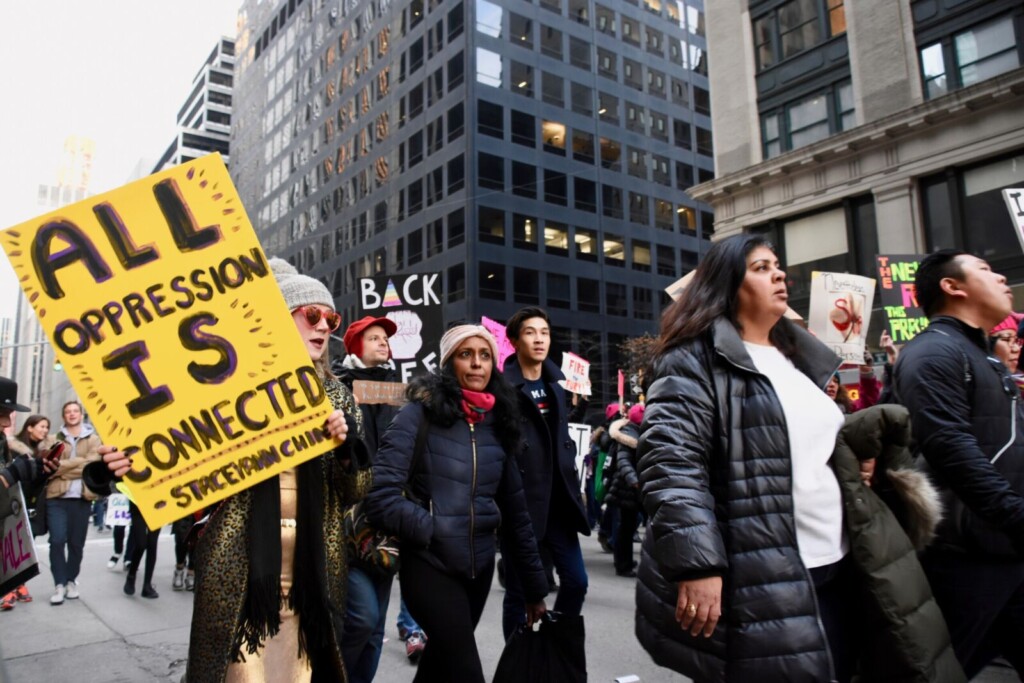
You are standing in a government office in January 1920, and a man you have never met is handing a federal agent a list with your name on it. You have not committed a crime. You have, however, attended a meeting where someone read aloud from a pamphlet printed in a language that is not English, and that is sufficient. Attorney General A. Mitchell Palmer had already survived a bombing at his Washington home the previous June, and the political infrastructure surrounding Woodrow Wilson‘s exhausted administration needed a villain with the urgency that only fear can manufacture. The raids bearing Palmer’s name swept through thirty-three cities on a single night in January 1920, detaining somewhere between six and ten thousand people — the numbers themselves fluctuated depending on who was counting and what they needed the count to prove. No coherent legal framework governed the arrests. The point was never prosecution. The point was the image of a nation under siege from within.
What made the Red Scare of 1919-1920 so instructive was not its violence but its timing. The First World War had ended fourteen months earlier, and with it the remarkable social adhesive of external threat. C. Wright Mills, writing decades later in “The Power Elite” in 1956, would have recognized the mechanism immediately: the coalitions that form at the top of any society require a continuous justification for their cohesion, and when the foreign enemy recedes, the machinery of fear does not dismantle itself — it pivots. Palmer understood, whether consciously or through the pure instinct of political survival, that labor unrest, immigrant communities, and the ghost of Bolshevism could be fused into a single domestic specter. The Internal Subversive replaced the German soldier, and the transition required almost no time at all.
The pivot is never ideologically neutral, and it is never random in its selection of targets. Japanese Americans in 1942 were not interned because anyone in the Roosevelt administration genuinely believed that a Nisei farmer in California’s Central Valley was coordinating with the Imperial Navy. They were interned because the shock of Pearl Harbor had created a political window, because their land was coveted, and because the category of racial otherness made the accusation feel self-evident to a white majority that had been prepared by decades of exclusion acts and anti-Asian immigration laws stretching back to 1882. Executive Order 9066, signed on February 19, 1942, displaced approximately 120,000 people, two-thirds of whom were American citizens by birth. The legal architecture was thin enough to be embarrassing even at the time — Colonel Karl Bendetsen, one of the order’s chief architects, later admitted that anyone with “one drop of Japanese blood” qualified for removal. This was not security policy. It was the state performing its own anxieties on a population that could not effectively resist.
What both episodes reveal is a structural logic that Giorgio Agamben would later theorize in “Homo Sacer” in 1995 as the state of exception — the moment when sovereign power suspends the legal order it claims to protect, and in doing so, exposes the fact that the legal order was always provisional. The civilian becomes the enemy not through any act but through designation, and the designation itself becomes the evidence. This circularity is not a failure of the system. It is the system operating at full capacity, stripping a category of people of the political protections that were never as universal as the founding documents suggested.
The historical record shows something even more troubling than cynical manipulation: it shows that the public, overwhelmingly, consents. Not because it is stupid, but because the internal enemy satisfies a need that the external enemy, once normalized, can no longer fill — the need to locate the source of one’s own precariousness somewhere visible, somewhere reachable, somewhere that does not implicate the structures that actually govern daily life.
Mass Media as the Technical Apparatus of Enmification
You are already doing it, and you cannot feel it happening. You are sitting with the news on in the background, half-listening, and somewhere between the fourth and fifth repetition of the same phrase — “security threat,” “radical element,” “dangerous ideology” — your nervous system has quietly filed a category. Not a conclusion. A reflex. The words did not persuade you. They simply arrived so many times that your brain, which is an organ built for pattern recognition and not for epistemological vigilance, stopped treating them as claims and started treating them as furniture.
Ben Bagdikian saw the architecture of this process before most people had a language for it. In 1983, when he published The Media Monopoly, fifty corporations controlled the majority of American media. He treated that number not as a market statistic but as a political fact, because the question of who owns the channel through which reality is described is inseparable from the question of whose version of reality gets described. By 2011, that number had collapsed to six. Six corporations — Comcast, News Corp, Disney, Viacom, Time Warner, CBS — producing and distributing the overwhelming share of what Americans see, hear, and read. The compression is not incidental. It is the condition of possibility for the enemy-making apparatus to function at industrial scale, because a thousand competing voices produce friction, contradiction, and doubt, while six coordinated voices produce something closer to weather: ambient, total, and seemingly sourceless.
The ideological labor performed by this system is almost never explicit. No editor sends a memo ordering journalists to dehumanize a population. The work happens instead in the three quieter mechanisms of framing, repetition, and omission — and the last of these is the most powerful precisely because it leaves no fingerprints. A community can be rendered threatening not by calling it dangerous but by covering it exclusively in the register of crime, disorder, and exception, while its grief, its art, its internal complexity, and its legitimate political claims are structurally absent from the feed. The reader who never encounters the omitted material does not experience a gap. They experience a complete picture. That completeness is the lie.
Framing operates differently but with equal efficiency. The same event — a protest, a border crossing, an act of economic desperation — can be introduced to the public as a crisis or as a symptom, as a threat or as a consequence, depending entirely on which detail is placed in the first sentence of the report. Cognitive psychologists call this the primacy effect: the first characterization of an ambiguous situation colonizes the interpretive frame through which all subsequent information is processed. This is not a flaw in human reasoning. It is a feature of a mind that must make fast decisions with incomplete information. The media system that understands this — and the professionals who run it understand it with precision — is not informing the public. It is loading a gun before handing it to them and calling the transaction journalism.
Repetition, finally, does something that neither framing nor omission can do alone: it manufactures consensus out of frequency. Elisabeth Noelle-Neumann’s research on what she called the spiral of silence, published in 1974, demonstrated that people calibrate their public speech not to their private convictions but to their perception of what the majority believes. When a single characterization of an enemy group circulates across six media ecosystems simultaneously, it does not merely appear to be the truth — it appears to be the shared truth, the socially safe truth, the truth whose rejection would place you outside the recognizable community of reasonable people. The individual watching alone in a room receives what feels like collective confirmation. The manufactured enemy becomes, at that moment, not a product of power but a fact of nature, and the citizen who has absorbed it without resistance believes, with complete sincerity, that they have simply been paying attention.
The Sociological Function of Moral Panic
You are walking home late, and you see the news alert on your phone before you even reach your door. A face, a name, a category — and something contracts in your chest that is not quite fear and not quite anger but sits precisely between them, warm and oddly pleasurable, the way outrage always is when it arrives pre-packaged with a clear object.
Stanley Cohen understood this contraction. In 1972, working from case studies of British youth subcultures — Mods and Rockers on seaside beaches, amplified into national catastrophe by tabloid press — he mapped what he called moral panic: a condition in which a person, group, or episode becomes defined as a threat to societal values and interests, processed through editorial distortion, moral entrepreneurs, and institutional response, until the original phenomenon is barely recognizable beneath its own representation. What Cohen identified was not simply media hysteria but a structural mechanism through which societies periodically produce, select, and then consume a figure of contamination. Not merely danger — contamination. The distinction is everything.
Danger you can calculate. It has dimensions, probabilities, mitigation strategies. Contamination operates differently: it spreads by proximity, it marks those who have touched it, it requires not management but purification. Mary Douglas, writing in Purity and Danger in 1966, had already shown that what any culture designates as polluting is never arbitrary — it is always matter that transgresses the categories a society uses to organize itself. The folk devil Cohen described is not dangerous because of what they do but because of what they symbolize: a boundary crossed, a category violated, an order threatened at the level of identity rather than merely security. This is why the emotional register of moral panic is disgust before it is fear, and why disgust is so much more politically durable — fear can be relieved by safety, but disgust demands expulsion.
What this mechanism accomplishes sociologically is something remarkably efficient and largely invisible to those it most completely captures. Émile Durkheim observed in 1893 that crime functions not primarily as a social pathology but as a social adhesive — that punishing the transgressor produces collective effervescence, a momentary fusion of the group around shared moral feeling. Moral panic industrializes this process. It generates communities not built around what their members share in terms of material interest or lived experience, but around what they collectively repudiate. The bond is negative, constituted entirely by the shared object of disgust, which means it requires that object to survive. A community of the virtuous defined by its enemy cannot afford to resolve the threat — only to intensify and perpetuate it.
This is where the sociological function diverges most sharply from the official narrative of public protection. The 2011 UK phone-hacking scandal revealed in forensic detail how editors at national tabloids understood that the cycle of moral panic was a circulation model, not a journalistic one — that audiences returned not to be informed but to participate in the ritual of collective condemnation. The folk devil was a product, engineered to specific emotional specifications: just sympathetic enough to produce the frisson of ambiguity, just monstrous enough to allow readers to locate themselves firmly on the side of decency. Every editorial choice — the cropped photograph, the unverified criminal history, the family source willing to speak — was a calibration of this emotional instrument.
What no one asks, inside the warm interior of that collective disgust, is what happens to the actual human being who has been processed through this mechanism. Cohen himself noted that folk devils rarely vanish when the panic subsides — they are deposited into social reality at a lower altitude, carrying stigma that the panic generated and the institutional record preserved. The criminal file, the search result, the neighborhood association that quietly received the flyer — these are the sediment of moral panic, which outlasts every news cycle and continues to structure a real life long after the community of the virtuous has dissolved and reassembled around a new target.
A vision curated by a filmmaker, not an algorithm
In this video I explain our vision
The Cognitive Economy of the Enemy Figure

You are already doing it when you walk into a room and feel the temperature change — something in the air has shifted, and before your mind can process the variables, you have found the face that explains it. This is not a failure of intelligence. It is intelligence operating at full efficiency, doing exactly what it was built to do: reduce the cost of understanding.
Henri Tajfel spent decades mapping the architecture of this efficiency. His 1981 work “Human Groups and Social Categories” demonstrated something that social psychologists had circled but never said plainly: the human mind does not categorize because it is lazy. It categorizes because it is economical. Categorization is cognition’s preferred instrument for managing a world that arrives faster and denser than any individual nervous system can process in real time. The problem is not that we simplify. The problem is that simplification, once applied to human beings, becomes a technology of hostility that runs almost entirely on its own momentum.
What Tajfel called social identity — the portion of a person’s self-concept derived from membership in a group — turns out to be structurally dependent on contrast. You do not know who you are within a group until you know who the group is not. This asymmetry is not a cultural habit that education could dissolve. It is embedded in the mechanics of identity formation itself, which means that any system seeking to manage population psychology has a ready-made lever already installed in every mind it wishes to pull. Power does not need to manufacture tribalism from nothing. It only needs to select the line along which existing divisions will crystallize, and then apply enough heat.
The enemy figure is, in this precise sense, a cognitive subsidy. It offers the mind a way to discharge the otherwise unbearable weight of structural complexity — unemployment that has macroeconomic causes spanning three decades, housing markets shaped by legislation no voter ever approved, health systems dismantled across bipartisan administrations. These are not narratives. They are systems, and systems do not produce faces. The enemy figure produces a face. It compresses a diffuse, historically thick causal network into something the brain can locate in space and time, point at, and hold responsible without ever having to read a policy document or trace a supply chain. The cognitive relief this provides is not trivial. It is, in measurable psychological terms, the relief of resolution — the same neurological satisfaction that follows the closure of an open question, now systematically redirected away from structures and toward persons.
George Orwell observed this dynamic from the inside in 1937, moving through the mining communities of northern England and recording in “The Road to Wigan Pier” how economic misery was already being metabolized not as an indictment of capital but as a grievance against adjacent ethnic and immigrant communities. The resentment was real. The target was substituted. The substitution required no conspiracy to execute — only the presence of a visible, categorizable other close enough to touch, while the actual mechanisms of dispossession remained invisible, distributed across institutions no one could photograph.
What makes the enemy figure durable is not that it deceives. It is that it partially explains. Real tensions exist between communities competing for scarce resources in systems deliberately kept scarce. The figure arrives not as a lie but as a misattribution — accurate enough in its emotional register to pass, wrong enough in its causal architecture to prevent any correction. And misattribution, once emotionally ratified, is almost impossible to dislodge through argument alone, because argument operates on a different register than the relief the figure provided. You cannot reason someone out of a cognitive economy they entered for survival.
Tajfel himself noted that the drive to positively differentiate one’s own group from others intensifies precisely when group status feels threatened or ambiguous — which is to say, precisely when people are most vulnerable and most in need of explanation.
When the Designated Enemy Begins to Believe It
There is a man sitting in a government office, filling out a form for the fourteenth time in three years. Each time he completes it, the boxes have shifted slightly — new categories, new requirements, new checkboxes demanding he describe himself in terms he did not choose. He is not filling out this form as a citizen. He is filling it out as a suspect category, a flagged demographic, a security variable. And somewhere between the third and fourth page, something changes in how he holds the pen. He stops correcting the language the form uses to describe him. He starts using it himself.
This is not weakness. It is the logical outcome of a process that Frantz Fanon mapped with clinical precision in 1961, writing from the wreckage of colonial Algeria, watching what happened to people who had been classified by external power long enough that the classification began to feel like memory. In The Wretched of the Earth, Fanon argued that colonial systems do not merely oppress bodies — they restructure interiority. The colonized subject internalizes the colonizer’s image of them not because they are defeated, but because that image controls access to everything: employment, movement, legitimacy, survival. The pathology the colonial administrator claimed to describe — the laziness, the irrationality, the incapacity for self-governance — was not a pre-existing condition that justified the classification. It was a condition the classification produced by systematically dismantling every alternative identity structure.
What Fanon understood, and what makes his analysis so uncomfortable even now, is that this is not a metaphor. It is a physiological and psychological mechanism. When every institution you encounter reflects back a singular, damaging image of who you are, the cognitive cost of maintaining a counter-narrative becomes unsustainable. You spend enormous energy refusing the label, building internal evidence against it, insisting on your own complexity — and that energy is extracted from every other domain of your life. At some point the arithmetic simply does not work anymore. The designated enemy begins to perform the role because the performance is less exhausting than the resistance.
The power elite’s genius, if one can use that word for something so brutal, is that this process generates its own evidence. A man who has been surveilled, denied employment, flagged at borders, and treated as inherently suspicious for long enough will eventually behave in ways that look like guilt even when no guilt exists — because he has learned that innocence is not a protection. He learns to move through institutions the way the guilty are expected to move: cautiously, evasively, with the particular hunched awareness of someone who knows they are being watched. And the watchers, seeing this comportment, nod to each other. They write it down. The file thickens.
This is how the manufacture of the public enemy achieves its most durable phase: it stops requiring active fabrication, because the enemy has begun to produce the required evidence autonomously, from the inside. The label becomes self-fulfilling not through any mysterious social psychology but through the very concrete mechanism of what it costs a human being to live under permanent accusation. By 1965, the psychiatrist Robert Rosenthal was already documenting what he called the Pygmalion effect — the way expectation reshapes performance in experimental conditions — but Fanon had already described something far more violent: the expectation does not merely shape the performance, it consumes the performer’s capacity to conceive of a performance that was never asked for.
What gets erased in this process is not the individual — individuals survive, resist, endure. What gets erased is the possibility of being legible outside the terms the classification imposes. The man with the form eventually hands it back across the desk, and the clerk processes it without looking up, because the form already said everything the system needed to know about who was sitting on the other side.
The Elasticity of the Enemy Category Under Economic Stress
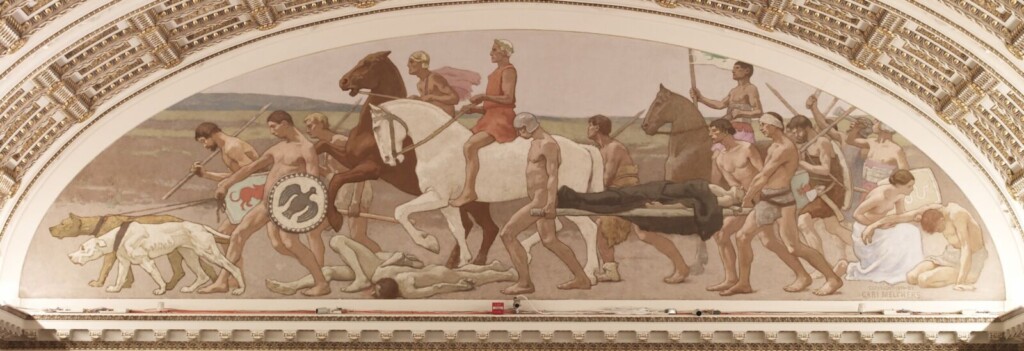
You are standing in a supermarket in 2010, somewhere in the English Midlands, and the man behind you in the queue is muttering about Polish workers, about benefits scroungers, about China stealing jobs, and his voice carries the unmistakable texture of genuine grievance — the kind that has been real for years but has only recently been handed a target.
What happened between 2008 and that supermarket queue was not spontaneous. The financial system had imploded under the weight of its own speculative architecture — mortgage-backed securities, collateralized debt obligations, leverage ratios that would have seemed delusional to any previous generation of bankers — and the institutions responsible were not merely rescued but insulated from the political consequences of their failure. The bailouts in the United States alone exceeded seven hundred billion dollars through TARP, supplemented by Federal Reserve interventions that brought the total exposure to several trillion. The people who designed the instruments that failed were, with rare exceptions, not prosecuted, not significantly penalized, and in many cases continued to collect bonuses while unemployment in countries like Spain climbed past twenty percent. The question that should have followed — who built this, who benefited, who was protected — was answered with a redirection so comprehensive that it functioned almost as a magic trick performed in slow motion across an entire decade.
David Harvey, writing in The Enigma of Capital in 2010, argued that capitalism does not resolve its crises but moves them — displacing contradictions across space, time, and social category rather than eliminating their underlying causes. Crisis management, on this reading, is never neutral. It is always a political act that determines which populations absorb the damage and which are shielded from it. The austerity programs that swept through Europe after 2008 were not economic necessities in any objective sense; they were choices — choices that protected bond markets and financial institutions while dismantling the social wage that had been won through decades of labor struggle. And because those choices required justification, the enemy category had to be populated quickly and convincingly with figures who could plausibly bear the blame for scarcity that was, in structural terms, manufactured from above.
The elasticity of this process is what makes it so difficult to name in real time. The enemy is not assigned once and held constant — it expands and contracts in direct proportion to elite vulnerability. When the banking sector needed cover, the target expanded to absorb immigrants, welfare recipients, public sector workers, and eventually entire debtor nations rendered as cautionary tales of indolence — Greece was not described as a country whose sovereign debt crisis was partly engineered by Goldman Sachs’s currency swap arrangements beginning in 2001, but as a civilization that had lived beyond its means and deserved its punishment. The moral vocabulary of responsibility was surgically transferred from institutions to populations, from financial engineering to cultural character.
What this elasticity reveals is that the enemy figure serves a load-bearing function in the architecture of elite legitimacy — it must be flexible enough to accommodate new crises without ever pointing back at the structural conditions that produce them. The category stretches to include whoever is most available and least defended at the moment of maximum political pressure, which is why the same rhetorical machinery that targeted welfare recipients in 2010 could pivot to target tech oligarchs in 2020 and then pivot again without fully abandoning the earlier target. The enemy is never retired — it is layered, archived, and reactivated as needed, which means that the populations once scapegoated do not escape their designation when the immediate crisis passes; they remain in suspension, available for recall, their assigned guilt never formally revoked but simply deprioritized until the next moment of elite exposure makes their resurrection useful again.
🕵️ The Architecture of the Enemy: Power, Control & Consensus
Every system of domination needs a target — a face, a group, a threat that justifies surveillance, exclusion, and obedience. These articles explore the mechanisms by which power elites construct, sustain, and deploy the figure of the public enemy across history, media, and psychology.
Bernays’s Propaganda: Analysis
Edward Bernays, the father of modern propaganda, demonstrated with chilling precision how public opinion can be engineered rather than merely influenced. His techniques — borrowed from psychology and applied to mass persuasion — laid the groundwork for the manufactured enemy as a political tool. Reading Bernays today is to understand the invisible architecture behind every moral panic and every designated threat.
GO TO THE SELECTION: Bernays’s Propaganda: Analysis
Banal Evil and Radical Evil: Kant and Arendt
Hannah Arendt‘s distinction between banal and radical evil reveals how ordinary institutional logic can produce extraordinary violence against designated enemies. The bureaucratic normalization of exclusion allows power elites to manufacture culprits without visible malice, embedding persecution within administrative routine. This analysis remains essential for decoding how the ‘public enemy’ is constructed not through hatred alone, but through structural indifference.
GO TO THE SELECTION: Banal Evil and Radical Evil: Kant and Arendt
Herbert Marcuse and Mass Culture
Herbert Marcuse diagnosed modern mass culture as a sophisticated apparatus for neutralizing dissent and producing passive consensus. By absorbing opposition into entertainment and spectacle, the system transforms potential critics into complicit consumers — and redirects social anxiety toward scapegoats chosen by the dominant order. His thought illuminates how the manufacture of the public enemy serves as a pressure valve for systemic contradictions.
GO TO THE SELECTION: Herbert Marcuse and Mass Culture
The roots of social prejudice and the mechanisms of exclusion
The roots of social prejudice are never spontaneous — they are cultivated, selected, and amplified by those who benefit from social division. This article traces how mechanisms of exclusion operate beneath the surface of everyday culture, shaping perception of who belongs and who threatens. Understanding these roots is the first step toward recognizing when fear of the ‘other’ is manufactured rather than genuinely felt.
GO TO THE SELECTION: The roots of social prejudice and the mechanisms of exclusion
Discover the Cinema That Power Would Rather You Not See
On Indiecinema you’ll find independent films that dare to question who names the enemy and why — stories told outside the logic of the mainstream, where the real mechanisms of control become visible. Explore our streaming catalog and let cinema become your most lucid instrument of critical thought.
👉 EXPLORE THE CATALOG: Watch Indie Films in Streaming
A vision curated by a filmmaker, not an algorithm
In this video I explain our vision