
The Boy from the Border
You arrive and something in the atmosphere changes before anyone has spoken a word. The buildings are older than anything your village has produced in three centuries of living. The other students move through the courtyards with a loose, unhurried authority, as though the stone itself recognizes them. You carry your accent like a wound you haven’t yet learned to hide, and when you open your mouth in a tutorial room, you watch a subtle recalibration happen in the faces across from you — not hostility exactly, but a kind of surprised reassessment, the way people look when an object turns out to be in the wrong category. The language you speak is technically the same language they speak. But it isn’t. You know this the moment someone laughs at a joke you didn’t understand was being made.

This is not metaphor. This is what the border feels like when you cross it carrying everything the wrong side gave you.
Raymond Henry Williams was born in 1921 in Pandy, a village on the Welsh-English border in Monmouthshire, the son of a railway signalman. His father, Harry Williams, was a man of Labour politics and quiet intellectual seriousness, a figure who would haunt Raymond’s writing for the rest of his life — not as nostalgia but as evidence, as proof that the working class contained forms of dignity and critical thought that the dominant culture systematically refused to recognize. The border was not incidental to Williams’s formation. It was constitutive of it. He grew up in a place that was neither fully Welsh nor fully English, a geography of in-betweenness that sharpened his eye for the way cultures draw lines and then pretend those lines are natural.
When he arrived at Trinity College, Cambridge in 1939, he was eighteen years old and carrying a scholarship. He was also carrying Pandy. The two things were not reconcilable, at least not in any way the institution was prepared to offer him. Cambridge in the late thirties was an environment of extraordinary intellectual ferment — Wittgenstein was still there, Leavis was shaping a generation’s sense of what literature was for — but it was also a place structured by inherited advantage in ways so deep they had become invisible to those who benefited from them. Pierre Bourdieu would later give this a name, theorizing in Distinction (1979) and in The Logic of Practice (1980) the concept of cultural capital — the accumulated habits, tastes, and linguistic ease that middle and upper-class children absorb before they ever enter a classroom, and which they then spend their educational careers having officially validated. Williams didn’t have Bourdieu’s vocabulary yet. He had something harder and more immediate: the daily experience of being its subject.
What Cambridge gave Williams, and what it cost him, is not a simple ledger. He read voraciously, was formed by the English Marxist tradition that was electrifying intellectual life in those years, and began developing the analytical habits that would eventually produce some of the most consequential cultural criticism of the twentieth century. But the institution also required a certain performance, a leaving-behind, that he refused to complete. He completed the first part of his degree before the war interrupted everything, and the interruption was not only military. It was also, as he would later describe it, a clarification — a period in which the abstractions of university life collided with the concrete brutality of historical reality, and certain kinds of pretension became impossible to sustain.
The fault line was already there before he enrolled. It ran through him rather than around him, the fracture between a world that had produced him and a world that was prepared to educate him only if he agreed, at some fundamental level, to disown the first. That agreement he never signed.
Trench

Thriller, Mystery, by Serge Turgeon, Italy, 2023.
In Venice, an art historian realizes that her brilliant mind will not be enough to solve the mystery surrounding the disappearance of an unknown woman. In addition to regaining trust in her intuition and her heart, she will need the help of a series of colorful characters from her community.
The idea behind Trench is to tell, through a detective story, the journey of an intellectual woman who suffered while growing up in a working-class district of Venice, where she never felt truly valued. In order to solve a mystery, she must face danger and rely on the help of the “non-intellectual” members of her community, rediscovering along the way her resourcefulness, her Venetian identity, and her true self.
LANGUAGE: Italian
SUBTITLES: English, Spanish, French, German, Portuguese
What Culture Actually Means to Those Who Never Owned It
You walk into a room and you know within seconds. Not from anything said, not from any gesture directed at you. You know from the quality of the silence, from the way certain people hold their wine glasses, from references dropped like breadcrumbs you were never taught to follow. You know because your body knows before your mind catches up, and the knowledge is not neutral. It carries the specific weight of someone who grew up understanding that culture was something other people had, something housed in institutions and inherited through bloodlines you were not part of. The calculation happens faster than thought. You are already measuring the distance between where you stand and where you are supposed to stand.
Raymond Williams spent his entire intellectual life refusing to accept that this distance was natural. Born in 1921 in the Welsh border village of Pandy to a working-class family, he carried that bodily knowledge with him to Cambridge and then back out into the world, and what he made from it was not resentment but something more dangerous: a systematic dismantling of the very vocabulary used to keep people like him at a measured remove from what was called civilisation. Culture and Society, published in 1958, was the instrument of that dismantling. It traced the word culture through more than a century and a half of English thought, from Edmund Burke through Matthew Arnold to T.S. Eliot, and it showed how the concept had been quietly kidnapped. It had been turned from a description of human collective making into a possession, a standard, a property held by the few against the many.
Arnold’s famous formulation — culture as “the best that has been thought and said” — sounds generous until you ask who decides what counts as best, and by what authority, and whose thinking and saying simply does not register on that scale. Williams asked precisely this. He understood that every time culture was defined as a set of objects, a canon, a refined sensibility achieved through education and exposure, it simultaneously defined a vast population as culturally deficient. Not different. Deficient. The word itself became a mechanism of exclusion disguised as an aspiration.
What Williams proposed instead was precise enough to be genuinely unsettling to those who had benefited from the old definition. Culture, he argued, is a whole way of life. Not the achievements extracted from a way of life and displayed in galleries or syllabi, but the living texture of how people organise meaning, how they work and love and mourn, how they build solidarity under pressure and pass knowledge across generations without it ever appearing in a curriculum. This was not a sentimental elevation of the folk. It was a structural argument: that the worker who never reads Matthew Arnold is not culturally empty but culturally full, operating within a dense and coherent set of meanings that the dominant definition renders invisible precisely because making it invisible serves a function.
Pierre Bourdieu would later map this terrain with sociological precision in Distinction, published in 1979, showing how cultural capital operates as a currency that reproduces class advantage across generations, how the ease with which someone navigates a concert hall or discusses a certain kind of literature is not evidence of superior sensibility but of prior investment, of a childhood structured to produce exactly that ease. But Williams had already made the devastating move two decades earlier, from the inside, without the apparatus of French sociology. He had made it as someone who felt it in the room before he had language for it.
That is the particular authority of his argument. It does not arrive from a position of detached analysis. It arrives from the body of someone who learned that the word culture had been turned into a door, and that the door had a lock, and that the lock had been designed to look like a test of merit.

The Long Revolution Nobody Told You About
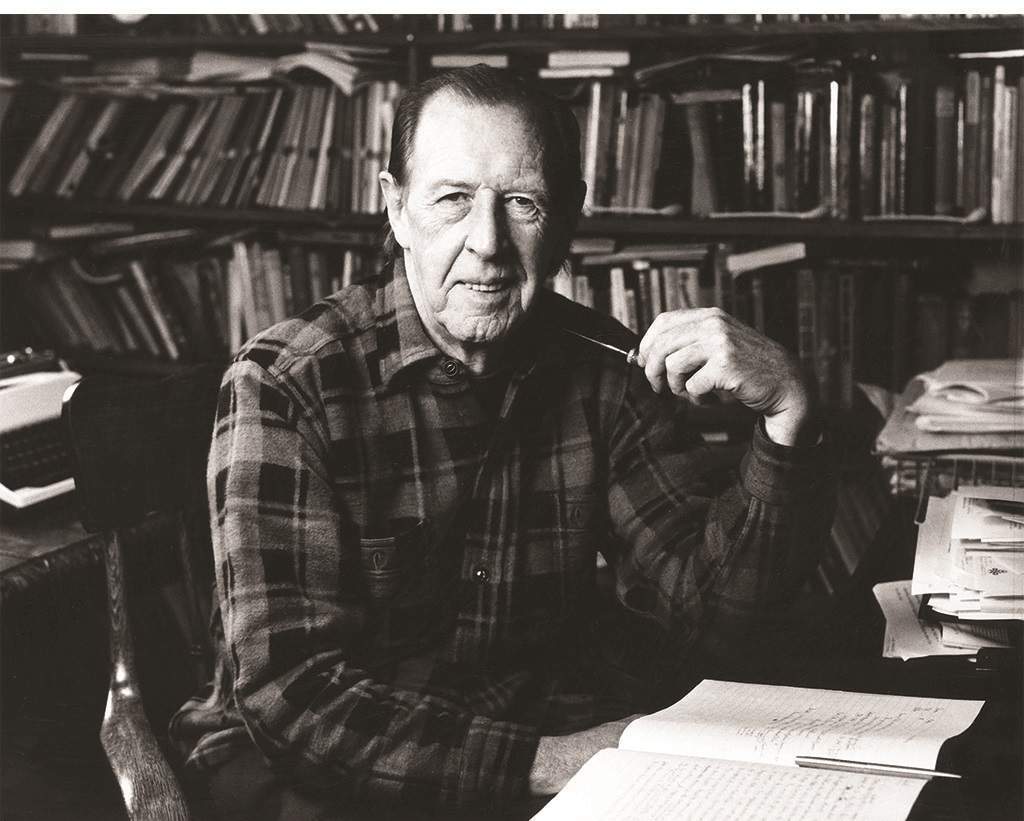
You are standing at the edge of a car park that used to be something else. You can tell by the way the older men avoid looking at it directly, the way they angle their bodies slightly sideways when they pass, as if the concrete itself emits a frequency only they can hear. Your father walked through iron gates here every morning for thirty-one years. The gates are gone. The building is gone. The particular smell of hot metal and oil and collective fatigue is gone, and what replaced it is not simply a different building but a different grammar — a set of spatial and social arrangements that make his entire vocabulary of life not wrong exactly, but untranslatable. He knows how to speak the old language fluently. Nobody speaks it anymore.
This is what Raymond Williams meant when he argued, with patient and devastating precision, that revolution is almost never the event we have been trained to recognize as revolution. Not the barricade, not the decree, not the charismatic figure seizing the apparatus of state. The real revolutions are the ones that happen in the texture of daily existence, in the way children are taught to read, in what counts as a legitimate feeling, in whose stories get told and whose get silenced before they even form fully in the throat. The Long Revolution, published in 1961, is Williams’s attempt to think seriously about the fact that capitalist modernity had already performed one of the most comprehensive transformations in human history — the industrialization of England, the enclosure of common land, the systematic reorganization of labor, consciousness, and culture across several generations — and that most people living inside that transformation had no conceptual tools to recognize it as transformation at all, because the tools themselves were products of the same process.
Williams identified three interlocking dimensions of this long revolution: the democratic revolution, the industrial revolution, and what he called the cultural revolution — the expansion of literacy, the growth of the press, the gradual and contested emergence of the idea that ordinary people’s inner lives were legitimate subjects of representation. By 1961 he was already tracking these dimensions across two centuries, and what he found was not a story of progress exactly, but a story of permanent contest, in which every expansion of literacy or democratic participation carried within it new mechanisms for containing and redirecting the energies it released. Antonio Gramsci had described something adjacent to this in his prison notebooks, written between 1929 and 1935, in his analysis of hegemony — the way dominant cultures maintain themselves not through brute force but through the slow colonization of common sense, the naturalization of hierarchies until they feel like weather rather than policy. Williams read Gramsci carefully, and what he added was the English empiricist’s insistence on the lived texture of that colonization, on what it actually feels like from inside.
What your father lost when the factory closed was not only income, though he lost that too. He lost a structure of feeling — Williams’s own phrase, one of his most enduring conceptual contributions — a whole organized mesh of values, relationships, habits of attention and expectation that had formed him as a particular kind of person capable of particular kinds of solidarity. Williams introduced the concept in The Long Revolution to describe something between ideology and lived experience, the affective residue of a social formation, the way a specific historical moment produces not just ideas but textures of consciousness, qualities of perception, emotional vocabularies that feel natural precisely because they are so thoroughly embedded in material practice. When the material practice disappears, the feeling does not simply migrate. It becomes stranded, orphaned, available only as nostalgia or grief, which is to say it becomes politically legible only as sentiment, which is to say it becomes dismissible.
That is one of the more efficient mechanisms the long revolution has ever developed.
Structures of Feeling and the Things You Cannot Quite Name
You have stood in a street you grew up in and felt something wrong without being able to say what. The buildings are the same, or nearly. The faces have changed, but faces always change. There is something in the air, in the pace of people walking, in the way the shop fronts have been redesigned to look cheerful, that tells you a story is being closed before you agreed to finish it. You cannot file a complaint about this. There is no language yet for what you are losing, because the dominant vocabulary around you insists on calling it improvement.
Raymond Williams called this exact sensation a structure of feeling, and the phrase is deceptively quiet for how much weight it carries. It is not quite an ideology, because ideology is what has already hardened into doctrine, into policy, into the words powerful people use with confidence at press conferences. A structure of feeling is what comes before that hardening. It is the lived experience of an era in the process of becoming, felt in the body and in the syntax of ordinary speech before any theorist has named it, before any institution has claimed it. Williams introduced the concept formally in Preface to Film in 1954, developed it through The Long Revolution in 1961, and refined it again in Marxism and Literature in 1977, that late and rigorous work where he distinguished between dominant, residual, and emergent cultural formations with a precision that never sacrificed the human tremor underneath the categories.
The emergent is what matters most here. Not the new as fashion, not novelty for its own sake, but the genuinely new forms of feeling, relationship, and value that have not yet been absorbed or neutralized by the dominant culture. They are felt first. They surface in literature, in tone, in the kinds of silences that gather in certain conversations. Karl Mannheim had gestured toward something similar in his sociology of knowledge, and Antonio Gramsci had theorized the gaps within hegemony, but Williams was doing something neither quite managed: he was locating cultural change inside subjective experience, inside the texture of consciousness itself, without surrendering to individualism or mysticism.
Think of a man who returns to a house after years away and finds his father sitting in the same chair, with the same newspaper held at the same angle, and yet something has irreversibly shifted between them — not in what is said, but in the register of everything unsaid, in the particular quality of distance that neither will name because there is no approved word for the generation that moved and the generation that stayed. That scene belongs to the marrow of Williams’s thinking, because it was also his own life. Born in 1921 in Pandy, a Welsh border village, the son of a railway signalman, he crossed into Cambridge and into an entirely different grammar of self-presentation, one that required him to speak as though the crossing had never happened. His prose carries the friction of that impossible position. Read a sentence of his closely and you can sometimes feel two idioms pulling against each other, the careful analytical English of the academy and something older, slower, more rooted, that refuses to be fully translated.
E.P. Thompson, who was both ally and occasional adversary, once observed that Williams always seemed to be thinking in two languages simultaneously. That doubleness was not a weakness. It was the structural condition that allowed him to perceive what people living entirely inside one cultural formation could not: that the official story of progress, consensus, and shared values was being written over other stories that were still alive, still felt, still exerting pressure on the present from underneath. The structure of feeling is his name for that pressure. The sensation you have in a street you no longer quite recognize is not nostalgia. It is evidence.
Marxism, Language, and the Lie of Neutral Words
There is a word you use every day without thinking about it. “Individual.” You say it as though it names something obvious, something prior to history, something that would exist even if no society had ever formed around it. Williams spent years tracing that word backward through centuries of usage and discovered that before the seventeenth century it meant almost the opposite of what it means now — it referred to the inseparable, the indivisible unit within a larger whole, the member who could not be extracted from the body without destroying both. The autonomous, self-contained individual who stands over against society, who precedes it, who must be protected from it — that figure is not a discovery. It is an invention. And the word that carries him has been quietly reloaded.
This is the argument Williams sharpened across two books published within a year of each other in the mid-1970s, one an act of theoretical warfare, the other something closer to forensic archaeology. In Marxism and Literature, published in 1977, he dismantled the assumption — shared, he argued, by orthodox Marxism and liberal thought alike — that language is a medium, a transparent vessel through which pre-formed meanings travel. The metaphor of the vessel is itself the problem. It implies that thought exists somewhere upstream of its expression, that words are merely the clothing ideas wear when they go out in public. Williams followed Valentin Voloshinov, whose Marxism and the Philosophy of Language had argued in 1929, from inside a Soviet context that would soon destroy him, that the sign is not neutral territory but a social arena — every word is the site where different social accents meet and struggle. The word does not carry meaning the way a pipe carries water. It generates meaning, and that generation is always political.
Against Saussure’s elegant, sealed system — where language is a structure of differences, self-contained and synchronic, indifferent to history and power — Williams insisted on what he called the living language, the language in use, in time, by people whose positions in the social order are not equivalent. When a ruling class and a subordinate class reach for the same word, they do not pick up the same thing. “Culture” means something different to the man who decides which plays receive public funding and to the woman who was told her community’s forms of expression do not qualify. The word appears shared. The struggle inside it is invisible until you press.
Keywords, published the year before, in 1976, is the pressing. Seventy-six words — culture, nature, family, ordinary, educated, progressive, hegemony, aesthetic, democracy — each one unfolded across pages of historical usage, each one shown to carry sediment from previous battles that have quietly hardened into apparent common sense. It is not a dictionary. A dictionary tells you what a word means. Keywords tells you what a word has been made to mean, by whom, against whom, and at what cost to the meanings that were displaced. Williams wrote in the introduction that he began keeping notes for it while returning from the war in 1945 and feeling, in conversation after conversation, that he and the people around him were not speaking the same language even when they used the same words. That gap was not a failure of communication. It was a record of social division.
The radicalism of this linguistics is not merely academic. It explains why certain arguments cannot be made in the terms available — why, as Williams noted drawing on Gramsci, hegemony works not through direct coercion but through the saturation of the imaginable. When the vocabulary of an era has been shaped by particular interests over long periods of time, resistance requires first the laborious, unglamorous work of understanding what has been done to the words. Before you can say something new, you have to understand why the old words keep pulling you back.
A vision curated by a filmmaker, not an algorithm
In this video I explain our vision
Television, Drama, and the Invisible Architecture of Attention

You sit down at two in the afternoon with the vague intention of watching something for an hour. By the time the light outside has changed and the room has gone dim without you noticing, it is past six. You did not decide to stay. You never decided anything. One thing simply continued into the next, and the next carried its own momentum, and somewhere in that seamless succession the afternoon was consumed without ever being chosen.
Raymond Williams named this experience before most people had the vocabulary to feel it as a problem. In Television: Technology and Cultural Form, published in 1974, he introduced the concept he called flow — and what he meant by it was not merely that television programs follow one another, but that the entire broadcast sequence is engineered as a single, unbroken experience in which the distinctions between program, advertisement, trailer, and transition are deliberately eroded. The viewer does not receive discrete objects of attention. The viewer is carried. The difference is not trivial. One implies agency; the other describes its quiet removal.
Williams arrived at this insight, characteristically, through direct observation rather than theoretical abstraction. Watching American television during a visit to Miami in the early 1970s, he was struck by something that had no adequate name in existing media criticism — the way the stream of content seemed to anticipate and neutralize any impulse toward disengagement. Every ending implied a beginning. Every pause was filled before it could become a silence. He wrote that what was offered was not a program but a planned flow, and that this flow was the defining cultural form of broadcasting itself, not a feature of it but its fundamental structure.
This is a more radical claim than it first appears. It means that the unit of television is not the individual program — not the episode, the documentary, the news bulletin — but the total sequence in which all of these are embedded. To analyze any single piece of television content in isolation is, on Williams’s account, to misunderstand the medium at its most essential level, in roughly the same way that analyzing a single note tells you nothing about the particular disorientation of a piece of music designed to make you lose track of time.
There is a scene — a man sits in a hotel room, the television on, not exactly watching but not not-watching either, his attention suspended in that middle state where the screen provides just enough stimulation to prevent any other thought from forming but not enough to constitute genuine engagement. He does not know what he is watching. He knows he has been there for some time. The room is the same. He is the same. And yet something has passed through him that he cannot account for.
What has passed through him is flow. And what flow manufactures, Williams understood, is a particular relationship between the viewer and time — one in which time is experienced as duration without decision, as presence without accumulation. The philosopher Henri Bergson distinguished between clock time and lived time, between the measurable sequence of moments and the felt density of experience. Flow operates precisely in the gap between these two registers. Measured time passes at its ordinary rate. Lived time is suspended, thinned out, made almost weightless.
Stuart Hall, writing in the same decade, would frame related concerns through his encoding-decoding model, recognizing that media messages are not simply transmitted but actively constructed at both ends of the exchange — and that what looks like passive reception often conceals an elaborate set of structural pressures on interpretation. Williams and Hall were circling the same problem from different directions: the question of what it means to receive culture rather than encounter it.
What Williams saw in 1974, watching the Florida channels flicker through their seamless succession, was not a technological curiosity. It was the emerging grammar of an attention that had learned to consent to its own direction without ever quite realizing it had stopped choosing.
The Country and the City: Pastoral as Political Narcotic
There is a particular kind of English sentence that makes the land sound like it has always been peaceful. You have read it a hundred times without noticing its violence. The meadows stretch, the hedgerows bloom, the village sleeps in its ancient arrangement as though the whole scene had grown organically from the earth itself, untouched by human struggle, unmarked by human cost. It is a sentence that performs amnesia so gracefully that you mistake the forgetting for feeling.
Williams spent years learning to read the violence inside that sentence. What he discovered in 1973, when The Country and the City was published, was not simply that pastoral literature was naive or sentimental. It was something far more precise and far more damning: that the English countryside as a literary and cultural ideal had been constructed through a systematic erasure of the people who built it. The laborers who drained the fens, the families evicted during enclosure, the women bent double in the fields — they do not appear in the tradition Williams was dissecting. Or rather, they appear only as background, as texture, as the picturesque detail that gives the gentleman-poet something to stand in front of while he contemplates the eternal.
He traced this through centuries of English writing, from Ben Jonson‘s country house poems in the early seventeenth century through to the Georgian pastoral mode that persisted well into his own lifetime. The pattern he found was startlingly consistent. In poem after poem, estate after estate as rendered in verse and prose, nature is bountiful and serene precisely because the human labor that produced that bounty has been made invisible. The great house sits in its park. The harvest is plentiful. And nobody in the poem seems to have done anything to bring this about. The land gives itself. The order is natural. The hierarchy is simply the shape of things.
What Williams was anatomizing here was nostalgia operating as ideology — not a private emotion but a political instrument. The sociologist Fred Davis, writing in the same decade, would describe nostalgia as a response to discontinuity, a way of stabilizing identity against the shock of change. But Williams understood something that pure psychological analysis could not quite reach: that collective nostalgia, when it becomes attached to a landscape and its imagined past, does not merely comfort the individual who feels it. It actively justifies the social arrangements that produced the suffering being forgotten. When the English ruling class in the eighteenth and nineteenth centuries looked at their enclosed estates and felt the deep satisfaction of continuity, they were not simply enjoying their property. They were constructing a version of history in which their property had always been the natural order of things, and in which the dispossession of the rural poor — hundreds of thousands of people, across E.P. Thompson’s entire “making” period of English working-class life — was simply the landscape settling into its proper form.
The enclosures were not ancient and inevitable. Between roughly 1750 and 1850, approximately six million acres of common land in England were privatized through Parliamentary acts, transforming shared agricultural commons into private estates. People who had farmed, grazed animals, and gathered fuel on those lands for generations were made trespassers overnight. The pastoral poem was, among other things, a way of not writing that sentence.
You encounter this structure still, though the vocabulary has shifted. The contemporary version wears organic farmers’ markets and heritage seed catalogues and a certain aesthetic of unbleached linen. The land is once again imagined as a site of simplicity and restoration, and once again the question of who labors in it, under what conditions, at what wages, is carefully outside the frame. The meadow is still beautiful. The sentence still performs its forgetting with extraordinary grace, and you still read it, most of the time, without hearing the thing it has chosen not to say.
Border Country, Again and Always
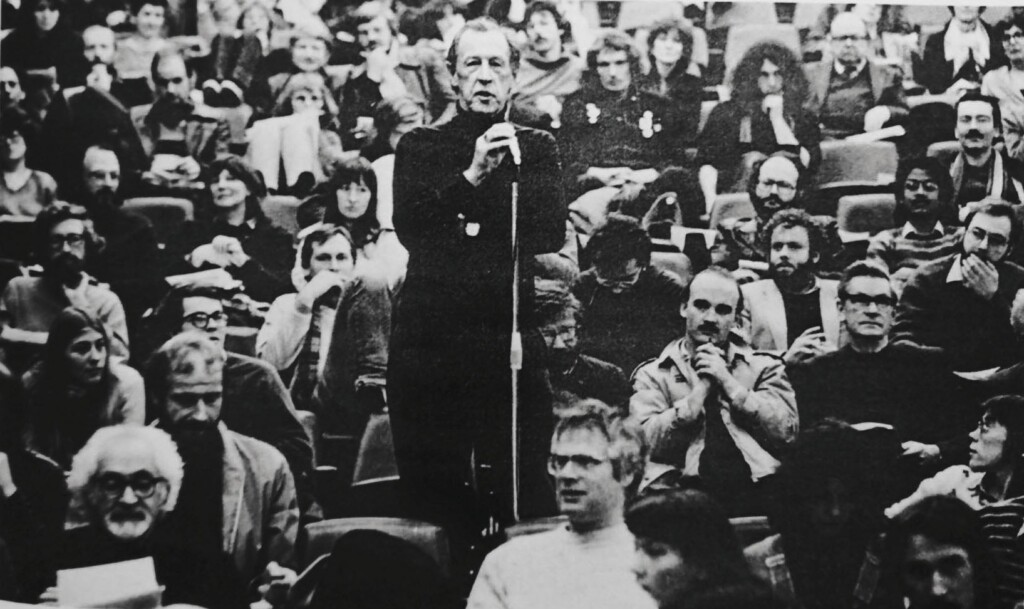
There is a train journey that never quite ends. A man sits moving through landscape, watching fields give way to valleys he recognizes before he can name them, feeling something tighten in his chest that is not grief yet but is already its shadow. He is returning to his father, who is dying, and he is returning also to himself — the earlier self who left, the one who could not stay without suffocating, the one whose leaving was a form of survival and also, inescapably, a form of betrayal. Both things are true simultaneously, and neither cancels the other, and this is what makes the journey so unbearable and so precisely honest.
This is the emotional architecture of Border Country, the novel Williams published in 1960 after years of revision, a book he could not stop writing because he could not stop living its central problem. Matthew Price is a university lecturer in London, a man who has crossed the class frontier through education, and who must now return to the Welsh village and the railway signalman father he carries inside him like a second skeleton. The novel refuses to resolve the tension between those two lives. It insists, with a stubbornness that feels almost ethical, on keeping the wound open.
What Williams understood, in ways that his theoretical writing could approach but never quite touch, is that the language of intellectual formation is itself a barrier. When you acquire the vocabulary of cultural analysis, of structural critique, of historical materialism, you gain a tool for understanding the world your parents inhabited — and you simultaneously lose the ability to speak to them inside that world without translation. The knowledge that was supposed to be liberation arrives as a new form of exile. This is not a paradox Williams observed from a distance. It was the tissue of his own daily life. He had grown up in Pandy, on the Welsh border, the son of a railway worker who was also a man of intense local dignity, and he had gone to Cambridge, and he had never fully recovered from either experience.
Raymond Williams — born 1921, died 1988 — spent roughly four decades producing work that changed how literary studies understood culture, politics, and history. Culture and Society appeared in 1958, The Long Revolution in 1961, Marxism and Literature in 1977, among dozens of other volumes. He helped build the very foundations of cultural materialism as a discipline. But the conceptual architecture of all those books rests on an emotional truth that only the novel could carry: that to think seriously about class is to think about loss, and that the loss is never abstract, because it always has a face.
Georges Perec wrote that to question the habitual requires a kind of deliberate strangeness, an effort to defamiliarize what has been rendered invisible by repetition. Williams achieved something harder — he defamiliarized not the external world but himself, turning the act of self-examination into a political category. The border in Border Country is not merely geographic or sociological. It is the permanent condition of anyone who has moved between worlds and discovered that movement leaves both worlds slightly unreal.
What makes Williams so permanently necessary, and so permanently uncomfortable, is that he refused the consolations available on either side. He would not romanticize working-class culture into timeless authenticity, nor would he accept the professional middle class as a neutral vantage point from which to view it. He remained on the border not because he lacked the courage to choose, but because the border was where reality actually was — contradictory, unresolved, asking questions that no single tradition had the vocabulary to answer. The man on the train, returning to the dying father, knows that the journey home is also the journey toward something he can no longer fully enter, and that this knowing is not wisdom but simply the price of the distance he has traveled.
🧭 Culture, Society, and the Long Revolution
Raymond Williams devoted his life to understanding how culture shapes society and how ordinary people participate in its transformation. These related articles explore the intellectual traditions, thinkers, and themes that orbit Williams’s legacy — from Marxist theory to the politics of art and memory.
Antonio Gramsci: vita e pensiero politico
Antonio Gramsci, like Williams, approached culture as a battlefield where hegemony is contested and consent manufactured. His notion of the organic intellectual deeply influenced Williams’s own conception of cultural politics and the ‘long revolution.’ Reading Gramsci alongside Williams illuminates how two thinkers from peripheral backgrounds reimagined the relationship between intellectual life and social change.
GO TO THE SELECTION: Antonio Gramsci: vita e pensiero politico
Karl Marx and Alienation: Economic and Philosophical Manuscripts
Karl Marx’s concept of alienation, developed in his Economic and Philosophical Manuscripts, provided Williams with a foundational lens through which to critique capitalist culture. Williams extended Marx’s analysis beyond the factory floor, arguing that alienation permeates language, media, and everyday life. This article explores the philosophical roots of a concept Williams would transform into a tool of cultural analysis.
GO TO THE SELECTION: Karl Marx and Alienation: Economic and Philosophical Manuscripts
Pierre Bourdieu and the Artistic Field
Pierre Bourdieu‘s theory of the artistic field shares significant common ground with Williams’s cultural materialism, both insisting that aesthetic judgments are never innocent of social power. Bourdieu’s mapping of taste, distinction, and capital parallels Williams’s analysis of selective traditions and the reproduction of dominant culture. Together they form a powerful dyad for understanding how culture both reflects and reinforces social hierarchy.
GO TO THE SELECTION: Pierre Bourdieu and the Artistic Field
Herbert Marcuse and Art: The Aesthetic Dimension
Herbert Marcuse‘s work on art as a dimension of liberation resonates deeply with Williams’s belief in the transformative potential of culture and creativity. Both thinkers challenged the idea that art could be neatly separated from politics or reduced to entertainment. This article traces Marcuse’s aesthetic theory and its enduring dialogue with the cultural criticism Williams championed throughout his career.
GO TO THE SELECTION: Herbert Marcuse and Art: The Aesthetic Dimension
Discover Cinema That Thinks and Challenges
If Raymond Williams taught us that culture is ordinary and that art belongs to everyone, then independent cinema is where that truth comes alive most vividly. On Indiecinema streaming you will find films that question, provoke, and illuminate the very ideas explored in these pages — come and discover them.
👉 EXPLORE THE CATALOG: Watch Indie Films in Streaming
A vision curated by a filmmaker, not an algorithm
In this video I explain our vision

