
The Architecture of Disconnection
You are mid-sentence when you realize you have not actually been present for the last forty minutes. The phone is in your hand. There are three open tabs, a half-read article about a war, a notification about a birthday you forgot, an advertisement that knows something about you that you have not consciously admitted to yourself. Somewhere behind all of it, there was supposed to be a life you were living.

This is not a crisis. That is precisely the problem. The numbness does not arrive as catastrophe — it arrives as weather, as the ordinary atmosphere of a Tuesday, as the mild and persistent sensation of being distributed across too many surfaces to fully inhabit any of them. You are not suffering in any way that would justify the word. You are simply elsewhere, perpetually and efficiently elsewhere, present at the coordinates of your own body while your attention has been sold, rented, and subdivided into fractions too small to feel.
Georg Simmel saw the architecture of this condition forming over a century before the smartphone made it total. Writing in 1903, in an essay that most urban planners and sociologists have praised without absorbing, he described what the modern metropolis demands from its inhabitants: a radical recalibration of the nervous system. The sheer density of stimulation in city life — the strangers, the advertisements, the noise, the pace, the obligation to process without pausing — forces the mind to protect itself by withdrawing feeling from perception. What Simmel called the blasé attitude was not laziness or cynicism. It was a biological adaptation. The person who cannot grow numb to the city’s volume will be destroyed by it.
The adaptation, however, does not stay contained. A defense mechanism installed to protect the self from overstimulation gradually becomes the texture of the self. What began as a shield calcifies into a character. The person who learned to feel less in order to survive the crowd eventually cannot locate the switch that turns feeling back on when the crowd dissolves. They sit alone in a quiet room and discover that the quiet does not restore them because restoration requires a kind of permeability they have spent years engineering out of themselves.
Simmel published that essay when Berlin had just crossed two million inhabitants. The cognitive demand he was diagnosing was produced by a city of trams and market stalls and newspaper vendors. Scale that forward to an information environment processing approximately 2.5 quintillion bytes of data generated daily, to a social architecture in which a single individual may receive more interpersonal signals in one hour of scrolling than a nineteenth-century farmer received in a month, and the blasé attitude is no longer a metropolitan quirk but the universal precondition for functioning. Numbness is not a symptom of modernity. It is the operating system.
What makes this worth examining rather than simply lamenting is that the condition disguises itself as its opposite. The overstimulated person does not feel empty — they feel busy, engaged, needed, informed. The feeds deliver the sensation of participation. The metrics deliver the sensation of mattering. The algorithmic environment is specifically engineered to produce the feeling of connection while systematically replacing its substance with a simulacrum fine-tuned enough to satisfy the nervous system without nourishing it. You can spend an entire day in vigorous communication with other human beings and arrive at midnight having made no contact with any of them — and the data of that day will show nothing wrong.
Alienation, when Marx used the word in his 1844 manuscripts, described a structural theft: the worker estranged from the product of their labor, from the act of production, from other workers, and finally from their own species-being. What the twenty-first century has produced is an alienation that no longer requires a factory floor or an exploiting class — it has been internalized so completely that the estrangement feels like personality.
Ancestral
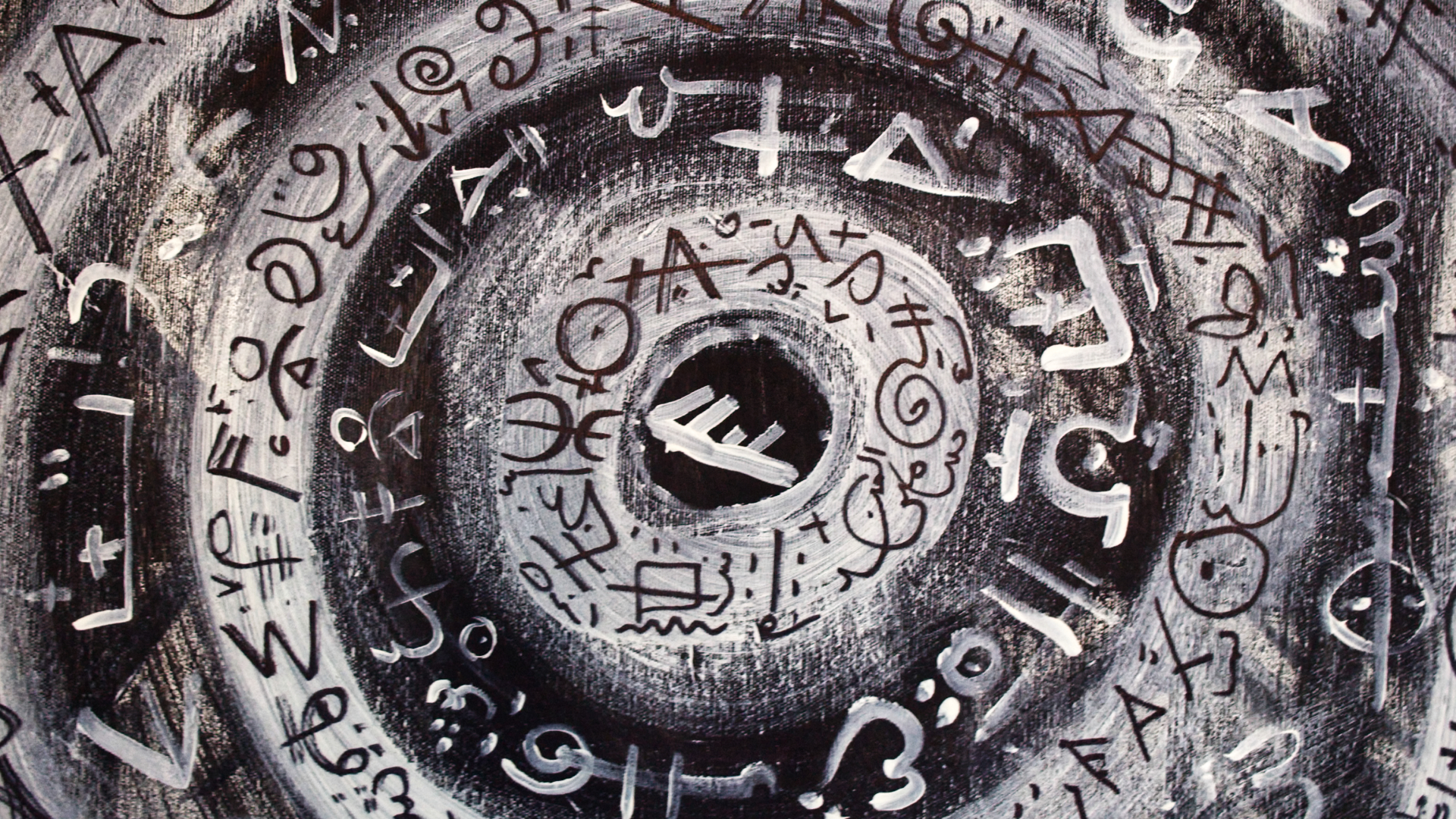
Documentary, by Lumar Brothers, Italy, 2023.
“Ancestral: Life and Art of Massinissa Askeur” is a documentary that explores the life and art of Algerian painter Massinissa Askeur. The film follows Askeur on his creative journey, showing his artistic process and his commitment to the preservation of Berber culture and tradition. Through interviews with Askeur, his family, friends and testimonies from people who knew him on a personal, professional and artistic level, the documentary tells the story of his past and his deep connection to his Berber roots. Askeur displays his art, from canvases to sculptures, which are inspired by the shapes and symbols of Berber culture, representing his search for a connection between the past and the present.
The documentary also explores the challenges Askeur faced throughout his life, including racial discrimination, poverty and the difficulty of making his art known outside of Algeria. However, despite these difficulties, Askeur continues to create and promote his art as a form of cultural resistance and celebration of his ancestral heritage. A vision far from art as a commercial product and very close, instead, to the exploration of the depths of one's own soul and the soul of the world. Massinissa's mission is to leave a testimony of his time to future generations.
LANGUAGE: Italian
SUBTITLES: English, Spanish, French, German, Portuguese
The Historical Manufacture of the Inner Void

You are sitting in a room that was designed to make you feel like you are never quite enough. You did not notice when you moved in. The walls went up slowly, over centuries, and by the time you were born they had already been painted in the colors of your mother tongue, your school timetable, your first experience of shame when you failed to produce something visible and countable from a day that felt, to you, full.
Max Weber saw the architectural blueprint. In 1905, tracing the genealogy of capitalism not through economics but through theology, he identified the moment when the Protestant Reformation fused salvation with labor, turning the inner life into an audit. Calvin’s doctrine of predestination created a subject who could never know with certainty whether they were among the elect, and who therefore had to produce, accumulate, and demonstrate disciplined industry as the closest available evidence of divine favor. The anxiety was irreducible by design. No amount of work could close the gap between the soul and its longed-for confirmation, because the confirmation was structurally withheld. What capitalism inherited from this theological architecture was not the content of the belief but the shape of the hunger: a restlessness permanently aimed at an approval that never fully arrives, a self that measures its worth in outputs and finds the measurement always slightly short.
What this produced, over four centuries, was not merely a work ethic but a new phenomenology of the interior. The self became the site of perpetual examination, a space of suspicion rather than habitation. Luther’s insistence on the individual’s direct relationship with God, unmediated by priestly intercession or communal ritual, was experienced as liberation, but it was also a radical isolation. The monk’s cell moved inside the chest. Every person became responsible for their own spiritual accounting, which meant that every person was also perpetually exposed to their own verdict, with no collective structure to absorb or distribute the weight of insufficiency. The community had once been a container. Now the container was the individual psyche, and it was asked to hold something too large for it.
Philippe Ariès spent decades reconstructing what was lost when that container shrank. His historical research into death and mourning in Western Europe, published as The Hour of Our Death in 1977, documented a long arc of privatization: the medieval “tame death,” faced collectively and publicly, embedded in communal ritual that gave grief a shared grammar, gave way by the nineteenth and twentieth centuries to the sequestered death, the concealed corpse, the grief that must not disturb the social surface too long or too visibly. The rituals that had once metabolized loss, giving it form, duration, and communal witness, were progressively dismantled. Death moved from the village square to the hospital room to the individual’s private burden of feeling, which was expected to resolve itself quietly and on schedule. Bereavement leave in most Western countries today runs between three and five days for an immediate family member. The bureaucratic clock measures grief in units that have no relation to the biological and psychological reality of what loss costs a human nervous system.
The inner void that so many people sense but struggle to name is not a personal failure of resilience or gratitude. It is the accurate perception of an absence: the absence of the structures that once held rupture, transition, and mortality in a frame larger than the individual. The Protestant soul was trained to look inward for both its wound and its cure, and modernity perfected that training without preserving any of the communal scaffolding that once made interiority bearable. What remains is a subject exquisitely sensitized to its own deficiency, stripped of the collective containers through which human cultures had, for millennia, made loss survivable rather than merely something to get through alone.

Ecology as Diagnosis, Not Metaphor
You are walking through a city that has everything — coffee on every corner, a device in your pocket that can summon almost any human being or any piece of information within seconds — and you feel, with a precision you cannot name, utterly marooned.
Felix Guattari published The Three Ecologies in 1989, the same year the Berlin Wall came down and the world began congratulating itself on having solved the large questions. His argument was not about trees or carbon. It was a diagnostic proposition: that there are three interlocking registers of ecological collapse happening simultaneously, and that treating any one of them in isolation is like treating a fever by cooling the thermometer. The environmental register — soil, air, water, nonhuman life — gets the headlines. The social register — the erosion of collective forms, mutual obligation, the slow dissolution of any space where people gather without a transactional purpose — gets occasional worried op-eds. The third register, subjectivity itself, almost never gets named as an ecological crisis at all, because we have no political language for the damage done to the inner architecture of a person by the systems they inhabit. Guattari called this third ecology mental ecology, and he meant something structurally rigorous by it: that the production of subjectivity — of desire, attention, the capacity to imagine oneself otherwise — is a material process, shaped by institutions, media flows, economic pressures, and collective rituals, just as a watershed is shaped by gradient and rainfall.
What the data since 2000 reveals is not a mystery. Across OECD countries, rates of major depressive disorder rose by approximately 18 percent between 2005 and 2015, a period of relative peace and unprecedented material wealth in historical terms. Loneliness — now measured with epidemiological seriousness after decades of being treated as a personal failure of social skill — affects an estimated one in four adults in Western Europe and North America. In the United Kingdom, the situation was considered severe enough that in 2018 a Minister for Loneliness was appointed, a bureaucratic gesture so revealing in its inadequacy that it functions almost as an accidental confession: we have built a world that requires a ministry to manage the void it generates. These are not numbers about sadness. They are readings of a structural rupture in the three registers Guattari identified, all three failing at once, each failure amplifying the others in a feedback loop that no antidepressant prescription and no wellness app was designed to interrupt.
The insistence on treating these figures as psychological — as problems of individual resilience, cognitive distortion, or neurochemical imbalance — performs a sleight of hand that serves the structures producing the crisis. When a river floods repeatedly, the responsible question is about the landscape, the upstream deforestation, the concrete channeling that stripped the basin of its capacity to absorb. The irresponsible question, the one that protects the developers and the logging companies, is whether the water is simply too anxious. The medicalization of social rupture is not a conspiracy; it is something more automatic and more durable than that. It is what happens when the only tools a society funds are individual tools, when the unit of analysis is always the person and never the arrangement of forces that the person is trying to survive.
Guattari understood that capitalism in its late form is not merely an economic system but a producer of a certain kind of inner life — abbreviated, competitive, terrified of dependency, severed from the slow rhythms that make meaning possible. The three ecologies collapse together because they are made of the same material: relation. Relation to land, relation to others, relation to the unfinished and unresolvable fact of being a self embedded in time.
The Sands

Science fiction, by Noah Paganotto, Argentina, 2022.
In an undetermined location on planet Earth, in an unknown time, Zoilo lives with his family in a wasteland surrounded by ruins. They live uprooted, without mothers, knowing that pregnancy for women is synonymous with death. For them there is only one collective routine; keep the fire alive. Only Zoilo escapes this logic, observing, intrigued, details that others do not see and therefore do not appreciate. Zoilo's personal search for answers will increase the differences with his relatives, increasingly revealing an empty world of interiority.
Avant-garde film that burns slowly in the first part and then reveals in the second the profound conflicts of a family prisoner of archaic beliefs. It is a dystopian and visionary work, with wonderful photography and images of rare power that allow us to grasp the depth of the story and its poetic potential. The faces of the actors, especially the protagonist boy, are perfect. The Sands metaphorically represents the world we live in: an alienated society, where what keeps us alive is demonized and blamed for death. In opposition to the fast pace of the typical mainstream film, The Sands is a meditative journey into the depths of images. The film was shot in natural environments in the city of Necochea, Buenos Aires province, Argentina.
LANGUAGE: Spanish
SUBTITLES: English, Spanish, French, German, Portuguese
The Colonization of Interiority

You are sitting in a waiting room and the magazine on the table in front of you is six months old and your phone is dead and thirty seconds pass and something in your chest begins to move in a way that feels indistinguishable from panic. Not boredom. Not mild discomfort. A physiological event, a small emergency of the nervous system, as though the self without stimulus has become structurally uninhabitable.
Bernard Stiegler spent the last two decades of his life arguing that this is not a metaphor. His concept of psychic individuation, borrowed and radicalized from Gilbert Simondon, holds that the self is not a given but a process — something that must be actively produced through engagement with what Stiegler called tertiary retentions, the externalized memory objects that civilization accumulates: books, rituals, monuments, songs. The catastrophe he diagnosed was not that these objects had multiplied but that they had been captured. When the systems organizing tertiary retention are governed exclusively by the attention economy, the raw material of individuation is no longer available to the individual. It has been pre-formatted, pre-felt, pre-reacted-to. The platform does not merely distract you from thinking; it thinks in your place, at the precise moment when thinking was about to begin.
What makes this different from older forms of distraction is the mechanism of substitution rather than interruption. A carnival, a tavern, a crowded market — these pulled attention outward but left the interior structure intact. You could return to yourself. The digital interface does something more surgical: it colonizes the precise neurological interval in which interiority forms. The neuroscientist Mary Helen Immordino-Yang, in research published across the 2010s, demonstrated that the brain’s default mode network — active during rest, self-reflection, and moral imagination — requires genuine unstructured time to consolidate experience into identity. Chronic interruption does not merely prevent this consolidation; it gradually raises the threshold of stimulation required to tolerate its absence. The waiting room is not a neutral space. It has become, for a growing portion of the population, a site of low-grade suffering.
There is a historical depth to this that makes the situation stranger than it first appears. Blaise Pascal wrote in the 1660s that all of humanity’s problems stem from the inability to sit quietly in a room alone. He meant it as a theological provocation — the restless soul fleeing from the confrontation with its own finitude. But Pascal’s restless nobleman still had to do the fleeing himself. He had to choose the hunt, the card game, the court intrigue. The contemporary subject does not choose distraction so much as inhabit a designed environment in which the alternative has been made structurally costly. This is the difference between a weakness and an architecture. Moral exhortation cannot reach what engineering has built.
The philosopher Byung-Chul Han, in his 2010 essay collection The Burnout Society, drew a distinction between the vita activa and what he called the vita contemplativa, arguing that advanced capitalist culture had declared the second not merely inferior but effectively illegitimate — a failure of productivity, a waste of monetizable attention. What he perhaps did not press far enough is that the elimination of contemplative time is not a cultural mood but a revenue model. Every second of genuine interiority is a second during which no behavioral data is being generated, no micro-decision is being nudged, no preference is being profiled. The empty mind is economically inert, and economic inertness in a system built on continuous extraction looks, from inside that system, like a problem to be solved.
The solution arrived in the form of convenience so total it became invisible as a choice.
What a New Ecology of the Soul Would Have to Destroy
You are sitting across from someone who is paid to listen, and the transaction feels almost indistinguishable from care. The room is calibrated for disclosure — soft light, neutral walls, the deliberate absence of judgment — and whatever you bring in gets processed, labeled, and returned to you as a problem with a name. Naming it, you are told, is the beginning of healing. What nobody mentions is that the naming also ends the inquiry. Once your suffering has a clinical address, it stops being a symptom of anything larger than you.
Eva Illouz mapped this operation with uncomfortable precision in Cold Intimacies, published in 2007, tracing the way emotional life in the twentieth century became the raw material of a new economic rationality. The therapeutic vocabulary that saturated Western culture after the 1950s did not simply describe inner experience — it restructured it, training people to locate the source of their distress inside their own psychological history, their attachment styles, their unresolved patterns. The political became biographical. What might have been collective outrage calcified into personal narrative. Capitalism did not need to suppress dissent when it could redirect it inward as self-work, and charge handsomely for the tools.
The problem is not that introspection is worthless. The problem is that a society organized around privatized suffering has a structural interest in keeping suffering private. The therapeutic model is not a conspiracy — it is something more durable than conspiracy, which is a set of incentives that reproduce themselves without coordination. When every form of pain can be traced to individual biography, there is no remainder left over to indict the arrangement. The clinic absorbs what the street corner might otherwise produce.
A genuine reorientation, then, would have to begin by breaking that absorption. Not by abolishing the interior life but by refusing the deal in which interiority becomes the only legitimate site of transformation. It would require forms of relation in which suffering is witnessed without being immediately therapeutized — without being rerouted into a protocol. This sounds obvious until you try to build it, at which point you discover how thoroughly the available models are haunted by what they were. The commune was also a site of coercion. The parish was also a site of surveillance. The village held you together and held you down simultaneously, and anyone who proposes returning to collectivity without accounting for this is selling nostalgia dressed as politics.
The question that does not resolve easily is whether any new form of togetherness can be constructed that does not either replicate the old suppressions or dissolve back into the therapeutic isolation it was supposed to replace. Georg Simmel noticed in 1903, in his essay on the metropolis, that modern urban life produced a protective blunting of the nerves — a kind of psychic armor worn against the overstimulation of city existence. What he did not fully anticipate was that this armor would eventually be celebrated as individuality itself, making porousness feel not like openness but like pathology. To be genuinely affected by another person — changed by them, disorganized by them — now reads as a failure of boundaries, and boundaries have become the highest civic virtue of the therapeutic age.
The self that cannot be disorganized cannot genuinely encounter anything. It can consume experiences, accumulate relationships, curate its emotional responses, but it remains fundamentally sealed. And a sealed self does not need a community — it needs an audience, which is precisely what every major platform has been designed to provide. Whether anything can break that seal without simply replacing one enclosure with another is the question this moment is not yet honest enough to answer.
Nasumice
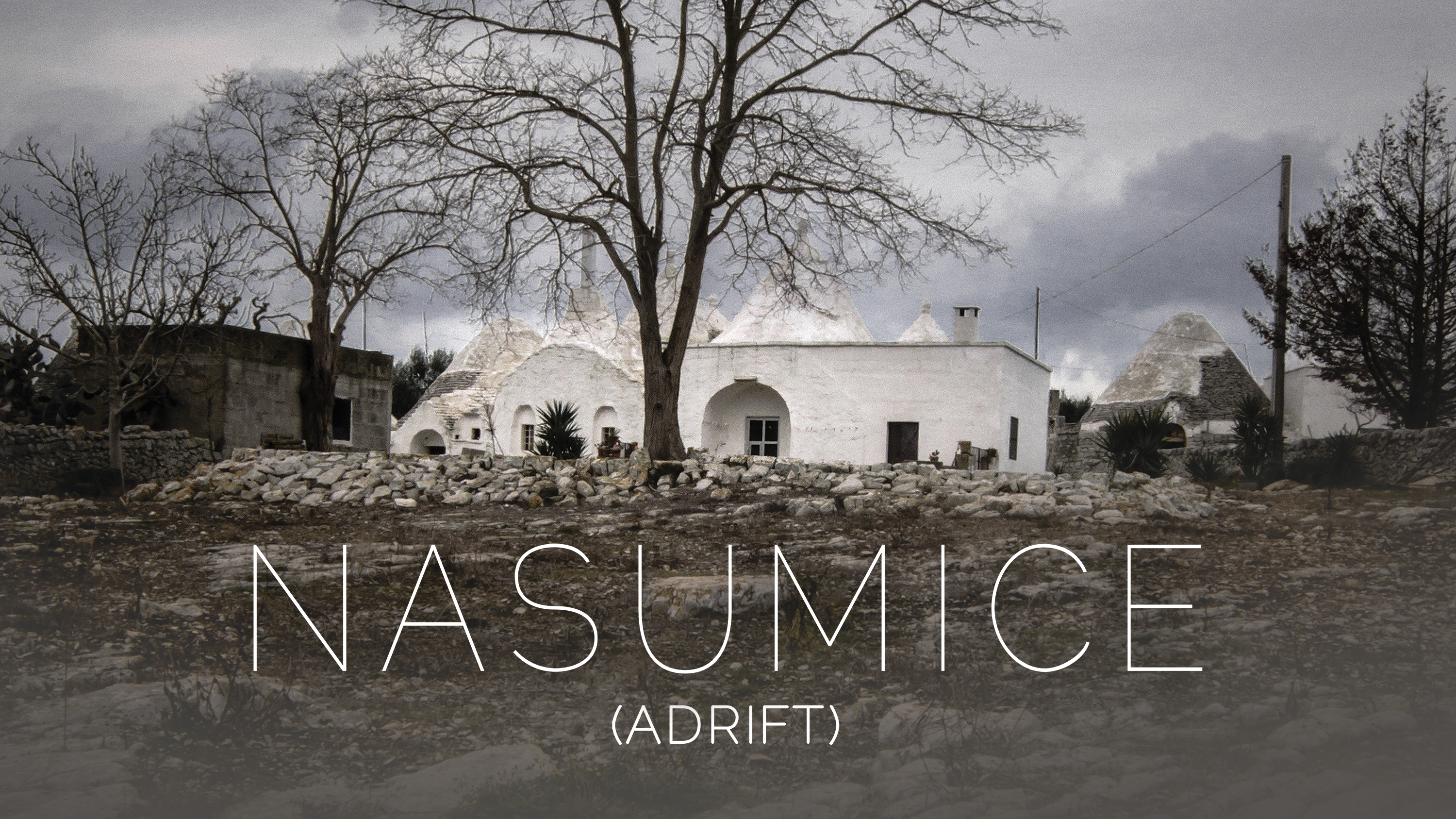
Drama, by Caleb Burdeau, United States/Italy/Bosnia, 2018.
Italy, 1994. The war in the Balkans drags on without end. Elvis, a young man from Sarajevo, is photographing tourists with his Polaroid to get by. After his camera is stolen, Elvis decides to visit Rodolfo, a stranger he met by chance in Venice. Their brief and solitary encounter takes place in the timeless landscape of the whitewashed villages, green hills and olive trees of southern Italy.
Set against the backdrop of the Yugoslav wars of 1994, Nasumice is a film about existential drift and the search for a sense of belonging. The project was born from the stories of a family friend to the director Caleb about his travel experiences in southern Italy in the 70s. When Caleb was working at Bela Tarr's film factory in Sarajevo, he met Moamer Kasumovic and the idea of making the film with Moamer in the lead role took hold. The film is a remarkably direct exploration of alienation and isolation with a unique story and beautiful cinematography. The cities, towns and hills of southern Italy form the backdrop for the story of Elvis and Rodolfo. The director combines long sweeping shots of the countryside and fixed scenes with the protagonists to create the feeling of isolation on the screen. Nasumice was shot in Venice, Rome and the Puglia countryside, and is a visually stunning independent film despite its low budget. The world premiere of Nasumice took place at the 2018 Sarajevo Film Festival.
LANGUAGE: Italian, English, Bosnian
SUBTITLES: English, Spanish, French, German, Portuguese
A vision curated by a filmmaker, not an algorithm
In this video I explain our vision
🌿 The Wounded Soul Seeking a New Home
Modern alienation is not merely a social phenomenon — it is a spiritual wound that cuts through identity, community, and our relationship with the living world. The films collected in the Infinite Maze series return again and again to this fracture, asking what it would mean to truly belong to oneself and to the earth. These articles offer the philosophical and cultural coordinates to navigate that search.
Karl Marx and Alienation: Economic and Philosophical Manuscripts
Karl Marx’s early manuscripts reveal alienation not as an abstract philosophical concept but as a concrete rupture between human beings and the products of their labor, their communities, and their own inner life. This foundational analysis remains startlingly relevant in an era where digital capitalism extends estrangement into every waking hour. Understanding Marx’s diagnosis is the first step toward imagining any genuine ecology of the soul.
GO TO THE SELECTION: Karl Marx and Alienation: Economic and Philosophical Manuscripts
Deep Ecology: History and Philosophy
Deep ecology, as formulated by Arne Næss and his successors, proposes that the environmental crisis is inseparable from a crisis of human self-understanding — that we have mistaken our isolation for freedom. This philosophical tradition calls for a radical re-embedding of the self within the living web of nature, dissolving the boundaries that modernity erected between inner and outer worlds. It offers one of the most coherent frameworks for what a new ecology of the soul might actually require.
GO TO THE SELECTION: Deep Ecology: History and Philosophy
Loneliness in Contemporary Society
Contemporary loneliness is not simply a lack of company but a structural condition produced by societies that prize performance, mobility, and productivity over rootedness and genuine encounter. Sociologists and psychologists have traced how the erosion of community bonds leaves individuals adrift in a world of surfaces, unable to find the depth they instinctively crave. This article maps the landscape of modern disconnection with both rigour and compassion.
GO TO THE SELECTION: Loneliness in Contemporary Society
Erich Fromm and the Sane Society
Erich Fromm‘s vision of a sane society rests on the conviction that mental health is impossible without a radical transformation of the cultural conditions that produce alienated human beings. His humanistic psychology argues that love, creativity, and authentic relatedness are not luxuries but existential necessities — the very substance of a soul ecology worthy of the name. Reading Fromm today feels less like history and more like an urgent prescription.
GO TO THE SELECTION: Erich Fromm and the Sane Society
Discover the Cinema That Asks the Questions That Matter
If these ideas resonate with you, Indiecinema is the streaming platform where cinema becomes a tool for inner exploration — a curated space for films that dare to ask what it means to be human, connected, and alive. Step beyond the mainstream and let independent cinema guide you toward a deeper encounter with yourself and the world.
👉 EXPLORE THE CATALOG: Watch Indie Films in Streaming
A vision curated by a filmmaker, not an algorithm
In this video I explain our vision

