
The Man Who Insulted a King and Survived (Almost)
The cold finds you before the guards do. It rises through the stone floor, through the soles of whatever you are wearing, into the bones of your feet, and then it simply stays there, permanent as a verdict. You are sixty years old, you have gout, and you are being dragged through the corridors of the convent of San Marcos in León in the winter of 1639, not because you killed anyone, not because you denied God or plotted a military coup, but because someone found a poem. A piece of paper, allegedly slipped beneath the dinner napkin of Philip IV himself, verses so sharp they drew blood without touching skin. The charges were never made entirely explicit, which is how power operates when it wants to destroy someone without the inconvenience of proof. Francisco de Quevedo y Villegas, the most lethal pen in the Spanish language, had finally been outmaneuvered by the very instrument he spent a lifetime perfecting.

There is something almost cosmically ironic in this, and Quevedo would have recognized the irony immediately, because recognizing irony was perhaps the only thing he did better than producing it. He had spent decades transforming language into a weapon of extraordinary precision, a scalpel disguised as a rapier, capable of eviscerating a political enemy, a romantic rival, a corrupt magistrate, or an entire social class within the space of fourteen lines. The sonnet form, in his hands, became something almost violent, a closed fist rather than an open palm. And now the weapon had turned. Now the fourteen lines were evidence. Now the words that had made him the most celebrated and most feared writer in Spain were the reason a man with gout was sleeping on stone in winter without trial, without sentence, without the most basic architecture of justice.
Michel Foucault argued, in his 1975 work Surveiller et punir, that punishment is never simply about the crime. It is about the demonstration of power, the theatrical reassertion of the sovereign’s capacity to harm. Philip IV did not imprison Quevedo because a poem endangered the state. He imprisoned him because not imprisoning him would have suggested that the state could be mocked without consequence. The poem was almost beside the point. What mattered was the message written in stone and cold and silence: no one is so brilliant that brilliance protects them.
Quevedo had spent his entire life testing precisely that hypothesis, and he had gotten away with it for so long that perhaps he had begun to believe the test was over and he had won. Born in Madrid in 1580, educated by the Jesuits, holder of a doctorate in theology, fluent in Latin, Greek, Hebrew, French, Italian, and Arabic, he was from the beginning a figure whose intellectual gifts were matched only by his appetite for deploying them recklessly. He wrote philosophy and he wrote pornography and he saw no necessary contradiction between the two. He translated Anacreon and he produced some of the most savage satirical verse in European literature and he did both with the same fundamental conviction: that language was power, and power was the only game worth playing.
What makes him extraordinary is not simply the range, though the range is staggering. It is the quality of the attention he brought to everything. There is a ferocity in Quevedo’s writing that feels almost personal, as though every target he chose had somehow offended him at the level of ontology, had committed the crime of existing stupidly in a world that deserved better. The anger is never decorative. It is structural. It holds the sentences together the way calcium holds bones, invisibly, essentially, and you only notice it when something breaks.
He survived the prison, barely. He was released in 1643, a broken body carrying an unbroken mind, and he died two years later. The poem that imprisoned him was never conclusively proven to be his.
Don Barry: A Quixotic Exploration
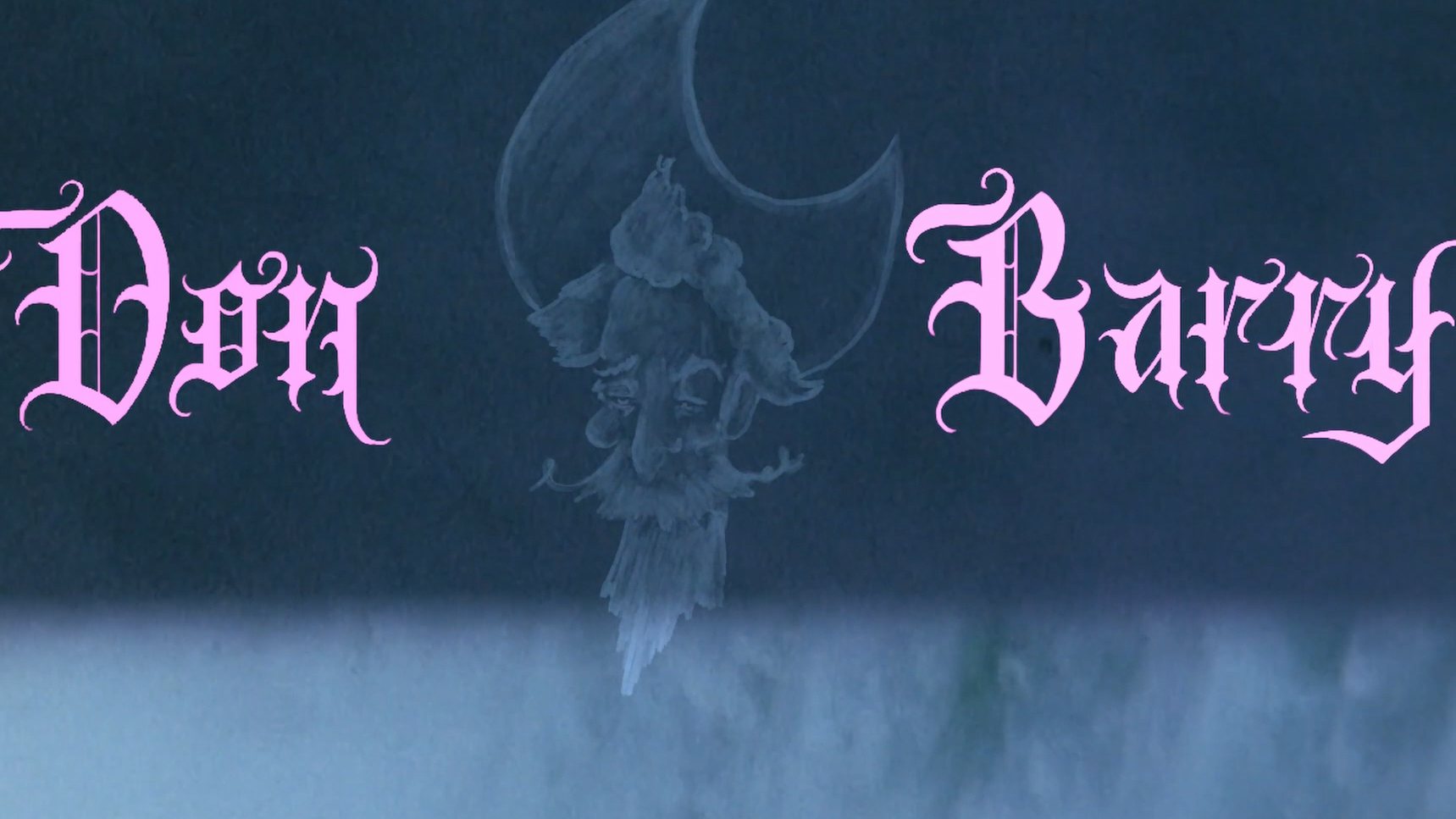
Docufiction, Experimental, by Paul Smart, Mexico, 2026.
Don Barry: A Quixotic Exploration is a debut feature that places the biography of an eighty-year-old experimental filmmaker and artist, Barry Gerson, within the metanarrative of Miguel de Cervantes’ Don Quixote. Don Barry was filmed in the city of Guanajuato during the 51st edition of the Cervantino Festival, as well as during the vibrant Day of the Dead celebrations held in the city’s UNESCO-listed tunnels. The film honors the director’s long friendship with artist Barry Gerson, drawing inspiration from Cervantes’ Don Quixote. Paul Smart’s directorial choices create something new that celebrates life and goes beyond conventional storytelling. A search for magic in our real lives. A moving film about the meaning of life, art, and death. Not to be missed.
Paul Smart is a proud outsider filmmaker with a long history of film screenings. In the 1980s, he emerged in New York’s vibrant youth art scene, working in theater production and later filmmaking, before retreating to rural upstate New York, in the Catskill Mountains, where he made a living writing and screening independent films in old parish halls for rural audiences, many of whom had never seen a film.
LANGUAGE: English
SUBTITLES: Spanish, French, German, Portuguese
Born into the Court’s Shadow
He was born into a house where power arrived as furniture, as smell, as the shadow of other men’s decisions. Madrid, 1580. His parents served the royal household — his father as secretary to the queen, his mother as a lady-in-waiting — which meant that the court was not an institution they visited but a climate they inhabited. You grew up in rooms where the King’s mood was a meteorological fact, where a whispered conversation in an antechamber could determine whether your family ate well or disappeared quietly into debt. Quevedo entered the world already inside the machine, which is perhaps why he spent his entire life trying to describe it from a vantage point that didn’t exist.
He was also born with a body the court would never let him forget. Severely myopic, he wore thick lenses at a time when glasses marked a man as physically compromised, intellectually suspect, or both. He had a clubfoot. He moved through spaces designed for elegance and display with a gait that announced him before he spoke. And yet he became one of the most feared wits in Spain, which tells you something essential: that the mind compensated with a ferocity that physical grace never requires. The insult, the satirical thrust, the verbal ambush — these are weapons developed by people who learned early that the room was not designed for them.
Norbert Elias, writing in The Court Society in 1969, described how proximity to the sovereign created a specific kind of human being — one whose entire identity was organized around the management of appearances, the calibration of distance and access, the performance of loyalty as a survival mechanism. Elias was not being cynical. He was being precise. The court was a civilizing trap: it refined behavior, cultivated language, produced extraordinary cultural output, and simultaneously destroyed the possibility of authentic interiority. Every gesture meant something. Every friendship was also a calculation. Every poem, every letter, every public laugh was read as political information by someone in the room.
Quevedo understood this not as an intellectual proposition but as the texture of his childhood. He did not arrive at a critique of court society through reading. He arrived at reading because court society had already given him the critique in lived form. There is a particular lucidity available only to those who are inside a system and visibly marked as not quite belonging to it — not excluded enough to be free, not included enough to be blind. He occupied that exact position from birth.
He studied at the University of Alcalá, then at Valladolid, accumulating languages — Latin, Greek, Hebrew, Italian — with the hunger of someone who understood that knowledge was the only currency that couldn’t be revoked by a change in royal favor. He was reading Seneca and Tacitus as a young man, and this was not accidental. Both wrote from within imperial systems they could not escape, about the mechanisms of power they could not openly condemn. They had found the oblique angle, the rhetorical form that let truth through sideways. Quevedo recognized the method because he already needed it.
What Elias could not have predicted — because his framework was sociological rather than literary — was that the civilizing trap sometimes produced, as its most perverse byproduct, a writer whose entire art was built from the pressure of that trap. The deformity, the servile family position, the inherited proximity to greatness that was never quite one’s own greatness: these were not obstacles Quevedo overcame. They were the forge. The court did not constrain his voice. The court made his voice necessary, gave it its particular cutting edge, its almost pathological need to say exactly what could not be said safely in any room where he had ever stood.

Language as a Knife, Satire as Survival
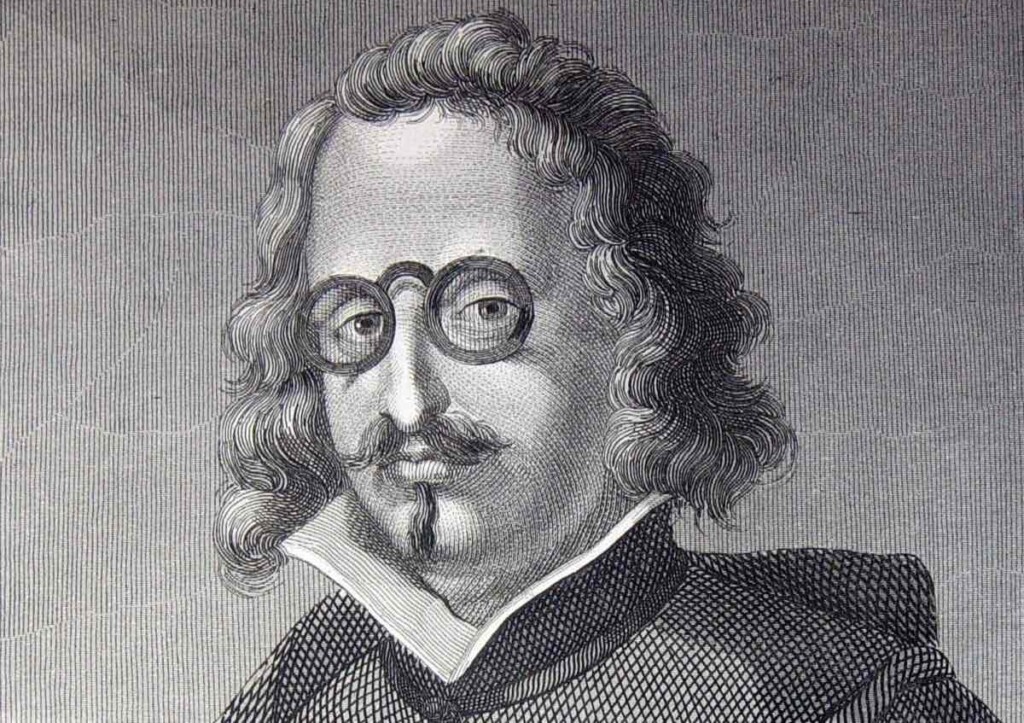
There is a moment when you sit in a waiting room — a doctor’s office, a courtroom anteroom, a government bureau — and you watch the performance of authority unfold around you, and something in your chest tightens not with fear but with a kind of furious lucidity. You see the costume before you see the person. You see the ritual before you see the intention. Quevedo saw this his entire life, and he wrote it down with the precision of a man who understood that language used gently against power is no language at all.
The Sueños, composed across nearly two decades beginning around 1605, are structured as visions of the afterlife, but to call them theological exercises would be like calling a scalpel a table utensil. In these dream-journeys, the dead arrive at judgment stripped of their professional armor, and what is revealed underneath is almost always grotesque vacancy. Doctors parade past, their Latin credentials dissolving in the air, their patients’ corpses trailing behind them like accusations. Judges arrive wrapped in the parchment of their own verdicts, and when the parchment is peeled away there is nothing inside that could be called a conscience. Nobles present their genealogical trees at the gates of eternity and are met with the observation that lineage is simply a longer rope from which to hang. This is not satire as entertainment. This is ontological demolition.
Mikhail Bakhtin, in his 1965 study of Rabelais and the folk culture of the Middle Ages, identified the carnival moment as the philosophical inversion through which a culture briefly permits itself to see the truth it cannot afford to see in daylight. The grotesque body in carnival tradition — leaking, distorted, excessive, mortal — is the body that refuses the polished fiction of institutional selfhood. Quevedo’s parade of corrupted professionals belongs entirely to this logic, but with a crucial Quevedian twist: his carnival never ends. There is no restoration of order after the feast. The grotesque remains as the permanent condition, not the temporary exception. The doctor doesn’t become competent again once the laughter subsides. The judge doesn’t recover his integrity at dawn. The mask, once removed, reveals only another mask, and beneath that, the void.
The Buscón, published in 1626 though circulating in manuscript for years before, pushes this vision into the picaresque form and makes it biographical — not Quevedo’s biography, but the biography of a social type the Spanish empire had manufactured and then refused to acknowledge: the man of ambiguous blood, uncertain origin, and desperate aspiration. Pablos, the protagonist, moves through a society organized entirely around the performance of honor, applying his considerable intelligence to the acquisition of exactly those performances, and the text watches him with an eye that is neither sympathetic nor cruel but something more devastating — accurate. Every institution Pablos encounters is revealed as a theater of cruelty maintained by the collective agreement not to name it as such.
This is what separates Quevedo from the merely cynical. Cynicism is a posture of withdrawal, a decision to stop caring. What Quevedo practices is something closer to what the philosopher Stanley Cavell described, in a different context, as the refusal of skepticism’s comfort — the insistence on remaining exposed to the world’s failures rather than retreating into disengagement. To keep writing the dream-visions, to keep following Pablos through his humiliations, to keep sharpening the sentence until it cuts — this is not the behavior of a man who has given up on truth. It is the behavior of a man for whom truth is the only thing that cannot be surrendered, even when every institution around him is built on the agreement that surrender is simply called civilization.
The knife of his language does not wound for pleasure. It wounds because the body of the social lie had grown so thick that nothing gentler would reach the bone.
The Lost Poet
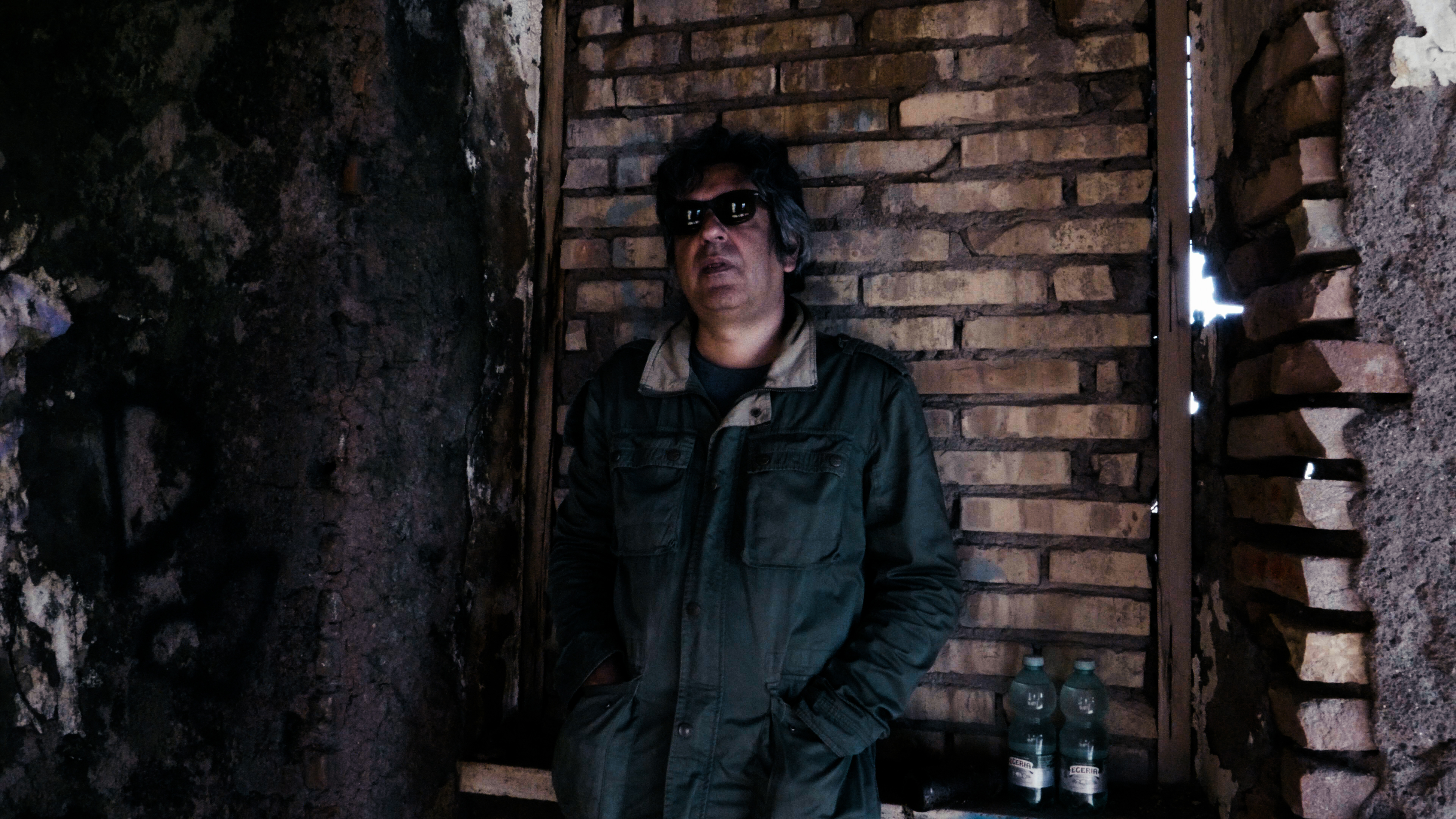
Drama, by Fabio Del Greco, Italy, 2024.
Dante Mezzadri wants to see an old friend, nicknamed the Iguana, whom he has lost sight of for many years, and who has managed to turn their shared youthful passion for poetry into a job, becoming a famous writer and poet. The man escapes from his bourgeois life and his wife to live homeless on the Roman coast, printing and trying to sell his poetry collections. At night he sleeps in a park of old carnival floats, inside a papier-mâché tank, and waits for the opportunity to meet his old friend, who however never shows up for appointments in the places they frequented when they were young, now in ruins. Dante's poetry books do not interest anyone and to support himself he is forced to "change product": he starts selling the infamous "cannibal pill" on behalf of young drug dealers, a new drug that sells like hot cakes and causes sensory and consumerist ecstasy. However, he realizes that this powerful drug is very dangerous for those who take it, he comes into conflict with his ethical conscience and throws all the pills into the sea. However, the dealers want to collect their money.
Shot over a period of 2 years, the film is a reflection on the cultural and artistic rubble of the society in which the protagonist lives, in an increasingly mechanized, consumerist and arid world. Dante Mezzadri is yet another human being who has renounced his inspiration and his creativity, but unlike many he is not willing to give his life to a system that distances him from his true identity. The physical world around him, however, seems constructed in such a way that it seems impossible to escape from this "invisible cage". The enthusiasm of the people he meets is ignited only by sensory gratification, by unreal visions of personal affirmation and success, by "metaverses" that offer an escape into an illusory and destructive reality. The poet's house on the coast, where he met with his friends as a young man, is just a pile of abandoned rubble. What happened to all those who wanted to become poets and ended up becoming something else? Are there internal forces with which that house can be "rebuilt"?
LANGUAGE: Italian
SUBTITLES: English, Spanish, French, German, Portuguese
Conceptismo and the Violence of Precision
There is a kind of writing that exhausts you with its beauty before you have understood a single thing it said. You emerge from it dazzled, slightly perfumed, uncertain what happened. And then there is writing that lands before you can prepare yourself, that finds the nerve before the mind has time to anesthetize it. Quevedo belonged entirely to the second category, and he knew it, and he considered the first a form of cowardice dressed in silk.
The aesthetic war he waged against Luis de Góngora for decades was not a personal rivalry that happened to take literary form. It was a genuine philosophical dispute about what language is for. Góngora’s culteranismo proceeded from the conviction that poetry’s highest ambition was the construction of a parallel world, luminous and remote, where Latinate syntax and mythological accumulation created an aristocratic opacity that excluded the uninitiated. The image, in that system, was an ornament. It beautified the wall rather than breaking it open. Quevedo found this not merely wrong but dishonest, a performance of profundity that mistook decoration for depth. His own method, conceptismo, worked from the opposite premise: that the image must be a collision, not a veil, that compression is not a stylistic choice but an ethical one. To say a thing with maximum precision and minimum excess was to respect both the subject and the reader, to refuse the luxury of obscurity that protects the writer from being tested.
Walter Benjamin, writing in a very different century but thinking toward the same problem, described what he called the dialectical image — the moment when two historical or conceptual fragments collide and meaning flashes in the gap between them, not before, not after, but precisely in the instant of contact. He developed this idea most fully in the Arcades Project, assembled through the 1930s and left unfinished at his death in 1940, and what he was describing philosophically is what Quevedo had been executing technically three centuries earlier. Every compressed Quevedian metaphor is exactly that: a flash produced by collision, not a description of something already known but the violent creation of a perception that did not exist until the line was written.
Consider the sonnet from 1597, the one that begins by addressing a rose and ends by addressing death. The flower is not a symbol deployed to represent mortality. The rose and the decay are slammed into the same grammatical space until they are indistinguishable, until the reader cannot locate where beauty ends and annihilation begins. That is not decoration. That is diagnosis. Or the later sonnet, the one that opens with the line about love as fire and ice simultaneously — a conceit that might seem like an inventory of contradictions until you notice that Quevedo is not listing paradoxes but demonstrating that the self under love’s pressure becomes incoherent, that the contradiction is not rhetorical but ontological. The poem does not describe the experience. It reproduces it in the reader’s nervous system.
This is what Góngora’s method, for all its extraordinary craft, could not do. The culteranista poem asks you to admire it from a respectful distance. The conceptista poem grabs you by the collar. And Quevedo understood that grabbing someone is a more honest form of intimacy than displaying yourself before them.
The sonnets written in the Torre de Juan Abad, during his imprisonments and exiles through the 1620s and 1630s, intensify this quality until it becomes almost unbearable. Forced inactivity stripped away any remaining tolerance for linguistic excess. What remained was bone. What remained was the line that hits you and keeps hitting you three hundred years later because it was never aiming for its own historical moment to begin with. It was aiming for the nerve that does not age.
Love as a Form of Ruin

There is a letter you have never sent. It sits somewhere — a drawer, a folder buried in a hard drive, the back of a notebook — and you know with complete certainty that it will never reach the person it names. You wrote it anyway. You may have written it more than once, across different years, the handwriting or the font changing but the essential thing remaining fixed, like a stone at the center of moving water. The act of writing it was not communication. It was something closer to testimony, or to confession before a tribunal that will never convene. You were not trying to reach someone. You were trying to prove to yourself that what you felt was real, that it had happened, that the feeling had sufficient weight to leave a mark somewhere in the material world even if that mark was only paper in a closed drawer.
Francisco de Quevedo spent decades writing to a woman he called Lisi. The sonnets dedicated to her were not composed in a burst of passion but accumulated over years, possibly across most of his adult life, with a relentlessness that has no real equivalent in Spanish lyric poetry before or after him. Whether the historical Lisi — believed to be Doña Luisa de la Cerda — was ever truly the object of sustained devotion or a literary construction matters far less than what the poems themselves reveal: a mind in the process of discovering that desire does not obey the rules of the world it inhabits. It does not obey time. It does not obey reason. It does not even obey the death of the body.
The most devastating of the Lisi sonnets, the one that ends with the declaration that his dust will still feel love, is not a hyperbole of the courtly tradition. It is a philosophical proposition dressed in the syntax of grief. What Quevedo is articulating is something Spinoza would formalize in the Ethics, published in 1677, roughly three decades after Quevedo’s death: conatus, the fundamental drive of every existing thing to persist in its own being. For Spinoza, this was the essential definition of existence itself — not merely life, but the irreducible insistence on continuation. Quevedo reaches the same conclusion through the opposite direction, not through geometrical demonstration but through the catastrophe of feeling. If desire persists past the dissolution of the body, then desire is not a property of the body. It is something closer to the structure of the self, to what the self most fundamentally is.
This is where love, in Quevedo, becomes philosophically dangerous. It is not the place where the self is fulfilled or consoled. It is the place where the self is most nakedly revealed — and what is revealed is not beautiful. What is revealed is the absolute poverty of the will, its inability to govern the interior life it believes it owns. You do not choose to keep the letter. You keep it because something in you refuses the alternative, refuses the clean ending, refuses the freedom that forgetting would offer. There is no virtue in this. Quevedo never pretends there is. His love poetry is conspicuously free of the moral uplift that characterizes much devotional or Neoplatonic verse of his era. He does not love Lisi better than himself. He loves her in a way that consumes him, that makes him legible to himself only as a site of damage.
And damage, in Quevedo, is always the most honest form of self-knowledge. The man who writes the letter he will never send knows something about himself that the man who sends nothing does not know. He knows the precise shape of what he cannot release.
A vision curated by a filmmaker, not an algorithm
In this video I explain our vision
Political Entanglement and the Price of Proximity
There is a particular kind of man who mistakes the king’s ear for the king’s will. You have seen him at every dinner table where someone powerful sits — the advisor who leans in a little too close, who laughs a half-second before the joke lands, who has confused proximity with leverage so completely that he can no longer feel the difference. Francisco de Quevedo was this man, replicated across decades and across masters, each cycle slightly more catastrophic than the last.
His relationship with Pedro Téllez-Girón, the Duke of Osuna, was the first great wager of his political life. Between roughly 1613 and 1620, Quevedo served as Osuna’s agent, diplomat, and propagandist across the Italian territories — Naples, Sicily, Venice — carrying messages that were never entirely what they seemed, operating in a world where loyalty and betrayal wore identical clothing. He wrote memoranda, he negotiated in shadows, he made himself indispensable. And indispensable is the most dangerous thing a man can make himself, because the moment his patron falls, he falls with him, and yet he has no standing of his own from which to recover. When Osuna was stripped of his offices in 1620, arrested and ultimately broken, Quevedo was exiled to his estate in La Torre de Juan Abad. He had been useful. Now he was residue.
Hannah Arendt, in her 1970 essay On Violence, draws a distinction that Quevedo spent his life refusing to understand. Power, she argues, belongs to a group acting in concert — it is relational, collective, it requires others to sustain it. Violence is the tool of the individual who has lost power and compensates with force or cunning. What Quevedo kept reaching for was neither of these: it was access, which he continuously mistook for the first while it was always closer to the second. He was not powerful. He was instrumentalized by those who were.
The pattern repeated with meticulous cruelty under the Count-Duke of Olivares, the great minister who dominated the reign of Philip IV. Quevedo aligned himself, wrote in support of Olivares’s centralizing politics, believed again that words placed in the right hands could bend the direction of a state. In 1626 he published Política de Dios, gobierno de Cristo — a treatise drawn from the Gospels that attempted to construct a theology of righteous governance, arguing that the prince must model himself on Christ’s example of service rather than domination. It is a serious work, philosophically earnest, and it is precisely this earnestness that makes it so revealing. A man who genuinely believed power could be moralized was a man who had not yet understood what power was.
Niccolò Machiavelli had understood it a century earlier, in the most brutally honest diagnosis of political reality the Renaissance produced. Quevedo knew Machiavelli — he attacked him, in fact, which is its own kind of knowing. To attack something obsessively is to be shaped by it. The Política de Dios is, in some sense, an anti-Prince, an attempt to write the book Machiavelli refused to write. And it was received warmly at first, reprinted, praised. Then quietly set aside, because courts do not actually want their princes to govern like Christ. They want texts that flatter the idea while changing nothing.
In 1639, Quevedo was arrested again — this time under circumstances still debated by historians, possibly betrayed by Olivares himself, possibly the victim of a forged document slipped beneath the king’s pillow. He spent nearly four years imprisoned in the monastery of San Marcos in León, in conditions that permanently damaged his health. When he emerged in 1643, Olivares had already fallen. His patron had not saved him. His words had not saved him. The access he had cultivated across a lifetime had dissolved the moment it was tested, as access always does.
Prison, Silence, and the Stoic Turn
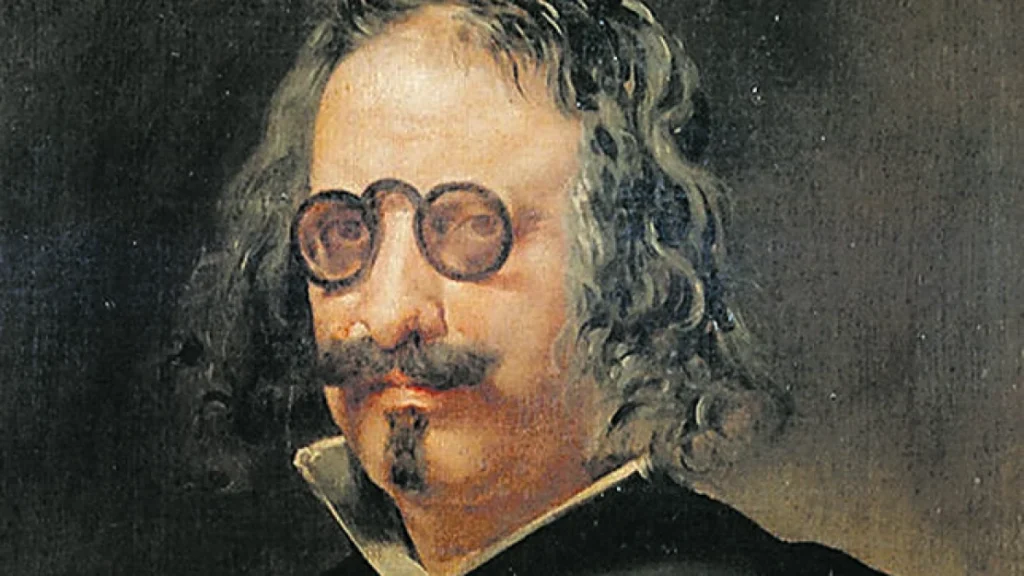
The cold arrives before the darkness does. In the monastery of San Marcos de León, the stone walls do not simply surround a man — they absorb him, pull the warmth from his bones with a patience that feels almost intentional, almost punitive. A figure sits hunched over a narrow table, his hands moving across paper with the careful deliberateness of someone who knows that speed is no longer available to him, that the candle will not last, that the fingers will stiffen before the thought is finished. He is copying. Not composing, not declaiming, not performing the brilliant satirist who had made Madrid laugh and shudder in equal measure. He is copying the words of men long dead, tracing their sentences as though the physical act of reproduction might transfer something essential into his own failing body.
Francisco de Quevedo entered the convent of San Marcos as a prisoner in December 1639, arrested on suspicion of having authored a seditious memorial against the Count-Duke of Olivares, a document allegedly found beneath the royal napkin at a dinner of Philip IV. He was sixty years old, already broken by a lifetime of political maneuvering and physical ailment. He would remain imprisoned for nearly four years, released only in 1643 when Olivares himself fell from power. The conditions were not metaphorically harsh. The dampness of the Leonese winter penetrated everything; his legs, chronically troubled since youth, deteriorated further; his eyesight weakened. By any conventional measure, this was annihilation.
And yet the work continued. What emerged from those years was not silence but a peculiar kind of deepening — a turn toward Epictetus and Seneca so concentrated that it reads less like intellectual preference and more like survival strategy. His translations of and commentaries on these Stoic masters, refined and meditated upon during imprisonment, carry a texture that his earlier engagements with Stoicism do not. There is a difference between a man who quotes Seneca at a dinner table and a man who copies him by candlelight while his hands go numb.
Michel Foucault, in his late lectures at the Collège de France — particularly the 1981-1982 series published as The Hermeneutics of the Subject — developed what he called the epimeleia heautou, the care of the self, tracing it through Greco-Roman philosophy as a practice of self-constitution that operates independently of external conditions. This is not narcissism and it is not mere consolation. It is something more precise and more demanding: the deliberate cultivation of an interior sovereignty that persists precisely when all exterior sovereignty has been stripped away. Foucault recognized that the Stoics were not counseling resignation but something far more radical — the construction of a self that cannot be confiscated.
This is what Quevedo was doing in San Marcos. The copying, the commentary, the slow translation of Epictetan maxims into Castilian prose — these were not the activities of a man who had accepted defeat. They were the activities of a man who had located the one territory his captors could not enter. When Epictetus writes, in the Enchiridion, that some things are within our power and others are not, he is not offering comfort. He is drawing a line, and on one side of that line sits everything the world can take from you, and on the other side sits the only thing it cannot. Quevedo understood this not as philosophy but as anatomy — a description of how a person actually functions when stripped to the essential.
The candle shortens. The hand continues. Outside, the political world grinds on without him, Olivares consolidates and then collapses, the empire contracts, and none of it requires his participation to proceed. He has been rendered unnecessary by power, which is perhaps the cruelest thing power knows how to do to a man who has spent his life insisting on his own indispensability.
What Remains When the Wit Is Gone
He died in Villanueva de los Infantes in September 1645, in a bed that was not his own, in a town that was not his choosing, in a body that had been failing him for years. The gout had spread. The imprisonment in San Marcos had taken something from his spine that never returned. He was sixty-four years old and had spent the last decades of his life writing with the furious consistency of a man who understood that the page was the only territory no one could confiscate permanently. Even at the end, there were manuscripts on the table.
What survives Quevedo is not what he would have predicted, and perhaps not what he would have wanted. The diplomat who navigated the courts of Philip III and Philip IV, who carried secret letters for the Duke of Osuna across Mediterranean harbors, who conspired and charmed and maneuvered through the machinery of imperial Spain — that man dissolved almost immediately into historical footnote. The courtier who traded proximity to power for the illusion of influence, who believed for long stretches of his life that wit could purchase protection, that intelligence was a form of armor — that man was proven catastrophically wrong and knew it. The satirist who skewered the pretensions of his age, who drew blood with a metaphor the way surgeons drew blood with lancets, who made the grotesque body of his century visible in all its moral deformity — even that voice has been domesticated over time, anthologized, made safe, turned into a monument that students photograph rather than read.
What persists, stubbornly and without permission, is something harder to name. It is the voice that refused to make reality more bearable through language. Not the refusal of beauty — Quevedo was incapable of ugliness in the technical sense, his syntax too elegant, his imagery too precise — but the refusal to let beauty function as consolation. When Roland Barthes wrote in 1977 about the difference between a text that performs pleasure and a text that produces rupture, what he called jouissance, he was describing something Quevedo had been practicing for decades without the theoretical vocabulary: the literary act that unsettles rather than soothes, that opens a wound in the reader’s comfortable relation to time and meaning and self. Quevedo’s darkness was not ornamental. It was structural. It was the architecture of his thought.
His last known poem speaks of love persisting beyond the grave. The bones themselves, he wrote, will still carry the memory of desire. The ash will still feel. It is one of the most radical statements in the Spanish literary tradition, and it arrives not as triumph but as defiance — a refusal to accept that death settles anything, that time resolves the questions it raises, that the body’s dissolution ends what the body began. And yet the manuscripts of that poem, like so many of his works, were scattered after his death. Copied by hands he never authorized, edited by minds that did not share his obsessions, reconstructed by scholars who made choices in the gaps that Quevedo himself would have made differently. The voice that survived was assembled by others. The words are his, but their arrangement, their preservation, their reaching us across nearly four centuries — that is a collective act, and a distorting one.
This is the condition of every writer who dies before their work is settled, which is to say, of nearly every writer who matters. The question of who owns a voice once the body that produced it is gone does not resolve into an answer. It opens into a longer argument about whether literature belongs to the one who writes it, the one who reads it, the one who preserves it, or the silence that surrounds all three.
📜 The Golden Age and Its Literary Universe
Francisco de Quevedo stands as one of the towering figures of Spanish literature, a master of satire, mysticism, and poetic complexity. To fully appreciate his genius, it helps to explore the broader literary and cultural landscape that shaped and surrounded him. These related articles trace the world of the Spanish Golden Age, its authors, its forms, and its enduring legacy.
Spanish Literature of the Seventeenth Century: History and Authors
The seventeenth century in Spain produced an extraordinary flourishing of literary talent, from mystical poetry to biting social satire. This article maps the major authors, movements, and cultural forces that defined an era in which Quevedo himself played a central role. Understanding this context is essential to grasping the full ambition and originality of his work.
GO TO THE SELECTION: Spanish Literature of the Seventeenth Century: History and Authors
The Spanish Golden Age: Literature and Culture
The Spanish Golden Age was not merely a literary period but a complex cultural phenomenon shaped by empire, faith, and artistic experimentation. This article explores how literature, theater, and ideas intertwined during a time of both greatness and contradiction. It provides the essential backdrop against which figures like Quevedo, Calderón, and Cervantes must be understood.
GO TO THE SELECTION: The Spanish Golden Age: Literature and Culture
Lope de Vega: Life and Works
Lope de Vega was Quevedo’s near-contemporary and, in many ways, his literary rival and counterpart in the shaping of Spain’s Golden Age culture. Celebrated as the creator of the comedia nueva, Lope brought a prolific energy to Spanish theater that matched Quevedo’s dominance in poetry and prose. Exploring his life and works offers a fascinating parallel journey through the same turbulent century.
GO TO THE SELECTION: Lope de Vega: Life and Works
Miguel de Cervantes: Life and Works
Miguel de Cervantes, the creator of Don Quixote, was the third great pillar of Spain’s Golden Age alongside Lope de Vega and Quevedo. His revolutionary approach to narrative and character transformed European literature in ways still felt today. Reading about Cervantes alongside Quevedo illuminates how a single era could produce such radically different yet equally monumental literary visions.
GO TO THE SELECTION: Miguel de Cervantes: Life and Works
Discover the Cinema of Ideas on Indiecinema
If the world of Quevedo and the Spanish Golden Age has stirred your curiosity about art, culture, and the enduring power of human expression, Indiecinema is your next destination. Our streaming platform gathers the finest independent and auteur cinema, films that think deeply and speak boldly, just as the great writers of history once did. Explore our catalog and let independent cinema open new horizons of meaning and imagination.
👉 EXPLORE THE CATALOG: Watch Indie Films in Streaming
A vision curated by a filmmaker, not an algorithm
In this video I explain our vision

