
The First Cell and the First Lie
You are looking at something that should not be able to look back, and yet you feel watched. The cluster of cells on the screen — magnified, luminous, pulsing with a metabolism that predates every concept you have ever used to define life — does not move, does not speak, does not demand anything from you. And still you lean back slightly in your chair. Something old and pre-linguistic in you has recognized that the boundary you assumed was solid is, in fact, a convention.

That recognition is exactly what Martin Evans and Matthew Kaufman prevented the public from having in 1981. Their paper, published in Nature that July, described the isolation of pluripotent stem cells from mouse embryos with a precision that was almost deliberately anesthetic. The language was careful, controlled, taxonomic. They had extracted cells from the inner cell mass of blastocysts — mouse embryos at roughly four days of development — and maintained them in culture, keeping them alive and undifferentiated outside any living body. This was, by any honest measure, a rupture in the history of biology comparable to the moment Watson and Crick described the double helix. What Evans and Kaufman had done was prove that the primordial cellular state, the condition of pure biological potential before any tissue, organ, or identity crystallizes, could be arrested, cultivated, and studied. A cell that could become anything had been caught in the act of being nothing yet, and held there.
The scientific community understood immediately what this meant. Developmental biologists had spent decades trying to map the process by which a single fertilized egg generates the staggering complexity of a mammalian body, and here was the material with which that map could finally be drawn in real time. The applications were not abstract. If you could maintain pluripotent cells in culture, you could manipulate them, introduce genetic changes, observe their differentiation trajectories. Evans himself would go on to use this technology to create the first knockout mice — animals with specific genes deactivated — work that earned him the Nobel Prize in Physiology or Medicine in 2007. The entire architecture of modern genetic medicine, from targeted therapies to gene editing platforms, runs on a foundation that was poured in that 1981 paper.
What the paper did not do was name the thing it had opened. The word embryo appears in it, but neutralized, embedded in procedural description, stripped of the charge it carries outside laboratory syntax. This was not accidental naivety. The late 1970s and early 1980s were a period of acute cultural sensitivity around reproductive biology: the first IVF baby, Louise Brown, had been born in 1978 to immediate international controversy, with theologians and politicians on multiple continents debating whether conception outside the body altered the moral status of the resulting life. Evans and Kaufman were not operating in a vacuum. They knew that declaring they had isolated and cultivated cells taken from embryos — even mouse embryos — in terms legible to the general public would invite a confrontation the field was not prepared to have. So they offered the public a technical event instead of a philosophical one. They handed the world a tool and declined to describe what the tool had required to make.
This is how science has always managed its most volatile discoveries: not through suppression, but through vocabulary. The history of nuclear physics, of eugenics, of behavioral genetics is filled with the same move — a finding released into the world dressed in the neutral clothing of method, its implications left to metabolize slowly, without the acute crisis that full transparency would have triggered immediately.
Stem Cell
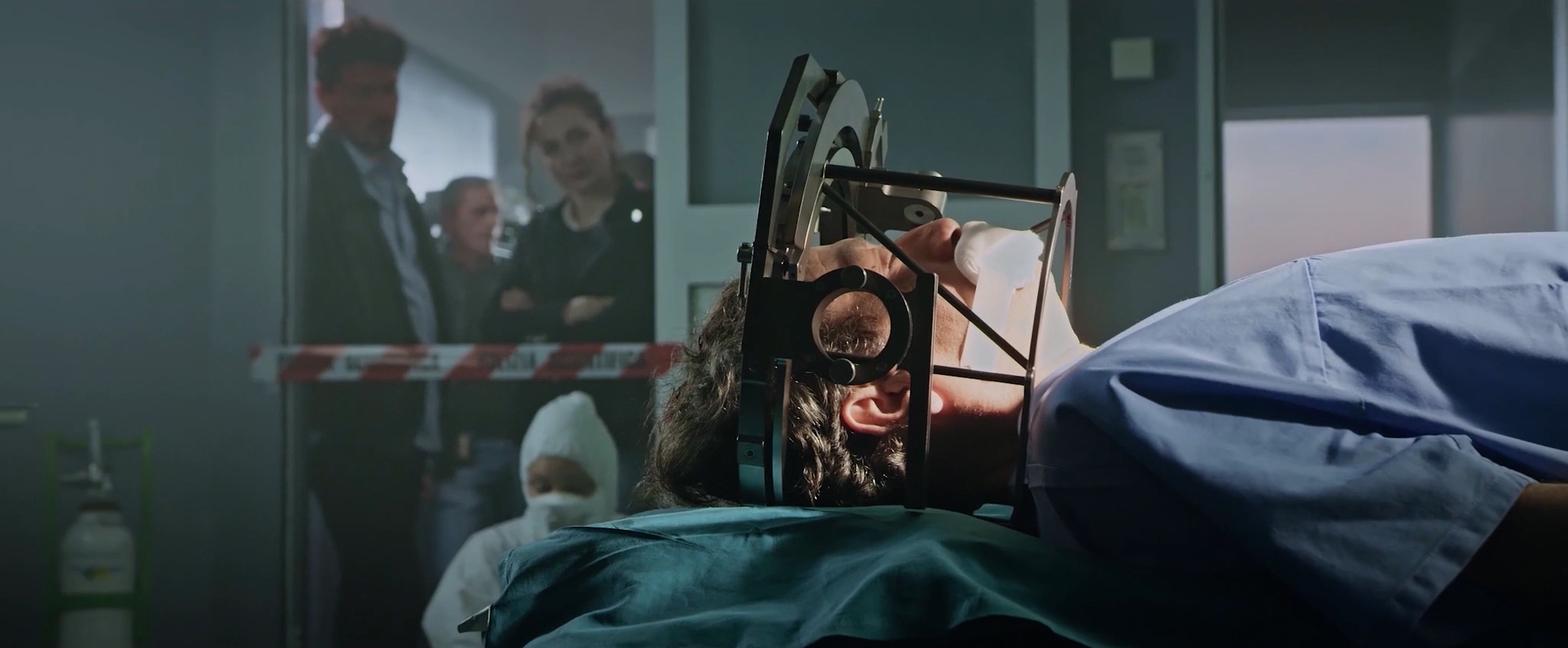
Stem Cell, directed by Giuseppe Di Giorgio, Italy, 2020.
A brilliant neurosurgeon is found murdered in his own operating room. The scene is gruesome. His killer used the very tools of his trade. Who is the murderer? A psychopath? Someone from within the institute? Commissioner Lorenzo Aliprandi and his team find themselves in a race against time to stop a killer who continues to murder using the same heinous methods, targeting other prominent doctors, leaving no trace behind except a trail of blood. New knowledge, intense experiences, and the race against time will test the strong character of Commissioner Aliprandi, who determined to uncover the murderers, will face every challenge head-on.
Based on the novel of the same name by Paolo Gaetani, a neurosurgeon by profession, Stem Cell addresses the major issues facing healthcare and its institutions, with a more poignant relevance than ever. Cinema thus complements the narrative and becomes a powerful tool for in-depth analysis and dissemination, exploring questions and proposing answers. It does so through the powerful tools of a fast-paced thriller rhythm and meticulous, bold cinematography. Alongside the main theme, the crimes unfold along with the intrigues, betrayals, economic interests, stories, and psychologies of all the characters.
Language: Italian
SUBTITLES: English, Spanish, French, German, Portuguese
When Biology Became a Battlefield
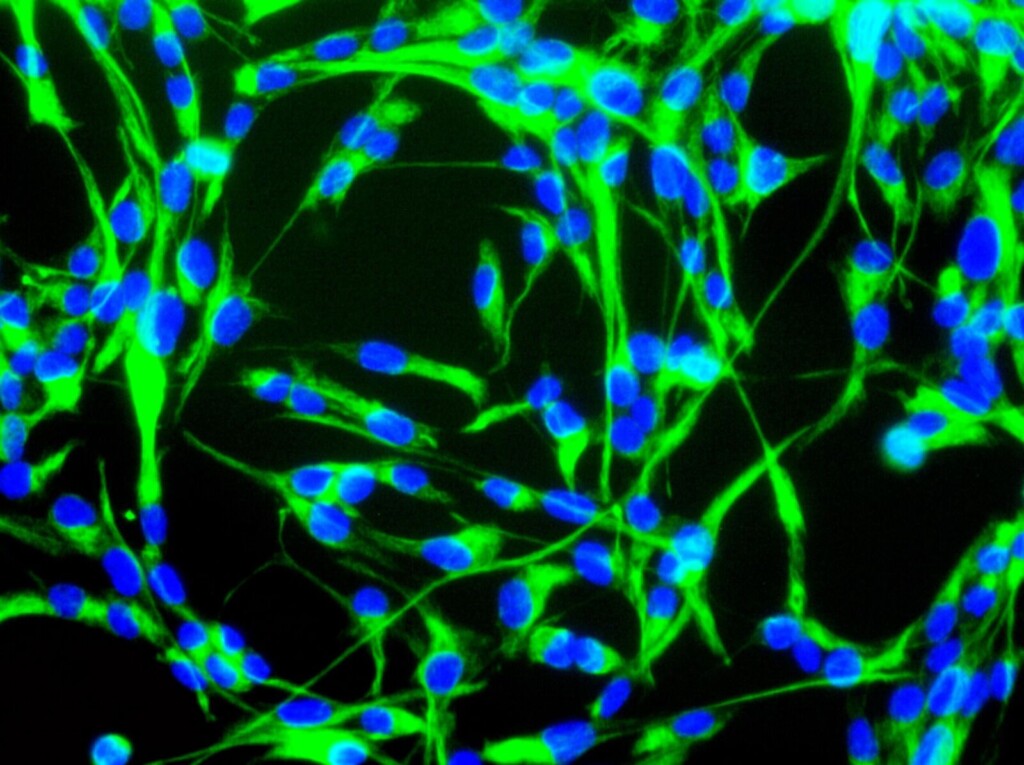
You are sitting in a genetics lab in Madison, Wisconsin, in November 1998, and the paper on the bench in front of you has just quietly rearranged the moral architecture of the modern world. James Thomson‘s team at the University of Wisconsin has succeeded in deriving and culturing human embryonic stem cells from blastocysts donated by in vitro fertilization clinics — five to fourteen days old, smaller than the period at the end of this sentence, and suddenly the most politically radioactive object in the history of American science. The cells themselves have not changed. What changed is that they now have a name, a method, and a published protocol in Science, volume 282, and the moment a thing can be reliably reproduced, it can no longer be ignored.
What erupted in the months that followed was not a debate about biology. The biology was, within scientific consensus, largely uncontroversial: a blastocyst possesses no nervous system, no capacity for sensation, no differentiated organs. What erupted was a battle over personhood, and personhood is not a biological category. It is a legal fiction, a theological construction, and a political instrument that different institutions have defined, retracted, and weaponized across centuries with remarkable inconsistency. The Catholic Church, for instance, did not hold a settled doctrine of immediate ensoulment at fertilization until relatively recently in its own long history — Thomas Aquinas in the thirteenth century argued for delayed ensoulment, distinguishing between the unformed and formed fetus in ways that directly contradicted the absolute positions the institution would adopt by the late twentieth century. The consistency of the opposition was itself a fabrication of the present moment dressed in the robes of eternal truth.
Into this unstable ground stepped the United States Congress with the Dickey-Wicker Amendment, first attached to an appropriations bill in 1996 and renewed annually thereafter, prohibiting federal funding for research in which human embryos are created, destroyed, or knowingly subjected to serious risk. The amendment predated Thomson’s breakthrough but was immediately conscripted to govern its aftermath. What is striking is that Dickey-Wicker passed with almost no public debate, inserted into a spending bill the way a splinter enters skin — quietly, painlessly, and with consequences that announce themselves only later. By the time Thomson published, the legislative architecture designed to contain exactly this kind of research was already in place, built not in response to a specific moral emergency but out of a generalized cultural anxiety about biotechnology that had been building since the first successful in vitro fertilization birth in 1978.
Leon Kass, appointed by President George W. Bush to chair the President’s Council on Bioethics in 2001, brought to that position a philosophical framework drawn partly from his 1985 collection Toward a More Natural Science, in which he argued that modern biology’s drive to master life at its most elemental level represented a form of hubris that would corrode the very moral intuitions that made human community possible. His concept of the “wisdom of repugnance” — the idea that visceral disgust is itself a form of moral knowledge — was used to legitimate what were, in practice, deeply political decisions about which kinds of suffering deserved federal investment and which did not. The sixty-four stem cell lines Bush announced as available for federal research in August 2001 were later found to be largely contaminated or scientifically unusable; the number itself had been a performance of moderation rather than a scientific assessment of adequacy.
Meanwhile, patients with Parkinson’s disease, spinal cord injuries, and juvenile diabetes were watching a different calculus unfold — one in which the potential of their own bodies to regenerate had been subordinated to a debate about entities that would otherwise be discarded by the fertility industry without political consequence of any kind.

The Architecture of the Ethical Trap
You are sitting in a Senate hearing room in the year 2001, watching a scientist explain, with extraordinary patience, that a blastocyst at five days of development contains no nervous system, no capacity for sensation, no differentiated tissue beyond a hollow sphere of roughly 150 cells. The senator across the table nods and then asks whether this thing has a soul. The scientist has already lost.
That exchange was never a debate about biology. The framing had been set years before any researcher stepped near a microphone, and it was set deliberately, not by ignorance but by what Hannah Arendt described in “The Origins of Totalitarianism” as the construction of a parallel reality — a world of categories and definitions that replaces observable fact with politically necessary truth. Arendt was writing about something far more violent, but her structural insight holds: when a political order needs to control a domain of life, it first colonizes the language through which that domain is perceived. By the time the embryo entered public discourse in the late 1990s, the word itself had already been loaded with ontological weight it had never carried in any prior legal, theological, or biological tradition. The question was not what a blastocyst is. The question was who gets to answer.
Michel Foucault, working through his lectures at the Collège de France from 1975 onward — particularly what became the published course “The Birth of Biopolitics” — identified the modern state’s essential ambition not as territorial conquest but as the administration of life itself: its definition, its thresholds, its value, its expendability. Biopolitics does not present itself as power. It presents itself as ethics. It speaks the language of protection, dignity, and the sanctity of vulnerable beings, and in doing so it transforms a political claim about sovereignty into a moral claim about nature. When the Bush administration announced in August 2001 that federal funding for embryonic stem cell research would be limited to the roughly 71 existing cell lines — a number that turned out to be closer to 21 usable lines — it was not issuing a biological verdict. It was issuing a territorial boundary: this far and no further, and the boundary is ours to draw.
What made the trap architectural rather than merely rhetorical was its double bind. Scientists who accepted the terms of the debate — who argued that embryos used in research were already slated for destruction at fertility clinics, that no new embryos were being created for extraction, that the moral cost was therefore minimal — had already conceded the foundational premise that an embryo possesses a form of moral status that requires justification to override. Every utilitarian argument reinforced the ontological claim it was trying to circumvent. The louder the scientific community argued that the benefits outweighed the costs, the more it legitimized the idea that there was a cost of the kind being described.
Meanwhile, the approximately 400,000 frozen embryos stored in American fertility clinics in 2001 — a number documented in a survey published that same year in “Science” magazine by researchers David Hoffman and colleagues — continued to exist in a legal and ethical vacuum. They were property. They could be discarded, donated, or abandoned. No senator convened a hearing about their souls. The embryo became sacred precisely and only where its sanctity could be weaponized against a specific scientific practice, which means the sanctity was never the point. Sovereignty was the point — the power to determine which knowledge is permissible, which futures are authorized, and which bodies of expertise hold legitimacy inside the republic’s official moral architecture.
What science discovered about pluripotency in 1998 was remarkable. What the subsequent decade revealed about politics was that the most durable form of censorship never bans a question outright.
Dolly, Yamanaka, and the Moving Goalposts

You are watching a sheep that should not exist. Born on July 5, 1996, at the Roslin Institute outside Edinburgh, Dolly carried no father’s DNA, no random genetic lottery, no ancestral mixing — she was the carbon copy of a six-year-old Finn Dorset ewe, produced by somatic cell nuclear transfer, a technique that Ian Wilmut and Keith Campbell had refined over 277 failed attempts before the one that held. The world did not respond with wonder alone. It responded with the particular vertigo that arrives when a boundary you assumed was natural turns out to have been contingent all along.
The ethical machinery mobilized almost immediately, and it mobilized around a very specific fear: not the sheep herself, but the human standing just behind her in the imagination. Cloning a mammal from adult somatic cells meant that, in principle, the developmental clock could be reversed — that differentiation, long considered biology’s own form of irreversibility, was negotiable. Leon Kass, writing in his 1998 essay “The Wisdom of Repugnance” in The New Republic, argued that the visceral disgust most people felt toward human reproductive cloning was not primitive irrationality but encoded moral intelligence — what he called the “language of the soul.” President Clinton suspended federally funded human cloning research within days of Dolly’s announcement. Nineteen countries signed the Council of Europe’s Additional Protocol on the Prohibition of Cloning Human Beings by 1998. The anxiety was not about sheep. It never was.
What followed was a decade of therapeutic cloning debates in which the distinction between reproductive and research cloning was drawn, redrawn, and contested in legislatures from Washington to Seoul, while embryonic stem cell research — already embattled since James Thomson’s 1998 isolation of human embryonic stem cells at the University of Wisconsin — became the primary ethical battlefield. The embryo’s moral status, the question of when personhood begins, the permissibility of creating life in order to harvest it: these arguments consumed congressional sessions, papal encyclicals, and bioethics committees across the industrialized world. Then, in 2006, Shinya Yamanaka published his landmark paper in Cell demonstrating that ordinary mouse fibroblasts could be reprogrammed into induced pluripotent stem cells — iPSCs — by introducing just four transcription factors. No embryo required. No nuclear transfer. No destroyed blastocyst. The announcement carried the unmistakable subtext that the controversy had been technically outflanked.
It had not. Within months of Yamanaka’s Nobel-trajectory breakthrough — he shared the prize with John Gurdon in 2012 — the objections had simply migrated. Critics noted that iPSCs could, under certain conditions, generate gametes, raising the prospect of same-sex biological reproduction or reproduction from a single individual. Others pointed to the oncogenic risks of the reprogramming vectors. Then came organoids: in 2013, researchers began growing cerebral organoids from iPSCs, miniature brain-like structures that could exhibit spontaneous neural activity, and the question of embryo personhood dissolved into the far stranger question of whether a mass of self-organizing neural tissue in a petri dish could be said to suffer. The moral panic had not been resolved. It had been promoted.
This is the pattern that the history of biotechnology reproduces with something close to fidelity: every technical solution that appears to neutralize an ethical controversy does so only by relocating the anxiety to a more sophisticated address. The underlying discomfort is not, and has never been, about any specific procedure. It is about the category of the human itself — its boundaries, its reproducibility, its resistance to being engineered. Each time science offers a workaround, the boundary simply redraws itself further out, protecting the same core intuition that human life must contain something that cannot be fully captured by a protocol, a transcription factor, or a culture medium maintained at 37 degrees Celsius.
What We Permit Ourselves to Hope

You are sitting in a hospital waiting room when a doctor explains that the trial has shown measurable improvement in dopaminergic neuron function, that the tremor may reduce, that something science spent decades calling impossible is now being called preliminary but promising. What moves through you in that moment is not gratitude in any simple register — it is something closer to relief that someone, somewhere, kept working while the committees debated.
The clinical landscape of regenerative medicine in 2024 is dense with exactly these moments. Trials targeting Parkinson’s disease using induced pluripotent stem cells have advanced through Phase I safety assessments in Japan under the work initiated by Masayo Takahashi’s team at RIKEN, building on Shinya Yamanaka’s 2006 reprogramming breakthrough. Spinal cord injury protocols at institutions across the United States and Switzerland have moved cautiously toward demonstrating functional recovery in patients who were told recovery was neurologically foreclosed. The numbers are not dramatic yet — partial sensation returning in a fraction of participants, motor function improving by degrees that matter enormously to the person living inside that body and read as modest in a press release. But the direction of travel is real, and it is built on decades of foundational research that was, at multiple points, nearly legislated out of existence.
The discomfort that regenerative medicine forces into the open is not primarily scientific. It is arithmetical in a moral sense: societies that have channeled enormous political energy into protecting embryos from research have simultaneously failed to fund pediatric cancer research at levels commensurate with the suffering it causes. The National Institutes of Health allocated roughly 4.9 billion dollars to cancer research in fiscal year 2023, yet pediatric cancers — which strike children who by any intuitive measure represent the most unambiguous category of innocent life — receive less than four percent of that total. No political speech mourns this allocation. No candlelight vigil assembles outside a congressional office to demand that a child with diffuse intrinsic pontine glioma receive the same moral urgency as a blastocyst in a laboratory freezer. The asymmetry is not accidental. It follows the logic of visibility, of symbolism, of what philosopher Peter Singer identified in “Practical Ethics” as the identifiable victim effect — the cognitive bias by which a singular, representable entity commands more moral investment than a statistical population of sufferers whose faces we do not see.
What emerges from this asymmetry is a portrait of collective grief that is highly selective, almost curated. The embryo is legible as a symbol precisely because it asks nothing of us behaviorally — it does not require hospital visits, does not interrupt work schedules, does not confront us with the prolonged, expensive, emotionally exhausting reality of degenerative illness. The patient with ALS whose motor neurons are failing at thirty-four, who has watched the disease move from one hand to both arms to the muscles governing breath — that person is harder to symbolize because their suffering is too specific, too prolonged, too resistant to the clean narrative of violation and protection that political emotion requires.
Regenerative medicine does not resolve this contradiction; it illuminates it with a particular cold clarity. Every incremental advance in stem cell therapy arrives carrying the weight of what was nearly prevented, what was delayed by legislative moratoriums, what might have been possible ten years earlier had the research environment been governed by different priorities. The California Institute for Regenerative Medicine, created by Proposition 71 in 2004 with three billion dollars in state funding specifically because federal policy had constrained embryonic stem cell research, represents a direct monument to that gap — a state voting to fund what its federal government had chosen, for reasons of symbolic politics, to restrict. That a public referendum on a scientific methodology was necessary at all suggests how thoroughly the conversation had migrated from laboratories and ethics boards into the theater of electoral identity, where what mattered was not the patient in the waiting room but the story a constituency could tell about itself.
A vision curated by a filmmaker, not an algorithm
In this video I explain our vision
🧬 Science, Ethics, and the Boundaries of Life
Stem cell research sits at a crossroads where scientific ambition meets profound moral questions about the nature of life itself. These related articles explore the philosophical, historical, and ethical territories that surround biomedical science and the human search for knowledge and healing.
Marie Curie: Life and Works
Marie Curie‘s life is a landmark in the history of science, illustrating how radical discovery often comes at enormous personal cost. Her pioneering work on radioactivity opened doors that would eventually lead to modern biomedical research, including the cellular studies that underpin stem cell science. Understanding her legacy helps contextualize the sacrifices and controversies that accompany every major scientific breakthrough.
GO TO THE SELECTION: Marie Curie: Life and Works
Barbara McClintock: Life and Discoveries
Barbara McClintock‘s revolutionary discovery of genetic transposition challenged the rigid assumptions of mid-twentieth-century biology, much as stem cell research challenges our fixed notions of cellular identity. Her decades-long struggle to have her findings accepted by the scientific establishment reflects the resistance that often greets transformative biological knowledge. Her story is essential reading for anyone interested in the politics of science and the courage required to pursue unorthodox truths.
GO TO THE SELECTION: Barbara McClintock: Life and Discoveries
Gregor Mendel: Life and Works
Gregor Mendel‘s foundational work on heredity laid the conceptual groundwork for all of modern genetics, including the cellular biology at the heart of stem cell research. His meticulous experiments with pea plants established that life’s traits are governed by discrete, transmissible units—a revelation that would eventually open the path toward understanding cell differentiation and reprogramming. Revisiting Mendel reminds us how quietly radical ideas can reshape entire scientific paradigms across generations.
GO TO THE SELECTION: Gregor Mendel: Life and Works
Donna Haraway: Life and Thought
Donna Haraway‘s provocative thinking about the boundaries between organism, technology, and ethics offers a powerful philosophical lens through which to examine the stem cell controversy. Her work challenges us to question who controls biological knowledge and whose values shape the direction of scientific research. In an era of genetic manipulation and regenerative medicine, Haraway’s critical perspective remains urgently relevant.
GO TO THE SELECTION: Donna Haraway: Life and Thought
Explore Science, Ethics, and Human Stories on Indiecinema
If these themes of discovery, moral complexity, and the frontiers of human knowledge resonate with you, Indiecinema’s streaming catalog offers a rich selection of independent films that bring these questions to life with depth and artistic courage. From intimate documentaries to visionary fiction, you’ll find stories that dare to ask the hardest questions about what it means to be human. Begin your exploration today and let independent cinema expand your thinking beyond the expected.
👉 EXPLORE THE CATALOG: Watch Indie Films in Streaming
A vision curated by a filmmaker, not an algorithm
In this video I explain our vision

