
The Book You Were Never Supposed to Understand
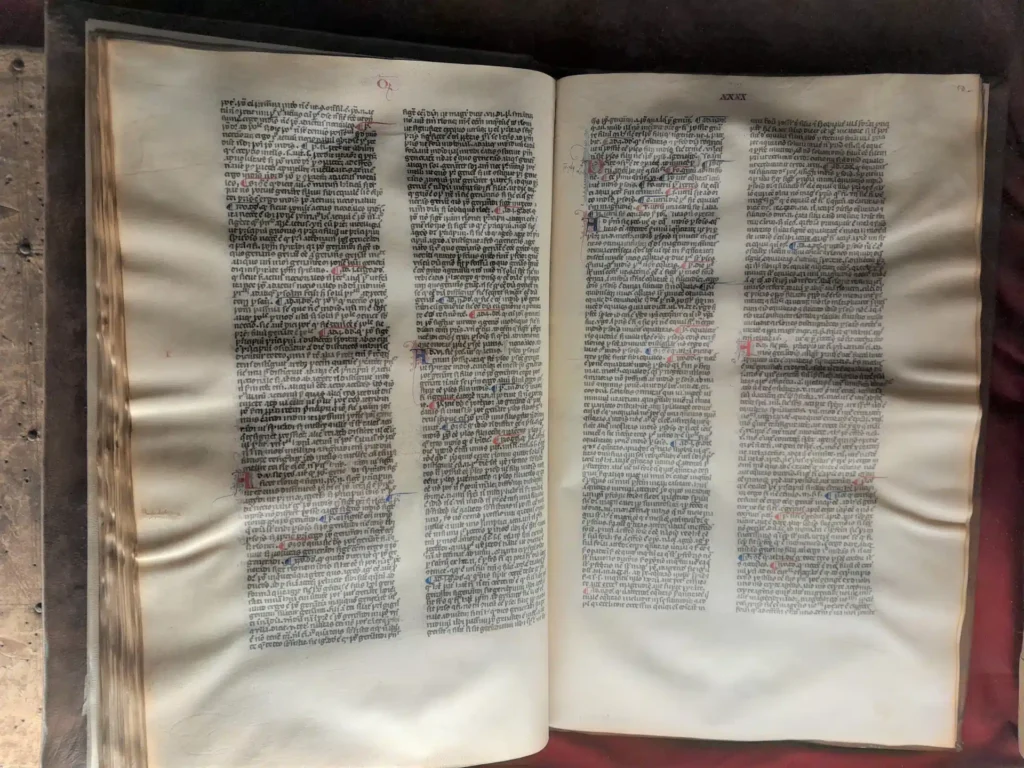
You pick it up once. Maybe in a library, maybe in a second-hand bookshop where it sits wedged between a dictionary and something about the Crusades. You open it somewhere in the middle, because that is what curious people do, and within thirty seconds you are looking at a structure so alien and so relentless that something in your chest simply gives up. There are questions posed in a formal Latin-derived cadence. There are objections to those questions, numbered and cold. There are replies to the objections, and replies to the replies, and somewhere inside all of that scaffolding there is supposed to be an argument about God, or the soul, or the nature of evil, but you cannot find it because the architecture itself has swallowed it whole. You close the book. Quietly, without drama, with the particular shame of someone who has just confirmed a suspicion they had about themselves. And you put it back.

That moment is not a personal failure. It is a historically manufactured response, centuries in the making, and it works precisely because it feels so private.
Thomas Aquinas completed the Summa Theologica between 1265 and 1273, and he left it unfinished. He died before the third part was done, and what we have is a torso — enormous, yes, but incomplete. The work runs to somewhere in the region of three thousand articles organized into hundreds of questions spread across three major parts, the second of which is itself divided into two. The numbers are real and they are genuinely staggering. But numbers, by themselves, do not explain the terror the book produces. What explains it is what happened to the text after Aquinas put down his pen.
Within decades of his death in 1274, the Summa began its transformation from a teaching instrument into an institution. By the time the Council of Trent opened in 1545, it was placed on the altar alongside the Bible as a doctrinal authority. By the nineteenth century, Leo XIII’s encyclical Aeterni Patris of 1879 had effectively mandated Thomism as the official philosophy of Catholic intellectual life, and the Summa became the fortress wall of an entire civilizational identity. Generations of seminarians were trained not to read it but to cite it. To wield it. To defend it. The text stopped being a conversation and became a credential.
What was lost in that transformation is the sentence Aquinas himself wrote at the very opening of the work — the sentence almost nobody quotes when they are trying to frighten you with the book’s dimensions. He wrote that the Summa was composed for beginners. The Latin is unambiguous: ad eruditionem incipientium, for the instruction of those who are starting out. He was not being modest. He was being precise. The Summa was designed as a pedagogical instrument, a structured introduction meant to replace the chaotic and overlapping commentaries that were burying his students alive. It was, in the most literal sense, a guide for people who did not yet know.
The irony has a kind of brutality to it. The book written to rescue beginners from confusion became the primary object of confusion. The tool designed to make thinking accessible was repackaged as proof that thinking required authorization. And the reader who closes it in a library, feeling small, is enacting a ritual that has nothing to do with the thirteenth century and everything to do with every institution that has ever had an interest in making knowledge feel like property.
The gate was not built by Aquinas. But it was built in his name, with his text as the lock, and the first thing you need to understand about reading the Summa is that the intimidation you feel is not an invitation to step back.
A Mind Built for Combat, Not Comfort
There is a kind of mind that cannot rest until it has given the opposing argument its fullest, most dangerous form. Not the caricature version, not the strawman dressed up in borrowed clothes, but the real thing — the objection sharpened to its finest edge, the challenge stated so precisely that it genuinely threatens your own position. Thomas Aquinas had this kind of mind, and it was not a gift from heaven. It was trained into him, beaten into shape through years of a pedagogical system that modern universities have largely abandoned and, in abandoning, lost something they cannot quite name.
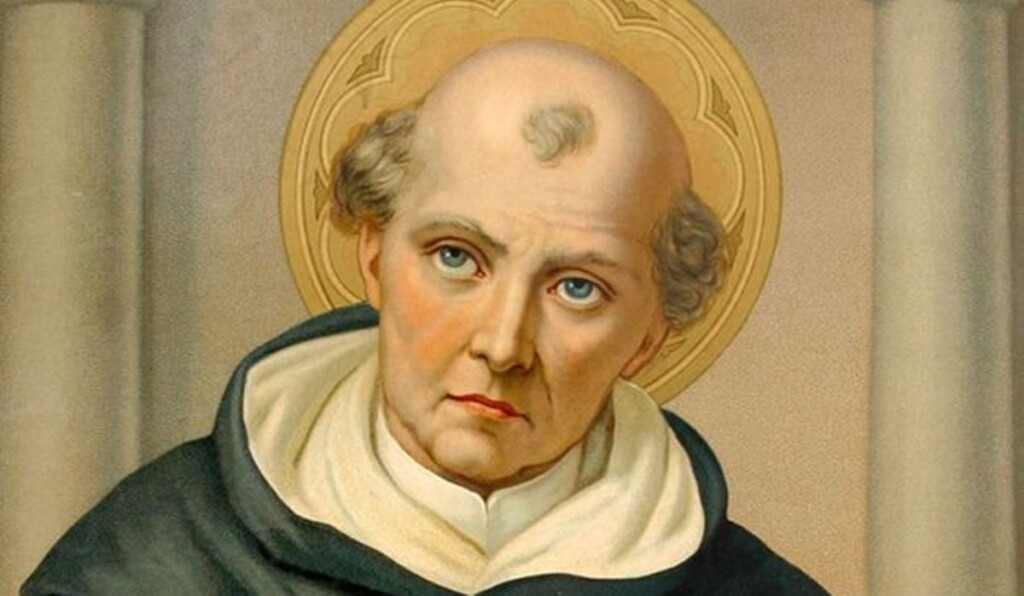
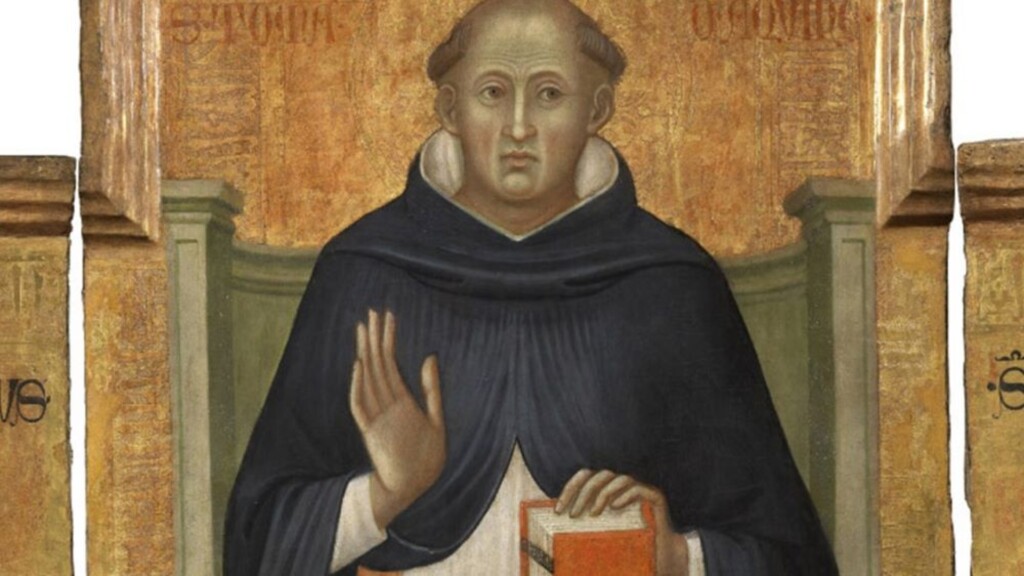
He was born in 1225 in Roccasecca, in the Kingdom of Sicily, to a minor noble family that had plans for him involving Benedictine abbeys and ecclesiastical comfort. Instead, at nineteen, he joined the Dominicans — an order built around preaching and argument, perpetually mobile, perpetually in dispute — and was sent to Cologne to study under Albert the Great, the man who had already decided that Aristotle and Christian theology were not enemies but unfinished partners. Aquinas arrived as a student so quiet and large that his classmates called him the dumb ox. Albert, famously, told them they were wrong. He said the bellowing of that ox would one day be heard across the whole world.
The bellowing took a particular form. Between 1265 and 1274, Aquinas wrote the Summa Theologica — or more precisely, he dictated it, revised it, left it unfinished when a blow to his head in March of 1274 silenced him permanently, months before his death at forty-nine. What remains is not a finished cathedral but something stranger and more honest: a structure whose incompletion feels almost intentional, as if the builder understood that certain questions resist their final stone.
The method he worked in was scholasticism, and its central gesture was the quaestio — the question posed not as a rhetorical flourish but as a genuine problem requiring resolution. Each article of the Summa follows a structure that looks almost procedural: here are the objections, here is the counterargument from authority, here is my reply, here is why each objection fails or requires qualification. It looks, at first glance, like bureaucratic formalism. It is, in fact, something close to intellectual courage made into a habit.
Think about what this actually requires. Before you state your own position, you must construct the best possible version of the case against you. Not a weak version. The strongest one. You must give your opponent’s argument more credit than he might give it himself. You must feel the genuine pull of the objection, sit inside it long enough to understand why a serious person would hold it. Only then do you reply. Contrast this with the architecture of contemporary public debate, where the goal is not to refute the strongest form of the opposing view but to perform confidence in front of an audience that already agrees with you. What passes for argument today would have been recognized by Aquinas as something closer to theater — and not particularly good theater.
There is a moment that stays with you — a young man in a room full of interrogators, questioned for hours about things that matter to him enormously, and rather than defending himself by attacking them, he begins by granting their premise, carefully, fully, and then turns it inside out. The room does not know what to do with this. It expected combat of the theatrical kind. It got something more unsettling: someone who had already thought what they were thinking, gone further with it than they had, and arrived somewhere else entirely.
Aquinas had this quality not because he was serene or above the fray, but because the scholastic method had made the fray internal. The debate was already happening inside the text before any opponent arrived.

What the Objections Are Really Doing
There is a specific kind of intellectual cowardice that passes itself off as confidence. You have seen it in a meeting, in a dinner conversation, in a political debate where the person speaking never quite addresses what the other person actually said. They address a softer version of it, a deflated replica, something easier to knock down. They win the argument they invented rather than the one they were given. And then they look satisfied, as though something real had been settled.
Aquinas does the opposite. In every single article of the Summa Theologica, before he says a word of his own position, he constructs the opposing argument as powerfully as he can. Not a caricature. Not a paraphrase designed to fail. The objection is written so that it could persuade you. Sometimes it does persuade you, at least momentarily, before you continue reading. This is not rhetorical courtesy. It is the structural core of his entire epistemological ethics. The form of the article — objection, the authority that pulls in the contrary direction, the answer, the specific reply to each objection — is not a medieval quirk or a scholastic convention to be skipped. It is the argument that the method itself is making, before any content arrives.
Eli Pariser, writing in 2011, documented what happens when the opposing argument is never allowed to reach you in the first place. His analysis of algorithmic filtering showed how recommendation systems learn your preferences and seal you inside them, not out of malice but out of optimization logic. You click on what confirms you, the system serves you more of it, and gradually the world reshapes itself into a mirror. Jonathan Haidt’s research on moral reasoning had already shown, a decade earlier, that humans typically reach their moral conclusions first, through intuition and emotional reflex, and construct the reasoning afterward. The argument is not how we think. It is the costume thinking wears once it has already decided. What Pariser described technologically, Haidt had described psychologically, and together they portrait a mind that encounters objections only in the forms it can already defeat.
There is a scene that captures this precisely: a man is shown footage of his own behavior, evidence he cannot dismiss, and rather than revising his position he immediately begins explaining why the footage is misleading, why context is missing, why the person who gathered it cannot be trusted. The evidence is processed entirely as threat, not as information. He walks away more certain than when he arrived. This is not weakness. This is the default architecture of a mind that has never been trained to do otherwise.
Aquinas was trained otherwise, by a method that treated the opposing argument as a gift. The objection is not the enemy of truth. It is the instrument by which truth sharpens itself. When he writes “it seems that” to introduce a position he will later dismantle, the phrase carries genuine weight. It really does seem that way. He is not pretending. And when he returns to each objection in the Reply section, he does not simply repeat his answer at higher volume. He shows exactly where the objection was right, how far it goes, and at precisely what point it misreads the problem. The disagreement is anatomized, not annihilated.
This is what makes the Summa so strange to read in the present moment. We are trained to experience concession as defeat. To acknowledge that an opposing argument has force feels like losing ground. But Aquinas treats concession as the precondition of any honest intellectual movement. He cannot answer what he will not first fully hear. And the hearing is not passive. It requires him to inhabit a position long enough to make it dangerous, to feel the weight of it before finding where it gives way.
God Is Not What You Think He Is
You have a picture of God in your head. You inherited it without knowing it, the way you inherited your grandmother’s fear of silence or your father’s distrust of strangers. He is large, probably bearded, probably patient in a way that suggests disappointment is always just behind the patience. He knows your name. He watches. This image is so deeply embedded in Western consciousness that even declared atheists tend to reject it specifically, as though the thing they are refusing is that particular figure, that particular moral superintendent. What almost nobody realizes is that Aquinas, the medieval Dominican friar whose Summa Theologica sits at the center of Catholic intellectual tradition, would have found that image not merely inadequate but philosophically incoherent.
The Prima Pars, the first part of the Summa, opens not with declarations about God’s nature but with a systematic dismantling of the very possibility of declaring anything about God’s nature. Aquinas inherits this move from two sources that few readers expect to find inside a Christian theological monument. The first is Pseudo-Dionysius, the anonymous fifth or sixth century Christian mystic who argued that God transcends every category human language can produce. The second is Moses Maimonides, the twelfth-century Jewish philosopher whose Guide for the Perplexed, completed around 1190, insisted with almost aggressive rigor that any positive attribute applied to God is an error, because it implies limitation and composition, and God by definition cannot be limited or composed of parts. Aquinas read both. He absorbed both. And what emerged is a doctrine of divine simplicity so radical that it quietly destroys the comfortable image most people carry.
The via negativa, negative theology, does not mean that we say God is bad or absent. It means that we approach what God is only through what God is not. God is not finite. God is not composite. God is not caused. God is not in time. God does not possess goodness the way a person possesses a quality, because in a person goodness is distinct from existence, and in God there is no such distinction. This is the doctrine of divine simplicity in its most vertiginous form: in God, essence and existence are identical. God does not have being. God is being itself. The Latin phrase Aquinas uses, esse ipsum subsistens, being itself subsisting, is not a poetic flourish. It is a precise philosophical claim that severs God completely from the category of objects, beings, or persons as normally understood.
Think of a man who spends his life building a case that something exists beyond the reach of every tool he possesses, who arrives at the edge of language and keeps walking. That is more or less what Aquinas does in the Questions on God’s nature in the Prima Pars. The closer you get to the God of the Summa, the less He resembles anything you can picture, and Aquinas does not apologize for this. He insists on it. The philosophical distance between the God of the Summa and the God of popular devotion is so enormous that Spinoza’s substance, that single infinite attribute-bearing reality described in the Ethics of 1677, is in some ways a closer cousin to Aquinas’s esse subsistens than the personal God of Sunday liturgy. Wittgenstein, writing in the Tractatus Logico-Philosophicus in 1921, concluded that whereof one cannot speak, thereof one must be silent. Aquinas would not have used that formulation, but he would have recognized the pressure behind it. Some realities are not hiding from language. They exceed it constitutively.
What this means for anyone reading the Summa is that the theological comfort you may have been expecting is not available here. The text does not offer you a God you can address like a neighbor.
The Body Is Not the Enemy
You are sitting across from someone you love and you feel, suddenly, a flash of anger so clean and so precise it almost resembles clarity. Not the hot blur of rage but something sharper — a recognition that something wrong has been permitted to continue too long, that the silence you have been maintaining has a cost you can no longer afford. And in that moment, before you do anything with it, you feel ashamed of the feeling itself. You have been taught, somewhere deep in the sediment of your formation, that the anger is the problem. That the virtuous response is to dissolve it, breathe through it, return to calm. Aquinas would tell you that you have been taught badly.
The Secunda Pars of the Summa Theologica is the section most people have never read and most confidently misrepresent. It is where Aquinas turns from God and creation toward the human being in motion — acting, desiring, fearing, deliberating, failing, trying again. It runs to hundreds of questions across two massive sub-parts, and it constitutes perhaps the most sophisticated pre-modern account of the interior life that Western philosophy produced. It is also the section most grotesquely distorted by centuries of moral theology that claimed to be its heir.
Think of a man standing in a dim apartment, watching the woman he cannot have through the window of his own restraint — not because he doesn’t feel desire but because he has learned to treat every desire as evidence of his own unworthiness. That posture, that particular contortion, is not Thomism. It is what was made of Thomism after the fact, the residue of a Counter-Reformation project that needed a rigorous intellectual architecture to legitimate a disciplinary apparatus. The Church of the sixteenth and seventeenth centuries required a moral code that could be administered, confessed, catalogued. What it built from Aquinas’s text was a grid of prohibitions. What it erased was his fundamental claim: that the passions are not obstacles to virtue but its material.
Aquinas is explicit. The passions — what he calls the movements of the sensitive appetite, among them desire, joy, sorrow, hope, fear, anger — are not morally neutral at best or sinful at worst. They are cognitive. They carry information. Anger perceives injustice. Fear perceives genuine threat. Desire perceives real good. Martha Nussbaum, in Upheavals of Thought published in 2001, reconstructs almost exactly this position from within the tradition of analytic philosophy and Stoic revision, arguing that emotions are not dumb surges of animal energy but evaluative judgments about the world — what she calls intentional states with propositional content. She reaches across two millennia and finds, whether she frames it this way or not, that Aquinas was already there.
What the Secunda Pars argues is that virtue does not require the extinction of feeling. It requires its integration. The temperate person does not lack desire; they desire well, in proportion, at the right moment, toward the right object. The courageous person is not fearless; they feel fear with accuracy and move through it when the situation genuinely demands it. This is not a minor distinction. It is the difference between a moral framework built on suppression and one built on formation — on what Aristotle called habituation and Aquinas absorbed and theologized as the cultivation of virtue through repeated acts that gradually reshape the structure of the self.
The man who finally says what should have been said three years earlier, the woman who refuses an arrangement that everyone around her has normalized, the adolescent who names the cruelty that adults in the room are calling discipline — these are not people who conquered their feelings. They are people whose feelings were precise enough, and trained enough, to be trusted.
The body was never the enemy. The lie that it was came later, and it came with an institutional signature.
A vision curated by a filmmaker, not an algorithm
In this video I explain our vision
Free Will Under Pressure
You make a choice. You are certain it is yours. You deliberated, weighed, decided. And yet if you trace the deliberation back far enough — the words you used to frame the options, the threshold of what counted as acceptable, the almost physical pull toward one outcome over another — you find something that was never chosen at all. You find the person you were made into before you had any say in the matter.
Aquinas understood this long before the vocabulary for it existed. In the Prima Secundae, beginning at Question 6, he builds what looks like a celebration of human freedom: the will is rational appetite, he says, and because it is ordered by reason rather than by instinct, it is genuinely free. Animals are moved by sensation toward particular goods and cannot do otherwise. We can step back, consider, refuse. This is the classical picture, and it is true as far as it goes. But Aquinas does not stop there, and the questions that follow — through Question 17, across the intricate machinery of voluntary acts, intention, choice, use — begin quietly dismantling the triumphalism of that opening.
The will, he explains, is moved by what the intellect presents as good. It cannot desire what reason does not first illuminate as desirable. Which means the freedom of the will is only as wide as the honesty of the intellect, and the intellect is not a neutral instrument. It operates through habit. Through what Aquinas calls habitus — those stable dispositions acquired through repeated action, which come to shape not just what we do but what we see, what we notice, what we are even capable of considering as a live option. A person habituated to cruelty does not merely choose cruel acts more readily. They cease to perceive cruelty as cruelty. The practical reason has been reformed from the inside.
Seven centuries later, Pierre Bourdieu named this same structure with different tools. The habitus, as he developed it across works from Outline of a Theory of Practice in 1972 through The Logic of Practice and then Distinction, is the social world made flesh — class position, cultural inheritance, economic precarity or security, all of it deposited into posture, taste, reflex, aspiration. Bourdieu’s crucial insight was that domination does not require coercion precisely because it works through the body, through the pre-reflective, through what feels like personal preference or natural inclination. You do not experience your class habitus as an external constraint. You experience it as yourself.
Aquinas would have recognized this immediately, even if the politics would have unsettled him. Because what he describes in the corruption of practical reason through bad habit is structurally identical. A man who has grown up surrounded by the reduction of other people to instruments does not choose, each morning, to treat them instrumentally. He perceives them that way. The intellect presents what habit has trained it to present, and the will follows. The freedom is real in the formal sense — no one is holding a gun — and entirely compromised in the lived sense.
There is a moment when a woman, preparing a formal dinner for people she has served for decades, realizes she cannot actually picture herself sitting at that table. Not because she has been told she cannot. Because the thought does not form. The imagination has been educated out of that particular movement. This is not servility. This is what Bourdieu called the sense of one’s place, and what Aquinas called a will whose objects have been narrowed by disordered habituation until certain goods simply do not appear on the horizon of the possible.
The question that opens from here — whether any act can be called fully voluntary when the conditions of perception have been shaped by forces the agent never consented to — is one that Aquinas poses without quite answering, and that sociology has been circling for a hundred years without closing either.
The Tertia Pars and the Scandal of the Particular
There is a moment when you are sitting with someone who is dying — not the idea of death, not mortality as a philosophical category, but this person, this specific face, this particular hand that has grown cold in a way no abstraction prepared you for — and you understand suddenly that everything you thought you knew about suffering was knowledge about a concept, not about this. The particular ambushes you. It always does.
This is precisely the scandal Aquinas walks into with his eyes open in the Tertia Pars. After two vast architectures — the nature of God, the nature of the human being moving toward God — he arrives at the point the entire structure was secretly organized around: the claim that the infinite entered history at a specific coordinate. Not mankind in general. Not the human condition as a philosophical specimen. A body, a region, a moment datable to within a generation. The Word became flesh in Galilee under Roman administrative control, sometime between 6 BCE and 30 CE, in a province that appears in tax records and military dispatches. This is the move that should have seemed philosophically embarrassing and instead turns out to be the most philosophically serious thing Aquinas does.
Because what the Incarnation proposes — stripped of its devotional register and read as a claim about how truth operates — is that universals do not descend cleanly into particulars from above. They are not applied to instances like a template pressed into wax. They arrive, if they arrive at all, embedded. Contaminated by specificity. Carrying the marks of where they have been. The Tertia Pars is Aquinas’s argument that the highest form of knowledge is not the one that ascends furthest from the concrete but the one that finds the universal hiding inside a particular face.
Simone Weil, writing in the early 1940s in conditions of exile and voluntary destitution, arrived at the same position from a different direction entirely. Her essays collected posthumously in Waiting for God make an argument that academic philosophy has largely refused to take seriously because it is too uncomfortable: that attention — real attention, the kind that suspends the self and its projects entirely — is not a preliminary to thought but its highest form. “Attention is the rarest and purest form of generosity,” she writes, and she means it with technical precision. To attend to the particular, to this face, this situation, this unrepeatable configuration of suffering, is to perform the act that most fully exercises the intellect. The abstraction-obsessed mind, she implies, is not more rigorous. It is more defended.
There is a sequence — a man watching his father eat, slowly, with the concentrated effort of someone for whom even this simple act has become labor — and the camera does not explain what it means. It simply watches. The watching is the argument. It refuses to resolve the particular into a lesson, refuses to let the scene become an illustration of something larger than itself. The father’s face remains the father’s face. And yet, in that insistence on the irreducible specific, something opens — not despite the particularity but through it.
Aquinas in the Tertia Pars, before illness stopped him in December 1273 and he declared that everything he had written seemed to him as straw, was building exactly this. The sacraments he analyzes in the later questions are not symbols pointing away from matter toward spirit. They work through matter — through water, bread, oil, the specific gesture of specific hands. The physical is not transcended. It is the medium. Grace does not bypass the body. It travels through it, the way meaning travels through the exact words of a sentence and cannot be paraphrased without loss.
What remains, in the unfinished silence at the end of the Tertia Pars, is not a gap in a system. It is the shape of a question Aquinas could not close because it is the kind of question that resists closing — not from weakness of thought, but from fidelity to something that keeps happening, keeps arriving particular, keeps refusing to be finished.
Reading the Summa Against Itself
There is a particular kind of exhaustion that comes not from having understood too little but from having understood too much. You have followed the arguments, traced the objections back to their roots, watched the replies arrive with their careful distinctions, and somewhere around the nine hundredth article you begin to feel not the satisfaction of accumulation but something closer to vertigo — the sensation of standing inside a cathedral so vast that the walls have disappeared into darkness above you, and you are no longer certain whether you are enclosed or exposed.
Aquinas built the most systematically ambitious theological structure in Western intellectual history, and then, in the final weeks of his life in 1274, he stopped writing. Not because he had finished. The third part of the Summa remains incomplete, broken off mid-question on the sacrament of penance, a sentence simply not continued. Those who were with him pressed him to go on. He refused. What he reportedly said — that everything he had written seemed to him like straw compared to what he had experienced — is usually treated as a biographical curiosity, a footnote about mystical exhaustion. It is nothing of the sort. It is the only honest commentary the Summa ever received, and it came from the man who wrote it.
Consider what that sentence actually does to the text it describes. The Summa is predicated on the premise that reason, properly ordered, can illuminate the truths of faith, can move from effect to cause, from creature to Creator, from the grammar of being to the name of God. Five ways to demonstrate existence. Forty-three questions on the nature of angels. Elaborate taxonomies of vice and virtue calibrated to the finest distinctions of intention. The entire edifice rests on confidence in the instrument — in the capacity of the scholastic method to carry weight that no method had ever been asked to carry before. And then the architect looks at what he has built and uses the word straw.
The philosopher Bernard Lonergan, who spent decades studying Aquinas and whose 1957 work on insight remains one of the most searching engagements with Thomistic cognition in modern thought, argued that what Aquinas was reaching toward was not a failure of method but a recognition of its horizon. Reason can map the territory up to a certain boundary. Beyond that boundary is not irrationality but a different kind of knowing — what the medieval tradition called contemplation, and what Aquinas, in those final weeks at the monastery of Fossanova, seems to have encountered in a form that made his five million words feel provisional. Lonergan understood this as the completion of intellectual conversion, not its negation. But even that generous reading does not fully absorb the shock of what Aquinas said. Straw is not a minor qualification. Straw is what you burn.
To read the Summa against its own grain means holding two things simultaneously: the extraordinary precision of the arguments and the author’s own verdict on their ultimate sufficiency. It means following every distinction with genuine rigor while remembering that the man who made those distinctions considered them inadequate to the thing they were pointing toward. This is not an invitation to mysticism, nor a dismissal of theology. It is something more unsettling — the recognition that the greatest achievement of systematic religious thought is also a demonstration of systematic thought’s outer limit, written in painstaking detail by someone who then looked beyond it and found the detail small.
The Summa does not end. It stops. And the difference between those two words is exactly the space Aquinas left open — not through carelessness, not through death alone, but because any honest cartographer eventually draws a line at the edge of the known world and writes there, in whatever language serves, that beyond this point the map is no longer the territory, and the territory does not end.
🧭 The Labyrinth of Medieval Thought
Aquinas’s Summa Theologica stands at the crossroads of faith, reason, and philosophical tradition, drawing from centuries of theological and intellectual inquiry. To truly grasp its depths, one must explore the broader world of medieval philosophy, mysticism, and the figures who shaped Christian thought. These related articles illuminate the rich intellectual maze in which Aquinas wrote and reasoned.
Thomas Aquinas: Life and Philosophical Thought
Thomas Aquinas was the towering intellect behind the Summa Theologica, synthesizing Aristotelian philosophy with Christian revelation in a way that redefined Western theology. This article offers a comprehensive portrait of his life, his Dominican formation, and the philosophical system that made him the cornerstone of scholasticism. Understanding Aquinas the man is the essential first step before diving into the architecture of his great work.
GO TO THE SELECTION: Thomas Aquinas: Life and Philosophical Thought
Meister Eckhart: Life and Mystical Philosophy
Meister Eckhart represents the mystical current that ran alongside scholastic theology in the medieval Christian world, offering a radically interior vision of the divine that both complements and challenges Aquinas’s systematic approach. His life and philosophy illuminate how the same tradition could produce vastly different but deeply interconnected spiritual paths. Reading Eckhart alongside Aquinas reveals the full spectrum of medieval theological imagination.
GO TO THE SELECTION: Meister Eckhart: Life and Mystical Philosophy
Bernard of Clairvaux: Life and Mystical Thought
Bernard of Clairvaux was one of the most influential voices in twelfth-century Christianity, shaping the spiritual and institutional landscape that Aquinas would later inherit and transform. His mystical theology, centered on love and contemplation, provides a vital counterpoint to the rational architecture of the Summa. Exploring Bernard’s thought enriches one’s understanding of the devotional undercurrents flowing beneath scholastic reasoning.
GO TO THE SELECTION: Bernard of Clairvaux: Life and Mystical Thought
Gothic Cathedrals: History and Symbolism
Gothic cathedrals were the architectural equivalent of the Summa Theologica, vast and intricate structures designed to express the totality of Christian truth in stone, light, and symbol. Like Aquinas’s theological edifice, they organized knowledge and faith into a harmonious and hierarchical whole that spoke to both learned clergy and illiterate faithful. Exploring their history and symbolism offers a vivid visual companion to the intellectual world of high scholasticism.
GO TO THE SELECTION: Gothic Cathedrals: History and Symbolism
Discover the Cinema of Ideas on Indiecinema
If the labyrinthine depths of medieval thought and philosophical inquiry have stirred your curiosity, Indiecinema streaming is your next destination. Our curated selection of independent and documentary films explores mysticism, philosophy, and the great questions of human existence with the same rigor and wonder you find in the Summa Theologica. Join us and let independent cinema be your guide through the infinite maze of ideas.
👉 EXPLORE THE CATALOG: Watch Indie Films in Streaming
A vision curated by a filmmaker, not an algorithm
In this video I explain our vision

