
The Map You Never Questioned
There is a map on the wall of almost every classroom you have ever sat in. You probably stopped seeing it years ago. But there was a moment — you were seven, maybe eight — when you pressed a fingertip against its surface and traced the edge of a continent the way you might trace the outline of a sleeping face. The colors were authoritative. The borders were clean. The names were printed in fonts that suggested permanence, the kind of permanence that does not invite questions. You absorbed it the way you absorbed the alphabet, or the names of the planets, or the idea that certain things simply are the way they are because they have always been that way. The map did not ask you to believe it. It did not need to. It was already the air in the room.

This is how ideology works at its most efficient. Not through argument, but through furniture.
The geographer J.B. Harley spent much of his career in the 1980s and early 1990s dismantling what he called the epistemological innocence of cartography. In his foundational essay Deconstructing the Map, published in 1989 in the journal Cartographica, Harley argued that maps are not neutral records of a terrain but rather instruments of power dressed in the language of objectivity. Every map, he wrote, contains silences that are as much a part of its meaning as the things it shows. Silences that are chosen. Silences that are maintained. Silences that, over generations, calcify into the unquestioned texture of what we call knowledge.
Consider what it means to name something on a map. The act of naming is the act of claiming. The Spanish did not discover the Americas — they renamed them. Every toponym they erased was not just a word lost but an entire architecture of meaning, a civilization’s way of organizing space and time and belonging into language. The historian Walter Mignolo, in his 2000 work Local Histories / Global Designs, called this process the coloniality of knowledge — the mechanism by which European epistemic frameworks were imposed as universal frameworks, so that what Europe did not recognize ceased, officially, to exist. The map on your classroom wall was not drawn by the world. It was drawn by particular hands, in particular centuries, with particular interests. You just never had reason to ask whose.
There is a peculiar vertigo that arrives when you first understand this. A man stands in the hallway of his childhood home and realizes, suddenly, that the furniture he grew up with was not chosen by him — that the chairs and the colors and the angles of the rooms shaped him before he was old enough to consent to being shaped. The world does not feel different. It looks exactly the same. But something has shifted in the relationship between himself and what he sees. The familiar has become, in a single instant, strange. Not threatening, necessarily. Just — no longer automatically true.
That is the sensation this article asks you to sit with. Not conspiracy. Not revelation. Vertigo.
Because somewhere on those authoritative classroom maps, across the vast interior of the Eurasian continent, there are names that appear and then, in later editions, quietly disappear. There are territories that shrink, that fragment, that get redistributed into other categories with other names. There is a word — a name, a designation — that appears in European atlases, in diplomatic correspondence, in the writings of travelers and merchants and ambassadors across three centuries of documented history, and then, with a peculiar gradualness that is more unsettling than any sudden erasure, fades. Not corrected. Not superseded by better scholarship. Simply absorbed into silence.
The word is Tartaria. And the silence around it is not the silence of something that never existed.
A Name That Vanished Overnight
There is a particular kind of disappearance that does not announce itself. No fire, no decree, no single moment of rupture you could point to and say: there, that is where it ended. The name Tartary — or Tartaria, depending on the century and the cartographer — does not vanish from history with a dramatic gesture. It recedes, the way a word you use every day can suddenly seem foreign to you, until one morning you wake up and it is simply gone, and you cannot say exactly when it left.
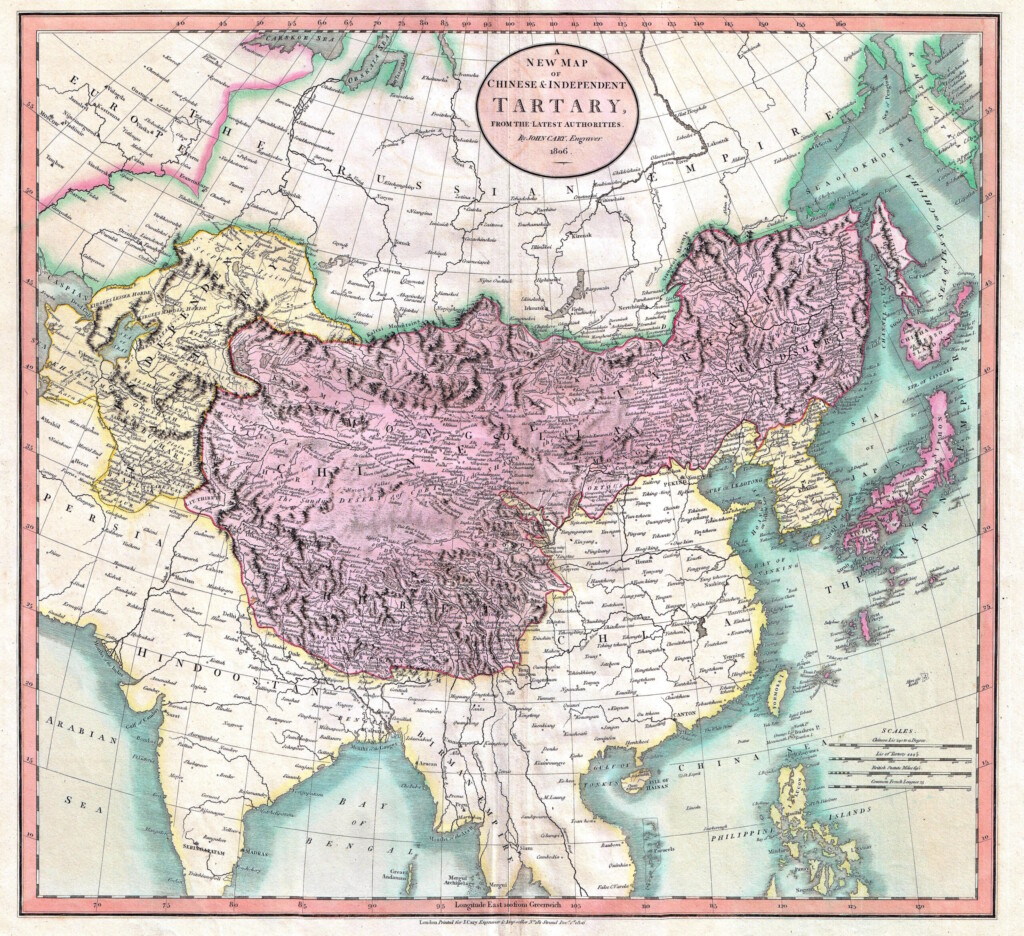
For nearly six centuries, Tartary was one of the most consistently documented territories on the surface of the known world. Abraham Ortelius, whose Theatrum Orbis Terrarum of 1570 is considered the first modern atlas in the Western tradition, places Tartaria firmly on his maps — a vast, internally differentiated space stretching from the Caspian Sea toward regions that European geography could barely name. Gerard Mercator, whose projection of 1569 reshaped how humanity imagined the planet, does the same. These were not imprecise or romantic cartographers working from rumor. They were systematic, methodical men engaged in the most rigorous intellectual project of their era: the accurate representation of the physical world. And Tartary, for both of them, was simply there. A territory. A fact.
The documentation does not stop with cartography. The Encyclopédie of Diderot and d’Alembert, published between 1751 and 1772, that cathedral of Enlightenment rationalism — the very monument to the idea that knowledge, properly organized, would liberate human beings — contains extensive entries on Tartary. The editors subdivide it: Chinese Tartary, Independent Tartary, Muscovite Tartary. They assign it populations, customs, geographic boundaries. The Encyclopédie does not speak of Tartary the way it might speak of a legend or an ancient myth. It speaks of it the way it speaks of France.
And then, across the turn of the nineteenth century, the territory begins to dissolve. Not all at once. The process is gradual, almost administrative in its rhythm. The regions are renamed, reclassified, absorbed into the expanding framework of Russian imperial geography and Chinese dynastic cartography. What was called Tartary becomes Siberia, becomes Central Asia, becomes a series of provinces with new names assigned by new powers with new reasons for the naming. The people who lived there do not disappear, obviously. The land does not move. What disappears is the organizing category, the name that had given the space a coherent identity in the European imagination for six hundred years.
This is what makes the erasure so difficult to process: it is not the erasure of something false. It is the erasure of something that had been, by the standards of its time, rigorously true. The philosopher of science Thomas Kuhn, in The Structure of Scientific Revolutions published in 1962, described how paradigm shifts do not simply add new knowledge to old frameworks — they actively disqualify the previous framework, rendering it not wrong exactly, but illegible, unspeakable within the new vocabulary. What Kuhn identified in the history of science operates with equal force in the history of geography. When the political and imperial vocabulary of the nineteenth century restructured the map of Asia, Tartary did not become incorrect. It became untranslatable.
There is something almost bureaucratic about the mechanism. No announcement. No official retraction. The entries in newer encyclopedias simply grow shorter, then absent. The maps produced after a certain decade simply do not carry the name. And because the erasure is gradual, because it happens across decades and across dozens of institutions simultaneously, there is no single document you can hold up and say: this is where the decision was made. The decision, if it was a decision, was distributed across so many hands and so many years that it became invisible. Which is, of course, precisely the most effective way to erase something.

The Archaeology of Forgetting
There is a particular kind of disorientation that has nothing to do with getting lost. A man walks a street he has walked ten thousand times. He knows the curve of it, the angle at which the morning light strikes the third building on the left, the way sound bounces differently near the corner where the old pharmacy used to be. But the sign above him reads something else now. A new name, a new history encoded in those letters, and suddenly the pavement beneath his feet feels provisional. He is not lost. He simply cannot locate himself inside the official version of where he stands.
This is not a metaphor. After the Soviet dissolution, entire cities across Central Asia and the Caucasus underwent what administrators called renaming programs, restoring pre-Soviet designations or installing post-independence identities over the old Soviet ones. But before the Soviet names, there had been other names, belonging to other administrative regimes, other languages, other cosmologies of space. Each layer of renaming did not merely relabel. It performed an act of deep archaeology in reverse, burying what came before under the fresh sediment of the official present. The man on the street was not confused. He was archaeologically stranded.
Michel Foucault, in The Archaeology of Knowledge published in 1969, proposed something that still makes historians uncomfortable: that knowledge is not cumulative but discontinuous, that history does not progress toward greater clarity but lurches between epistemic regimes, each one replacing not just the answers of the previous era but its very questions, its entire framework of what counts as knowable. He called these moments epistemic ruptures, thresholds after which what was once thinkable becomes literally unthinkable, not because the evidence disappears but because the categories that would allow someone to receive it as evidence have been dissolved. You cannot see what you have no conceptual vessel to hold.
What this means for a civilization like Tartaria is something more violent than mere neglect. It means that the erasure was not primarily physical. Libraries can burn and cities can fall, but those are visible catastrophes that leave visible absences. The deeper mechanism is the one Foucault identified, the replacement of an entire regime of truth, so that the previous one does not appear destroyed but simply ceases to appear at all. It becomes background noise, anomaly, the kind of detail a serious scholar would not linger over. The traces remain. They accumulate in the margins of manuscripts, in the inconsistencies of archaeological surveys, in the bewilderment of travelers who described something their contemporaries had no language to categorize. The problem is never the absence of evidence. The problem is always the absence of a framework willing to recognize it as such.
A man returns to a city after thirty years and finds that the monuments have not been torn down, only recontextualized, new plaques installed beneath old stones, the statues still standing but now explained differently, their origins quietly reassigned to a more legible narrative. He remembers what the plaques used to say. But memory without institutional support has the half-life of a rumor. Within a generation, what he remembers becomes eccentricity. Within two, it becomes mythology. Within three, it becomes precisely the kind of unverifiable claim that serious inquiry is designed to exclude.
This is the machinery of historiographical forgetting, not dramatic, not necessarily conspiratorial, but inexorable. It does not require malice. It requires only the ordinary operation of what Pierre Nora, writing in 1984 in his monumental work Les Lieux de Mémoire, distinguished as the difference between milieux de mémoire and lieux de mémoire, between living environments of memory and the commemorative sites that replace them precisely when the living memory is already gone. When a civilization becomes a lieux de mémoire, it has already been archived into stillness. And what has been archived can always be re-described.
The Architecture That Refuses to Disappear
There is a moment that happens to certain travelers — not tourists, but the kind of people who move slowly through unfamiliar cities and let buildings speak to them — when they stop in front of a structure and feel something slide sideways in their understanding of where they are. The building is too large. The columns are too precise. The dome catches afternoon light in a way that suggests someone who had spent a lifetime thinking about afternoon light designed it, and that person could not possibly have been here, in this place, in the year the bronze plaque beside the entrance insists.
A train station in a mid-sized American city. Founded, the records say, in 1852. A railroad depot built, officially, in 1894. But the proportions belong to another order of ambition entirely — vaulted ceilings that make the human body feel briefly mythological, stone floors worn in patterns that suggest centuries rather than decades of foot traffic, archways whose curves carry a mathematical confidence that has nothing to do with frontier pragmatism. You stand inside it and something in your nervous system registers a discrepancy before your intellect can name it.
This is not an isolated sensation. Architectural historians have documented the extraordinary stylistic precocity of civic building across the American Midwest, the Russian interior, and the urban centers of Central Asia that appeared — seemingly fully formed — in the mid to late nineteenth century. Lewis Mumford, writing in The City in History in 1961, described the civic architecture of the post-Civil War American boom as exhibiting a “confident grandeur disproportionate to its social and economic context,” a phrase careful enough to avoid accusations of mysticism while still admitting the strangeness of the phenomenon. Buildings that would have required decades of accumulated institutional knowledge to produce were being erected in towns that had not existed a generation earlier.
The Tartarian mud flood theory — which has circulated with increasing momentum through online communities since roughly 2018 — is the conspiratorial metabolism of this genuine architectural unease. It proposes, in its more extreme formulations, that an advanced global civilization was deliberately buried, its buildings half-submerged by an engineered catastrophe, and that what we call nineteenth-century architecture is in fact the visible upper stories of something far older. The theory is empirically untenable, and its internal logic collapses under any serious examination of construction records, material dating, or basic geology. But the cultural symptom it represents is more interesting than the theory itself, because symptoms always know something the conscious mind refuses to admit. When large numbers of people independently arrive at the feeling that the buildings around them are lying about their own age, it is worth asking what legitimate historical intuition is being processed through that distorted channel.
The architectural historian Siegfried Giedion argued in Space, Time and Architecture — first published in 1941 and revised repeatedly through the 1960s — that official architectural history had systematically suppressed the anonymous, the vernacular, and the non-Western in order to construct a linear narrative of progress centered on European academicism. What was erased from that narrative did not disappear. It persisted in structures, in techniques, in spatial intuitions that kept reappearing in places the official timeline had no explanation for. The buildings that make travelers stop and feel that sideways slide are not evidence of a buried empire. They are evidence of historical transmission — the movement of knowledge, craft, and spatial philosophy across routes and through peoples that the dominant historiography preferred not to examine too carefully.
A man stands before a municipal hall in a Kazakhstani city and photographs the cornices. He does not know why he cannot stop photographing them. They remind him of something he has never seen, which is the most precise definition of cultural memory that anyone has ever offered him.
Who Benefits from the Blank Space

There is a moment, somewhere in the administrative machinery of every empire, when a cartographer receives instructions that are not about geography at all. The lines he draws, the names he omits, the vast interior regions he leaves unmarked or labels simply as wasteland — these are not failures of knowledge. They are the product of knowledge being carefully managed, distributed selectively, and in certain cases, deliberately withheld. The blank space on a map is not an admission of ignorance. It is a policy.
Noam Chomsky and Edward Herman, writing in 1988 about the mechanisms through which mass media filters reality for populations who believe they are receiving neutral information, identified something that applies far beyond journalism. The manufacture of consent does not require conspiracy. It requires only that the institutions producing knowledge share the same structural interests, the same definitions of what counts as relevant, the same unconscious hierarchies about whose past deserves to be recorded and whose can safely be allowed to dissolve into silence. The cartographic erasure of Central Asian complexity was not coordinated in some secret room. It was the natural output of three empires — Russian, British, Chinese — each of which had independent but perfectly convergent reasons to need that space to remain unlegible.
Walter Benjamin understood this with a precision that cuts. In his theses on the philosophy of history, written in 1940 in the shadow of his own erasure from the world, he argued that history is never simply the past. It is the past as constructed by those who survived to tell it, and more specifically, by those who won enough to control the telling. Every document of civilization, he wrote, is simultaneously a document of barbarism — meaning that behind every archive there is another archive that was never allowed to exist. The official record is not a record of what happened. It is a record of what the powerful needed to have happened.
Apply this to the imperial cartography of the eighteenth and nineteenth centuries and the mechanism becomes visible. Russia, expanding southward and eastward into territories that had sustained sophisticated trade networks, administrative cultures, and urban life for centuries, needed those territories to appear as ungoverned wilderness. The justification for colonization has always required the prior erasure of what was already there. A civilization does not need to be conquered and administered. A void does. The legal and moral architecture of imperial expansion — from the doctrine of terra nullius to the civilizing mission — depends entirely on the prior production of blankness. The map is not a reflection of the conquest. It precedes and enables it.
Britain played the same game from the opposite direction. The Great Game, that century-long strategic contest over Central Asia that consumed enormous diplomatic and military energy from roughly the 1830s onward, was fought in part through cartographic intelligence. British surveyors and officers moved through the region not only to understand it but to define it in ways that served imperial strategy. A region populated by coherent polities with their own histories and networks of authority was a problem. A region of fragmented tribes and undefined spaces was an opportunity — both for intervention and for the fiction of bringing order where none had existed.
China’s relationship to the historical memory of its northwestern frontier follows a different logic but arrives at the same destination. Dynasties that had negotiated, traded, and sometimes lost to the powers of the steppe interior had reasons to rewrite those encounters as the natural expansion of civilization into barbarism, rather than as the complex, reciprocal history they actually were.
A man who had spent his life studying satellite images of buried urban structures beneath the Taklamakan Desert once described the sensation of looking at what the official maps insisted was nothing. He said it felt less like discovery and more like being shown a wound that had been carefully hidden under clean cloth for a very long time.
A vision curated by a filmmaker, not an algorithm
In this video I explain our vision
The People Who Remember Without Knowing Why
There is a grandmother in a village outside Kazan who sings to her granddaughter every evening before sleep. The song has a specific melody, a specific cadence, a specific series of syllables that rise and fall in a pattern so old no one can explain it anymore. When the granddaughter asks what the words mean, the grandmother pauses. She does not know. She has never known. She learned it from her mother, who learned it from hers, and somewhere in that chain of women the meaning was lost or perhaps deliberately left behind, like a key hidden inside a wall that no longer has a door. But the grandmother sings it anyway. She sings it as though the not-knowing is precisely the point.
This is not nostalgia. Nostalgia requires a conscious object, a specific loss you can name and mourn. This is something else entirely. It is the persistence of form after content has been evacuated, which is perhaps the deepest form of cultural memory there is, because it cannot be argued with, cannot be explained away, cannot be revised by any official decree. The body carries what the mind has been instructed to forget.
Paul Connerton, in his 1989 study How Societies Remember, made a distinction that most historians of the period found inconvenient: he argued that social memory is not primarily stored in texts or monuments or official archives, but in habitual bodily practices. In the way a people stand, eat, greet, mourn, build, and move through space. The body, he insisted, is itself an archive, and it is far more resistant to political revision than any written record. You can burn a library. You cannot burn the angle at which a woman tilts her head when she hears a certain kind of music. You cannot burn the instinct that makes a craftsman carve a particular spiral into wood without knowing why the spiral feels correct.
Among Turkic, Mongol, and Siberian peoples scattered across a territory that once bore names the current maps have replaced with administrative divisions, this kind of embodied knowledge surfaces constantly in ways that perplex even the people who carry it. An architect in Novosibirsk who has never studied pre-Petrine building traditions will nevertheless feel an almost physical wrongness when asked to design a structure with certain proportions. A shaman in Buryatia performs a ceremony whose internal logic no anthropologist has fully decoded, and when pressed for the origin of specific gestures, he says only that his hands know. His hands know.
Carl Jung, in his later work on the collective unconscious, was circling something adjacent to this when he described inherited psychic structures that no individual life could have produced alone. He was describing the architecture beneath the architecture, the layer of human experience that precedes personal biography. His critics accused him of mysticism, but the accusation misses the point. Jung was not talking about magic. He was talking about the reality that certain patterns of response, certain symbolic resonances, certain fears and recognitions, arrive in a human being without having been learned in any conventional sense. They are transmitted through proximity, through ritual, through the sung syllables of a grandmother who no longer knows what she is saying.
What happens to a civilization when its official history is replaced, its maps renamed, its continuity severed at the administrative level, is not that it disappears. It goes underground. It enters the body. It becomes the song whose words no longer exist in any living language but whose melody is accurate down to the last interval, preserved with a fidelity that no archive could match, precisely because no archive was keeping it. The forgetting was never complete. It never is. The people who were supposed to forget remember without knowing why, which is perhaps the most subversive form of remembering that exists.
The Pattern of Erasure and Its Repetitions
There is a particular kind of forgetting that does not happen by accident. A student sits in a university library surrounded by thousands of volumes organized by century, by region, by empire, by dynasty, and notices at some point — if they are paying attention — that certain geographies appear only when conquered, certain peoples emerge into the historical record only at the moment they become useful to someone else’s story. Before that moment: silence. Not the silence of absence, but the silence of a decision made long before the student was born.
Tartaria fits this pattern with uncomfortable precision. But what makes its erasure significant is not its uniqueness — it is its familiarity. The same structural logic that rendered vast Eurasian confederacies invisible in European cartography is the logic that reduced the urban complexity of pre-Columbian Mesoamerica to a footnote before the arrival of Cortés. Tenochtitlán in 1519 was a city of perhaps two hundred thousand people, larger than any city in Europe at the time, with an aqueduct system, floating gardens, and a market at Tlatelolco that the Spanish soldiers themselves described with something close to awe — and then spent the following century systematically dismantling, overwriting, and reclassifying as primitive. The awe did not survive the political necessity of justifying conquest. What survived was the narrative that made conquest legible as progress.
W.E.B. Du Bois spent decades documenting the mechanics of exactly this process. In The Suppression of the African Slave Trade, published in 1896 as the first volume of the Harvard Historical Studies series, and more expansively in Black Reconstruction in America in 1935, Du Bois demonstrated that historical scholarship was not a neutral enterprise but a political one — that the academy actively produced ignorance about African and African American intellectual and civic life because acknowledging that life would destabilize the ideological scaffolding holding the racial order in place. He called it a propaganda of history, and he meant something precise by that phrase: not deliberate lying, necessarily, but the systematic orientation of scholarly attention away from whatever complicated the story that power needed to tell about itself.
Vine Deloria Jr. pushed this further in a direction that applies directly to the Tartaria problem. In Red Earth, White Lies, published in 1995, Deloria documented how Indigenous astronomical, geological, and ecological knowledge had been not merely ignored but actively discredited by Western scientific institutions — classified as mythology, as oral superstition, as the kind of thing that does not count as knowledge because it did not arrive through the approved epistemological channels. The result was not simply that Indigenous peoples were denied credit for what they knew. The result was that Western science lost access to centuries of precise empirical observation about the natural world, because the containers in which that knowledge traveled were deemed inadmissible.
This is what makes the pattern a system rather than a conspiracy. A conspiracy requires intent, coordination, a room of villains deciding what to hide. A system requires only incentive structures, institutional inertia, and the quiet reproduction of assumptions that no one ever explicitly chose but everyone inherits. No cartographer sat down to erase Tartaria. The mapmakers simply drew what their patrons needed, emphasized what their academic frameworks recognized as civilization, and left the rest as terra incognita — which is itself a political act dressed as an admission of ignorance.
The peoples erased by this system were not erased because they were small or insignificant. They were erased because their existence raised questions that the dominant narrative could not answer without unraveling. Complexity in the wrong place is more dangerous to empire than any army. A city that should not exist according to the timeline, a confederation that should not have been capable of what it was capable of — these are not curiosities. They are evidence. And evidence, when it cannot be refuted, must be reclassified as legend.
What It Means to Live Inside a Lie You Did Not Choose
There is a particular silence that falls over a person when they realize, mid-sentence, that the ground beneath an argument they have been making for years has quietly dissolved. Not the silence of defeat — something stranger than that. The silence of a man sitting in a library surrounded by volumes bound in authoritative leather, whose gold lettering suddenly looks less like knowledge and more like costume jewelry, and who understands for the first time that the weight of a book is not the same thing as the weight of truth.
This is not an abstract epistemological crisis. It happens in the body. The chest tightens slightly. The eyes move differently across the page. Something that functioned as a floor reveals itself to have been, all along, a painted surface over open air.
Frantz Fanon understood this vertigo not as a personal failing but as a structural condition. In The Wretched of the Earth, published in 1961, he described with surgical precision how colonial power does not only occupy land — it occupies the mind that interprets land, the language that names it, the historical record that remembers it. The colonized subject is not merely dispossessed of territory. They are dispossessed of the cognitive tools that would allow them to perceive the dispossession clearly. The map is taken, and then the memory of having had a map is taken too. What Fanon diagnosed in the context of French Algeria applies, with uncomfortable breadth, to any human community whose past has been administered by parties with an interest in a particular version of events.
Robin DiAngelo’s work on whiteness and institutional narrative speaks to the same mechanism from a different angle — the way that systems of power maintain themselves not through overt violence alone, but through what is normalized, what is rendered unquestionable, what is taught as the natural shape of things. The gaslighting that operates at cultural scale is not a conspiracy in the dramatic sense. It requires no secret room, no signed agreement. It requires only that the authorized version of events be repeated with sufficient confidence by sufficient authorities until the act of questioning it begins to feel like a symptom of confusion rather than a sign of clarity.
The man in the library — and it is always a specific man or woman, always a specific afternoon, always a specific book cracked open at a specific page — is not discovering that everything is false. He is discovering something more unsettling than that. He is discovering that the mechanism for distinguishing the true from the false, the very apparatus of verification he was handed, was itself assembled by someone with preferences. The encyclopedias on the shelves around him were written by people who had careers, patrons, national affiliations, ideological inheritances. The absence of Tartaria in the canonical texts is not a neutral fact. It is a choice made visible only by its silence.
What does it cost, psychologically, to live with this knowledge without collapsing into either paralysis or conspiracy? The question is not rhetorical. There is a real cognitive labor involved in holding open the possibility that what was officially forgotten may have been deliberately forgotten, while simultaneously resisting the seductive closure of the fully fabricated counter-narrative that conspiratorial thinking offers as relief. The relief is false. The discomfort is the more honest place to stand.
Somewhere between the lie you inherited and the lie you might construct to replace it, there is an unsteady patch of ground where genuine thinking becomes possible — and also genuinely difficult. The maps were drawn by interested parties. The libraries were curated by the powerful. The question is not whether to trust authority, but whether you have ever clearly seen what authority actually is: not a credential, but a costume worn long enough that most people stopped noticing the seams.
🗺️ Hidden Civilizations and the Secrets of Official History
The story of the Great Tartaria invites us to question the very foundations of what we have been taught as historical truth. Like all great suppressed narratives, it opens a labyrinth of parallel realities, erased maps, and forbidden knowledge that echoes across many disciplines. These related articles will deepen your journey into the hidden layers of civilization, consciousness, and esoteric thought.
Mass Social Homologation Today
The phenomenon of mass social homologation is not unrelated to the erasure of alternative histories like Tartaria. When entire populations are conditioned to accept a single version of reality, dissident civilizations and inconvenient truths are the first to disappear from collective memory. This article explores how conformity becomes the most effective tool of historical censorship.
GO TO THE SELECTION: Mass Social Homologation Today
Universal Consciousness
The idea of a universal consciousness connects directly to the mystery of lost civilizations that may have operated on entirely different cosmological principles than our own. If Tartaria represented a world built on energy, resonance, and spiritual knowledge, then the concept of a shared cosmic mind offers a framework to understand what was truly erased. This article opens a profound reflection on what humanity has forgotten about its own nature.
GO TO THE SELECTION: Universal Consciousness
Helena Blavatsky and Theosophy: the Woman Who Revolutionized Esoteric Thought
Helena Blavatsky dedicated her life to recovering ancient wisdom that official institutions had buried or ignored, much like the alleged suppression of Tartarian history. Her Theosophy proposed that humanity had passed through great root races and lost civilizations carrying advanced spiritual knowledge. Reading her work alongside the Tartaria hypothesis reveals striking parallels between esoteric tradition and alternative historiography.
GO TO THE SELECTION: Helena Blavatsky and Theosophy: the Woman Who Revolutionized Esoteric Thought
Rudolf Steiner and Anthroposophy: A Guide to Modern Esoteric Thought
Rudolf Steiner and Anthroposophy represent one of the most sophisticated modern attempts to reconstruct a vision of human history that goes far beyond what mainstream scholarship admits. Steiner spoke of ancient civilizations possessing faculties of perception and spiritual technology now completely forgotten. His framework offers a rich intellectual companion to the investigation of erased worlds like the one Tartaria allegedly represents.
GO TO THE SELECTION: Rudolf Steiner and Anthroposophy: A Guide to Modern Esoteric Thought
Discover More Hidden Worlds on Indiecinema
If these labyrinthine histories have awakened your curiosity, Indiecinema streaming is the place where the journey continues. Our platform gathers independent documentaries, visionary films, and esoteric cinema that dare to question the official story and explore the depths of human civilization. Come and discover what mainstream screens have left in the dark.
👉 EXPLORE THE CATALOG: Watch Indie Films in Streaming
A vision curated by a filmmaker, not an algorithm
In this video I explain our vision

