
The Body in July: When the Heat Becomes a Mirror
There is a particular kind of suffering that arrives without drama. It settles in around two in the morning, when the sheet has been kicked to the floor for the third time and the ceiling offers nothing but its blankness back. The chest feels slightly too full, as though the heart is beating a few millimeters closer to the skin than it should. The mind is not thinking about anything in particular and yet it will not stop. A word from earlier in the day returns, then a face, then something unresolved that has no name. By morning the person at the breakfast table is not quite themselves — short-tempered over small things, flushed in a way that has nothing to do with exertion, unable to locate the calm they are certain they possessed just a few weeks ago, before the heat arrived.

This is not metaphor. This is July, and this is the body announcing something precise.
Chinese medicine has spent roughly two thousand years developing a language for exactly this announcement. The Huangdi Neijing, the foundational classical text compiled across the Han dynasty and reaching its present form around the first century BCE, describes the Heart — written always with a capital, always understood as sovereign — as the ruler of the five organ systems, the residence of Shen, which translates inadequately as spirit but means something closer to the luminous organizing intelligence that makes a person recognizably themselves. The Neijing does not separate the psychological from the physiological. It never entertained the idea that they were separate things to begin with. When the Heart is disturbed, the Shen is disturbed. When the Shen is disturbed, the face shows it, the sleep breaks, the speech accelerates or fragments, and the person experiences what they might describe to a Western clinician as anxiety, or irritability, or simply a feeling of being too much inside their own skin.
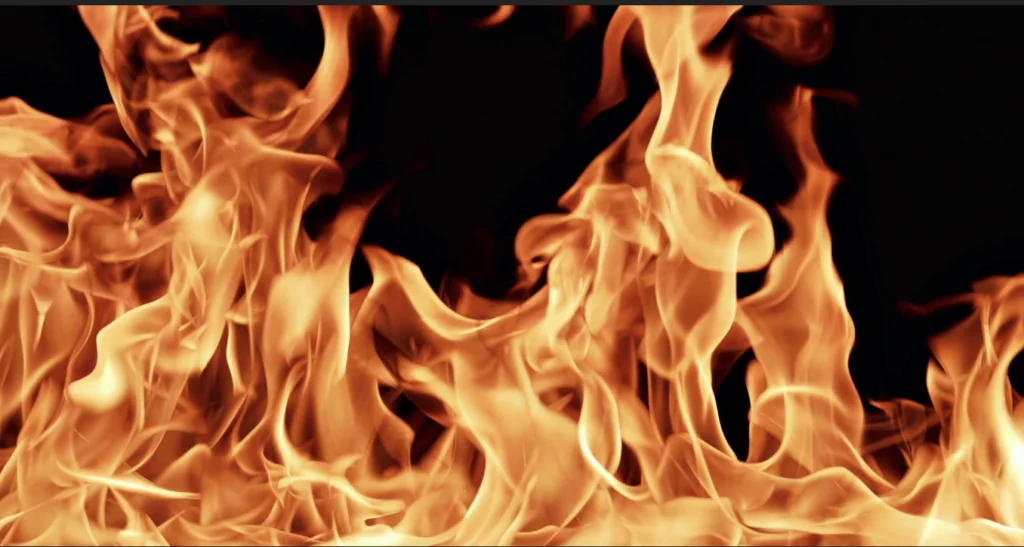
The Fire element governs summer, and it governs the Heart. This is not a poetic correspondence constructed for philosophical elegance. It is a clinical observation encoded over generations of practice — that the symptoms most commonly presenting in summer are symptoms of excess Heat in the cardiovascular and nervous systems, that the season itself acts as an amplifier for whatever constitutional vulnerabilities a person already carries in their chest. The ancient Chinese physicians were watching something real. They were watching the body respond to thermal load with cardiovascular strain, watching sleep architecture collapse as core temperature failed to drop sufficiently in the night hours, watching what we would now measure as elevated cortisol and disrupted circadian signaling. They were watching it and they were naming it within a coherent system that held body, season, emotion, and organ in continuous relationship.
Modern physiology has since confirmed the mechanics without collapsing the meaning. We know now that ambient heat increases cardiac output, that the heart genuinely works harder when the body attempts to thermoregulate through peripheral vasodilation, that sleep quality degrades measurably when nighttime temperatures exceed eighteen degrees Celsius, that heat stress elevates inflammatory markers in ways that interact with mood regulation. We know that psychiatric emergency admissions increase statistically during heat waves — a finding replicated across multiple continents and demographic groups, documented with particular clarity in a 2017 analysis published in JAMA Psychiatry covering data from thirty-one countries. The body in July is not being dramatic. It is responding to a genuine environmental pressure with a genuine cascade of physiological consequences.
What Chinese medicine adds — and what the classical framework preserves that the clinical data alone cannot — is the understanding that this cascade is not random. It has a direction. It moves toward the Heart, and through the Heart toward the Shen, and what happens next depends entirely on whether the fire finds something to tend it or simply burns.
The Sovereign and the Flame: What Chinese Medicine Actually Means by Heart and Shen
There is a moment most people have experienced without ever finding the right words for it. You are sitting across from someone — a friend, a lover, a parent — and they are speaking, their mouth moving, sentences forming, and yet something essential is absent. The lights are on but the house is empty. You watch their eyes and notice they do not quite land on you. They skim the surface of your face the way a stone skips water, touching without penetrating. You feel, obscurely, that you are not being seen. Not because the other person is cruel or indifferent, but because they are, in some fundamental sense, not there.
Classical Chinese medicine has a name for what is missing in that moment. It calls it Shen.
The Huangdi Neijing, the foundational canonical text of Chinese medicine compiled across centuries and reaching something close to its received form during the Han dynasty, states with unambiguous authority that the Heart is the sovereign official, the ruler from whom the radiance of spirit emanates. The character translated as Shen carries a semantic field that no single English word can hold: spirit, yes, but also consciousness, presence, the animating intelligence that makes a human face readable to another human face. Paul Unschuld, the German medical historian whose decades of scholarship on the Neijing remain indispensable, has argued that the Chinese medical body was never merely a biological system but a cosmological one — a mirror of the state, of heaven, of the relational order between things. The Heart, in this framework, does not pump blood as its primary function. It governs. It receives, integrates, and broadcasts the quality of a person’s inner life outward into the world.
This is not metaphor dressed as medicine. It is a precise clinical observation rendered in the language available to its time. When the Shen is settled, the eyes are clear and the gaze lands with weight. There is what the tradition calls presence — not charisma, not performance, but the simple, unmistakable sense that the person before you is actually inhabiting their own face. When the Shen is disturbed, the diagnostic picture shifts in ways that are entirely recognizable once you know how to look. The person who cannot be reached even when they are physically present. The laugh that arrives a half-second too fast and a register too loud, the social laugh that is really a firewall. The eyes that move constantly, that never quite settle, as if the inner sovereign has abandoned the throne and the court is running on panic and habit.
Summer, in the five-phase cosmology that structures classical Chinese medicine, belongs to the Heart. The correspondence is not arbitrary. Fire is the phase associated with expansion, with the movement outward and upward, with the impulse to connect, to be seen, to radiate. Summer asks the Heart to open. And this is precisely where the vulnerability lives. Because fire, when it burns clean and steady, warms without scorching. But when it is excessive — when there is too much heat, when the yang rises without the yin to anchor it — the Shen becomes restless, scattered, unhoused. The classical texts speak of Heart fire agitating the spirit, producing what would be recognizable today as anxiety, insomnia, emotional volatility, the sensation of a mind that cannot find its own ground.
The philosopher and sinologist François Jullien has written about the Chinese tendency to think in terms of propensity rather than causation — not what forces act upon a thing, but what a situation is already inclining toward. Summer inclines the Heart toward excess. The season itself carries the same quality as a disturbed Shen: brilliant, overwhelming, too much light, the difficulty of finding shade.

The Culture That Cannot Sit Still: Summer as Social Symptom
There is a moment, familiar to almost everyone, when you realize you have picked up your phone not because anything happened but because nothing did. The silence lasted three seconds. Maybe four. And something in you — something wired, alert, primed — could not tolerate it. You were not bored. You were not waiting. You simply could not remain where you were.
This is not a personal failure. It is a structural condition.
Byung-Chul Han, writing in 2010, diagnosed something that most people were still experiencing as private inadequacy: a civilization that had replaced disciplinary repression with the far more insidious tyranny of self-optimization. The burnout society is not one that forbids or suppresses — it is one that commands expansion, perpetual output, relentless positivity. The enemy is no longer the external authority that says you cannot. It is the internal voice that says you must do more, be more, produce more. And unlike the old prohibitions, this voice feels like freedom. That is precisely what makes it so effective at destroying rest.
Jonathan Crary, three years later, pushed the analysis further into the body itself. The 24/7 world he described is not merely an economic arrangement — it is a war against sleep, against the rhythmic alternation that all living organisms require to remain coherent. By the early 2010s, the average American slept between six and six and a half hours a night, down from nearly nine hours a century earlier. The American Academy of Sleep Medicine estimates that insufficient sleep costs the United States alone over four hundred billion dollars annually in lost productivity — a figure that reveals, in its own perverse logic, how deeply sleep disruption has been normalized, measurable only in economic damage because nothing else is left to measure.
In Chinese medical terms, what Crary is describing without knowing it is the systematic depletion of Heart-Yin and the chronic over-agitation of Shen. The Heart governs not only consciousness but the quality of resting consciousness — the capacity to be genuinely still, genuinely present, genuinely inside one moment without scanning for the next. When that capacity erodes, the fire does not simply burn brighter. It begins to burn without fuel, consuming the very tissues that sustain it.
Think of someone you know — or yourself — who cannot watch a film without checking their phone twice. Who eats while reading. Who lies in bed mentally composing tomorrow’s to-do list. Who describes feeling exhausted but cannot actually stop. This is not weakness. This is the nervous system of someone who has been trained, across years and decades, to treat stillness as a threat. The Heart, in this condition, is not passionate. It is dysregulated. There is a difference between fire and a gas leak that has been lit.
What Han calls the achievement subject — the person who internalizes the demand for unlimited self-expansion — is, in the body, a person whose sympathetic nervous system never fully disengages. Cortisol remains elevated. The hypothalamic-pituitary-adrenal axis stays primed. Sleep architecture fractures. And the Shen, that luminous quality of settled presence that classical texts associate with a clear and rested Heart, begins to flicker like a screen with a failing connection.
The cruelty of this arrangement is that it disguises itself as vitality. The person who works at eleven at night, who answers messages before sunrise, who fills every waiting room minute with content consumption, often believes they are thriving. The heat feels productive. The agitation feels like aliveness. It is only later — in the sudden collapse, the inexplicable crying, the week where nothing works and the body simply refuses — that the cost becomes visible.
By then, the summer has already been burning too long.
Fire That Devours Itself: The Pathology of Excess and the Lie of Intensity
There is a particular kind of exhaustion that does not feel like exhaustion at all. It arrives wearing the costume of aliveness — the racing thoughts at two in the morning that feel like genius, the desperate need to call someone, anyone, just to keep the current moving, the sense that slowing down would be a kind of death. A man stays awake for the third consecutive night, not because he cannot sleep but because sleeping feels like abandoning something. He is not sure what. The feeling is electric, almost sacred. He will crash, of course. But not yet.
Chinese medicine has a precise name for what is happening inside him. Heart Fire Rising — in its more chronic and depleted form, Empty Heat — describes a condition in which the yang of the Heart has become unmoored from its yin anchor. The flame burns without fuel. The spirit, the Shen, which in its healthy state rests in the Heart like a flame inside a lantern, begins to flicker and leap erratically, no longer contained, no longer illuminating but scorching. The classical texts of the Huangdi Neijing describe the Heart as the sovereign organ, the emperor whose clarity governs all others. When the emperor loses his stillness, the entire kingdom falls into disorder — sleep fractures, anxiety becomes a baseline hum, the mind loops and cannot stop, the face flushes, the tongue tip reddens, the pulse races thin and fast like a wire pulled too tight.
What Western culture calls passion, Chinese medicine often reads as pathology in progress.
This is the uncomfortable diagnosis the romanticization of intensity refuses to accept. The Western tradition has built entire cathedrals around the idea of burning brightly and briefly as the highest form of living. Rimbaud abandoned poetry at nineteen. Van Gogh painted with a ferocity that his body could not sustain. The Romantic poets consecrated consumption — literal tuberculosis — as the aesthetic signature of souls too fine for ordinary existence. Lord Byron, Keats, Shelley: the body as the price of the vision. By the time the twentieth century industrialized this myth into the figure of the tortured artist, the rock star dead at twenty-seven, the startup founder who sleeps four hours and considers it a competitive advantage, the equation had become invisible precisely because it was everywhere. Burning out is not failure. It is proof. Proof that you cared enough, felt enough, wanted enough.
Byung-Chul Han, the South Korean-German philosopher, diagnosed this logic with surgical precision in his 2010 work The Burnout Society. He argued that contemporary achievement culture has replaced external repression with internal compulsion — the whip is now held by the self, against the self, in the name of self-realization. The exhausted society is not one that has been oppressed into depletion. It is one that has voluntarily accelerated itself past the threshold of recovery, mistaking the acceleration for freedom. The neuroscience supports him: chronic states of hyperarousal — elevated cortisol, dysregulated HPA axis function, persistent sympathetic nervous system dominance — do not produce sharper cognition. They produce the convincing simulation of sharpness while quietly dismantling the architecture underneath.
A woman describes her months before the collapse as the best of her life. She was everywhere at once. She felt connected to everything. She was electric. What she is describing, without knowing it, is the classic presentation of Empty Heat: the yin has become so depleted that the yang, no longer rooted, floats upward in a blaze that feels like illumination. The candle does not know it is burning from both ends. It only knows it has never burned so bright.
Cooling the Sovereign: Practices, Paradoxes, and the Question of Who You Are Without the Fire
There is a particular kind of person who arrives at the question of rest already suspicious of it. They have spent years being the one who answers first, feels deepest, burns longest into the night — and now someone is telling them that lotus seed and wild jujube kernel, taken in decoction before sleep, might quiet what they privately regard as the truest part of themselves. The suspicion is not paranoia. It is the most honest thing they have felt in months.
The classical remedies for an agitated Shen are, philosophically speaking, provocations before they are treatments. Suan Zao Ren, the sour jujube seed that appears in Zhang Zhongjing’s formulas dating to the third century, does not sedate in the Western pharmacological sense. It nourishes the blood that houses the spirit, which is an entirely different gesture — less a silencing than an offer of shelter. Bai He, the lily bulb associated with lung and heart in texts like the Bencao Gangmu, works in what classical physicians called the domain of the Po, the corporeal soul, the one that grieves and longs without knowing why. These substances do not remove the fire. They build the container that was never quite adequate to hold it. The distinction matters enormously, because what is lost in an inadequate container is not intensity but coherence.
Acupuncture points along the Heart meridian, particularly Shen Men at the wrist’s crease, carry names that are themselves philosophical statements. Shen Men means Spirit Gate. You do not close a gate. You stand at its threshold and decide what passes. The point does not extinguish anything; it asks the practitioner and the patient alike to take seriously the idea that the spirit requires a passage, a threshold, a moment of decision about what enters and what stays outside. Michel Foucault, writing in The Hermeneutics of the Subject in 1981 and 1982, argued that the care of the self in antiquity was never about self-knowledge as an end in itself but about the transformation of the subject through practice. The acupuncture needle at Shen Men is, in this sense, a practice in the Foucauldian register — not insight delivered, but a repeated, disciplined return to the question of what the self is willing to become.
Wu Wei, the Taoist principle of non-doing that Laozi articulates in the Tao Te Ching as the action that does not force, is perhaps the strangest prescription of all for the person whose identity has been built entirely on the force of their own feeling. To rest at midday — not merely to pause, but to genuinely withdraw into stillness at the peak of yang, when the Heart’s fire is most exposed — is to practice, physically and daily, the paradox that the sovereign does not rule by burning more brightly. The sovereign rules by knowing when to sit in the dark of the inner chamber and let the kingdom breathe without being watched.
And here is where the discomfort becomes irreducible. The person who has calmed their Shen, who sleeps without the cascade of anxious images, who wakes without the chest already tightening with the weight of what the day requires — that person is quieter. They may be, by every clinical and classical measure, healthier. But they will stand in their own kitchen one morning, in the ordinary light of an ordinary summer, and wonder briefly whether the one who used to stand there, burning, was not also somehow more themselves. That question does not have a reassuring answer. It has only the next breath, and the slow, difficult work of learning to call stillness by your own name.
A vision curated by a filmmaker, not an algorithm
In this video I explain our vision
🔥 Fire, Spirit, and the Ancient Art of Inner Balance
The Heart governs not only blood but the luminous Shen — the spirit that animates consciousness, emotion, and clarity. To understand the Fire of summer is to enter a tradition of living knowledge that maps the body, the seasons, and the cosmos as one breathing whole. These articles trace the deepest roots of that wisdom, from energetic channels to the rhythms of time itself.
The Organ Clock: Why Every Organ Has Its Time of Peak and Low Energy
Every organ in Chinese medicine breathes according to its own hour, rising to peak energy and then surrendering to rest in a perfect daily cycle. The Heart reigns supreme in the hours of midday, when summer’s fire is highest and the Shen shines brightest or falters under excess heat. Understanding the Organ Clock is essential to anyone seeking to honor the rhythms that govern both body and spirit.
GO TO THE SELECTION: The Organ Clock: Why Every Organ Has Its Time of Peak and Low Energy
The 12 Energetic Channels: The Secret Map of Meridians in Body
The meridians are the invisible rivers along which Qi, Blood, and Shen travel throughout the body, connecting every organ to the surface of the skin and to the cosmos beyond. The Heart meridian in particular carries the fire of consciousness, linking emotional life to physical vitality in ways that Western anatomy has only begun to appreciate. Mapping these twelve channels is the first step toward understanding how summer’s heat can either nourish or disturb the spirit.
GO TO THE SELECTION: The 12 Energetic Channels: The Secret Map of Meridians in Body
Vital Breath: if Your Qi is Blocked, Weak, or Scattered
When Qi flows freely, the Heart can govern the Shen with grace — but blockage, weakness, or scattering of vital breath creates the restlessness, anxiety, and insomnia so often felt during the intense heat of summer. This article explores the fundamental nature of Qi and the warning signs that appear when its movement is disrupted at the deepest levels. Recognizing these patterns is the beginning of genuine healing rather than mere symptom management.
GO TO THE SELECTION: Vital Breath: if Your Qi is Blocked, Weak, or Scattered
The Dance of Yin and Yang: Harmony Between Opposing Forces
Yin and Yang are never static opposites but a living, breathing dance in which each force contains the seed of the other and continuously transforms into its counterpart. In summer, Yang reaches its zenith and the risk lies in excess Fire consuming the Yin that should cool and anchor the Shen. Learning to honor this dynamic balance is the very heart of classical Chinese medicine and the art of living in harmony with the seasons.
GO TO THE SELECTION: The Dance of Yin and Yang: Harmony Between Opposing Forces
Discover Cinema That Nourishes the Spirit
If these themes of inner fire, consciousness, and the invisible architecture of life resonate with you, Indiecinema streaming invites you to explore an extraordinary selection of independent and arthouse films that dare to ask the same questions. From meditative documentaries to visionary fiction, Indiecinema is the place where cinema becomes a genuine practice of awakening.
👉 EXPLORE THE CATALOG: Watch Indie Films in Streaming
A vision curated by a filmmaker, not an algorithm
In this video I explain our vision

