
The Green Silence Nobody Chose to Mythologize
You arrive expecting something to happen. The road descends through oak and ilex into a valley that holds its breath, and you wait for the landscape to announce itself the way Tuscany does — that cinematic swell of cypress and golden light that has been so thoroughly curated it arrives pre-interpreted, already loaded with meaning before you can form your own. But Umbria gives you nothing of the kind. The hills here are darker, the green more interior, the silence not picturesque but structural, as though the land has decided against performance and is simply existing with a density that makes your own restlessness feel embarrassing. You are not a tourist receiving a view. You are a person standing in a place that has no interest in being received.

This refusal is not accidental. It has a history, and that history is political before it is aesthetic. When the great machinery of Italian cultural identity was being assembled — first in the humanist workshops of fifteenth-century Florence, then in the papal administrative imagination of Rome, and finally in the nationalist literature of the Risorgimento — Umbria was present in each moment but never at the centre, always lateral, always the territory you passed through on the way to somewhere that mattered more. The consequence was not neglect in the ordinary sense. It was something more deliberate: a mythological disinvestment, a choice made by the literary and political centres to let this region remain unnamed in the deeper registers of collective imagination. Florence needed a hinterland that would not compete. Rome needed a buffer between itself and the northern cultural authority. Umbria served both needs best by staying silent, and silence, when it is structural, becomes indistinguishable from absence.
Benedetto Croce, writing in his 1917 Teoria e storia della storiografia, argued that every historical narrative is simultaneously an act of selection and an act of erasure — that what we call cultural memory is always the residue of a battle between competing centres of meaning, and that the regions which lose that battle do not disappear but are frozen, rendered decorative, turned into atmosphere rather than argument. Croce was thinking about the problem abstractly, but the cartography of Italian literary culture makes the point concrete: count the canonical works of Italian literature set in Umbria and you are counting against a silence that has been curated with extraordinary care. Not the silence of an empty room but the silence of a room whose furniture has been quietly removed.
What remained, and what the centres found useful, was the mystical residue. Francis of Assisi gave Umbria a spiritual brand legible to the Church’s international reach, and this turned out to be a remarkably effective mechanism for containing the region within a single register of meaning. Once a place becomes the landscape of sanctity, it becomes very difficult to also make it the landscape of political argument, economic tension, or literary complexity. The sacred frame is totalizing. It does not merely add a dimension to a place — it crowds out the other dimensions, leaving behind an icon where a geography used to be. By the time the grand tours of the eighteenth century codified what an educated European was supposed to see in central Italy, Umbria had been so thoroughly spiritualized that its material reality — its actual soil, its actual poverty, its actual dialects and disputes and hunger — had been rendered invisible beneath the glow of Franciscan transcendence.
The landscape you are standing in, then, with its dark oaks and its unremarkable silence, has been made unremarkable by sustained cultural effort. Its refusal to perform is not a natural quality of the terrain. It is the accumulated result of centuries of decisions made elsewhere about what this place was permitted to mean.
Irene
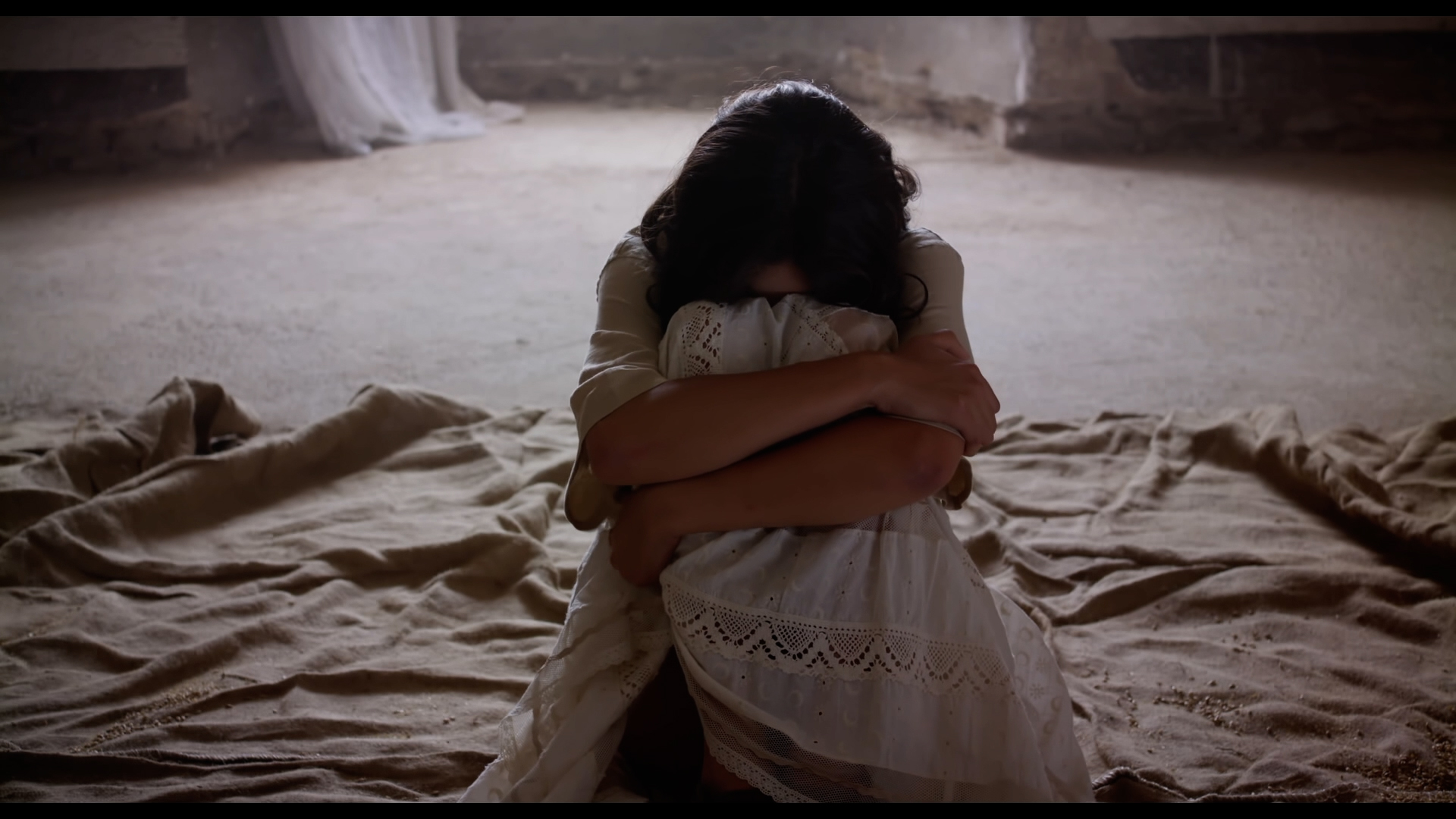
Drama, by Valerio Pampaglini, Italy, 2023.
Irene is trapped within her own unconscious, empty and ruined like an abandoned house. Through broken glass and shady figures dressed in black, a song awakens something long forgotten inside her. The film, written and directed by Valerio Pampaglini, is supported by the Rome Film Academy. It was shot in the summer of 2022 in the province of Perugia, in the municipality of Todi and at the Montenero castle.
LANGUAGE: Italian
SUBTITLES: English
Mysticism as Social Control: The Franciscan Paradox
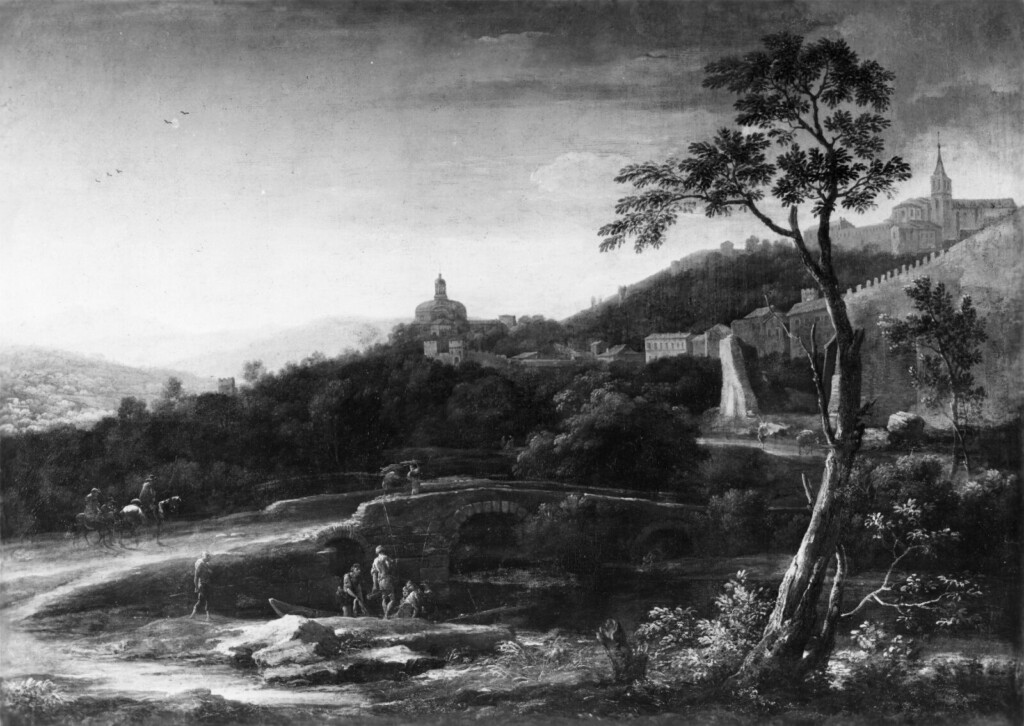
You have probably held an image of Francis without ever choosing it: a brown-robed figure surrounded by birds, gentle, otherworldly, safely removed from anything that might cost you something. That image did not emerge from the thirteenth century. It was manufactured across several centuries of careful cultural editing, and Umbria was the landscape onto which the finished product was projected.
The historical Francis of Assisi, the one who surfaces in the earliest documents before hagiography smoothed him down, was engaged in something economically scandalous. His refusal of property was not a spiritual metaphor. It was a direct confrontation with the Church’s accumulation of land and wealth at a moment when feudal dispossession was reshaping central Italy’s rural populations. The Franciscan poverty debates that consumed the Order through the fourteenth century — culminating in Pope John XXII’s declaration in 1322 that the doctrine of absolute apostolic poverty was heretical — were not theological abstractions. They were arguments about who controlled the surplus of an agrarian economy. When Michael of Cesena and William of Ockham fled to the court of Louis IV of Bavaria in 1328 to escape papal prosecution, they were political refugees in the full modern sense of the term.
What the Fioretti did — compiled in Tuscan vernacular around 1370 from earlier Latin sources — was perform a specific kind of amnesia. The little flowers of Saint Francis bloomed in a text where poverty had been aestheticized into simplicity, where Brother Juniper’s grotesque literal-mindedness became charming rather than threatening, where the encounter with the Sultan during the Fifth Crusade was reframed as spiritual courage rather than a radical rejection of Christian military violence. The Laudes Creaturarum, the Canticle of the Sun, does something even more structurally interesting: it absorbs the entire natural world into a grammar of praise, which sounds expansive until you notice that a world entirely organized around devotion has no room left for grievance.
Antonio Gramsci, writing in Prison Notebook 25 in the early 1930s, articulated what happens to the culture of subaltern groups when it gets incorporated into a dominant national narrative: it is preserved in form while being emptied of its antagonistic content. The folklore, the dialect literature, the local saints — they are not suppressed but curated, displayed like specimens in a case that the dominant culture controls. Umbria became, across the Risorgimento period and more aggressively after Italian unification in 1861, a region whose identity was managed precisely through its spiritual associations. The Papal States had governed it for centuries, and the new secular Italian state needed to neutralize that history without erasing its cultural residue. Sanctity was useful. A landscape of saints and mystics — Francis, Clare, Benedict whose Nursian origins anchored the entire monastic tradition of the West — could be narrated as Italy’s spiritual interior, its soul rather than its wound.
The mystical reading of Umbria performed a geographic redistribution of political weight. Regions that had experienced the most complete suppression of civic autonomy under theocratic governance were reclassified as naturally contemplative, as though the silence of populations historically denied self-governance were a form of spiritual depth rather than enforced exclusion. Giosuè Carducci, in his late nineteenth-century verse, was already doing this to the Umbrian landscape, finding in its olive-silvered hillsides a tranquility that had nothing accidental about it and everything ideological. The birds around Francis were real birds. The sunlight over Assisi was real light. But the decision to see them and not the landless laborers moving beneath them was a decision made by people who needed a certain Italy to exist.

The Poets Who Were Never Quite Italian Enough
You are standing in a church that smells of cold stone and beeswax, and someone is screaming. Not metaphorically — the text itself screams. Jacopone da Todi, a wealthy notary from the hill towns of central Umbria, watched his wife die in a building collapse in 1268 and emerged from that event speaking in a language Italian literary history has spent seven centuries carefully misclassifying. His laude are not hymns. They are accusations.
The Donna de Paradiso, composed somewhere in the final decades of the thirteenth century, stages the Crucifixion as a confrontation between a mother and the instruments of state violence. Mary does not pray. She demands accountability. She names the body parts being destroyed with a forensic specificity that reads less like devotion than like testimony. The Virgin in Jacopone’s hands becomes a witness who refuses the consolation of theology, insisting instead on the intolerable physical fact of what is being done to a son by a government. The poem was written by a man who had been excommunicated by Pope Boniface VIII, imprisoned in a subterranean cell, and publicly mocked — not for heresy in any doctrinal sense but for the political inconvenience of his position within the Spirituals faction of the Franciscan movement, a faction that argued, with uncomfortable material precision, that institutional wealth corrupts institutional authority.
Literary historiography solved the problem of Jacopone by filing him under mysticism. Once a text is labeled mystical, its political content becomes illegible by definition — mysticism is, by scholarly convention, the literature of interiority, of the soul’s private navigation toward the divine, and it shares no border with the literature of power, protest, or structural critique. The 1921 edition of Francesco Novati and Rodolfo Renier’s foundational surveys of early Italian literature establishes this filing system with bureaucratic confidence, placing Jacopone in the lineage of Francis of Assisi and away from the Sicilian School, away from the proto-humanist trajectories that would eventually be handed the title of Italian literary origin. The effect is not neutral. It means that a man who was imprisoned for his writing, whose verse directly engaged the political theology of papal authority, whose formal innovations in the vernacular are structurally comparable to anything produced in Tuscany in the same century, is remembered as a mystic rather than as a poet, as a devotee rather than as a dissident.
This is the mechanism by which a region accumulates a particular cultural function in the national imagination. Umbria becomes the container for everything the literary tradition wants to honor without taking seriously — the irrational, the ecstatic, the pre-rational, the devotional. It is a region where feeling is permitted to exceed reason, precisely because the feeling is coded as religious and therefore pre-political, pre-civic, pre-modern. The landscape participates in this. The olive groves, the hill towns catching afternoon light, the Franciscan iconography available on every surface — these aesthetics confirm that what is produced here belongs to the soul rather than to the mind, to experience rather than to argument. Geography becomes a critical instrument. When a writer or a thinker is Umbrian, their work is subtly pre-categorized by the place itself, absorbed into a regional affect that softens edges, diffuses force, relocates urgency from the political register to the spiritual one.
What this costs the national literature is not a few reclassified poems. It is a model of what vernacular language can do when it refuses the decorum of its moment — when it names suffering without transcending it, when it makes the body of the victim the center of the argument rather than the vehicle of a lesson.
Landscape as Ideological Sediment

You have driven through it, or seen it projected somewhere behind a couple eating lunch at a stone table, the light falling at that angle that seems to exist nowhere else on earth, the cypress trees doing their work of making time feel suspended. The image is so complete it feels inevitable, as though Umbria had always been destined to mean this — permanence, stillness, a world that survived modernity by refusing to notice it. That feeling of inevitability is precisely where the ideological operation begins.
Franco Moretti argued in Atlas of the European Novel, published in 1998, that literary geography is never neutral — that where a story is set does not merely provide backdrop but actively produces meaning, constraining what kinds of social relations can be imagined, what kinds of conflict can be visible. When twentieth-century Italian writers and filmmakers reached for Umbria, they were not documenting a place so much as activating a spatial grammar that had already been loaded with specific political content. The rolling hills, the hilltop towns sealed against the horizon, the olive groves running down toward river valleys that never seem to contain factories or polling stations — this geography encoded an argument: that authentic Italian identity existed prior to and outside industrial capitalism, and that it had survived somewhere in the interior, waiting.
The argument was a fiction in the most precise sense. The Umbrian communes of the thirteenth and fourteenth centuries were not pastoral idylls but ferociously competitive city-states, Perugia and Todi and Spoleto locked in cycles of factional violence that Dino Compagni documented with undisguised horror in his Cronica around 1312. When papal subjugation finally consolidated the region under direct Church administration through the sixteenth century, what was suppressed was not a timeless rural harmony but an entire tradition of municipal self-governance, contentious and bloody and irreducibly political. The landscape that later centuries would aestheticize as eternal had been produced through centuries of subordination, depopulation, and deliberate economic marginalization by the Papal States, which had little interest in Umbrian development and considerable interest in Umbrian compliance.
By the time the tobacco-processing industry became one of the region’s dominant employers in the twentieth century, drawing predominantly female workers into factories in Città di Castello and Perugia, Umbria had already been so thoroughly mythologized that this industrial reality existed in a kind of representational blind spot. The labour disputes of the 1960s and 1970s, when women workers organized under the Federazione Italiana Tabacchine and staged strikes that forced national negotiation over wages and working conditions, generated no equivalent mythology. No celebrated novel placed its protagonist among the drying sheds. No internationally distributed film used the tobacco fields as its moral landscape. The hills remained available for a different story.
What makes this suppression structurally interesting rather than merely ironic is that it required active maintenance. The pre-industrial image of Umbria did not persist because nobody noticed the factories or the strikes; it persisted because the cultural machinery selecting which images of the region would circulate internationally had a vested interest in the timeless version. Tourism infrastructure, literary prizes, co-production deals with foreign studios — these were not conspiracies but systems with consistent aesthetic preferences, and those preferences reliably excluded whatever complicated the postcard. Giorgio Agamben wrote in The Man Without Content, as early as 1970 in its Italian edition, about how aesthetic experience can become a mechanism for neutralizing historical content, transforming the politically charged into the purely contemplative. A hilltop town at dusk does not ask to be understood as a site of medieval factional massacre or twentieth-century labour organizing. It asks only to be felt.
What the Centre Needs the Periphery to Forget
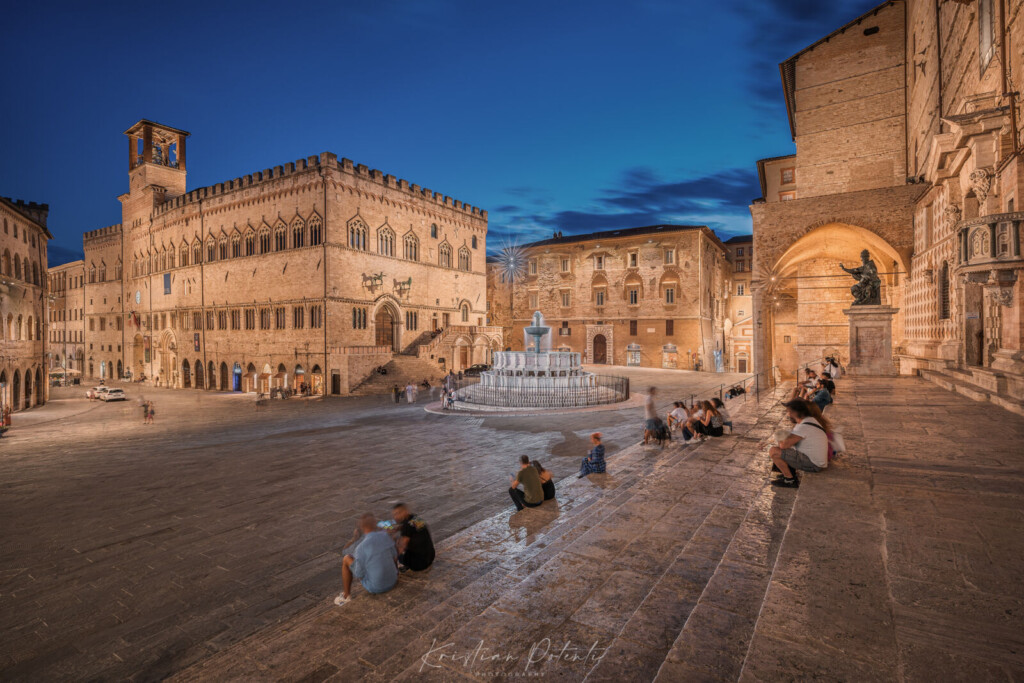
You have driven two hours into the hills, past hand-painted signs for white truffles and ceramic studios, and somewhere between the third olive grove and the fourth medieval village with its sixteenth-century loggia restored to a shade of ochre that looks more convincing than the original, you have felt something that resembles discovery — a quiet, private conviction that you have found something Italy has not yet sold to everyone else. That feeling is the product. The landscape is merely its packaging.
Benedict Anderson, writing in Imagined Communities in 1983, described the nation not as a territory but as a collectively maintained fiction, a horizontal brotherhood of people who will never meet but who require common symbols to sustain the illusion of shared destiny. What he did not fully press — because his concern was with print capitalism and its newspapers, not with truffle fairs — is the particular labor assigned to the interior periphery within that structure. Umbria does not simply exist beside the national narrative; it exists to perform a function inside it, to embody the version of Italy that justifies the centre’s self-congratulation. The region is recruited to demonstrate that something ancient, unhurried, and spiritually coherent survived all of modernity’s damage. Which requires that the damage itself remain invisible.
The editorial process that produces this effect is not cynical in the way of advertising agencies. It operates through genuine enthusiasm, through art historians who love Perugino, through food writers who believe in hand-pressed oil, through local governments sincerely committed to preserving what remains. Sincerity is precisely what makes it so effective. When the Galleria Nazionale dell’Umbria in Perugia frames its permanent collection as a window onto a civilization of contemplative beauty, it is not lying about the paintings. It is making a curatorial choice about which century to present as the region’s essential truth, and that choice quietly buries the century that followed — the factional violence, the Papal annexation of 1540, the systematic dismantling of Perugian municipal autonomy that Federico Chabod documented as part of the broader construction of the Italian territorial state.
What gets selected for the truffle fair, for the slow-food festival, for the Spoleto arts program that since 1958 has dressed a medieval hill town in the prestige of international performance — all of it points toward an Umbria that is pre-industrial, pre-conflict, and above all pre-political. An Umbria where the relevant human activities are cultivation, prayer, and the production of beautiful objects. This is not preservation. It is a hypothesis about what the region means, and it requires the continuous suppression of every piece of evidence that complicates the hypothesis.
The tourist who arrives convinced they are escaping the manufactured experience — who has read the right food writers, who knows to avoid the obvious restaurants, who drove the secondary roads — is not outside this system. They are its most sophisticated consumer. Their resistance to the obvious, their preference for the authentic, their cultivated capacity to distinguish the real from the performed: all of it was anticipated, all of it has been accommodated, because the market for genuine experience is simply a premium tier of the same market. The sense of discovery they carry home is not false in its emotional register. It is false in its epistemological claim — the claim that what they encountered was the region as it actually is, rather than the region as a centuries-long process of selection decided it should appear to those willing to pay attention carefully enough.
What a place is allowed to remember about itself tells you very little about the place, and everything about who needed it to forget the rest.
A vision curated by a filmmaker, not an algorithm
In this video I explain our vision
🌿 Voices of the Italian Soul: Land, Art and Memory
Umbria, the green heart of Italy, has long nourished the imagination of poets, painters and thinkers. To understand its place in Italian culture is to trace the deeper roots of a civilization shaped by mysticism, landscape and civic memory. These related articles explore the broader literary and cultural currents that flow through and beyond the Umbrian tradition.
Rome in Italian Literature: History and Imagery
Rome has served as the magnetic center of Italian literary imagination for centuries, drawing writers into its layered history of grandeur and decay. From ancient poets to twentieth-century novelists, the Eternal City becomes a living palimpsest in which past and present coexist in perpetual tension. Understanding Rome’s role in Italian literature illuminates the broader question of how place itself becomes a protagonist in the national cultural narrative.
GO TO THE SELECTION: Rome in Italian Literature: History and Imagery
Italian Medieval Communes: History and Culture
The medieval communes of Italy were crucibles of civic identity, artistic patronage and political experimentation that shaped the cultural landscape for generations to come. Umbrian cities like Perugia and Spoleto were among the most vibrant of these urban communities, producing a unique blend of religious devotion and secular ambition. Exploring this history reveals the deep structural roots of Italian regional culture and its enduring literary echoes.
GO TO THE SELECTION: Italian Medieval Communes: History and Culture
Medieval Mysticism: History and Main Figures
Medieval mysticism found one of its most fertile grounds in the Italian peninsula, particularly in Umbria, home to Saint Francis of Assisi and a long tradition of contemplative spirituality. The visionary writings of figures such as Angela of Foligno and Jacopone da Todi bear witness to a rich inner life that shaped both literature and art. This article traces the history and main figures of a movement that transformed the Western spiritual imagination.
GO TO THE SELECTION: Medieval Mysticism: History and Main Figures
Southern Identity in Italian Culture
Southern Italian identity has often been constructed in opposition to the industrialized North, creating a cultural mythology of marginalization, resilience and deep-rooted tradition. Writers such as Carlo Levi and Ignazio Silone gave literary voice to these tensions, mapping a landscape where history weighs heavily on the living. Exploring southern identity in Italian culture provides essential context for understanding how regional experience shapes national literary consciousness.
GO TO THE SELECTION: Southern Identity in Italian Culture
Discover More on Indiecinema
If these cultural and literary journeys have stirred your curiosity, Indiecinema streaming is where the search continues through film. Explore independent cinema that captures the spirit of place, memory and identity in ways that only moving images can. Join Indiecinema and let the stories of Italy and the world unfold on your screen.
👉 EXPLORE THE CATALOG: Watch Indie Films in Streaming
A vision curated by a filmmaker, not an algorithm
In this video I explain our vision

