
The Weight of Stones Underfoot
You are walking, and the city is already ahead of you. The cobblestones of the Via Sacra do not yield to your step the way pavement does in other cities — they push back, faintly, with a pressure that travels up through the ankle and settles somewhere behind the sternum. This is not metaphor. It is geology. Beneath your feet lie not one city but at least nine, each collapsed into the next like a set of nested arguments, and the stone you are standing on right now was laid, relaid, broken, and reset across centuries that your nervous system was never designed to comprehend all at once. Yet your body tries. Something tightens at the back of the throat when you round a corner and a fragment of wall from the second century BCE interrupts a Renaissance facade, which is itself interrupted by a Baroque fountain, which is itself interrupted by a Vespa. The discontinuity should be jarring. Instead, it feels like a sentence that keeps correcting itself and somehow remains true.

There is a peculiar reversal that happens to people in Rome, and Italian writers have been documenting it, often against their will, for centuries. You arrive believing you are the one who will read the city — interpret its ruins, decode its layers, extract its meaning — and somewhere between the Capitoline Hill and the first glass of wine, you realize the city has been reading you. It knows what you came looking for. It has seen your type before. The exile seeking grandeur, the provincial hungry for legitimacy, the intellectual trying to weigh his ideas against something that will not be impressed by them. Rome has absorbed them all and left barely a dent on its own surface. Stendhal felt it in 1817 when the sheer density of beauty in Florence briefly paralyzed him — but it was Rome, he wrote, that produced not paralysis but a slow and humiliating education in one’s own smallness. The city does not overwhelm you the way a storm does. It diminishes you the way time does.
This quality, this capacity of Rome to function simultaneously as physical space and as accumulated meaning, is precisely what has made it the central obsession of Italian literary imagination from antiquity to the present. The relationship is not one of affection. It is closer to the relationship between a person and the family home they cannot stop returning to, knowing that every room holds a version of themselves they were hoping to outgrow. Virgil understood this in the first century BCE, when he constructed in the Aeneid not just a founding myth but a justification — an enormous, anxious justification — for why this particular city, on this particular set of hills, had become the axis around which the known world organized itself. The anxiety is audible in every book of that poem. Aeneas does not want to found Rome the way a hero is supposed to want things. He is burdened into it. The city begins, in Latin literature’s most defining work, as a weight someone carries rather than a triumph someone achieves.
That weight has never fully lifted from the Italian literary tradition. It is there in Dante’s rage at Rome’s corruption, in Petrarch’s reverence for its ruins, in Leopardi’s cold despair before monuments that outlast every human intention. It is there in the twentieth century in Alberto Moravia, who wrote the city’s streets into his novels not as backdrop but as moral atmosphere — the stones themselves implicated in whatever human transaction is taking place above them. And it is there in the contemporary writers who walk those same streets and still cannot decide whether the city is a resource or a prison, a source of identity or the thing that makes identity impossible. The question has not been resolved. It has simply been asked, more beautifully, more relentlessly, more honestly than almost anywhere else in the literary record.
The Smartphone Woman
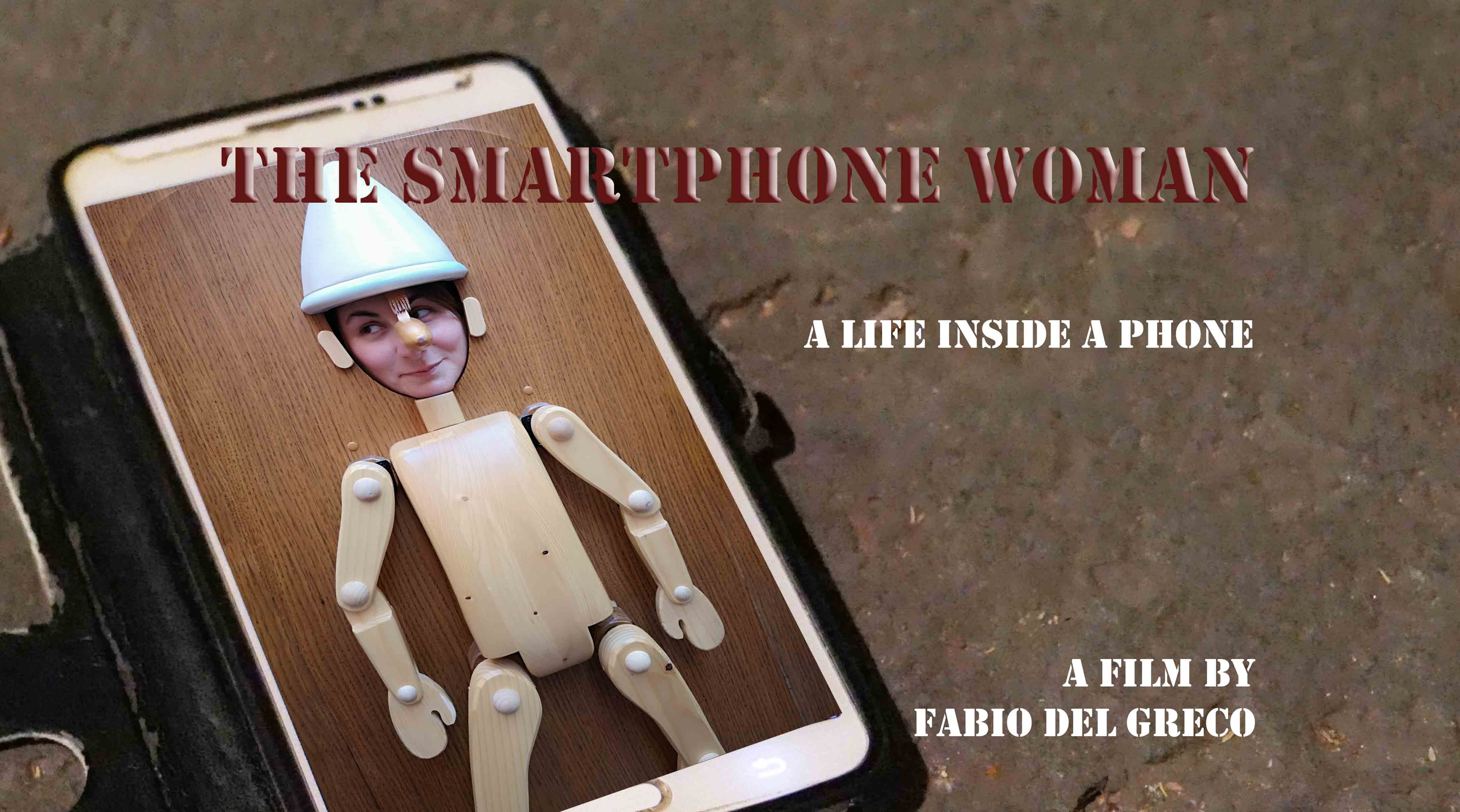
Drama, thriller, dark comedy, by Fabio Del Greco, Italy 2020.
On a bridge over the Tiber River, an elderly and severely ill man has decided to end his life, but an unusual discovery changes his mind: he comes across a lost smartphone. Intrigued, he decides to return home and watch the videos contained within it. On the screen, a series of videos unfold, telling the story of a woman who has emigrated from southern Italy to Rome to work as a teacher in schools and her struggles with integration in a social reality she cannot fully grasp.
"The Smartphone Woman" is a realistic tale of a woman's life and her complex relationship with an "infernal" city. It portrays the challenges she faces, her connection to her origins, the social discomfort she discovers in the outskirts, and the eerie presence of the ghosts of ancient Roman empire. Fabio Del Greco employs a fragmented style, using pieces of "real life" shot with the smartphone, to construct a narrative that ambiguously oscillates between fiction and truth. This creates a captivating exploration of the discomfort and alienation within the bustling city, contrasting with the peaceful village life from which the protagonist hails. The film is constructed with a variety of heterogeneous characters and situations, an emotional kaleidoscope, weaving between evenings of exploration in the Eternal City and daily struggles. Realistic smartphone-shot videos are alternated with a narrative thread reminiscent of film noir and, ultimately, surrealism in the finale. On screen, a succession of grotesque characters unfolds, representing the director's vision of a tumultuous humanity. The film's potency lies in the emotion it manages to convey and in the protagonist's naive perspective. "The Smartphone Woman" is a must-see for enthusiasts of independent and experimental cinema.
LANGUAGE: italian
SUBTITLES: English, French, German, Portuguese, Spanish
Virgil’s Founding Lie and the Literature Born From It
There is a moment, familiar to anyone who has sat with a schoolbook longer than they wanted to, when a story stops feeling like a story and starts feeling like a command. You are reading about a man wandering the Mediterranean, carrying his elderly father on his back, dragging his son by the hand through burning ruins, and something in the cadence of the verse tells you this is not a tragedy you are witnessing but an appointment you are being asked to keep. That sensation is not accidental. It was engineered.
Virgil composed the Aeneid between approximately 29 and 19 BCE, dying before he could revise it to his satisfaction, reportedly asking on his deathbed that the manuscript be burned. The request was denied by Augustus himself, who understood, with the cold lucidity of a man who had just finished dismantling a republic, exactly what the poem was worth. What Virgil had written was not merely an origin story but a theological argument: that Rome had not simply grown, conquered, and stumbled into empire through ambition and bloodshed, but had been chosen. Fated. The wandering Trojan Aeneas, displaced by war, guided by the gods, burdened with pietas, was the first Roman before Rome existed, and his suffering was not loss but preparation. Every ruin he left behind was a foundation laid somewhere else.
The foundational move here is not poetic but political, and the two have been entangled in Italian literary culture ever since. Augustus needed legitimacy that neither military victory nor legal maneuvering could fully supply. He needed the past itself to testify on his behalf. Virgil, whether through genuine belief, artistic complicity, or the complex surrender of a sensitive man inside a powerful machine, gave him that testimony. The Julian family was grafted onto the divine genealogy of Venus and Aeneas; the civil wars that had just torn the Roman world apart were rewritten as the labor pains of a predestined civilization. What had been massacre became myth.
This is the template that Italian literature has never entirely escaped. Not because later writers were naive, but because the Aeneid established something subtler than a nationalist narrative: it established a grammar of historical meaning, a way of reading suffering as portent, displacement as mission, violence as the precondition of order. When Dante placed Virgil himself as guide through the Inferno in 1308, he was not simply paying homage to a great poet. He was inheriting the structure of justified suffering, the idea that descent and darkness are navigable if the destination is luminous enough, that the pilgrim’s agony has a shape and the shape is teleological. Dante needed Virgil precisely because Virgil had invented the literary Rome that Dante still inhabited, the Rome of providential architecture, where even ruins point upward.
The consequences of this inheritance are not only aesthetic. Petrarch, in the fourteenth century, crowned poet laureate on the Capitoline Hill in 1341 in a ceremony designed explicitly to echo ancient Rome, spent decades writing Africa, a Latin epic about Scipio Africanus that almost no one reads anymore, precisely because the Virgilian template had become a trap: magnificent, demanding, and ultimately unable to accommodate what Petrarch actually knew, which was not destiny but vertigo. His Italian sonnets survived because they betrayed the template. The Canzoniere is full of a man who cannot make his desire cohere into mission, who loves a woman who will not be a symbol and grieves a self that will not be a hero. That fracture, between the Virgilian imperative and the actual texture of consciousness, is where Italian literary truth tends to live.
What the Aeneid really bequeathed was not a story but a pressure. The pressure to mean something historically, to locate the Italian self inside a narrative of civilizational weight, to treat geography as destiny and ancestry as obligation. Whether a writer genuflects before that pressure or tries to dismantle it, the pressure is always there, shaping the sentence before it is written, organizing the silence between the words.

Dante’s Rome: A City That Damns and Redeems
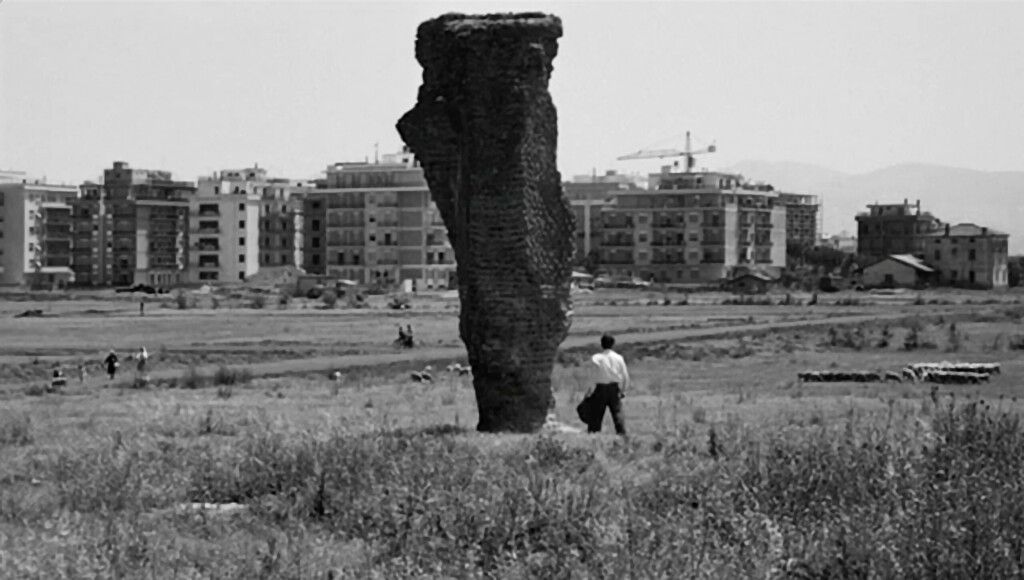
You already know what it feels like to need something you despise. The institution that failed you, the city that ground you down, the authority whose corruption you witnessed firsthand and yet whose blessing you still required to make your argument mean anything at all. Dante Alighieri knew this from the inside. Exiled from Florence in 1302 on false charges of corruption, condemned to death if he returned, he spent the last nineteen years of his life writing a poem whose entire cosmological machinery depended on the symbolic legitimacy of the very Rome that had helped destroy him.
The Commedia, completed around 1320, is formally a journey through Hell, Purgatory, and Paradise. But read it closely and it becomes something stranger and more uncomfortable: a document written by a man who needed Rome’s authority to condemn Rome’s crimes. Pope Nicholas III is jammed headfirst into a hole in the rock of the eighth circle, his legs kicking in the air, his feet on fire, punished for simony — the buying and selling of sacred offices. Pope Boniface VIII, the man directly responsible for Dante’s exile, is promised the same fate. Pope Clement V joins them. This is not satire in any gentle sense. Dante is placing sitting and recent popes in Hell, by name, with specific charges, with almost judicial precision. And yet the same poem that damns these men requires the entire theological architecture of the Church, rooted in Rome, to give his cosmology its authority and shape. Without Apostolic succession, without the Petrine tradition, without Rome as the axis between earthly power and divine order, the geography of Dante’s afterlife collapses into private fantasy.
This is the double bind he constructed for himself, and it was not accidental. He elaborated the idea most systematically in the Monarchia, written around 1313, where he argued that Rome’s imperial authority and the Church’s spiritual authority were meant to operate as two suns, separate but both divinely ordained. The Emperor was to govern earthly life; the Pope was to guide souls toward God. What Dante witnessed, and what enraged him with the specific fury of a man who has seen something beautiful wrecked by those entrusted with it, was the Church’s insistence on swallowing both roles. The papacy’s involvement in temporal politics — its alliances, its financial schemes, its manipulation of imperial succession — was, for Dante, not merely corrupt governance but a theological catastrophe, a confusion of orders that he believed was literally damning souls and distorting history.
So he built a city inside his poem. Not a description of Rome, but Rome as structure. The Rome of the Commedia is the vanishing point toward which all moral trajectories either converge or diverge. Julius Caesar appears in Limbo with the virtuous pagans, honored. Brutus and Cassius are in the very mouth of Satan, chewed alongside Judas Iscariot, because their assassination of Caesar was, for Dante, an act against divinely sanctioned imperial order — the same order Rome was meant to represent. The violence of that image, those two men eternally ground in Lucifer’s teeth for a political act committed in 44 BCE, tells you everything about how seriously Dante took the claim that Rome was not merely a city but a theological fact, a node in the structure of Providence itself.
The reader who has ever watched an institution betray its own founding principles while still needing that institution’s legitimacy to make any claim at all will recognize something almost unbearable in Dante’s position. He is writing the most comprehensive moral indictment of Rome’s corruption that the Italian Middle Ages produced, and he is writing it in a form that only makes sense if Rome’s sacred authority is real. He damns the men. He cannot damn the office. And that distinction, held under enormous pressure across fourteen thousand lines of verse, is not a contradiction he resolves. It is the engine that drives the whole machine forward, and it never stops turning.
The Renaissance Invention of a Rome That Never Existed
You have probably stood in front of something old and felt, without being able to explain it, that it was speaking to you. Not the stone itself, not the inscription worn smooth by centuries of rain, but something projected onto it — a feeling you brought with you and then attributed to the object, as though the ruin had been waiting there specifically to confirm what you already believed about the past. This is not a personal failure of perception. It is, in fact, the founding gesture of an entire literary and political tradition, and it was performed with extraordinary deliberateness by a man who knew exactly what he was doing.
Francesco Petrarch, born in Arezzo in 1304, first walked through Rome in 1337 and was devastated — not by what he saw, but by the catastrophic gap between what he saw and what he had read. The city was overgrown, populated by cattle grazing near collapsed temples, its monuments cannibalized for building material, its ancient topography buried under medieval accretion. What Petrarch encountered was a living, breathing medieval city of approximately twenty thousand people who had no particular interest in inhabiting a museum. What he wrote, however, was something else entirely. In his letters, collected and revised across decades, Rome becomes a theatre of grief, a monument to a greatness that the present has betrayed. His correspondence with Cola di Rienzo in the 1340s treats the ancient city not as a ruin to be understood historically but as a wound to be avenged politically. The distinction matters enormously, because the Rome Petrarch describes in those pages never existed in the form he describes it. It was assembled from Livy, Cicero, and Virgil, filtered through medieval manuscript copies, shaped by a longing for order and eloquence that the actual Roman Republic, with its civil wars, its brutal slave economy, and its constitutional chaos, would have found unrecognizable.
This is what the historians of humanism have called the invention of the classical, and Jacob Burckhardt‘s analysis in The Civilization of the Renaissance in Italy, published in 1860, remains one of the most penetrating accounts of the mechanism. Burckhardt understood that the humanists were not recovering antiquity so much as constructing it, selecting from the textual archive what confirmed their vision and discarding what complicated it. The Rome that emerges from Petrarch’s Africa, his unfinished Latin epic about Scipio Africanus begun around 1338, is a Rome of moral clarity and civic virtue — precisely the qualities that made it so useful as a polemical instrument against the corruption of the fourteenth-century Church and the fragmentation of Italian political life. The poem was never finished, but its incompleteness is almost programmatically significant: the classical ideal functions best as an horizon, something always visible and always unreachable, because an achieved utopia would have to answer for its actual contents.
What the humanists did to Roman imagery was to freeze it at its most rhetorically serviceable moment and then circulate that frozen image through every available literary form — the epistle, the dialogue, the vernacular lyric, the civic oration. By the time Lorenzo Valla was demonstrating in 1440 that the Donation of Constantine was a forgery, using philological methods that were themselves a product of this humanist recovery project, the invented Rome had already become more politically real than the historical one. The forgery mattered because Rome mattered, and Rome mattered because Petrarch had made it matter in a particular way — as a standard of judgment, a measure of present inadequacy, a mirror held up not to reflect but to accuse.
The literature that came out of this construction was not dishonest in any simple sense. It was ideological in the precise meaning that Louis Althusser would develop six centuries later: it produced subjects who recognized themselves in its imagery and, in recognizing themselves, reproduced the conditions that made the imagery necessary. Every Italian writer who invoked Rome after Petrarch was not citing history. They were participating in a ritual whose original fabrication had been so thorough that the fabrication itself had become invisible, indistinguishable from the ground beneath their feet.
The Risorgimento’s Roman Obsession and Its Dangerous Romanticism
You have probably, at some point in your life, stood in front of something ancient and felt a grief that didn’t belong to you. Not nostalgia for something you lived, but for something you were told you deserved, something that was taken before you arrived. That sensation is not accidental. It was engineered, with extraordinary literary precision, by a generation of Italian poets who understood that the fastest route to political action runs through a wound that feels personal.
Ugo Foscolo, born in 1778, spent most of his adult life in exile, and that biographical fact is not incidental to his work — it is the work. In his 1807 poem “Dei Sepolcri,” he writes about graves and memory and the civic function of the dead, but what he is actually constructing is a moral argument: that a people without continuity with their ancestors is a people without the right to exist as a political body. Rome, for Foscolo, is not a historical period. It is the unpaid debt of the present. The glory of the ancient city becomes, in his hands, an accusation leveled at every Italian who has accepted fragmentation, foreign rule, and the humiliation of the peninsula’s division into petty states. His Rome is not a place you visit. It is a verdict.
Giacomo Leopardi, eleven years younger and far more philosophically radical, takes this further and makes it more dangerous. In his “Canti,” particularly in the ode “All’Italia” written in 1818, he performs something that looks like lamentation but functions as incitement. He surveys the ruins, invokes the fallen soldiers of Thermopylae in the same breath as Roman legions, and constructs a single, seamless heroic lineage in which the nineteenth-century Italian reader is asked to see himself as heir and debtor simultaneously. Leopardi’s philosophical pessimism is real — he genuinely believed human suffering was irremediable — but his political romanticism operates on a separate register, one where suffering becomes fuel rather than paralysis. The tension between those two registers is what gives the poem its destabilizing charge. You read it and feel ashamed of your own ordinary life, ashamed of not having died for something.
This is the mechanism worth holding. By 1848, when the revolutions swept the peninsula and the Roman Republic briefly existed as a living political experiment under Mazzini and Garibaldi, the literary groundwork had been laid for decades. Young men went to the barricades carrying lines of poetry in their heads like ammunition. The fusion of aesthetic longing and political program was not metaphorical — it was operational. Mazzini himself wrote extensively about literature as the soul of nationhood, and his 1836 essay “On the Philosophy of Music” reveals the degree to which the Risorgimento’s leadership understood cultural production as the primary site of political formation. The poem was the pamphlet. The ruins of Rome were the argument.
The problem — and this is what the twentieth century eventually made impossible to ignore — is that a politics built on mythologized loss does not stop when the practical goal is achieved. Italy unified in 1861, Rome became its capital in 1871, and yet the rhetoric of wounded greatness, of glorious ancestors betrayed by the diminished present, did not dissolve into administrative satisfaction. It had been too well written, too deeply internalized. The imagery of Rome as eternal standard against which living Italians always fell short became available for anyone willing to pick it up and redirect it. Gabriele D’Annunzio picked it up. And then someone far more lethal did. The Leopardi who wept for Italy’s fallen dignity and the march on Rome in 1922 are not separated by an abyss. They are connected by a literary education that taught an entire culture to feel its present as humiliation and its past as a promised land it had some obligation, some almost sacred duty, to reclaim by force.
The poetry did not cause fascism. But it built the house.
A vision curated by a filmmaker, not an algorithm
In this video I explain our vision
Moravia, Pasolini, and the City That Refuses to Be Symbolic
You already know the smell before you can name it. It is the smell of a courtyard in August, of damp plaster and rotting vegetable peels in a basin someone forgot to empty, of a city that has been a capital for too long and has stopped pretending it needs to clean itself up. Alberto Moravia knew that smell from the inside. Born in Rome in 1907, he spent his entire literary career doing something that the Italian tradition had made nearly impossible: he wrote about Rome as a place where people were bored, cowardly, sexually desperate, and economically trapped, without once invoking the Colosseum as a metaphor for anything.
His 1929 debut Gli indifferenti arrives with the force of a door slammed in the face of rhetorical Rome. Two young bourgeois siblings watch their mother’s lover methodically dismantle what little dignity their family has left, and not one character reaches for history to console themselves, not one sentence permits the city’s grandeur to dilute the squalor of what is happening in those airless apartments. Moravia was twenty-two when he wrote it, and the critical establishment initially had no framework for it, because Italian literary culture had spent centuries organizing Rome into significance. Here was a novel that proposed that significance was precisely the lie keeping everyone comfortable in their degradation. The indifference of the title is not an emotional state. It is a structural condition: the city produces people who cannot act because they have been taught to witness, to contemplate, to inherit postures from monuments rather than make decisions from hunger.
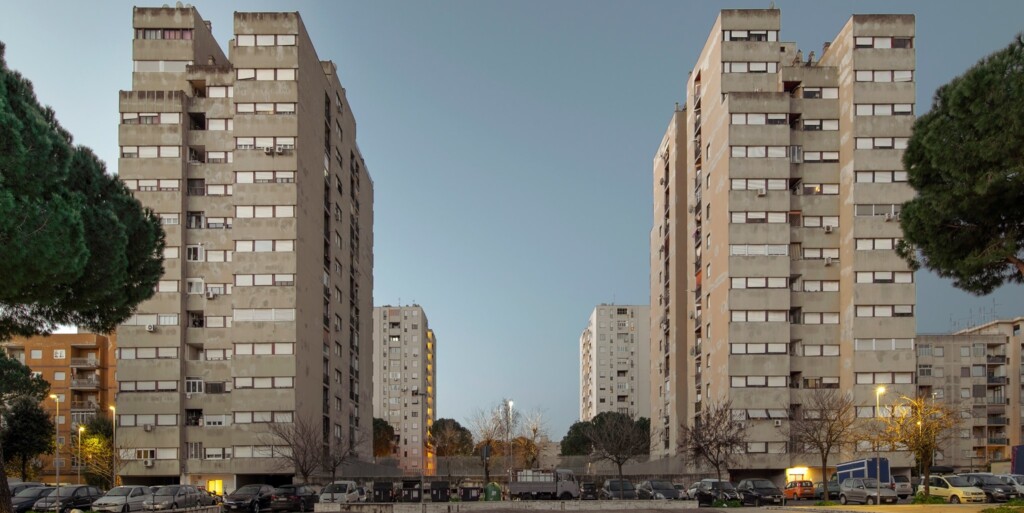
Pier Paolo Pasolini arrived in Rome in 1950 as a refugee from his own life, having been expelled from the Communist Party in Friuli following a scandal, his mother in tow, his pockets functionally empty. What he found in the borgata, the informal peripheral settlements that fascist urban planning had pushed to the city’s margins in the 1930s and left to calcify in poverty, was not picturesque misery. It was a population that had no relationship whatsoever to the Rome being studied, celebrated, and exported. His 1955 novel Ragazzi di vita does not describe Rome. It describes a city that happens to share a postal code with Rome, where adolescent boys named Riccetto navigate a world of petty theft, the Tiber’s polluted banks, and social services that function as machinery for humiliation. Pasolini did something philologically precise here: he rendered the borgata dialect not as local color but as the primary epistemological instrument, the only language in which this reality could be accurately perceived. Standard Italian, with its Dante-inflected prestige and its capacity for elevation, was itself complicit in the erasure of these lives.
What Moravia and Pasolini share, despite their profound differences in class origin, sexuality, political trajectory, and prose style, is a refusal that operates at the level of form. The monumental city is not critiqued in their work. It is simply absent. And that absence is more devastating than any critique, because it reveals the monument for what it always was: a selective hallucination maintained by people who needed Rome to mean something large enough to justify their own smallness. When Moravia’s characters drift through their drawing rooms unable to feel, or when Pasolini’s ragazzi watch a friend drown and feel something closer to inconvenience than grief, the Palatine Hill exists somewhere in the same geography, geologically indifferent. Giorgio Agamben, writing decades later about bare life and the mechanisms by which political power strips individuals of their civic existence while keeping their biological bodies functional, was mapping a structure that these two writers had already rendered in fiction. The borgata was not outside the empire. It was its purest product.
And this is what the grandest literary symbol in Western civilization could not survive being seen clearly: not as ruin, not as resurrection, not as eternal return, but as a landlord who had not repaired the plumbing since 1943 and saw no particular reason to start.
The Imagery Trap: How Rome Became a Mirror That Distorts
You walk through a piazza you have seen a thousand times in photographs before you ever set foot in it, and the strange thing is not the beauty — it is the ease of it. The ease with which you receive it. The travertine, the fountains, the ochre light dying against the walls, and something inside you settles into a posture of reverence that you did not choose and cannot quite explain. It feels like memory, though it is not yours. It feels like recognition, though you have recognized nothing. What has happened, in that moment, is not an encounter with a place. It is an encounter with a mechanism.
Roland Barthes, writing in Mythologies in 1957, described myth not as falsehood but as a specific operation performed on language and image: the act of draining history from a sign until what remains appears natural, inevitable, beautiful. Myth, for Barthes, does not deny things. It purifies them. It gives them a clarity that is actually a kind of amnesia. When a culture transforms a historically saturated object — a monument, a landscape, a literary tradition — into an aesthetic experience, it does not falsify the past so much as it makes the past unaskable. The question of how something came to be, and at what cost, dissolves into the simpler, warmer question of how it makes you feel.
Roman literary imagery has been doing precisely this for centuries. The marble and the ruin, the eternal hills and the Forum swallowed by grass, the Pope’s shadow on the Tiber and the prostitute’s shadow in the vicolo — these are not neutral images. They are images that have been worked on. Virgil’s Aeneid, completed around 19 BCE, did not describe Rome’s greatness so much as manufacture its necessity, embedding an imperial destiny into the very structure of the cosmos, making Augustus’s power feel like the resolution of a wound opened at the beginning of time. The violence required to build that empire — the displacement, the conquest, the annihilation of peoples who never received a name in the text — appears in the Aeneid as the tragic price of something sacred. Tragedy aestheticizes. That is its function and its danger.
What Italian literature inherited from this founding gesture was not simply a set of images but a set of emotional instructions. When Petrarch mourned the ruins of Rome in his letters, when Leopardi in 1821 addressed the city as a living corpse of glory, when Pasolini walked the borgata periphery and rendered poverty in a prose so dense with beauty that the reader almost forgets to be angry — all of them, in their different centuries and with their radically different politics, were operating inside the same structural problem. The imagery of Rome converts historical conditions into aesthetic ones. It moves you. And movement, in the Barthesian sense, is precisely what keeps you still.
This is the trap’s real architecture. A reader who feels genuinely stirred by the image of a crumbling arch at sunset is not indifferent to suffering. They are responding to it, in a register that has been carefully prepared to receive that response and neutralize it. The emotion is real. The recognition is real. But the circuit has been designed so that the emotion loops back into the image rather than forward into a question. Who built this? Who was excluded from its mythology? What was destroyed so that this light could fall at this angle and mean what it means to you now? Italian literature, at its most canonical and most celebrated, has rarely asked these questions inside the same breath that produces the beauty. It has tended to keep them separate — the aesthetic wing and the critical wing of the same house — as if beauty and accountability were guests who could not be seated at the same table. And the reader, entering that house, almost always gravitates toward the room where the light is better.
What It Costs to Inherit a Ruin
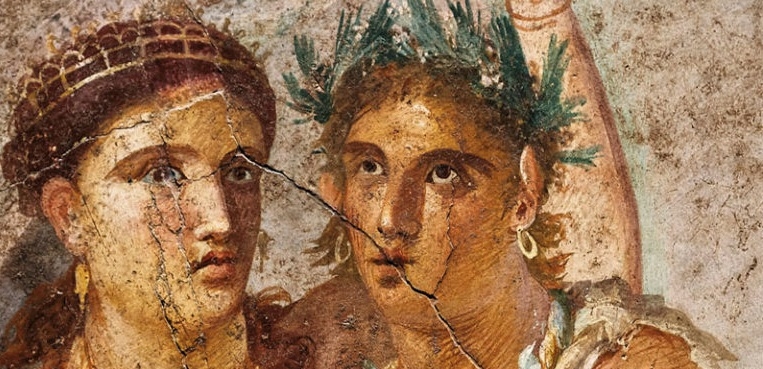
You sit down to write about Rome and something shifts almost immediately, a tidal pull you did not consciously invite. The words come with weight already attached to them. The stones, the light on the Tiber at dusk, the layered sediment of empire and martyrdom and Renaissance ambition — none of it arrives neutral. It arrives pre-loaded, carrying the freight of two thousand years of interpretation, and the moment you reach for it, you are no longer entirely the author. You are also the material.
This is the trap that every Italian writer who has touched Rome has, at some level, stumbled into, and very few have named it clearly enough to escape it. Giacomo Leopardi understood something close to this when he wrote in his “Zibaldone,” that vast private archive of thought accumulated between 1817 and 1832, that the grandeur of antiquity functions as a kind of beautiful prison for the modern imagination — not by forbidding movement, but by making all movement feel already completed, already surpassed, already elegized by someone more eloquent and more dead. The ruin does not oppress you with its size. It oppresses you with its patience. It has outlasted everyone who came before you, and it will outlast you too, and it knows this in the way that stones know things: without irony, without cruelty, simply by continuing to exist.
Alberto Moravia, writing Rome across six decades of the twentieth century, seemed at times to believe he had found a way through this — by stripping the city of its grandeur, populating it with bodies rather than monuments, with desire and boredom rather than history. His Rome was the periphery, the apartment, the transaction. And yet even this deflation is a literary response to enchantment, which means it is still organized around the enchantment it refuses. You cannot debunk a myth without first acknowledging its power over you. The disenchanted writer and the rhapsodic one are mirror images: both are defining themselves in relation to the same gravitational center, which is Rome as symbol, Rome as inheritance, Rome as the thing that must be dealt with before you can say anything else.
The philosopher Giorgio Agamben, working through Walter Benjamin‘s idea of the dialectical image, has argued that the past does not simply precede the present but interrupts it, flashing up inside it at moments of historical crisis. In Rome, this interruption is not occasional. It is structural. The city does not offer the writer a background. It offers them a palimpsest in which every layer is still partially legible, still demanding to be read, still generating meaning that neither the writer nor the reader fully controls. When Pier Paolo Pasolini walked the borgata in the 1950s and wrote what he saw, he believed he was writing against the imperial tradition, reclaiming a vernacular vitality that the official culture had buried under marble and rhetoric. But the borgata itself existed in the shadow of an EUR district built by a regime that had deliberately cited classical Rome, and Pasolini’s very act of counter-citation was still a citation. Resistance, in this symbolic field, does not exit the system. It enriches it.
What this leaves open is not a comfortable question. If the writer who celebrates Rome is absorbed by it, and the writer who resists Rome is absorbed by it differently but no less completely, then the act of writing Rome may be less an exercise of imagination than an act of submission to a symbolic order so ancient and so total that the only honest thing to say about it is that no one has yet found the exit — and that the search for the exit has itself become one of Rome’s most durable literary traditions, a ruin among ruins, beautiful and load-bearing and impossible to tear down.
🏛️ Cities, Memory, and the Literary Imagination
Rome has always been more than a city — it is a living archive of civilization, a palimpsest of ruins and myths that has inspired writers, philosophers, and artists across centuries. The articles below explore the literary and cultural worlds most deeply intertwined with the themes of place, identity, historical memory, and the imagination of the eternal city.
Venice in Literature: History and Imagination
Venice, like Rome, is one of those rare cities that exists as much in the literary imagination as in physical reality. This article traces how writers from Henry James to Thomas Mann have transformed the lagoon city into a symbol of beauty, decay, and timeless fascination. Understanding Venice’s literary mythology enriches our reading of how Italian and European writers have used urban space as a mirror for the human condition.
GO TO THE SELECTION: Venice in Literature: History and Imagination
Calvino’s Invisible Cities: Meaning and Analysis
Italo Calvino‘s Invisible Cities is perhaps the most celebrated modern meditation on the city as a space of memory, desire, and storytelling. Through a series of imaginary urban portraits narrated to Kublai Khan, Calvino reimagines every city as a web of relationships between history and dream. This work stands as a foundational text for understanding how Italian literature transforms geography into pure literary symbol.
GO TO THE SELECTION: Calvino’s Invisible Cities: Meaning and Analysis
Jan Assmann and Cultural Memory
Jan Assmann‘s theory of cultural memory offers essential conceptual tools for understanding how a city like Rome functions as a collective repository of shared meaning. His work explores how communities construct identity through the transmission of texts, monuments, and rituals across generations. For any reader of Italian literature, Assmann’s framework illuminates why Rome’s imagery carries such extraordinary historical and symbolic weight.
GO TO THE SELECTION: Jan Assmann and Cultural Memory
Italian Medieval Communes: History and Culture
The Italian medieval communes were the crucible in which a distinctly Italian civic consciousness — and with it a literary culture — first took shape. This article examines how the rise of city-states fostered the development of vernacular literature, political thought, and a sense of urban identity that would later feed Dante, Petrarch, and the entire tradition of Italian letters. The communal experience is inseparable from the literary imagination that would eventually make Rome a mythological center of the written word.
GO TO THE SELECTION: Italian Medieval Communes: History and Culture
Discover Italian Culture and World Cinema on Indiecinema
If these literary and cultural journeys have stirred your curiosity, Indiecinema streaming is the ideal place to deepen your exploration — from Italian auteur cinema to documentary films on history, art, and the great cities of the imagination. Discover a curated selection of independent and world cinema that brings literature, philosophy, and culture to life on screen.
👉 EXPLORE THE CATALOG: Watch Indie Films in Streaming
A vision curated by a filmmaker, not an algorithm
In this video I explain our vision

