
The Séance at Beacon Hill
You are sitting in a drawing room on Beacon Hill, Boston, sometime in the winter of 1885, and the gas lamps have been turned low enough that the wallpaper — dark green, William Morris vines — has dissolved into something closer to forest. Across a mahogany table that cost more than a laborer earns in six months, a woman named Leonora Piper is holding your hand. She has closed her eyes. She is breathing with the deliberate slowness of someone entering sleep, and then she is speaking in a voice that is not quite her own, producing names, dates, small domestic facts about people you have lost, and the room is absolutely silent except for the scratch of a pen. The man holding the pen has a medical degree from Harvard. He also has a philosophy chair there. His name is William James, and he is watching her the way a surgeon watches a chest cavity — with total attention and with the willingness to be surprised by what he finds.

There is something structurally wrong with this scene, and it has nothing to do with the supernatural. The wrongness is institutional. By 1885, the research university in America had begun its great consolidation into the temple of method, the place where knowledge was produced through replication, falsifiability, and peer verification. Johns Hopkins had opened its graduate programs in 1876 explicitly on the German research model. The American Psychological Association would be founded seven years later, in 1892, and the new psychology it represented wanted nothing to do with séances or spirits or the gray zone between sleeping and waking. It wanted reaction times. It wanted stimulus-response tables. It wanted data that did not embarrass it at dinner. William James knew all of this, had helped build some of it, and was sitting in that drawing room anyway.
What makes James irreducible to his era is that he took the conflict seriously rather than dissolving it into a hierarchy. His 1890 masterwork, The Principles of Psychology, ran to nearly fourteen hundred pages and was ruthlessly empirical in its methods, yet it contained within it a concept that would unsettle the entire edifice it was building: the stream of consciousness, which was not a mechanism but a metaphor, and which admitted that the self was not a fixed address but a moving target. A man capable of writing that was also capable of sitting across from Leonora Piper and asking, without irony, whether she was accessing something real. He had joined the American branch of the Society for Psychical Research in 1884, one year before the Piper sittings began, and he would remain associated with it until his death in 1910 — a span that covered his entire mature intellectual career and that his colleagues at Harvard mostly pretended not to notice.
The Society for Psychical Research had been founded in London in 1882 by a group that included the philosopher Henry Sidgwick and the physicist Lord Rayleigh, who would later win the Nobel Prize. Its founding premise was neither credulous nor dismissive: that the phenomena associated with mediumship, telepathy, and hypnotic suggestion were sufficiently anomalous to warrant systematic investigation rather than reflexive ridicule. This was a position that required a particular kind of courage, because it guaranteed ridicule from both sides — from the scientists who considered the subject beneath investigation and from the spiritualists who considered investigation a form of desecration. James occupied that exact position, cheerfully and pugnaciously, and the discomfort he caused was not accidental.
The gas lamps in that Beacon Hill drawing room were doing something that electric light does not do: they were making the edges of things uncertain, softening the boundary between the object and its shadow, and James understood, perhaps better than anyone in that room, that the boundary he was actually testing was not between the living and the dead.
Cathnafola - A Paranormal Investigation
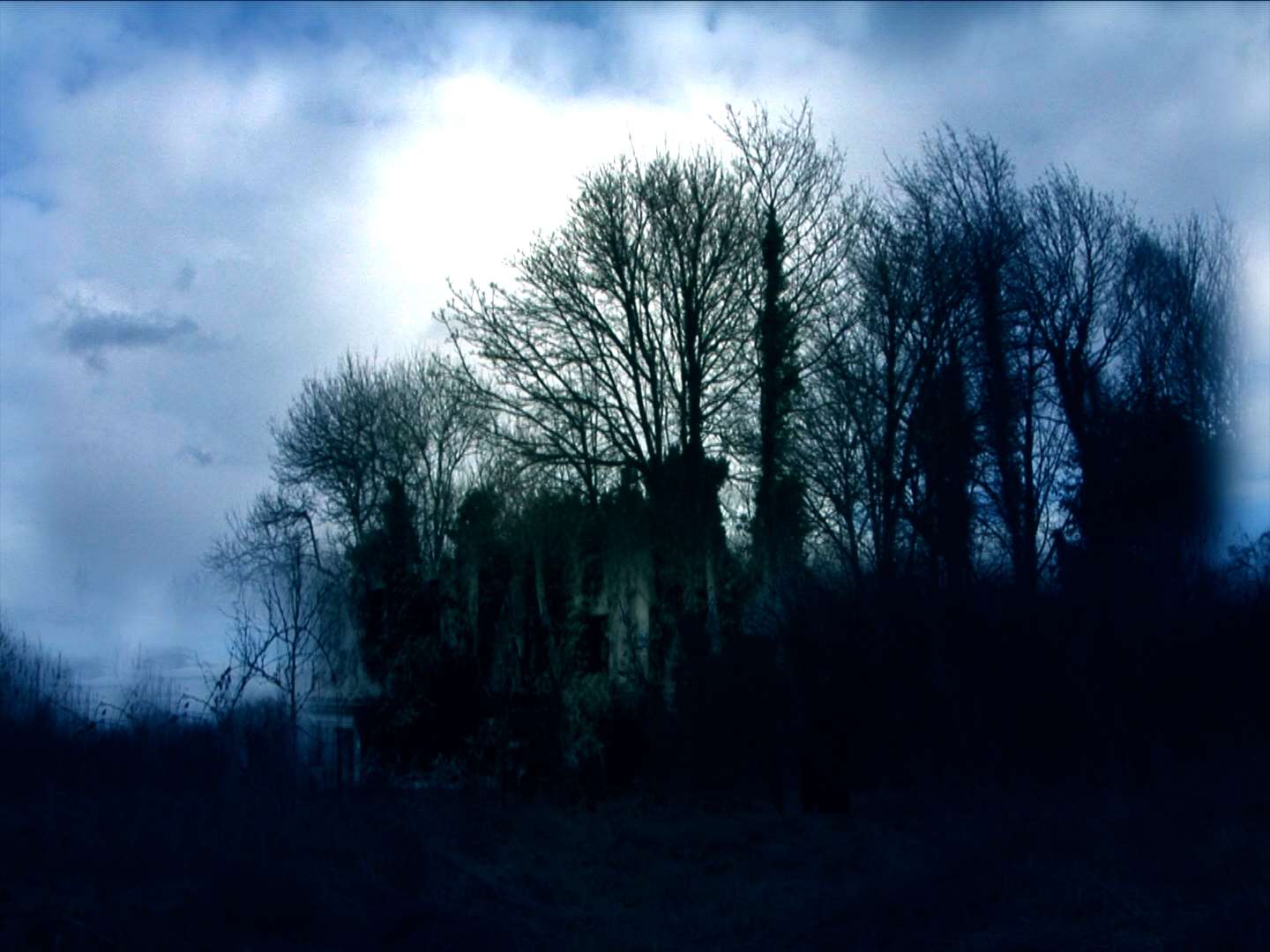
Documentary, horror, by Jason Figgis, USA, 2014.
In "Cathnafola", everything begins when renowned paranormal investigator Chris Halton of Haunted Earth UK receives footage filmed by three teenagers at the ruins of Cathnafola House in Ireland. Determined to unearth the truth behind the location’s bloody past, Halton embarks on a nighttime exploration of the infamous ruins—and soon uncovers terrifying and disturbing revelations.
LANGUAGE: English
SUBTITLES: Spanish, French, German, Portuguese
Pragmatism's Blind Spot
You have sat with a belief long enough that it stopped feeling like a belief and started feeling like the floor beneath your feet. William James understood this more precisely than almost anyone writing in 1907, and it was this understanding that made his position on psychical research not merely uncomfortable but philosophically inescapable. When he delivered the lectures that would become Pragmatism: A New Name for Some Old Ways of Thinking, he was not simply proposing a methodology — he was detonating the entire architecture by which educated Americans had learned to separate legitimate inquiry from embarrassing speculation.
The core of that detonation was deceptively simple: truth is not a static property residing inside propositions like a gem inside a box. Truth happens to an idea. It becomes true insofar as it helps carry us successfully through experience, as it proves useful in navigating what James called “the stream of consequences.” This sounds reasonable until you follow it to its actual edge. If a belief functions — if it organizes behavior, produces results, connects disparate experiences into coherent meaning — then the pragmatist has no clean philosophical instrument with which to declare it false simply because it offends the sensibilities of trained scientists. The burden of dismissal becomes as heavy as the burden of proof.
This is precisely the trap James had built for himself, without quite intending to. The genteel scientific consensus of his era operated on a different model, one inherited from positivism and still radiating the authority of figures like Thomas Huxley, who had dismissed all inquiry into telepathy and survival as beneath serious consideration. Huxley wrote in 1869 that even if such phenomena were real, they would be of no scientific interest — a statement so revealing in its circularity that James returned to it more than once as an example of dogmatism masquerading as rigor. But James could not simply invert Huxley’s dismissal. His own framework demanded that he take seriously the question of whether psychical phenomena actually worked — whether they produced genuine experiential results that resisted conventional explanation.
What made this trap spring shut was the existence of the Society for Psychical Research, founded in London in 1882 by Frederic Myers, Edmund Gurney, and Henry Sidgwick. James became a member of its American branch, eventually serving as president, and he sat through hundreds of hours of testimony, controlled sittings, and statistical tabulation. The Census of Hallucinations, published by the Society in 1894, surveyed over seventeen thousand individuals across multiple countries and found that roughly one in ten reported a vivid hallucination of a living or recently deceased person under conditions that could not be attributed to illness or intoxication. James could not wave this away. The data had been collected with methodological seriousness comparable to anything produced by experimental psychology — a discipline he had helped to found in America when he established his laboratory at Harvard in 1875.
The reputation problem was not abstract. His colleagues at Harvard watched his involvement with something between bewilderment and contempt. Hugo Munsterberg, who ran the Harvard psychological laboratory and was in many ways James’s institutional opposite, was openly derisive. The emerging profession of academic psychology needed to distinguish itself from folk belief and popular superstition, and any association with mediums or telepathy threatened to pull the entire enterprise backward into the credulous nineteenth century. James knew this. He wrote to friends with a weariness that reads now as the exhaustion of a man who cannot unsee what he has seen and cannot un-argue what his own philosophy has made unarguable.
What pragmatism had given him was a method that respected consequences over categories — and the consequence he kept returning to was a woman in a Boston parlor whose knowledge could not, by any account he trusted, have arrived through ordinary channels.

The American Society for Psychical Research and Its Borrowed Legitimacy
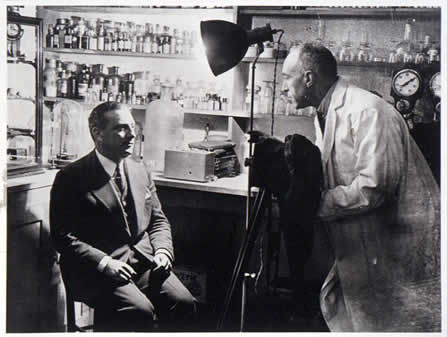
You are already inside an institution before you understand what one is. You learn to read in a building called a school, you learn to trust in a building called a hospital, and somewhere along the way you absorb the unexamined belief that the building itself — its name, its charter, its letterhead — constitutes a form of proof. This is not naivety. It is the operating logic of credibility in every modern society, and it was exploited with extraordinary deliberateness in Boston in 1885.
When a group of American intellectuals formally established the American Society for Psychical Research that year, they were not simply founding an organization. They were performing an act of institutional translation — importing the cultural authority of the British Society for Psychical Research, which had been established in London in 1882 under figures like Henry Sidgwick and Frederic Myers, and transplanting its prestige onto American soil before a single original result had been produced. The ASPR’s founders understood something that most scientists refuse to admit: legitimacy travels faster than evidence. The British SPR had secured its reputation partly by enrolling eminent names — physicists, philosophers, a future Prime Minister in William Gladstone among its honorary members — and the Americans replicated this strategy with surgical precision. Simon Newcomb, the astronomer whose calculations on the speed of light were among the most cited in the world, was enlisted as the ASPR’s first president. His name on the masthead did not represent an endorsement of any particular claim about mediums or telepathy. It represented borrowed gravity, the kind that allows a new institution to skip the decades of slow credibility-building that genuine scientific fields require.
Pierre Bourdieu spent much of his career describing how fields accumulate and distribute what he called symbolic capital — the prestige that accrues to positions, institutions, and names independently of the actual content they produce. His 1984 work on academic distinction showed that universities do not simply rank knowledge; they manufacture hierarchies of knowers, so that the same idea expressed by a tenured professor at a prestigious institution carries more weight than the identical idea expressed by an outsider. The ASPR was a deliberate machine for generating exactly this kind of capital in a domain that would otherwise have been dismissed as folklore. By mirroring the structural features of respectable science — committees, proceedings, correspondence networks, peer review in everything but name — it forced a question that critics found genuinely difficult to answer: if this is not science, why does it look exactly like science?
The discomfort that question produces is not accidental, and it does not belong only to the history of the paranormal. In the late nineteenth century, the boundary between legitimate and illegitimate inquiry was far more porous than popular history remembers. Geology had only recently won its independence from biblical chronology. Germ theory was still fighting for acceptance against miasma. Psychology itself — the discipline William James would help legitimize at Harvard — had no agreed experimental methodology and was regarded with deep suspicion by physicists and chemists who considered introspection a laughably soft instrument. Into this genuinely unsettled epistemic landscape, the ASPR inserted itself not as a fringe interloper but as a participant in a broad, unresolved argument about where the limits of the knowable actually lay.
James joined the ASPR almost immediately after its founding, and his involvement was never merely honorific. He conducted his own investigations, corresponded with researchers across the Atlantic, and brought to the work the same rigorous attention he applied to his laboratory studies of perception and habit. What made his participation so consequential was precisely that he refused to treat the institutional apparatus as a substitute for direct inquiry — which meant he could see, more clearly than most, exactly how much of what surrounded him was scaffolding dressed as structure, performance dressed as method, and the social theater of science dressed as science itself.
Leonora Piper and the Evidence That Refused to Behave
You sit across from a woman you have never met, in a room you chose yourself, and she begins to speak your dead son’s name.
William James arranged exactly this kind of encounter in 1885, bringing his mother-in-law to a Boston medium named Leonora Piper after hearing rumors from neighbors who had visited her independently and returned shaken. What he found was not a carnival act. Piper entered a light trance and began producing names, dates, and relational details that James could not immediately explain away. He was not credulous — he brought her under controlled conditions repeatedly, corresponded with Richard Hodgson of the newly formed American Society for Psychical Research, and eventually hired private detectives to follow Piper between sittings, checking whether she employed confederates, bribed servants, or researched sitters through obituaries and city directories. The detectives found nothing. The investigation extended across nearly a decade of documented sittings, producing a formal report in 1890 that James contributed to alongside Hodgson, running to hundreds of pages of testimony, cross-examination transcripts, and failed attempts at natural explanation.
What made Piper genuinely disturbing to James as a scientist was not that she was obviously fraudulent. It was that she was not obviously anything. The sittings produced a mixture of accurate specific detail, spectacular failure, and information that sat precisely on the line between explicable and inexplicable. In 1890, Hodgson brought sitters to Piper under assumed names, with no prior contact, no shared social network, no discernible route through which she could have learned their histories. Some sessions produced nothing of value. Others produced names of deceased relatives, accurate descriptions of circumstances surrounding deaths, and details about family configurations that the sitters themselves had to verify afterward with surviving relatives. The phenomenon refused to stabilize into either proof or hoax.
This is where James began to suspect that the problem was not Piper but the architecture of scientific verification itself. He had read Francis Galton’s work on statistical method and understood exactly what a controlled experiment was supposed to deliver: a result that held or collapsed under replication. Piper’s results neither held consistently nor collapsed. They distributed themselves in a pattern that resembled neither chance performance nor reliable skill — they clustered, spiked, went silent, then spiked again. James articulated this tension most directly in his 1896 address to the Society for Psychical Research, where he argued that science had developed its standards of evidence precisely for phenomena that behaved cooperatively, that reproduced themselves on demand, that submitted to the laboratory without changing character in the process. A phenomenon that appeared intermittently, that seemed sensitive to the psychological conditions of the observer, that left behind only testimony rather than instrument readings — such a phenomenon was not necessarily false simply because it refused the laboratory’s terms.
This is an uncomfortable argument because it can be used to shelter any claim from scrutiny. James knew that, and he did not use it as a license for belief. What he used it as was a pressure point against the assumption that the current boundaries of the scientifically investigable were identical with the boundaries of the real. The philosopher Charles Sanders Peirce, with whom James had been in dialogue since their days in the Metaphysical Club in Cambridge in the early 1870s, had argued that inquiry was in principle unlimited — that no domain of experience was in principle closed to method, even if current methods were inadequate to it. James pushed that logic further than Peirce was comfortable with, toward the specific claim that the absence of a method for investigating something was not evidence of that thing’s nonexistence.
Piper sat for British investigators as well, crossing to England in 1889 at the Society’s invitation, where Frederic Myers and Edmund Gurney subjected her to conditions even more stringent than James had managed. The results were structurally identical: neither clean proof nor clean refutation, but a residue of specific accurate detail that the investigators could not dissolve by any means available to them at the time, and that left the question not answered but permanently, uncomfortably open.
The Professional Costs of Taking the Marginal Seriously
You are sitting across from a colleague you have known for twenty years, a man whose mind you respect, and he is not arguing with you. He is smiling. That smile — patient, faintly sorrowful, the smile of someone watching a brilliant friend drink — is the most efficient instrument of institutional violence ever devised, because it requires no evidence and leaves no wound you can show anyone.
Hugo Münsterberg, who arrived at Harvard in 1892 at James’s own invitation to direct the experimental psychology laboratory, spent the better part of two decades performing exactly that smile in correspondence. His letters about James’s involvement with the Society for Psychical Research circulated through the emerging network of American academic psychology with the careful casualness of a man who knows what he is doing. Münsterberg was not cruel; he was strategic, which is far more damaging. In his 1909 book Psychotherapy, he positioned rigorous laboratory work as the legitimate heir of mental science, implicitly drawing a border that left séance rooms and mediums on the other side of it. He never needed to name James directly. The architecture of the argument did it for him.
What Münsterberg understood, and what James perhaps understood too well to admit, was that the nascent discipline of psychology in America was not yet secure enough to tolerate heterodoxy at its center. The American Psychological Association had been founded in 1892 with only thirty-one members, and the entire enterprise of making psychology a respectable science depended on demonstrating distance from what the popular press still associated with mesmerism, Spiritualism, and the circus atmosphere of the lecture hall. Every hour James spent with Leonora Piper — the Boston medium he investigated across multiple sittings beginning in 1885 and whose case he documented meticulously over years — was an hour the discipline’s enemies could weaponize. His colleagues did not need to refute his methodology. They only needed to mention it.
The historian of science Frank Turner, writing about Victorian professional science in his 1974 study Between Science and Religion, documented how the boundary between legitimate and illegitimate inquiry in the late nineteenth century was maintained not primarily through epistemological argument but through social performance — through what got cited, what got reviewed, who got invited to which symposium. James lived this structure from the inside. His Presidential Address to the Society for Psychical Research in 1896 was delivered with full awareness that it would be read in London as serious intellectual engagement and in Cambridge as evidence of a mind beginning to soften at the edges. The same text, the same argument, the same rigor — filtered through two different social frameworks and producing two entirely different verdicts about the man who wrote it.
What makes this genuinely uncomfortable to sit with is that the people performing the exclusion were not, by any ordinary measure, wrong about the risks they were managing. Psychology’s claim to scientific legitimacy was real and fragile, and the history of disciplines that failed to police their borders — phrenology, mesmerism, moral philosophy — was visible and recent. The social violence done to James was not irrational. It was the rational operation of an institution protecting its conditions of possibility. The injustice was not that his colleagues were stupid or malicious. The injustice was structural: the same mechanism that produces valid scientific fields also produces the systematic destruction of questions that do not yet have the social infrastructure to survive scrutiny. James knew this. In a letter to his brother Henry in 1904 he wrote that he sometimes felt he was conducting his intellectual life entirely in enemy territory, and that the enemy included most of the people he admired.
What no tenure review, no editorial decision, no collegial smile can ever settle is whether the question being excluded was wrong, or simply early.
A vision curated by a filmmaker, not an algorithm
In this video I explain our vision
Consciousness Without a Container

You are sitting in a lecture hall in Cambridge in 1898, and the man at the podium is about to say something that will be quietly ignored for the next century by almost everyone with the institutional power to take it seriously.
William James delivered his Ingersoll Lecture on Human Immortality in November of that year, and what he offered was not a defense of the afterlife in any sentimental sense. It was a philosophical demolition charge placed at the foundation of the materialist consensus that was, even then, consolidating its grip on scientific respectability. The argument was precise: the fact that mental activity correlates with brain activity does not logically establish that the brain produces consciousness. Correlation, as James knew with the rigor of someone trained in both medicine and logic, is not causation. The brain might instead be doing something far stranger — filtering, transmitting, and limiting a consciousness that pre-exists and exceeds it. He called this the transmissive function, and the distinction, while it sounds technical, carries consequences that most neuroscience has spent a hundred and twenty years refusing to follow to their ends.
The productive theory of mind — the default assumption hardwired into laboratory culture since Hermann von Helmholtz quantified nerve conduction velocity in 1850 and Pierre Flourens began mapping mental functions onto cortical tissue — treats the brain as the generator of experience, the way a furnace generates heat. Remove the furnace, the heat disappears. This analogy feels self-evident until you press it. Fernand Léon Doumer, writing in a French neurological context James was familiar with, and later Henri Bergson in Matière et Mémoire in 1896 — two years before James’s lecture — had already begun arguing that the nervous system functions as an organ of action, not of representation. Memory, for Bergson, was not stored in the brain at all. The brain was an interface, a narrowing mechanism that kept perception manageable by blocking out what was experientially irrelevant to survival. James read Bergson carefully and recognized the structural kinship with his own intuition: the brain does not create the richness of experience; it constrains it.
What this quietly dismantles is not just one theory but the entire architecture of questions that follow from it. If the brain is a filter rather than a source, then the question is no longer how neurons produce consciousness — a question that has generated what philosopher David Chalmers in 1995 would name the hard problem, the inexplicable leap from electrochemical signaling to the felt quality of redness or grief — but rather what consciousness is when it is not being filtered. That second question is one that mainstream neuroscience has no methodological instrument to ask, which is precisely why it goes unasked. The discipline’s tools are calibrated to the productive model. Positron emission tomography, functional magnetic resonance imaging, every technique developed across the twentieth century — all designed to locate and measure the correlates of experience inside the skull. The filter theory would predict exactly the same data and interpret it entirely differently.
James was not naive about where this left him. He wrote in his private correspondence that the transmissive hypothesis opened the door to everything science was then training itself to dismiss — to survival of consciousness after death, to the permeability of individual minds, to the data his colleagues at the Society for Psychical Research had been accumulating since 1882. He did not claim this data was conclusive. What he claimed was that the productive theory, taken as metaphysical certainty rather than working hypothesis, was foreclosing investigation on philosophical grounds dressed up as empirical ones. The locked door was not built by evidence. It was built by a prior commitment to a picture of the universe in which certain results are inadmissible before the experiment begins, and the picture had been drawn so early, and repeated so often, that almost no one could see it as a picture at all.
The National Mythology of Rational Progress
You are sitting in a parlor in Boston in 1882, and the woman across from you has lost three children to diphtheria in fourteen months. She is not uneducated. She reads newspapers. She knows what a telegraph wire does. She wants to know if her children still exist somewhere, and she will pay a medium to find out, and this makes her, in the historical record, a credulous fool — a data point in the long American story of superstition gradually retreating before the lamp of science.
What that story omits is the arithmetic. Between 1861 and 1865, approximately 620,000 soldiers died in the American Civil War, a figure that does not include the wounded who died years later from infection, or the women who died in childbirth while their husbands rotted in field hospitals, or the children who died of the smallpox carried home by survivors. The 1870s brought cholera back along the Mississippi valley. The 1880s brought diphtheria into the parlors of exactly the kind of literate, aspirational families who would otherwise be reading Herbert Spencer and congratulating themselves on their rationalism. By the time William James co-founded the American Society for Psychical Research in 1884, the United States had experienced a density of sudden, intimate death that contemporary Americans have no metabolic reference point for. The hunger for mediums was not a regression from reason. It was reason applied to an unbearable data set: the people I loved were here, and now they are nowhere, and that cannot be the full account.
The Gilded Age performed a peculiar double act that has never been adequately theorized. On one side, it built Carnegie’s steel empire, laid 70,000 miles of railroad track in a single decade, and produced Thomas Edison, who would later spend years attempting to build a device to communicate with the dead — not as a joke, but as a serious engineering project he discussed openly in 1920. On the other side, it generated the largest sustained engagement with spiritualist practice in American history, with an estimated eight million self-identified Spiritualists by the 1870s. These were not two populations. They overlapped almost entirely. The industrialist and the grieving widow were sometimes the same person, and the contradiction was not felt as contradiction because the underlying epistemology was identical: if energy cannot be destroyed, as the new physics insisted, then consciousness, which is a form of energy, must persist. The séance was not opposed to the telegraph. It was modeled on it.
What the national mythology of rational progress required, then and now, was a clean partition between the scientific and the superstitious, because the alternative — that the same cognitive impulses driving industrialization were driving the hunger for contact with the dead — would collapse the self-flattering narrative of a civilization ascending from darkness. The progressive story needed a before and an after. It needed the credulous past and the rational present to remain separate. James’s psychical research disturbed this arrangement not because he was eccentric but because he refused the partition. His 1897 lecture “The Will to Believe” had already argued that withholding judgment is itself a choice with consequences, that the demand for certainty before commitment is a disguised form of commitment to a particular kind of blindness. Applied to psychical research, this meant that the scientifically respectable position of dismissal was not neutrality. It was a wager, and a poorly examined one.
The Progressive Era that followed repackaged the same mythology in the language of efficiency, expertise, and institutional authority. Psychology departments were being professionalized. The American Psychological Association, founded in 1892, spent considerable energy distinguishing itself from the psychical research societies with which it shared personnel and, uncomfortably, questions. What a discipline chooses to make unprofessional tells you more about its anxieties than its methods.
What the Dismissal Actually Protected
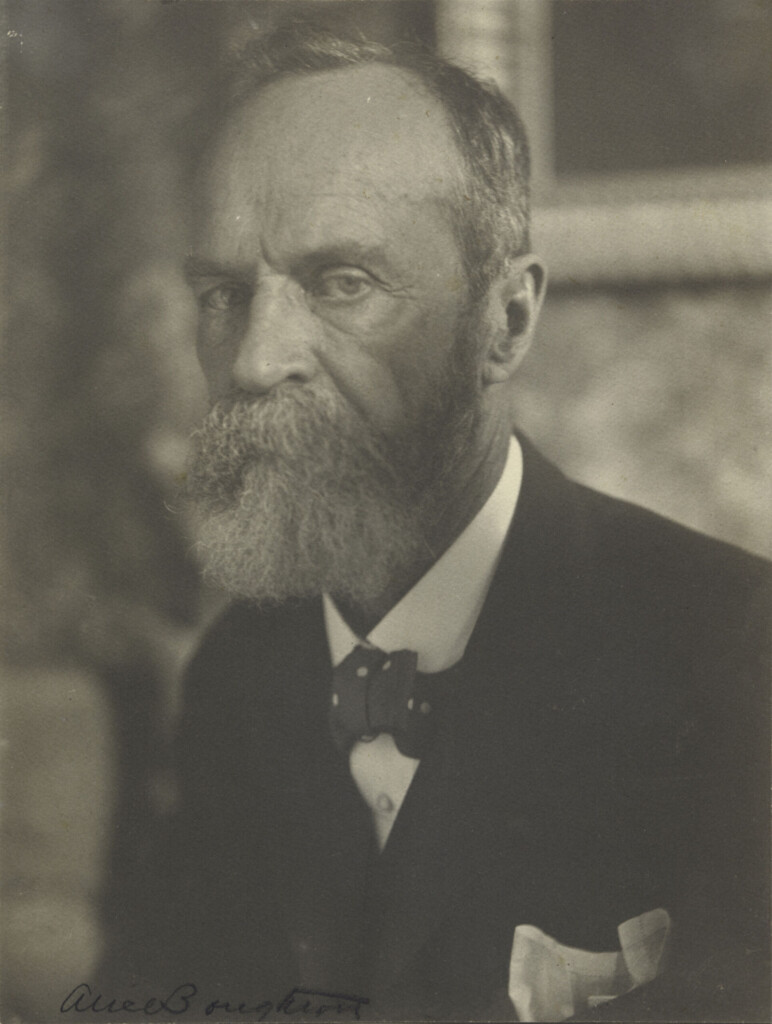
You are standing in a university corridor sometime in the late 1920s, outside a department meeting you were not invited to attend, and through the closed door you can hear the careful, collegial language of institutional hygiene — which grants, which chairs, which research programs deserve the oxygen of legitimacy, and which do not.
The exclusion of psychical research from American academic life after 1910 was not the inevitable triumph of rigor over credulity. It was a bureaucratic achievement, accomplished incrementally through funding decisions, journal gatekeeping, and the slow reclassification of curiosity itself as a symptom of insufficient training. The American Psychological Association, which James had helped to found, spent the decades following his death consolidating a methodological orthodoxy that prized measurability above all else. Phenomena that resisted clean experimental replication were not merely set aside as unresolved — they were reclassified as inherently unresolvable, which is a different epistemic judgment entirely, and a far more aggressive one.
The word “paranormal” did not enter widespread English usage until the 1920s and gained institutional traction through the 1930s, precisely the period when behaviorism under John B. Watson was completing its colonization of academic psychology. What the category accomplished was not descriptive but jurisdictional. By naming a class of phenomena as paranormal, the discipline effectively created a conceptual quarantine zone — a place where questions could be deposited without being answered, acknowledged without being examined. The prefix “para” suggests adjacency, something alongside the normal, but in practice it functioned as a permanent exile visa. Once a question was labeled paranormal, engaging with it seriously became evidence not of open-mindedness but of professional unseriousness.
This is what institutional power looks like when it operates at its most refined: it does not burn books or silence dissenters through force. It reclassifies the territory so that anyone who walks into it is understood to have already lost their bearings. Joseph Jastrow, one of the most prominent psychologists of the early twentieth century and a fierce critic of psychical research, understood this perfectly. His 1935 book Wish and Wisdom framed belief in anomalous phenomena as a predictable cognitive error, a failure of the educated mind to police its own desires. The argument was not falsification — it was preemptive pathologization. You did not need to examine the evidence if you could explain away the examiner.
What was being protected was not the integrity of scientific method but the coherence of a professional identity that had been constructed, at considerable effort, around the exclusion of certain questions. Academic psychology in America had fought hard through the late nineteenth century to distinguish itself from philosophy on one side and from folk belief on the other. Psychical research sat at exactly the wrong intersection — it used empirical methods, which made it look scientific, while investigating experiences that ordinary people reported and took seriously, which made it look dangerously popular. An institution trying to professionalize has nothing to fear more than a field that refuses to be either dismissed by laypeople or monopolized by experts.
James himself had understood the social mechanics of this long before it reached its conclusion. In a 1909 letter written less than a year before his death, he observed that the will to systematize was itself a kind of intellectual cowardice — that the construction of grand unifying frameworks served the theorist’s comfort more reliably than it served truth. His twenty-five years of work with the American Society for Psychical Research, his painstaking documentation of mediumistic sessions, his sustained engagement with figures like Leonora Piper whose performances he found genuinely inexplicable — none of it was naivety, and none of it was resolved by the institutional verdict that followed his death.
The questions he sat with remain, structurally intact, beneath the accumulated sediment of a century of professional consensus that was built, in no small part, to avoid having to answer them.
🔮 The Unseen Mind: Consciousness, Spirit & the Beyond
William James stood at a crossroads between empirical science and the uncharted territories of human experience, dedicating years to psychical research and the investigation of consciousness beyond its ordinary limits. His work invites us to explore the borders of the mind, where psychology, spirituality, and the paranormal converge in deeply unsettling and illuminating ways.
William James and Consciousness: The Stream of Thought
William James revolutionized the way we think about consciousness, famously introducing the metaphor of the ‘stream of thought’ to describe the continuous, flowing nature of mental experience. His psychological writings laid the groundwork not only for American pragmatism but also for later explorations into altered states and the fringes of perception. Understanding James’s theory of consciousness is essential for grasping why he was drawn so compellingly toward psychical phenomena.
GO TO THE SELECTION: William James and Consciousness: The Stream of Thought
The Theosophical Society: History, Principles and Influence on Western Culture
The Theosophical Society, founded in the same era as James’s psychical research, represented one of the most ambitious attempts to reconcile spiritual belief with scientific inquiry. Its founders sought empirical proof of invisible worlds and hidden dimensions of consciousness, ambitions that overlapped significantly with the agenda of the Society for Psychical Research. Exploring Theosophy’s history illuminates the broader cultural climate in which figures like James dared to take séances and telepathy seriously.
GO TO THE SELECTION: The Theosophical Society: History, Principles and Influence on Western Culture
Universal Consciousness
The concept of universal consciousness has haunted philosophers, mystics, and scientists alike, from the Vedantic traditions James admired to the quantum theories of today. James himself flirted with panpsychist and radical empiricist ideas that blur the boundary between individual minds and a larger cosmic awareness. This article traces the long intellectual lineage of an idea that James helped bring into the modern Western conversation.
GO TO THE SELECTION: Universal Consciousness
Dissociation in Psychology: When the Mind Divides
Dissociation in psychology—the splitting or fragmenting of the unified self—was a central puzzle for the psychical researchers of James’s generation, including his close collaborator Frederic Myers. James studied mediums and trance states precisely because they seemed to reveal hidden strata of the self operating beneath ordinary waking consciousness. This exploration of dissociation connects directly to James’s belief that human personality is far wider and stranger than conventional psychology dared admit.
GO TO THE SELECTION: Dissociation in Psychology: When the Mind Divides
Explore the Frontiers of the Mind on Indiecinema
If these hidden landscapes of consciousness have sparked your curiosity, Indiecinema streaming is your gateway to independent films that dare to venture where mainstream cinema never goes—into the mysteries of the psyche, the spirit, and the unseen. Discover documentaries, essays, and visionary works that carry the same restless wonder William James brought to his lifelong investigation of the human soul.
👉 EXPLORE THE CATALOG: Watch Indie Films in Streaming
A vision curated by a filmmaker, not an algorithm
In this video I explain our vision

