
The Cambridge Grief That Founded a Science
You are standing in a room that still smells like the person who is no longer in it. Their coat is on the hook. Their handwriting is on a notepad by the telephone. Every object in the space has become a kind of wound, radiating presence in the very moment it announces absence, and somewhere beneath the grief there is a thought you cannot suppress, a thought so naked and humiliating you would not say it aloud to anyone: what if they are still here, somehow, just beyond the membrane of what you can perceive? You do not believe in ghosts. You were educated past that. And yet the question rises anyway, not as superstition but as biological emergency, because the alternative — that a mind so specific, so irreplaceable, so saturated with memory and desire and particular humor has simply stopped, like a clock unwound — feels less like a fact than like an assault on the very structure of meaning itself.

This is where Frederic William Henry Myers began. Not in a laboratory, not in a philosophical seminar, but in loss so precise it became a vocation. Myers was a classical scholar at Trinity College, Cambridge, a man of extraordinary erudition who had translated Virgil and written verse and moved inside the intellectual aristocracy of Victorian England with easy fluency. What broke him open was the death of Annie Marshall in 1876 — his cousin’s wife, the woman he loved with the consuming intensity of a man who had no sanctioned language for what he felt. She died in an asylum, having suffered what the period called nervous collapse, and Myers spent the remainder of his life conducting what can only be described as a forensic search for her continued existence. Every experiment he designed, every séance he attended, every medium he interrogated with the methodological rigor he borrowed from natural science carried within it the unspoken question he had been asking since 1876: are you still there?
What makes this remarkable is not the grief itself, which is ordinary enough, but what Myers did with it intellectually. Rather than sublimate the question into religion or suppress it into academic professionalism, he decided to treat survival of consciousness as an empirical problem. In 1882, together with Henry Sidgwick, Edmund Gurney, and a circle of Cambridge men who shared a particular impatience with both credulous spiritualism and dismissive materialism, he co-founded the Society for Psychical Research. The SPR was the first organization in history to apply systematic scientific methodology to phenomena that official science refused to examine: telepathy, apparitions, mediumship, hypnotic regression, deathbed visions. Within a decade it had enrolled among its members or corresponding associates William James, John Dewey, Alfred Russel Wallace, and eventually even Sigmund Freud, who joined in 1911, the year Myers had already been dead for ten years.
The founding impulse matters more than the founding date because it tells you what kind of science this was. It was not curiosity science, the detached Baconian accumulation of data for its own sake. It was desperation science, research driven by the oldest and most ungovernable of human needs. William James, writing in 1897 in The Will to Believe, had already diagnosed what happens when a culture strips its citizens of the consolations of metaphysical certainty without replacing them with anything structurally equivalent — you do not get rational acceptance, you get private terror dressed in the clothes of agnosticism. The Victorian age was that moment in concentrated form: Darwin had published On the Origin of Species in 1859, Tyndall and Huxley were systematically closing the gaps in which God had previously lived, and educated men and women found themselves stranded in a universe that had grown vast and cold and indifferent at precisely the historical moment when the community structures that had once metabolized grief were disintegrating.
Myers did not retreat from that coldness. He walked directly into it carrying his instruments.
Cathnafola - A Paranormal Investigation
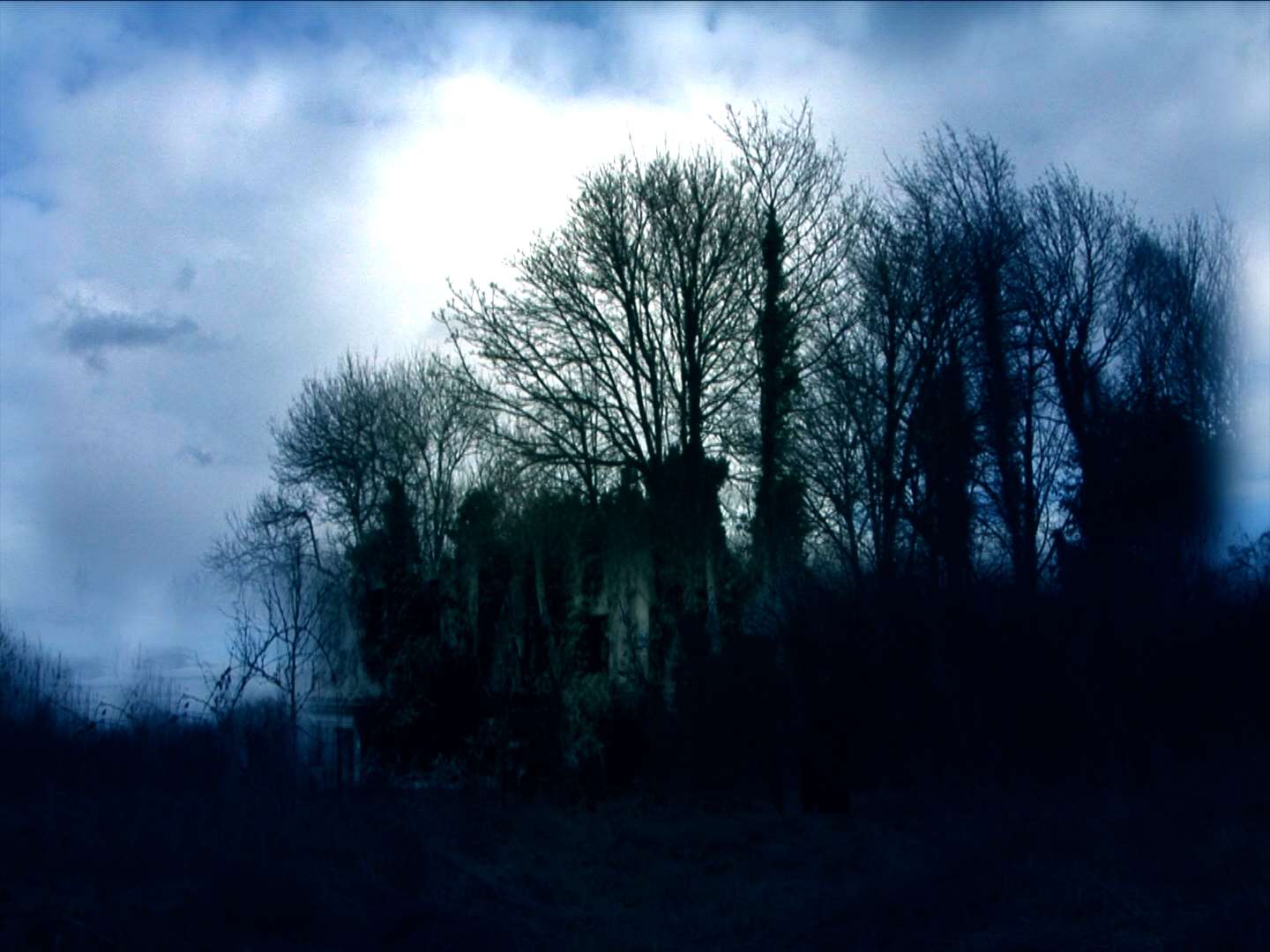
Documentary, horror, by Jason Figgis, USA, 2014.
In "Cathnafola", everything begins when renowned paranormal investigator Chris Halton of Haunted Earth UK receives footage filmed by three teenagers at the ruins of Cathnafola House in Ireland. Determined to unearth the truth behind the location’s bloody past, Halton embarks on a nighttime exploration of the infamous ruins—and soon uncovers terrifying and disturbing revelations.
LANGUAGE: English
SUBTITLES: Spanish, French, German, Portuguese
Frederic Myers and the Wound Behind the Method
You are thirty-four years old, and the woman you love has just drowned herself, and the question you cannot survive without answering is whether anything of her remains anywhere at all.
Frederic William Henry Myers was born in 1843 in Keswick, in the English Lake District, into a family shaped by clerical seriousness and Romantic geography — the fells and the grey water forming, as he would later suggest in his poetry, a kind of permanent atmospheric pressure on the mind. He was educated at Cheltenham College and then at Trinity College, Cambridge, where he distinguished himself with a velocity that embarrassed his peers, winning the Classical Tripos with sufficient force to secure a fellowship in 1865. He was, by every measure available to Victorian intellectual culture, a man whose future would be organized around Greek tragedy and Wordsworthian verse, around the long corridors of Cambridge and the careful production of classical scholarship. He published a study of Wordsworth in 1881, essays on Virgil and Dante, a collection of verse that circulated among those who cared about such things. The word used most often to describe his mind was luminous. The word used for his temperament was ardent. What neither word touched was the vertigo that had been living inside him since adolescence — an inability to reconcile the apparent meaninglessness of a universe governed purely by matter with the scale of feeling that matter somehow managed to generate in a human chest.
Annie Marshall entered his life in the early 1870s. She was his cousin by marriage, the wife of Walter Marshall, and what existed between her and Myers has been described by his biographers with the careful circumspection Victorian intimacy tends to produce in later scholars. What can be said with confidence is that the relationship was the most consequential emotional fact of his adult life, and that Annie Marshall was a woman of unusual intelligence and severe psychological suffering, subject to episodes of mental illness that no medical framework of the period had adequate language to address. She was committed, at various points, to institutional care. Myers visited. He corresponded. He watched the person he regarded as the center of his interior world deteriorate within a system that understood her suffering as deviation rather than signal. On August 29, 1876, Annie Marshall drowned in Ullswater — the same lake district water that had formed the backdrop of his childhood — in circumstances that left little ambiguity about intention.
The grief Myers experienced was not the clean, mournable kind. It carried the additional weight of metaphysical emergency. If consciousness was simply what the brain did, then Annie Marshall was not anywhere. She had not gone somewhere. She had stopped. The Victorian scientific consensus, hardening through the 1860s under the pressure of evolutionary materialism, offered him exactly this conclusion and nothing more. T.H. Huxley had coined the term agnosticism in 1869, John Tyndall had delivered his famous Belfast Address asserting the primacy of matter in 1874, and the intellectual mood that greeted Myers’s grief was one of rigorous, almost triumphalist, naturalism. Feeling, under this dispensation, was epiphenomenal. Love was chemistry. Death was termination.
Myers refused this — not sentimentally, but methodologically. What he decided, in the aftermath of 1876, was that the question of whether consciousness survived bodily death was an empirical question, and that it had never been investigated with anything approaching scientific rigor because the institutions of science had decided in advance that the answer was no. The refusal of the question had been mistaken for its resolution. And so he turned, with the same intellectual intensity he had brought to Pindar and Wordsworth, toward telepathy, toward apparitions, toward the testimony of the dying, toward every category of experience that respectable Victorian epistemology had agreed to treat as delusion — not because he was credulous, but because the alternative was to accept a universe in which the drowning of Annie Marshall in Ullswater had simply, finally, and completely, meant nothing.

1882 and the Audacity of Institutional Seriousness
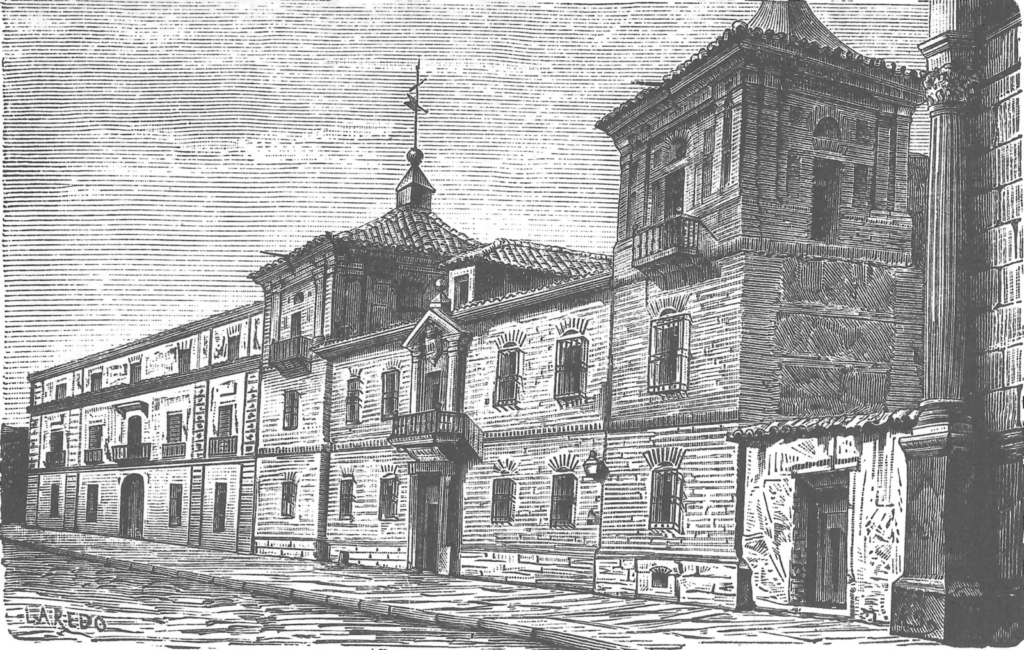
You are sitting in a room in London in 1882, and the men around you are not mystics. They are a Cambridge philosopher who held the Knightsbridge Professorship of Moral Philosophy, a classically trained musician who abandoned a performance career to pursue questions he considered more urgent than any concert hall could contain, and a barrister whose social connections stretch across the highest corridors of Victorian intellectual life. The year matters because it sits at a particular hinge in history: Darwin’s revolution is barely two decades old, the X-Club has spent years successfully professionalizing British science, and the unspoken consensus in respectable learned circles is that the boundary between legitimate inquiry and credulous enthusiasm has finally, mercifully, been drawn. What these men are about to do is cross that boundary deliberately, in full public view, with their real names attached.
The Society for Psychical Research was founded in London on February 20, 1882, and the audacity of its founding lay not in its subject matter but in its method. Henry Sidgwick, who became its first president, had spent decades constructing the ethical architecture of utilitarian thought, culminating in “The Methods of Ethics” published in 1874, a work so scrupulously reasoned that even its critics could not accuse it of sentimentality. Edmund Gurney, whose abandoned musical career had left him with a kind of unhoused intellectual intensity, brought to the group a willingness to sit for hours in cold rooms watching nothing happen and recording the nothing with the same care another man might give a laboratory result. These were not people who wanted the supernatural to be real in any comforting sense. Sidgwick in particular had staked his entire philosophical reputation on the refusal to believe anything simply because believing it would be easier.
What Victorian science had actually done with phenomena like telepathy, apparitions, and trance states was not refute them — it had refused to look. The dismissal was social before it was empirical. John Tyndall’s 1874 Belfast Address, in which he delivered what amounted to a materialist manifesto before the British Association for the Advancement of Science, set the ideological temperature with precision: nature was continuous, mechanical, and in principle fully explicable without recourse to anything that resembled mind operating outside the body. To investigate the contrary was not merely wrong, it was a category error, a kind of intellectual bad taste. The SPR’s founding act was to treat this social consensus as exactly what it was — a consensus — and to ask what the evidence actually showed when examined without prior commitment to the conclusion.
The membership that gathered around Sidgwick and Gurney included figures whose credentials were themselves a kind of argument. William Barrett, a professor of physics at the Royal College of Science in Dublin, had already presented a paper on thought-transference to the British Association in 1876 and been met with the specific silence that institutions deploy when they cannot refute but will not engage. His presence in the SPR made the point without anyone having to state it: here was a man with a laboratory and a salary and a publication record, and the respectable world had simply looked away from what he found. The Society’s early committees — organized around thought-transference, mesmerism, apparitions, and mediumship — were not committees of believers. They were committees of people who had noticed that the official story contained a gap no one was willing to measure.
What Gurney and Myers began assembling in those first years was eventually published in 1886 as “Phantasms of the Living,” a two-volume work containing over seven hundred cases of spontaneous telepathic experience, each cross-referenced, corroborated where possible, and evaluated against alternative explanations with a rigor that most contemporary psychology had not yet thought to apply to its own data. The sheer mass of it was itself a kind of epistemological pressure — a way of saying that dismissal, at this scale, required its own justification.
What the Census of Hallucinations Actually Revealed
You are handed a questionnaire in 1886. It asks whether you have ever, while awake and in good health, experienced a vivid impression of seeing, hearing, or being touched by a living or deceased person when no such person was present. Seventeen thousand and sixty-three people answered it honestly, and what came back was not the fringe testimony of the credulous or the grieving but a cross-section of Victorian professional and domestic life — clergymen, physicians, schoolteachers, railway engineers — offering accounts that refused to behave like folklore.
The Census of Hallucinations, published by the Society for Psychical Research and coordinated across Britain, the United States, France, and Germany, produced a figure that immediately unsettled the framework used to interpret it: roughly one in ten respondents reported at least one vivid hallucination while fully awake and in apparent physical health. That number alone was difficult to absorb without revising the assumption that such experiences belonged exclusively to pathological minds. But the figure that proved genuinely intractable was narrower and more specific. Among those who reported a hallucination of a known living person, a statistically disproportionate number had occurred within twelve hours of that person’s death — at a rate roughly 440 times higher than chance would predict, once mortality tables were applied to calculate the expected coincidence rate. Edmund Gurney, who had been the primary architect of the methodology before his death in 1888, had anticipated something like this pattern. Henry Sidgwick’s wife Eleanor presented the full findings in 1894, and the statistical argument she laid out was not mystical in its structure — it was epidemiological, drawing on the same probabilistic reasoning used to establish correlations in public health research.
The problem was not that the numbers were fabricated. Skeptical researchers who examined the methodology found it imperfect but not fraudulent. The problem was categorical. The dominant psychological framework of the late nineteenth century had inherited from associationist philosophy the assumption that hallucinations were products of internal disruption — fever, grief, chemical imbalance, neurological instability. Théodule Ribot, whose work on diseases of memory and personality was shaping French experimental psychology in exactly this period, had no conceptual space for a hallucination that might correspond to an external event occurring at a distance. The experience was by definition a malfunction of the perceiving apparatus, not a channel to anything outside it. What the Census revealed was that this definition was doing enormous philosophical work that no one had openly acknowledged — it was not a neutral description of a phenomenon but a prior commitment about the boundaries of mind.
Believers were equally destabilized, though they preferred not to show it. The data did not confirm what spiritualism required. The veridical hallucinations in the Census were almost never dramatic, almost never narrative, almost never communicative in the way séance testimony demanded. A woman sees her brother standing at the foot of her bed; he is silent; he vanishes; she learns the next morning he died during the night. That is the modal case. No revelation, no message, no continuity of personality demonstrating survival. What it suggested, if it suggested anything beyond coincidence, was some form of unconscious transmission between minds — a possibility that satisfied neither the spiritualist who wanted proof of an afterlife nor the materialist who wanted proof of nothing. Myers called these cases phantasms of the living, deliberately choosing language that refused the ghost and the hallucination equally, and the refusal was not rhetorical evasion but an acknowledgment that the existing vocabulary had been built to prevent the question from being asked in this form.
What the Census made visible was not evidence of survival but evidence of a gap — a space between the psychological and the physical where the standard conceptual tools reached their limit and the data simply sat, unhoused, in the cold.
The Subliminal Self as a Philosophical Grenade
You are reading a sentence right now, and somewhere beneath the act of reading — beneath the eye moving left to right, beneath the word recognized before it is consciously parsed — something else is already working. Frederic Myers named that something in 1903, in the two posthumous volumes of Human Personality and Its Survival of Bodily Death, and the name he gave it was the subliminal self: a stratum of consciousness running deeper than the threshold of waking identity, not a repository of repressed material but an active, organizing intelligence that the ordinary ego floats upon without ever knowing its own depth.
The word “subliminal” is Myers’s coinage. He introduced it in the Proceedings of the Society for Psychical Research in 1886, seventeen years before Freud’s The Interpretation of Dreams had fully colonized the intellectual landscape with its own architecture of hidden mental life. Myers was not gesturing at a basement full of forbidden desires. He was proposing something structurally different: that beneath the supraliminal self — the self that wakes, names itself, writes letters, attends to business — there exists a wider field of consciousness, capable of perception, memory, and integration that the waking mind cannot access and sometimes cannot survive. The subliminal self, in Myers’s model, was not the damaged part. It was the larger part.
William James read Myers with sustained attention across two decades and acknowledged him directly in The Varieties of Religious Experience in 1902, calling Myers’s framework one of the most important contributions to psychology of the nineteenth century. James adopted the concept of the “fringe of consciousness” and developed his own notion of the “transmarginal” or “subliminal” region in ways that owe an explicit and documented debt to Myers’s prior theorization. The acknowledgment is there in James’s footnotes, legible to anyone willing to look, and yet the history of psychology as taught in universities consistently positions James as the originator of these ideas about peripheral and subthreshold mental activity, with Myers reduced to a curious footnote about ghost-hunting.
Freud never cited Myers, but the intellectual transmission is less clean than silence suggests. Freud corresponded with members of the Society for Psychical Research and was elected an honorary member in 1911. Josef Breuer, whose collaboration with Freud produced Studies on Hysteria in 1895, was aware of the SPR’s published investigations into dissociated states. The conceptual vocabulary for a mental life operating below conscious awareness was already circulating in the exact networks Freud inhabited. What Freud did — and this is not a diminishment, it is a diagnosis — was reframe that vocabulary inside a therapeutic and sexual economy that made it assimilable to medicine and eventually to culture. Myers’s subliminal self was too large, too spiritually promiscuous, too resistant to clinical containment. It had to be shrunk before it could be sold.
What Myers was actually describing, with the data he accumulated from cases of automatic writing, hypnotic regression, telepathic transmission, and crisis apparitions — data gathered by the SPR across hundreds of documented testimonies from 1882 onward — was a model of mind in which the boundaries of individual identity are constitutively porous. The subliminal self communicates across those boundaries. It receives impressions from distances the waking self cannot account for. Myers did not reach this conclusion mystically; he reached it empirically, through the same methods of classification and falsification that any Victorian scientist would recognize. The problem was not his method. The problem was that his conclusions could not be absorbed by a discipline — psychology — that had staked its legitimacy on the brain as a closed system.
Every field defends its foundational assumptions with the same mechanism: it simply stops citing the work that would require it to revise them. Myers published a theory of consciousness in 1903 that anticipated dissociation theory, the unconscious, and the extended mind thesis — and academic psychology responded by treating his name as a warning about what happens when a serious mind wanders too close to the séance table.
A vision curated by a filmmaker, not an algorithm
In this video I explain our vision
The Trap of Respectability and Its Institutional Costs

You sit across from a colleague at a faculty dinner in Cambridge, sometime in the 1880s, and you mention, carefully, that you have been attending sessions of the Society for Psychical Research. The silence that follows is not hostile. It is worse than hostile. It is the silence of a man deciding whether to feel pity or contempt, and settling, with the quiet efficiency of the well-bred, on both simultaneously.
Frederic Myers and his collaborators knew this silence intimately, and their institutional response to it shaped every methodological choice the SPR made in its first two decades. The strategy was legibility: if they could speak the language of experimental protocols, statistical controls, and evidentiary chains, the academy would have to engage with the substance rather than dismiss the frame. Richard Hodgson spent time in 1884 and 1885 dismantling the fraudulent apparatus of Helena Blavatsky‘s Theosophical Society in Adyar, India, producing a 200-page report for the SPR’s Proceedings that remains a model of forensic skepticism. Edmund Gurney’s Phantasms of the Living, published in 1886 with over 700 case studies cross-referenced against independent testimony and corroborating witnesses, was not spiritualist literature. It was the architecture of a database, assembled with a rigor that would not have embarrassed a Victorian epidemiologist. The SPR was not pretending to be scientific. It was being scientific, in the precise methodological sense available to its era, and it changed almost nothing about how it was perceived by the institutions it was trying to impress.
This is the double bind that no amount of procedural virtue could dissolve. The moment the SPR applied rigorous methods and eliminated fraud — which it did, repeatedly, publicly, sometimes to the fury of the spiritualist community it was nominally adjacent to — it produced exactly the kind of inconclusive, probabilistic, contested results that rigorous inquiry into anomalous phenomena tends to produce. And inconclusive results in a domain already marked as suspect are not read as epistemic honesty. They are read as confirmation of the original suspicion. Meanwhile, every case that survived scrutiny — every telepathy experiment that showed statistically significant results, every medium whose performance resisted exposure — was treated not as data but as evidence of investigator credulity. The evidentiary bar moved. It always moves. Thomas Huxley, who coined the word agnostic and built a career on methodological openness, declined an invitation to join the SPR in 1882 on the grounds that even if telepathy were proven, it would be of no scientific interest. This was not skepticism. It was a prior. The result could not, in principle, count.
What the SPR encountered was not a failure of proof but a feature of how Western epistemological institutions maintain their boundaries. Sociologist Thomas Gieryn described this in 1983 as boundary-work — the rhetorical and institutional labor by which scientific communities demarcate themselves from non-science, not through neutral criteria but through strategic policing that serves professional interests. The SPR threatened this boundary not because its methods were poor but because its subject matter, if taken seriously, would have required existing disciplines to account for phenomena that fell between and beneath their established jurisdictions. Psychology had not yet fully professionalized. Neurology was in its infancy. Physics had no framework for action at a distance that wasn’t already accounted for. The SPR was operating in genuinely unmapped territory, and the response of the surrounding institutions was to redraw the map so that the territory didn’t appear on it.
Myers understood this, and it quietly devastated him. He had staked his intellectual identity on the belief that patient accumulation of evidence would eventually force a reckoning, that the weight of testimony, properly verified and systematically organized, would become impossible to ignore. What he had not fully reckoned with was that institutions do not revise their foundations under evidential pressure alone — they revise them when the cost of not revising exceeds the cost of the disruption revision brings.
A Second Scene: The Medium, the Séance, and the Manufactured Transcript
The gas lamps had been turned low enough that the investigator could still see his own hands, but only just. Across the table sat a woman who had produced, in seventeen documented sessions over the previous two years, phenomena that no one in the room could immediately explain: raps from surfaces no one touched, a name spoken aloud that belonged to a dead child only the grieving mother in the corner had ever known, temperatures that dropped without mechanical cause. The investigator had come not to believe but to measure, and he carried with him a protocol developed partly from Richard Hodgson’s 1887 report on Helena Blavatsky — a document that remains one of the most methodologically sophisticated fraud analyses of the nineteenth century, running to over two hundred pages in the Proceedings of the Society for Psychical Research, detailing hidden trapdoors, confederate networks, and the precise mechanics by which a charismatic figure had constructed an entire spiritual cosmology from mirrors and prior information. The investigator knew how it was done. He had read every page.
What Hodgson’s framework could not anticipate — and what no framework built on the assumption of a clean binary between genuine and fraudulent could survive — was the sitting that produced both in the same hour. The medium, whose hands were held by two sitters throughout, nonetheless produced a materialized form in the corner of the room that three witnesses described independently and in consistent detail. Then, during the same session, the investigator’s assistant discovered a length of muslin folded inside the medium’s corset during a controlled interval she had requested for personal reasons. Two facts, occupying the same night, the same body, the same performance. The muslin proved deception. The form in the corner remained unaccounted for.
William James, who attended several SPR-affiliated investigations during his time corresponding with Myers in the 1880s and 1890s, identified this problem with a precision that his contemporaries found uncomfortable. In his 1896 presidential address to the Society for Psychical Research, he argued that the dismissal of an entire body of testimony on the grounds that some portion of it was fabricated constituted a logical error as serious as uncritical acceptance. Fraud contaminated a sitting; it did not retroactively dissolve every anomaly that preceded or coexisted with it. The scientific community ignored this distinction almost universally, because the alternative — holding two incompatible findings in genuine suspension — was institutionally intolerable.
Myers had built the SPR’s methodology on exactly that suspension, and it cost the organization its credibility with the very establishment it was trying to address. The cross-correspondence experiments, running from 1901 through the 1930s and involving automatic writing from mediums in England, India, and America producing interlocking classical fragments that seemed to require a coordinating intelligence to assemble, generated transcripts of extraordinary complexity — thousands of pages catalogued by Alice Johnson and Eleanor Sidgwick with a scholarly rigor that would not embarrass a modern archive. The classical scholar who examined some of the Greek references noted that they were not the kind a casual Victorian educated woman would reproduce from memory. None of this settled anything. Because none of it could be staged cleanly in a laboratory, it remained permanently available to the charge of collusion, selective reporting, or unconscious cryptomnesia — a term Théodore Flournoy had introduced in 1900 in his study of the medium Hélène Smith, describing the way forgotten memories resurface in apparent revelation.
The epistemological trap the SPR had walked into was not a failure of intelligence. It was a structural consequence of investigating phenomena that could not, by their nature, be isolated from the human relationships in which they occurred. Every séance was also a social event, a grief ritual, a performance negotiation between the medium’s reputation and the investigator’s need to return with something legible.
What Survival of Consciousness Would Actually Destroy
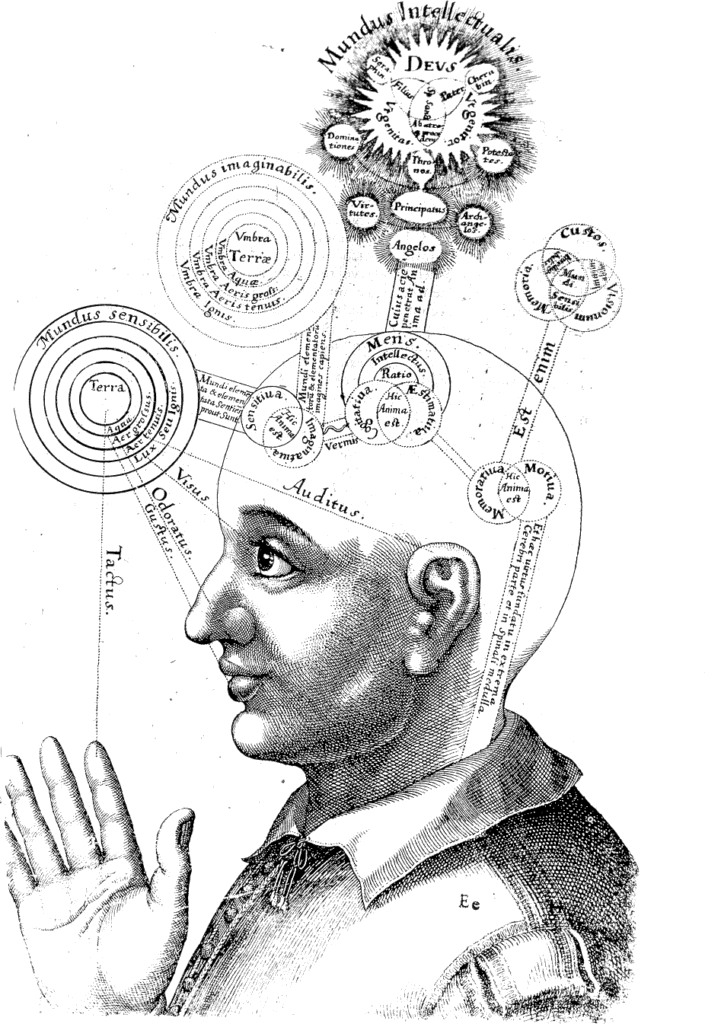
You are sitting with a document you have spent three years writing, a legal will, a medical directive, a careful articulation of who you are and what you want done with the remains of your life, and somewhere beneath the legal language is an assumption so total it never needed to be written down: that the person signing this document will, at a fixed and verifiable moment, cease to exist entirely.
That assumption is not biology. It is architecture. It holds up entire systems that modern civilization has built its procedural confidence upon, and Frederic Myers, working with disciplined seriousness through the 1880s and 1890s and crystallized in his posthumously published “Human Personality and Its Survival of Bodily Death” in 1903, placed a slow charge at its foundation without most people noticing the fuse.
The problem is not theological. Theology has always accommodated survival, domesticated it, given it robes and a geography. What Myers proposed was categorically different: survival as a phenomenon subject to empirical investigation, meaning survival as something that could be partially true, intermittently verifiable, structurally complex, and utterly resistant to the clean binary of existence and non-existence that every modern legal and medical institution requires. Jurisprudence does not have a protocol for partial persons. A death certificate is not designed to accommodate degrees.
Consider what personal identity actually rests on in the legal tradition descending from John Locke‘s 1689 “Essay Concerning Human Understanding,” where psychological continuity — memory, consciousness threading through time — became the criterion distinguishing persons from mere bodies. Locke built that framework assuming the thread snaps at death. If the thread does not snap, or snaps unevenly, or persists in some attenuated form that can occasionally produce verifiable information about events it should have no access to, then the philosophical scaffolding beneath inheritance law, criminal sentencing, consent doctrine, and the entire concept of a final decision collapses into something requiring reconstruction from the ground up, not amendment.
Medical ethics is equally exposed. The principle of patient autonomy rests on the presumption that the patient is the terminal authority on their own existence, that their preferences end with them, that the person who signed the advance directive is the same continuous entity whose heart has stopped. The moment survival becomes even a theoretical empirical question rather than a religious assertion, the physician’s moral geometry shifts in ways that cannot be absorbed by adding a new paragraph to existing guidelines.
What makes Myers genuinely dangerous to both camps — the believers and the debunkers — is that he refused to let survival be comfortable. His subliminal self, the vast psychological substrate he theorized beneath conscious awareness, was not a soul in any reassuring sense. It was strange, fragmented, capable of extraordinary perception and also of profound deception, not a guarantor of moral continuity but an unsettling expansion of what a person might actually be. Moral accountability in criminal law depends on a bounded self that knew what it was doing at a specific time. A self with the architecture Myers described does not fit that courtroom.
The materialist consensus that emerged through the twentieth century was not simply a scientific conclusion. It was also an administrative convenience. A universe in which consciousness terminates cleanly is a universe that can be governed, insured, litigated, and medicated according to clear protocols. The SPR’s most unsettling implication was never that death might not be the end, but that the institutions built on the certainty of its finality might be resting on an empirical question they had simply decided in advance, not because the evidence demanded it, but because the alternative was a complexity that no existing system was built to bear.
Myers died in Rome in January 1901, before his major work appeared in print, which means he never saw how thoroughly the century that followed would choose administrative clarity over the open question he had spent his life refusing to close.
🔮 Minds Beyond the Veil: Consciousness and the Unseen
Frederic Myers devoted his life to the scientific investigation of phenomena that official science refused to acknowledge, founding a discipline that bridges psychology, philosophy, and the supernatural. The articles below trace the broader intellectual landscape in which Myers operated — one haunted by questions of consciousness, survival, memory, and the invisible forces shaping human experience. Each piece opens a door into the same infinite maze Myers explored.
The Theosophical Society: History, Principles and Influence on Western Culture
The Theosophical Society emerged in the same Victorian crucible that gave birth to the Society for Psychical Research, and the two organizations shared many preoccupations — chief among them the question of whether the human soul survives bodily death. While Myers pursued empirical evidence through séances and census studies, Blavatsky and Olcott built an entire cosmological system around the reality of the invisible. Understanding their parallel project illuminates the cultural urgency that drove Myers and his colleagues to take the supernatural seriously as a field of inquiry.
GO TO THE SELECTION: The Theosophical Society: History, Principles and Influence on Western Culture
William James and Consciousness: The Stream of Thought
William James, one of the most distinguished members of the Society for Psychical Research and a close intellectual ally of Frederic Myers, placed the study of consciousness at the very center of his psychology. His concept of the stream of thought — fluid, continuous, never fully graspable — resonates deeply with Myers’s own theory of the subliminal self, which posited layers of mind beneath ordinary awareness. Reading James alongside Myers reveals a shared conviction that science had barely begun to map the true territory of human consciousness.
GO TO THE SELECTION: William James and Consciousness: The Stream of Thought
Dissociation in Psychology: When the Mind Divides
Dissociation — the splitting of the mind into separate streams of experience — was one of the central phenomena that Myers investigated through hypnosis, automatic writing, and mediumistic communication. His theoretical framework anticipated many of the concepts that later clinical psychology would use to understand how the mind fragments under pressure. This article traces the history and theory of dissociation, providing essential background for anyone seeking to understand the psychological stakes of Myers’s most radical ideas.
GO TO THE SELECTION: Dissociation in Psychology: When the Mind Divides
Spirit Photography: When the Lens Captures the Invisible
Spirit photography emerged in the same historical moment as the Society for Psychical Research, reflecting a widespread Victorian desire to capture proof of the afterlife through modern technology. Myers and his colleagues were acutely aware of these visual claims, subjecting them to scrutiny while remaining open to the possibility that some form of post-mortem existence might one day be verified. This article examines how the camera became an instrument of both hope and deception in the age of psychical research.
GO TO THE SELECTION: Spirit Photography: When the Lens Captures the Invisible
Explore the Invisible on Indiecinema
If these ideas about consciousness, the afterlife, and the hidden dimensions of the mind have stirred something in you, Indiecinema is the place to continue the journey. Our streaming platform gathers the most visionary works of independent cinema — films that dare to look beyond the surface of reality, just as Frederic Myers did. Discover them now on Indiecinema.
👉 EXPLORE THE CATALOG: Watch Indie Films in Streaming
A vision curated by a filmmaker, not an algorithm
In this video I explain our vision

