
The Unaccompanied Body in Public Space
You slide your passport across the counter and the clerk’s eyes flick up, past you, toward the door, as if your husband might materialize a beat behind, delayed by luggage. When no one appears, something in his expression recalibrates. He asks if you’re waiting for someone. You say no, just me, and the sentence comes out slightly too fast, slightly too rehearsed, because you have said it so many times before in so many lobbies that it has become a kind of password, a small verbal key you insert into the lock of other people’s assumptions. The room they give you is near the elevator, not the one with the view. Nobody asks a man traveling alone if he’s waiting for someone.

Sit down at a restaurant table set for one and watch what happens to the room. The waiter hesitates before removing the second setting, as though its absence were a wound that needs acknowledging rather than a simple fact of the reservation. Other diners glance over, not with hostility exactly, but with a kind of low-grade accounting, a silent tally of why. Why alone, why here, why now. The body at the single table becomes legible in a way the body at the table for two never is, because a woman alone has historically been read as a body without explanation, and unexplained things demand narrative. Erving Goffman wrote in 1963 about the machinery of stigma, the way a discredited attribute organizes all the information that follows it, and a woman eating alone in a public dining room enters exactly that machinery, becomes a text that strangers feel entitled to interpret.
This is not paranoia; it is geography, and it was built that way on purpose. The city as we inherited it, particularly the nineteenth-century European city that shaped so much of modern urban life, was constructed around the free movement of a specific figure: the flâneur, the strolling observer, the man who could walk through Paris arcades absorbing the spectacle of modernity while remaining himself unobserved, untouchable, a pure eye. Walter Benjamin, working through Baudelaire in the Arcades Project he left unfinished at his death in 1940, made this figure central to the experience of urban modernity itself, the idea that to know the city was to walk it anonymously, to disappear into the crowd while devouring it visually. What Benjamin’s account never had to reckon with, because the culture he was describing never had to reckon with it, is that this anonymity was a male privilege dressed up as a universal condition. A woman walking those same arcades alone in 1860 was not reading the city; she was being read by it, categorized instantly as one of a narrow set of possibilities, most of which orbited around commercial sex.
Janet Wolff named this absence directly in her 1985 essay on the invisible flâneuse, arguing that the literature of modernity theorized the public sphere as though it had no gender, when in fact it had been organized from the ground up to accommodate one gender’s freedom by restricting the other’s. The bourgeois woman of that same century occupied, ideally, domestic space; the streets belonged to working women out of necessity and to no respectable woman by choice, and the ones who did appear there alone absorbed a suspicion that had nothing to do with their actual conduct and everything to do with the fact of their unaccompanied visibility. This was never simply etiquette. It was cartography. Doreen Massey, writing on space and gender in the 1990s, described how spatial arrangements are never neutral containers but active participants in producing and reproducing power, and the hotel lobby, the restaurant floor, the night train compartment are all inheritors of that arrangement, still running the old software even when nobody in the room could articulate the rule they’re enforcing.
The Manufactured Fear Industry
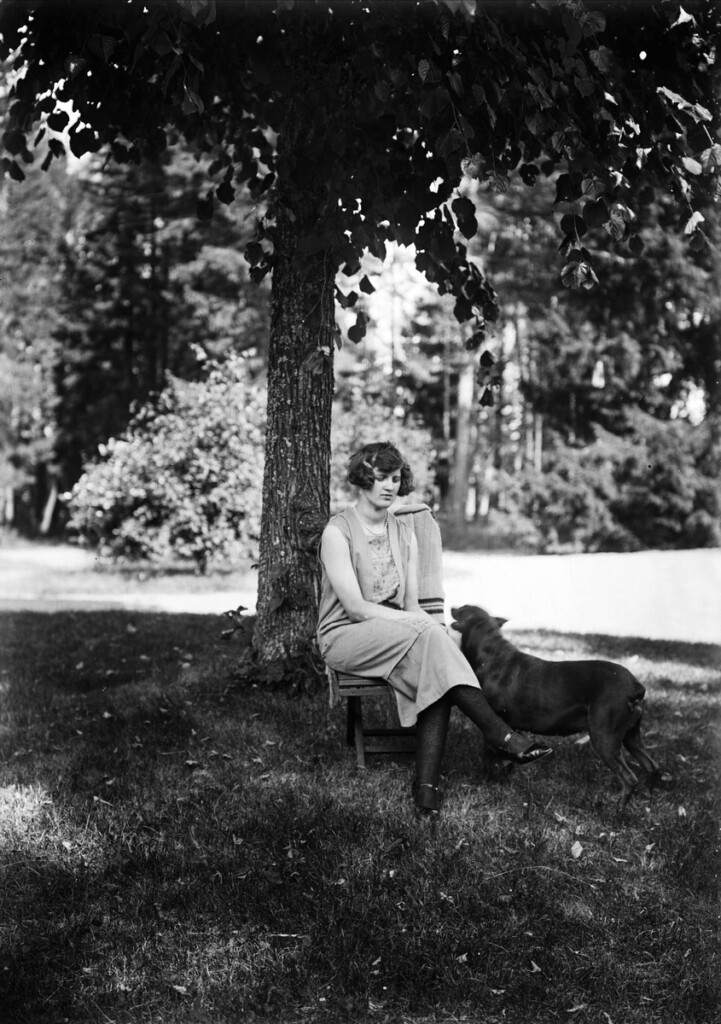
You check the location pin three times before leaving the hotel room, screenshot it to a friend who is asleep eight time zones away, and rehearse in your head the sentence you’ll say if a man in the stairwell asks where you’re headed alone at this hour. Nothing happens. Nothing was ever going to happen, statistically speaking, but the rehearsal itself is the point, because somewhere between your mother’s warnings and the government website’s travel advisory and the true-crime podcast you half-listened to on the flight, you absorbed a script that runs whether or not the scene requires it.
The sociologist Margaret Gordon and her collaborator Stephanie Riger documented this discrepancy back in 1989 in their book The Female Fear, showing that women’s fear of crime, particularly of assault by strangers, vastly outstripped their actual likelihood of victimization by unknown attackers, while the far more statistically probable danger, violence from intimate partners or acquaintances, generated comparatively little of the same dread when women stepped outside their own homes. That inversion has not corrected itself in the thirty-five years since. The Global Peace Index and multiple criminological surveys across the UK, the US, and Australia consistently show that women report fear of public space at levels two to four times higher than men, even in neighborhoods where men are statistically more likely to be victims of street violence. The fear is not irrational in the sense of being baseless; it is irrational in the sense of being misallocated, aimed at the wrong perpetrator, the wrong location, the wrong hour, because the actual data on sexual violence, gathered by the World Health Organization and reiterated in study after study, places the overwhelming majority of assaults on women within homes, among people already known to the victim, not in the foreign train station at midnight.
Yet the foreign train station at midnight is what gets legislated. Travel advisories issued by state departments and foreign offices routinely single out destinations with vague, unfalsifiable language, exercise increased caution, be aware of your surroundings, phrasing that criminologist Elizabeth Stanko identified decades ago as a genre of warning that never specifies the actual mechanism of risk because it isn’t actually describing risk, it’s transmitting a mood. The mood does the work that data would otherwise have to justify. A woman reading that her destination merits a heightened advisory does not receive a number, a rate, a comparison; she receives a feeling, and the feeling is calibrated to make her reconsider the trip altogether, or to make her build her itinerary around avoidance rather than engagement, which amounts to the same outcome as if the restriction had been stated outright.
This is what Michel Foucault, writing on discipline in 1975, would have recognized instantly as an apparatus that doesn’t need a guard because the subject has learned to guard herself. The panopticon required no warden in every tower; it required only the belief that a warden might be watching. Female travelers perform an equivalent self-surveillance, checking the time, calculating the walk, selecting the seat near the door, not because an authority commands it in the moment but because the command has already been internalized so thoroughly it now feels like instinct, like prudence, like her own good sense rather than a rule she was handed before she could walk unaccompanied to school. News media accelerates the loop: a single assault on a foreign tourist generates international coverage precisely because it is rare enough to be newsworthy, and that rarity is what makes it feel ubiquitous, a cognitive distortion psychologists call the availability heuristic, first named by Amos Tversky and Daniel Kahneman in 1973, whereby the vividness and repetition of an image substitutes for its actual frequency. One viral headline about a woman missing in a hostel does more to shape global female mobility than a decade of unremarkable, uneventful solo trips taken by millions of women who never make the news precisely because nothing happened to them.

Solitude as Historically Denied Privilege
Rousseau walked. For decades he walked, alone, through the countryside around Geneva and later through the woods outside Paris, composing in his head the sentences that would become the Reveries of the Solitary Walker, published posthumously in 1782. Nobody questioned his right to disappear for hours, to return silent, elaborated, full of thought that belonged only to him. His solitude was not a scandal. It was the very mechanism of his genius, the raw material from which the Confessions and the Discourse on Inequality had been extracted. A man alone on a road was a philosopher. A woman alone on the same road, in the same years, was a problem to be explained, escorted, or punished.
The room mattered as much as the road. Virginia Woolf named the condition with brutal precision in 1929: a woman needed five hundred pounds a year and a room with a lock on the door if she was ever going to write fiction. She was not being metaphorical. She was describing an economic and architectural fact. Men had studies. Men had libraries willed to them by fathers, colleges that fed and housed them for the sole purpose of thinking, monasteries and hermitages built specifically to shelter male withdrawal from the world. Women had the parlor, the nursery, the kitchen, spaces engineered for interruption, where solitude was structurally impossible because the labor performed there existed precisely to be available to others at any moment. Jane Austen, we know from her family’s own accounts, wrote at a small table in a shared sitting room, and kept a creaking door deliberately unoiled so she would hear anyone approaching in time to hide her manuscript under a piece of blotting paper. Her solitude had to be smuggled. It could not be claimed.
The pathology went further than mere inconvenience. When women did seek solitude, medicine and law were ready to name the seeking itself as illness. The nineteenth century produced an entire diagnostic apparatus for women who withdrew, who wandered, who wanted a door that locked. Silas Weir Mitchell, the American physician, prescribed his infamous rest cure to women exhibiting nervous exhaustion, a treatment that meant total isolation from intellectual activity, forced feeding, and absolute bed rest, stripping solitude of its content while leaving the woman physically alone in a room designed to break rather than nourish her. Charlotte Perkins Gilman underwent this treatment herself in 1887 and transformed the experience into “The Yellow Wallpaper” three years later, a story in which a woman’s forced isolation, ostensibly for her own good, becomes the very mechanism of her unraveling. The story is not about solitude destroying a woman. It is about solitude administered by others, stripped of agency, turned into confinement wearing the mask of rest.
Outdoor solitude carried its own specific charge of danger and suspicion. The figure of the flâneur, theorized by Baudelaire and later by Walter Benjamin in his unfinished Arcades Project, could drift through nineteenth-century Paris observing, absorbing, existing as pure unaccompanied consciousness moving through public space. The female equivalent barely existed as a social category because a woman walking alone through those same streets was read as a streetwalker, the word itself fusing mobility and solitude with sexual availability. Janet Wolff’s 1985 essay on the invisible flâneuse laid this out with precision, arguing that the very geography of nineteenth-century modernity was constructed to make solitary female movement through public space either impossible or scandalous, never simply neutral, never simply pleasurable.
Even domestic solitude, when women managed to seize it, required justification through productivity or piety, never through mere desire for one’s own company. A woman alone had to be praying, sewing, nursing a headache, recovering from something, always oriented toward some eventual return to service. The idea that a woman might want to be alone simply to think, to feel bored, to stare at a wall and belong to no one for an hour, remained, for centuries, a request nobody had bothered to write into any code of law, because nobody had imagined a woman might ask.
The Second Scene: Disintegration and Reassembly of Identity Abroad

She stands at a tram stop in a city whose language she does not speak, and the schedule board is cycling through numbers that mean nothing to her. It is past eleven. The rain has that particular quality of foreign rain, indifferent to her presence in a way that rain at home never quite manages to be. Nobody is waiting for her text. Nobody knows which street she is on, and for the first several minutes this produces something close to panic, a small animal alarm at the base of the throat, because she has spent thirty-some years being locatable. Then the panic does something unexpected. It curdles into a sensation she does not immediately recognize because she has so rarely felt it: the absence of an audience.
This is worth sitting with, because the self we walk around calling “myself” is not, according to a fairly durable line of thought running from George Herbert Mead’s Mind, Self, and Society in 1934 through Erving Goffman’s The Presentation of Self in Everyday Life in 1959, a fixed interior object at all. It is a performance stabilized by witnesses. Mead argued that the self arises only through the internalized responses of others, the “generalized other” we carry as an inner audience even when alone. Goffman went further and colder, treating identity as a continuous theatrical production, front stage and back stage, in which we are always managing impressions for someone. The uncomfortable implication, one most people never test because they never have occasion to, is that if you remove the audience entirely, you do not get a purer version of the self underneath. You get a kind of static.
That static is what she is standing in, at the tram stop, in the rain. Her usual roles, daughter who calls on Sundays, colleague who is competent and slightly overextended, friend who is the funny one or the reliable one or the one who always knows the good restaurant, have no purchase here because no one present has cast her in any of those parts. There is no script because there is no scene partner. Kenneth Gergen, in The Saturated Self, published in 1991, described a version of this as identity’s dependence on what he called relational scaffolding, the invisible architecture of other people’s expectations that holds a personality upright the way a trellis holds a vine. Take away the trellis and the vine does not become more essentially itself. It has to figure out, often clumsily, how to stand.
What she notices, over the following days, is not liberation in the triumphant sense the guidebooks and the memoirs promise. It is closer to a mild vertigo that eventually resolves into something quieter. She orders food by pointing. She gets lost twice and is mildly late to nothing, because nothing is expecting her. She catches her own reflection in a shop window and has the disorienting experience of not immediately reading it through anyone’s eyes but her own, an experience so rare that she has to stop walking for a second. This is close to what Donald Winnicott, writing decades earlier in his 1960 paper on ego distortion, called the capacity to be alone, which he insisted, counterintuitively, could only develop in the presence of another and yet which reveals its full shape only in that other’s absence. The woman at the tram stop is not experiencing the erasure of self that the panic promised. She is experiencing its unscheduled maintenance.
There is a specific kind of shame that surfaces in this condition, one rarely spoken of because it implicates the very people we love. It is the shame of noticing how much energy goes into being legible to others, how constant the low-grade editing is, the flinch before a joke lands wrong, the recalibration of tone for a mother, a boss, a partner. Alone in the unfamiliar city, with no one to edit for, she catches herself missing the editing. Not the people. The performance itself, its comforting demands, its proof that she mattered to a structure. What replaces it is not a truer self waiting patiently to be discovered under all that social sediment, because there was no self under the sediment. There was only ever the sediment, arranged differently now, with her as the sole architect, for the first time answerable to no one’s expectation but the one she is, tentatively, in real time, constructing.
Courage Redefined Beyond Heroic Narrative

She is standing at a bus terminal in a city whose language she does not speak, and the ticket she has just bought is for a departure three hours from now, and there is nothing to do but sit with her backpack between her feet and watch strangers move through a fluorescent-lit hall that smells like diesel and fried dough, and nothing about this moment will ever become a photograph, because there is no image here that says anything, there is only the flat unglamorous fact of waiting, and this, more than any cliff-edge sunset she might post later, is what the hours of solo travel are actually made of.
The word courage gets attached to this woman the instant someone learns she is traveling alone, and the attachment happens so fast, so automatically, that it forecloses almost everything else she might be doing there, thinking there, failing to feel there. Courage implies a threat overcome, a fear metabolized into triumph, and triumph requires witnesses, which is precisely why the language of empowerment around solo female travel has become so easily absorbed into advertising copy. Airlines, backpack brands, phone carriers selling international data plans, all of them now traffic in the same image: a woman alone on a cliff, arms open, hair loose, the caption implying that her aloneness is itself the achievement. Byung-Chul Han’s argument in The Burnout Society, that neoliberalism converts every act of freedom into a performance of productivity, applies with unsettling precision here. The woman alone is not simply living her life; she is generating content that proves she has optimized her courage, and the market has learned to sell the proof back to her as inspiration for the next woman, who will buy the flight, the backpack, the data plan, and produce the same image.
What gets lost in this loop is the possibility that some of what she is doing has no narrative at all, redemptive or otherwise. She might get on that bus and simply arrive, and nothing will have been overcome, no fear will have been transmuted into growth, she will just be a person in a seat looking out a window at unfamiliar terrain, tired, slightly bored, thinking about nothing in particular. This is not failure to have an experience worth narrating; it is the experience, and the refusal of the story arc is itself the harder thing to sit with, because we have been trained, especially around women’s lives, to expect meaning to arrive on schedule, packaged, ready for the caption.
Simone Weil wrote in Gravity and Grace that attention, not exertion, is the rarest human capacity, and that most of what passes for effort is actually a way of avoiding the harder discipline of simply looking at what is in front of us without immediately converting it into significance. Solo travel, stripped of its heroic gloss, is closer to this kind of attention than to any act of conquest. The woman at the terminal is not conquering anything. She has placed herself in a position where she has no choice but to notice, because there is no one beside her to narrate the noticing for her, no one to confirm that what she is seeing is worth seeing. This is a form of exposure that has nothing to do with bravery in the cinematic sense and everything to do with tolerating the absence of confirmation.
What remains after the marketing image is stripped away is something closer to discomfort than triumph, a willingness to be unaccompanied inside her own perception without the guarantee that anything redemptive is waiting at the far end of the trip. She may return changed or she may return exactly as she left, mildly disappointed that no revelation arrived, and both outcomes are equally real, equally hers, and neither one needs to be sold back to her as proof of anything at all.
A vision curated by a filmmaker, not an algorithm
In this video I explain our vision
🧭 Wandering Women: Roads to Selfhood
Setting out alone, without a map of expectations to follow, is one of the boldest acts a woman can perform. These stories explore how solitude, movement and risk become tools for reclaiming identity, turning the open road into a mirror of the soul.
Female Empowerment: When the Body Becomes a Tool for Freedom
Female empowerment often begins the moment a woman decides her own body and choices belong to no one else. This article examines how physical autonomy becomes a language of freedom, echoing the same defiant spirit that pushes women to travel solo despite social pressure. It’s a meditation on reclaiming space, literally and symbolically.
GO TO THE SELECTION: Female Empowerment: When the Body Becomes a Tool for Freedom
The Female Creative Awakening: Stories of Women Who Reinvent Themselves
Every solitary journey is also a creative rebirth, and this piece traces the stories of women who reinvented themselves through art, distance and self-imposed exile. It resonates deeply with the psychology of the solo traveller, who often leaves home precisely to rediscover a silenced part of herself.
GO TO THE SELECTION: The Female Creative Awakening: Stories of Women Who Reinvent Themselves
Women’s Self-Defense: History and Techniques to Feel Safe
Traveling alone demands not just courage but practical readiness, and this article dives into the history and techniques of women’s self-defense as tools of empowerment. It complements the emotional journey of self-discovery with the tangible skills that make freedom actually possible.
GO TO THE SELECTION: Women’s Self-Defense: History and Techniques to Feel Safe
Women in Colonial India: Between Oppression and Awakening
Set against the backdrop of colonial India, this piece explores how women navigated rigid social expectations to find fragments of autonomy and awakening. Its themes of quiet rebellion and inner awakening mirror the transformative power that solo travel can unlock in women seeking to escape imposed roles.
GO TO THE SELECTION: Women in Colonial India: Between Oppression and Awakening
🎬 Keep Exploring on Indiecinema
If these stories of courage and self-discovery have stirred something in you, Indiecinema offers a curated selection of independent films that dive even deeper into journeys of freedom and identity. Stream titles you won’t find anywhere else and let cinema become your own uncharted road.
👉 EXPLORE THE CATALOG: Watch Indie Films in Streaming
A vision curated by a filmmaker, not an algorithm
In this video I explain our vision

