
The Alchemy of the Ordinary
You are standing at the bathroom sink at half past six in the morning, water still running, and something stops you. Not a thought exactly — more like a gap between thoughts. You are looking at your face in the mirror and for a fraction of a second you do not recognize it. Not because you look different. Because you look exactly the same. The same lines, the same asymmetry around the left eye, the same way the jaw sets itself slightly forward when you are tired. And yet something in that familiarity has cracked open, and through the crack comes a question you cannot quite formulate: what is this thing, and why does it keep going? The moment lasts perhaps two seconds. Then the kettle sounds, or someone calls from another room, and you close the gap back up and proceed with the morning.

That moment — that specific, unremarkable, universally experienced moment — is closer to what the alchemists called the Philosopher’s Stone than anything you will find in a museum vitrine or a fantasy novel. Closer than any laboratory. Closer than any temple. The Stone was never a thing to be found. It was a structure of attention, a quality of encounter between the self and the world, that transforms both without leaving either intact. The tragedy is not that people never find it. The tragedy is that they find it constantly and immediately look away.
The alchemical tradition, which ran through European and Islamic intellectual culture with remarkable continuity from roughly the second century CE through to the early eighteenth century, has been systematically misread by two opposing camps who are, in this error, perfectly symmetrical. The first camp, the debunkers, reduced it to proto-chemistry: failed science, primitive groping toward the periodic table, embarrassing superstition dressed in elaborate metaphor. The second camp, the enthusiasts, inflated it into secret revelation: hidden masters, encoded mystical truth accessible only to initiates, the spiritual consolation prize for those who find organized religion too tidy. Both readings protect the reader from the actual content. Both make the tradition safely distant — either primitive or elite — and therefore unthreatening to the ordinary life being lived right now.
Carl Gustav Jung spent the better part of three decades refusing both evasions. His Psychology and Alchemy, published in 1944, and the later Mysterium Coniunctionis from 1955, argued something genuinely uncomfortable: that the alchemists were engaged in a projection of psychological processes onto matter, and that those processes were not primitive but foundational. The opus — the great work — was a map of individuation, the lifelong and mostly unconscious labor of becoming a whole person. The Stone was not the endpoint of a chemical reaction. It was what you became when you stopped running from the parts of yourself you had declared incompatible with your public identity. Jung was careful to say he was not claiming the alchemists intended this. Projection is not intention. But the structure was there, encoded in their language, available to anyone who read it without the protection of contempt or reverence.
What Jung did not fully account for — what perhaps required more sociological nerve than he was willing to apply — was the question of why this structure keeps being buried. Not why it is misunderstood, but why the misunderstanding is so consistent, so energetic, so clearly motivated. Because there is a kind of violence in the way modernity has handled the transformative traditions. Not the violence of destruction, which would at least be honest, but the violence of domestication: making them decorative, making them safe, scheduling them into weekend retreats and wellness apps and fantasy franchises where the Stone is always held by someone else, always in another century, always requiring a quest that begins after the ordinary life has been left behind.
A man carries a small stone in his coat pocket for years. He picked it up from a riverbed on a day he cannot now fully remember, only that something about its weight felt right. He does not know why he keeps it. He is not the kind of person who believes in such things.
He keeps it anyway.
Mystery of an Employee
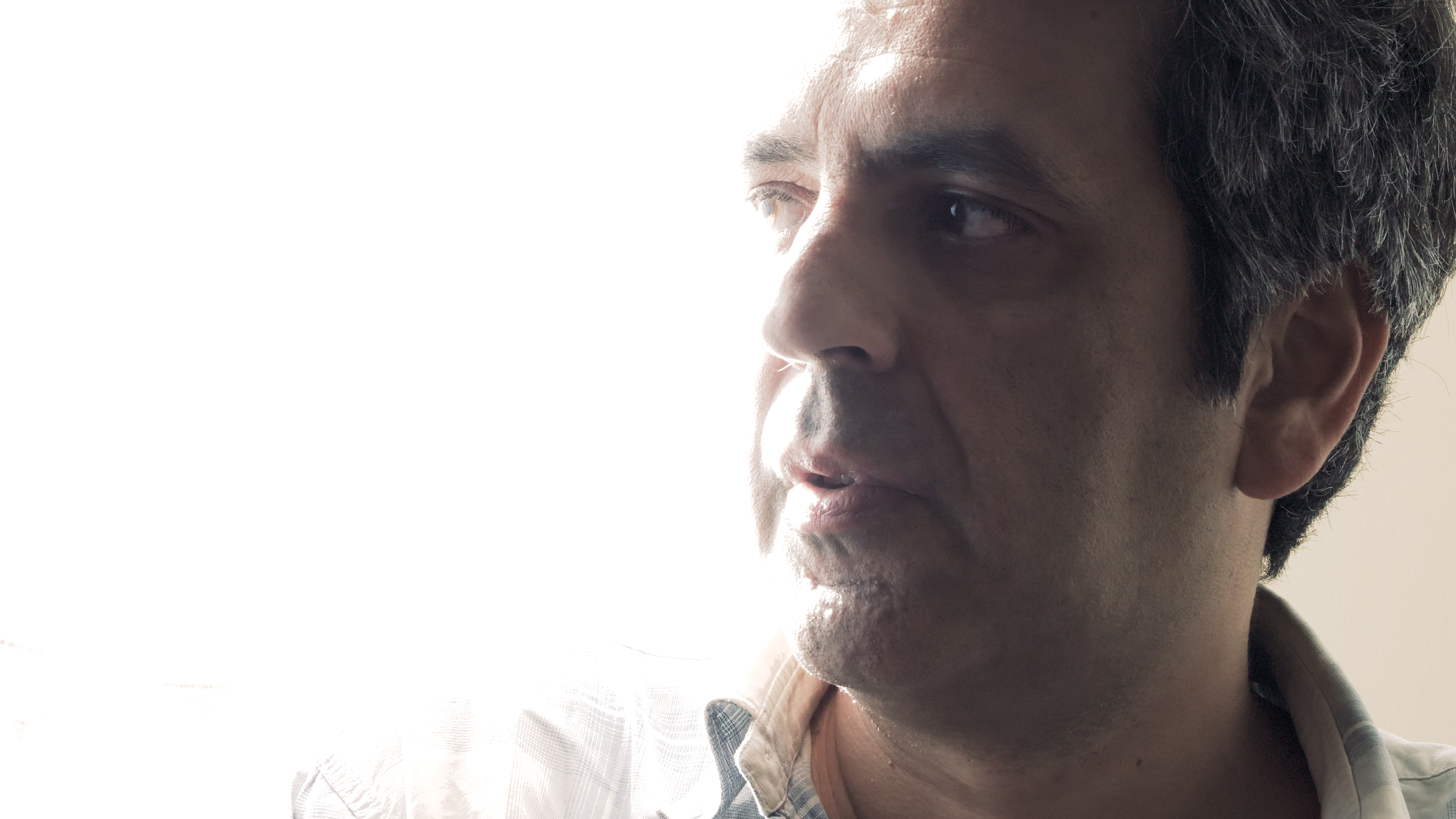
Drama, thriller, by Fabio Del Greco, Italy, 2019.
Someone wants to control the life of the employee Giuseppe Russo: the products he buys, his political and religious faith, his private life, even his dreams. But he will do anything to escape control and find his true self. Giuseppe is a man of around 45, married, with a stable job and a home of his own. His life flows seemingly peacefully when he meets a mysterious tramp who gives him some old VHS video cassettes. Giuseppe begins to see video tapes in which he is filmed in some moments of his life since he was a child, then as a teenager and as a young man. Who shot those videos that he remembers nothing about? Giuseppe has the strange sensation of being constantly observed and begins to investigate what is happening. Through his investigation of him, he begins to rediscover his true identity and become aware of who he truly is.
Employee's Mystery is a film that highlights the danger of social control and shows a society where everyone is constantly monitored and conditioned in their deepest selves. The film is also an analysis of human nature and identity. Fabio Del Greco, who plays Giuseppe, gives an engaging performance. Equally good is Chiara Pavoni, in the role of Giada Rubin and Roberto Pensa in the role of the tramp. Employee's Mystery is a film that addresses important themes in an original way, a psychological thriller that keeps the viewer glued to the screen until the end: a metaphor for contemporary society, in which people are increasingly monitored and conditioned by the media and technologies . It is a courageous and provocative work, which addresses important themes in an original way.
LANGUAGE: Italian
SUBTITLES: English, Spanish, French, German, Portuguese
What the Alchemists Actually Meant
There is a kind of obsession that looks, from the outside, like madness. A man who has spent eleven years bent over a workbench covered in instruments no one else can name, cross-referencing manuscripts in three dead languages, certain that he is close to something whose shape he cannot quite describe. His family has stopped asking. His colleagues have long since stopped laughing. What remains is only the work, and a conviction so internalized it no longer requires defending. Watch him long enough and you begin to wonder whether the object he seeks even matters, or whether the seeking itself has become the point, the furnace in which something in him is being slowly, irreversibly remade.
This is not a metaphor invented by romanticism. It is, almost precisely, what the practitioners of the art understood themselves to be doing. Jabir ibn Hayyan, writing in eighth-century Kufa with a systematic rigor that would not appear in European natural philosophy for another four centuries, described the transmutation of base metals as a process inseparable from the purification of the operator. His hundreds of surviving Arabic treatises, catalogued and translated by scholars like Paul Kraus in the mid-twentieth century, do not merely describe chemical procedures. They describe states of the practitioner. The sulfur-mercury theory he elaborated was also a psychology: two principles in perpetual tension, one volatile and one fixed, whose reconciliation produced not just a new substance but a new coherence in the one who achieved it. The lapis philosophorum, the Philosopher’s Stone, was the product of that reconciliation. Which means it was never purely an object.
By the time the Rosarium Philosophorum was printed in Frankfurt in 1550, this understanding had crystallized into an elaborate symbolic language that institutional Christianity found genuinely threatening. And rightly so. The Rosarium’s woodcut sequences, eighteen images depicting a royal couple who merge, die, putrefy, and are reborn as a single androgynous figure, described a path to the sacred that required no priest, no sacrament, no confession, no pope. The divine was not approached through institutional mediation. It was precipitated, slowly and through suffering, within the individual psyche. This was not heresy by accident. It was heresy by design.
Carl Jung understood this with the precision of a diagnostician. In Psychology and Alchemy, published in 1944, he argued that the alchemists had projected onto matter what they could not yet consciously name in themselves. The lapis was an image of the individuated self, the integrated totality that emerges when a person has metabolized rather than suppressed their contradictions. The gold they sought was not wealth. It was what Jungian analyst Marie-Louise von Franz, elaborating his work across decades, would call the lived wholeness of the personality. The process, with its stages of nigredo, albedo, and rubedo, its deliberate immersion in darkness before any light becomes possible, was a map of psychic transformation so accurate that Jung spent nearly two decades demonstrating its correspondence with the dream material of his patients, none of whom had read a single alchemical text.
And yet something in that obsession is also a trap, or can become one. A woman who cannot stop moving toward a transformation she cannot name, reorganizing her life around a goal that keeps retreating, persuaded that the next iteration, the next refinement, the next stage of the work will finally deliver the thing she is circling. She is not deluded. She is, in the deepest sense, engaged with something real. But there is a way in which the structure of the search can become a substitute for the arrival, the laboratory a more comfortable dwelling than whatever life awaits outside it. The alchemists knew this danger too. They called it the multiplication of the work without fixation, the endless production of volatile matter that never solidifies into the stone.
What was persecuted in this tradition was not its irrationality. It was its audacity, the insistence that transformation is a personal event, authored by no institution and certified by no authority except the changed quality of the one who has passed through it.

The Stone as Mirror: Jung, the Shadow, and the Unacceptable Self

There is a moment most people have experienced but rarely speak about directly — standing before a mirror at an unexpected hour, in light that is neither flattering nor harsh, and feeling for a fraction of a second that the face looking back is not entirely yours. Not a hallucination. Not madness. Something quieter and more unsettling: the sensation that the person you have been performing all day has briefly slipped, and whatever is underneath has surfaced to the glass before you could stop it.
Carl Gustav Jung would have recognized this moment precisely. In volume fourteen of his Collected Works, Mysterium Coniunctionis, published in 1955 and representing the culmination of decades of alchemical research, Jung argued that the entire enterprise of alchemy was never primarily about metals. It was about the confrontation with the Shadow — that reservoir of everything the conscious personality has refused to integrate, the sum of what we have deemed unacceptable about ourselves and subsequently buried with considerable architectural skill. The alchemists projected this inner drama onto matter because matter was safer than the self. You could heat a crucible. You could not so easily heat your own refusals.
The Shadow, as Jung described it across dozens of case studies and theoretical elaborations, is not evil in any simple moral sense. It is simply what has been left in the dark. And what has been left in the dark does not disappear. It organizes. It develops its own logic. It begins to speak in dreams, in symptoms, in the inexplicable hostility we feel toward strangers who remind us of something we cannot name.
There is a scene that happened to a man — it doesn’t matter where or when — in which he met, across a table in a government building, someone who shared his face but had made every choice he had refused to make. The encounter lasted perhaps twenty minutes. He felt, he later said, as though he were being accused of something he had never done and had always been guilty of. That sensation — accusation without act, guilt without crime — is precisely what Jung called the experience of the Shadow made external. When projection collapses, when the double appears not as fantasy but as flesh, the psyche has no buffer left. The prima materia, the first matter of alchemical transformation, is not lead. It is this: the self stripped of its preferred narrative.
Gaston Bachelard, writing in The Psychoanalysis of Fire in 1938, proposed something that sounds simple until you sit with it long enough to feel its weight: the imagination of matter is a form of self-knowledge. When a person watches fire, they are not passively observing combustion. They are reading themselves. The element answers something prior in the psyche, something that chose fire because fire does what the self cannot do openly — consume, transform, leave nothing recognizable in its original form. Bachelard called this a reverie of will, and it illuminates why alchemical fire was never merely technical. The furnace was a mirror that refused to flatter.
The coniunctio oppositorum — the union of opposites — that Jung identified as the central alchemical symbol is not a comfortable reconciliation. It is not two things becoming politely compatible. It is a dissolution that precedes any synthesis, a stage Jung called the nigredo, the blackening, in which everything previously structured collapses into undifferentiated chaos. In Memories, Dreams, Reflections, the autobiography he composed with Aniela Jaffé and published in 1962, Jung described his own confrontation with inner darkness following his break with Freud not as a spiritual crisis but as a deliberate descent — a chosen disintegration. He understood, because he had been through it, that you cannot reassemble something that has not first been allowed to fall apart completely.
What terrifies people about the Philosopher’s Stone is not the promise of gold. Gold is comprehensible. Gold has a price. What terrifies is the prior demand: that you become, before anything else, entirely unrecognizable to yourself. That the person who enters the work and the person who completes it share nothing but a body.
Gold Was Never the Point
There is a moment most people recognize but rarely name: the instant after getting what you wanted, when the wanting itself vanishes and leaves behind something uncomfortably close to nothing. Not disappointment exactly, not regret, but a kind of structural collapse — as though the scaffolding of your days had been quietly load-bearing all along, and you only discover this by removing it. The promotion arrives, the relationship is secured, the number in the bank account reaches the threshold you had privately designated as sufficient, and the silence that follows is not peace. It is the sound of a question that has lost its answer before you understood what the question actually was.
This is the misreading at the heart of how we have understood alchemy for centuries: that it was about gold. That the alchemist bent over his furnace was a failed chemist, a credulous miser, a prescientific fool chasing yellow metal through smoke and latin incantation. The historiography has been almost contemptuous in its condescension, treating the tradition as a monument to human gullibility that modernity finally outgrew. Mircea Eliade, writing in 1956 in “The Forge and the Crucible,” dismantled this reading with a patience that bordered on severity. His argument was not that alchemists were secretly rational actors using metaphor as cover. His argument was more unsettling than that: they were doing something real, something cosmological, and the gold was never the object. It was the symbol of a completed transformation — of matter that had been returned to its original perfection, and through that return, of the human being who had worked the transformation upon himself.
Eliade traced the alchemical impulse back through metallurgical cultures across Asia, Africa, and pre-Columbian America, showing that the smith was never merely a craftsman. He was a mediator between worlds, someone who participated in the accelerated gestation of metals within the earth, helping matter complete in a furnace what it would otherwise require geological time to achieve. The ore was not raw material. It was an embryo. The forge was not a factory. It was a womb. This is not metaphor dressed up as technology. For those cultures, it was the operative description of what was happening. The separation between spiritual cosmology and material process had not yet been made, and Eliade’s point was that the loss of that integration represented not progress but amputation.
A man spends years in relentless pursuit of a formula, a secret, a synthesis that others have died seeking. He sacrifices friendships, health, decades of ordinary life that might have accumulated into something quieter but liveable. And then he finds it. The moment of obtaining is filmed with the same light as every other moment, which is the cruelest directorial choice possible, because it reveals that the extraordinary was never in the object. It was in the approach. Having arrived, he discovers that the geometry of his life — every tension, every hunger, every morning with a reason to rise — was entirely structured by the not-yet. The stone in his hand is simply a stone. What it has destroyed is the architecture of wanting that kept him vertical.
René Girard would recognize this structure immediately. His theory of mimetic desire, developed across “Deceit, Desire and the Novel” in 1961 and elaborated through decades of subsequent work, holds that we do not desire objects independently. We desire what others desire, or what we perceive others to desire, or what the very inaccessibility of an object suggests others must desire. The Philosopher’s Stone is the perfect mimetic object: no one has it, everyone who has sought it has been consumed by the search, and this very history of consumption becomes the proof of its value. We pursue it because it has been pursued. The desire is not ours. It was handed to us by the structure of the pursuit itself.
Which means the alchemist working through the night was never confused about gold. He was confused about something older and harder to name — the suspicion that transformation must be possible, that matter and self are not fixed, that the base can become
Heresy, Suppression, and the Institutionalization of Ignorance

There is a moment most people recognize but rarely speak aloud: the moment you return home after something has shifted irrevocably inside you, and you sit across the dinner table from people who love you, and you realize they are speaking a language you no longer entirely inhabit. Nothing dramatic has happened. No one has died. You have simply become, in some cellular and untranslatable way, someone else. And the room, which has not changed at all, now feels like a country whose customs you are performing from memory.
This is not metaphor. This is the actual phenomenology of transformation, and it is precisely what made the alchemical tradition so threatening to every institutional structure that encountered it.
Frances Yates, in her foundational 1964 study of Giordano Bruno and the Hermetic tradition, traced with meticulous archival precision how the Renaissance recovery of Hermetic texts — particularly the Corpus Hermeticum, believed at the time to predate Moses himself — represented not merely an intellectual movement but a direct challenge to the monopoly over inner life that ecclesiastical and later secular power required to function. What the Hermetic tradition proposed was radical in a way that pure theology never quite was: it suggested that the transformation of consciousness was available to any individual who pursued it seriously, that the path to the divine ran through the interior of the human being rather than through the administered sacraments of an institution. Bruno was burned at the Campo de’ Fiori in Rome in February 1600 not primarily for his cosmological speculations about infinite worlds, though those certainly alarmed the Inquisition, but for what those speculations implied about the locus of spiritual authority. A universe without a fixed center is a universe without a fixed hierarchy. The geometry of power and the geometry of the cosmos are never unrelated.
By the mid-seventeenth century, the systematic marginalization of Hermetic and alchemical knowledge was nearly complete in official European intellectual culture. What Yates called the “Rosicrucian moment” — that brief, strange eruption of manifestos in the 1610s promising a universal reformation through hidden wisdom — was absorbed, ridiculed, or silenced within a generation. The newly institutionalized Royal Society, founded in London in 1660, made its epistemological commitments explicit: only that which could be measured, repeated, and externally verified would count as knowledge. Everything else was enthusiasm, superstition, or fraud. The word enthusiasm itself, it is worth remembering, once meant possession by a god. Its reclassification as pathology was not accidental.
Michel Foucault, writing in Power/Knowledge in 1980, called these the “subjugated knowledges” — not the knowledges that were simply proven false and abandoned, but those that were “disqualified as inadequate to their task or insufficiently elaborated: naive knowledges, located low down on the hierarchy, beneath the required level of cognition or scientificity.” What Foucault identified as a structural feature of power, anyone who has undergone genuine interior transformation will recognize as personal history. The knowledge that transformation produces is almost always illegible to the institutions and communities from which the transformed person emerged. It cannot be adequately credentialed. It refuses to sit still inside the available categories.
There is a scene — lived by someone, somewhere, though the details belong to no single biography — where a man returns to his village after years of wandering, after a kind of death and reconstitution that he could not have anticipated when he left. The people there remember him. They use his name. They expect the familiar responses. And he gives them, because what else can he do, the approximate version of himself they require. But something in his eyes, or in the quality of his silence when he thinks no one is watching, marks him as foreign. Not threatening in any obvious way. Threatening in the more intimate sense: he has become evidence that leaving is possible, that the self is not fixed, that the life they have organized around certainty is organized around a lie. That is what gets someone exiled. Not what they know. What they have become.
A vision curated by a filmmaker, not an algorithm
In this video I explain our vision
The Unfinished Transmutation

He is standing at the kitchen sink again. Same cracked porcelain, same weak morning light coming through the window at the angle it always comes. He holds a coffee mug — chipped at the rim, unremarkable, purchased without memory at some point in a life full of unmemorable purchases — and something about the weight of it in his palm feels different. Not the mug. The mug is identical to what it has always been. But the hand holding it belongs to someone who has been somewhere, even if that somewhere has no address and left no visible mark.
This is the return the alchemical tradition never quite explains cleanly. It does not announce itself. There is no golden light, no chorus, no visible proof that the Work has done anything at all. Maria Zambrano, writing in 1958 in what remains one of the most quietly devastating philosophical texts of the twentieth century, described human life not as a project with a terminus but as a condition of permanent creative incompletion. Her idea, developed across the pages of Person and Democracy with the particular urgency of someone who had lived exile as a philosophical fact and not merely a biographical inconvenience, was that the person is never a finished thing. The person is always in the act of becoming themselves, and any political or spiritual system that demands completion — that insists the work is done, that the self has arrived, that transformation has concluded — is a system that has confused the map for the territory and the corpse for the body.
The alchemists understood this, or at least the serious ones did. The opus, they wrote with a consistency that cuts across centuries and cultural boundaries, is never finished. Not in the sense that it fails, but in the sense that completion was never the actual destination. The Philosopher’s Stone, when it appears in the literature with any philosophical honesty, is almost always described as something in motion, something that acts upon matter and continues to act, something whose power lies precisely in its refusal to be static. The red king does not sit down. The peacock’s tail does not stop unfurling. The conjunction is always happening and always about to happen.
There is a man in a story — not a parable, not an allegory, an actual man in an actual situation — who has returned home after a journey that cost him everything he thought he was. He sits in a room that is exactly the room he left. The chair is in the same position. The light through the curtains is the same light. And yet he cannot make himself fit back into the shape the room assumes he still has. He is suspended between the person the room remembers and the person the journey has made, and neither state is stable, and neither state is complete. He does not resolve. He sits in the unresolution the way a note held too long begins to mean something different than it meant at the start.
Zambrano would have recognized him instantly. She wrote about the human being as someone who lives in the gap between what they are and what they are called to become, and she insisted that this gap is not a failure but the very space where existence actually occurs. To close the gap is to die in some way that biology does not yet register.
What the alchemical tradition has always been pointing toward, through all its coded language and elaborated symbol and centuries of commentary piled on commentary, is something almost embarrassingly simple when you strip it back: that the real transformation is the one that cannot finish, that the Stone is not a product but a process that has simply learned to hold its own heat, and that every person standing at an ordinary threshold, holding an ordinary object in the changed light of their own continuing existence, is already inside the Work, whether they have a name for it or not.
What if the process is the only thing that is real, and the Stone is just the name we give to our refusal to stop?
🔮 Paths Through the Esoteric Labyrinth
The Philosopher’s Stone is not merely a medieval fantasy but a symbol pointing toward the deepest layers of Western esoteric tradition. To understand its meaning fully, one must wander through the rich landscape of mystical thought, occult philosophy, and the seekers who dared to map the invisible. These articles open doorways into that same labyrinth.
Helena Blavatsky and Theosophy: the Woman Who Revolutionized Esoteric Thought
Helena Blavatsky stands as one of the most influential architects of modern esoteric thought, weaving together Eastern mysticism, Hermeticism, and alchemical symbolism into a coherent spiritual system. Her concept of the universal divine spark mirrors the alchemical pursuit of the Philosopher’s Stone — the transformation of the base self into pure spiritual gold. Understanding Theosophy is essential for anyone tracing the living roots of Western esotericism.
GO TO THE SELECTION: Helena Blavatsky and Theosophy: the Woman Who Revolutionized Esoteric Thought
Aleister Crowley: the Great Beast and the Religion of Will
Aleister Crowley pushed the boundaries of ceremonial magic and esoteric philosophy, drawing deeply from alchemical and Kabbalistic traditions that circle around the very symbols embedded in the Philosopher’s Stone. His system of Thelema reframes the Great Work of alchemy as an act of supreme individual will and spiritual transmutation. Crowley remains a controversial yet unavoidable figure in the genealogy of Western occult thought.
GO TO THE SELECTION: Aleister Crowley: the Great Beast and the Religion of Will
Pyotr Ouspensky: the Mathematician Who Sought the Fourth Dimension of Spirit
Pyotr Ouspensky spent his life searching for a higher dimension of reality beyond ordinary perception, a quest that resonates profoundly with the alchemist’s pursuit of hidden universal laws. His mathematical and philosophical approach to mysticism offers a rigorous lens through which the symbolism of the Philosopher’s Stone can be reexamined as a genuine metaphysical inquiry. His work bridges rational thought and esoteric vision in a uniquely compelling way.
GO TO THE SELECTION: Pyotr Ouspensky: the Mathematician Who Sought the Fourth Dimension of Spirit
Esoteric Movies to Watch
Esoteric cinema has long served as a visual and narrative vessel for the very mysteries that alchemical tradition sought to encode in symbols like the Philosopher’s Stone. These films translate the inner journey of spiritual transformation into image, sound, and myth, making the invisible tangible for the modern seeker. This curated selection is an indispensable companion for anyone drawn to the deeper currents of occult philosophy.
GO TO THE SELECTION: Esoteric Movies to Watch
✨ Discover the Hidden Dimensions of Independent Cinema
If these themes of transformation, hidden knowledge, and spiritual depth speak to you, Indiecinema is your gateway to a world of independent films that dare to explore what mainstream cinema ignores. Stream bold, visionary, and truly independent works that carry the spirit of the Great Work into moving image. Join Indiecinema and keep searching.
👉 EXPLORE THE CATALOG: Watch Indie Films in Streaming
A vision curated by a filmmaker, not an algorithm
In this video I explain our vision

