
The Man Who Stopped Reading in the Middle of the Night
There is a particular kind of stillness that arrives around three in the morning, when the house has gone entirely quiet and the only light in the room is the lamp on the table, and you are sitting with a book open in front of you that you did not expect to still be reading. You had planned to stop hours ago. You had told yourself one more page, then one more chapter, and now the night has consumed itself and you are somewhere you did not anticipate being, not physically but in some register that does not have a clean name. The words on the page have stopped being words you are processing and have become something closer to pressure. You are not reading anymore in any ordinary sense. Something is reading you.

Most people who have encountered the Corpus Hermeticum describe the experience in terms that embarrass them in daylight. They reach for clinical language and then abandon it. They say things like it felt like recognition, or it was as though the text already knew what I was going to think before I thought it, and then they laugh a little, uncomfortable with how that sounds. But the laugh is nervous rather than dismissive, because they mean it absolutely. The sensation is not metaphorical. It arrives in the chest before it arrives in the mind.
This is not a mystical claim. It is a phenomenological one, and it is worth taking seriously on those terms before rushing toward either belief or debunking. The philosopher Hans-Georg Gadamer spent much of his career trying to articulate what actually happens when a reader encounters a text that genuinely exceeds them, the moment when understanding ceases to be a transaction and becomes something more like an event. In Truth and Method, published in 1960, he described this as the fusion of horizons, Horizontverschmelzung, the collapse of the distance between the world embedded in the text and the world the reader carries inside them. What Gadamer observed was that certain texts do not wait passively to be interpreted. They interpret the interpreter. They turn the reading into a kind of exposure.
The Corpus Hermeticum is precisely this kind of text, and it arrives into your life accordingly. It does not announce itself as a historical artifact from late antiquity, though that is what it is. It does not introduce itself as a collection of Greek philosophical dialogues composed somewhere between the first and third centuries of the common era, in Alexandria or thereabouts, attributed to the mythical figure of Hermes Trismegistus, the Thrice-Greatest, who is himself a merger of the Greek god Hermes and the Egyptian god Thoth. It does not say: here is the document that Cosimo de’ Medici’s agents brought back to Florence in 1460, the one that Cosimo ordered Marsilio Ficino to translate immediately, interrupting his work on Plato, because Cosimo was old and sick and felt he could not die without having read it. None of this contextual apparatus presents itself at three in the morning when the lamp is the only light and the page is open.
What presents itself instead is a voice. Urgent, intimate, and strangely close. A voice that claims to speak from before the categories you use to organize experience, before the separation of subject and object, before the hard boundary between the human and whatever surrounds it. A voice that says: you have forgotten something essential, and the forgetting itself is what you have mistaken for your life.
The person sitting at the table at three in the morning does not necessarily believe this. But they cannot put the book down. That inability is the beginning of something, and it is worth understanding what kind of beginning it actually is, because it does not resemble the beginning of ordinary reading in any way that matters.
Alexandria Never Died, It Just Changed Addresses
There is a monk walking through a market somewhere in Macedonia, sometime around 1460, carrying a manuscript he almost certainly does not fully understand. He knows it is old. He knows it carries names that matter — Hermes, Thoth, the ancient Egyptian god of writing and wisdom fused into a single impossible figure. He knows it needs to go somewhere important. What he cannot know is that the parchment under his arm is about to detonate inside the most influential mind in Florence, and that the explosion would take centuries to fully settle.
Cosimo de’ Medici received that manuscript near the end of his life, already ill, already aware that time was narrowing. He had spent decades building a kind of philosophical kingdom — funding scholars, assembling libraries, sponsoring the recovery of ancient texts as if culture itself were a banking operation, which in Florence it essentially was. He had commissioned Marsilio Ficino to translate the complete works of Plato. That project was already underway, already historic, already the kind of undertaking that reshapes how a civilization thinks about itself. And then the monk arrived. And Cosimo, without apparent hesitation, told Ficino to stop. Put Plato down. Translate this first.
That command, issued by a dying man to one of the sharpest intellects of the fifteenth century, is one of the strangest and most consequential editorial decisions in the history of Western thought. Ficino completed the Latin translation of what would become known as the Corpus Hermeticum in 1463. Cosimo died the following year, but not before reading it. The texts he held in his hands had been composed in Greek, almost certainly in Alexandria, across a period stretching roughly from 100 to 300 CE — a city and an era where Egyptian priestly tradition, Platonic philosophy, Jewish mysticism, and early Gnostic speculation had been circling each other for generations, generating a kind of intellectual friction that produced entirely new forms of thought.
The attribution to Hermes Trismegistus — Hermes the Thrice-Great, a figure assembled from the Greek messenger god and the Egyptian Thoth — was not exactly a lie and not exactly the truth. It was what Frances Yates, in her foundational 1964 study Giordano Bruno and the Hermetic Tradition, called a “pious fiction,” a deliberate framing that lent ancient authority to texts that were, in reality, the product of a specific cultural moment. But that fiction was enormously productive. Ficino and his contemporaries believed they were reading something older than Plato, older than Moses, a revelation that predated and somehow anticipated both. The philosopher Brian Copenhaver, whose 1992 critical edition and translation of the Hermetica remains the scholarly standard, has documented how thoroughly this belief in the texts’ extreme antiquity shaped how Renaissance thinkers received and deployed them. They were not reading philosophy. They were reading prophecy that had survived the wreckage of time.
The scholar Isaac Casaubon eventually demonstrated in 1614 that the texts could not possibly be as ancient as claimed — their Greek betrayed the influence of Platonic and Stoic vocabulary that did not exist before the Common Era. That correction mattered academically. It changed almost nothing culturally. Ideas do not die when their false origins are exposed. They simply find new addresses.
What the long arc of the Hermetica reveals — from Alexandrian composition to Byzantine preservation to Macedonian transport to Florentine resurrection — is not the innocent survival of wisdom across time. It reveals a machinery of selection. Someone chose which manuscripts to copy. Someone chose which to carry across borders. Someone chose which scholar received what, and when. The history of esoteric knowledge is never the history of what was too powerful to destroy. It is the history of what someone, somewhere, decided was worth protecting — and that decision was never philosophically neutral.

What the Text Actually Says, and Why That Terrifies Institutions
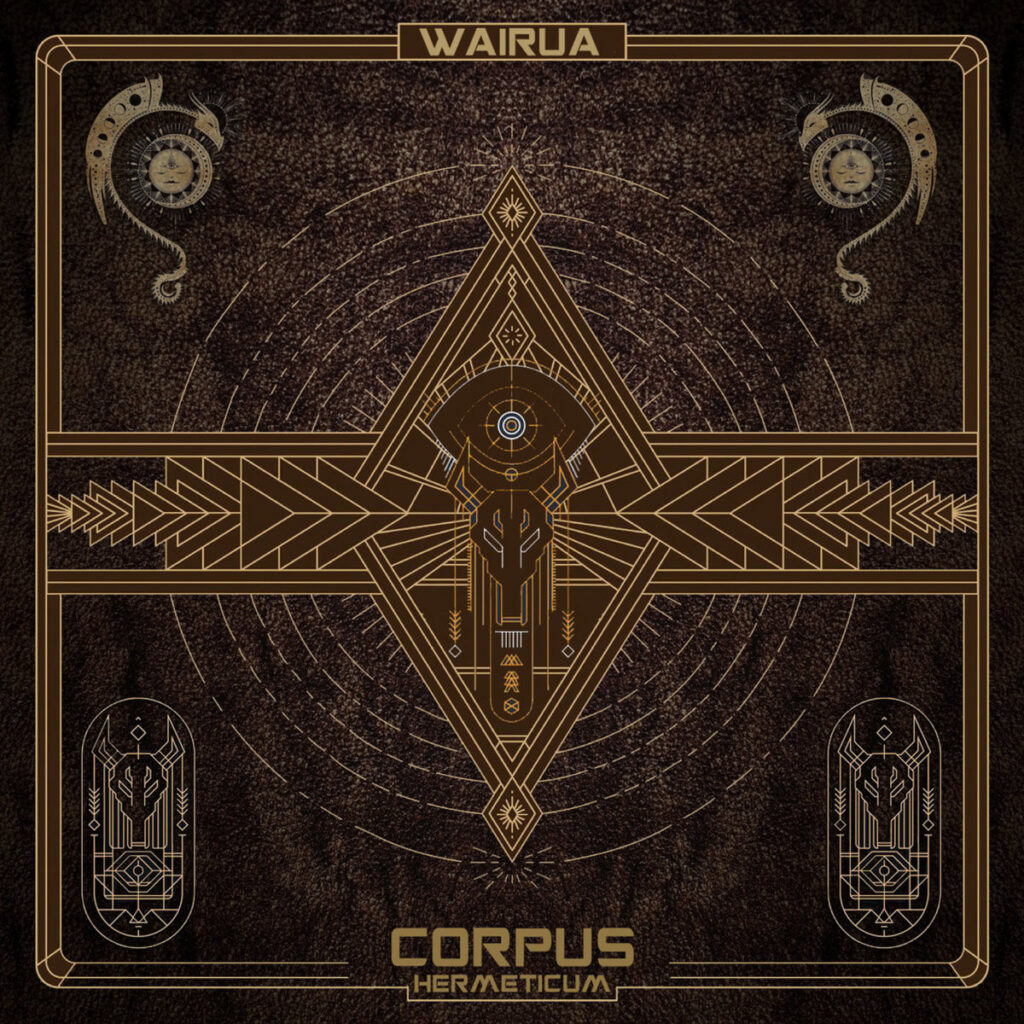
There is a moment in reading the Hermetic texts when the ground shifts. Not dramatically — no thunderclap, no revelation — but quietly, the way a room feels different when you realize the person you thought was a stranger already knows your name. The shift happens around the proposition that knowing and being are not two separate operations. That when the mind genuinely comprehends something, it does not stand apart from it, observing it through glass, but becomes it. The Poimandres, the opening treatise of the Corpus Hermeticum, states this with a directness that centuries of commentary have struggled to dilute: the Nous, the divine intellect, is not a gift granted to humans from outside. It is what humans most fundamentally are, when the accumulated weight of material existence is stripped away.
Brian Copenhaver’s 1992 critical translation restored something that softer renderings had quietly buried — the philosophical precision of these claims. The text does not speak in metaphor when it identifies the human mind with the divine principle that orders reality. It speaks in ontology. The knower and the known are the same substance in different states of self-awareness. This is not mysticism in the vague, consolatory sense. It is a structural argument about the nature of consciousness that predates Descartes by well over a millennium and arrives at the opposite conclusion: not the isolated cogito sealed inside its own certainty, but the mind as a permeable membrane between the individual and the total.
Garth Fowden’s 1986 study of the Egyptian Hermes situated these texts in their historical and cultural matrix with a precision that academic theology had long resisted providing. Fowden traced the Hermetica to a milieu of educated, religiously eclectic communities in Roman Egypt — not fraudulent texts, not naive allegory, but a serious philosophical tradition working through problems that Platonic philosophy had opened and institutional religion had already begun to close. What Fowden made legible was the social function of the doctrine: in a world where temples mediated between the human and the divine, where priests held the keys to sacred knowledge, where ritual prescribed the precise distance to be maintained between the ordinary person and transcendent truth, the Hermetic proposition was structurally subversive.
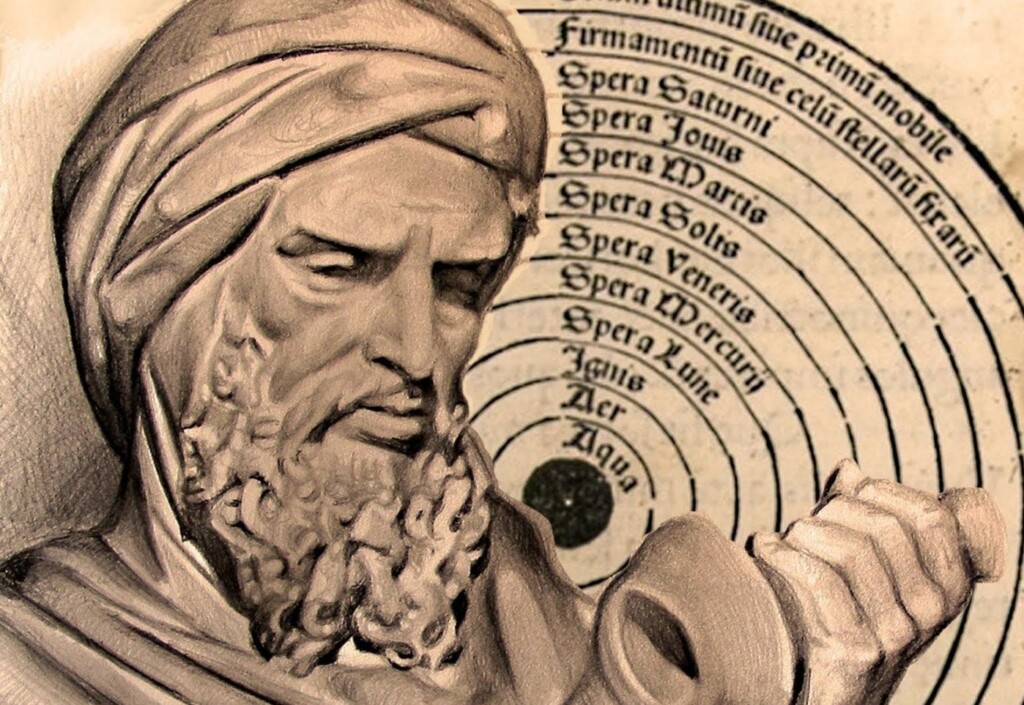
The cosmology of the soul’s descent through the planetary spheres carries this subversion in its architecture. The soul, in Hermetic teaching, travels downward through seven planetary zones before entering the material body, acquiring at each layer a different veil — irrationality from one sphere, desire from another, ignorance from another — until it arrives in flesh already obscured. The path of return strips these veils away in reverse order. What this means philosophically is that salvation, liberation, truth — whatever word a given century prefers — is not located in an institution, a sacrament, a mediating authority, or a credentialed interpreter. It is located in the intellect’s own capacity to recognize what it already, essentially, is. The individual mind, rightly oriented, needs no one standing between it and the real.
This is precisely what makes the texts dangerous, and it has nothing to do with superstition. Every institution that has organized itself around the principle of mediated access to truth — the Church requiring its priests, the Enlightenment academy requiring its peer review, the rationalist tradition requiring its methodological gatekeepers — has found the Hermetic claim intolerable not because it is irrational, but because it is too rational in the wrong direction. It locates authority inside the seeker. The Church suppressed it, then absorbed it partially, then suppressed it again. Enlightenment rationalism dismissed it as primitive confusion, as though the men who composed these texts had simply failed to achieve what Locke would later manage. The condescension required to sustain that dismissal is itself a kind of evidence.
What cannot be mediated cannot be taxed, cannot be hierarchically distributed, cannot be used to justify the intermediary’s existence.
The Technique of Reading That Was Never Taught in School
There is a particular kind of reading that most people have done at least once without realizing it had a name. A letter arrives, or perhaps is found at the bottom of a drawer, and the person who picks it up does not unfold it to extract its content. They hold it. They turn it over. They read the same three lines four times not because the words are unclear but because remaining inside them postpones something, or enables something, or makes the person holding the paper temporarily different from the person they were thirty seconds ago. The information in the letter is almost incidental. What matters is the contact. What matters is who they become while the paper is in their hands.
This is not a pathological relationship with text. It is, in fact, the oldest one.
Hans-Georg Gadamer, in Truth and Method published in 1960, proposed something that the academic world largely acknowledged and then proceeded to ignore in practice: that genuine understanding is never the extraction of meaning from a text, but always a transformation of the one who reads. He called it the fusion of horizons, Horizontverschmelzung, the moment in which the horizon of the reader and the horizon of the text do not simply meet but alter each other irreversibly. The reader who truly understands a text does not walk away with new information. They walk away as a new configuration of themselves. The text has not been decoded. It has been inhabited.
Schools, for the most part, teach the opposite. They teach reading as retrieval. Find the thesis. Identify the argument. Extract the meaning. This is useful for contracts and assembly instructions and newspaper articles. It is catastrophically inadequate for texts that were designed to do something other than transmit data.
The Corpus Hermeticum was designed precisely for this other thing. The dialogues attributed to Hermes Trismegistus, assembled in their Greek form by roughly the second and third centuries of the common era and rediscovered for Renaissance Europe when Cosimo de’ Medici commissioned Marsilio Ficino to translate them in 1463, are not doctrinal documents. They do not argue toward conclusions. They circle. They repeat. They contradict themselves at intervals that feel deliberate rather than careless. The Poimandres, the first and most discussed of the treatises, opens with a vision that cannot be paraphrased without destroying it. The moment you summarize it, something essential evacuates the room.
This is structural, not accidental. The text was built to resist extraction. Reading it as a historical document, as evidence of late antique syncretism or Neoplatonic influence, produces accurate scholarship and dead contact. Reading it as an instruction manual, as a sequence of steps toward gnosis or illumination, produces the opposite error: the reader imposes a linear expectation onto a spiral architecture and then wonders why they feel cheated when the spiral refuses to resolve. Both errors share the same root. Both assume that the reader stands outside the text and the text is an object to be processed.
The Hermetica demands something structurally closer to what the man with the letter is doing. It demands that the reader consent to being changed before they understand, rather than waiting to understand before they are willing to change. Gadamer describes this as the willingness to allow the text to make a claim on you, to let it interrogate your assumptions rather than confirm them. This is not mysticism. It is hermeneutics. It is also, frankly, uncomfortable, because most of us have built considerable architecture around the belief that we read texts, not that texts read us.
The mirror metaphor is not decorative. A mirror does not explain itself. It does not argue. It simply returns to you what you bring, altered by the angle and the light, slightly truer than what you thought you looked like before you looked.
How Modernity Taught Us to Read Dead

There is a moment most people can locate somewhere in their schooling — around age nine or ten, perhaps — when a teacher hands back an essay and the comment written in red ink is not “what did you feel?” but “you forgot to state the main point.” The child had written about a story the way a child naturally encounters a story: from the inside, moved, confused, implicated. The teacher wanted an extraction. A summary. A report filed from a safe distance. Something that proved the child had read the text without being touched by it. That was the lesson, and almost everyone passed it.
This is not incidental to what happened to the Hermetica. It is the same operation, performed at civilizational scale.
Descartes, writing in the 1630s, gave European intellectual culture its founding myth of proper knowing: the subject withdraws, clears itself of all sensation, all inheritance, all bodily interference, and confronts the object in pure rational transparency. The Meditations are, among other things, a manual for producing a certain kind of reader — one who believes that proximity to the text corrupts understanding, that the right epistemic posture is forensic. You stand over the text. You do not stand inside it. By the time this disposition had fully colonized pedagogy, libraries, and the university system, it had become invisible as a choice. It simply felt like rigor. It felt like the absence of distortion. It was, of course, its own profound distortion — but one that had successfully disguised itself as neutrality.
Francis Yates, in her landmark 1964 study of Giordano Bruno and the Hermetic tradition, traces the precise mechanism by which this epistemological coup was used as a weapon against a specific body of knowledge. When the scholar Isaac Casaubon published his philological analysis in 1614, demonstrating that the Greek of the Corpus Hermeticum bore linguistic markers of the early Christian centuries rather than ancient Egypt, the dating was wielded not merely as a correction but as an annihilation. The texts lost their claimed antiquity — and with it, in the eyes of the emerging scientific establishment, their authority. What Yates understood, and what most subsequent commentators have preferred not to dwell on, is that the philological argument and the epistemological argument were doing entirely different work while pretending to be the same argument. One said: these texts are not as old as claimed. The other said: these texts cannot mean what their readers have experienced them to mean. The first is a historical observation. The second is a philosophical coup dressed as scholarship.
Casaubon’s dating was not wrong. The Hermetica almost certainly were composed between the first and third centuries of the common era, drawing on Platonic, Stoic, and Egyptian religious currents simultaneously. But the age of a text has never been a reliable indicator of its capacity to transmit. The Upanishads do not lose their phenomenological force because we can date their composition. The Psalms do not become inert because we have established their historical stratification. Only within the specific logic of post-Cartesian European rationalism does philological dating function as existential dismissal — because within that logic, what a text can do to a reader has already been removed from the category of legitimate knowledge.
Think again of that classroom. The child who wrote from the inside — who reported being moved, disoriented, changed — was told, gently or harshly, that this was not the assignment. What was being trained was not intelligence but a particular defense against intelligence. The capacity to process without receiving. To analyze without being altered. To finish the book exactly as one began it, intact, uninvaded, professionally unaffected.
That child grew up and went to university. In some departments, they are now teaching others how to read.
A vision curated by a filmmaker, not an algorithm
In this video I explain our vision
The Planetary Spheres Are Not Astronomy
There is a house some of us have walked through in dreams, or in the years following a collapse we did not see coming. Room after room, each one stripping something away. In the first room you leave behind the certainty that you knew how to be angry correctly, that your rage was justified and precise. In the second, something goes that felt like desire but was really appetite, the compulsive reaching toward what you believed would finally satisfy. By the fourth room you have lost the particular pride that made you walk into spaces as though they already belonged to you. And somewhere near the end, standing in a room that is almost empty, you realize you cannot quite remember what you were originally searching for. The object of the search has dissolved. What remains is the searcher, stripped and bewildered and, for the first time in years, genuinely present.
This is the structure the Hermetic texts describe when they speak of the seven planetary spheres. The soul, in its descent into matter, passes through each sphere in turn and acquires from each one a specific psychic burden. From the sphere of the Moon it takes the capacity for growth and diminishment. From Mercury, the cunning of deceit. From Venus, the architecture of longing that is never quite satisfied. From the Sun, the blinding certainty of self-importance. From Mars, the rashness that does not calculate consequences. From Jupiter, the ambition that accumulates without asking why. From Saturn, the heaviness of malice and the slowness that mistakes inertia for wisdom. These are not astronomical observations. No serious reader of the Hermetica has ever believed that ancient cosmologists confused the reddish glow of Mars with an actual source of human aggression. The planetary spheres are a taxonomy of the soul’s distortions, given spatial form so they can be examined rather than simply endured.
Carl Gustav Jung understood this with particular clarity when he turned his attention to alchemical and Hermetic literature in Psychology and Alchemy, published in 1944. His central argument was not that ancient esotericists were primitive psychologists accidentally stumbling toward Freud. His argument was more disquieting than that. He proposed that the projection of psychic contents onto celestial bodies, onto metals, onto mythological figures, was itself a sophisticated technique, a way of making the invisible visible by placing it outside the self where it could be named and approached. You cannot confront what you cannot see. The planetary spheres gave the unseeable a location. They gave the work an address.
What this means for the reader approaching the Corpus Hermeticum is that the cosmological sections, which tend to produce the most impatience in modern readers trained to separate science from metaphor, are precisely where the most clinically precise material lives. When Hermes describes the soul shedding its planetary acquisitions on the ascent back through the spheres, returning to each level what it borrowed on the way down, he is describing something that any person who has survived a serious psychological unraveling will recognize. The qualities we believed were ours, the aggression we thought was character, the hunger we thought was passion, the vanity we thought was confidence, these are not native to us. They were accumulated. They were picked up in transit. The cosmology insists that they can be put down.
This is not comfort. The insistence that you can return what you accumulated requires first that you acknowledge how thoroughly those accumulations have impersonated your actual self. The woman in the last room of that house does not feel liberated when she cannot remember what she came looking for. She feels frightened. The disorientation is the therapy. The Hermetic cosmos is not a map of the sky above us but of the weight we carry through rooms we cannot name, in a house we entered so long ago we have forgotten there was ever a door.
Why Every Serious Reader Eventually Comes Back to This Text
There is a particular moment that happens to serious readers — not beginners, not tourists of ideas, but people who have spent years inside a discipline, following its internal logic with genuine devotion — when they realize that the path they thought was entirely their own has been walked before, and that it leads somewhere they did not choose. A historian of Renaissance mathematics finds Hermetic cosmology underneath Copernicus. A philosopher tracing the genealogy of German idealism discovers that Leibniz, in his private notebooks and his published Monadology of 1714, was thinking in patterns that rhyme too precisely with the ancient Egyptian-Greek synthesis to be coincidental — the monad as living, perceiving, mirroring the whole, unbounded by space yet constituting it. A literary scholar parsing Blake’s prophetic books realizes that Los and Urizen are not invented mythology but inherited architecture, that the imagery of light imprisoned in matter, of divine sparks scattered through a fallen creation, is Hermetic to its bone. Each of these readers arrives, through completely different corridors, at the same unmarked door.
Giordano Bruno did not arrive at that door quietly. He walked through it in 1584 with De la causa, principio et uno and the Spaccio de la bestia trionfante, declaring an infinite universe animated by a single divine intellect, embracing the Egyptian religion described in the Hermetic Asclepius as spiritually superior to Christianity, and paying for that conviction with sixteen years of inquisitorial imprisonment and his life, burned in Rome on February 17, 1600. Bruno was not a mystic retreating from the world. He was a philosopher of extraordinary technical precision who understood that Hermeticism was not a supplement to serious thought but a competitor to the dominant framework — and that it was winning, inside him, despite everything. Frances Yates, in her 1964 Giordano Bruno and the Hermetic Tradition, documented this with the kind of scholarly patience that itself resembles a detective’s obsession: every trail of Bruno’s thinking leads back to Hermes Trismegistus, to the Corpus Hermeticum that Ficino had translated in 1463, to the idea that the human mind is not a fallen fragment but a genuine microcosm of divine intelligence.
What Yates demonstrated, almost accidentally, was that Hermeticism had not been a marginal current in Western thought. It had been its recurring pressure from below. Simone Weil, working in the twentieth century from an entirely different angle — political theology, the experience of factory labor, mystical Christianity, Greek philosophy — kept arriving at formulations about the soul’s relation to necessity and to the divine that carry unmistakable Hermetic resonances, even when she does not name them. Roberto Calasso, across decades of writing that culminated in works like Ka and The Marriage of Cadmus and Harmony, treated the mythological archive not as a collection of stories but as a system of knowledge that Western rationalism had not refuted but simply buried, incompletely. Both of them read like people circling something they know is there without being able to say its name without embarrassment.
That embarrassment is itself the subject. The Corpus Hermeticum persists not because readers are credulous or nostalgic, but because it addresses a structural absence in Western intellectual culture: the place where cosmology, psychology, and spiritual practice once formed a single unified inquiry before they were separated by disciplinary boundaries that serve institutional convenience more than truth. Carl Gustav Jung recognized this in 1944 when he published Psychologie und Alchemie, tracing the unconscious through alchemical and Hermetic symbolism not as metaphor but as phenomenological report. The text keeps returning because the repression was never complete. Something in the Hermetic vision of the human being — as cosmos, as image of a living and intelligent universe, as genuinely participant in what it contemplates — refuses to stay in the archive where official thought has tried to shelve it, politely, permanently, without a forwarding address.
The Question the Text Leaves Inside You
There is a moment — and anyone who has experienced it knows exactly what is being described — when you are sitting across from someone, deep in a conversation that has lasted long enough to feel safe, and something shifts. A word lands differently than expected. A silence holds a shape. And you realize, with the slow vertigo of someone stepping off a curb they did not see, that the conversation was never about what you thought it was about. The subject you had been discussing — the mutual friend, the shared memory, the professional problem — was a surface. Beneath it, something else entirely had been moving, patient and deliberate, waiting to be recognized. And what changes in that moment is not your understanding of the topic. What changes is your understanding of yourself as the one who misread it.
This is the experience the Poimandres engineers. Not metaphorically. Technically.
The first and most architecturally complete of the seventeen treatises ends with an image of ascent that is also an image of subtraction. As the soul rises through the planetary spheres it passed through on its descent into matter, it does not accumulate wisdom — it surrenders. To the first sphere it returns the capacity for increase and decrease. To the second, the machinery of evil cunning. To the third, the illusions of desire. And so the stripping continues, each sphere reclaiming what it lent, each faculty revealed not as a possession of the self but as a loan from the architecture of the cosmos, carried so long it was mistaken for identity. What remains at the summit of this ascent cannot be named, because naming is itself one of the faculties surrendered along the way. Language belongs to the spheres. The self that arrives beyond them is not available to description, including its own.
Pierre Hadot, in his 1995 collection of essays gathered under the title Philosophy as a Way of Life, argued something that the academic tradition had systematically forgotten: that ancient philosophy was never primarily a body of doctrine to be understood but a set of practices to be undergone. The Stoic did not learn about attention — he practiced attention until it altered the grain of his perception. The Epicurean did not theorize about friendship — he lived in structures designed to make friendship a daily discipline. Hadot’s point was not nostalgic. It was diagnostic. The moment philosophy became exclusively textual, exclusively a matter of correct interpretation, it lost the capacity to do what it originally claimed to do: transform the one who engaged with it. Comprehension replaced conversion. The reader finished the book and remained, in every meaningful sense, exactly who they were before opening it.
The Corpus Hermeticum was written against that possibility. Its density, its apparent contradictions, its refusal to deliver a clean systematic theology — none of this is accident or archaic incompetence. It is design. The text does not want to be understood from the outside. It wants to be entered, the way the Poimandres describes the nous entering the primordial waters — not observing creation but becoming implicated in it. Every reader who approaches these treatises as historical document or philosophical curiosity will extract information. They will not undergo the thing the text is attempting to perform.
The question it leaves is not written anywhere in its pages. It cannot be, because the question is not about the text. The question is about the person who, having read it carefully enough, looks up from the final page and finds that the room they are sitting in — the same room, the same light, the same ordinary afternoon — feels subtly other than it did. Not explained. Not resolved. But inhabited differently, as if something very old has been recognized, and that recognition, however silent, however incomplete, cannot now be unfound.
🔮 Sacred Texts, Hidden Paths, and Ancient Wisdom
The Corpus Hermeticum opens a door into a vast tradition of esoteric thought that spans centuries and continents. From Renaissance mystics to modern occultists, the search for hidden knowledge has taken countless forms. These related articles trace the living threads that connect Hermetic philosophy to the broader tapestry of Western esotericism.
Aleister Crowley: the Great Beast and the Religion of Will
Aleister Crowley stands as one of the most controversial inheritors of the Hermetic tradition, weaving its themes of divine will and cosmic law into his own system of Thelema. Like the Hermetic texts, his work demands that the seeker confront the deepest layers of self in pursuit of transcendence. Understanding Crowley is essential for anyone tracing the journey of Hermetic ideas into the modern occult revival.
GO TO THE SELECTION: Aleister Crowley: the Great Beast and the Religion of Will
Helena Blavatsky and Theosophy: the Woman Who Revolutionized Esoteric Thought
Helena Blavatsky drew deeply from Hermetic sources when constructing the grand edifice of Theosophical thought, weaving together Neoplatonism, Gnosticism, and ancient Egyptian wisdom. Her foundational texts echo the Hermetic conviction that a universal, hidden knowledge underlies all world religions and philosophies. Reading Blavatsky alongside the Corpus Hermeticum reveals how profoundly the ancient texts shaped modern esoteric movements.
GO TO THE SELECTION: Helena Blavatsky and Theosophy: the Woman Who Revolutionized Esoteric Thought
Pyotr Ouspensky: the Mathematician Who Sought the Fourth Dimension of Spirit
Pyotr Ouspensky pursued the same luminous mystery that animates the Hermetic writings: the existence of higher dimensions of reality invisible to ordinary consciousness. His mathematical and philosophical investigations sought to map the invisible architecture of being that Hermeticism calls the All. His work serves as a fascinating modern bridge between ancient esoteric cosmology and twentieth-century metaphysical inquiry.
GO TO THE SELECTION: Pyotr Ouspensky: the Mathematician Who Sought the Fourth Dimension of Spirit
Esoteric Movies to Watch
Esoteric cinema has long been the visual heir to traditions like Hermeticism, translating the initiatory journey of the soul into moving image and symbolic narrative. Films in this category often mirror the Hermetic principle that transformation begins within and radiates outward into the perception of reality. Exploring these films alongside the Corpus Hermeticum enriches both experiences, revealing how ancient wisdom continues to speak through contemporary art.
GO TO THE SELECTION: Esoteric Movies to Watch
Explore the Mysteries Further on Indiecinema
The search for hidden knowledge does not end on the page — it lives and breathes in the world of independent cinema. On Indiecinema, you will find a curated streaming universe of films that dare to explore consciousness, mysticism, and the invisible structures of reality. Join us and let the journey continue beyond words.
👉 EXPLORE THE CATALOG: Watch Indie Films in Streaming
A vision curated by a filmmaker, not an algorithm
In this video I explain our vision

