
The Herbalist’s Table and the Scholar’s Desk
There is a particular kind of attention that belongs to someone standing over a table covered in dried roots and glass vessels, fingers moving slowly through matter that resists easy categorization. The smell alone is enough to disorient: something between medicine and rot, between kitchen and warning. The hands know what the mind hasn’t yet formulated. A leaf is crushed, a color changes, a residue forms at the bottom of a clay bowl that wasn’t there an hour ago. The person watching this doesn’t know whether to call it cooking or science or prayer. In the thirteenth century, this confusion was not ignorance. It was the actual state of human knowledge.

Albertus Magnus worked like this. Not as a symbol, not as a monument to medieval learning, but as a man with stained hands and a perpetually unsatisfied curiosity about why matter behaves the way it does. In Cologne, in the decades around 1250, he maintained gardens, collected specimens, dissected animals, tasted minerals, and wrote at a pace that still bewilders scholars who attempt to catalogue his output. His complete works, published in the Borgnet edition of 1890, run to thirty-eight volumes. This is not the production of someone who theorized from a distance. This is the output of someone who could not stop looking.
What makes Albertus genuinely difficult to place, even now, is that he refused the separations we have since made mandatory. The boundary between natural philosophy and theology, between observation and revelation, between what can be measured and what must be believed, was not, for him, a boundary at all. He read Aristotle with the same seriousness with which he read Augustine, and he read both while also noting that the sulfur he was heating behaved in ways neither of them had predicted. He wrote botanical observations that would not be surpassed in European literature for two centuries. He described the reproductive systems of plants with a precision that reads, even today, as genuinely empirical. He also wrote on the mystical theology of Dionysius the Areopagite with equal conviction and equal rigor.
This simultaneity is what unsettles. We have been trained, through the long discipline of modernity, to believe that these activities belong to different rooms, different people, different centuries. The scientist and the mystic are not supposed to share a desk. Yet Albertus not only shared the desk but saw no contradiction in doing so, and his seeing no contradiction was not naivety. It was a position, held deliberately, against pressures that were already building in his own lifetime. The condemnations of Aristotelian philosophy issued in Paris in 1210 and again in 1277 were not abstract ecclesiastical gestures. They were attempts to force exactly the choice that Albertus spent his life refusing to make.
The philosopher Hans-Georg Gadamer, writing in Truth and Method in 1960, argued that every act of understanding is conditioned by a horizon, and that genuine encounter with the past requires recognizing how different that horizon was without immediately colonizing it with our own assumptions. Albertus stands at the edge of our ability to do this. We can name him a proto-scientist and feel comfortable. We can name him a faithful Dominican and feel comfortable. What we cannot easily do is hold both simultaneously and feel the actual weight of what that cost him. The accusations of magic that followed him throughout his career, the rumors that he had constructed an automaton that Thomas Aquinas later destroyed because its conversation disturbed him, the persistent suspicion that someone who knew this much about matter had obtained his knowledge through illegitimate means: these were not misunderstandings. They were the social cost of refusing to choose.
What he was doing at that table, with those roots and those vessels, was something the culture around him could not fully authorize and could not fully condemn. He stood in the threshold not as a compromise but as a statement. And the statement, seven centuries later, has still not been fully heard.
What the Church Permitted and What It Could Not Stop
There is a moment most people recognize from somewhere in their working lives: the meeting where everyone knows what cannot be said, and so everyone speaks carefully around it, using the right vocabulary, the sanctioned framework, the language that belongs to the institution rather than to the mind. The thought you brought into the room leaves differently than it arrived — reshaped, reclothed, made acceptable by the pressure of walls. You did not lie. You simply learned which words open doors and which ones seal them shut.
Albertus Magnus understood this geometry of speech with a precision that would have impressed any modern organizational theorist. He was a Dominican friar at a time when the Dominican order had been founded explicitly to defend orthodoxy against heresy — the intellectual militia of the Church, established by Dominic de Guzmán in 1216 and weaponized by the Inquisition within a decade of its founding. To be Dominican was to wear a credential that functioned both as armor and as permanent scrutiny. Every page you wrote was already partially pre-read by the institution whose habit you wore.
And yet Albertus wrote everything. The scope of his corpus remains staggering even after eight centuries of context: over thirty volumes in the critical Cologne edition, covering mineralogy, botany, zoology, meteorology, astronomy, psychology, ethics, and yes, alchemy. He dissected animals. He catalogued plants with an empirical specificity that his contemporaries found disquieting. He argued that natural phenomena required natural explanations, that theology and philosophy operated through different instruments and need not perpetually collide. This was not the intellectual timidity of a man afraid of his superiors. It was the calculated confidence of someone who had read the room and understood, with surgical clarity, exactly how far the room extended.
Michel Foucault, in The Archaeology of Knowledge published in 1969, described the episteme — the hidden structure that determines what counts as knowledge in a given era, what questions are thinkable, what statements are permissible at all. The thirteenth century had its own episteme, and Albertus navigated it not by transgressing it but by inhabiting its permissive margins with extraordinary skill. The Church had no systematic prohibition against natural philosophy in 1250. What it had was a pattern of anxious surveillance, a set of reactive condemnations — the Paris prohibitions of 1210 and 1215 against certain Aristotelian texts — and an institutional memory of what happened to thinkers who moved too fast or too visibly. Albertus moved at exactly the speed the institution could absorb.
His positions helped enormously. Appointed Bishop of Regensburg in 1260, he held authority that protected him from the subordinate vulnerabilities that destroyed lesser men. His teacher’s relationship with Thomas Aquinas gave him theological credibility by association — or rather, it would later run in reverse, Aquinas borrowing legitimacy from the master who had already made Aristotle negotiable within Christian thought. When you are simultaneously a bishop, a celebrated Dominican, and the man who trained the century’s most important theologian, the threshold of suspicion rises dramatically. Accusation requires courage from the accuser, and courage is expensive when the accused outranks you institutionally.
There is a scene that feels true from somewhere in recent memory: a man sits across from a figure of enormous bureaucratic power, discussing one thing while thinking another, his face composed into the precise expression required by the situation. He has learned this face over years. It costs him nothing now. He answers every question correctly, volunteers nothing, and when he leaves, his actual work continues undisturbed. He is not a coward. He is a strategist. The distinction matters more than it is usually given credit for.
The thirteenth century was not dark in the way the popular imagination prefers. It was, as Foucault might have said, strategically illuminated — certain flames were tolerated, even celebrated, because they served the warmth of the institution, while others were extinguished before they could light anything uncontrollable. Albertus learned which kind of fire he was tending. He kept it burning for eighty years.

The Stone That Was Never Just a Stone
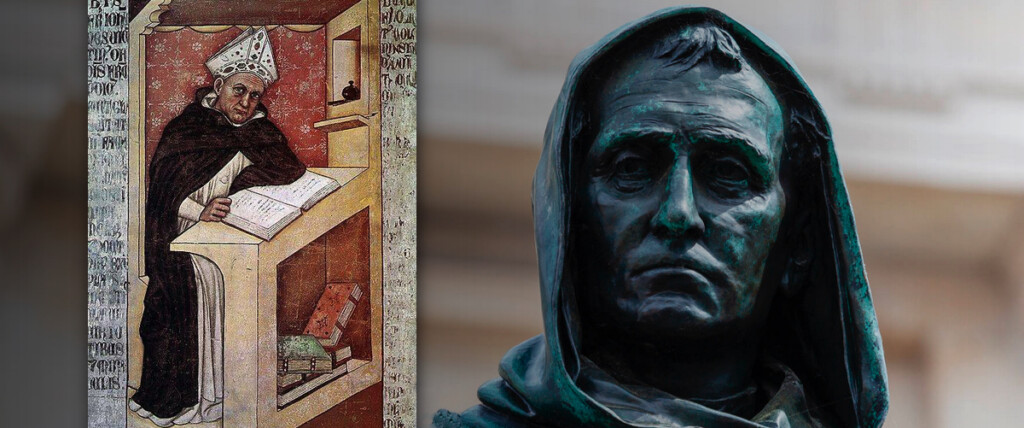
There is a particular kind of person who cannot leave a thing alone. You have seen them — in workshops, in libraries, in the corner of a kitchen at two in the morning — turning some object over and over in their hands as though the secret is in the friction, as though if they just keep touching it long enough it will finally tell them what it is made of. The obsession is not greed. It is something closer to grief. The grief of knowing that matter conceals itself, that surfaces lie, that the world presents itself as finished when it is perpetually, secretly, becoming.
This is the emotional truth that alchemy encoded in its strange vocabulary of sulfur and mercury, of calcination and albedo, long before anyone thought to call it a scientific program. The Libellus de Alchimia, the slim Latin treatise that has circulated under Albertus Magnus’s name since at least the thirteenth century, arrives at the reader with this double uncertainty: did he write it, and does it matter that we cannot be sure? The attribution question is genuinely unresolved. Scholars including Pearl Kibre, writing in the mid-twentieth century on medieval Latin scientific manuscripts, identified the Libellus as part of a broader tradition of texts that accrued to Albertus’s name precisely because his name functioned as an epistemological guarantee. To publish under Albertus was to claim seriousness, systematic method, the inherited authority of Aristotelian natural philosophy applied to material things. His name was a kind of philosophical currency, and currency, as everyone understands, gets counterfeited.
But the forgery problem, if it is one, reveals something more interesting than fraud. It reveals that alchemy needed a legitimate father figure badly enough to borrow one. The discipline was permanently on trial, accused of charlatanry by the ecclesiastical authorities who worried about its eschatological implications and by the practical merchants who had noticed that base metal stubbornly remained base metal. What the Libellus and its kin texts were attempting was not deception but something far more ambitious: they were trying to establish that transformation was a law of nature, not a violation of it. The treatise describes procedures — the separation of earth from water, the purification of metals through repeated heating and cooling, the careful observation of color changes as a metal passes through its stages — that are recognizable, across a seven-hundred-year gap, as systematic empirical inquiry. The goal was wrong in its specific metallurgical ambitions. The method was not.
Gaston Bachelard, writing in La Psychanalyse du feu in 1938, offered the most penetrating diagnosis of what was actually happening in those furnace-lit rooms. For Bachelard, fire was not merely a physical phenomenon but the original object of human reverie, the first thing that invited contemplation and rewarded it with warmth, with light, with the spectacle of transformation. The alchemist was not a failed chemist. The alchemist was a dreamer who refused to stop touching things, who insisted on fusing the imaginative life with the material one, who could not accept that the inner drama of transformation — of the self becoming other than it was — had no correspondence in the external world. Alchemy was, in Bachelard’s reading, a projection of psychic life onto matter, but a projection so disciplined, so organized, so insistent on repeatable procedure, that it constituted a genuine epistemology. It was dreaming with instruments.
A man sits across a fire from someone he has spent years trying to become. He watches the flame. He has given everything to a process that will not complete itself, that keeps revealing new stages where he expected finality. He does not leave. The leaving is not available to him because the pursuit is not really about the destination — it never was. The gold, if it ever existed, was always a figure for something else: the self that transformation promises and permanently defers.
Whether Albertus wrote the Libellus or merely haunts it as an authorizing ghost, the obsession the text encodes is recognizably human, recognizably his era’s most serious attempt to insist that matter and meaning were not separate problems.
Aristotle Reborn in a Language That Wasn’t His
There is a particular kind of scholar who disappears into another man’s mind so completely that when he finally surfaces, no one can say with certainty whose face is looking back. You have seen this person. Perhaps you have been this person — at a desk somewhere, annotating margins, following a thread of thought that began as someone else’s and ended, hours later, in territory you cannot map back to the original.
Albertus Magnus spent the better part of forty years doing exactly this with Aristotle. The project was staggering in its ambition and almost lunatic in its patience: to paraphrase, expand, and make intelligible the entire corpus of Aristotelian thought for a Latin-reading European world that had almost no direct access to the Greek. The volumes that resulted — covering logic, physics, metaphysics, biology, ethics, psychology — fill the Borgnet edition of his Opera Omnia to thirty-eight folio volumes, published between 1890 and 1899. They sit today in seminary libraries and university archives, largely untouched, which is itself a kind of historical injustice and also, perhaps, a historical honesty: we have absorbed what Albertus did without needing to read him, the way we absorb a translator’s choices without knowing the translator’s name.
But the text had already traveled before it reached him. Aristotle written in Greek, translated into Syriac by Nestorian Christians fleeing Byzantine orthodoxy, carried into Arabic by scholars at Baghdad’s House of Wisdom in the eighth and ninth centuries, filtered through the dense and brilliant commentaries of Averroes — Ibn Rushd — whose interpretations were so authoritative that medieval Europeans simply called him The Commentator, as if commentary and original had fused into a single voice. By the time Albertus received these texts, they had passed through at least three languages, multiple theological agendas, and centuries of cultural sediment. What arrived was not Aristotle. It was something more complex and more interesting: a mind refracted through minds.
Jorge Luis Borges, in his essay “The Translators of the Thousand and One Nights,” written in 1935, formulated what might be the most honest description of what happens in this process — that every translation is a betrayal that simultaneously creates something that did not exist before. The translator’s fidelity is always a fiction. The closer you try to follow, the more your own shadow falls across the page. Albertus knew this, at least implicitly. He wrote explicitly that he was not simply transmitting Aristotle but following Aristotle’s method — the method of sustained empirical attention to the natural world — even when he disagreed with Aristotle’s conclusions. This is not humility. This is annexation performed in the language of deference.
There is a man who spends years reconstructing the life of someone who has vanished — gathering photographs, letters, habits, a way of walking — until the reconstruction becomes so complete that the reconstructor no longer exists outside it. His own memories begin to feel borrowed. His gestures are someone else’s gestures. And yet the portrait he has built is undeniably his own invention, shaped by every gap he filled, every silence he interpreted, every moment where he chose one version of events over another because it fit something he needed to believe. The person he was searching for has become the occasion for self-creation. The loss of self is also the discovery of self.
This is what Albertus did with Aristotle across four decades. When he writes about the soul, he is writing about Aristotle’s hylomorphism — the doctrine that soul is the form of the body — but he is also writing as a Dominican theologian who needs this to be compatible with Christian resurrection, which it structurally is not. The solution he constructs is his own. The vocabulary is Aristotle’s. The architecture is something neither man would have built alone.
The philosopher Alasdair MacIntyre, in his 1990 work “Three Rival Versions of Moral Enquiry,” describes the medieval scholastic project as a tradition that understood itself not as innovation but as recovery — and yet recovery is never passive, because what you recover depends entirely on what you were looking for when you went to find it.
Observation as Heresy, Curiosity as Courage
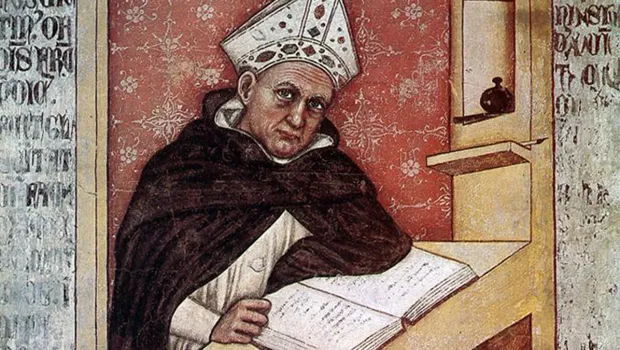
There is a particular kind of loneliness that belongs to the person who simply describes what they see. Not interprets, not theorizes, not situates within a framework handed down from respectable predecessors. Just describes. A man watches the way a beetle moves across bark for an hour, then writes down exactly what he observed. He does not reach for Aristotle to confirm it. He does not ask whether the beetle’s movement coheres with the accepted taxonomy of motion. He looks, and then he says: this is what I saw.
In the thirteenth century, that gesture was not neutral. It was, in a precise sense, a claim about the world that competed with another kind of claim — the claim of the authoritative text, the glossed page, the accumulated weight of commentary upon commentary. When Albertus Magnus wrote, in his De Vegetabilibus, that he had personally examined certain plants and found the received descriptions inaccurate, he was not merely correcting a botanical record. He was proposing a different epistemological ground to stand on. He was saying that the living thing in front of him had more authority than the sentence written about it by someone who may never have looked at it at all.
Lorraine Daston and Peter Galison, in their monumental Objectivity published in 2007, trace with forensic patience how the act of “seeing for oneself” became, over centuries, something like a moral category. Their argument is that what we now call scientific objectivity was not a natural development but a cultural achievement, a slow and contested construction, built against enormous resistance. The trained eye, the self-suppressing observer, the investigator who brackets their own assumptions in order to let the thing speak — this figure had to be invented. It did not exist before it was made. And it was made painfully, against people who understood, correctly, that such a figure undermined existing hierarchies of knowledge.
Albertus stands at a peculiar position in that history. He is not its origin, and he is not its fulfillment. He is something stranger: a man who insisted, within a thoroughly theological worldview, on the irreducibility of matter. His descriptions of animals in De Animalibus read at moments less like natural philosophy and more like field notes — observations of behavior, anatomy, habitat that carry the unmistakable texture of someone who has been in the presence of the thing. He notes the specific smell of certain minerals. He describes the way particular birds behave in particular seasons. He corrects ancient sources not with other ancient sources but with what his own senses returned.
There is a scene that belongs to anyone who has ever held that kind of knowledge against the grain of consensus. A person sits in a room full of people who are absolutely certain of something, and they know with equal certainty that these people are wrong, because they have seen the contrary with their own eyes. The social pressure in that room is not abstract. It lands on the body. The easiest thing, always, is to doubt what you saw. To decide that the text, the authority, the collective agreement must know better than your own unreliable perception. Several people in that room have made that decision, visibly, and they are more comfortable now.
What Albertus did was refuse that comfort repeatedly, across decades, across an enormous body of work. This was not proto-scientific rationalism in any clean sense. He did not reject authority categorically. He was a theologian, a Dominican, a man for whom scripture carried an entirely different order of weight. His empiricism was not secular. It was, if anything, a form of reverence for creation — the idea that God’s work deserved to be actually looked at, not merely discussed. The distinction matters. It means his insistence on observation was not the beginning of a straight line toward Galileo or Darwin. It was something else: a medieval theology of presence, a conviction that matter was not a lesser thing to be transcended but a real thing to be known.
Which raises a question about what we lose when we narrate that kind of curiosity as mere anticipation of something that came later.
A vision curated by a filmmaker, not an algorithm
In this video I explain our vision
The Inheritance No One Wanted to Claim

There is a particular kind of person who makes everything possible and appears in no one’s story. You have seen them: the figure who arrives before the cameras, who sets the table, who teaches the ones who will be remembered, and then steps back into the background while history arranges its portraits. In a certain film, a man spends his entire life building a house he will never live in, training apprentices who will go on to sign their own names to the work, and when the house is finally celebrated, his name is not on the plaque. The audience understands this as tragedy. But the film ends, and the feeling passes, and no one goes looking for his name afterward.
This is more or less what happened to Albertus Magnus.
He is not forgotten in the way that obscure figures are forgotten, through simple neglect or the erasure of time. He is forgotten structurally, which is a different and more telling thing. The thirteenth century produced several figures whose names have become cultural shorthand: Aquinas for the marriage of faith and reason, Roger Bacon for the proto-scientific imagination, and later, further down the centuries, Giordano Bruno for the martyrdom that modernity required — the burning man who died for heliocentrism and free thought, regardless of whether the history is entirely accurate. Each of these figures serves a narrative function. Each one fits a story that the modern world needed to tell about itself.
Albertus does not fit. He is too empirical for the mystics, too theological for the scientists, too synthetic for anyone who needs a clear lineage. He dissected animals and wrote commentaries on Aristotle and corresponded with alchemists and catalogued plants with a precision that would not be equaled for two centuries, and he did all of this while remaining a bishop in good standing with the Church. He refused the rupture that would have made him legible. He was not a rebel. He was not a martyr. He was not even, in the end, particularly controversial. He was useful, thorough, and catastrophically difficult to mythologize.
Thomas Kuhn, writing in 1962, described the history of science as a history of paradigm shifts — sudden, dramatic reorganizations of the conceptual field that render the prior framework obsolete and mark the names of those who triggered the revolution. The blind spot in this model, which Kuhn himself partially acknowledged but never fully resolved, is precisely the figure who precedes the paradigm without triggering it. The one who accumulates the observations, assembles the vocabulary, trains the minds, and creates the conditions without which the revolution would have no ground to stand on. These figures do not appear in histories of science because they belong to no paradigm — they are the sediment beneath the foundation, invisible once the building is erected above them.
There is a scene that belongs to no single film and yet appears in all of them: someone is leaving a room where something important has just been decided, and they are leaving because they were essential to the decision being possible at all, and no one stops them at the door. The camera does not follow them. The story continues with the ones who stayed. This is not cruelty. It is simply the structure of how stories are told, which requires that some people be the story and others be its preconditions.
Albertus Magnus is a precondition.
And the unnerving thing — the thing that does not resolve into a clean thought about his legacy or its injustice — is that he would not have been troubled by this. He was, by every account, a man who believed that attention was its own reward, that the observation of the world was already a form of devotion, that to hold a plant up to the light and name its parts and ask what it was trying to become was not a lesser activity than writing a summa or dying for a principle. He sat in the middle of the thirteenth century doing exactly that, and the question his life leaves open is not why we forgot him, but what it means that we can only remember people who fit the stories we have already decided to tell.
🜂 The Hidden Masters of Alchemical Thought
Albertus Magnus stands at the crossroads of medieval scholasticism and alchemical inquiry, weaving natural philosophy with the esoteric currents that would shape Western thought for centuries. His work did not exist in isolation — it belongs to a vast constellation of thinkers, symbols, and traditions that reach from ancient Hermeticism to the Renaissance and beyond. Explore the threads that connect his legacy to the broader tapestry of alchemical knowledge.
Paracelsus: Life and Alchemical Thought
Paracelsus carried forward the spirit of Albertus Magnus by fusing empirical observation with alchemical and spiritual insight, transforming medicine and natural philosophy alike. His concept of the three primes — sulfur, mercury, and salt — echoes the elemental thinking that Albertus had already begun to systematize in the medieval era. Together, their legacies form an unbroken chain of thinkers who refused to separate the material from the mystical.
GO TO THE SELECTION: Paracelsus: Life and Alchemical Thought
Magnus Opus: nigredo albedo rubedo
The Magnum Opus — with its triadic stages of nigredo, albedo, and rubedo — represents the very culmination of the alchemical process that Albertus Magnus theorized and encoded in his natural philosophical writings. These three phases are not merely chemical but deeply symbolic, mapping an inner journey of purification and transformation. Understanding them is essential to grasping the full depth of Albertus’s alchemical worldview.
GO TO THE SELECTION: Magnus Opus: nigredo albedo rubedo
Tabula Smaragdina: Text Meaning and Interpretation
The Tabula Smaragdina, or Emerald Tablet, is the foundational Hermetic text that underlies virtually all Western alchemical thought, including that of Albertus Magnus. Its cryptic maxim — ‘As above, so below’ — resonates throughout Albertus’s attempts to reconcile celestial influences with earthly transformations. Reading its text and interpretation reveals the metaphysical architecture upon which medieval alchemists built their entire philosophical framework.
GO TO THE SELECTION: Tabula Smaragdina: Text Meaning and Interpretation
What Is Alchemy: History and Origins
To fully appreciate Albertus Magnus’s contribution, one must first understand the broader history and origins of alchemy as a discipline that spanned Greek, Arabic, and Latin traditions. This foundational article traces alchemy’s journey from ancient Egypt and Hellenistic Alexandria through the Islamic Golden Age and into the European scholastic tradition where Albertus became a pivotal figure. It provides the essential context for understanding why his synthesis of alchemy and natural philosophy was so historically significant.
GO TO THE SELECTION: What Is Alchemy: History and Origins
Discover the Cinema of the Unseen on Indiecinema
If these hidden currents of knowledge awaken something deeper in you, Indiecinema is the streaming destination where independent and visionary cinema illuminates the mysteries that mainstream culture leaves in the shadows. From esoteric documentaries to philosophical films that challenge the boundaries of perception, Indiecinema curates a world of moving images for those who seek more than entertainment. Step through the screen and discover what independent cinema reveals about the great questions of existence.
👉 EXPLORE THE CATALOG: Watch Indie Films in Streaming
A vision curated by a filmmaker, not an algorithm
In this video I explain our vision

