
The City That Refuses to Be Real
You step off the vaporetto and the ground moves under you, not from seasickness but from something older and harder to name. The city refuses to orient you. There are no cars, no traffic lights, no grid of streets that promises to resolve itself into logic if you only walk far enough. What you find instead are narrow calli that collapse into canals without warning, bridges that lead to other bridges, a map that lies to you with every step. You are not in a place that functions. You are inside something that performs.

This is the first and most disorienting truth about Venice: it does not behave like a city. It behaves like a text. Every corner has already been described, every reflection in the water already written down, every peeling facade already freighted with someone else’s meaning before you arrive to misread it. Henry James understood this with particular precision when he noted, in the essays collected in Italian Hours in 1909, that the difficulty of Venice is not its beauty but its surplus of beauty, a quantity so excessive it becomes almost aggressive, as if the city were daring you to say something about it that has not already been said. And of course you cannot. The literary sediment is too thick.
You carry this sediment whether you have read the books or not. Goethe arrived in 1786 and wrote that Venice could only have been invented by itself, as if the city had willed itself into existence through sheer aesthetic will. Byron lived here and made it his theater of dissolution. Ruskin spent years measuring its stones and wrote three volumes — The Stones of Venice, published between 1851 and 1853 — that transformed Gothic architecture into a moral argument and the city into its illustration. Mann sent Aschenbach here to die of beauty and cholera and himself, and the dying seemed so inevitable, so structurally correct, that it has colonized every subsequent visit made by a melancholy intellectual who arrives in late summer and finds the heat oppressive and the mirrors too numerous. The imagination does not wait for lived experience to begin. It has already written the script.
This is what makes Venice unlike any other city in the world and what makes writing about it an act of almost reckless presumption. Paris has its mythology, Rome its weight of centuries, but in those cities the myth still competes with the functional. People live in Paris as if Paris were not a symbol. In Venice, no one quite manages this. Even the Venetians themselves, the shrinking population of real residents — roughly fifty thousand in the historic center today, down from nearly two hundred thousand at the height of the Republic in the seventeenth century — seem to inhabit the city slightly sideways, as if aware that they are extras in someone else’s imagination.
The philosopher Gaston Bachelard, in his 1958 work The Poetics of Space, argued that certain places do not merely contain human experience but actively shape it, that the imagination does not project itself onto neutral ground but enters into a dialogue with spaces that already dream. Venice is the extreme case of this. It is a city that dreams so loudly its dreams drown out your own. You arrive with your private history, your particular grief or happiness, your reasons for being there, and within hours the city has absorbed them into its own symbolism, made them about water and decay and the gorgeous persistence of things that should by any rational measure have already sunk.
And yet the sinking has not happened. This too is part of the performance. Venice has been announcing its own imminent death for so long that its survival has become another layer of myth, another text laid over the stones. You are not visiting a dying city. You are visiting a city that has been dying, beautifully and publicly, for six hundred years.
Venetian Arcanum
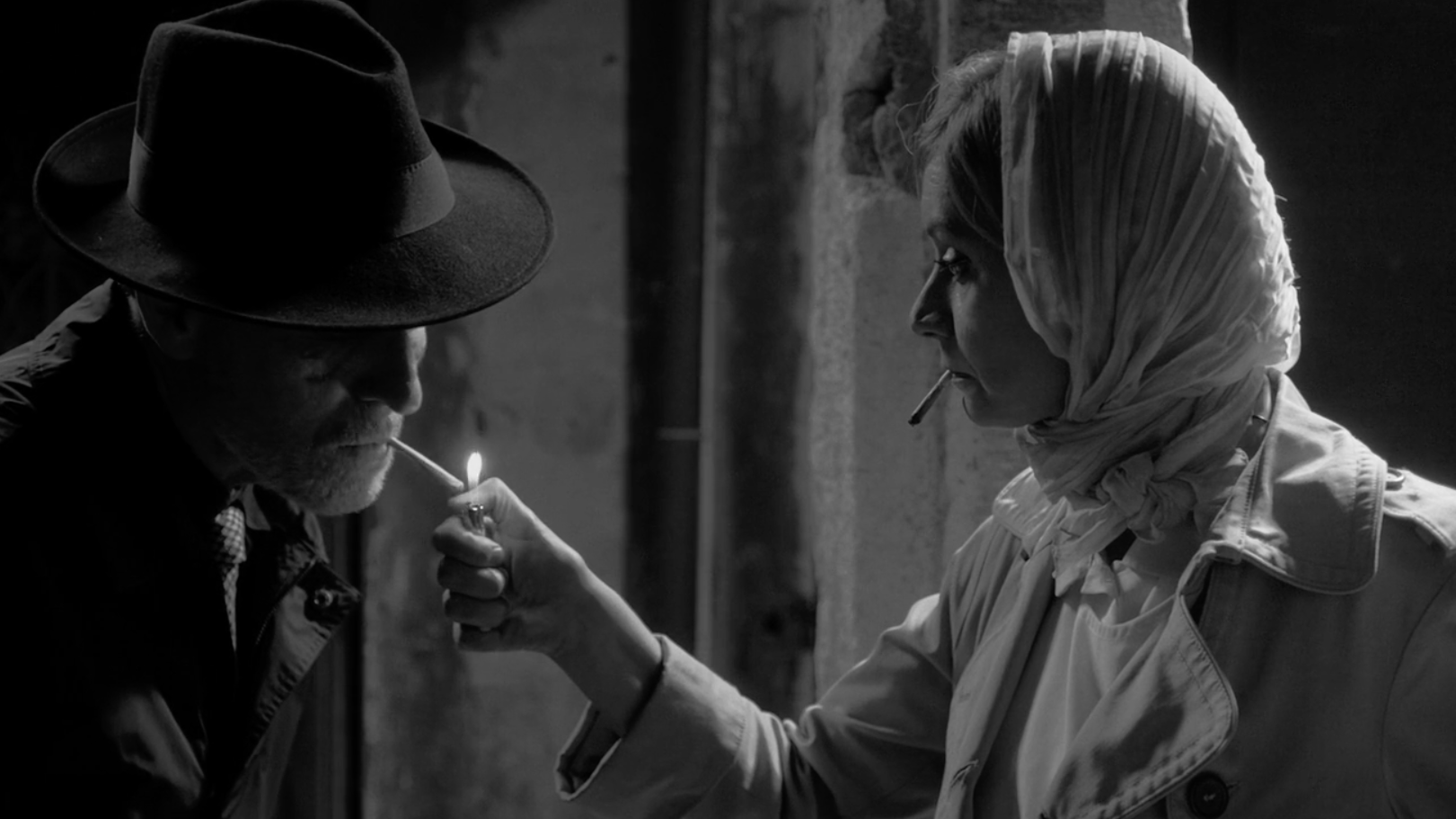
Thriller, by Serge Turgeon, Italy, 2025.
In Venice, a mysterious presence appears once every century or two, haunting the canals and hidden corners of the city. Driven by a sense of destiny, a woman decides to search for it. Following its elusive traces, she is drawn deeper and deeper into the city’s arcane secrets. Reality and myth begin to blur, and Venice itself transforms into a labyrinth of dangers.
LANGUAGE: Italian
SUBTITLES: English
Water as Syntax: How the Lagoon Shaped a Way of Thinking
There is a specific kind of vertigo that arrives not from height but from looking down at water through the gaps between old stone and realizing the ground you stand on is itself a fiction. You feel it on certain bridges in Venice at low tide, when the exposed barnacled timber of a thousand-year-old foundation is visible beneath you, black and saturated and somehow still holding. The city does not rest on solid earth. It rests on wooden piles driven into silt, on compressed mud, on a geological bargain that has been renegotiated every century without ever being fully paid off. This is not metaphor. This is the structural condition under which every writer who has ever seriously inhabited Venice has done their thinking.
Gaston Bachelard, in his 1958 Poetics of Space, argued that the imagination is not a neutral faculty floating free of its material conditions. It is shaped, coerced, educated by the spaces it inhabits. Water, for Bachelard, is the element of reverie and dissolution, the substance that refuses fixed form, that mirrors and distorts simultaneously. He wrote of water as the element most hostile to the illusion of permanence, the one that constantly returns you to the flux beneath apparent solidity. In Venice, this is not a philosophical proposition. It is the pavement under your feet.
The calli do not permit straight thought. They are too narrow for that, too prone to sudden dead ends that open onto unexpected campi, too likely to deposit you at a canal when you were certain you were walking toward a piazza. The labyrinthine street pattern of Venice is not merely confusing in the practical sense. It actively reshapes the cognitive habits of anyone who spends real time within it. You learn to hold your destination loosely. You learn that certainty about direction is a form of hubris the city will punish. The writers who came here and stayed long enough to be changed by it produced work that bears this imprint: a loosening of linear argument, a tolerance for digression, a suspicion of arrival.
Think of that particular quality in Venetian writing — the way it circles rather than advances, the way it returns to images rather than building arguments, the way time inside it feels tidal rather than sequential. This is not stylistic affectation. It is learned from a city where the same calle looks entirely different at acqua alta, when the water rises and the ground floor of the world becomes a reflecting surface that makes everything simultaneously present and inverted. The historian Fernand Braudel, writing in The Mediterranean and the Mediterranean World in the Age of Philip II, noted that Venice’s survival across eleven centuries was inseparable from its capacity to transform its greatest vulnerability, the water, into its primary defense. But that same transformation happened internally, in the minds of those who stayed. The instability became a resource. The dissolution became a method.
There is a scene that belongs to every serious visitor who has ever come alone to Venice in winter, off-season, when the tourists are gone and the fog rolls in from the lagoon so dense that the opposite bank disappears and you are walking in something that has no edge. The city in that condition stops being a place you are visiting and becomes a condition you are inside of. The boundary between mind and environment, which architecture usually enforces quite firmly, simply dissolves. Bachelard would recognize this as the water-dream made literal: the self diffusing into its surroundings, losing the hard edges that ordinary solid ground insists upon.
This is what Venice does to a serious imagination. It does not provide atmosphere. It provides grammar. It teaches a syntax in which the subject is never fully stable, the verb is always tidal, and the sentence never quite ends where you expected.

The Grand Tour and the Invention of Melancholy
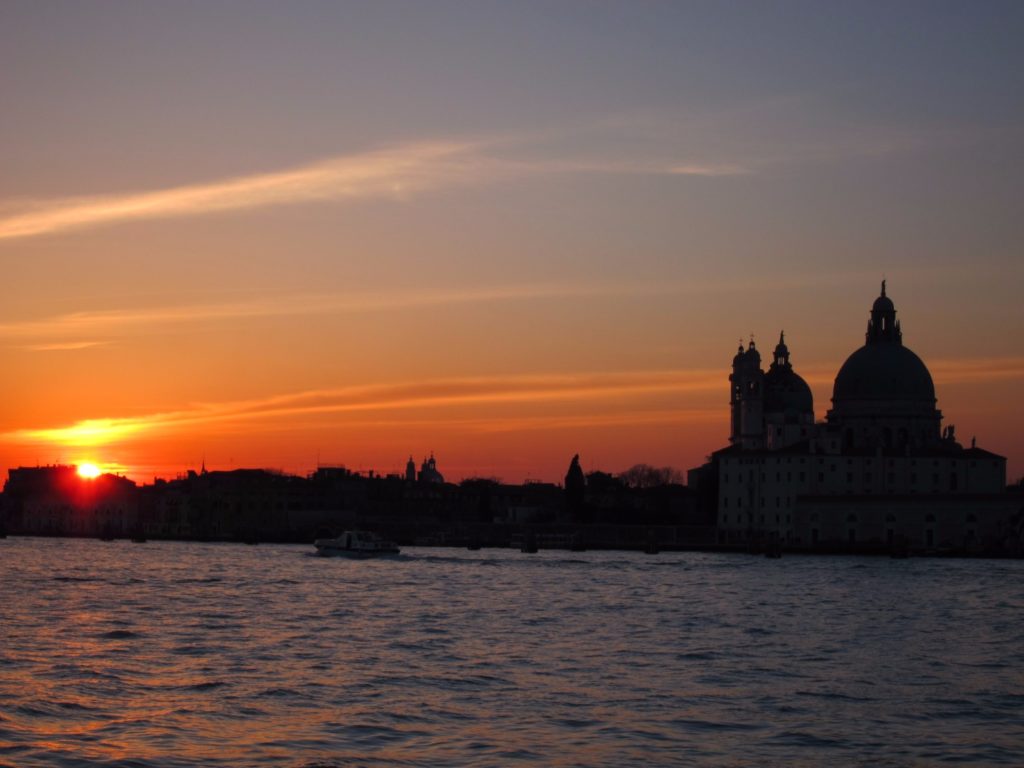
You arrive with the feeling already packed. This is the first thing no one tells you about Venice, and the first thing every writer who came before you knew without admitting it. The emotional itinerary precedes the geographical one. By the time the young English aristocrat of the eighteenth century stepped off his carriage somewhere on the Venetian mainland and arranged for the crossing, he already knew what he was supposed to feel. The Grand Tour had codified it. The tutors had confirmed it. The letters of introduction, passed between families of the same class across the Channel, had made it official. Venice was where you went to learn that beauty and ruin were the same thing, and if you did not feel that upon arrival, you adjusted your perception until you did.
The Grand Tour as an institution of elite formation reached its apex roughly between 1660 and the outbreak of the Napoleonic Wars, displacing something like forty thousand young Britons across the Continent in search of cultural capital they could not acquire at home. Venice was not merely a stop on this itinerary. It was, for many, its emotional climax, the city that validated the entire enterprise by confirming that civilization was transient, that grandeur carried within it the seed of its own disappearance, and that the properly educated sensibility was one capable of appreciating both simultaneously. Joseph Addison, writing in the early 1700s, described the city in terms that already sounded like an elegy for something not yet dead. His Remarks on Several Parts of Italy, published in 1705, established a rhetorical mode that would echo forward for two centuries: the present Venice measured against a vanished Venice, the living city found inadequate by comparison to its own legend.
This is a production mechanism, not a perception. What the Grand Tour manufactured, and what every subsequent writer inherited, was not an experience of Venice but a template for that experience. The philosopher Hans-Georg Gadamer argued in Truth and Method that our understanding of any text, any place, any encounter, is always already shaped by the horizons of expectation we bring to it, the traditions we inhabit without having chosen them. Venice became the supreme example of this. The melancholy was not discovered there. It was deposited there, layer by layer, by travelers who arrived already knowing what the place meant, and who then wrote home confirming it, thus thickening the deposit for those who would follow.
Byron spent time in the city between 1816 and 1819, and his correspondence and verse from that period are saturated with exactly the decay-romanticism the Grand Tour template demanded, right down to the moonlit canals and the sense of a republic breathing its last. But the Republic of Venice had already formally ceased to exist in 1797, dissolved by Napoleon with almost bureaucratic efficiency. Byron was mourning something that had been dead for nearly two decades when he arrived. He mourned it brilliantly, movingly, and completely in accordance with what the emotional script required. Ruskin followed, in the middle of the nineteenth century, with The Stones of Venice, a work of such architectural and moral intensity that it effectively legislated how subsequent generations would see the city’s buildings. And then Proust, in a famous section of In Search of Lost Time, described Venice as the realization of a dream he had carried since childhood, already pre-formed, already complete before the visit, so that the city became the confirmation of an interior state rather than the origin of one.
What travels through all of them is not sensibility. It is inheritance. A set of emotional instructions passed forward through literary culture, so thoroughly naturalized that each writer experienced them as personal discovery. The melancholy of Venice is one of the most successful ideological constructions in Western literary history, and it succeeded precisely because it never looked like one.
Thomas Mann‘s Fever Dream and the Desire We Don’t Name
You already know you should leave. You have known it for days. The vaporetto schedule is memorized, the bags could be packed in twenty minutes, and yet here you are again at the same hour, at the same café table, watching the same figure move through the same light. Something in you has made a decision that your conscious mind refuses to ratify, and so you sit, and you order another coffee, and you call it staying.
This is the precise geometry of dissolution that Venice has always made available. A man arrives in the city exhausted, rigid with discipline, his life organized around production and renown. He is a writer, or was, in the way that certain people are what they do until the doing becomes unbearable and they no longer know what remains underneath. He takes a room, intending a brief recovery. And then he sees a boy on the beach, golden and carelessly beautiful, and something in him that had been dormant for decades lurches awake with the force of a physiological event. He does not name it. He does not need to. The city is already naming it for him, in its particular language of water and rot and gorgeous decay.
What makes this unbearable to read is not the desire itself but the self-knowledge running alongside it. He knows what is happening. He watches himself follow the boy through the streets with the clinical detachment of a man observing his own fever from a slight remove, aware of the delirium and unable to stop it. And beneath the city, literally beneath the streets and canals and the glossy surface that the tourist bureaux are at pains to protect, cholera is spreading. The authorities have chosen to suppress the information. Hotels remain open. Visitors remain. The city performs its beauty over a biological fact that would empty it in a week if spoken aloud. The man learns this and does not leave. He cannot say, even to himself, whether it is the boy that holds him or whether dying in Venice has begun to feel, at some level he will not examine, like a form of resolution.
Freud published his essay on the uncanny in 1919, the same decade that would canonize this Venetian narrative, and what he identified there was the precise mechanism the city deploys: the unheimlich, the not-home, the familiar made strange, or more accurately, the strange recognized as something that was always already home and was repressed because it could not be accommodated. Venice does not create desire. It removes the architecture that ordinarily contains it. The labyrinthine streets, which offer no legible grid, no rational navigation, no reassuring sequence of cause and effect, perform spatially what the unconscious performs psychologically. You cannot plan your route. You arrive somewhere you did not intend and discover you recognize it.
Foucault’s heterotopia, developed in his 1967 lecture and published as “Of Other Spaces,” describes sites that exist within society while standing outside its normative logic, spaces where multiple incompatible realities coexist and where the usual rules of time and behavior are suspended. Venice is the heterotopia as architectural fact. It is a city that should not exist, built on water, preserved beyond its geopolitical moment, maintained as spectacle by an economy of desire that it simultaneously critiques. To enter it is to enter a space where ordinary social coordinates shift, where what you suppress in your daily life finds the room it was never given.
This is why Venice literature returns, compulsively, to the theme of the desire that cannot be named. Not because writers found the city picturesque, but because the city offered them a container for everything that the social order required them not to say. The pursuit through the labyrinth is not metaphor. It is the only honest map of what happens when suppression runs out of geography.
Casanova’s City: Libertinism as Political Resistance
There is a particular kind of freedom that only exists inside a cage, and Venice built its cage with extraordinary care. The bocche di leone — those stone mouths carved into palace walls, their lips slightly parted, always waiting — were not instruments of mere paranoia. They were architecture as ideology. You deposited your accusation anonymously, and the machinery of the Council of Ten would proceed without your needing to know what happened next. The Republic functioned on the principle that surveillance, internalized, becomes self-surveillance. By the sixteenth century, Venice had developed one of the most sophisticated intelligence apparatuses in Europe, a network of informants, inquisitori, and diplomatic spies that would not look out of place in a twentieth-century security state. Michel Foucault‘s analysis of panoptical power in “Discipline and Punish” (1975) describes precisely this mechanism: you behave as though you are always watched because you can never confirm that you are not.
And yet Venice was also the city of Carnival, of masks, of six weeks each year when the entire social order dissolved into costumed anonymity. This is not a paradox. It is a system.
What literary history has frequently misread as decadence — the erotic poetry, the libertine memoirs, the carnivalesque fiction — was in fact a language. Not escape from politics, but politics written in the only grammar that could not be easily denounced, because it could always be dismissed as mere pleasure. When a man in a bauta mask propositioned a senator’s wife at a ridotto, and both knew perfectly well who the other was, the transgression was not sexual in its deepest register. It was a rehearsal of equality, a temporary dissolution of the hierarchies that the Republic spent the rest of the year enforcing with meticulous bureaucratic violence.
Giacomo Casanova understood this instinctively, which is why his memoirs remain one of the most politically shrewd documents produced in eighteenth-century Europe. The Histoire de ma vie is not, at its core, a catalogue of seductions. It is a study of power conducted through the body. Every encounter Casanova narrates involves a negotiation of status: who has leverage, who performs submission, who controls the terms of disclosure. He moves through Venice, Paris, and Vienna like a man reading the actual text beneath the official one. The lover who enters a convent through a secret passage is not committing a sin against God. He is demonstrating that the institutional wall has a door, that authority has a hidden logic of exception that those in power exploit privately while enforcing publicly. Casanova was arrested by the Venetian Inquisition in 1755 and imprisoned in the Piombi under the leads of the Doge’s Palace — not for his sexual conduct, which everyone knew about and many shared, but for Freemasonry and the suspicion of ideas. The body was merely the pretext.
This displacement of political speech into erotic register has a deeper history than Casanova alone. Peter Burke, in “Venice and Amsterdam” (1974), describes how the Venetian print trade of the sixteenth century used erotic literature as a vehicle for social satire that could not be published directly. Pietro Aretino’s Sonetti lussuriosi — written to accompany explicit engravings in 1527, one of the first mass-produced pornographic texts in European history — used sexual description to mock papal authority, aristocratic pretension, and clerical hypocrisy simultaneously. The scandal was the cover. The meaning lived inside the scandal.
A man watches his city through a window, the canal below perfectly still in the early morning. He has said nothing that could be used against him. He has been entirely eloquent. The mask does not hide the face. It makes a different kind of speech possible, one the listener cannot quite pin to the speaker, cannot quite fold into an accusation and slip into the stone mouth in the wall.
A vision curated by a filmmaker, not an algorithm
In this video I explain our vision
The Drowning City and the Literature of Apocalypse
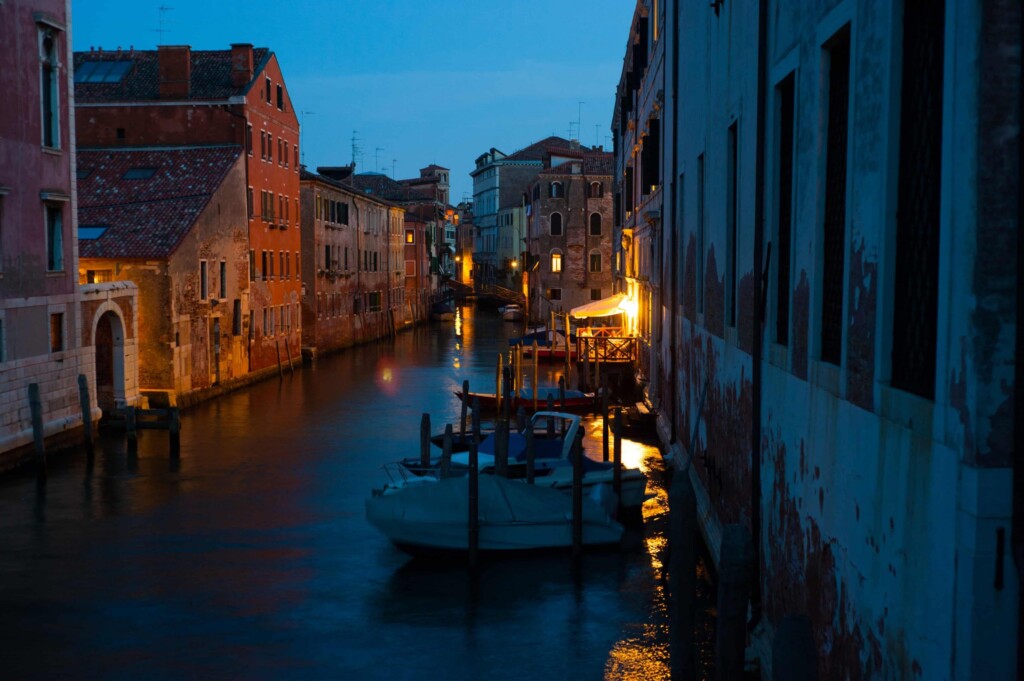
The water came in under the door before anyone had time to move the chairs. Not as a flood announces itself — with violence, with warning — but with the particular patience of something that has always known it would win. By the time it reached the third step of the staircase, the November light was already going, and the city looked, for a moment, exactly the way ten thousand paintings had promised it would look: luminous, wounded, inevitable.
That November of 2019, the acqua alta climbed to a hundred and eighty-seven centimeters, the highest mark in over fifty years. The Basilica of San Marco flooded for the fourth time in twelve centuries, and for the second time in fifteen years. The numbers accumulate with the kind of weight that ought to produce action. The MOSE project — the system of mobile barriers built across the three lagoon inlets, engineered to rise when the tide threatens — consumed approximately five and a half billion euros over decades of construction, delay, corruption scandals, and political dispute before it was finally activated in 2020. Five and a half billion euros to hold back water that the city has been telling itself, in prose and verse and elegy, was always going to win anyway.
This is the question that the literature of Venice makes almost impossible to ask cleanly: did the writing create the conditions for surrender? Susan Sontag, in On Photography published in 1977, argued that to photograph something is to participate in its mortality, to frame it as already completed, already past. The image consumes the subject by fixing it in a moment of beautiful helplessness. What she said about photographs is true, perhaps more devastatingly true, about the centuries of literary Venice — the city has been framed in the posture of dying for so long that dying has become its essential identity, the thing it cannot be saved from without ceasing to be itself.
John Ruskin understood Venice as already ruined in 1851, when The Stones of Venice began to appear, and his magnificent grief became the grammar through which all subsequent visitors learned to see. Thomas Mann sent a man there to die — not arbitrarily, but because the city’s beauty and its corruption were, in his imagination, the same phenomenon. Even the writers who loved Venice most could only express that love through anticipated loss, as though the emotion required the certainty of ending to achieve its proper intensity. The result is a literature that has rehearsed the apocalypse so thoroughly that the actual apocalypse arrives already narrated, already absorbed, already aestheticized into something one might call tragic but not preventable.
There is a man who keeps returning to a place he knows is disappearing — not to save it, but to witness it one more time, to secure the image before it goes. You recognize something in that, even if you have never been to Venice, because it describes a relationship to loss that the culture has trained into almost everyone: the melancholy tourism of the already-doomed. Roland Barthes, writing about photography in Camera Lucida in 1980, identified what he called the punctum — the detail that wounds, that pierces through the composed surface of an image directly into the viewer’s unprotected feeling. Venice has become, in the literary imagination, a city that is nothing but punctum. Every corner pierces. Every reflection wounds. And wounds, by definition, do not get better. They scar, they close, they become the beautiful evidence of what happened to you.
The MOSE barriers can rise and fall. Engineers can model tidal surges. Governments can allocate billions. But the cultural imagination of Venice was sealed into its posture of elegy before any of this infrastructure existed, and it remains there, fixed in the amber of its own most eloquent storytelling, unable to picture a Venice that endures without being, in some essential way, already gone.
The Foreigner’s Gaze and the City’s Silence
There is a particular kind of silence that has nothing to do with the absence of sound. You have heard it, possibly, in a place where everyone speaks about you and no one speaks to you, where the story of your life has already been written by someone who arrived last Tuesday with a notebook and a theory. Venice knows this silence intimately, has been living inside it for centuries, though no one who wrote about it ever seemed to notice, because the writers were too busy writing.
Almost every text that constitutes the canonical literary Venice — the James of “The Aspern Papers,” the Proust of the long Venetian passages in “À la recherche,” Brodsky’s “Watermark,” Hemingway’s “Across the River and Into the Trees,” Pound’s Cantos saturated with lagoon light — was composed by someone who did not grow up watching the acqua alta creep under the front door in November, who did not inherit the particular fatalism of a city built on wood pilings sinking by measurable millimeters each decade. The Venetian themselves, the actual inheritors of the sestieri, are structurally absent from the literary record of their own place. This is not an accident of taste or talent. It is a mechanism.
Edward Said, in “Orientalism” published in 1978, described how the Western imagination constructs its other not through ignorance but through an excess of attention — an attention that is, at its core, a form of possession. The Orient, for Said, was never a place but a discourse, a vast projection apparatus through which Europe named, ordered, and thereby owned what it could not literally keep. Venice operates by the same logic, though it sits in the middle of Europe and belongs to no colonial fantasy in the conventional sense. What it belongs to is something older and perhaps more insidious: the fantasy of beautiful decay, of a civilization whose death can be safely aestheticized because the mourners are not the ones dying.
A man sits in a palazzo that has been converted into a pensione, watching the light move across a ceiling that has not changed since the sixteenth century. He is writing. He feels the weight of history, the proximity of something he cannot name but which seems essential, as if the city itself were transmitting a frequency available only to those sensitive enough to receive it. This is precisely Said’s mechanism in its most elegant form — the outside observer who mistakes the intensity of his own projection for the depth of the place, who reads his own hunger in the silence of others and calls it meaning.
The Venetian writer, should one attempt to emerge, finds the territory already narrated to exhaustion. The gondolier in the James story is a surface, a mood, a vehicle for the foreigner’s internal drama. He has no interiority that the text is interested in. The working women in the markets at Rialto, the families crowded into apartments above the flooded ground floors, the fishermen of the northern islands — they do not appear in the literary Venice because the literary Venice was never built for them. It was built by and for the gaze that travels, that arrives with Baedeker and sensibility, that needs the city to confirm something it already suspects about beauty and time and the inevitability of loss.
What gets called the literature of Venice is, in structural terms, a literature of desire and projection — desire for permanence, projection of mortality, the old traveler’s trick of turning someone else’s home into a mirror. The city has been narrated so completely by strangers that the native voice has not simply been overlooked. It has been crowded out, made structurally inaudible, the way a room full of people speaking loudly about a painting leaves no space for the painter to mention that the light had actually been different that afternoon, that the shadow fell another way, that what you see is not quite what was there.
The Map That Replaced the Territory
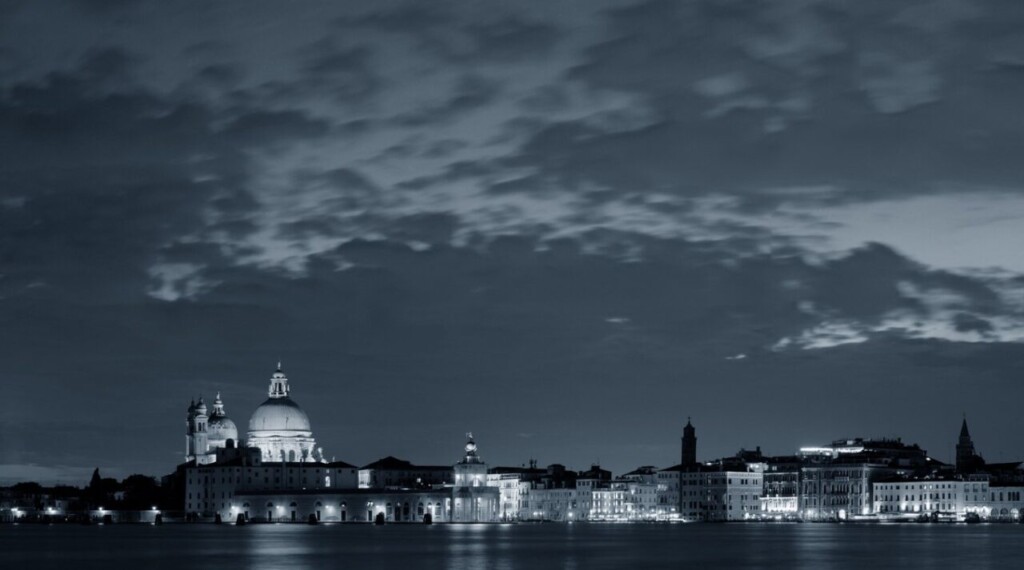
There is a moment, arriving by train at Santa Lucia station, when you step out onto the water-front and feel something strange before you even look around: a sensation of recognition so total it borders on the uncanny. You have never been here before. And yet you know exactly what you are about to see. The canal, the boats, the light on the water doing precisely what it was supposed to do. The sensation is not wonder. It is confirmation.
Jean Baudrillard argued, in Simulacra and Simulation published in 1981, that we have entered an age where the map precedes the territory, where the representation does not follow reality but instead generates it, or rather replaces it so thoroughly that the question of what was “real” before becomes unanswerable and finally irrelevant. He opened that argument with a fable borrowed from Borges, about a civilization whose cartographers drew a map so detailed it coincided exactly with the empire it represented, until the map and the territory became indistinguishable, and then the territory rotted beneath the map, and only the map remained. Venice did not wait for Baudrillard to theorize it. It had been practicing this disappearing act for centuries, allowing itself to be drawn over and over until the drawings accumulated into something more substantial, more permanent, more widely distributed than stone and water could ever be.
Thirty million people arrive annually to walk through a city they already entirely possess in imagination before their feet touch a single bridge. They arrive carrying Thomas Mann’s dying Aschenbach, Henry James‘s Isabel Archer pausing at a threshold, Donna Leon’s Commissario Brunetti navigating the calli of the sestiere with the casual authority of a man who has never needed a map. They arrive carrying the paintings, the photographs, the film scenes absorbed across decades of cultural saturation. What they find when they arrive is not Venice. What they find is the confirmation that their Venice, the interior one, was accurate. This is not travel. It is verification.
The philosopher’s discomfort with the simulacrum runs deeper than nostalgia for authenticity. It is not that the copy is inferior to the original. It is that the copy has colonized the original so completely that any claim to encounter the original directly has become structurally impossible. When you stand on the Rialto and feel moved, what moves you is not Venice. It is everything you have ever read and seen about Venice colliding with a set of physical coordinates that confirm the collision was always inevitable. Ruskin understood the danger from the opposite side: he believed the stones could resist the narrative. He was wrong. The stones have been fully absorbed.
What remains genuinely difficult to settle is whether this constitutes a form of death or a form of strange, unprecedented immortality. Cities burn, flood, are bombed into rubble, are abandoned to desert and jungle. Venice is sinking, measurably and literally, centimeters at a time. Its resident population has collapsed from 175,000 in the mid-twentieth century to fewer than 50,000 today, the permanent human fabric of the city dissolving even as the tourist infrastructure metastasizes around the emptying bones. By any conventional measure of urban vitality, Venice is dying. And yet no city on earth is more fully alive in the human imagination, more densely inhabited by thought and memory and desire, more continuously written and rewritten and dreamed.
Baudrillard’s map did not save the empire. It simply outlasted it. Whether Venice’s literature, its vast and still-growing archive of representation, constitutes salvation or the most beautiful form of erasure ever devised remains the question that the city itself, with its characteristic and maddening ambiguity, refuses to answer.
🌊 Cities, Memory, and the Literary Imagination
Venice has long been a mirror for literature’s deepest obsessions: the passage of time, the seduction of beauty, and the tension between reality and dream. These related articles explore the writers, thinkers, and ideas that have shaped how we read cities, memory, and the power of imagined worlds.
Calvino’s Invisible Cities: Meaning and Analysis
Calvino’s Invisible Cities is perhaps the most Venetian book ever written without ever truly being about Venice. Through Marco Polo’s dreamlike dialogues with Kublai Khan, Calvino transforms urban space into pure metaphor, where every city is a fragment of memory, desire, or loss. Reading it alongside Venice in Literature reveals how the city on water has always been less a place than a state of mind.
GO TO THE SELECTION: Calvino’s Invisible Cities: Meaning and Analysis
Italo Calvino: Life and Works
Italo Calvino stands as one of the twentieth century’s most inventive literary architects, building fictional worlds that blur the line between geography and imagination. His lifelong fascination with structure, myth, and the act of storytelling places him in direct dialogue with the literary tradition that has made Venice one of literature’s most enduring symbolic landscapes. Understanding his life and works enriches any exploration of how Italian writers have used place as a philosophical instrument.
GO TO THE SELECTION: Italo Calvino: Life and Works
Pierre Nora and the Sites of Memory
Pierre Nora’s concept of ‘lieux de mémoire’ — sites of memory — offers a powerful theoretical lens through which to read Venice as a literary phenomenon. For Nora, certain places crystallize collective memory so intensely that they become inseparable from cultural identity and imagination. Venice, saturated with centuries of literary projection, is perhaps the most complete embodiment of this idea in European culture.
GO TO THE SELECTION: Pierre Nora and the Sites of Memory
Stream of Consciousness in Literature and Cinema
Stream of consciousness in literature finds a natural home in a city like Venice, where time seems to dissolve and the self drifts between past and present like a boat on still water. From Henry James to Thomas Mann, writers have used the city’s labyrinthine geography to externalize the fluid, associative movement of inner thought. This article traces how that narrative technique evolved across literature and cinema, opening new ways to understand how Venice has been written from the inside out.
GO TO THE SELECTION: Stream of Consciousness in Literature and Cinema
Discover Cinema That Thinks Like Literature
If these ideas about cities, imagination, and literary memory have sparked your curiosity, Indiecinema is the streaming platform where cinema meets depth. Explore independent and arthouse films that share the same spirit of inquiry — discover them now on Indiecinema.
👉 EXPLORE THE CATALOG: Watch Indie Films in Streaming
A vision curated by a filmmaker, not an algorithm
In this video I explain our vision

