
The Room Where Property Begins
You turn the key. The lock clicks. Something in your chest settles — not relief exactly, more like recognition, the feeling of a boundary confirmed between what is yours and what belongs to the rest of the world. It is a sensation so ordinary it barely registers as a sensation at all, and that invisibility is precisely the point. The feeling that certain things belong to you, that your labor earns them, that your body is the first and most sovereign of your possessions — this is not instinct. It is architecture. Someone built it, and built it so well that generations have lived inside it without once noticing the walls.

John Locke was born in Somerset in 1632, the same year Galileo was placed under house arrest for insisting the earth moved. The timing is not incidental. Locke arrived in a world where every certainty was being renegotiated at sword point — where kings claimed divine right and lost their heads for it, where religious authority fractured into a hundred competing certainties, where the very ground of what counted as legitimate power was soaked in blood and still wet. He would live through the English Civil War as a child, watch Charles I executed in 1649 while he was still a student at Westminster School, and spend decades navigating the violent reversals of a century that could not decide who owned England, let alone who owned anything else. The man who would become the philosopher of natural and self-evident property rights spent most of his life in hiding, in exile, under assumed names, his manuscripts smuggled across the Channel in the luggage of friends.
This is the paradox that almost never makes it into the introductory textbook. We inherit Locke’s ideas about property and individual rights as though they emerged from serene contemplation, from the calm deduction of a settled mind working at a well-lit desk. In fact they emerged from crisis — from a man who understood, with the intimacy of personal danger, what it meant for legitimacy to collapse. His Two Treatises of Government, published in 1689 and now canonical in the history of political philosophy, were written at least a decade earlier under conditions that made their open circulation genuinely dangerous. The first treatise dismantled Robert Filmer‘s Patriarcha, the royalist argument that political authority descended from God through Adam to kings, and in doing so Locke was not merely making an academic argument. He was dismantling the intellectual foundation of a regime that had very recently been executing people for less.
The second treatise is where the room begins. It is where Locke constructs the argument that would eventually furnish the language of the American Declaration of Independence, the conceptual skeleton of liberal capitalism, and the quiet moral grammar by which you justify turning that key. His central claim — that individuals own themselves, that this self-ownership generates property rights through the act of mixing one’s labor with the natural world, that governments derive their legitimate authority only from the consent of the governed — reads today with the smoothness of common sense. But common sense is never discovered. It is manufactured, slowly, by people with urgent reasons to manufacture it.
Locke had urgent reasons. The world he was trying to stabilize was one in which the alternative to a theory of natural individual rights was the theory that power belonged to whoever could hold it by force or divine fiction. He was not describing how property worked. He was arguing for how it must work, if civilization was to mean something other than organized violence. Whether the architecture he built was itself a form of organized violence — whether the room where property begins is also the room where dispossession begins — is a question his century had no patience for, and ours has not yet finished asking.
Slow Life
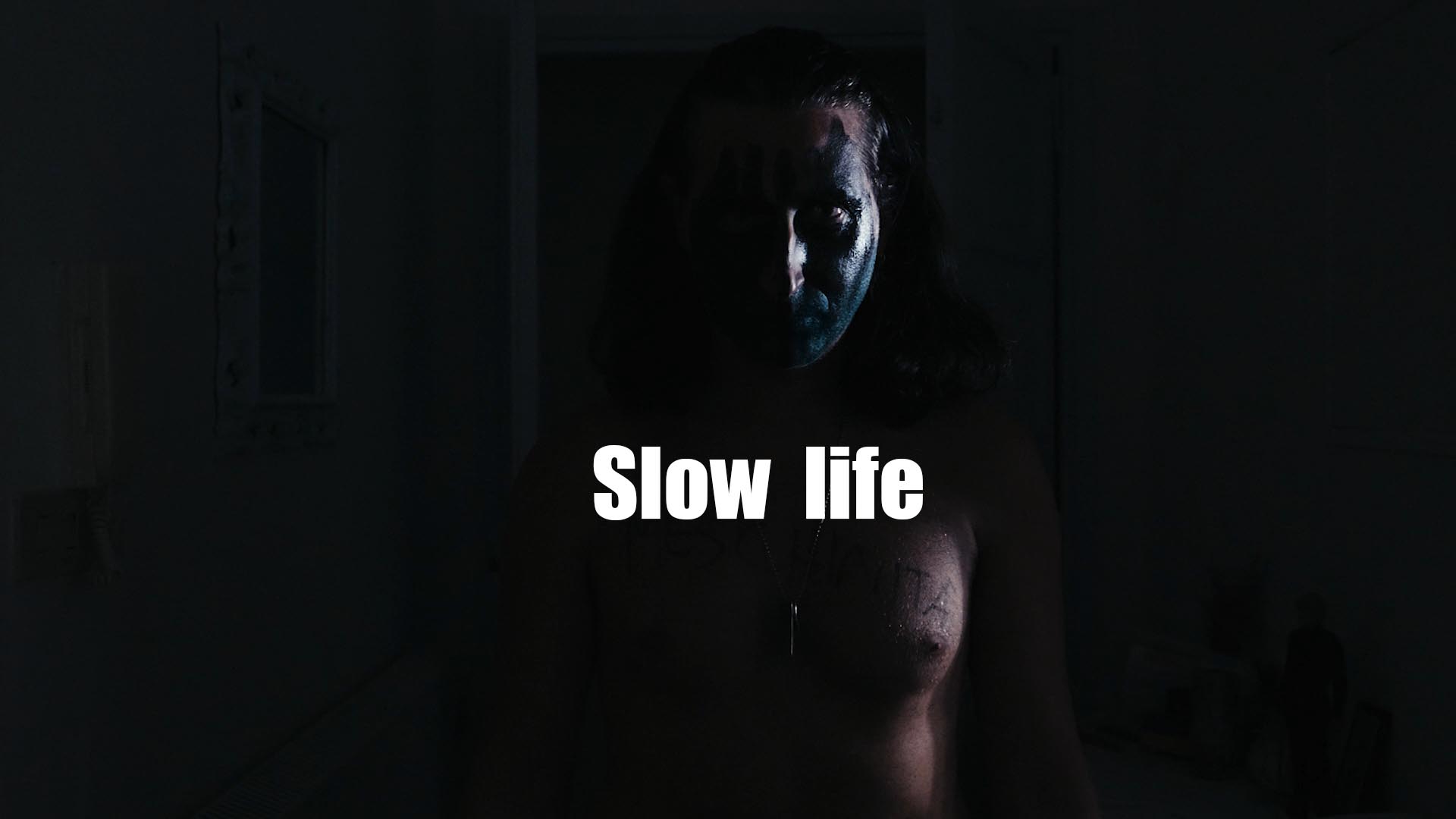
Drama, comedy, thriller, by Fabio Del Greco, Italy, 2021.
Lino Stella takes a period of vacation from his alienating job to devote himself to relaxation and his passion: drawing comics. But he did not foresee certain disturbing elements: the intrusive administrator of the building where he lives, the postman who delivers crazy fines and tax bills, an overbearing security guard, a very enterprising real estate agent, the old lady downstairs who raises the feline colony of the condominium. These characters will make his vacation hell.
Food for thought
The larger a social group is, the more rules and bureaucracy are needed, which often do not respect the individual. You have to learn to live with annoying people, but sometimes the social pressure and arrogance can become intolerable. The only laws that always come to our aid are the laws of Nature.
LANGUAGE: Italian
SUBTITLES: English, Spanish, French, German, Portuguese
Born Into the Century That Broke Everything
The year 1632 arrives quietly in Wrington, Somerset — a village so small it barely registers on the maps that matter, tucked into the Bristol countryside with its low stone walls and persistent grey light. Nothing announces that this is a year of rupture. And yet the child born there on August 29th enters a world that is already, invisibly, coming apart at the seams.
England in 1632 is still nominally at peace, still governed by a king who believes his authority descends directly from God and who has chosen to rule without Parliament for what will stretch into eleven years of personal rule. Charles I sits on his throne with the serene confidence of a man who has confused divine right with personal infallibility. But that confidence is a shell, and beneath it the pressures are building — religious, constitutional, economic — that will, within a decade, produce something no living European has ever witnessed: a nation executing its own monarch in broad daylight, in public, with the formal apparatus of a trial.
John Locke will be sixteen when they take Charles I to the scaffold at Whitehall on a cold January morning in 1649. He is not an abstraction at that moment. He is a teenager at Westminster School, less than a mile away, in a city that is either liberated or destroyed depending on who you ask and what they stand to lose. The question of legitimate authority — who holds it, how it can be forfeited, what replaces it when it collapses — is not, for him, a seminar topic. It is the air he breathes.
His father had already answered the question with his body. The elder John Locke served as a cavalry officer under the Parliamentarian commander Alexander Popham during the Civil War, riding against the king’s forces with the quiet conviction of a man who had decided that some authorities could be resisted. This is not a small biographical detail to file away and forget. A child who watches his father choose a side in a war about the limits of power does not grow up thinking that political authority is natural, self-evident, or beyond question. He grows up knowing that it is constructed, contested, and revocable — and that men die over the terms.
What the chaos of these years produced in Locke was not cynicism but something more precise and more durable: an epistemological caution that would come to define everything he wrote. When the certainties that have organized a civilization for a millennium — the divine right of kings, the unity of church and state, the inherited hierarchy of a fixed social order — collapse within a single lifetime, the thoughtful response is not to find new certainties with equal speed. It is to ask harder questions about what can be known at all, and how, and with what degree of confidence. The Essay Concerning Human Understanding, which Locke would not publish until 1689, is in some deep sense the philosophical reckoning with a world that had already proved its own foundations fraudulent.
The philosopher and historian of ideas Isaiah Berlin once drew a distinction between the desire for certainty as a psychological need and the actual availability of certainty as an epistemic condition. Locke’s life made that distinction visceral before it was ever theoretical. He did not choose humility about human knowledge as a rhetorical posture or a fashionable modesty. He had seen what happened when men acted on unshakeable certainty about their right to rule or their right to rebel. The bodies were real. The wreckage was real.
Wrington, 1632. A child arrives into a century that has not yet shown its full violence, but is already loading the gun.

Oxford and the Education He Rejected
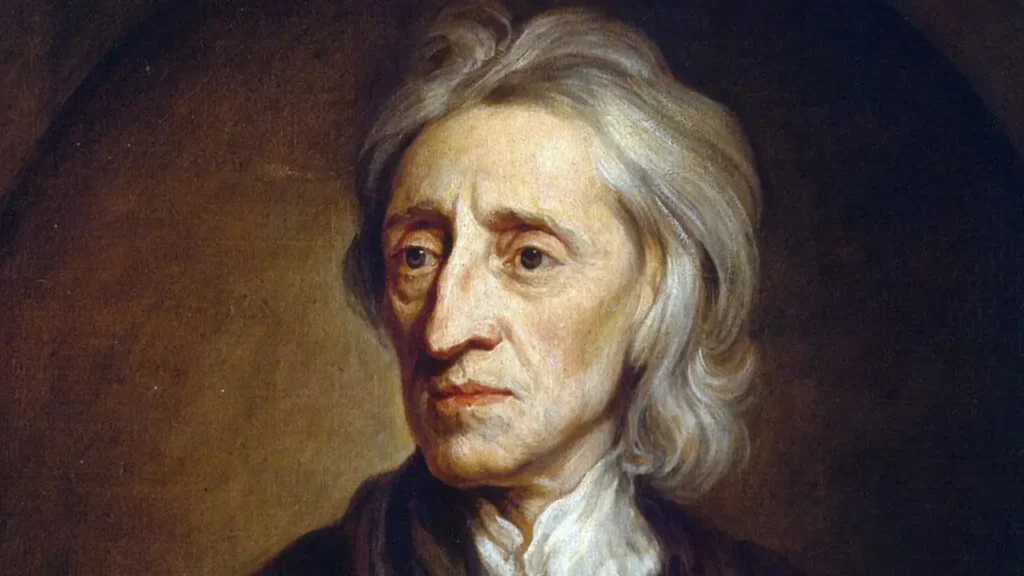
The lecture hall smells of old arguments. You are twenty years old, you have walked from Somerset to Oxford, and the man at the front of the room is explaining, in Latin, why Aristotle’s four causes are sufficient to explain everything that exists. He has been explaining this, in various forms, for thirty years. The students copy it down. Some of them believe it. You copy it down too, but something in you has already decided that this is not knowledge — it is the performance of knowledge, which is a different and more dangerous thing.
Locke arrived at Christ Church in 1652 and spent years in a state of productive contempt. The word contempt is important here; it should not be softened into skepticism or intellectual distance. He wrote in letters and retrospective accounts that he found the scholastic curriculum largely useless, that the disputations trained men to win arguments rather than understand things, and that the Aristotelian categories handed down through medieval commentary had calcified into a system that explained everything and therefore investigated nothing. This is not the complaint of an arrogant young man. It is the recognition, which takes a particular kind of attention to reach, that inherited language can function as a wall disguised as a window.
What Locke did with that recognition was not immediately philosophical. He turned toward bodies. Medicine pulled him not as a retreat from ideas but as a discipline that punished error in ways that syllogisms never did. A patient either recovered or did not. The categories did not negotiate with fever. Through his friendship with Robert Boyle, whose Skeptical Chymist appeared in 1661 and systematically dismantled the classical theory of elements through actual experiment, Locke encountered a way of thinking that began with observation and moved cautiously toward principle — never the reverse. And through Thomas Sydenham, the physician he worked alongside and deeply admired, he learned something that no university course had offered him: that the body was not a philosophical argument, and that treating it like one killed people.
Sydenham’s method was almost aggressive in its simplicity. Observe the patient. Record what you see. Resist the temptation to fit the symptoms into a pre-existing theory before the theory has earned that privilege. Locke absorbed this not as a medical technique but as an epistemological stance, though he would not have used that word yet. What Sydenham was practicing was a disciplined suspension of the inherited framework — the same suspension that Locke would eventually theorize, two decades later, as the clearing of the mind from its native forest of received ideas.
The Essay Concerning Human Understanding, published in 1689 after nearly twenty years of drafts and revisions, is often taught as a work of abstract philosophy, a counterpoint to Descartes, an answer to the question of how the mind acquires knowledge. But that is reading it from the wrong end. The Essay begins, structurally and temperamentally, with the refusal of innate ideas — and that refusal is a medical refusal before it is a philosophical one. The physician who insists on looking at the patient rather than consulting the ancient authority is making the same gesture as the epistemologist who insists that the mind begins as a blank slate, that nothing is given in advance, that every concept must earn its place through contact with experience. The tabula rasa is not a metaphor invented in a library. It is the posture of someone who has watched bodies fail when the wrong theory was applied with confidence.
There is something almost forensic in Locke’s early intellectual formation — the habit of tracking causation backward from effect to origin, of refusing to let a plausible story substitute for an actual mechanism. Oxford gave him the problem. Boyle and Sydenham gave him the method. What he did with both of them took another thirty years to fully articulate.
The Man Behind the Patron
There is a letter Locke wrote in 1666 that says almost nothing about what it meant. He had gone to Oxford to supervise the dispensing of some mineral water for a patient who never arrived. The patient was Lord Ashley, soon to become the First Earl of Shaftesbury, and instead of a medical consultation the two men talked through the night. Within a year Locke had moved into Exeter House in London as Ashley’s personal physician, secretary, intellectual companion, and, in every way that mattered, the hidden architecture of a powerful man’s public ideas.
The relationship was stranger than patronage and more intimate than friendship. Locke supervised an operation on Ashley’s liver in 1668 — a drainage of an infected cyst that Ashley credited, with characteristic drama, as the act that saved his life. The silver tube inserted that day seems almost allegorical in retrospect: Locke was always threading something careful and precise into the body of another man’s ambition. He drafted documents, shaped arguments, ghostwrote positions, and sat at the edge of rooms where the future of English governance was being argued in voices that rose above civility. When Shaftesbury became Lord Chancellor in 1672, Locke moved with him into the machinery of state. He had opinions about trade, about colonial administration — he contributed to the Fundamental Constitutions of Carolina in 1669, a document whose contradictions about liberty and the simultaneous codification of slavery have been examined with increasing discomfort by scholars like David Armitage and James Farr — and about the foundations of legitimate authority. Those opinions did not emerge in tranquility.
The Two Treatises of Government carry a publication date of 1689, tucked conveniently into the aftermath of the Glorious Revolution, as though they were a philosophical endorsement of what had just occurred. Locke encouraged this reading. He was careful about it. But Peter Laslett’s meticulous archival work in the 1950s, culminating in his 1960 critical edition, established with substantial force that the texts were composed a decade earlier, during the Exclusion Crisis of 1679 to 1681, when Shaftesbury led the Whig effort to bar the Catholic James, Duke of York, from the succession. This was not a seminar. Parliament was prorogued and dissolved by a king who understood that its sitting threatened his brother’s future. Shaftesbury was imprisoned in the Tower in 1681. The argument that no government derives legitimate authority except from the consent of the governed was not a serene deduction from natural law. It was written while men were calculating whether resistance could be justified, whether a king who violated the social compact had forfeited his claim to obedience, and whether those calculations, if discovered, would cost someone their head.
Locke himself fled to the Netherlands in 1683 after the exposure of the Rye House Plot, a conspiracy in which his proximity to the radical Whig circles around Shaftesbury made his position in England dangerous enough to abandon. He spent five years in exile in Amsterdam and Utrecht, moving houses, corresponding under pseudonyms, watching from a distance as James II took the throne his father had fought to deny him. Shaftesbury had already died in Amsterdam in 1683, his health broken by the political reversals, the exile, the weight of having staked everything on a constitutional argument that the moment had not yet been ready to receive.
What the Two Treatises contain, then, is not philosophy that preceded politics. It is philosophy forged inside politics, under its pressure, shaped by its desperation. The second treatise’s argument that legislative power cannot be arbitrary, that the executive who acts against the people’s trust dissolves his own authority, that revolution is not sedition but the reassertion of a violated contract — these propositions had names attached to them in Locke’s mind, living names, names of men who were winning or losing in real time.
Exile and the Clarity It Produces
There is a particular quality of thought that only becomes possible when you have lost the ground beneath your feet. Not metaphorically — literally. When the city you are walking through is not yours, when the language spoken in the street belongs to strangers, when your name on a document is not your name. Locke arrived in the Dutch Republic in 1683 carrying this condition with him like a second coat, and what he produced in those years bears its weight on every page.
He had fled England following the collapse of the Shaftesbury circle and the exposure of the Rye House Plot, a conspiracy to assassinate Charles II that had brushed close enough to Locke’s associates to make his continued presence in England something between dangerous and suicidal. He was forty-one years old. He would not return for six years. During that time the English government formally requested his extradition, listing him among those accused of treason. He moved between cities — Amsterdam, Utrecht, Rotterdam — writing under the pseudonym Jean Le Clerc in some correspondence, and in others simply disappearing into silence. He was surveilled. His letters were opened. He knew this.
What people tend to forget, or perhaps never bother to learn, is that the Essay Concerning Human Understanding — that foundational document of empiricist epistemology, that patient demolition of innate ideas, that argument that the mind begins as a blank slate — was substantially completed during these years of displacement. The first edition appeared in 1689, immediately after his return, but the thinking had hardened in exile. It is almost impossible to read the Essay’s insistence that no proposition is self-evident, that no authority can simply install a truth in the mind by declaration, without hearing the biographical undertone. A man whose own government has labeled him a traitor has particular reasons to distrust the category of the innate.
The Letter Concerning Toleration, written in Latin in 1685 and published in 1689, is the text that most directly carries the scar tissue of this period. The standard reading presents it as a liberal argument for religious coexistence, and it is that, but the framing strips the argument of its teeth. Locke was not writing from a position of comfortable pluralism, sketching out an enlightened social policy from behind a desk in Oxford. He was writing as a man without a state, whose beliefs — or rather, whose associations — had made him legally invisible in his own country. When he argues that the magistrate has no jurisdiction over the soul, he is not making a theological point about divine authority. He is making the point of someone who has watched the theological and the political collapse into each other and produce persecution as their natural offspring.
Isaiah Berlin’s distinction between negative and positive liberty is useful here, but only briefly. Locke’s toleration is not primarily about the freedom to be left alone. It is about the structural recognition that coerced belief is incoherent — that you cannot compel conviction through force, only compliance, and that a state which mistakes compliance for faith has already lost the argument it thinks it has won. This is a conclusion that tastes different when you have spent years watching your name circulate on lists, when you have learned to write in code, when friendship itself becomes a security risk.
There is a man in one of the period’s more instructive human scenes — a civil servant, meticulous, respected, who discovers that his colleagues have been reporting his private conversations for months. He continues to arrive at work. He continues to speak. But something in the quality of his sentences changes. They become more careful, more precisely delimited, more resistant to interpretation. Locke’s prose from this period has exactly that texture. Not paranoid. Precise. The precision of someone who has learned what it costs to be misread.
A vision curated by a filmmaker, not an algorithm
In this video I explain our vision
The Blank Slate and What It Costs

Pick up a newborn and look at her face. There is nothing written there — no prejudice, no creed, no predetermined station. This is not a metaphor. For John Locke, writing in the Essay Concerning Human Understanding, it was a precise philosophical claim: the mind arrives in the world as unmarked wax, and everything it becomes is pressed into it by experience. He called it, in the Latin phrase that schoolrooms would carry forward for three centuries, the tabula rasa. The blank slate. No innate ideas, no God-given hierarchy of knowledge, no mental furniture installed before birth. The senses open, the world enters, and the human being is made.
The immediate implication was radical and genuinely liberating in the intellectual climate of 1689. If the mind has no innate content, then no one is born superior or inferior in their capacity to reason. Aristocratic bloodlines carry no cognitive privilege. The peasant’s child and the nobleman’s child arrive at the same cognitive zero. What separates them afterward is environment, instruction, opportunity — all of which are, at least theoretically, subject to reform. This is where Lockean empiricism fed directly into Enlightenment optimism: if ignorance is not natural but acquired, then education becomes the supreme moral technology. The philosopher’s contemporary Gottfried Wilhelm Leibniz pushed back against the blank slate in his Nouveaux Essais, insisting that the mind has innate dispositions, but Locke’s version won the cultural war precisely because it was more useful to a world that wanted to believe in progress.
Useful, and also dangerous in a way that took longer to see. A blank slate is not only educable. It is also perfectly colonizable. If the mind is pure receptivity, then whoever controls the inputs controls the person. The logic folds back on itself with an almost mechanical neatness: the same philosophy that abolishes natural hierarchy creates the theoretical foundation for manufactured hierarchy. Manage the environment, shape the experience, and you shape the human being to any specification required. John Watson, the behavioral psychologist, would make this explicit in 1924 when he claimed he could take any infant and train them into any kind of specialist — doctor, lawyer, beggar, thief — regardless of talent or ancestry. He was only extending Locke’s premise to its coldest institutional conclusion.
But the shadow cast by Lockean empiricism does not require Watson to become visible. It is already present in Locke’s own biography, in a place most readers of the Essay do not follow him. Locke held shares in the Royal Africa Company, the English trading enterprise that transported enslaved Africans across the Atlantic in numbers that ran into the hundreds of thousands. He was not a passive inheritor of someone else’s portfolio. He was Secretary to the Lords Proprietors of Carolina from 1668, and in that capacity he co-drafted the Fundamental Constitutions of Carolina in 1669, a document that stated in plain language that every free man of Carolina shall have absolute power and authority over his negro slaves. Not euphemism. Not evasion. A legal guarantee, written by the man who would within two decades publish the most influential philosophical argument for natural human liberty in the English language.
This is not a paradox that resolves cleanly. Locke’s defenders have argued that the provision referred to an existing practice he was documenting rather than advocating, that his theory of natural rights was meant to apply universally even if his personal conduct did not follow. These arguments exist, and they are not entirely without merit, and they do not close the wound. The philosopher who established that all human beings begin equal — that no one carries the mark of servitude in the structure of their mind — wrote servitude into constitutional law with the same hand. The blank slate, it turned out, was blank only for those whose blankness someone found it profitable to fill.
Property, Labor, and the Ground Beneath Your Feet
The ground beneath a settler’s feet in the late seventeenth century was not merely earth. It was argument. Locke had made it so.
In the fifth chapter of the Second Treatise, published in 1689, the reasoning unfolds with a deceptive simplicity that has misled generations of readers into thinking it purely innocent. A person who takes an apple from a tree, who clears a field, who drives a furrow through soil — that person has mixed something of themselves into the world, and in doing so has made that portion of the world theirs. Labor is the original title to property. Not royal decree, not inheritance, not conquest. This was the radical claim, the one aimed at divine-right monarchs and the feudal logic that made land ownership a function of bloodline. It was genuinely subversive in its moment.
But the argument contained a threshold condition that would do enormous damage across the following two centuries, and Locke had placed it there deliberately. Property rights through labor were legitimate only when what was taken did not spoil and only when “enough and as good” remained for others — the famous Lockean proviso. Beyond that, however, there was a deeper requirement, one that operated less visibly: the land had to be improved. Those who lived on land without transforming it, without enclosing it, without making it yield surplus through what Locke recognized as productive agricultural work, had not, in the framework’s own logic, genuinely appropriated it. They were passing over the earth’s surface, not grounding themselves in it.
A man returns to a village after a long journey and finds his family’s fields overgrown, the boundaries unmarked, the soil untouched for two seasons. Under Locke’s framework, his claim weakens the longer he leaves the land to its natural state. Now transpose that private scenario to a continental scale. The Indigenous peoples of North America were, in Locke’s own explicit estimation, in a state of nature — not as a metaphor but as a political-philosophical designation that carried legal consequences. He wrote approvingly of the “wild Indian” in the Second Treatise as someone who had not yet enclosed the productive potential of the land. This was not peripheral to his argument. It was the empirical example he chose to illustrate what the state of nature actually looked like.
C.B. Macpherson, in his 1962 study The Political Theory of Possessive Individualism, identified the structural logic that made this displacement possible with precise and devastating clarity. For Macpherson, Locke’s framework did not simply describe property as something people happen to have. It reconstructed the self as a proprietor — a being whose freedom and moral standing were inseparable from ownership. The person who had not accumulated property had not fully realized their humanity within this system’s own terms. Possessive individualism meant that what you were was measured by what you held, and the failure to hold land according to European agricultural conventions registered not merely as economic underdevelopment but as a kind of anthropological incompleteness.
This is where the argument stops being a historical curiosity and becomes something structurally embedded in the modern concept of legitimate ownership itself. The dispossession of Indigenous peoples across the Americas, Australia, and elsewhere was not a misapplication of Locke’s theory. It followed from its internal grammar. Colonizers were not betraying the Enlightenment’s principles when they seized uncultivated land. They were, within the framework’s own terms, completing them. The philosophical architecture that was built to dismantle the arbitrary power of kings provided, almost simultaneously, the intellectual scaffolding for one of the largest transfers of land in human history. The argument that was supposed to free people from one kind of illegitimate claim became the instrument for making a different kind of illegitimate claim appear not only legal but rational, even moral, grounded in the very labor of thought that had produced it.
The Glorious Revolution and the World Locke Made
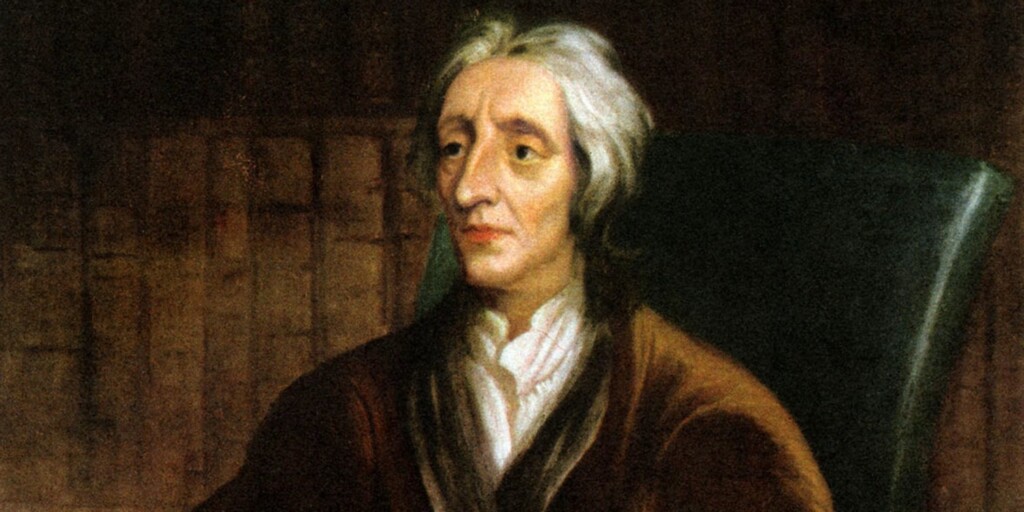
The ship crossing the Channel in February 1689 carried, among its passengers, the woman who would become Queen Mary II of England. It also carried John Locke, fifty-six years old, returning from five years of Dutch exile with a manuscript he had been refining in secret. No one watching the grey water that morning could have known that what was being transported was not merely a philosopher but a grammar — a set of sentences about persons, property, and legitimate power that would eventually structure constitutions on three continents.
The speed of what followed was almost indecent. The Two Treatises of Government appeared in print that same year, nominally anonymous, its argument shaped to justify what had just happened: the displacement of James II, the invitation to William and Mary, the settlement that would become the Bill of Rights. The Letter Concerning Toleration arrived in Latin, then in English translation, within months. Some Thoughts Concerning Education followed in 1693. Within a single decade, the architecture was complete — a coherent, interlocking system for producing the liberal subject: born free, endowed with reason, entitled to property through labor, owed toleration by the state, and shaped from childhood into exactly the kind of self-governing individual the system required.
Jefferson did not simply borrow from Locke. He breathed him. The phrase “life, liberty, and the pursuit of happiness” is the famous deviation — Locke’s original triad had “life, liberty, and estate” — but the substitution reveals the mechanism rather than escaping it. Jefferson softened the property claim just enough to make it sound like philosophy rather than law, while the constitutional and legal frameworks that surrounded the Declaration immediately restored what the rhetoric had obscured. The Fifth Amendment’s protection against the taking of property without due process, the entire architecture of Anglo-American contract law, the doctrine of possessive individualism that C. B. Macpherson dissected so precisely in his 1962 study: all of it runs on Lockean fuel, whether or not the people operating the machinery know the name of the man who built the engine.
And here is where it becomes uncomfortable rather than simply historical. When someone today registers a patent, defends a copyright claim, argues that their intellectual effort entitles them to exclusive reward, or insists that the house they bought with wages they earned cannot be taken without their consent, they are not expressing a natural intuition. They are reciting, in simplified form, chapter five of the Second Treatise. The labor theory of property feels obvious because it has been repeated for three hundred and fifty years inside legal systems, school curricula, and common conversation until it no longer sounds like a theory at all. It sounds like the shape of things.
What Locke’s architecture could not accommodate — or rather, what it accommodated only by exclusion — was the prior existence of anyone who did not fit the category of the reasoning, self-owning individual. The indigenous peoples of the Americas, in Locke’s own text, did not count as having mixed their labor with the land because they did not cultivate it in the recognizable European sense. Women were not absent from Locke’s thinking; they were managed by it, placed inside a domestic sphere that his political theory declared private and therefore outside the reach of the rights he was inventing. The enslaved were simply not addressed, which is its own form of address.
So when you reach for something — a phone, a paycheck, a plot of land, a creative work you consider yours — and feel in that reaching a certainty that seems to precede argument, you are feeling the sediment of a reasoning that is older than you, more interested in some people than others, and still very much in force, shaping the edges of what you can claim and who, somewhere else, had to give it up so that the claim could be made at all.
🔍 Power, Liberty, and the Social Contract
John Locke’s philosophy of natural rights, consent of the governed, and the limits of political authority echoes across centuries of political and social thought. These related articles explore thinkers and works that share Locke’s central preoccupations: the nature of power, the foundations of society, and the freedom of the individual.
Thomas Hobbes: Life and Political Thought
Thomas Hobbes, Locke’s great predecessor and intellectual adversary, built his political philosophy on a vision of human nature as fundamentally competitive and conflict-prone. Where Locke trusted individuals with natural rights, Hobbes demanded a sovereign leviathan to keep the peace. Reading the two together reveals the founding tensions of modern liberal political thought.
GO TO THE SELECTION: Thomas Hobbes: Life and Political Thought
Niccolò Machiavelli: Life and Political Thought
Niccolò Machiavelli reframed the question of political authority long before Locke, stripping power of its moral pretensions and examining it as a practical art. His cold-eyed analysis of rulers and states set the stage for the Enlightenment debates in which Locke would play a defining role. Understanding Machiavelli sharpens our appreciation of why Locke’s insistence on consent and legitimacy was so radical.
GO TO THE SELECTION: Niccolò Machiavelli: Life and Political Thought
Wollstonecraft’s A Vindication of the Rights of Woman
Mary Wollstonecraft extended Lockean principles of natural rights and rational autonomy to women, challenging the gendered limits of Enlightenment liberalism from within. Her Vindication argues that if reason is the basis of rights, women cannot be excluded without contradiction. Her work stands as both a tribute to and a critique of the tradition Locke helped to found.
GO TO THE SELECTION: Wollstonecraft’s A Vindication of the Rights of Woman
Banal Evil and Radical Evil: Kant and Arendt
Hannah Arendt‘s distinction between banal and radical evil confronts a dark question that haunts all liberal political philosophy: what happens when legitimate institutions collapse into systems of violence? Kant and Arendt together probe the moral responsibilities of individuals within political structures, a question Locke’s theory of resistance and revolution anticipated in its own way. This article provides essential context for understanding the fragility of the constitutional order Locke envisioned.
GO TO THE SELECTION: Banal Evil and Radical Evil: Kant and Arendt
Discover Independent Cinema on Indiecinema
The ideas explored by Locke and these kindred thinkers — liberty, power, justice, and the individual — have always found a powerful home in independent cinema. On Indiecinema streaming you can discover films that dare to question authority, imagine different societies, and put human freedom at the center of the frame. Explore our curated catalog and let the most visionary independent filmmakers take these philosophical debates from the page to the screen.
👉 EXPLORE THE CATALOG: Watch Indie Films in Streaming
A vision curated by a filmmaker, not an algorithm
In this video I explain our vision

