
The Man at the Edge of Everything He Built
You have everything. The house is large and warm, the children move through its corridors like proof of something, the shelves carry your name pressed into leather spines, and the fields outside belong to you in a way that few people in any century will understand — not rented, not borrowed, not mortgaged against some future that might not arrive. You own the ground beneath your feet. You have written two of the longest and most celebrated novels in the history of European literature. You are fifty years old, which in 1879 is not the middle of anything — it is late, it is the part where a man is supposed to consolidate, to rest inside what he has made. And instead you are hiding the ropes.

Not metaphorically. Leo Tolstoy removed ropes from accessible places in Yasnaya Polyana, his ancestral estate in the Tula region, because he did not trust himself to pass them without thinking about how to use them. He stopped carrying firearms on his hunting walks for the same reason. He wrote about this in A Confession, completed in 1882, with a directness that still reads like a hand grabbing the reader by the collar: he had everything that human ambition names as its destination, and it had become, without transition or warning, a source of unbearable nausea. Not sadness. Not melancholy, which is a condition that still loves itself. Pure logical horror at the question he could not stop asking: if all of this ends in death, what is the point of any of it?
What makes this unbearable to read — and to recognize — is that Tolstoy did not arrive at this crisis through failure or loss. There was no collapse to point to, no wound to dress. The mechanism that broke him was success functioning exactly as designed. He had followed the contract society offers its most gifted members: work with extraordinary intensity, produce work of lasting value, accumulate recognition, build a family, hold land, persist. He did all of it. And the contract, once fulfilled to the letter, revealed itself to have no second page. The signature led nowhere.
William James, writing in The Varieties of Religious Experience in 1902, would later use Tolstoy as one of his central cases for what he called the “sick soul” — the temperament incapable of filtering out the terror that underlies ordinary experience. James distinguished this from simple depression: the sick soul is not broken, it is lucid. It sees clearly what the healthy-minded person is constitutionally unable to face. The price of that clarity, James observed, is that the normal scaffolding of motivation collapses. You cannot work toward goals you have already proven are insufficient. You cannot love what you can already see ending.
Tolstoy was not the first person to stand at this particular edge. What makes his position historically singular is the precision with which he could document it, and the scale of what he had to abandon in order to move through it. He was not a young man in a garret raging against a world that had rejected him. He was Russia’s most famous living writer, the author of War and Peace and Anna Karenina, a man whose estate employed hundreds of serfs even after emancipation had technically dissolved that arrangement, a man whose wife Sophia had hand-copied the manuscript of War and Peace seven times by hand. The machinery of his life was enormous. And he was standing at its center, watching it turn, feeling nothing that resembled meaning.
The crisis did not resolve through therapy or philosophy or the passage of time. It resolved — or rather, it broke open — through something that Tolstoy himself found humiliating to admit: he turned toward the peasants working his land and noticed that they were not asking his question.
I Am Nothing
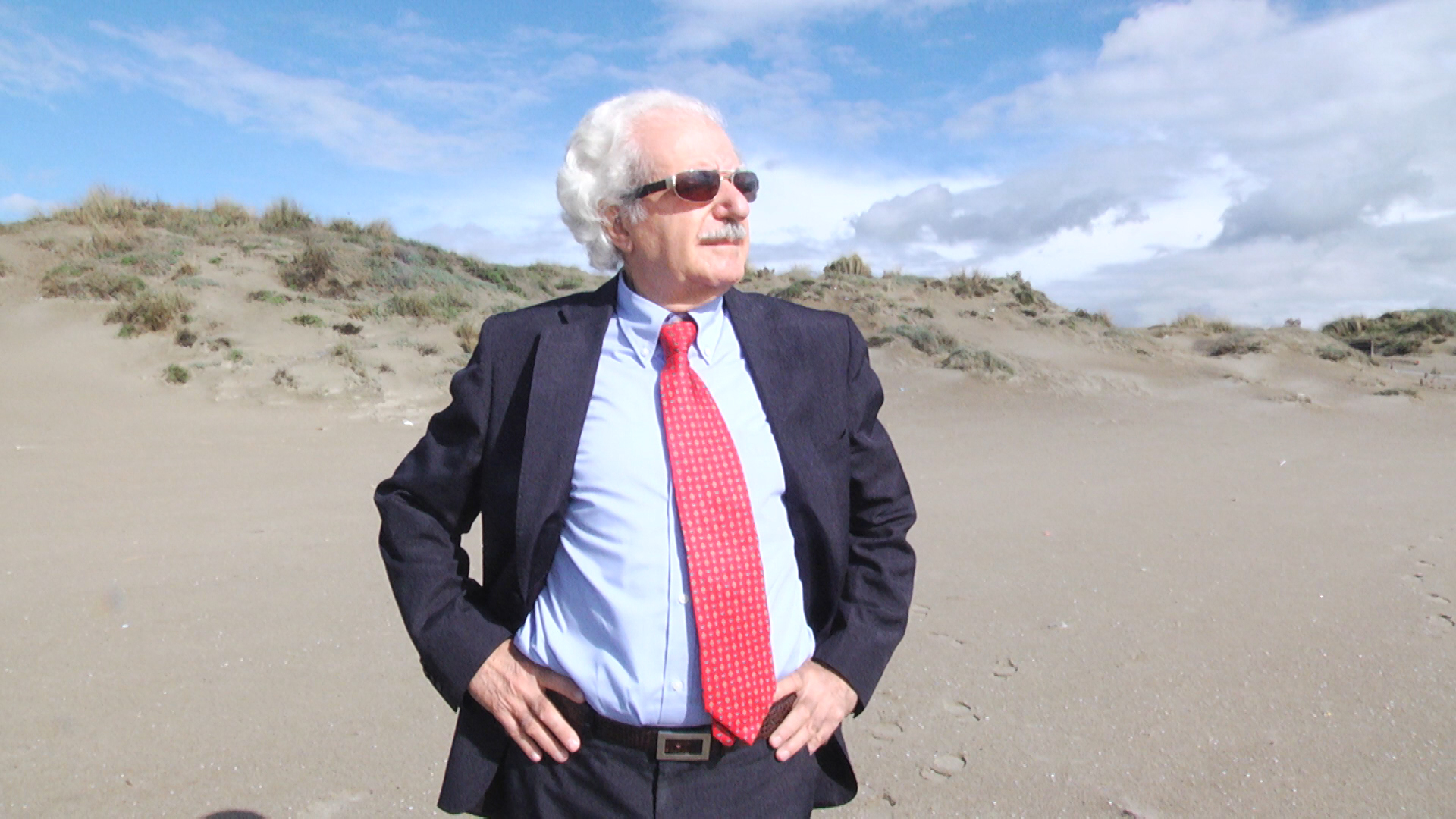
Drama, thriller, by Fabio Del Greco, Italy, 2015.
The story revolves around Vasco, a Roman builder who, at the age of 74, enjoys a life of absolute comfort. His human parable takes a dramatic turn when a mysterious encounter leads him to an ambush. Having survived, but marked by a long coma, Vasco wakes up with a new sensitivity, developing an intimate and poetic bond with nature. This new relationship with the world around him leads him to deeply explore himself, in an internal and external journey. through Italy, the United States and India, in search of a higher meaning and a cure. In parallel, the threat of a planetary cataclysm adds an epic dimension to the story.
I Am Nothing explores universal themes such as time, memory, oblivion and the connection with nature. Fabio Del Greco creates an existential drama full of food for thought. The director skillfully combines different visual materials, mixing archive images with nature photographs and dreamlike visions. This visual experimentation translates into an editing that captures the viewer's attention, guiding him through a cycle of creation and destruction. The sequences that alternate the buildings, Vasco's pride, with Indian landfills and natural landscapes create a hypnotic rhythm, underlining the beauty and fragility of life. Vasco's existential journey is a hymn to transformation and rebirth. The evolution of the protagonist, from unbridled luxury to the rediscovery of purity, represents a powerful metaphor on the meaning of life and the need to reconnect with authentic values. Io sono nulla stands out for its ability to combine introspection and visual experimentation, offering a suggestive and engaging narration. It is a film that invites us to reflect on the human condition, on our relationship with power and nature, and on the possibility of finding ourselves through change. A work that leaves its mark and lends itself to multiple readings.
LANGUAGE: Italian
SUBTITLES: English, Spanish, French, German, Portuguese
What the Crisis Was Actually About
You are fifty years old, you have written two of the greatest novels in any language, your estate is large, your family is intact, your name is known across Europe, and you are standing at the edge of a well in your garden wondering whether tonight might be the night. Not because something has gone wrong. Because everything has gone right, and it has told you nothing.
This is the peculiar violence at the center of what Tolstoy described in A Confession, the document he completed around 1882 and which his own church moved to suppress — not because it was heretical in the conventional sense, but because it was too honest about the direction honest thinking leads. The crisis he was documenting was not a collapse of the will or a failure of the nervous system. It was the arrival, at full intellectual force, of a single question he could not answer and could not stop asking: what is the point? Not rhetorically. Literally. Given that I will die, given that everyone I love will die, given that the sun will eventually extinguish and the earth will be cold and whatever I have built or written or loved will leave no trace in a universe indifferent to its own contents — why should I do anything at all rather than nothing?
What makes A Confession extraordinary as a philosophical document is not that it asks this question. Schopenhauer had asked it before him, and Tolstoy had read Schopenhauer with the focused attention of a man who recognized his own interior on the page. What makes it extraordinary is its refusal to escape through the usual exits. Tolstoy catalogs the four responses available to a person who genuinely confronts meaninglessness without flinching. The first is ignorance — simply not seeing the question, which is the condition of most people and which he could no longer access. The second is pleasure — choosing to go on eating and drinking and acquiring while the question waits in the corner, which he found intellectually dishonest to the point of nausea. The third is what he calls the way of strength, the Epicurean resolution to face the void without blinking and destroy yourself when the contradiction becomes too heavy — a position he found logically consistent but emotionally impossible to inhabit. The fourth is weakness: knowing the answer is death and continuing to live anyway, which is where he recognized himself, and which he found intolerable as a permanent address.
The structural problem he was identifying has a precise philosophical name that would not be coined for decades after him, but the phenomenon itself is as old as systematic thought: the terminus of pure rationalism, followed without deflection, is not enlightenment but paralysis. This is what the Enlightenment project concealed behind its confidence — the assumption that reason, applied consistently, would yield not only accurate descriptions of the world but also a reason to inhabit it. What Tolstoy discovered at fifty, through lived experience rather than academic exercise, is that the descriptive power of rationalism and its motivational power are entirely separate engines, and that the second does not follow from the first. You can know everything science has to offer about the mechanics of existence and still have no answer to whether existence is worth the trouble. The nineteenth century’s faith in progress, in positivism, in the accumulating authority of empirical knowledge — Tolstoy had believed all of it, had built his intellectual identity on it, and at fifty he watched it produce precisely the abyss it was supposed to fill.
What he could not yet see, standing at the well, was that the question itself was a kind of confession — that asking why live at all presupposes a standard against which life is being measured, and that standard does not come from science.

The Four Escapes and Why Three Fail
You are standing in a room you have lived in for years, and you notice, for the first time, that there are no windows. Nothing has changed. The walls are the same. The furniture is the same. But the knowledge that there is no exit transforms every familiar object into a kind of taunt.
This is precisely the phenomenological situation Tolstoy documented with clinical ferocity in A Confession, written between 1879 and 1882, after the crisis that had hollowed out the years following Anna Karenina. He was not describing despair in the romantic sense, the aesthetic suffering of a sensitive soul. He was performing a logical audit. He had wealth, fame, family, land, and health, and none of it answered the one question that had lodged itself in him like a splinter too deep to reach: what is the point of any of this, given that it ends? He surveyed the possible responses to this question and found four. He called them, in essence, the ways human beings manage to keep living in the presence of the absurd.
The first was ignorance, and he dismissed it with something close to contempt. It belongs to those who simply have not yet noticed the problem, who move through life in a state of what he considered borrowed time, their peace dependent entirely on the question never being raised. This is not a solution. It is a condition that ends the moment genuine reflection begins, and reflection, for a mind of Tolstoy’s formation, was not optional. Ignorance is not available to everyone equally, which means it is not really a position at all but a privilege that can be revoked without warning.
The second was pleasure, and here his critique cuts deeper because it implicates more people who consider themselves serious. The strategy of pleasure involves turning away from the question by intensifying immediate experience: drink, sex, social ambition, artistic production. Tolstoy had lived this with thoroughness. His diaries from the 1850s record a young man consuming sensation at a rate that alarmed even him. What he recognized in retrospect was not moral failure but structural impossibility. Pleasure does not answer the question about meaning; it postpones the question while consuming the energy that might otherwise be used to face it. It is a form of spending down a principal without ever addressing the debt. The trap tightens because the more sophisticated the pleasures, the more clearly the intelligent person sees through them, until the very capacity for enjoyment becomes evidence of the problem rather than relief from it.
The third escape was the one that most interested him precisely because he could not take it. Suicide presented itself to Tolstoy not as weakness but as the only logically consistent response to a life whose meaning could not be demonstrated. If existence is genuinely without foundation, then the person who chooses to end it is being more honest than the person who continues simply out of animal inertia. He acknowledged this with a directness that still disturbs readers: he hid ropes in his study so he would not hang himself, and he stopped carrying a rifle when he went hunting because he did not trust his own restraint. The logical case for suicide was, in his accounting, sound. What stopped him was not a counter-argument but a failure of nerve, which he named openly, without self-pity and without false comfort. He lacked the courage that his own reasoning seemed to demand.
What this left him with was the fourth option: endurance. Not acceptance, not peace, not resolution. Simply the continuation of existence without justification, carried forward by biological momentum alone, the way a stone rolls because it was pushed rather than because it has a destination. And this, he understood, was where almost everyone actually lived, whether they admitted it or not.
The Peasant Who Knew Without Knowing Why
He does not wake before dawn with a question. He wakes before dawn because the animals need feeding, because the frost has come earlier than expected, because the wood from yesterday’s splitting still needs stacking before the ground freezes solid. There is no drama in this. His hands know what to do before his mind assembles itself into something coherent, and by the time he is fully awake in any philosophical sense, he is already halfway through the morning’s first task. The existential vertigo that consumed a Russian count for the better part of a decade — the sensation of purposelessness so acute it made a loaded rifle feel like a reasonable object to contemplate — this man has never experienced. Not because he is incapable of suffering. Because the structure of his days does not leave the particular kind of empty space in which that specific torment can take root and grow.
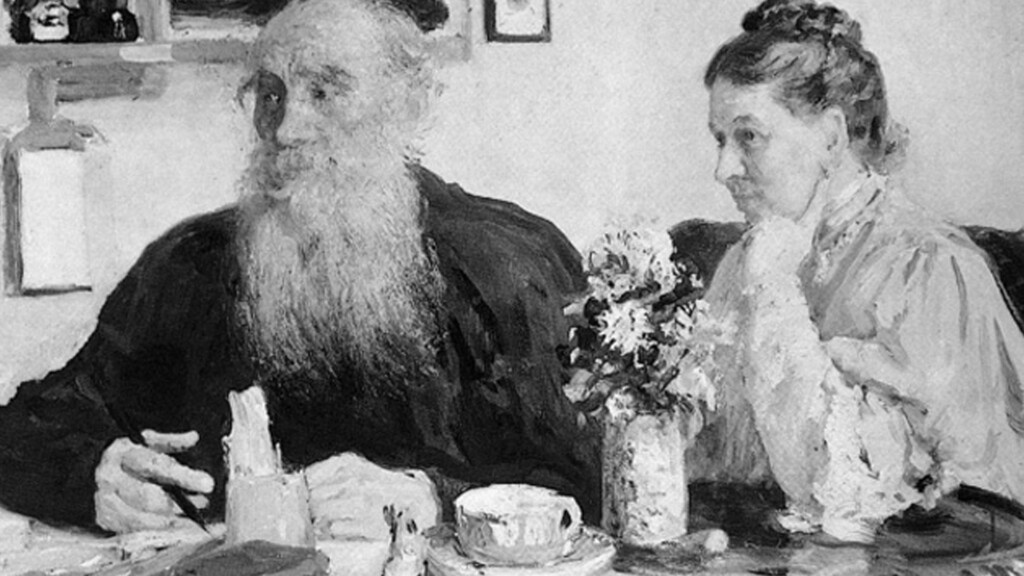
This is what Tolstoy himself, with a mixture of genuine admiration and something he could not quite recognize as self-indictment, observed in the peasants of Yasnaya Polyana. They lived and died without the convulsions he associated with consciousness. They bore grief without the theatrical scaffolding of meaning-making. They buried their children and returned to the field. He interpreted this as wisdom — a form of pre-theoretical knowledge that civilization had stolen from the educated classes. He was not entirely wrong. But the explanation he reached for was one that preserved his dignity, because the more unsettling explanation was sitting in plain sight: the peasant did not have a crisis of meaning because he could not afford one. The luxury of sustained existential doubt presupposes that someone else is tending the field while you pace the library.
Pierre Bourdieu spent decades anatomizing what he called the “scholastic point of view” — the capacity, detailed with particular acuity in Pascalian Meditations published in 1997, to treat the world as a set of problems to be contemplated rather than pressures to be immediately answered. This disposition is not a natural endowment of sensitive souls. It is a product of material conditions that free certain bodies from urgency. The philosopher who stares at the ceiling wondering about the good life is able to do so because the rent is paid, because hunger is not a present sensation, because the horizon is not a deadline but a metaphor. Tolstoy, one of the largest private landowners in nineteenth-century Russia, performed his spiritual crisis on an estate worked by people whose relationship to mortality required no philosophical mediation whatsoever.
What makes this more than a simple accusation is that Tolstoy knew it, partially and painfully. He tried to dissolve the contradiction by working alongside peasants, by cobbling his own boots, by writing in a style stripped of aristocratic ornamentation. None of it resolved the underlying asymmetry, because the asymmetry was not ethical — it was structural. A man who can choose to be a peasant is never a peasant. The act of choosing announces the very privilege it claims to renounce. His voluntary simplicity remained, at its root, a gesture available only to someone who had first accumulated everything it required renouncing.
And yet the peasant who knew without knowing why — who carried within his unreflective daily practice something that the count strained after through decades of anguished reading — was not simply fortunate. He was also constrained. His equanimity, if that is even the right word for something so unperformed, was inseparable from a horizon that did not extend far beyond the village, the season, the body’s needs. Tolstoy’s mistake was to mistake the absence of a certain torment for the presence of a certain truth. What he saw in those faces may have been not wisdom but the specific texture of a life that had no room for the question he was asking.
Faith as Epistemological Trespass
You are sitting in a room where everything functions. The bills are paid, the people around you speak in measured tones, the calendar fills with obligations that arrive and get completed, and somewhere in the middle of all this operational success you notice that you feel absolutely nothing. Not despair exactly — despair would be interesting. Something flatter. A groundlessness that has no drama because it produces no symptoms recognizable as illness.
William James, writing in 1902 in “The Varieties of Religious Experience,” had a name for this condition, and it was not depression, not nihilism, not existential crisis in the fashionable sense. He called it the religion of the sick soul, and he placed it in deliberate, almost combative contrast with what he identified as healthy-mindedness — the psychological disposition that takes optimism as its default orientation, that regards suffering as incidental rather than structural, that believes human experience, properly managed, trends naturally toward the good. The healthy-minded person, James argued, achieves coherence by exclusion: by refusing, constitutionally or deliberately, to look at the parts of existence that do not cooperate with the narrative of forward progress. The sick soul cannot do this. Not because it is weaker, but because it sees more, and what it sees refuses to stay out of the frame.
James was not speaking abstractly. He quoted at length from a document he identified only as coming from a French correspondent, a passage describing a visceral collapse of the sense of safety in the world, a sudden and irreversible awareness of the arbitrariness beneath ordinary life. Scholars have since established that the passage was James’s own — autobiographical testimony delivered in disguise. But he also turned, openly and by name, to Tolstoy, reading the account of the spiritual crisis not as a case of nervous breakdown or artistic exhaustion but as a philosophically rigorous encounter with a question that healthy-mindedness is structurally incapable of answering: what is the point of any of it, if the end is always the same, and the same end voids the middle? This is not a rhetorical question. It is a logical one, and it demands a logical answer, not a therapeutic one.
What makes James’s analysis dangerous to a secular readership — then, and perhaps more acutely now — is his conclusion that the movement toward faith in such cases is not regression or surrender. It is, in his precise formulation, the only available synthesis available to the twice-born self, the self that has passed through dissolution and cannot reconstitute itself on the earlier terms. The twice-born person does not recover their former innocence. They reach something else, something that can only be called belief because it extends into territory that evidence, in the empirical sense, does not reach. And James, who was a trained psychologist and a founding figure of American pragmatism, refused to pathologize this move. He argued instead that its fruits — the restoration of directionality, the capacity to act as though things matter — were as real as any other psychological fact, regardless of whether their metaphysical foundation could be verified.
This is precisely what secular modernity finds offensive. Not the belief itself, but the epistemological claim embedded in the act of believing: that there are questions which exceed the jurisdiction of measurable evidence, and that arriving at a structure of meaning through lived crisis rather than through rational accumulation is not a cognitive failure but a different, and possibly deeper, form of knowing. When someone moves through the kind of dissolution James documented and emerges holding something that looks like faith, the modern critical impulse is to explain it — as trauma response, as psychological compensation, as the nervous system’s demand for pattern.
A vision curated by a filmmaker, not an algorithm
In this video I explain our vision
The Heresy Against Progress

You are sitting across from someone you respect, someone educated and sharp, and you mention — carefully, with all the hedging a person learns to use — that something has shifted in you, that you no longer want what you wanted before, that the machinery of ambition has gone quiet. Watch their face. There is a flicker, almost too fast to catch, before they reassemble it into polite interest. That flicker is the diagnosis. It says: regression. It says: something broke in you and you are calling it awakening.
This is not a personal failure of your friend’s imagination. It is the structural output of a framework so thoroughly internalized that it no longer announces itself as a framework at all. Max Weber, delivering his lecture “Science as a Vocation” in Munich in 1917, named the condition with a precision that has not aged: Entzauberung, the disenchantment of the world. What he meant was not simply that modernity had lost its sense of wonder, though it had. He meant something colder — that the rationalizing process which had organized Western civilization since at least the Reformation had systematically expelled the category of the sacred from legitimate discourse about the real. Not banned it by decree, but made it illegible. Made it the kind of thing a serious person does not reach for when explaining the world or themselves.
The consequence is not atheism as a position. Plenty of people who experience radical inner transformation are not religious in any institutional sense. The consequence is the disappearance of a conceptual vocabulary capable of registering transformation as anything other than two things: pathology or naivety. If you change suddenly and deeply, you either had a breakdown or you were always susceptible to this kind of thing, which means you were never quite as rational as advertised. Either way, the transformation is quarantined. It cannot be evidence of something real about the structure of human experience, because the structure of human experience has already been defined as the forward movement of rational agents optimizing against constraints. Any deviation from that movement is, by definition, a malfunction.
What makes this trap nearly invisible is that it does not feel like a trap. It feels like sophistication. Tolstoy knew this with a bitterness specific to the converted intellectual: the people most likely to dismiss his transformation as a symptom were the people who had read everything he had read, who spoke every language he spoke, who could cite the same histories and demolish the same bad arguments. His 1882 account in “A Confession” is not the story of a man who found faith because he lacked the tools to resist it. It is the story of a man who found that the tools themselves had a blind spot — that the entire apparatus of secular self-understanding had no instrument calibrated for the kind of thing that was happening to him. He tried to use philosophy, used Schopenhauer and Kant, turned them over like keys in a lock that would not open. The lock was not in the philosophy. The lock was in the assumption that philosophy was the right instrument.
The sociologist Philip Rieff, writing in “The Triumph of the Therapeutic” in 1966, described what replaces the sacred in disenchanted culture: not reason in its pure form, but the therapeutic management of the self. Transformation, in this register, is always something to be processed, metabolized, returned to stability. The goal is function, not truth. A man who walks away from his career at the height of his fame, who gives away his property, who begins wearing peasant clothes and learning to make shoes — in the therapeutic framework, this is a case study in late-life crisis, possibly dissociative, possibly grandiose. That he might have seen something, that the seeing might have been accurate, does not enter the calculus because accuracy is not a category the therapeutic applies to spiritual states.
And yet the discomfort the secular framework produces when faced with genuine conversion is itself a kind of evidence — not of the framework’s correctness, but of what it has had to work very hard to forget.
What He Gave Up and Why That Part Is Never Taught
You are standing in a room full of everything you built, and you set it on fire yourself. Not because you lost your mind. Because you finally found it.
After 1881, Tolstoy stopped collecting royalties on his post-conversion works. He transferred the copyrights freely to anyone who wanted them, peasant presses included. This was not a symbolic gesture in the way that wealthy people make symbolic gestures — writing a check and keeping the mansion. He meant it as a material act, a severance from the economic logic that transforms thought into property and property into prestige. The publishing houses that had made him the most celebrated novelist in Europe suddenly found themselves holding contracts with a man who no longer believed in the contract. His wife Sophia, who had copied War and Peace by hand multiple times, who had managed his literary estate with ferocious intelligence for decades, understood immediately what this meant: it was not just money he was surrendering. It was the architecture of everything their life together had been built upon.
What Tolstoy was doing, without naming it or theorizing it, was dismantling his own accumulated symbolic capital — the consecration of a life spent accruing reputation, mastery, and institutional recognition within the literary field. There is a particular violence in this kind of self-erasure that cannot be explained by generosity alone. When a man who has spent fifty years learning exactly how to be valued by a culture suddenly begins returning all the tokens of that valuation, the culture experiences it as aggression. And in a way, it is. It destabilizes everyone around him precisely because he had earned the right to be taken seriously, and now he was using that earned seriousness to declare the entire game fraudulent.
Sophia’s position has been too easily dismissed as bourgeois defensiveness, as the reaction of a woman who wanted to preserve comfort. But she was watching something more disorienting than financial loss. She was watching her husband declare retroactively that the shared project of their intellectual life had been, in his own estimation, morally hollow. He called Anna Karenina and War and Peace works of vanity. He said he was ashamed of them. For a woman who had poured her own considerable intelligence into those books as collaborator, editor, and archivist, this was not a theological disagreement. It was an annihilation of a shared past. The rupture between them, which would culminate in his flight from Yasnaya Polyana in October 1910 and his death eleven days later at the Astapovo railway station, began not with a single argument but with this long slow revocation of everything he had once allowed both of them to take pride in.
The sociological reality of what he was doing is almost never taught because it is uncomfortable in a specific way. We are accustomed to narratives of conversion that preserve the convert’s prestige — the sinner who becomes a saint and is celebrated more than before, the radical who is eventually canonized by the institutions he attacked. Tolstoy’s conversion did not follow that arc. The Russian Orthodox Church excommunicated him in 1901. The tsarist government monitored him. His most devoted followers, the Tolstoyans, often misunderstood him in ways that frustrated him deeply. He was not rewarded for his renunciation. He was penalized by every structure that had previously sustained him, including his own family.
What makes this almost impossible to teach is that it offers no usable lesson. It does not resolve into a model. A man who gives away his copyrights, alienates his wife, repudiates his masterworks, and dies alone in a railway stationmaster’s house is not offering a template. He is asking a question so raw that most institutions — educational, literary, religious — would rather frame him as eccentric than let the question land.
The Unbearable Demand of Sincerity
You are sitting across from someone you have known for twenty years, and somewhere in the middle of an ordinary dinner, you realize you can no longer pretend the conversation is real. Nothing dramatic has happened. The wine is good. The light is warm. But you have changed in a way that makes the familiar performance feel like wearing someone else’s skin, and you understand, with a cold and quiet certainty, that the friendship will not survive what you have become.
This is the moment conversion actually produces, stripped of its theological decoration. Not rapture. Not peace. A fundamental incompatibility with the coordinates of a life that was, until recently, entirely yours.
What Kierkegaard understood in the Concluding Unscientific Postscript of 1846 was that the movement toward authentic existence cannot be accomplished by reasoning your way across the distance. The leap he described is not a metaphor for courage. It is the recognition that the gap between what you have been and what the truth demands cannot be bridged incrementally, because the very faculties you would use to cross it are themselves products of what you are trying to leave behind. The self that deliberates is not a neutral instrument. It is a historical object, shaped by the same social pressures, family loyalties, and economic dependencies that conversion threatens to dissolve. You cannot think your way out using the mind that the system built. At some point the movement becomes discontinuous, and what waits on the other side is not reward but exposure.
Tolstoy arrived at this exposure not through abstract philosophy but through the specific texture of his own position. He was one of the most celebrated writers in the world, the author of work that had placed him at the center of European literary culture, the owner of an estate at Yasnaya Polyana that housed his wife, his thirteen children, and the entire infrastructure of aristocratic comfort. When his conversion demanded that he renounce property, abandon copyright, dress as a peasant, and work the land with his own hands, it was not demanding a symbolic gesture. It was demanding the destruction of every social structure that defined him to others and to himself. Sofia Andreyevna, his wife, understood this with perfect clarity, which is why she fought it with everything she had. She was not defending luxury. She was defending the coherence of a shared life, and she was right to see his transformation as an act of violence against it, because that is precisely what it was.
The sociologist Robert Bellah, writing in Habits of the Heart in 1985, identified the deepest resistance to genuine moral transformation in modern societies: not immorality, but the therapeutic language that reframes every demand as a matter of personal fulfillment. When conversion is absorbed into a culture that speaks only the grammar of self-realization, it loses its essential character. What made Tolstoy’s conversion unbearable to his circle was not that he had found inner peace. It was that his peace made their compromises visible. Genuine transformation is socially aggressive in this precise sense: it does not attack others directly, but its mere existence constitutes a verdict.
The leap, then, is never a private event. Its consequences land on everyone adjacent to the one who makes it. The children, the spouse, the collaborators, the publisher, the friends who depended on a version of you that no longer exists — they absorb a cost they never agreed to pay. And this is the calculation that almost no one performs honestly before they begin: not what the change will cost you, but what it will extract from the people whose lives were built around the assumption of your continuity, who loved not the truth you were moving toward but the specific, flawed, compromised person you were determined to leave behind.
🕊️ The Soul’s Journey: Conversion, Faith, and Inner Transformation
Tolstoy’s radical spiritual conversion — his rejection of worldly life in favor of Christian asceticism and moral rebirth — resonates deeply with a broader tradition of thought exploring the boundaries between the self, the divine, and the search for meaning. The articles below trace parallel paths through mysticism, existential crisis, grief, and the philosophy of consciousness, all illuminating the transformative power of inner life.
Medieval Mysticism: History and Main Figures
Medieval mysticism offers one of the richest traditions of spiritual transformation in Western thought, providing a direct parallel to Tolstoy’s late-life conversion. Figures such as Meister Eckhart, Hildegard of Bingen, and Bernard of Clairvaux all grappled with the dissolution of the ego in the face of the divine, much as Tolstoy sought to annihilate his aristocratic self in pursuit of true Christian life. Understanding this mystical lineage deepens our reading of Tolstoy’s spiritual writings as part of a long and urgent human conversation about God and the soul.
GO TO THE SELECTION: Medieval Mysticism: History and Main Figures
C.S. Lewis and the Death of His Wife: A Grief Observed
C.S. Lewis’s A Grief Observed is one of literature’s most honest accounts of faith shattered and then painfully reconstructed after catastrophic personal loss. Like Tolstoy, Lewis underwent a profound spiritual crisis that forced him to strip away comforting religious convention and confront raw, unmediated experience. The book stands as a companion text to any study of conversion, showing how the soul is remade not in moments of illumination alone but also in the darkness of doubt.
GO TO THE SELECTION: C.S. Lewis and the Death of His Wife: A Grief Observed
Viktor Frankl: Life and Logotherapy
Viktor Frankl‘s logotherapy emerged directly from his experiences in Nazi concentration camps, where the search for meaning became a matter of survival. His thought echoes Tolstoy’s famous existential crisis — described in A Confession — in which the novelist confronted the apparent meaninglessness of life and emerged with a radical moral and spiritual purpose. Both thinkers insist that human beings are not destroyed by suffering but by the absence of a why that gives suffering its dignity.
GO TO THE SELECTION: Viktor Frankl: Life and Logotherapy
Meister Eckhart: Life and Mystical Philosophy
Meister Eckhart’s mystical philosophy, centered on the concept of Gelassenheit — a radical letting go of the self — offers a profound philosophical framework for understanding what Tolstoy experienced in his conversion. Eckhart argued that true union with the divine required the abandonment of all worldly attachments, a teaching that resonates strikingly with Tolstoy’s renunciation of property, fame, and social privilege in his final decades. Reading Eckhart alongside Tolstoy reveals how deeply the Russian writer’s late spirituality belongs to a universal mystical current.
GO TO THE SELECTION: Meister Eckhart: Life and Mystical Philosophy
Explore the Cinema of the Soul on Indiecinema
If these journeys of inner transformation have stirred something in you, Indiecinema’s streaming platform offers a carefully curated selection of independent and art-house films that explore spirituality, conversion, and the search for meaning with the same depth and courage. Discover cinema that dares to look inward — films that, like Tolstoy’s confession, refuse easy answers and illuminate the difficult, luminous work of becoming human.
👉 EXPLORE THE CATALOG: Watch Indie Films in Streaming
A vision curated by a filmmaker, not an algorithm
In this video I explain our vision

