
The Body as Battlefield Before the Diagnosis Exists
You notice it first in the way people stop touching doorknobs with their bare hands. No announcement has been made. No press conference, no headline, no official term for what is happening. Yet something has already moved through the social body like a current through water — invisible, directional, irreversible. The office where you work has quietly placed small bottles of hand sanitizer at every entrance, and no one mentions them, because mentioning them would require naming what they are for, and naming it would make it real in a way that someone, somewhere, has decided it must not yet be.

This is where pandemic fiction actually begins. Not with the pathogen, not with the first confirmed case, not with the dramatic collapse of infrastructure that makes for compelling cinema. It begins in that charged silence between the biological event and the institutional acknowledgment — the gap in which ordinary people are already adapting their behavior while official language remains conspicuously inert. The most honest literature about epidemic has always understood that the first casualty is not human but epistemological: it is the shared agreement about what is happening and who has the authority to say so.
Albert Camus published La Peste in 1947, and what has been consistently underestimated about that novel is its patience with bureaucratic delay. The town of Oran does not fall immediately into crisis; it falls first into a specific kind of administrative embarrassment. The prefect’s office hesitates. The word “plague” is avoided with almost comic precision. The authorities fear, as Camus writes, that they might “cause alarm,” which is a polished way of saying they fear the consequences of truth more than the consequences of silence. What Camus understood — writing in the aftermath of Occupation, where institutional silence had very recently been a form of collaboration with atrocity — was that the failure to name a danger is never neutral. It is always a political act with a political beneficiary.
Mary Shelley‘s The Last Man, published in 1826, is rarely discussed in the same breath as epidemic realism, yet it arrives at something Camus would take another century to formalize. Shelley’s plague advances through a world whose leaders are busy with romantic rivalry, political ambition, and philosophical abstraction. The disease is not hidden by institutions so much as simply below the threshold of what institutions consider meaningful. Power, in her vision, is not suppressing the truth about the epidemic; it is genuinely incapable of registering it as primary. The body in distress does not speak the language that corridors of influence have trained themselves to hear.
This is the deeper structure that pandemic fiction keeps excavating across different centuries and different political contexts: the body knows before the system does, and the system resists that knowledge not always through conspiracy but through the far more mundane mechanism of professional incredulity. In 1854, John Snow mapped cholera deaths in the Soho district of London and identified the Broad Street water pump as the source — and was largely disbelieved, because his evidence was geographic and statistical rather than consistent with the miasma theory that the medical establishment had built its entire credibility upon. The institutions were not lying. They were doing something more dangerous: they were seeing through a framework that made the truth invisible.
Literature about pandemic inherits this epistemological vertigo and turns it into form. The reader of such fiction is placed structurally in the position of someone who knows something that cannot yet be officially known — which is not a comfortable position but an instructive one. You are always slightly ahead of the characters who hold power, and that gap between what you perceive and what they will admit is the precise space in which the fiction does its most serious work, teaching you something about how knowledge moves through hierarchies, which is to say how slowly, which is to say at what cost.
From Defoe to Camus: The Plague as Political Instrument
You are reading a book published in 1722, and you already know, without being told, that it is not about 1665. Daniel Defoe frames A Journal of the Plague Year as the recovered memoir of a saddler who survived the Great Plague of London, but Defoe was five years old when that plague struck, and the details he marshals with such archival confidence — the bills of mortality, the parish-by-parish death counts, the quarantine orders posted on infected doors — are reconstructions, not memories. The book arrives fifty-seven years after the fact, and yet it reads with the breathless urgency of a man who cannot sleep. That urgency belongs to 1722, not 1665, to a London electrified by the threat of plague spreading westward from Marseille, to a political class debating the Quarantine Act with the desperation of people who had already decided what they were afraid of.
What Defoe understood, writing in the mode of historical journalism, is that the past tense creates permission. A narrator recalling a catastrophe from half a century ago cannot be accused of sedition, of inflaming present anxieties, of targeting living ministers. The plague of 1665 became a lantern through which Defoe illuminated the incompetence of municipal authority, the cruelty of enforced confinement, the way poverty made some bodies more quarantinable than others. The saddler watches wealthy Londoners flee to their country estates while the poor are locked inside their own infected houses by law. This is not a historical curiosity. It is a structural argument about who gets to survive a crisis, dressed in the clothing of eyewitness testimony, protected by the coroner’s distance of six decades.
Albert Camus had no such distance available to him. La Peste, published in 1947, encoded an occupation that had ended only two years earlier, whose perpetrators were still being tried at Nuremberg, whose collaborators were still living on the same streets as their former victims. The rats dying in the gutters of Oran are not rats. Every reader in 1947 understood this without needing it explained, and that shared understanding was itself part of the novel’s political function — it allowed a nation to speak about what it had done and what had been done to it through a grammar that did not require anyone to confess directly. The plague as metaphor gave France a collective subject, an impersonal catastrophe, rather than a network of specific human decisions made by specific humans who still had names and addresses.
What is remarkable is how precisely Camus mapped the social phenomenology of occupation onto epidemic. The denial at the outset — the refusal of authorities to name what is happening — mirrors exactly the administrative vocabulary that normalized Vichy incrementally, each decree small enough to seem manageable. The quarantine that seals Oran from the outside world replicates the experience of a country that watched its borders become walls. Dr. Rieux’s exhaustion is the exhaustion of those who resisted not through heroism but through sheer, undramatic persistence, the kind that history rarely commemorates because it produces no single memorable act.
Pandemic fiction operates in this space between the utterable and the forbidden because disease already does. Illness has always carried a surplus of meaning beyond its biology — Susan Sontag documented in 1978, in Illness as Metaphor, how tuberculosis was conscripted into romantic ideology and cancer into narratives of repressed emotion, how the sick body becomes a screen onto which cultures project their deepest anxieties about weakness, contamination, and moral failure. When a novelist reaches for epidemic as vehicle, they are borrowing an instrument the culture has already primed for symbolic overload. The reader arrives at the plague already prepared to read it as something else, because they have been reading it as something else their entire lives, in the language of contagion used to describe immigration, in the epidemiological vocabulary borrowed to describe crime, in every political speech that has ever described an idea as something that spreads.

The Quarantine Line and the Creation of the Disposable Body
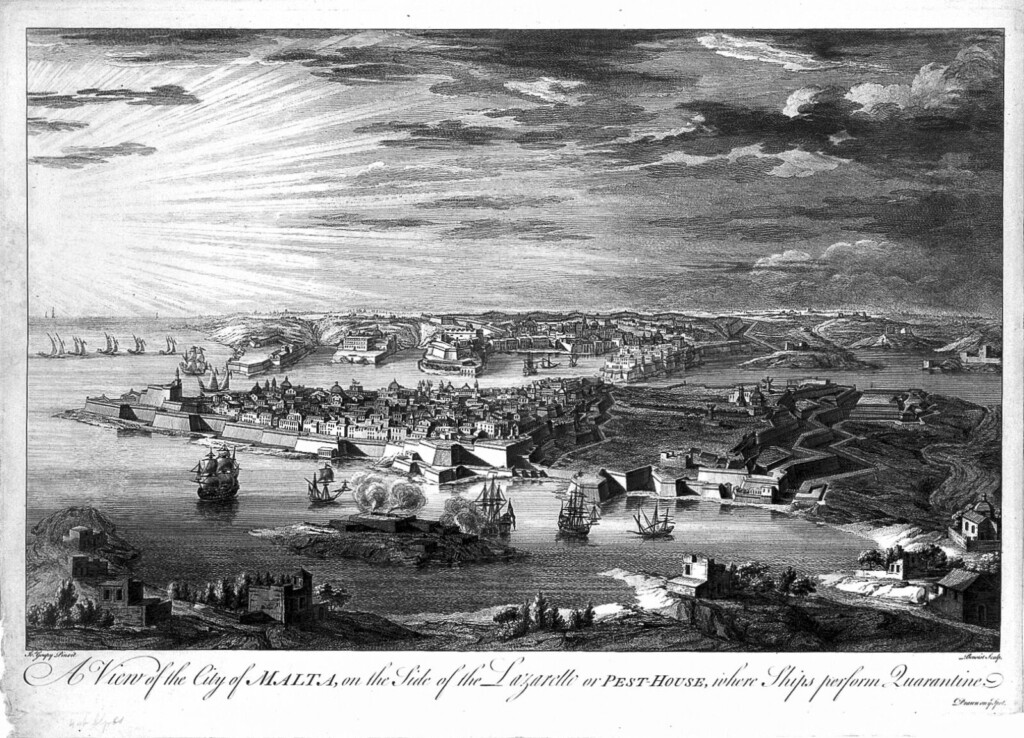
You have almost certainly never chosen which side of the line you stand on. The choice was made before you were born, encoded in an address, a surname, a skin tone, a profession your grandfather held. When cholera swept through Moscow in 1830 and then through Paris in 1832, the cordon sanitaire was not drawn around the sick. It was drawn around the poor. The distinction matters enormously, because the disease moved through all social classes with biological indifference, but the quarantine boundary — the enforced perimeter, the checkpoint, the locked gate — fell with surgical precision along lines that had existed for generations before any bacterium arrived. The wealthy fled. The destitute were sealed in. What administrators called a public health measure was, in its material geography, a confirmation of who already counted as expendable.
This pattern was not incidental. When the British colonial administration imposed quarantine cordons during the Indian plague epidemics of 1896 and 1897, the enforcement fell on lower-caste neighborhoods and working-class districts with a brutality that provoked riots in Pune and Bombay. The plague officer W. C. Rand ordered inspections so invasive — soldiers entering homes, separating families, removing the sick to isolation camps from which many never returned — that his assassination in June 1897 was treated by large sections of the population not as a crime but as an act of resistance. The cordon sanitaire, in that context, was experienced not as medicine but as occupation. The body being managed was not just the diseased body. It was the colonial body, the body already defined as a problem requiring containment.
Science fiction absorbed this geography almost immediately, and it has never fully relinquished it. The quarantine zone in narrative — the walled district, the red zone, the quarantined city sector — almost never materializes in the wealthy neighborhood. It emerges, with a consistency that should trouble any attentive reader, in the already-marginalized space. The zone of infection in speculative fiction tends to map with uncomfortable precision onto the zone of prior exclusion: the industrial district, the immigrant quarter, the slum, the colony, the reservation. What the narrative presents as a response to biological emergency is revealed, under even modest scrutiny, to be a continuation of a social arrangement that predates the outbreak entirely. The disease becomes the alibi, and the fiction that depicts it often reproduces the alibi without interrogating it.
Susan Sontag observed in Illness as Metaphor, published in 1978, that disease is never innocent of the cultural meanings projected onto it — that the metaphors we attach to illness do real political work, determining who deserves sympathy and who deserves surveillance. What she could not fully anticipate was how thoroughly that dynamic would saturate speculative world-building, how a genre defined by its capacity to imagine alternatives would so frequently fail to imagine a different geography of quarantine. The disposable body in science fiction — the one sacrificed to contain spread, the one left behind the sealed perimeter — tends to look remarkably like the disposable body in the historical record.
There is something technically interesting happening in the narrative mechanics of the quarantine zone that goes beyond ideology. The sealed boundary produces plot: it creates inside and outside, protagonist and excluded mass, the one who crosses and the one who cannot. The formal requirements of storytelling thus collaborate with the social logic of containment to make the cordon feel natural, even inevitable. Readers experience the quarantine line as dramatic architecture rather than as political decision. The emotional grammar of the story trains them to worry about the person trying to escape, never to ask who designed the fence, who funded it, or whose property values it was quietly protecting.
Contagion as Moral Verdict: The Puritan Legacy in Epidemic Storytelling
You have been sick before, and somewhere underneath the fever and the fatigue, a quieter illness ran parallel — the suspicion that you had somehow brought this on yourself.
That suspicion is not accidental. It has a theology behind it. When Susan Sontag published Illness as Metaphor in 1978, she was not making a literary argument so much as performing an archaeological excavation, pulling up the doctrinal bones buried beneath the language doctors and novelists had been using for centuries. Her central exposure was precise and devastating: Western culture had built a grammar around disease in which the body’s failure to resist was never purely biological but always confessional. Tuberculosis in the nineteenth century was read as the physical signature of an excessively passionate soul, consumption as the body’s honest accounting of a spirit too intense for its own flesh. Cancer in the twentieth century inherited a different but structurally identical myth — the repressed person, the one who swallowed emotion and kept score in silence, paying their debt in tissue. The illness did not merely arrive. It revealed.
This is the Puritan mechanism operating in secular disguise. The theological architecture of seventeenth-century New England, in which visible suffering testified to invisible moral condition, did not dissolve when the churches emptied. It migrated into medicine, into literature, into the narrative instincts of screenwriters and novelists who had never read a word of Cotton Mather. What survived was the underlying logic: that the world is morally legible, that the body is a ledger, and that an epidemic is not a failure of public health infrastructure but a verdict pronounced on a community’s character. Richard Evans, in his 1987 study of cholera in nineteenth-century Germany, documented how civic authorities consistently framed outbreaks as evidence of the moral deficiency of the poor neighborhoods where they concentrated — the filth they lived in was taken as symptom of internal corruption rather than as the predictable consequence of wage suppression and overcrowded housing.
Pandemic fiction absorbed this grammar and amplified it. Across the twentieth century, epidemic narratives repeatedly organized themselves around a central dramatic question that had nothing to do with virology: who deserves to live? The survivors in these stories were not statistically lucky or epidemiologically positioned in ways that favored exposure levels. They were morally differentiated. They had prepared, or they had loved correctly, or they possessed some quality of spirit that the dead, by dying, were implicitly shown to lack. Albert Camus resisted this architecture in La Peste in 1947, insisting on the randomness of death in Oran with an almost aggressive literalness, but his resistance was itself a philosophical argument against a dominant convention — which means the convention was powerful enough to require that level of deliberate opposition.
The AIDS crisis arrived into this fully formed narrative infrastructure, and the consequences were not metaphorical — they were fatal. When cases began concentrating among gay men in the early 1980s, the existing grammar of disease-as-moral-verdict was immediately available for conscription, and it was conscripted with terrifying speed. The illness was read as confession before any diagnostic category had stabilized. Writers who attempted to tell AIDS stories in the decade’s early years found themselves working against a narrative gravity so strong that even sympathetic accounts risked replicating its logic — every detail of a character’s life before infection could be assembled by readers into a prosecution. The body had become a court, and the outcome was already assumed. Paul Monette, in his 1988 memoir Borrowed Time, was working in full awareness of this trap, writing furiously against the idea that his partner Roger Horwitz had earned his death, insisting on the specificity and irreducible dignity of one man’s life against a culture that had already converted that life into a symbol of transgression punished.
What makes this inheritance particularly resistant to dismantling is that it flatters the healthy.
The Immune Body and the Fantasy of Biological Aristocracy
You wake up one morning and everyone around you is dead or dying, and you are not. Your skin didn’t blister. Your lungs didn’t fill. Your blood, for reasons neither you nor any surviving doctor can fully explain, simply refused the infection. In that silence — streets emptied, hospitals long abandoned, the air tasting of something final — what you feel is not gratitude. It is something older and more dangerous than gratitude. It is the creeping conviction that you were meant to survive.
Richard Matheson understood this vertigo with clinical precision when he published I Am Legend in 1954, a novel whose surface reads as horror but whose marrow is a sustained interrogation of what immunity does to a person’s self-conception. Robert Neville, the sole uninfected human in a world overrun by vampiric plague, does not spend his days celebrating his biological luck. He spends them building a mythology around it. He is the last man, which his mind quietly translates into the right man. The novel’s savage irony — that Neville is eventually revealed to be the monster in the eyes of the new infected majority — functions as a direct critique of this translation, but the critique arrives too late for most readers, who have already spent two hundred pages inhabiting Neville’s solipsistic certainty with uncomfortable ease.
What Matheson was excavating had a long institutional history. Francis Galton, who coined the term eugenics in 1883 and spent the following decades building its pseudo-scientific scaffolding, was obsessed with the idea that biological fitness was a readable moral text — that the body’s capacity to resist, endure, and reproduce was evidence of something deserved rather than something distributed by blind evolutionary caprice. By the early twentieth century, this framework had migrated from academic papers into immigration law, sterilization statutes, and eventually the bureaucratic machinery of genocide. What epidemic fiction did, beginning well before Matheson and accelerating sharply after him, was launder this logic back through the grammar of narrative sympathy. The immune body stopped being a statistical anomaly and became a protagonist, which meant it became a self, which meant it became a standard.
The mechanism is not always visible because it operates through the conventions of survival storytelling itself. Genre fiction has trained readers to identify with whoever lives, and post-apocalyptic plague narratives almost universally center the immune or the resistant as their point-of-view characters. This is not merely a craft decision — it is an epistemological one. When you spend three hundred pages inside the consciousness of someone whose body rejected the pathogen, you absorb their perspective on the infected as your own, and that perspective is, structurally, one of categorical difference. The infected become other, become mass, become landscape. The immune individual becomes person, becomes interiority, becomes moral agent. This is not metaphor. This is the precise cognitive operation that Susan Sontag was diagnosing in Illness as Metaphor in 1978, when she argued that disease has never been allowed to be merely disease — it is always recruited into the service of someone’s theory about who deserves to persist.
The fantasy intensifies when immunity is framed not as biological accident but as the surface expression of something deeper — willpower, purity, ancestral selection. A strand of epidemic fiction, particularly in American genre writing of the 1970s and 1980s, began dressing immunity in the language of spiritual or moral exceptionalism, so that the survivor’s uninfected blood became a kind of retroactive character testimony. The body was bearing witness to the soul’s fitness. This is precisely the structure of providentialist thought — the idea that history’s outcomes reveal divine preference — translated into the secular register of virology, where antibodies replace grace but the underlying logic of election remains perfectly intact, and equally impervious to evidence.
A vision curated by a filmmaker, not an algorithm
In this video I explain our vision
Viral Time: How Epidemics Collapse Linear Narrative

You are reading this too late. The date at the top of the page has already lost its meaning — you don’t know if it was written during the outbreak or after, if the author survived, if “after” is even a category that still applies. This is not a stylistic accident. It is the fundamental grammar of plague literature, the formal signature of a genre that understands something about contagion that epidemiology charts cannot capture: infection destroys the arrow of time before it destroys the body.
When Daniel Defoe published A Journal of the Plague Year in 1722, he did something structurally radical that readers have been underestimating ever since. The text poses as a firsthand account of the 1665 London plague, narrated by a man identified only as H.F., written in a mode of obsessive documentary precision — bills of mortality, parish counts, weekly death tallies. Yet the narrator keeps contradicting himself, circling back to events he claims to have not yet witnessed, admitting uncertainty about dates, confessing that his own memory has become unreliable. The scaffolding of chronicle collapses from within. Defoe understood that the plague didn’t simply kill people; it dismantled the shared temporal infrastructure — the markets, the church bells, the weekly rhythms — that made sequence itself legible.
This structural disintegration is not metaphor. It is physiology rendered into form. An epidemic operates on a biological cycle that has nothing to do with the calendar: incubation period, symptomatic onset, crisis, death or survival, re-exposure. This loop does not progress — it repeats. And when a society is caught inside it, the future, which is the direction in which civilizations orient their meaning, becomes inaccessible. You cannot plan. You cannot promise. The social contract is secretly a temporal contract, a bet on continuity, and the epidemic voids it.
Albert Camus built his entire formal strategy in La Peste around this temporal strangulation. The novel’s narrator explicitly remarks that the townspeople of Oran stop making plans, stop writing letters with futures in them, stop using the word “soon.” By the novel’s midpoint, published in 1947, the citizens have lost access to both memory and anticipation simultaneously, trapped in what Camus calls an “interminable present” — a phrase that functions as both psychological diagnosis and narrative description, because the prose itself starts to grind, to repeat its rhythms, to deny the reader the comfort of forward momentum.
Fragmented testimony becomes the only honest structure in this context. The unreliable survivor account — a genre convention often dismissed as a weakness of the pandemic novel — is in fact its most rigorous formal achievement. José Saramago’s Blindness, published in 1995, presents a narrator who occasionally admits she doesn’t know what happened in rooms she wasn’t present in, who reconstructs conversations she couldn’t have heard, who has no name and no stable position in the story’s time. This is not postmodern play. It reproduces the epistemic condition of any community mid-outbreak: no one has the full picture, everyone is reasoning from incomplete and possibly corrupted data, and the accounts assembled afterward are always partial reconstructions shaped by who happened to survive.
The retroactive diary — a form that appears in plague literature from Pepys forward — carries a particularly disturbing temporal irony: you write each entry as if the future is open, but the reader knows you lived, because you are writing. The form pretends to suspense while quietly eliminating it. What survives is not drama but texture — the granular, sensory, almost tedious record of days that felt endless from inside and look, from outside, unbearably compressed. Susan Sontag argued in Illness as Metaphor that disease is always recruited into moral narrative, made to mean something about fault and punishment. But the deeper formal truth of epidemic fiction is that it resists meaning’s precondition — it resists the sequential movement without which cause, consequence, and lesson cannot be formed.
The Second Scene: Bureaucracy as Vector
You have seen this man before, though you may not have recognized him for what he is. He sits behind a laminate desk in a building whose name appears on no tourist map, and someone has just placed a folder in front of him. Inside the folder are numbers — infection rates, projected mortality curves, a regional breakdown that makes the geometry of the coming disaster legible to anyone willing to read it. He reads it. He closes it. He places it in a tray marked for internal routing, which is a bureaucratic phrase meaning: this will move slowly enough that the moment for decision will pass on its own.
What makes this scene structurally interesting is that it has nothing to do with ignorance. Historians of the 1918 influenza pandemic have documented with considerable precision the degree to which municipal and federal officials in the United States possessed accurate case data weeks before public acknowledgment, a suppression partly enforced by the Committee on Public Information, Woodrow Wilson‘s wartime censorship apparatus, which had been operational since April 1917 and had already normalized the management of inconvenient information as a patriotic act. The silence was not a gap in knowledge. It was a policy decision wearing the costume of administrative procedure. The man with the folder is not confused. He is calculating.
Fiction has always understood this more honestly than political science has. The science fiction tradition of epidemic narrative — from Michel Fauconnier’s colonial fever literature through the mid-century biological catastrophe novels that multiplied after Hiroshima — repeatedly stages the institutional response not as paralysis but as a kind of negative action, a deliberate grammar of deferral. The sociologist Charles Perrow, in his 1984 analysis of systemic failure, Normal Accidents, argued that complex organizations do not malfunction randomly but tend to fail in directions that protect the organization’s core interests. Applied to epidemic response, this produces a precise and ugly logic: the deaths that threaten institutional legitimacy are suppressed; the deaths that can be narrativized as tragic but inevitable are released into public language at a controlled pace.
The calculation is always, at its root, a question of whose death constitutes a political event and whose constitutes a statistic that can be absorbed into existing categories without disturbing the accounting. Susan Sontag, in Illness as Metaphor published in 1978, identified how disease acquires its social meaning not from its biology but from the moral and political investments the surrounding culture places on the bodies it strikes. What she did not extend far enough — and what epidemic fiction has extended in her place — is the institutional dimension: it is not merely that certain bodies are morally coded in advance, but that certain deaths are bureaucratically pre-categorized as non-disruptive, routed into existing trays, moved slowly enough that the crisis becomes historical before it becomes political.
This is why the most honest pandemic narratives do not build to a scene of denial or conspiracy. They build to a scene of competent, orderly, professionally executed paperwork. The horror is not that the system broke down. The horror is that it worked exactly as designed, processing information according to a hierarchy of narratability that had been quietly assembled over years of smaller decisions — funding allocations, reporting categories, the particular bureaucratic vocabulary that makes some deaths visible as emergencies and others legible only as background data. Richard Preston’s nonfiction work on viral hemorrhagic fever, The Hot Zone from 1994, derives much of its genuine dread not from the biological details but from the moments when official channels absorb genuine alarm and return it in the form of managed concern — a memorandum, a committee, a protocol that acknowledges danger by placing it in a queue.
The man closes the folder. He places it in the tray. This is not inaction. This is the system expressing a preference it cannot publicly state, using the only language available to it.
Surveillance, Solidarity, and the Epidemic That Reveals the State

You are standing in a line that did not exist three weeks ago, holding a piece of paper that certifies you are allowed to buy food, and somewhere behind the temporary fencing a uniformed official is writing something down about you that you will never be permitted to read.
José Saramago published his novel about sudden, collective blindness in 1995, and the most disturbing element was never the loss of sight. It was the speed with which the healthy organized themselves into administrators of the afflicted, how quarantine zones became taxonomies of power, how the state’s first instinct was not to heal but to document, contain, and ultimately abandon. The blind internees in that government facility do not suffer primarily from their condition — they suffer from the discovery that the institution surrounding them was always, underneath its civic language, a machinery indifferent to their survival. Saramago was working in a tradition with deep roots: the medieval cordon sanitaire, those enforced boundaries drawn around plague towns beginning in the fourteenth century, were never purely medical instruments. They were political ones. They determined who remained a citizen and who became a problem to be managed at a distance.
What shifted dramatically in the pandemic fiction produced between 2000 and 2015 was a fundamental reorientation of dramatic tension. The biological agent — the virus, the prion, the unknown pathogen — receded into the background and the foreground filled with bureaucrats, intelligence agencies, quarantine protocols, and the specific texture of governmental panic. This was not accidental. The SARS outbreak of 2003, the H1N1 response of 2009, the Ebola crisis of 2014: each event exposed in real time the gap between the public health language states used and the security logic they actually operated under. Writers and filmmakers absorbed this. The contagion in the stories produced during this period functions less as a natural disaster and more as a stress test applied to institutions, revealing whether they were designed to protect populations or to protect themselves.
Michel Foucault‘s analysis in Discipline and Punish, published in 1975, drew a precise genealogy from the plague town of the seventeenth century to the modern disciplinary state. His argument was that epidemic management — the house-by-house inspections, the mandatory registrations, the enforced spatial orders — provided the template from which modern surveillance infrastructure was later built. What the epidemiological thrillers of the early twenty-first century understood, consciously or not, was that this template had never been dismantled. It had only been waiting for a sufficient emergency to become visible again.
The arrival of COVID-19 in early 2020 produced something philosophically vertiginous: journalists began describing reality using the grammar that fiction had spent two decades constructing. Contract tracing applications, quarantine hotels, color-coded mobility zones, the distinction between essential and non-essential human beings — this vocabulary had circulated in novels and screenplays for years before it entered government press releases. The fictional imagination had not predicted the pandemic so much as it had already mapped the bureaucratic and surveillance architecture that any sufficiently serious epidemic would activate, because that architecture already existed and required only a legitimizing crisis to deploy itself openly.
What remains genuinely unsettling is the solidarity question that this fiction kept raising and COVID kept deferring. Every pandemic narrative since Saramago’s has posed it differently but essentially the same way: when the state reveals its true priorities under pressure, what do ordinary people owe each other outside its structures? The mutual aid networks that proliferated in 2020 — neighbors delivering groceries to the isolated, informal information-sharing that outpaced official guidance, communities organizing care without waiting for institutional permission — were not spontaneous inventions. They were recoveries of something very old, older than the public health bureaucracy, older than the nation-state itself, a human technology of survival that epidemic fiction had been quietly insisting was still available, if people remembered they were allowed to reach for it.
🦠 When the World Ends: Plague, Fear & Imagination
Science fiction has long used the pandemic as a lens to examine humanity’s deepest fears, social fragility, and the collapse of order. From quarantine dystopias to viral apocalypses, the genre transforms biological crisis into powerful symbolic language. These related articles explore the cultural, literary, and philosophical territories that surround and illuminate this unsettling theme.
Huxley’s Brave New World: Meaning and Analysis
Aldous Huxley‘s Brave New World constructs a society where biological control and engineered immunity serve as tools of total domination, prefiguring many pandemic-era anxieties about state power and bodily autonomy. The novel’s vision of a sterile, managed world resonates deeply with science fiction narratives about contagion and social engineering. Reading it today feels less like dystopian fantasy and more like a diagnostic manual for contemporary fears.
GO TO THE SELECTION: Huxley’s Brave New World: Meaning and Analysis
Orwell’s 1984: Big Brother and Total Surveillance
George Orwell‘s 1984 imagines a world where epidemic-like fear is manufactured and maintained by a surveillance apparatus that monitors every breath and movement, a dynamic that pandemic fiction frequently amplifies. The control of bodies, information, and collective behavior in Orwell’s totalitarian state mirrors the themes of isolation, quarantine, and institutional power found across the science fiction pandemic genre. Big Brother’s omniscient gaze becomes a chilling metaphor for the biomedical and political surveillance unleashed by global health crises.
GO TO THE SELECTION: Orwell’s 1984: Big Brother and Total Surveillance
Albert Camus: Life and Philosophical Thought
Albert Camus, though writing literary fiction rather than science fiction, gave the world its most enduring philosophical meditation on plague with The Plague, and his broader existentialist thought permeates the genre’s pandemic narratives. His exploration of absurdity, solidarity, and the indifferent universe maps directly onto science fiction stories where humanity confronts extinction-level biological threats. Understanding Camus is essential for grasping the moral architecture beneath even the most speculative pandemic stories.
GO TO THE SELECTION: Albert Camus: Life and Philosophical Thought
Franz Kafka and Urban Alienation
Franz Kafka‘s vision of urban alienation, bureaucratic paralysis, and the individual trapped within incomprehensible systems finds a striking echo in pandemic science fiction, where quarantine zones and collapsed institutions mirror his nightmarish cityscapes. The sense of disorientation, helplessness, and opaque authority that defines Kafka’s urban world becomes a structural blueprint for countless science fiction narratives about societal breakdown during epidemic crises. Kafka’s city is always already a place under siege, its inhabitants already isolated long before any virus arrives.
GO TO THE SELECTION: Franz Kafka and Urban Alienation
Discover the Cinema That Dares to Imagine Otherwise
If these themes of crisis, transformation, and human resilience speak to you, Indiecinema is the streaming platform where independent and visionary cinema brings them to life on screen. Explore films that challenge, unsettle, and illuminate — the kind of stories that mainstream platforms rarely surface. Join Indiecinema and let independent cinema take you further.
👉 EXPLORE THE CATALOG: Watch Indie Films in Streaming
A vision curated by a filmmaker, not an algorithm
In this video I explain our vision

