
The Soma Hour
You reach for it before you even know what you are reaching away from. The discomfort arrives — not fully formed, not yet a thought, barely even a feeling — and your hand moves. The screen lights up. Something fills the space where the unease was trying to become itself, and now it never will. You did not decide this. The decision, if it can even be called that, was made in less time than language requires, in a gap so small that consciousness had no chance to intervene. The itch and the scratch are now a single motion.

This is not weakness. That needs to be said clearly, because the first instinct is to moralize about it, to frame it as a failure of willpower or a symptom of some personal shallowness. But willpower had nothing to do with it. You were engineered toward this. The reflex was trained over years of precise, incremental reinforcement — variable reward schedules that B.F. Skinner described in his operant conditioning research at Harvard through the 1950s, the same psychological architecture that made pigeons peck levers compulsively and that the behavioral design industry later scaled into something planetary. The phone did not seduce you. It was built to remove the gap between impulse and satisfaction entirely, because that gap — that small, fertile, uncomfortable pause — is where something dangerous to the attention economy lives. It is where you might have thought.
What is remarkable is how ancient the fantasy actually is. Long before anyone carried a glowing rectangle in their pocket, a writer sat in his Italianate villa in the hills above Florence and imagined a civilization that had solved the problem of human suffering not by addressing its causes but by eliminating the capacity to sit with it. He imagined a substance distributed freely, enthusiastically, governmentally — something that did not dull consciousness so much as redirect it, fill it, keep it from ever turning inward long enough to ask an inconvenient question. The citizens of his imagined world were not oppressed in any way they could identify. They were, by every measurable standard, content. They consumed, they coupled, they attended organized entertainments that stimulated all the senses simultaneously and demanded nothing from the mind. When the faint shadow of something unresolvable passed across them — grief, longing, the strange vertigo of an unanswered question — they took their grammes and the shadow passed.
Aldous Huxley published that vision in 1932, working from a matrix of anxieties about Fordist mass production, Pavlovian conditioning, and the early consumer culture he observed accelerating around him. He dedicated the novel’s epigraph to his friend and mentor Nicolas Berdyaev, who had written that utopias were far more achievable than previously believed, and that the real question facing modernity was how to avoid them. The novel is, in one sense, an extended meditation on that question. But its real shock — the one that does not arrive as an intellectual argument but as something closer to nausea — is not its dystopian machinery. It is its plausibility. It is the recognition that the citizens of that world are not wretched. They are fine. They are, by design, always almost fine.
The soma hour in Huxley’s world is not an emergency measure. It is not rationed or stigmatized. It is civic, cheerful, routine. There is a song they sing about it, half nursery rhyme and half advertisement. You recognize the tone immediately because you have heard it before, not as a song but as an interface, as a notification sound, as the particular frictionlessness of a platform that has learned your preferences better than you have. The soma hour does not announce itself as escape. It presents itself as the natural thing to reach for when the space between moments begins to open up.
And you reach for it before the space can finish opening.
Children Of A Darker Dawn
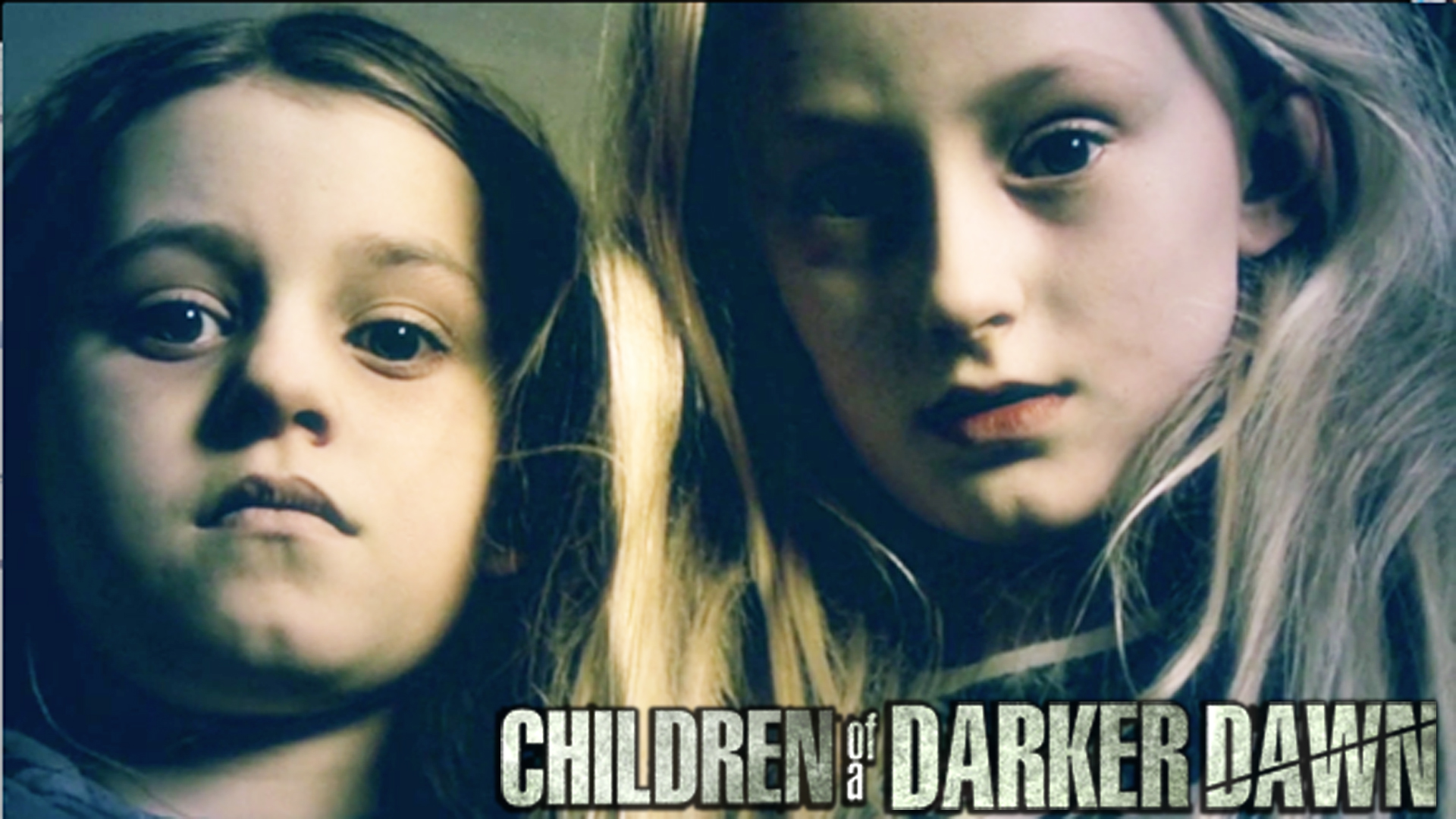
Drama, horror, sci-fi, by Jason Figgis, United States, 2012.
In a post-apocalyptic Ireland, a pandemic has wiped out the adult population, struck down by a mutant strain of flu that turns them paranoid and violent before killing them. Nine months later, the surviving children wander through abandoned buildings in search of food and shelter. Among them are Evie and her younger sister Fran, trying to survive while avoiding potentially dangerous groups of kids. Their only comfort is The Railway Children, the book their mother used to read to them. The arrival of Alice, a girl who has escaped from a gang led by her sister Kate, changes their path. After being betrayed by the gang, Evie decides to confront them, triggering a series of events that will lead to tensions and conflicts within the group.
The film, directed by Jason Figgis with limited resources but great sensitivity, is a post-apocalyptic drama that goes beyond horror, focusing on grief and the emotional fragility of its characters. The tone is somber, marked by melancholy, disturbing flashbacks, and unstable relationships. Though it recalls films like 28 Days Later, The Road, or Lord of the Flies, Children of a Darker Dawn finds its own voice through strong character development and powerful performances from its young cast.
LANGUAGE: English
SUBTITLES: Spanish, French, German, Portuguese
A World Built in 1931
There is a particular kind of dread that comes not from imagining the future but from watching the present accelerate. Aldous Huxley felt it in the early 1930s with the precision of someone who had seen too clearly and spoken too soon. He wrote the novel in four months in 1931, a speed that suggests not inspiration but urgency, the way you write when the thing you are describing is already happening outside the window and you need to get it down before it becomes unremarkable.
The world he was extrapolating from was not some distant dystopian hypothesis. It was the world of Frederick Winslow Taylor, whose Principles of Scientific Management, published in 1911, had already reduced human labor to its most measurable components — time, motion, efficiency, output. It was the world of Henry Ford, whose River Rouge plant in Dearborn, Michigan, had by the late 1920s become the largest integrated factory complex on earth, employing over one hundred thousand workers in a system so total it produced its own steel, glass, and electricity. Huxley had visited the United States and come back shaken in a way he could not quite name. What unsettled him was not the brutality of the assembly line but its seductiveness, the almost liturgical rhythm of it, the way human beings adapted to the machine’s tempo with something that looked disturbingly like contentment.
The consumer boom of the 1920s was the other half of this equation. Between 1919 and 1929, American industrial output nearly doubled. Refrigerators, automobiles, radios, vacuum cleaners flooded the market with a velocity that required new forms of desire management. Edward Bernays, Sigmund Freud‘s nephew and the founding theorist of modern public relations, was already in 1928 publishing Propaganda, his clinical manual for manufacturing consent and appetite. The economy no longer needed citizens; it needed consumers. And consumers, crucially, needed to be kept wanting. The World State’s conditioning is not Huxley’s fantasy — it is Bernays with the pretense stripped away.
The Great Depression arrived like a rupture in this logic, and Huxley was writing in its immediate aftermath, in the year unemployment in the United States reached nearly sixteen percent and breadlines stretched through the cities that had just been advertising prosperity. Europe was watching something darker take shape. In 1931, the National Socialists were consolidating power in Germany; Stalin’s Five-Year Plan was industrializing the Soviet Union through coercion and famine. The political alternatives to liberal capitalism were not abstract — they were mass movements, and each of them, in their different ways, shared the same conviction that human beings were raw material to be shaped by a superior collective will.
Huxley looked at all of this and refused the comfort of horror. The truly dangerous future, he understood, would not announce itself with jackboots and screaming. It would arrive with music and pharmaceuticals and the mild, continuous satisfaction of having everything you want except the capacity to want anything else. The World State does not suppress its citizens. It fulfills them, which is a far more efficient form of control.
The novel has sold an estimated six hundred million copies across ninety years, a number that belongs in a different category from literary success. Six hundred million is not admiration. It is recognition on a global scale, the cumulative shock of readers across nine decades opening a book written in four months in 1931 and feeling, with a certainty that precedes argument, that the world being described is not the one in the pages. The dystopia they are reading about is the one they drove to work in that morning, the one whose notifications are quietly buzzing in their pocket, the one that is, at this exact moment, making sure they are comfortable enough not to ask anything too difficult of themselves.

Conditioning and the Illusion of Choice
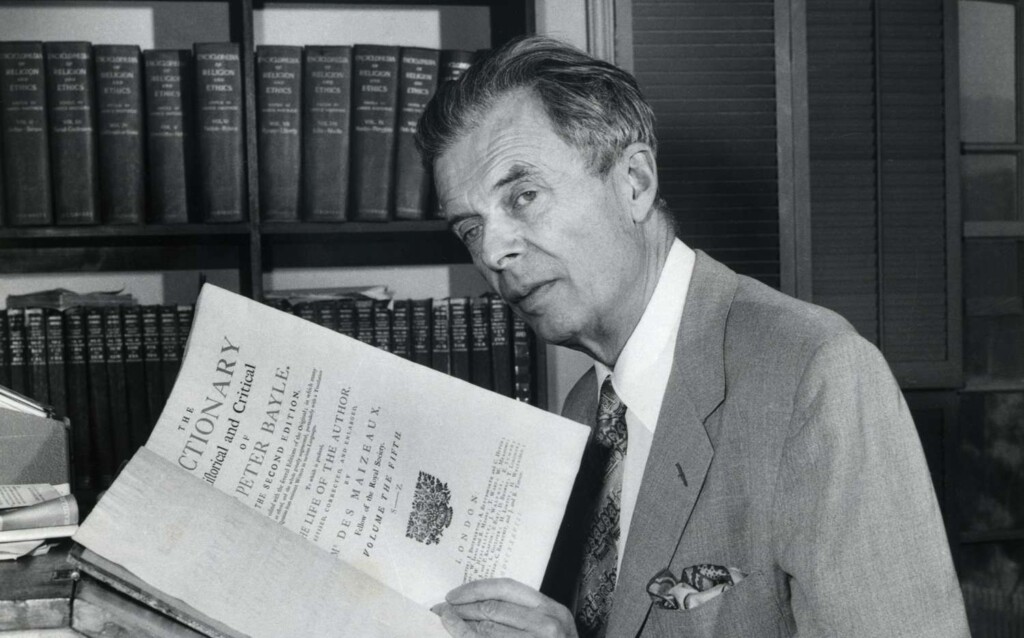
You have been choosing your entire life. What to eat, what to believe, whom to love, which ideas feel true and which feel foreign. The feeling of choosing is so constant, so textured with small resistances and preferences, that it seems impossible to question it. And yet there is a moment — watching a room full of infants crawling toward bright books and bowls of flowers, their small hands reaching, their faces open with that pure animal curiosity that precedes language — when the floor detonates under you. Because what follows is the sound of electric shocks and sirens, the screaming of those same infants recoiling, their bodies learning in a single scalding lesson what their minds will never need to consciously remember: that books are dangerous, that nature is repellent, that the reaching itself is wrong. The technicians in the room do not flinch. They record. They adjust the voltage. One of them checks a clipboard. This is not cruelty. Cruelty requires someone to enjoy the suffering. This is something far more unsettling — it is procedure.
Aldous Huxley published Brave New World in 1932, and the Bokanovsky Process at its center is not primarily a biological invention. It is an epistemological one. The process of budding a single human egg into ninety-six identical individuals is less interesting as science fiction than as a precise metaphor for what industrial society was already doing to thought itself. Identical workers for identical functions, their very neurological architecture pre-shaped for contentment within assigned limits. But Huxley understood that physical replication was only the scaffold. The deeper architecture was built through hypnopaedia — sleep-teaching, the repetition of moral and social slogans into the ears of sleeping children until the phrases felt like instinct. “Everyone belongs to everyone else.” “A gramme is better than a damn.” Not arguments. Not reasons. Just the slow geological pressure of repetition until the idea becomes indistinguishable from the self.
Walter Lippmann had named this mechanism a decade earlier. In Public Opinion, published in 1922, he described the “pictures in our heads” — the pseudo-environments that human beings actually respond to, constructed not from direct experience but from symbols, narratives, and repeated representations. Lippmann was not a cynic about this. He was an anatomist. He understood that the complexity of modern society made direct democratic participation effectively impossible, that what people voted for and fought for and died for was almost always a simplified image, a manufactured consensus. Edward Bernays took this diagnosis and turned it into a profession. His Propaganda, published in 1928, opens with a declaration of remarkable audacity: “The conscious and intelligent manipulation of the organized habits and opinions of the masses is an important element in democratic society.” Bernays called the practitioners of this manipulation an “invisible government.” He meant it as a compliment.
What Huxley saw — and what makes the screaming infants so unbearable to sit with — is that Bernays and Lippmann were describing something that, once perfected, would not need to be hidden. The most efficient control is the kind that the controlled experience as freedom. The infant who recoils from a flower does not feel imprisoned. It feels a preference. And a preference, once installed at the level of reflex, is phenomenologically identical to a choice. You cannot interrogate a flinch. You cannot debate a disgust response. The conditioning works precisely because it bypasses the layer of the mind where argument could reach it.
This is what the clipboard-holding technician understands that no tyrant with a dungeon ever fully grasped: that pain, applied early enough and systematically enough, does not produce a prisoner who knows they are imprisoned. It produces a free citizen who happens to never walk toward the door.
I Am Nothing
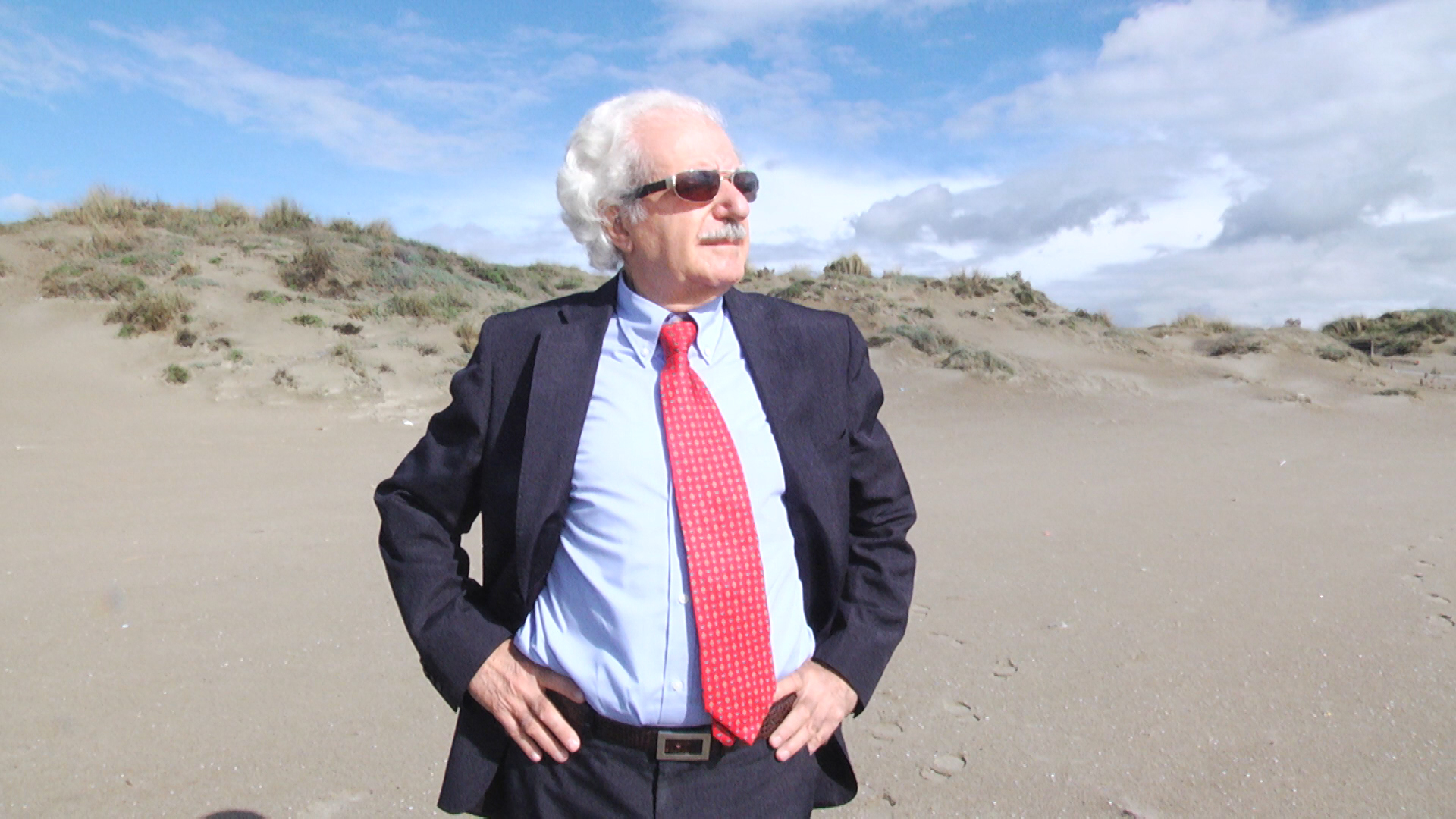
Drama, thriller, by Fabio Del Greco, Italy, 2015.
The story revolves around Vasco, a Roman builder who, at the age of 74, enjoys a life of absolute comfort. His human parable takes a dramatic turn when a mysterious encounter leads him to an ambush. Having survived, but marked by a long coma, Vasco wakes up with a new sensitivity, developing an intimate and poetic bond with nature. This new relationship with the world around him leads him to deeply explore himself, in an internal and external journey. through Italy, the United States and India, in search of a higher meaning and a cure. In parallel, the threat of a planetary cataclysm adds an epic dimension to the story.
I Am Nothing explores universal themes such as time, memory, oblivion and the connection with nature. Fabio Del Greco creates an existential drama full of food for thought. The director skillfully combines different visual materials, mixing archive images with nature photographs and dreamlike visions. This visual experimentation translates into an editing that captures the viewer's attention, guiding him through a cycle of creation and destruction. The sequences that alternate the buildings, Vasco's pride, with Indian landfills and natural landscapes create a hypnotic rhythm, underlining the beauty and fragility of life. Vasco's existential journey is a hymn to transformation and rebirth. The evolution of the protagonist, from unbridled luxury to the rediscovery of purity, represents a powerful metaphor on the meaning of life and the need to reconnect with authentic values. Io sono nulla stands out for its ability to combine introspection and visual experimentation, offering a suggestive and engaging narration. It is a film that invites us to reflect on the human condition, on our relationship with power and nature, and on the possibility of finding ourselves through change. A work that leaves its mark and lends itself to multiple readings.
LANGUAGE: Italian
SUBTITLES: English, Spanish, French, German, Portuguese
Happiness as a Cage
You are standing in the middle of a room you spent years trying to reach. The apartment is exactly what you imagined — the clean lines, the light, the silence that costs money. Every object in it was once a desire, a proof that you were moving in the right direction. And now you are standing there at two in the morning, unable to sleep, looking at these things with the strange feeling that they are looking back at you with indifference. Not disappointment. Something worse: indifference. The objects do not care that you are unhappy. They never promised you anything. You were the one who made that mistake.
This is the trap Huxley understood better than almost anyone writing in the twentieth century, and it is not a trap that springs shut suddenly. It closes slowly, over years, with your full cooperation. It closes because you are offered something real — comfort, stability, the absence of pain — and you accept it, as any reasonable person would. The cruelty is that the offer is genuine. The happiness is genuine. What disappears in the transaction is harder to name.
Bernard Marx wants to belong to the world that excludes him, and this wanting is his most human quality. He is small where others are tall, anxious where others are serene, and he resents the system with a bitterness that functions, for a while, as a kind of inner life. But watch him carefully when he briefly tastes acceptance and status. The resentment evaporates almost immediately. He becomes exactly the person he claimed to despise. His dissatisfaction was never a philosophy. It was a symptom of exclusion, and the moment inclusion arrives, the symptom resolves. He had confused his wound for his soul.
Helmholtz Watson has none of these excuses. He is everything the World State produces at its finest — beautiful, competent, admired, fulfilled on every surface the system recognizes as a surface. What gnaws at him is something he cannot even properly name. He feels, with the obscure certainty of a man sensing a limb he was never told he had, that his writing reaches for something the language around him has been deliberately stripped of. He has everything and feels the precise, specific hollowness of everything. This is the more dangerous knowledge, because it cannot be dismissed as envy.
And then there is John, who chooses suffering the way a drowning man chooses the burning ship — not because suffering is good but because it is real, because it is his, because in a world that has eliminated the possibility of tragedy it is the only remaining proof that something is at stake. Dostoevsky’s Grand Inquisitor laid this argument out with terrifying clarity in the pages of The Brothers Karamazov: the Church, he tells the returned Christ, has corrected your work. You gave people freedom and it destroyed them. We gave them bread and miracle and authority, and they are grateful. They came to us and begged us to take their freedom. The Inquisitor is not a villain in his own story. He is a realist who loves humanity enough to relieve it of itself.
Huxley read that chapter and understood it as prophecy rather than allegory. The Controllers of his World State are Grand Inquisitors who have succeeded. The bread is soma, the miracle is sex and cinema and constant low-grade stimulation, the authority is so thoroughly internalized that no enforcement is necessary. John’s insistence on the right to be unhappy is not heroism as it is usually performed. It is something more disturbing — the claim that a self requires friction to exist, that identity without resistance is just reflection, just the clean surface of that apartment in the middle of the night, giving nothing back.
The Savage and the Mirror
There is a woman in a remote village who performs the rituals every morning. She lights the incense, she kneels at the correct hour, she mouths the words her grandmother taught her. But she no longer believes them, and she has not believed them for years, and the performance has become so practiced that it is now indistinguishable from the real thing — except inside, where something watches with a detachment so cold it frightens her. She cannot leave, because to leave would be to name what she is, and she has no language for it. She cannot stay, because staying requires a sincerity that burned out quietly sometime in her late twenties. She is trapped between two worlds, each of which renders her a foreigner, and what she feels most of the time is not grief but a kind of exhaustion that sits just below the sternum.
John knows this exhaustion. He is born on the Reservation to a woman from the World State, raised among people who accept him just enough to make him want their acceptance and reject him just enough to ensure he never receives it fully. He reads The Complete Works of Shakespeare — a single battered volume, which is both his inheritance and his prison sentence — and from those pages he constructs an entire architecture of meaning: love as sacrifice, dignity as suffering, God as the organizing principle of human pain. He speaks in verse because he has no other language for the real. And then Bernard brings him to London, and he discovers that the World State has its own architecture, built with exactly the opposite materials, and that neither structure can accommodate a person who insists on feeling everything as if it mattered.
Frantz Fanon understood this geometry of annihilation. In The Wretched of the Earth, published in 1961, he described how the colonised subject is systematically placed in an impossible position: the culture of origin is devalued and made shameful, while the coloniser’s culture is presented as the aspirational horizon, the proof of humanity. The colonial subject learns to see themselves through the coloniser’s eyes, internalises that gaze as the only legitimate one, and then discovers that even perfect assimilation does not grant belonging. The tragedy is not simply exclusion. It is the destruction of the internal compass that would allow a person to navigate exclusion with any coherence. You no longer know what you want because wanting itself has been colonized.
John wants Lenina, but what he actually wants is the Lenina of Shakespeare — Juliet, Desdemona, a woman whose desire is tragic and therefore sacred. What he encounters is something that terrifies him precisely because it refuses tragedy. She offers herself without reservation, without shame, without the anguish that he has been taught makes feeling legitimate. He recoils from her. He calls her an impudent strumpet and strikes her. And in that moment of violence you see not cruelty but a kind of desperate theology: he needs her to suffer, because if she does not suffer then suffering itself has no value, and if suffering has no value then everything he has used to construct himself collapses entirely.
Huxley is not interested in making John sympathetic in any simple way. He allows John to be magnificent and unbearable in equal measure, a man who has read everything worth reading about the human condition and understood none of it as applied to actual humans. His Shakespeare is a liturgy, not a lens. When the World State proves immune to his moral convictions, he turns those convictions inward with the methodical ferocity of someone who has been told, all his life, that his capacity to feel deeply is proof of his worth. The self-flagellation near the end is not breakdown. It is the logical conclusion of a value system that has nowhere left to go except the body.
A vision curated by a filmmaker, not an algorithm
In this video I explain our vision
Mustapha Mond and the Price of Truth

There is a moment when someone with complete authority over your work explains, in a perfectly measured tone, with no malice and even a trace of genuine regret, that what you have discovered will never see the light. Not because it is false. Not because the methodology was flawed or the conclusions reckless. But because the truth it contains is inconvenient — inconvenient not for any particular person, but for the system of arrangements that keeps everything running smoothly. The scientist sits across from you in a dimly lit office, and the horror is not in his eyes. It is in his reasonableness. He understands the work. He may even admire it. And he will bury it anyway, with the calm precision of a man who made his peace with this transaction decades ago and has since stopped noticing the cost.
This is Mustapha Mond. Not a tyrant in any recognizable costume, not a man drunk on power or deformed by cruelty. He is the World Controller for Western Europe, one of ten men who administer the entire architecture of human happiness on the planet, and he is perhaps the most educated person in the novel. He has read Shakespeare. He has read the Bible. He keeps Ford’s original Model T in a safe alongside a copy of the Gospels, artifacts of a world abolished because it could not stop producing suffering alongside its meaning. Mond was once a physicist of genuine promise, a scientist who understood exactly what he was choosing when he stepped across the line from inquiry into administration. The choice was not made in ignorance. That is precisely what makes it unbearable.
His conversation with John the Savage in the novel’s final chapters is one of the most quietly devastating exchanges in twentieth-century literature because neither man is wrong. Mond argues that art, science, and religion are not casualties of the World State — they are sacrifices, deliberate and considered, offered at the altar of stability. You cannot have great art without discomfort, without the kind of longing and loss that the conditioning system is specifically engineered to eliminate. You cannot have genuine science without the freedom to pursue conclusions that might destabilize the social order. And you cannot have authentic religious feeling without the acknowledgment of God’s absence, which is exactly the kind of existential wound that soma was designed to cauterize. Mond knows all of this. He chose stability anyway. He is still choosing it, every day, with the serenity of someone who has outlasted his own doubts.
Isaiah Berlin‘s distinction, articulated in his 1958 lecture “Two Concepts of Liberty,” cuts directly to the nerve of this scene. Negative liberty — freedom from interference, from coercion, from external constraint — is the liberty Mond’s citizens technically possess. No one is forcing them to be happy. No one is torturing them into desire. Positive liberty — the freedom to become something, to exercise genuine self-determination, to author one’s own life through genuine choice — has been removed so completely that its absence no longer registers as absence. Berlin understood that the most sophisticated forms of unfreedom are those that colonize the desire for freedom itself, that teach you to want exactly what you were going to be given regardless. The World State does not oppress its citizens. It has simply ensured there is no self left to be oppressed.
John demands the right to be unhappy. Mond grants that right philosophically and denies it practically in the same breath. He is not being hypocritical. He is being precise. The price of truth, in his calculus, is simply higher than anyone should be asked to pay — and the most disturbing thing about him is that part of you, reading it, understands exactly what he means. Not agrees. Understands. Which is a different kind of contamination entirely.
Huxley Against Orwell, Huxley Against Himself
There is a moment you have probably lived without naming it. You are standing in a crowd — a stadium, a concert, a political rally — and something washes over the people around you, some collective surge of feeling that looks exactly like joy. The bodies lean forward, the faces open, the noise becomes physical. And somewhere in the back of your mind, almost too quiet to hear, a question surfaces: is this happiness, or is this what happiness has been trained to look like? And then, more troubling still: does the difference matter anymore?
This is the precise fault line between two visions of how freedom ends. One vision imagines a boot stamping on a human face forever — coercion, surveillance, punishment, the state as a predator that hunts you down. The other imagines something far more intimate and far harder to resist: the state as a lover who gives you everything you want until you forget you ever wanted anything else. Neil Postman, writing in 1985, put the distinction with surgical clarity. He argued that Orwell feared those who would ban books, while Huxley feared something worse — that no one would need to ban them, because no one would want to read them. Orwell imagined a population crushed into submission. Huxley imagined one that had been pleasured into it.
What makes Huxley’s version so much harder to fight is that there is no enemy. There is no moment of violation you can point to and say: here, this is where it happened. The crowd cheering in the stadium is not being coerced. The faces are genuinely lit. Whatever they feel, they feel it completely. The simulation, if that is what it is, has become indistinguishable from the original — and at that point, the concept of simulation loses its meaning entirely. Jean Baudrillard would later call this the precession of simulacra, the moment when the copy no longer refers to any real it was copying. But Huxley arrived at the same terror decades earlier, not through theory but through imagination, and then through something far more unsettling: recognition.
In 1958, twenty-seven years after publishing the novel, Huxley returned to it. Brave New World Revisited is not a sequel or a celebration of prescience. It reads like a man who has looked out of his window and seen something he built in a dream now standing in the street. He wrote it with the urgency of someone revising a warning that had not been taken seriously the first time, and the admission that runs through every chapter is almost unbearable in its honesty: he had thought he was writing about the far future, and the far future had arrived. Overpopulation, pharmaceutical manipulation of mood, the engineering of consent through entertainment, the erosion of private selfhood under the pressure of mass society — he catalogued these not as science fiction but as current events. The dystopia, he concluded, was not centuries away. It was decades away. Perhaps less.
What Huxley had not fully reckoned with in 1931 was his own complicity in the seduction he was describing. The prose of Brave New World is often gorgeous. The World State is rendered with a kind of dark pleasure. Aldous Huxley, the man who would spend his later years studying mysticism and the doors of perception, the man who asked for LSD on his deathbed, was not simply diagnosing the pharmacological numbing of consciousness. He was also, somewhere beneath the satire, half in love with it. This is what makes the novel something more than a warning. Warnings come from outside the thing they warn against. Brave New World comes from inside, from someone who understood the appeal of the soma holiday not as an abstraction but as a temptation he had turned over in his own hands.
And so the man in the stadium watches the crowd cheer, and the question he cannot answer is not really about them.
The Drug That Is Not Soma
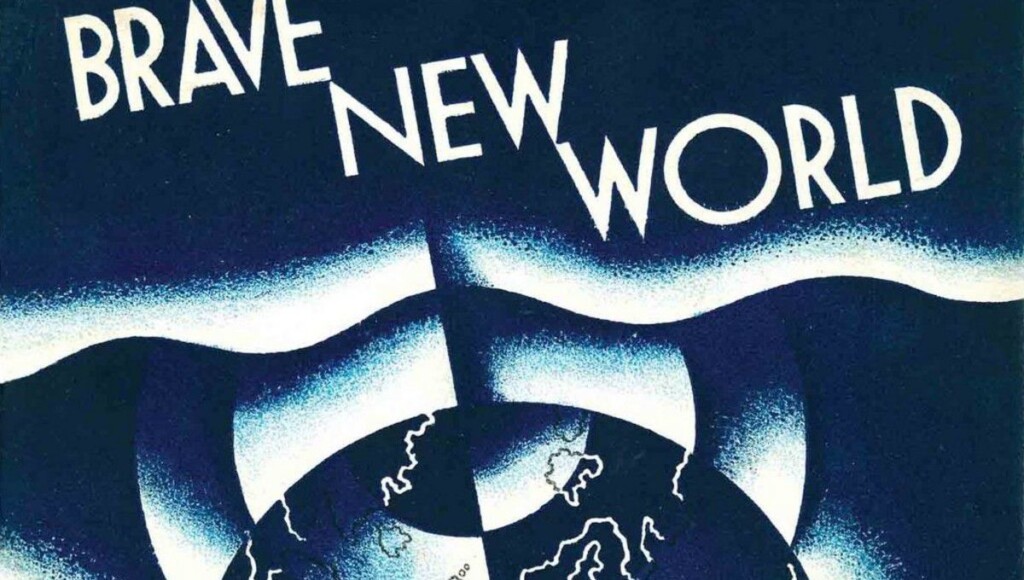
Nine years after finishing Brave New World, Huxley swallowed four-tenths of a gram of mescaline in his Los Angeles home and spent the following hours staring at a vase of flowers with the conviction that he was witnessing existence itself, unfiltered and terrifying in its fullness. What he wrote afterward was not a celebration. It was a question dressed as a report: what does it mean to chemically alter the threshold between the self and reality, and who gets to decide where that threshold should sit? The book that came from that afternoon, published in 1954, made him famous in ways Brave New World never quite had, but it also revealed something he had perhaps not fully intended — that his dystopia was not a warning about a distant future but a description of a desire that already lived inside the present, the desire to make experience manageable, to turn the volume of consciousness down to a level the nervous system can sustain without damage.
Prozac was approved by the FDA in 1987 and became, within three years, the most prescribed psychiatric drug in American history. By the early 2000s, antidepressant use in the United States had increased by nearly four hundred percent over the preceding decade. Global consumption figures tell a similar story: the OECD reported that by 2013, Iceland, Australia, and Canada were each consuming more than eighty defined daily doses per thousand inhabitants per year, numbers that have continued to climb in the decades since. None of this is simple. Depression destroys lives with a specificity and brutality that has nothing metaphorical about it, and the reduction of suffering is not a morally neutral act — it is, when it works, something close to restoration.
But Huxley’s splinter, the one he planted in 1932 and could not stop worrying at for the rest of his life, was never about whether suffering should be reduced. It was about the point at which the reduction of suffering becomes indistinguishable from the reduction of the person who suffers. Bernard Marx, in his clearest moments, feels the wrongness of his world as a kind of pain, and that pain is the only evidence he has that something in him is still intact. John the Savage chooses suffering explicitly, almost grotesquely, because he understands, even if he cannot articulate it cleanly, that the self and its capacity for anguish are not separate things.
She sits across from her therapist and says she feels better. She says it carefully, the way people say things they have been waiting to verify before speaking aloud. Genuinely better, she clarifies, not performing better, not telling herself she is better — actually better, sleeping, functioning, present in conversations in a way she had not been for years. And then she pauses. The pause lasts long enough that the therapist does not fill it. And then she says that she also feels, sometimes, like she is watching herself from a slight distance. Not dissociated, she says quickly, not like that. More like the volume of her own life has been turned down just enough to be bearable. She searches for the word. Bearable. She says it again. As if bearable is the thing she had always wanted and she is only now, having arrived at it, beginning to wonder what it cost.
Huxley never resolved the question he kept asking. He spent the last decade of his life moving between mysticism, pharmacology, and a kind of philosophical restlessness that his critics mistook for inconsistency and that was actually, if you read it carefully, fidelity — fidelity to the discomfort of a question that refuses to be answered without first demanding that you understand what you are willing to lose in the asking.
🧬 Dystopia, Control, and the Engineering of Happiness
Huxley’s Brave New World sits at the crossroads of technology, power, and the deep human need for meaning. These related articles explore the philosophical and cultural roots that make his dystopian vision so enduringly relevant today.
Orwell’s 1984: Big Brother and Total Surveillance
Orwell’s 1984 is the inevitable companion to Brave New World, offering a darker, more coercive vision of totalitarian control where fear replaces pleasure as the instrument of submission. Together, these two novels form the twin pillars of twentieth-century dystopian thought. Reading them in parallel reveals how power can wear radically different masks while pursuing the same annihilation of individual freedom.
GO TO THE SELECTION: Orwell’s 1984: Big Brother and Total Surveillance
Postman’s Amusing Ourselves to Death: Analysis
Neil Postman‘s Amusing Ourselves to Death argued presciently that Huxley, not Orwell, had correctly diagnosed the future: not a boot stamping on a human face, but a population too entertained to resist. Postman showed how television and mass media create the very soma-like distraction Huxley envisioned in his World State. This analysis remains one of the sharpest cultural commentaries on how pleasure and spectacle can function as instruments of soft totalitarianism.
GO TO THE SELECTION: Postman’s Amusing Ourselves to Death: Analysis
Huxley’s The Doors of Perception: Analysis
Huxley’s own later work, The Doors of Perception, reveals the other side of his lifelong obsession with altered consciousness — not as a tool of state control, but as a path toward genuine transcendence. Where Brave New World condemns the pharmacological management of experience, The Doors of Perception explores whether chemistry might also liberate the mind. This tension within Huxley’s thought is essential to understanding the full complexity of his literary and philosophical legacy.
GO TO THE SELECTION: Huxley’s The Doors of Perception: Analysis
Karl Marx and Alienation: Economic and Philosophical Manuscripts
Marx’s concept of alienation provides one of the deepest philosophical frameworks for reading Brave New World, revealing how the World State perfects capitalist logic by eliminating even the awareness of estrangement. In Huxley’s society, workers are biologically engineered to love their labor, making alienation invisible and therefore inescapable. Marx’s early manuscripts help us see that the most complete form of oppression is one in which the oppressed no longer recognize themselves as such.
GO TO THE SELECTION: Karl Marx and Alienation: Economic and Philosophical Manuscripts
Explore Cinema That Questions the World
If these ideas about freedom, control, and the engineering of human desire resonate with you, Indiecinema streaming is the place to take the next step. Discover independent and auteur films that dare to ask the questions mainstream cinema avoids — films that think, provoke, and stay with you long after the credits roll.
👉 EXPLORE THE CATALOG: Watch Indie Films in Streaming
A vision curated by a filmmaker, not an algorithm
In this video I explain our vision

