
The Séance as Epistemology
You are standing in a room that smells of beeswax and cedar smoke, somewhere in the labyrinthine residential streets behind Euston, and you are wearing robes you did not choose. The man beside you has memorized, to the syllable, a Hebrew divine name corresponding to a sephirah on a diagram you have spent four months studying. He is not eccentric. He is a chemist. The woman across the circle translates Greek medical papyri for a living. You are all performing an initiation ceremony whose structure borrows simultaneously from Freemasonry, Renaissance Neoplatonism, Egyptian funerary rite, and the Kabbalah, and every element has been cross-referenced, debated, and revised through correspondence that would fill a small archive. This is not hysteria. This is methodology.

The Hermetic Order of the Golden Dawn, founded formally in 1888 by William Wynn Westcott, Samuel Liddell MacGregor Mathers, and William Robert Woodman, was in many ways a direct product of the same Victorian intellectual climate that produced the X Club, the Fabian Society, and the Society for Psychical Research. The SPR itself, established in 1882, had by the mid-1880s enrolled Henry Sidgwick of Cambridge, Frederic Myers, and eventually William James among its investigators — people committed to applying empirical rigor to phenomena that official science had pre-emptively dismissed. What connected these projects was not a rejection of rationalism but a conviction that rationalism had narrowed its own aperture too quickly, closing off entire categories of experience before the evidence was genuinely in.
The philosopher William James wrote in 1902 in The Varieties of Religious Experience that consciousness is always a selection, a suppression of most of what impinges on the organism in favor of what proves useful to survival. The radical implication, which James pursued and his contemporaries largely refused, is that usefulness is not equivalent to truth. A mind disciplined to perceive only what can be weighed and measured is not a more accurate mind — it is a differently filtered one. The occultists of the 1890s were, in their most lucid moments, operating on exactly this intuition, which is why the Golden Dawn’s grade system was not theatrical ornament but epistemological scaffolding: a structured sequence of perceptual retraining, designed to make the practitioner capable of registering what ordinary socialization had taught them to ignore.
Yeats joined the Order in March 1890, and he did not join despite his seriousness as a poet but because of it. He had already spent years inside the Irish nationalist revival, absorbing John O’Leary’s conviction that a literature without mythological roots could not generate genuine cultural force. What he found in Isis-Urania Temple No. 3 was a living laboratory for something he had been theorizing instinctively: that symbol was not decoration applied to meaning but the primary structure through which certain orders of meaning could exist at all. Carl Jung would not publish his work on the symbol as psychic organon until decades later, but the practitioners in that cedar-scented room were already working the same territory through practice rather than theory, which may have given them a different kind of access to it.
The epistemological challenge of the séance — and it is a genuine challenge, not a quaint Victorian embarrassment — is that it forces a question about the burden of proof that most intellectual traditions quietly assume has been settled. If a structured ritual consistently produces in its participants altered states, vivid imagery, synchronistic external events, and lasting psychological reorganization, the scientific reflex is to explain these effects inward, as products of suggestion or expectation. But this explanation imports an assumption it cannot prove: that the external world contributes nothing to these states beyond a neutral stage. The Golden Dawn initiates were not obviously wrong to find that assumption arrogant rather than humble.
Cathnafola - A Paranormal Investigation
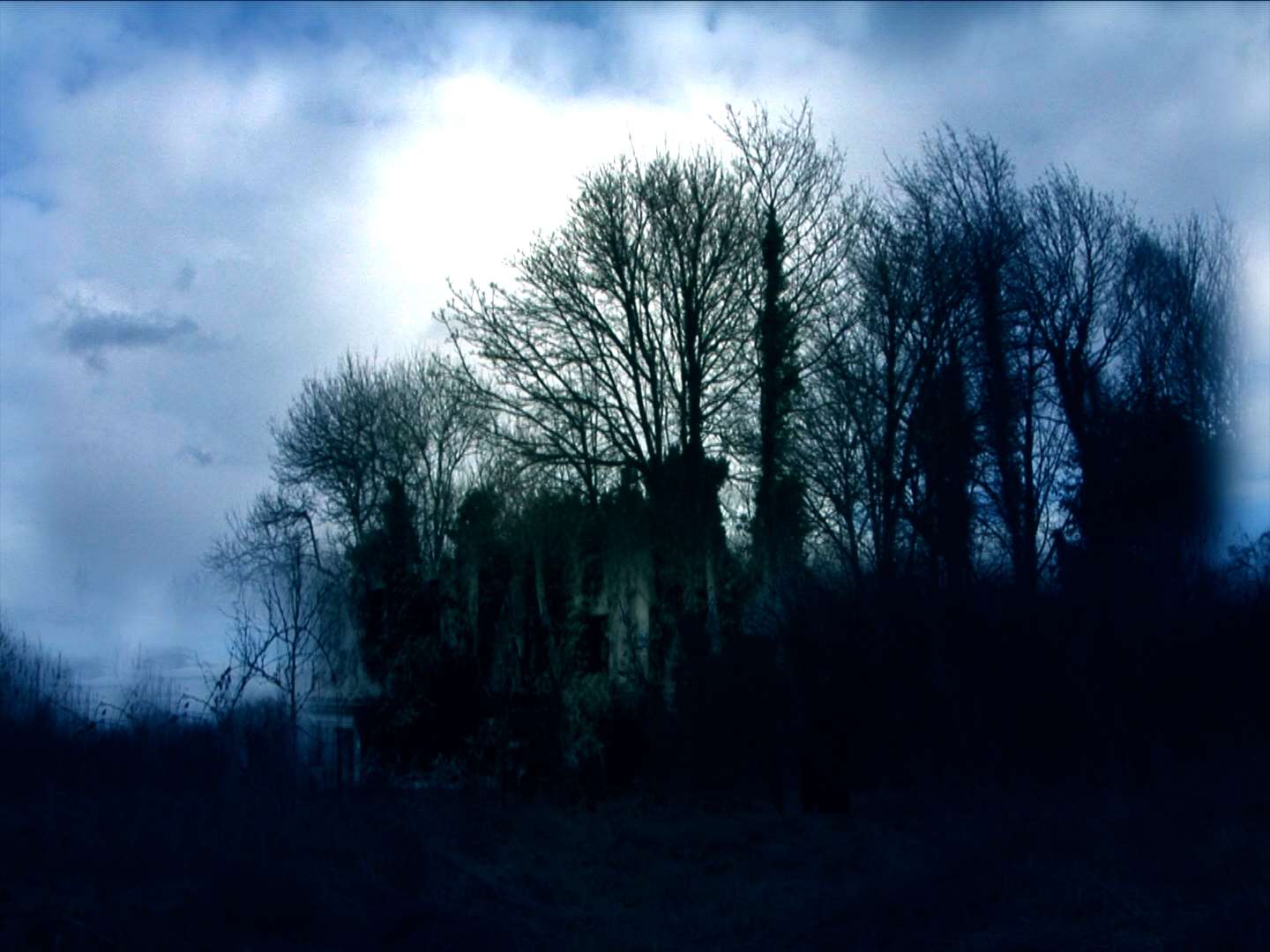
Documentary, horror, by Jason Figgis, USA, 2014.
In "Cathnafola", everything begins when renowned paranormal investigator Chris Halton of Haunted Earth UK receives footage filmed by three teenagers at the ruins of Cathnafola House in Ireland. Determined to unearth the truth behind the location’s bloody past, Halton embarks on a nighttime exploration of the infamous ruins—and soon uncovers terrifying and disturbing revelations.
LANGUAGE: English
SUBTITLES: Spanish, French, German, Portuguese
When Poetry Needed a Cosmology
You are already a minor celebrity in London literary circles, it is 1892, and you have just published a collection that makes reviewers reach for words like “luminous” and “otherworldly,” and yet every time you sit down to write the next poem you feel a kind of structural vertigo, as if the floor beneath the imagery has not yet been laid.
This was Yeats’s precise condition in the years before he committed fully to the Hermetic Order of the Golden Dawn, which he joined in 1890, and the anxiety was not temperamental but architectural. A poem needs a world to refer to. It needs, behind its images, some account of why those images carry weight — why the moon means what it means, why the tower recurs, why the gyre is not merely a decorative spiral but a claim about how civilizations are born and consumed. Every major poet before him had inherited such an account ready-made. Dante had Aquinas and the entire scholastic apparatus of correspondences. Milton had Protestant theology dense enough to construct a literal geography of heaven and hell. Even Keats, who believed in nothing systematic, could lean against the residual warmth of a Christian-Platonic tradition that still heated the stones. By the 1890s those stones had gone cold.
What Yeats faced was not a private crisis of faith but the downstream consequence of what the historian Owen Chadwick, in his 1975 work The Secularization of the European Mind in the Nineteenth Century, identified as the slow institutional collapse of religious authority under the combined pressure of biblical criticism, geological timescales, and evolutionary biology. The Church of England, into which Yeats had never been particularly inducted anyway, had spent forty years performing a managed retreat from metaphysical certainty. What remained was ethical instruction and social cohesion — useful perhaps, but useless as a cosmology. You cannot build a system of symbolic correspondences on the advice to be kind to your neighbors.
Science offered the opposite problem. It was not too vague but too complete, and its completeness was, for Yeats, a kind of aesthetic violence. A universe that operates through the conservation of energy and the selection pressure of environments has no interior, no correspondence between the motion of stars and the fate of souls, no reason why a particular bird appearing at a particular moment in a man’s life should mean anything beyond coincidence plus neurology. Yeats read enough Huxley and Tyndall to understand the argument, and he found it not false exactly but uninhabitable — a set of rooms with no windows and no doors that open onto anything larger than themselves.
This is the structural function the occult served, and A Vision, published in 1926 after years of automatic writing sessions conducted with his wife Georgie Hyde-Lees, is the monument to that function. The book is strange in ways that continue to embarrass his admirers: its twenty-eight phases of the moon mapping human personality types, its interlocking gyres churning through two-thousand-year historical cycles, its elaborate demonology of daimons and Frustrators. But to read it as mystical self-indulgence is to miss what it actually is, which is a load-bearing structure. The gyres explain “The Second Coming.” The phases explain “A Prayer for my Daughter.” Without the system, those poems float free of their own gravitational field.
His early notebooks, housed at the National Library of Ireland, show him already in the 1880s constructing private symbol-sets, mapping colors to cardinal directions and emotional states to planetary hours, doing the kind of patient taxonomic work that looks obsessive until you realize he was building, from scratch, the equivalent of what Dante received as cultural inheritance. The occult was not an eccentricity grafted onto a literary career. It was the pre-condition for a certain kind of ambition — the ambition to write poems that felt, to borrow his own phrase, like the speech of souls rather than the notation of observations.

The Golden Dawn's Machinery of Transformation
You have probably, at some point in your life, joined something that promised to remake you from the inside out — a program, a practice, a community with its own language and its own ladder — and discovered, somewhere around the third level, that the ladder was the point.
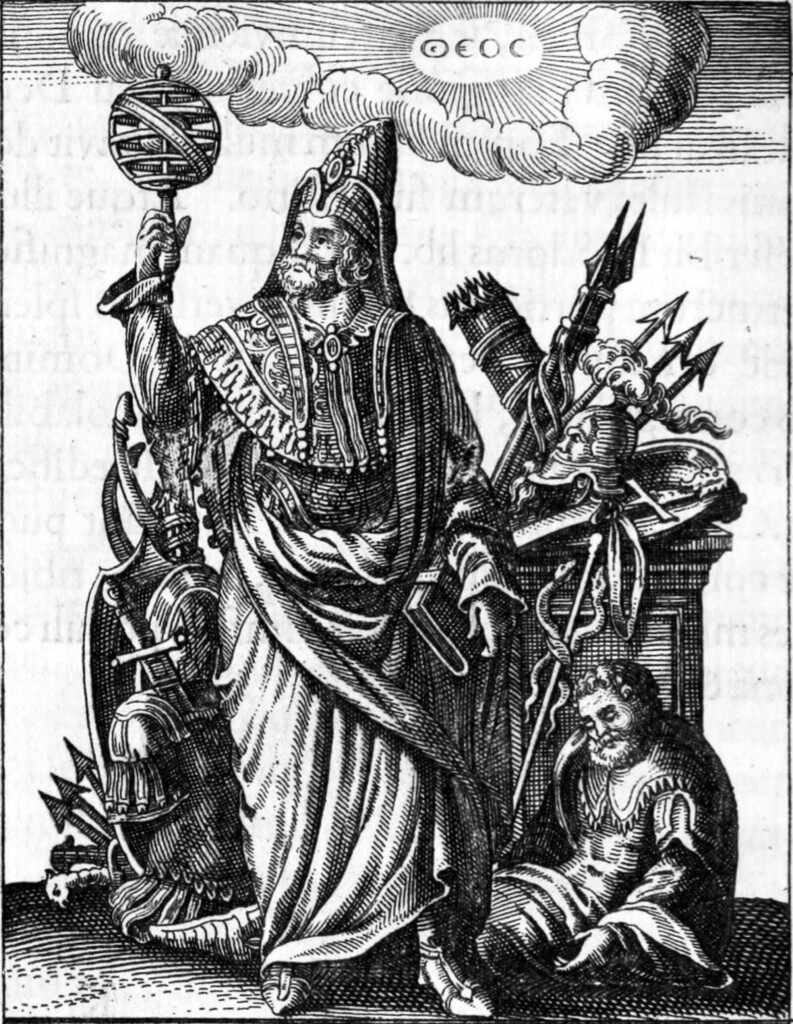
The Hermetic Order of the Golden Dawn was founded in London in 1888 by William Wynn Westcott, a coroner with a taste for ciphered manuscripts, and Samuel Liddell MacGregor Mathers, a man who believed he received direct communications from superhuman intelligences he called the Secret Chiefs. What they built together was, by any structural measure, an institution. It had grades — ten of them, organized across three orders, running from Neophyte at the base to Ipsissimus at the theoretical summit, a height no living member was ever confirmed to have reached. It had passwords that changed with each initiation, geometric floor diagrams that had to be memorized precisely, and a system of examinations that would have been recognizable to any Victorian civil servant. The borrowed vocabulary was dense: Rosicrucian symbolism from the seventeenth-century Fama Fraternitatis layered over Kabbalistic sephiroth from the Zohar, Egyptian god-forms mapped onto Tarot trumps, all of it cross-referenced and indexed with the compulsive thoroughness of a government registry.
What is worth pausing on is not the strangeness of this content but the perfect conventionality of its container. The Golden Dawn presented itself as a path beyond the mundane social order — beyond the Church, beyond the rationalist academy, beyond the material ambitions of late Victorian capitalism — and yet it reproduced every mechanism of those structures with uncanny fidelity. Rank determined access to knowledge. Knowledge was withheld from lower grades not because it was genuinely dangerous but because withholding was how hierarchy sustained itself. Mathers expelled members, members schismed, factions formed around competing claims to legitimate authority. By 1900, Aleister Crowley‘s attempt to receive the Second Order initiation in London had triggered a constitutional crisis that split the organization permanently. The rows were not about mystical disagreement. They were about who controlled the papers, who had the right to initiate, whose claim to transmission from the Secret Chiefs was valid — bureaucratic disputes wearing robes.
William Butler Yeats joined in March 1890 and would remain involved for more than two decades, rising through the grades with genuine dedication. He was not a passive member. He served on the governing council, participated in the factional wars, and took the initiatory rituals with a seriousness that his colleagues sometimes found excessive. What he was searching for inside those rituals was, by his own later account in the 1925 prose work A Vision, a system of symbols adequate to the full complexity of human experience — something that could hold history, psychology, and spiritual reality in a single coherent form. The Golden Dawn’s elaborate grade structure promised exactly this: a map of consciousness organized as a journey, each threshold crossed marking a genuine interior change. The promise was seductive because it was architectural. It gave transformation a shape you could point to.
Yet the sociologist Max Weber, writing in the same historical moment, identified the iron cage of bureaucratic rationalization as modern civilization’s defining trap — the tendency of any human project, however visionary at its origin, to calcify into procedure, to replace the charismatic with the administrative, to make the form outlast the spirit that generated it. Weber published his analysis of Protestant asceticism and economic rationality in 1905, seventeen years after Westcott and Mathers opened their temple. He was not thinking about occult lodges. He did not need to be. The pattern he described was structural, not ideological, which is precisely why it appeared with such fidelity inside an order dedicated to escaping the world his analysis described.
Yeats was intelligent enough to feel the contradiction without being free enough to leave it behind.
Automatic Writing and the Colonization of the Unconscious
You are sitting across from your spouse, a blank notebook open between you, and your spouse’s hand begins to move without apparent intention — tracing symbols, forming words, answering questions you haven’t asked yet. This is not metaphor. This happened in October 1917, four days after William Butler Yeats married Georgie Hyde-Lees, when she picked up a pencil and produced, in a dissociated state, the first fragments of what would eventually become one of the most elaborate symbolic architectures in twentieth-century literature. Yeats recognized immediately that something was being offered to him. He wrote later that the communicating spirits told him they had come to give him “metaphors for poetry,” which is among the more honest admissions in literary history — a confession that the entire apparatus was, at some level, understood to be generative machinery rather than cosmological fact.
What demands scrutiny is not whether the voices were real in any supernatural sense, but rather what the choice to locate authority outside the self actually performs. When a system of ideas arrives through a hand that moves on its own, through a voice that speaks from nowhere identifiable, the creator of that system is simultaneously absolved of accountability and elevated to the status of receiver rather than inventor. The philosopher Giorgio Agamben, in his 1977 work Stanzas, traced how Western culture has persistently split the act of creation from the act of possession — we desire what we cannot claim to have made, and we claim authority over what we cannot admit to desiring. The automatic script resolves this paradox by making the creator disappear at the precise moment of creation, only to reappear as the sole person capable of interpreting what arrived.
Over the next several years, Hyde-Lees produced thousands of pages of automatic script and later what Yeats called “sleeps” — trance states from which she spoke answers to his systematic questioning. The communicating entities identified themselves as “Instructors,” and they organized human experience into an elaborate geometry of cones, gyres, and lunar phases totaling twenty-eight distinct types of personality, cycling through historical epochs in vast two-thousand-year arcs. A Vision was published in 1925 in a limited edition and substantially revised in 1937, and its internal logic is dense enough to have generated serious scholarly commentary for nearly a century — which is itself a kind of evidence, though not for what Yeats intended. The elaborateness of a system is frequently mistaken for its depth.
There is something specific happening when a married couple constructs a private language together, one partner producing the raw material and the other becoming its official theorist and public voice. Hyde-Lees was an intelligent, well-read woman with genuine occult training of her own, a member of the Golden Dawn before Yeats introduced her to its inner circles. Her contribution to A Vision has been systematically understated, and not accidentally — the logic of the automatic script itself demanded her erasure. A message that arrives from beyond cannot have a terrestrial co-author without losing its legitimacy. She became, through the mechanism of the séance, the instrument that could not be credited.
The deeper trap is that every creative and philosophical system manufactures legitimacy through some version of this move. Freud claimed to be reading what the unconscious itself dictated. Marx insisted he was decoding the objective laws of historical materialism, not constructing a political vision. The Enlightenment philosophes appealed to Reason as though it were a discovered country rather than a concept they were assembling in real time. Each displaced their own authority onto something that could not speak back, could not be interrogated under pressure, could not revise itself. The automatic script makes this displacement visible precisely because it is so naked — the pencil moves, the hand is not responsible, and somewhere in the resulting symbols a man finds the confirmation of everything he already half-believed about time, fate, and the structure of the soul.
Symbols as Infrastructure
You open A Vision expecting fog — the kind of beautiful, useless fog that accumulates around poets who flirt with the supernatural — and instead you find something closer to an engineering diagram. William Butler Yeats published the first version in 1925 and a substantially revised edition in 1937, and what sits inside is not a collection of mystical impressions but a working architecture: two interpenetrating cones he called gyres, rotating against each other through time, generating historical epochs of roughly two thousand years as one cone widens and the other narrows toward its point. The system has the audacity of a theory, not the vagueness of a vision.
The gyres did not stay on the page. When Yeats wrote “The Second Coming” in January 1919, with Europe still smelling of the war and the Russian Revolution barely two years old, he did not reach for metaphor in the ordinary sense. He reached for a structural prediction built into his cone model: when one gyre completes its rotation and narrows to nothing, the opposite gyre erupts from that point outward, carrying a civilization of opposite character. The falcon losing the falconer is not a symbol of chaos in the decorative sense — it is a precise image of a system exceeding the limits of its own coherence. “Things fall apart; the centre cannot hold” is a mechanical description before it is a lament. The rough beast slouching toward Bethlehem is not an intuition about history; it is the arriving counter-gyre, the next two-thousand-year cycle forcing itself into presence exactly as the diagram predicts it must.
The twenty-eight phases of the moon, which Yeats mapped across the same system, provided a different kind of precision — psychological rather than historical. He assigned each phase a specific configuration of human personality, running from the total objectivity of Phase One, which he associated with complete absorption into material existence, through the full subjectivity of Phase Fifteen, which no human being can actually occupy because it represents perfect beauty and therefore perfect paralysis. Real human beings live in the twenty-six phases between those poles, and each phase comes with specific tensions between what he called the Will, the Mask, the Creative Mind, and the Body of Fate. These were not horoscope categories. They were a matrix for understanding why a particular type of person necessarily courts a particular type of destruction.
When Yeats placed himself at Phase Seventeen — the phase he associated with the Daimonic Man, figures driven toward Unity of Being but structurally incapable of achieving it without violence to the self — he was doing something stranger and more serious than self-mythologizing. He was using the phase system as a diagnostic that then shaped which images he allowed himself to reach for in poems, which conflicts he could treat as inevitable rather than contingent, which resolutions he had to refuse. The framework was generative in a technical sense: it eliminated certain choices and made others compulsory.
“Leda and the Swan,” written in 1923, operates from exactly this logic. Zeus descending as a swan onto a mortal woman is not chosen for its erotic shock alone — it is a gyre-hinge moment, the violent intersection of divine objectivity with human subjectivity that Yeats understood as the mechanism by which historical epochs are seeded. The question that ends the poem — “Did she put on his knowledge with his power / Before the indifferent beak could let her drop?” — is not rhetorical in any comfortable sense. It asks whether the human being caught inside a civilizational rupture can absorb the meaning of what is happening to her before history discards her. The occult system generates that question as a logical consequence, not as a poetic ornament.
What the Golden Dawn gave Yeats through years of ritual and symbolism was not belief in the supernatural. It was a vocabulary precise enough to make historical force feel bodily, and personal crisis feel structural.
A vision curated by a filmmaker, not an algorithm
In this video I explain our vision
The Social Function of Secret Knowledge

You already know the password before anyone tells it to you. You feel it the moment you stand outside the right door, watching others enter, watching the door close — that particular texture of exclusion that somehow makes you feel more real than the people inside, because at least the exclusion has chosen you as its object, has noticed you enough to keep you out.
Georg Simmel, writing in 1906 in his essay “The Sociology of Secrecy and of Secret Societies,” made an observation so precise it reads like a diagnosis: the secret society’s power does not reside in what it conceals, but in the act of concealment itself. The structure of withholding produces a social gravity, a centripetal force that binds the initiated not through shared revelation but through shared exclusion of everyone else. What is actually behind the locked door is almost irrelevant. What matters is that there is a locked door, that you have a key, and that most of humanity does not.
The Golden Dawn understood this architecturally. Its initiatory grades — from Neophyte through Adeptus Minor to the theoretical heights of the Third Order — were not primarily pedagogical. They were theatrical. Each threshold existed to make the previous room feel smaller and the next room feel sacred. The rituals of the Neophyte grade, which Yeats underwent in March 1890, involved blindfolding, the recitation of oaths, and the staged revelation of symbolic objects whose meaning was withheld until further advancement. The content of what was revealed mattered less than the neurological fact of the reveal — the body’s response to ceremonial darkness and sudden light produces a felt sense of significance that precedes any intellectual interpretation. Initiates were being trained not in Hermeticism but in the sensation of initiation.
Yeats was extraordinarily susceptible to this sensation, and he never stopped seeking it. What is striking about his entire poetic project, read from this angle, is how consistently it reproduces the grammar of the locked door. His mature verse is structured around symbols that do not fully explain themselves — the gyre, the Tower, the Rose — and this opacity is not a failure of communication but a feature of it. The poem becomes a secret society of two: the reader who suspects a meaning, and the poet who knows Yeats will never confirm it. The intimacy this produces is real, and Simmel’s logic explains why: a secret shared between two people creates a dyad of exceptional intensity, a social bond made denser by its exclusion of all third parties.
His elitism was never simply a matter of class preference, though the class component was genuine and worth naming. He despised what he called in “A Vision” the democratic age — the era he associated with the lunar phase of maximum dispersal, minimum intensity, the mass dissolving individual form. This was not an aesthetic preference dressed in cosmological language. It was a social preference dressed in aesthetic language. The Golden Dawn gave him a ready-made framework for believing that access to truth is naturally hierarchical, that most people are constitutionally incapable of receiving certain knowledge, and that this incapacity justifies the structure that excludes them.
What this framework could never acknowledge was its own circularity. The secret society does not find an elite and initiate it. It produces the experience of being elite through the act of initiation. The knowledge granted inside the Order was not withheld from the uninitiated because they lacked the capacity to understand it. It was withheld because the withholding was the knowledge — or rather, the withholding was the social technology that made the knowledge feel worth having. Yeats spent decades building a cosmological system of daunting complexity, and the system’s primary function was to sustain the sensation he had first felt standing in a blindfold in a London room, convinced that what was about to be revealed to him could not be given to just anyone.
Violence, Prophecy, and the Temptation of Historical Necessity
You are standing in a room where someone is explaining, with genuine calm, why the bloodshed outside the window was always going to happen. The voice is not cruel. That is precisely what makes it dangerous.
Yeats wrote his marching songs for the Blueshirts in 1934, and the biographical fact tends to make critics uncomfortable enough that they reach quickly for mitigation — he was naive, he pulled back, he later expressed ambivalence. What gets lost in that rush toward exculpation is the structural logic that made such a commission feel, to him, not like a betrayal of his art but like a fulfillment of it. A system that divides history into gyres, that assigns each civilization a predetermined arc of rise and catastrophe, that reads the present moment as the necessary convulsion before a new two-thousand-year cycle, does not merely permit violence — it aestheticizes it as cosmically punctual. The horror arrives on schedule. The marching songs were not an aberration. They were the system working correctly.
Georges Sorel, writing in Reflections on Violence in 1908, had already demonstrated that myth, not argument, is what moves historical actors toward collective action — and that the myth most potent is one that frames violence as generative, cleansing, inevitable. Yeats arrived at something structurally identical through an entirely different corridor: not syndicalist politics but hermetic cosmology. Yet the destination was recognizably the same chamber. When history is experienced as a wheel that must complete its turn, the human beings crushed beneath it are not victims of human choices but offerings to an impersonal necessity. That transference of agency — from the actors who choose violence to the cosmic schema that schedules it — is precisely what makes apocalyptic historicism so morally evacuating.
The fascist aesthetics of the 1930s were not merely a political tendency Yeats flirted with; they were a grammar that matched the syntax of his Vision almost clause by clause. Strong men, the breaking of decadent liberal forms, the purification through conflict — these were not foreign borrowings grafted awkwardly onto his thought. They were what his thought, at its most systematized, was already producing. In 1933 he wrote to Olivia Shakespear that he was reading the “school of Mussolini,” finding in it “the best part” of what he had himself believed, and the confession is not that of a man seduced but of a man recognizing his own face in an unexpected mirror. The occult schema had prepared the eye for exactly this recognition.
What A Vision had constructed, across its two editions of 1925 and 1937, was a world in which individual moral responsibility dissolves into phase and gyre. Phase 22, the phase of the “Fool” or the collective mob, must come before the new antithetical cycle begins. There is nothing to be done with phase 22 except endure it, or — and this is the step that the schema never quite forbids — accelerate it. The logic of inevitability and the logic of acceleration are not opposites. They are adjacent temptations sharing a wall.
What should disturb us is not that a poet held ugly political opinions in the 1930s — that century produced no shortage of such poets. What should disturb us is the machinery that made those opinions feel like metaphysical realism rather than political choice. A system that grants you the sensation of reading history from above, of watching the gyres turn with the detachment of an initiate who has decoded what the uninitiated can only suffer, does not make you wiser about power. It makes you specifically vulnerable to the oldest seduction power offers: the feeling that what is happening was always going to happen, which is the feeling that permits you to watch it happen, and sometimes to help it along, without once believing you have chosen anything at all.
What the Visions Were Actually Measuring
You are sitting across from someone who has just told you something they have never told anyone — not because the secret is shameful, but because there is no language for it in the world they normally inhabit, and the moment they try to speak it aloud, the available vocabulary turns it into something smaller and stupider than what it actually was.
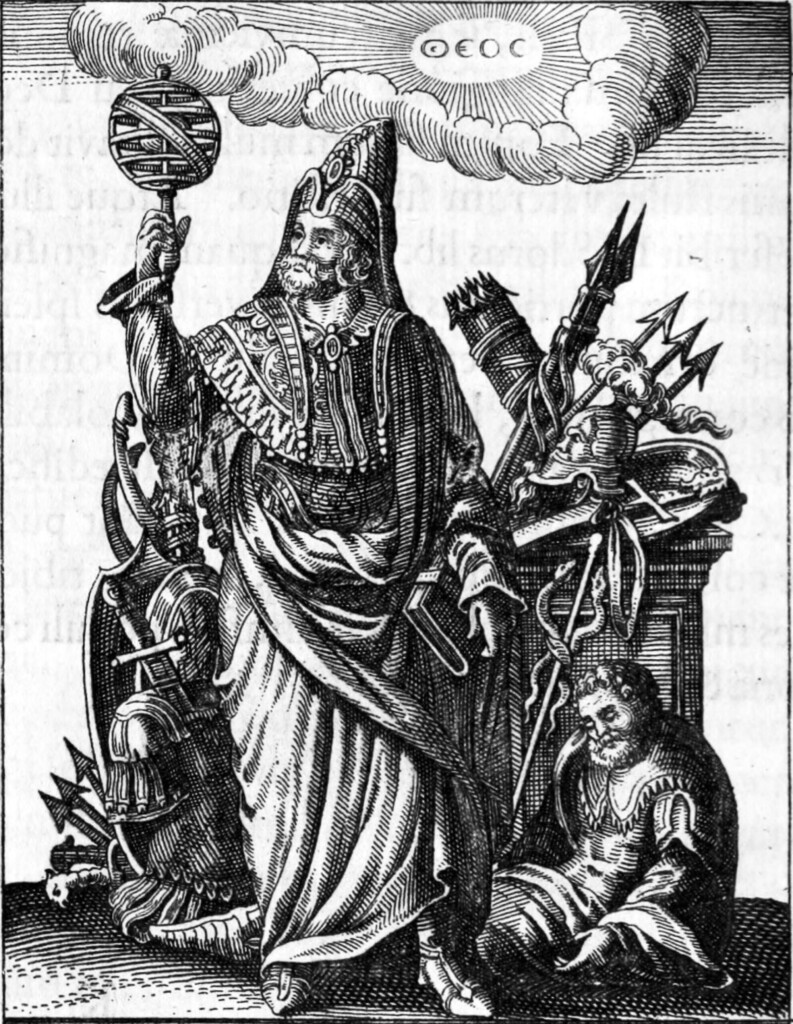
That experience of shrinkage, of the real thing contracting the instant it meets the public air, is precisely what William James was diagnosing in 1902 when he assembled the lectures that became The Varieties of Religious Experience. James was not arguing that God exists or that mystical states are epistemically reliable. He was doing something far more unsettling: demonstrating that human consciousness routinely generates experiences of an order that the reigning materialist account of mind simply cannot metabolize without remainder. His phrase “will to believe” is constantly misread as a license for wishful thinking. What he actually meant was structurally sharper — that belief is not merely a passive registration of evidence but an active orientation of the organism toward possibility, and that certain possibilities only become available to experience once the organism has already committed to taking them seriously. The vision, in other words, is not what you get after you believe. It is what believing makes room for.
Yeats understood this architecturally rather than doctrinally. What the Golden Dawn rituals and the automatic writing sessions with Georgie Hyde-Lees were actually constructing was not a theology but a grammar — a set of syntactic structures through which experiences that would otherwise remain formless could be organized into transmissible shape. When A Vision appeared in its first private edition in 1925 and then in a revised public form in 1937, it was received mostly as an eccentric embarrassment, a system of gyres and lunar phases that seemed to confirm every suspicion about Yeats’s willingness to disappear into private mythology. But what the book actually records is the strenuous effort to give stable form to a mode of inner experience that modernity had declared inadmissible. The gyres were not cosmology. They were scaffolding.
The historical pressure behind this effort is harder to feel from inside the present, where secularism has become so thoroughly the assumed baseline that religious or visionary experience is treated as a deviation requiring explanation. In the decades bracketing the turn of the twentieth century, that reversal was still actively happening, still raw. Max Weber would not publish his analysis of Entzauberung — disenchantment, the systematic evacuation of magical thinking from public life — until 1917, but the process he was naming had been grinding forward since at least the 1840s. What it produced in practice was not the calm, well-lit rational subject of Enlightenment promise but a population of people carrying needs that had formerly been organized by myth and ritual, now finding those channels blocked, the need itself surviving the loss of every structure that had previously handled it.
The occult revival of the late nineteenth century was not a retreat into superstition by people who had failed to modernize. It was populated largely by people who had modernized completely — scientists, poets, classically trained scholars, members of the professional classes — and who found that completion intolerable in a specific way. The Society for Psychical Research, founded in 1882, counted among its members figures of serious scientific standing, including the physicist William Barrett and the philosopher Henry Sidgwick, precisely because the demand being made was not for enchantment as such but for a methodology rigorous enough to investigate experience that the dominant methodology had ruled out of court by definition.
What Yeats finally measured with his visions was not the supernatural. He measured the precise interior volume of what a consciousness cannot afford to lose — and found it larger than any available secular framework was equipped to hold.
🔮 Hidden Worlds: Occultism, Vision and Sacred Knowledge
Yeats’s involvement with the Hermetic Order of the Golden Dawn was no mere curiosity — it was the spiritual backbone of his entire poetic vision. This labyrinth of related articles traces the esoteric currents that shaped Western mysticism, from secret societies to visionary cosmologies, revealing the hidden architecture behind art and thought.
Aleister Crowley: the Great Beast and the Religion of Will
Aleister Crowley was a central and controversial figure in the same occult milieu that Yeats navigated through the Golden Dawn, though the two men famously clashed in temperament and method. Crowley’s development of Thelema and his obsession with magical will represent one extreme of the Western esoteric tradition that Yeats approached with greater poetic restraint. Understanding Crowley illuminates the deeper tensions within the Golden Dawn and the broader world of fin-de-siècle occultism that so profoundly marked Yeats’s imagination.
GO TO THE SELECTION: Aleister Crowley: the Great Beast and the Religion of Will
The Theosophical Society: History, Principles and Influence on Western Culture
The Theosophical Society was one of the most influential esoteric currents of the nineteenth century, creating the intellectual atmosphere in which the Golden Dawn was born and flourished. Its synthesis of Eastern spirituality, Western Hermeticism, and evolutionary mysticism deeply shaped the language and ambitions of occult seekers like Yeats. Tracing Theosophy’s history and principles is essential to understanding the visionary framework Yeats would later systematize in his prose work A Vision.
GO TO THE SELECTION: The Theosophical Society: History, Principles and Influence on Western Culture
Giordano Bruno and the Hermetic Tradition
Giordano Bruno‘s fusion of Hermeticism, memory systems, and cosmic philosophy represents one of the deepest roots of the esoteric tradition that the Golden Dawn sought to revive and transmit. His ideas on magic as a form of imaginative knowledge resonated powerfully with Yeats’s own belief in the poet as a vessel for universal symbols. Exploring Bruno’s Hermetic legacy helps illuminate the philosophical genealogy behind Yeats’s visionary poetics and his lifelong engagement with the occult.
GO TO THE SELECTION: Giordano Bruno and the Hermetic Tradition
The Corpus Hermeticum: Guide to Esoteric Reading
The Corpus Hermeticum, the foundational text of the Hermetic tradition, provided the Golden Dawn and Yeats with a cosmological language of correspondence between the divine, the cosmic, and the human soul. Its teachings on the ascent of the soul and the transformation of consciousness through gnosis directly informed the initiatory structure of the Order’s magical grades. Reading the Corpus Hermeticum is reading the deep grammar behind the symbols and visions that haunted Yeats’s greatest poetry.
GO TO THE SELECTION: The Corpus Hermeticum: Guide to Esoteric Reading
Discover the Cinema of the Invisible on Indiecinema
If these hidden worlds of occultism, vision, and esoteric transformation captivate you, Indiecinema’s streaming platform offers an extraordinary selection of independent and art-house films that explore mysticism, consciousness, and the secret architecture of the human spirit. Step beyond the mainstream and discover cinema that dares to look into the dark.
👉 EXPLORE THE CATALOG: Watch Indie Films in Streaming
A vision curated by a filmmaker, not an algorithm
In this video I explain our vision

