
The Mask and the Man
You are handed a photograph of William Butler Yeats taken sometime in the 1930s, near the end of his life, and the first thing you notice is not his age but his posture — the way he holds himself slightly apart from whatever surrounds him, the chin tilted at an angle that is neither arrogant nor uncertain but something more calculated than either, a man who has spent decades deciding exactly how to be looked at.

This is not vanity in any ordinary sense. Yeats worked out, with the rigor of a philosopher and the patience of a craftsman, a systematic theory of the self as performance — not performance as deception, but performance as the only authentic mode of becoming. In A Vision, first published in 1925 and radically revised in 1937, he laid out a cosmological framework so elaborate it embarrassed some of his admirers and delighted his detractors, involving lunar phases, gyres, and the cyclical movement of souls through history. Embedded within that architecture, however, was one genuinely destabilizing idea: the concept of the Mask. For Yeats, the Mask was not the false face worn over a true one. It was the image of what a person most deeply is not, and therefore most urgently must become. The self, in this account, is not discovered but constructed through its opposite. You do not reveal yourself by stripping away pretense — you create yourself by choosing which pretense to inhabit completely.
The biographical consequences of this are severe and largely unacknowledged. Most readers approach Yeats’s life looking for the authentic man beneath the mystical prophet — the frustrated lover behind the Maud Gonne poems, the Anglo-Irish Protestant behind the Celtic Revival, the aging man behind the late erotic ferocity. This is precisely the interpretive move his own philosophy forbids. To read the biography as the key to the poetry is to assume that there is a prior, unperformed self whose private truth gives the public work its meaning. Yeats spent his entire adult life constructing a system to argue the opposite: that the man who sits down to write a poem is already a mask, already an achieved fiction, and that the poem is not confession but combat — combat between the self that exists and the anti-self that must be summoned.
Georg Simmel, writing in the same era, observed in his 1908 Soziologie that the face is the primary site of social legibility, the place where we expect a person’s interior to surface without distortion. Yeats understood this expectation and turned it inside out. The robes, the Celtic twilight atmospherics, the associations with the Golden Dawn, the carefully managed interviews and the theatrical friendships with figures like Ezra Pound and Lady Gregory — none of this was incidental to the work. It was the work, carried out in a different medium. He was sculpting a self in public space the way he sculpted a lyric on the page, through deliberate formal choices that foreclosed certain possibilities in order to make others violently present.
What this means for the poetry specifically is that the longing in it is never entirely personal. When he writes in “The Second Coming,” published in 1919, of a center that cannot hold and a rough beast slouching toward Bethlehem, he is not simply recording his horror at postwar Europe, though that is real enough. He is also a man enacting the Mask of the prophet — inhabiting, with full philosophical intention, the anti-self that sees through historical time to something beneath it. The poem works because the performance is total. There is no seam between the man and the role, which is exactly what Yeats meant when he insisted that the Mask, worn long enough and seriously enough, stops being a mask at all and becomes the only face the world ever needed to see.
Cathnafola - A Paranormal Investigation
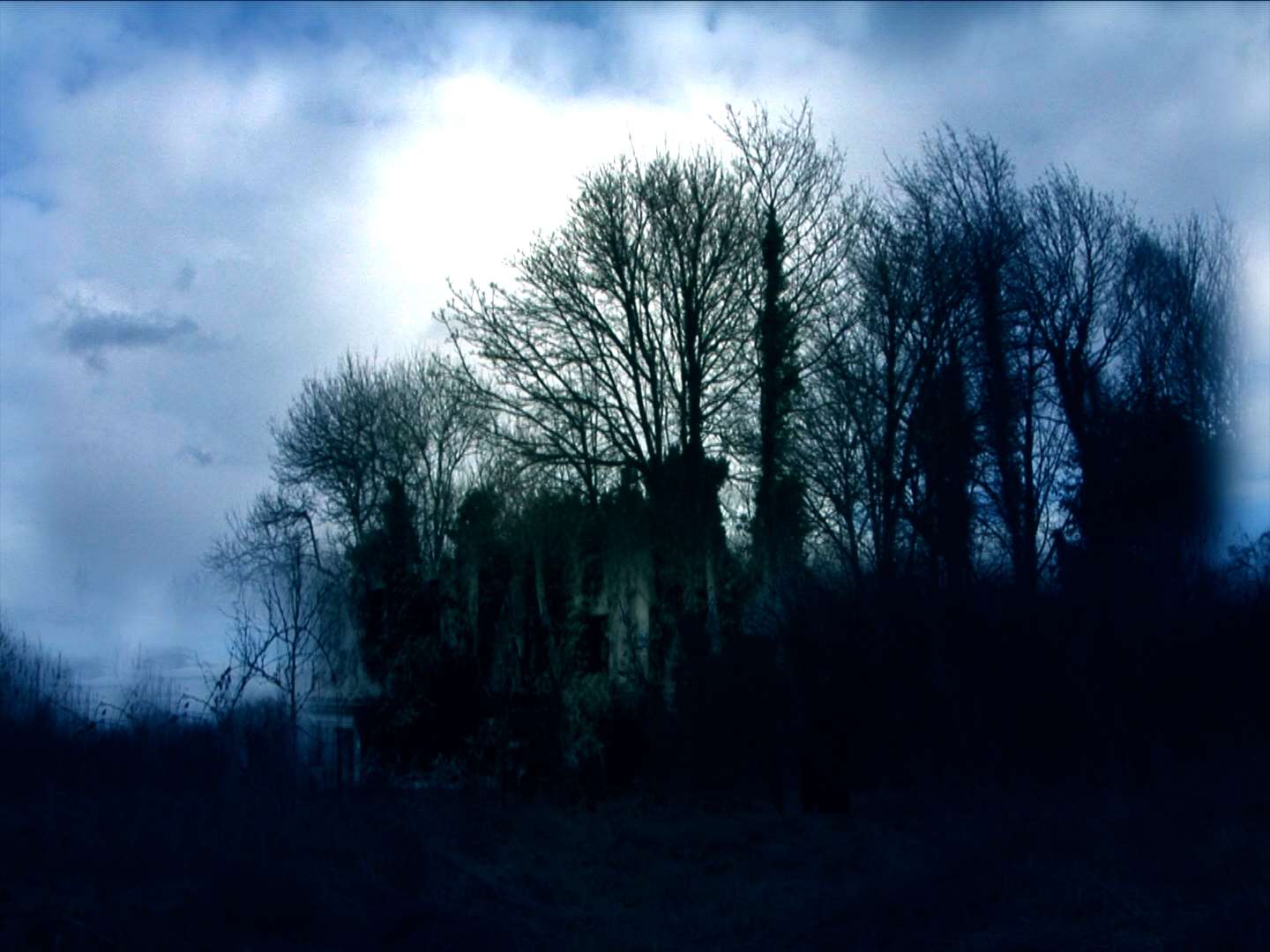
Documentary, horror, by Jason Figgis, USA, 2014.
In "Cathnafola", everything begins when renowned paranormal investigator Chris Halton of Haunted Earth UK receives footage filmed by three teenagers at the ruins of Cathnafola House in Ireland. Determined to unearth the truth behind the location’s bloody past, Halton embarks on a nighttime exploration of the infamous ruins—and soon uncovers terrifying and disturbing revelations.
LANGUAGE: English
SUBTITLES: Spanish, French, German, Portuguese
Protestant Margins and Irish Belonging
You grow up speaking the language of the empire that is crushing your neighbors, attending the church of the colonizer in a country where the colonizer’s church is a mark of betrayal, and you are somehow supposed to write the national literature of that country. This is not a metaphor for Yeats’s situation. It is the literal geometry of his existence, a structural impossibility that he never resolved because it could not be resolved, only metabolized.
The Anglo-Irish Protestant caste to which Yeats belonged occupied a specific and vertiginous position in the social architecture of nineteenth-century Ireland. They were neither fully British nor authentically Irish in the eyes of the Catholic majority — a community that had survived dispossession, famine, and systematic legal degradation under the very system the Protestant Ascendancy had administered. The Penal Laws, which had prohibited Catholics from owning land, holding public office, or receiving education for much of the eighteenth century, had been the legal machinery of this Ascendancy. By the time Yeats was born in 1865, those laws had been largely dismantled, but the memory they had carved into the landscape of Irish identity was still raw, still structuring who belonged to Ireland’s grief and who did not.
What this produced in Yeats was not guilt in any psychologically simple sense, but something far more generative and far more dangerous: an obsessive need to earn belonging through aesthetic means. Richard Ellmann, in his 1948 critical study “Yeats: The Man and the Masks,” identified this as a lifelong performance of Irish identity that was always slightly too deliberate, too constructed, too willed — and Ellmann meant this not as an insult but as a diagnosis of creative urgency. When a writer belongs naturally, they do not need to mythologize. When belonging must be justified, mythology becomes a survival strategy.
This is why Yeats reached so hungrily for the folklore collections of Lady Gregory, why the peasant cottages of County Galway and the mythology of Cuchulain and the Tuatha Dé Danann became the raw material of his early verse. He was not romanticizing the rural poor from a comfortable distance, though that charge has been fairly leveled at him. He was attempting something more desperate: to locate himself inside an Ireland that had structural reasons to refuse him. The Celtic Twilight, published in 1893, is often read as mystical escapism, but it functions equally as an act of cultural self-grafting — Yeats attempting to splice his own roots into soil that had not grown him.
The displacement also drove his theatrical ambitions in a direction that pure aesthetics alone cannot explain. The founding of the Irish Literary Theatre in 1897, alongside Gregory and Edward Martyn, was a political act dressed in cultural clothing. A national theatre requires a nation, and a nation requires a story about itself told from the inside. Yeats was not inside, and he knew it, and he built the institution anyway, as if the institution itself could retroactively legitimate his position within the tradition it claimed to represent.
What this structural contradiction did to his poetic language is where biography becomes aesthetics in a way that cannot be separated. The famous tension in Yeats between the sensuous and the abstract, between the image drenched in physical world and the symbol lifted free of it, reflects a writer who cannot fully inhabit either the material reality of Catholic Ireland or the disembodied realm of pure spirit. He is always caught between incarnation and transcendence, always reaching toward a ground he cannot stand on without qualification. Georg Simmel wrote in 1908 that the stranger is the person who arrives today and stays tomorrow — neither fully inside nor fully outside, but defined by the specific angle of their non-belonging. Yeats wrote from that angle for sixty years, and the obliqueness of his gaze is precisely what makes his vision irreplaceable.

Maud Gonne and the Erotics of Refusal
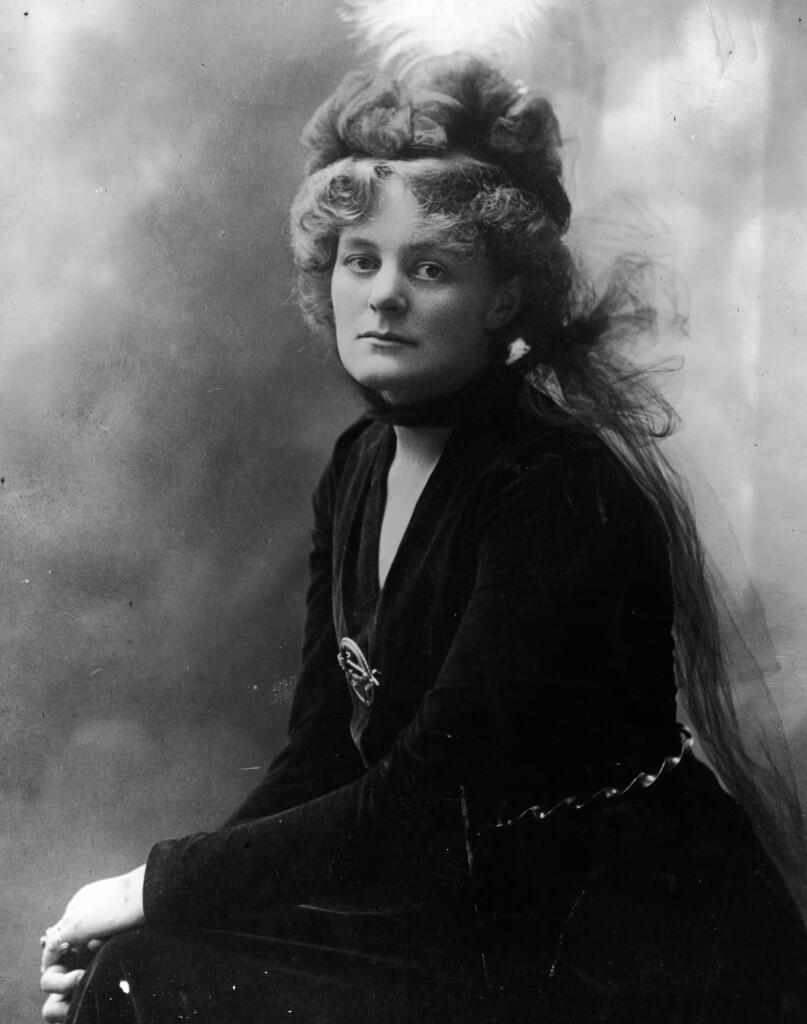
You have rehearsed this scene without knowing it: someone you want refuses you, and in the years that follow you find yourself unable to stop building, elaborating, returning — not to them, exactly, but to the structure their refusal created inside you. The wound becomes a room you keep furnishing.
William Butler Yeats met Maud Gonne in January 1889, when she arrived at his father’s house in Bedford Park, tall and radiant and already politically ferocious, and he was twenty-three years old and entirely unequipped for what was about to happen to him. He proposed to her in 1891, again in 1899, again in 1900, again in 1901. She refused every time with a consistency that bordered on its own kind of devotion. In 1903 she married John MacBride, a man Yeats considered her catastrophic inferior, and even this did not close the circuit — he proposed again in 1916, after MacBride had been executed following the Easter Rising, and once more in 1917 before pivoting, with a biographical strangeness that reads almost like resignation, to propose to her daughter Iseult instead.
What accumulates across that timeline is not pathos but a production system. The poems he addressed to her — “No Second Troy,” “He Wishes for the Cloths of Heaven,” the entire sequence that runs through “The Wind Among the Reeds” in 1899 — are not documents of suffering. They are acts of mythologization so thorough that the woman herself becomes structurally unnecessary. Gonne understood this, at some level, and wrote in her memoir “A Servant of the Queen” that she believed she served Yeats better as an inspiration than she could have as a wife. She was describing, with unexpected precision, the mechanics of what theorists of desire have long recognized: that the object of longing is always, at some fundamental level, a construction placed over an absence.
Jacques Lacan‘s formulation — that desire is not desire for the object but desire for the desire itself, that what is sought is the lack rather than its filling — finds in Yeats’s biography not an illustration but a proof conducted across five decades of lived experience. Every refusal from Gonne did not diminish the symbolic charge she carried; it amplified it, because it preserved the gap through which meaning could keep flowing. Had she accepted him in 1891, the poetry we have would not exist. The acceptance would have replaced the symbol with a person, and persons, unlike symbols, have bad mornings and changed opinions and the ordinary weight of proximity.
This is the trap that almost no one in the grip of it can see: the beloved is being asked to remain incomplete, to stay just out of reach, because their full presence would collapse the architecture built around their absence. René Girard, in “Deceit, Desire, and the Novel” published in 1961, argued that human desire is fundamentally mimetic and triangular, always requiring a mediator, always more interested in the metaphysical prestige attached to the desired object than in the object itself. Yeats never needed a mediator external to himself — he became his own, constructing around Gonne a symbolic system so elaborate that it eventually merged with his cosmology, with the gyres and the Mask and the anti-self he would theorize in “A Vision” in 1925.
That cosmology, built in part from the unresolvable tension she generated in him, then shaped the political and aesthetic imagination of an entire century of Irish writing. What began as one man’s inability to accept rejection became the symbolic grammar of a culture reaching for its own mythological form. The personal did not become political so much as it became ontological — a way of organizing how things oppose each other, how history turns, how a civilization understands the forces that will not reconcile and cannot merge.
Occultism as Epistemology
You sit across from someone you have just married, watching their hand move across paper without apparent volition, producing symbols and diagrams they claim not to understand. This is not a séance for entertainment. For William Butler Yeats, these sessions beginning in October 1917, four days after his wedding to Georgie Hyde-Lees, represented something closer to a scientific experiment conducted at the edge of what science was willing to touch.
The nineteenth century had not resolved the question of consciousness; it had only decided to stop asking it. When Hermann von Helmholtz formalized the conservation of energy in 1847 and the laboratory became civilization’s new cathedral, the immaterial was not disproved so much as administratively excluded. Yeats noticed this exclusion. He had been noticing it since adolescence in Dublin, where his father’s Darwinian rationalism left the young man with what he later described as a hunger for a belief system that could accommodate beauty, symbol, and the terrifying suspicion that the world was stranger than empiricism permitted. The Hermetic Order of the Golden Dawn, which he joined in 1890, was not a retreat from intellectual life but a competing epistemological tradition — one that counted Eliphas Lévi, Paracelsus, and the Neoplatonists as its ancestors rather than Newton and Pasteur.
What the Golden Dawn offered, structurally, was a theory of knowledge organized around correspondence rather than causation. The universe, in this framework, was legible — not through measurement but through pattern recognition at increasing scales of symbolic resolution. This is not as remote from serious thought as the twentieth century was trained to assume. Frances Yates, in her 1964 study Giordano Bruno and the Hermetic Tradition, demonstrated that Renaissance hermeticism was not marginal superstition but a coherent intellectual program that shaped early modern science before the two traditions violently separated. Yeats was, in his own eccentric way, attempting to repair that rupture — to construct a system in which vision and verification were not enemies.
The automatic writing produced by Hyde-Lees became the raw material for A Vision, published in its first form in 1925 and revised substantially in 1937. The book is almost unreadable unless you accept its premises, which is precisely what makes it interesting as an artifact of thought. Its central architecture — the Great Wheel of twenty-eight lunar phases mapping all human personality and historical eras — is not an allegory. Yeats treated it as a genuine topology of time and character. He used it to date historical civilizations, to classify living people he knew, and to structure the symbolic logic of poems. The gyres, those interpenetrating cones spinning in opposite directions, gave him a way to think about historical change not as linear progress but as oscillation between antithetical states. This was not mysticism decorating poetry; it was the scaffolding on which poems like “The Second Coming,” written in 1919, were architecturally built.
The historical claim embedded in the gyre system deserves to be taken seriously rather than condescended to. Yeats proposed that civilizations run approximately two-thousand-year cycles, each reaching its maximum expression before collapsing into its opposite. He was writing this as the Austro-Hungarian Empire dissolved, as the Russian Revolution liquidated one entire political theology, as Irish blood was drying on Dublin streets. The feeling that history had ceased to be progressive and had instead become catastrophically rhythmic was not a fringe position in 1919. Oswald Spengler published the first volume of The Decline of the West in 1918, arriving at a structurally similar cyclical diagnosis from an entirely secular direction. That two thinkers reached comparable historical geometries from opposite methodological starting points might suggest something about the adequacy of linear models rather than the madness of either man.
What Yeats understood, and what made his occultism philosophically interesting rather than merely colorful, is that every epistemology is also a cosmology — a prior decision about what kind of universe you are already assuming before you begin to look.
The Tower as Political Architecture
You are standing in a sixteenth-century Norman tower in County Galway, water seeping through the joints of the stone, a winding stair leading nowhere useful, and a poet upstairs convincing himself that the ruin is a throne. Yeats purchased Thoor Ballylee in 1917 for thirty-five pounds, a price so low it functioned less as a transaction than as an act of possession — the kind of ownership that requires not money but will. He did not restore the tower to comfort. He restored it to legibility, as a text that could be read against the new Free State, against the Catholic bourgeoisie he despised, against the entire democratic leveling he saw consuming the century.
The 1928 collection that took the tower’s name was not simply named after a place. It was an argument about what architecture means when a civilization is fracturing. In “Meditations in Time of Civil War,” Yeats watches the Irish Republican Army raid his house, soldiers moving through his library, and registers neither outrage nor solidarity but something stranger — a cold aesthetic appraisal of violence as historical necessity. This was not political neutrality. It was a claim that the poet’s role in moments of civic collapse is not to take sides but to absorb all sides into a larger symbolic order that only he can administer. The tower becomes the institution that replaces institutions.
What made this move possible was a particular theory of history that Yeats had spent years developing with his wife George, through their experiments in automatic writing between 1917 and 1920. The system they produced — published eventually as A Vision in 1925 — organized all human civilizations into gyres, interlocking cones of expansion and collapse, two-thousand-year cycles turning against each other. The practical consequence of this cosmology for his poetry was that the present violence of Ireland, the executions, the burnings, the Civil War of 1922 to 1923, could be framed not as political failure but as the inevitable grinding of historical gears. This framework did not produce detachment. It produced a kind of grandiosity dressed as fatalism.
The stones themselves matter here in ways that literary criticism has often smoothed over. When Yeats wrote “I declare this tower is my symbol,” he was performing something closer to a land claim than a metaphor. Ireland in the 1920s was convulsed by arguments about who owned what — land, language, memory, legitimacy. The Anglo-Irish ascendancy from which Yeats drew his imagined lineage was losing its grip on all of it. By planting himself in a medieval tower and then writing a major collection from within it, Yeats was attempting to convert symbolic capital into something durable, to make the poem outlast the political settlement he found illegitimate. The tower was a counter-parliament.
There is a long tradition, examined in detail by the historian R. F. Foster in the second volume of his biography W. B. Yeats: A Life published in 2003, of reading Yeats’s aristocratic posturing as essentially theatrical — a Protestant intellectual performing a feudal identity he never actually possessed. Foster shows that Yeats’s actual lineage was solidly middle-class, his grandfather a merchant, his father a portrait painter of modest success. The tower was not an inheritance but a purchase, not a recovery but a fabrication. And yet the fabrication worked, which is perhaps the more unsettling fact. The poems that came from Thoor Ballylee — “Sailing to Byzantium,” “The Tower,” “Among School Children” — achieved exactly what the architecture was meant to achieve: they installed Yeats as the custodian of Irish cultural memory at the precise moment when that memory was most violently contested and therefore most available to whoever arrived with sufficient imaginative force to claim it.
The question of whether that kind of seizure constitutes greatness or merely audacity is one that the poems themselves refuse to answer, because they were written to foreclose exactly that kind of scrutiny.
A vision curated by a filmmaker, not an algorithm
In this video I explain our vision
Between Revolution and Aristocracy

You attend a public ceremony in Dublin, 1922, and the man standing at the podium looks exactly like a poet should — silver-haired, oracular, draped in the authority of beautiful language — and you feel, without quite knowing why, that you are in the presence of someone who has earned the right to speak on behalf of a nation. What you do not know, and what the occasion will not tell you, is that this man spent decades treating Irish nationalism as raw material for mythology rather than as a political cause he was willing to subordinate himself to, and that the tension between those two postures would eventually pull him toward ideas far darker than romantic ambivalence.
Yeats was appointed to the Irish Free State Senate in 1922, a position he held until 1928, and he approached it with the conviction of someone who believed civilization was administered by its cultural superiors. His speeches on divorce, on education, on the Catholic Church’s encroachments into civil law, were often genuinely courageous — he stood in 1925 before a chamber hostile to him and defended the rights of Ireland’s Protestant minority with a fierceness that cost him politically. But courage in defense of one’s own caste is a particular kind of courage, and Yeats never fully disentangled his liberal instincts from his belief that the aristocratic tradition — the great houses, the Anglo-Irish lineage, the Swift-and-Burke inheritance he catalogued almost obsessively — represented a superior dispensation of human possibility. The Senate was not, for him, a democratic institution so much as a last redoubt of quality against the flood of what he privately called the “primary” masses.
W.H. Auden, in his elegy written immediately after Yeats’s death in January 1939, made the famous claim that “poetry makes nothing happen” — a line often read as consolation but functioning more precisely as a verdict, and one Auden himself may have aimed at Yeats’s specific brand of political mysticism. Because the troubling fact, documented in R.F. Foster’s two-volume biography published between 1997 and 2003, is that by the early 1930s Yeats had moved well past aristocratic nostalgia into active sympathy with European authoritarian movements. He wrote marching songs for Eoin O’Duffy’s Blueshirts in 1933, Ireland’s closest approximation to a fascist militia, though he withdrew them before publication — a withdrawal that softened his exposure without fundamentally altering what the composition revealed about his disposition.
What made this more than opportunism or momentary confusion was his sustained engagement with eugenicist thought. Between 1936 and 1938, working on what would become “On the Boiler,” published posthumously in 1939, Yeats argued explicitly that democratic civilization was biologically degenerating, that the superior stocks were being swamped by inferior ones, and that some form of selective control over reproduction was not merely conceivable but necessary. He cited no fringe sources; he drew on ideas circulating widely in European intellectual culture, which is precisely the point — the fact that a poet of his stature found these ideas not repellent but generative tells us something about how thoroughly eugenicism had colonized respectable discourse before the war made its conclusions undeniable and its advocates suddenly amnesia-prone.
The literary tradition has managed this problem primarily through aesthetic quarantine: the late poems are celebrated, the politics are footnoted, and the two are kept in separate rooms as though a mind that produced “The Second Coming” in 1919 — with its falcon deaf to the falconer, its rough beast slouching toward Bethlehem — was not already rehearsing a politics in which the centre’s failure to hold was something to be solved rather than merely mourned. The beast in that poem is not unambiguously a nightmare to the man who wrote it.
Late Style as Provocation
You pick up the book expecting elegy. A man in his seventies, decorated and consecrated, approaching death with the stately withdrawal the literary establishment had already scripted for him — a final gathering of images, a valedictory hush. Instead the first thing that hits you is obscenity, rage, and a sexuality so blunt it reads almost like assault. Yeats in his last years was not softening. He was sharpening.
Last Poems, assembled and published in 1939, the year of his death, contains some of the most formally violent work in the English canon. “The Circus Animals’ Desertion” is often cited as a graceful late reckoning, but that reading domesticates what is actually happening in its final lines — the descent into “the foul rag and bone shop of the heart” is not metaphor dressed for public consumption, it is a deliberate negation of everything the previous decades had constructed. Yeats was not descending into the rag shop; he was declaring that the rag shop had been the origin all along, that the magnificent ceremonial architecture of The Tower (1928) and The Winding Stair (1933) had been built on material that was always filthy, always animal. This is not humility. It is a kind of retrospective detonation.
Harold Bloom, in his 1970 study Yeats, argued that the poet’s late phase represented the fullest expression of what he called the “daemonic sublime” — a mode in which the poet turns against his own strongest achievements not to surpass them but to expose their foundations as willed fictions. The critical vocabulary is useful, but it misses something rawer: Yeats knew he had been canonized, and canonization is a form of burial conducted while the subject still breathes. The Nobel Prize had arrived in 1923. The collected editions, the commemorative essays, the civic honors — all of it was already closing around him like a monument. What he did in the last decade of his life was refuse the monument’s logic from inside it.
The Steinach operation he underwent in 1934 — a vasectomy procedure then fashionable among aging European men as a supposed rejuvenation therapy — is routinely treated as an embarrassing biographical footnote, the credulity of an old man seduced by pseudoscience. But the poems that followed, with their aggressive eroticism and their contempt for spiritual consolation, suggest that whatever the surgery actually did physiologically, Yeats used it as permission. Permission to be indecent, to be inconvenient, to be a body still insisting on its appetites after the culture had decided he should be a mind reviewing its legacy. “The Spur,” published in 1938, is nine syllables long and consists entirely of the admission that lust and rage are what drive him, offered not as confession but as challenge.
What makes this philosophically significant rather than merely biographical is that Yeats understood, as few artists do at that age, that an audience which has canonized you will absorb almost any provocation as further confirmation of greatness. The danger is not that they will reject the late work; the danger is that they will explain it, frame it, make it continuous with what they already approved. Against this, formal rupture becomes the only available weapon. The ballad rhythms of “The O’Rahilly” and “Come Gather Round Me Parnellites” are not nostalgic returns to folk tradition — they are roughenings, deliberate coarsenings of a voice the audience expected to finish in the high symbolic mode. The meter insists on the body, on breath, on the mouth rather than the page.
What Yeats grasped, and what remains almost intolerable to acknowledge even now, is that age confers a specific and largely wasted freedom — the freedom to stop managing one’s reception, to become incoherent by choice, to allow the work to constitute a problem rather than a conclusion — and that almost no one takes it.
What the Gyre Refuses to Close

You are living inside a turn you did not choose, watching institutions buckle and certainties dissolve, and somewhere in the back of your mind you suspect this has happened before, that the collapse feels familiar not because you remember it but because the shape of it is ancient.
Yeats spent the better part of two decades constructing the theoretical architecture of A Vision, published first in 1925 and substantially revised in 1937, a work so strange and so systematically ambitious that most readers have preferred to treat it as an eccentric footnote to the real poetry rather than the conceptual engine driving it. The book describes history as two interlocking cones, gyres he called them, spinning in opposite directions through time, each civilization ascending toward its fullest expression of a particular human quality before collapsing inward as the opposing force reaches its own peak. The dates he assigned were not vague: roughly two thousand years per full cycle, with the birth of Christ marking one gyric shift and what he calculated as around 2000 AD marking another. He was not writing science and knew it. He was writing a cosmology for people who could no longer inhabit the inherited one.
What the structure actually refuses to permit is the assumption that underlies nearly every political program ever designed in the modern West, the assumption that disorder is an anomaly, that catastrophe is a deviation from a norm that patient reform can restore. The Enlightenment project, the socialist project, the liberal democratic project: all of them rest on the belief that history has a correctable direction, that suffering identifies an error rather than a rhythm. Yeats built a framework that makes this belief architecturally impossible. In his model, the center does not hold, not because the wrong people are in power but because the gyre has completed its rotation, and no act of political will can reverse a cosmic turn any more than you can stop a season by voting.
Georg Wilhelm Friedrich Hegel had already made history into a spiral, but his spiral moved upward, toward the self-realization of Spirit, toward greater freedom. Even Marx’s inversion of Hegel preserved the forward thrust, the sense that contradiction resolves into something higher. What Yeats stripped away was the resolution. His gyres do not produce synthesis. They produce replacement. One thing ends. Another, incompatible thing begins. The new civilization does not inherit the virtues of the old one and correct its failures; it arises from exactly those qualities the old civilization suppressed, which means it carries its own blind spots baked into its foundations.
The psychological weight of living inside this worldview is not despair exactly, though despair is one available response. It is something closer to the sensation of watching an enormous wheel turn and understanding that your grief at what is being crushed beneath it is real and appropriate and entirely beside the point. Theodor Adorno, writing in Minima Moralia in 1951, diagnosed the modern condition as one of damaged life, existence conducted under conditions that make wholeness impossible without one’s even noticing the damage being done. Yeats would have recognized the damage while refusing Adorno’s implicit hope that naming it constitutes a first step toward repair. For Yeats, the naming is an act of tragic witness, not a prelude to correction.
What makes this position genuinely difficult to dismiss, even now, is that it refuses the comfort available to both the optimist and the pessimist. The optimist believes the worst can be prevented. The pessimist believes it cannot but reserves a private bitterness that still implies a standard of how things ought to go. Yeats denies the standard itself, and in doing so he leaves the reader not with answers or consolations but with the particular loneliness of clarity, standing at the edge of a turning that will not stop for human grief, holding whatever small thing still burns.
🌿 Poetry, Spirit, and the Irish Soul
William Butler Yeats wove together mysticism, nationalism, and lyric beauty into a body of work that reshaped modern poetry. These related articles explore the literary, spiritual, and cultural currents that illuminate his life and legacy.
Dark Ireland in Literature and Folklore
Ireland’s dark folklore and haunted landscapes profoundly shaped Yeats’s imagination, from the fairy myths of Sligo to the gothic undertones of his later visionary poetry. This article explores how Irish literary tradition carried an undercurrent of shadow, superstition, and ancestral dread that writers like Yeats transformed into enduring art. Understanding this dark Ireland is essential to grasping the symbolic depth behind poems like ‘The Second Coming’ and ‘The Tower.’
GO TO THE SELECTION: Dark Ireland in Literature and Folklore
Shelley and the Defence of Poetry: Poets as Legislators
Percy Bysshe Shelley‘s famous Defence of Poetry argued that poets are the unacknowledged legislators of the world, a conviction that Yeats absorbed and made central to his own artistic mission. This article traces the Romantic tradition of poetry as a form of prophecy and civic responsibility, a tradition Yeats inherited and transformed through his occult symbolism and Irish nationalist vision. Shelley’s influence on Yeats was direct and formative, making this cultural lineage indispensable reading.
GO TO THE SELECTION: Shelley and the Defence of Poetry: Poets as Legislators
Contemporary Ireland in Culture and Literature
Yeats lived through the most turbulent decades of Irish history, from the Land League agitation to the Easter Rising and the birth of the Irish Free State, and contemporary Irish culture still wrestles with the inheritance of that era. This article examines how modern Irish literature and culture continue to negotiate questions of identity, memory, and political violence that Yeats placed at the center of his mature poetry. The tensions he articulated remain alive in Irish creative life today.
GO TO THE SELECTION: Contemporary Ireland in Culture and Literature
Rudolf Steiner and Anthroposophy: A Guide to Modern Esoteric Thought
Rudolf Steiner‘s anthroposophy and the broader esoteric currents of the early twentieth century shared significant territory with Yeats’s own occult explorations through the Hermetic Order of the Golden Dawn and his visionary system outlined in ‘A Vision.’ This article offers a guide to the landscape of modern esoteric thought that shaped so many artists and thinkers of Yeats’s generation. Situating Yeats within this wider spiritual ferment helps explain why mystical symbolism is inseparable from his poetic craft.
GO TO THE SELECTION: Rudolf Steiner and Anthroposophy: A Guide to Modern Esoteric Thought
Discover More on Indiecinema
If the world of Yeats — poetry as vision, Ireland as myth, art as spiritual quest — speaks to you, Indiecinema’s streaming platform offers a curated selection of independent films that explore these same themes with depth and originality. From lyrical Irish cinema to meditative explorations of the creative soul, there is always another hidden masterpiece waiting. Join us and keep discovering.
👉 EXPLORE THE CATALOG: Watch Indie Films in Streaming
A vision curated by a filmmaker, not an algorithm
In this video I explain our vision

