
The Public Execution That Never Ends
You wake up one morning and someone you have never met has already decided who you are. Not based on a conversation, not based on years of knowing your contradictions and your good days alongside your worst ones, but based on a screenshot — seventeen words extracted from a thread posted four years ago, reshared without context, without the argument that preceded it, without the person you were when you wrote it. By the time you open your phone, the verdict has already been delivered. The jury has already dispersed back into the feed.

What is happening in that moment is not new, but its architecture is. The speed at which collective condemnation moves in the digital age has no historical precedent in terms of pure velocity — a reputation that took decades to build can be structurally demolished in seventy-two hours, sometimes less. Researchers at MIT published findings in 2018 in the journal Science demonstrating that false or emotionally charged information spreads six times faster on social platforms than verified, neutral content. The mob does not need truth to move. It needs heat, and heat travels at the speed of a share button.
What strikes anyone who watches one of these events unfold is not the anger — anger has always existed, and it has always sought a target. What strikes is the absence of a defense mechanism. In every legal tradition since the Roman concept of audi alteram partem — hear the other side — societies have understood that condemnation without response is not justice, it is spectacle. The accused in a modern cancellation event has no procedural standing. There is no chamber, no brief, no right of reply that the crowd is obligated to read. The statement released by a publicist gets screenshotted, mocked, and weaponized as further evidence of guilt within hours. Silence is guilt. Speaking is guilt. The only variable is the texture of the condemnation.
What this produces, beneath the surface politics of who deserves it, is a theater that satisfies something older than ideology. René Girard spent much of his academic career — from Deceit, Desire, and the Novel in 1961 through Violence and the Sacred in 1972 — documenting the mechanism by which communities discharge internal tension through the selection of a sacrificial figure. The scapegoat does not need to be innocent, and is not always innocent, but the function the scapegoat serves is not primarily moral. It is hydraulic. The community expels in order to temporarily re-establish its sense of coherence and shared identity. What is terrifying about Girard’s insight is not that it describes ancient rituals — it describes the comment section of a trending post on a Tuesday afternoon.
The person at the center of the storm is almost never encountered as a person. They are encountered as a symbol, a surface onto which the crowd projects whatever particular failure or betrayal feels most intolerable at that cultural moment. This is why the severity of the reaction so often seems grotesquely disproportionate to the actual offense — not because the crowd is irrational, but because the crowd is not actually responding to the offense. It is responding to everything the offense represents, to every accumulated grievance the symbol can be made to carry. The offense is the occasion. The release is the point.
And the person watching from the outside — the person reading the thread with a coffee going cold in their hand — is not merely a spectator. They are making a calculation that they will not name to themselves, about whether to say anything, whether to push back, whether the cost of defending someone whose position they are not entirely sure about is worth the risk of becoming the next symbol the crowd needs. That calculation, performed quietly and repeated millions of times across millions of feeds, is not cowardice in any simple sense.
Ostracism, Damnatio Memoriae, and the Recurring Architecture of Erasure
You have voted to remove someone before they committed any crime. That is precisely what Athenian ostracism demanded of its citizens: once a year, the assembly gathered and each man scratched a name onto a pottery shard — an ostrakon — and whoever received more than six thousand votes was expelled from the city for ten years, property intact, honor nominally preserved, but physically absent, socially nullified. The procedure was invented around 487 BCE not to punish wrongdoing but to preempt it, to excise a person whose accumulation of influence had begun to feel dangerous to the collective. Themistocles was ostracized. So was Aristides, called “the Just,” reportedly because a citizen who did not even know him personally told Aristides himself — not recognizing him — that he was tired of hearing everyone call that man just. The mechanism did not require evidence. It required anxiety.
What that Athenian ritual exposed was not a commitment to justice but a compulsion to manage proximity to power, and the Romans, who systematized everything the Greeks intuited, turned this compulsion into something far more surgical. Damnatio memoriae — the condemnation of memory — was a senatorial decree that did not merely exile the living but retroactively annihilated the dead. Inscriptions were chiseled from stone. Faces were gouged from frescoes and mosaics. Names vanished from official records. The emperor Domitian received this treatment in 96 CE, as did Commodus, Caracalla, and Geta — Geta erased so thoroughly from the Arch of Septimius Severus that only the arrangement of remaining figures suggests a body once stood there. The point was not to make people forget, which is impossible, but to make the remembering itself an act of transgression. To speak the name was to participate in a heresy against the present order. Memory became contraband.
The theological architecture of medieval Europe borrowed this logic and spiritualized it. Excommunication did not merely exclude; it ontologically reclassified. The excommunicated person was not punished — they were declared to have stepped outside the boundary of the human community as defined by its sacred coordinates. The Fourth Lateran Council of 1215 codified procedures that made social death a precondition for physical survival: no sacraments, no burial in consecrated ground, no commerce, no testimony admissible in court. To be excommunicated was to become legally and spiritually transparent, a presence that the community was obligated to look through rather than at.
What changes across these centuries is not the structure but the medium. When Nikolai Yezhov, the Soviet secret police chief who orchestrated the Great Terror, was himself arrested and shot in 1940, photographers were dispatched to systematically remove him from official images. A photograph taken beside Stalin at a canal opening was retouched: the water was extended, the composition rebalanced, and Yezhov ceased to have stood there. The image was then redistributed. Millions of people who had seen the original were now expected to see only the correction, and many did, or performed seeing only the correction, which amounts to the same thing socially. David King documented hundreds of these alterations in his 1997 study “The Commissar Vanishes,” and what his archive demonstrates is that totalitarian erasure is less about falsifying history than about training populations in the practice of synchronized forgetting.
The pattern is not incidental. Every society that has built an erasure mechanism has done so at precisely the moment when it needed to consolidate a story about itself — about who belongs, who threatens, who must be made to have never quite existed. The target is always selected not because they are the most dangerous individual available but because they are the most legible symbol of whatever the dominant coalition currently needs to expel. Themistocles was brilliant and that was his crime. Yezhov was loyal until loyalty required his disappearance. The mechanism does not discriminate between the guilty and the convenient because it was never designed to.

The Crowd as Moral Technology
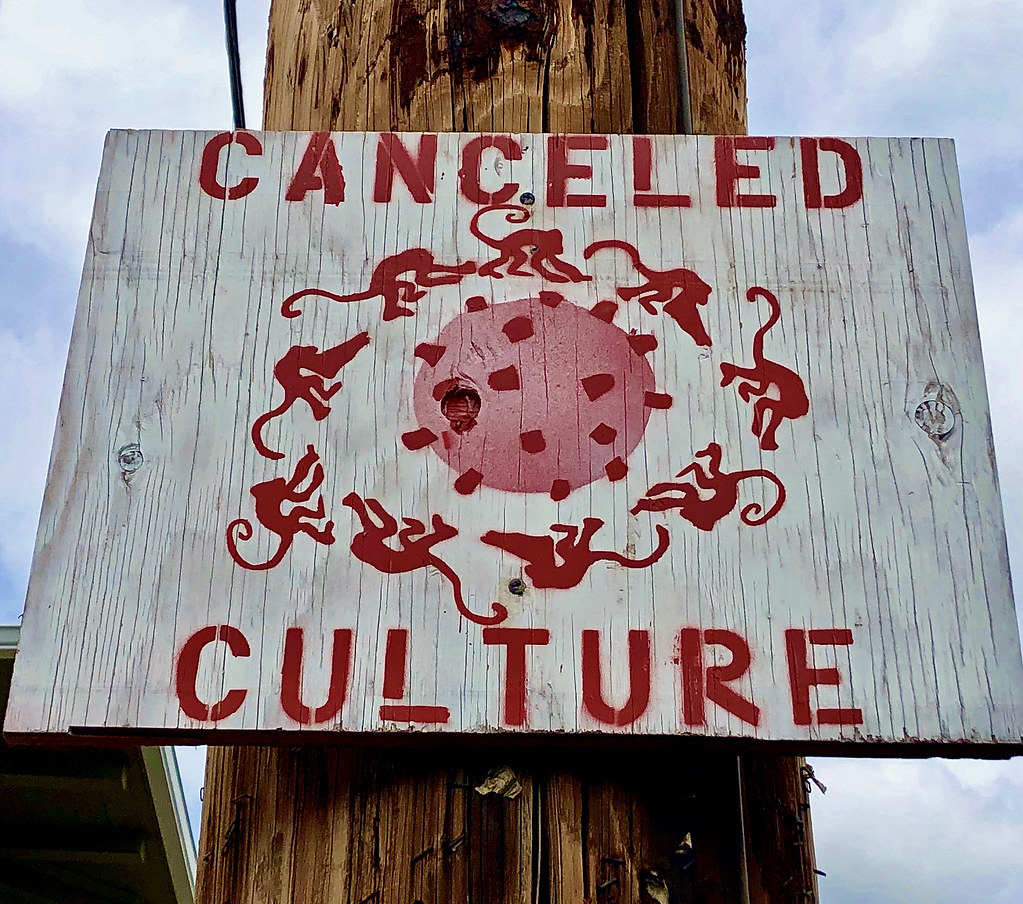
You are standing at the edge of a crowd that has already decided. You have not yet spoken, you have not yet read the full account, you may not even know the name of the person at the center — and yet something in you has already chosen a side, already felt the pull toward the interior of the group, toward the warmth of shared certainty. That pull is not moral. It is anatomical.
Gustave Le Bon spent the years before 1895 watching what he called the “era of crowds” emerge from the ruins of aristocratic Europe, and what disturbed him was not the violence of mobs but their logic — or rather the way mobs replaced logic with something more efficient. In “The Crowd: A Study of the Popular Mind,” he identified a specific psychological transformation that occurs the moment an individual submerges into collective action: the capacity for critical reasoning does not diminish, it inverts. The crowd does not think worse than the individual — it thinks differently, along entirely different axes, where contagion replaces evidence and image replaces argument. What spreads through a crowd is never the most accurate account of events. It is always the most emotionally legible one.
This is where the function of the target becomes structurally visible. Elias Canetti, writing in 1960 after having survived the century that Le Bon could only imagine, pushed the analysis into darker territory in “Crowds and Power.” For Canetti, the crowd is not a collection of people who happen to share an opinion. It is a specific type of entity that requires a discharge event to achieve internal cohesion — a moment where the group’s accumulated tension finds an external object against which to collapse. The persecution of a single figure is not a byproduct of crowd behavior. It is the mechanism by which the crowd becomes a crowd at all. Remove the target and you do not have a just assembly. You have a dispersal.
This means that the question of whether the target deserves what happens to them is, from the crowd’s functional perspective, largely irrelevant. Guilt and innocence are categories that belong to legal and deliberative frameworks — systems designed specifically to resist the crowd’s native pressure. Trial by jury, rules of evidence, the presumption of innocence: these are not expressions of natural human instinct. They are laboriously constructed barriers against it, built precisely because every prior civilization discovered what happens when crowds are allowed to be their own tribunal. The Salem witch trials of 1692 did not collapse because people became more superstitious. They collapsed because the community’s appetite for targets eventually outpaced the supply of plausible ones, and the accusations began consuming the accusers themselves.
What contemporary digital culture has contributed to this ancient architecture is not a new psychology but a new velocity. The crowd that Le Bon observed needed physical proximity to achieve contagion. The crowd that Canetti analyzed needed time — time for rumor to travel, for anger to accumulate. The crowd that forms on a networked platform in 2023 requires neither. It achieves in forty minutes what previously required weeks, which means the deliberative gap — the small but crucial interval between accusation and judgment — has effectively closed. There is no longer a morning after during which a person might reconsider. The discharge Canetti described happens in real time, and by the time the first wave of condemnation has broken, the target has already been structurally processed: fired, deplatformed, socially evacuated.
What makes this unbearable to examine honestly is that the participants are not cynics. They believe they are doing something morally serious. The sincerity is not a mask over the mechanism — it is the mechanism’s most efficient fuel, because it forecloses the internal friction that might otherwise slow the crowd’s momentum long enough for doubt to enter.
Social Media and the Acceleration of Verdict
You post something at 11:47 PM, half-asleep, reaching for a joke that lands wrong, and by 6 AM there are fourteen thousand replies and your employer has already been tagged.
The speed is not incidental. It is the product. When Twitter’s engineers designed the retweet function in 2009, they were solving a distribution problem — how do you get content to travel faster, further, with less friction? What they built, without naming it as such, was a machine for synchronized moral reaction. The retweet does not ask you to engage with an argument. It asks you to choose a side and transmit the choice in a single motion, which means the emotional temperature of a statement is what gets amplified, not its content. By 2013, Twitter’s internal data showed that outrage-coded tweets traveled on average three times faster through networks than neutral or positive ones. This is not a design flaw that was later corrected. It is the architecture expressing its own logic.
Jon Ronson spent two years between 2012 and 2014 tracking the human beings who had survived public shaming events, interviewing them after the storm had passed, after the apologies had been issued and ignored, after the jobs were gone. His 2015 book So You’ve Been Publicly Shamed is not primarily a book about social media. It is a book about what happens to a person’s nervous system when an abstract crowd decides they represent something larger than themselves. What Ronson found was that the subjects of pile-ons rarely understood, even retroactively, what rule they had violated precisely enough to have known in advance to avoid it. The offense was usually real but small; the punishment bore no ratio to the act. Justine Sacco, who boarded a flight to South Africa in 2013 after posting a badly worded joke about AIDS, landed eleven hours later to find herself globally famous and unemployed. The tweet had eleven followers when it went out. The hashtag waiting for her at the gate had trended worldwide. No editor, no institution, no deliberative body had made that decision. The algorithm surfaced it, the crowd recognized the opportunity, and the verdict was delivered before the defendant could speak.
This is where platform design intersects with something older in human psychology. Norbert Elias, in The Civilizing Process published in 1939, argued that social control was gradually internalized over centuries — the state’s monopoly on violence produced individuals who policed themselves through shame rather than through direct punishment. What the platform environment does is externalize that shame again, weaponize it, and accelerate its delivery to a degree that the internal regulatory system cannot process. The person being shamed cannot adjust behavior in real time because the verdict arrives faster than comprehension. They are being punished not for what they did but for what the crowd needed them to represent in that particular news cycle.
The irreversibility is structural, not moral. A newspaper correction can be issued; a court judgment can be appealed. But a tweet-storm leaves behind a sediment of cached pages, screenshots, secondary articles, and Wikipedia edits that no subsequent clarification reaches. Google’s autocomplete function has been documented to preserve associative damage for years after the original incident has been publicly resolved. The medium does not merely record judgment — it fossilizes it at the moment of maximum heat, before nuance has had the chance to enter the room. What feels like a community holding someone accountable is often a community crystallizing a story about a person at the precise instant when that story is least accurate and most emotionally satisfying. The platforms profit from that instant. They are built to harvest it. Every notification sent during a pile-on is an engagement event, a data point, a fraction of a cent in advertising revenue, and the engineers who designed the notification system knew that moral arousal was among the most reliable triggers for keeping a user’s eyes on the screen.
The Progressive Trap: When Emancipatory Tools Reproduce Domination
You post the thread at 11:47 p.m., exhausted and certain you are doing the right thing. The account you are targeting has 200,000 followers, a book deal, and a pattern of behavior that has genuinely hurt people you care about. By morning, the target has received 4,000 messages, lost two speaking engagements, and a pile-on has begun that you no longer control and cannot stop even if you wanted to. You did not build a cage. You simply opened a door that has always been there, waiting for someone righteous enough to walk through it.
Michel Foucault, in Surveiller et Punir published in 1975, was not describing prisons so much as describing the architecture of power that prisons made visible. His central insight was that modern discipline does not primarily operate through spectacular violence but through the internalization of the watching gaze — what he called the panopticon effect, borrowed from Bentham’s prison design where inmates could never know when they were being observed and so regulated themselves constantly. What contemporary cancellation produces is a social panopticon of extraordinary efficiency: the watched subject is not the powerful figure being held accountable but every ordinary person in the audience, who learns from the spectacle exactly which words, associations, and hesitations will trigger the same machinery against them. The punishment of one becomes the disciplining of thousands who were never accused of anything.
Angela Davis spent decades arguing, most systematically in Are Prisons Obsolete published in 2003, that carceral logic is not a solution to harm but a reproduction of it — that the impulse to contain, isolate, and punish a designated individual displaces the structural conditions that produce harm in the first place. The person who is canceled is extracted from their social context, stripped of the relationships and complexities that constitute an actual human life, and converted into a symbol whose destruction can temporarily satisfy the demand for justice without altering a single material condition. The abuser keeps their power. The institution that protected them continues operating. What changes is only the name on the door.
There is a specific cruelty in the fact that these mechanisms tend to consume people at the margins of institutional power before they reach those at the center. A mid-level academic with heterodox views on gender, a journalist of color who published one insufficiently vetted piece, a community organizer whose decade of labor is erased by a resurfaced private message — these are the recurring casualties, not because they caused the most harm but because they are accessible. The genuinely powerful have legal teams, crisis management firms, and networks of mutual protection that absorb and deflect. Cancel culture, marketed as a weapon of the weak against the strong, functions in practice with the same class bias as every punitive system it claims to oppose.
What makes this internal contradiction so difficult to name inside progressive communities is that the emotional experience of participating feels nothing like participating in a system of domination. It feels like solidarity. It feels like finally being believed. And those feelings are not false — the harm being responded to is frequently real, the exhaustion of watching powerful people escape consequences is real, the hunger for some mechanism of accountability is entirely legitimate. The problem is not the feeling. The problem is that the machinery answering that feeling was not built to produce accountability. It was built to produce compliance. And compliance is the oldest enemy of emancipation, dressed this time in the borrowed vocabulary of liberation.
Audre Lorde wrote in 1984, in the essay collection Sister Outsider, that the master’s tools will never dismantle the master’s house. The sentence has been quoted so frequently that it has calcified into decoration. But she was making a precise epistemological claim: that the categories of thought inherited from domination carry that domination inside them regardless of who deploys them, that there is no neutral use of a punitive instrument, that the hand holding the whip is changed long before the whip is.
A vision curated by a filmmaker, not an algorithm
In this video I explain our vision
Conservative Bad Faith and the Weaponization of Victimhood

You are told a powerful man lost everything. His book deal dissolved, his speaking invitations dried up, his name became a liability. You are meant to feel the chill of mob justice, the arbitrary cruelty of the crowd. What you are rarely given are the numbers: the book was subsequently acquired by a different publisher, frequently at a higher advance; the speaking fees, redirected to a new audience primed by outrage, often exceeded the previous ones. The story of cancellation, in these cases, is a story about a temporary interruption in the conversion of cultural capital into money, followed by a profitable rebrand as a martyr.
The strategic confusion between criticism and silencing is not an accident of rhetoric. It is load-bearing architecture. When a senator with a national platform, a columnist with a readership in the millions, or a television personality with a nightly audience of several million viewers claims to have been silenced, the word is doing something very specific: it is relocating power. The actual silenced party, in any given dispute, is never the one with a microphone. But if you can successfully claim the victim position, you capture the moral grammar of the conversation before it begins. Herbert Marcuse noted in his 1965 essay on repressive tolerance that the language of liberal neutrality could be weaponized to protect entrenched power while appearing to defend the weak. He could not have anticipated how efficiently the inversion would be automated, but the structure he identified is visible in every press release about a canceled conservative.
What the contemporary right almost never names is the most systematically effective cancellation apparatus in modern American history, which operated not through social media pile-ons but through federal subpoenas, blacklists compiled by the House Un-American Activities Committee, and FBI surveillance files. Between roughly 1947 and 1957, careers in film, theater, education, and journalism were permanently destroyed, not by Twitter, but by the institutional machinery of the state and by private organizations coordinating pressure on employers. Dalton Trumbo, one of the Hollywood Ten, spent years writing screenplays under pseudonyms because his name could not appear in credits. Paul Robeson, among the most celebrated artists of the twentieth century, had his passport revoked in 1950 and was effectively imprisoned within a country that refused to let the world hear him. These were cancellations in the strictest possible sense: economic, legal, and physical constraint imposed on individuals for their speech and associations. The silence around this history, within a political movement that claims to defend free expression above all else, is not an oversight.
What the invocation of cancel culture actually protects is a specific understanding of whose accountability is legitimate. When a working-class employee loses a job after a racist video surfaces, there is rarely a newspaper column lamenting the culture of fear. The machinery of outrage activates selectively, and the selection criterion is not the severity of the speech act but the institutional proximity of the speaker to existing power structures. Pierre Bourdieu spent much of his career documenting how symbolic violence operates precisely through this kind of selective indignation — in Distinction, published in 1979, he demonstrated that the capacity to define what counts as a transgression worthy of public reaction is itself a form of power, not a neutral reflex.
The victimhood narrative requires an audience willing to forget that victimhood and institutional power are not mutually exclusive as performances, but they are almost entirely mutually exclusive as realities. A man who controls the editorial direction of a major publication, who can commission or kill careers with a phone call, who has spent decades accumulating the kind of social capital that deflects most consequences, can still feel persecuted when the deflection occasionally fails.
The Unmourned Complexity of the Accused
You are sitting across from someone you used to admire — not a monster, not a martyr, just a person whose face has gone slightly wrong, as if the muscles no longer know which expression is safe. They speak carefully, in the grammar of someone who has rehearsed every sentence for invisible prosecutors. There is nothing theatrical about it. What you are watching is the specific exhaustion of a person who has lost the right to be complicated.
The binary logic of reputational collapse does not merely punish — it performs an epistemological act. It decides, before any testimony is heard, what kind of knowledge about a person is permissible. Erving Goffman, in his 1963 study Stigma: Notes on the Management of Spoiled Identity, mapped with clinical precision how a discrediting attribute doesn’t simply add a negative quality to a person — it retrospectively reorganizes every other quality around it. The accused does not become someone who did a bad thing. They become a bad thing that incidentally did other things. The whole archive of a life gets re-sorted under a single taxonomy.
This re-sorting carries extraordinary historical weight, because it is not new. The Soviet show trials of the 1930s operated on precisely this grammar: the accused were not merely convicted, they were made to confess that their entire biography had always already been treasonous. Arthur Koestler, writing in Darkness at Noon in 1940, dramatized how the internal logic of that mechanism was so totalizing that the accused eventually participated in their own erasure — not from cowardice but from a terrible coherence. The system’s narrative became more real than their own memory. Today’s reputational destruction rarely reaches that institutional violence, but the cognitive structure — guilt that colonizes backward through time, making innocence itself suspicious — operates with the same architecture.
What gets destroyed in that colonization is not reputation. Reputation is a social fact, external, revisable. What gets destroyed is the person’s access to their own irresolvable interior — the place where contradictory things are simultaneously true. Someone can have done real harm and also have been a genuine source of care for others. Someone can hold a view that causes damage and also have arrived at it through experiences of damage themselves. Hannah Arendt, in The Origins of Totalitarianism published in 1951, argued that what totalitarian systems most require is the elimination of the private self — the self that is not yet a verdict. Cancel culture, in its most virulent form, is not totalitarian, but it shares this appetite: it cannot tolerate the unresolved. The private interior of the accused — where remorse, confusion, partial understanding, and genuine error coexist without resolution — has no place in a discourse engineered around verdicts.
Psychologists studying what Jonathan Shay called moral injury, a concept developed through his work with Vietnam veterans and published in Achilles in Vietnam in 1994, identified something distinct from guilt or shame: the experience of having one’s moral framework shattered by an event that resists the categories available for processing it. The accused in a public cancellation often inhabit precisely this terrain. Not because they are innocent, but because the event that defined them publicly rarely maps cleanly onto their own experience of it — and the gap between the public narrative and the private one becomes a wound that cannot be shown, because showing it looks like excuse-making, which is its own form of confirmation.
The person across from you eventually stops speaking. Not because they have finished. Because they have learned, at considerable cost, that finishing is not something available to them anymore. The conversation will be read, they know this, the way everything they say is now read — as evidence for a verdict already rendered, evidence whose only permitted direction is toward confirmation. What they cannot say is the thing that would most accurately describe their situation, which is that they are not sure, even now, what exactly happened, and that this uncertainty is not evasion but the most honest thing left in them.
Memory, Power, and the Right to Contested History
You are standing in a museum that has recently rehung its collection. The placards are new. Some rooms have been quietly emptied. Nobody announced the removals, and no catalog documents what is missing — the absence simply exists, frictionless and total, as if the objects had never been acquired.
What makes this scene disturbing is not that curation happened — curation always happens, every archive is a selection — but that the selection has been made to look like completeness. The archive presents itself as the whole story precisely at the moment it has become partial. This is the epistemological trap at the center of erasure culture: not that it edits, but that it edits while performing neutrality, while performing justice, while insisting that what remains is what matters.
Hannah Arendt, writing in 1951 in “The Origins of Totalitarianism,” identified the manipulation of historical record not as a secondary feature of authoritarian power but as its central mechanism. The destruction of documents, the revision of newspapers, the quiet disappearance of individuals from official photographs — these were not cosmetic acts. They were ontological ones. They severed the capacity of a population to verify its own past, and without that capacity, the present became whatever the current power declared it to be. Arendt was describing mid-century European catastrophe, but the architecture she mapped is not ideologically exclusive. Any structure of power that gains control over what is remembered gains, by extension, control over what is real.
The question of who controls the archive is never merely archival. In 1619, the English Parliament ordered the journals of the House of Commons destroyed to prevent James I from accessing the record of parliamentary debate — the fight over paper was a fight over sovereignty. Michel-Rolph Trouillot, in “Silencing the Past” published in 1995, demonstrated that historical silences are not absences but productions: they require labor, decisions, and the expenditure of power. When a university removes a statue, cancels a course, or withdraws a publication, it is not stepping outside history — it is producing a new silence, which will itself require explanation by some future historian who notices the gap.
What current cancel culture shares with older forms of institutional censorship is not malice but certainty. The Comstock laws of 1873, which criminalized the mailing of obscene material across the United States and were used to suppress birth control information, feminist literature, and medical texts, were enforced by people who believed with full sincerity that they were protecting the social fabric. The Index Librorum Prohibitorum, maintained by the Catholic Church from 1559 until 1966, listed works whose suppression its authors regarded as morally necessary. Every act of cultural prohibition in recorded history has been accompanied by a moral vocabulary that made the prohibition feel like hygiene. The sincerity of the present conviction changes nothing about the structural dynamics of suppression.
A culture that cannot hold ambiguity in its living present is a culture that will be unable to produce an honest account of that present once it becomes the past. The testimony will have already been edited. The witnesses will have already learned what they are permitted to say. What gets transmitted will not be the complexity of the moment but the version that survived institutional pressure — and institutional pressure, in every era, flows toward the legible, the usable, and the safe. The texture of actual experience, the contradictions people lived, the discomfort that did not resolve, will be gone before the historians arrive.
There is no neutral ground from which to oversee this process. Every generation believes it has finally arrived at the correct moral coordinates, and every subsequent generation discovers that the map was drawn by interested parties. The only thing that has ever interrupted that cycle is the stubborn, uncomfortable, costly preservation of the record that the present found most threatening to keep.
🔥 When Society Silences, Punishes, and Rewrites History
Cancel culture does not emerge from a vacuum: it is rooted in long-standing debates about power, reputation, public opinion, and the boundaries of free expression. These related articles explore the intellectual and cultural terrain that makes the phenomenon legible, from the mechanics of propaganda to the psychology of social conformity.
Lippmann’s Public Opinion: Analysis
Walter Lippmann‘s foundational text on public opinion examined how mass media shapes collective perception and manufactures consent long before the digital age. His analysis of stereotypes and the ‘pictures in our heads’ anticipates the viral dynamics that fuel cancel culture today. Understanding Lippmann is essential to understanding how public shaming becomes a social mechanism of control.
GO TO THE SELECTION: Lippmann’s Public Opinion: Analysis
Celebrity as a Trap in Contemporary Culture
Celebrity culture creates figures that society simultaneously elevates and destroys, a cycle that cancel culture has accelerated to near-instantaneous speed. This article explores how fame itself becomes a trap, turning individuals into symbols that the public feels entitled to reclaim or dismantle. The psychological and sociological dimensions of this phenomenon are deeply intertwined with the logic of cancellation.
GO TO THE SELECTION: Celebrity as a Trap in Contemporary Culture
Mill’s On Liberty: Analysis
John Stuart Mill‘s essay On Liberty remains one of the most powerful philosophical defenses of free expression and the dangers of social tyranny over individual thought. Mill warned that the silencing of opinion, even of a wrong opinion, impoverishes public discourse and stunts intellectual progress. His arguments resonate with uncanny precision in contemporary debates about platform bans and reputational destruction.
GO TO THE SELECTION: Mill’s On Liberty: Analysis
Mass Social Homologation Today
Mass social homologation describes the process by which dominant cultural norms flatten difference and enforce conformity through subtle but relentless pressure. Cancel culture can be read as one of the sharpest contemporary expressions of this homologating impulse, where deviation from accepted values triggers collective punishment. This article provides a sociological framework for understanding the deeper cultural anxieties driving online mob dynamics.
GO TO THE SELECTION: Mass Social Homologation Today
Explore Culture, Dissent, and Identity on Indiecinema
If these themes provoke your thinking, Indiecinema’s streaming platform offers a curated selection of independent films that challenge conformity, interrogate power, and give voice to stories that mainstream culture often prefers to silence. Discover documentary and fiction films that explore free expression, identity, and the politics of memory — available now on Indiecinema.
👉 EXPLORE THE CATALOG: Watch Indie Films in Streaming
A vision curated by a filmmaker, not an algorithm
In this video I explain our vision

