
The Oldest Wager Against Oblivion
You are standing at the edge of something you cannot name — not grief exactly, not fear, but the specific vertigo that arrives when you first truly register that you will cease. Not sleep, not pause. Cease. Every culture that has ever left a record behind has felt that same drop in the stomach, and what is remarkable is not that they invented stories to survive it, but that several of them, independently, across thousands of miles and centuries, arrived at the same precise wager: that the self is not a single event but a recurring one.

The Rigveda, composed somewhere between 1500 and 1200 BCE and representing the oldest layer of Indo-Aryan religious thought, does not speak of reincarnation in the systematic way later Hindu philosophy would. But the conceptual skeleton is already present in its hymns about the atman — the breath-self, the animating principle that the text treats as categorically distinct from the body it temporarily inhabits. When Rigveda 10.16 addresses the funeral fire, it instructs the flame to carry the body but release the life-force elsewhere, back into wind, water, plant, and eventually into new human form. This is not poetry decorating a pre-existing belief. This is philosophy doing what philosophy does when it has no prior tradition to borrow from: it follows the logic of matter, observes that nothing in nature permanently disappears, and extends that observation to the most inconvenient case, the one that frightens everyone in the room.
What makes that extension intellectually serious rather than wishful is that the Vedic thinkers were not trying to guarantee personal survival in any comfortable sense. The self that continues, in their framework, is not the self that remembers your name, your loves, your accumulated grievances. It is something colder and more structural — a carrier of consequence rather than of memory. The karma that travels between lives is not a reward system administered by a benevolent deity. It is closer to what we would now recognize as a conservation law: action produces residue, residue shapes future conditions, and the individual as we experience them is merely a temporary crystallization of that residue. The consolation, if there is any, is almost punishingly abstract.
Pythagoras, born around 570 BCE on Samos, reportedly walked through a market one afternoon, heard a dog being beaten, and announced that he recognized the voice of a dead friend in the animal’s cries. His biographers, including Diogenes Laertius writing in the third century CE, treated this as evidence of his claimed ability to remember previous incarnations — a capacity he allegedly traced back to lives as a Trojan warrior, a fisherman, and a peacock, among others. Scholars debate how much of this is hagiography, but the philosophically significant point is what Pythagoras was insisting on structurally: that the soul is not native to any single body, that its passage between forms is as natural and lawful as the passage of number through different geometric configurations. For a man who built his entire metaphysics on the hidden mathematical order beneath visible reality, metempsychosis was not mysticism. It was applied cosmology.
The Egyptian Ba operated on different premises entirely, and the difference is instructive. Where the Vedic and Pythagorean traditions were concerned with a single essential self migrating through multiple lives, the Ba was the personality-soul, depicted as a human-headed bird capable of leaving the body at death and moving between the tomb, the underworld, and the world of the living. It was not a traveler looking for a new host. It was a commuter, returning each night to the mummified body it had temporarily vacated. The Egyptian system was less interested in the question of what the self becomes after death than in preserving the precise configuration of what it already was — a fundamentally different anxiety, a different species of refusal to accept that a particular arrangement of consciousness could simply stop.
Beyond Our Lives

Drama, noir, by Fabio Martorana, Italy, 2021.
Alex and Claire have something in common, between recurring nightmares and restless memories; only time will allow them to understand what is happening. Where is the truth hidden? Perhaps in a time that the two protagonists don't even imagine. A sweet and complicated, painful and troubled love story, between a psychoanalyst and a woman who must fight a tough battle against herself and her introspective fears. Two soul mates that fate brought together after reliving distant experiences over time.
Dedicated to the world of noir, where lighting rich in chiaroscuro, the contrast between light and shadow symbolically represents the conflict between good and evil, the feature film tells of a sweet and complicated, painful and troubled love story. The film was shot between the provinces of Rome and Latina in the splendid settings of Circeo and Doganella di Ninfa.
LANGUAGE: Italian
SUBTITLES: English, Spanish, French, German, Portuguese
Karma as Social Architecture
You are born into a body that was never yours to choose, into a family that precedes you by centuries, into a caste that determines whether you eat, whom you touch, and how close to the temple door you are permitted to stand — and the system that arranged all of this tells you, with perfect theological composure, that you chose it yourself, in another life, before memory began.
This is not metaphor. The Manusmriti, the ancient Sanskrit legal text compiled roughly between 200 BCE and 200 CE, is one of history’s most architecturally complete documents of social control. It does not merely assign social roles. It roots them in cosmic causality. A Brahmin’s birth at the apex of the varna system is not accident or inheritance — it is the earned residue of accumulated virtue across previous existences. A Shudra’s position at the base is not injustice — it is precision. The text states explicitly that those who fulfill their dharmic duties in this life ascend in the next; those who transgress descend. The wheel of rebirth becomes a ledger, and the ledger’s prior entries are permanently sealed.
What makes this architecture so durable is precisely the feature it shares with all effective ideology: it renders itself unverifiable. Michel Foucault, working across his genealogical studies of power in the 1970s, argued that the most productive forms of power are those that make their own operations invisible by appearing as natural order. Karmic determinism achieves exactly this. The crime that produced your current suffering was committed in a life you cannot access, by a self you cannot cross-examine, in circumstances no witness survived to describe. The injustice is placed in a jurisdiction that has no appeals process because it has no court.
Early Buddhist ethics complicated this picture without dismantling it. The Buddha’s own teachings in the Pali Canon — particularly in the Majjhima Nikaya — introduced a more dynamic karmic account, one in which intention rather than ritual purity was the operative moral unit. This was, in its historical moment, genuinely radical: it partially decoupled moral worth from birth and relocated it in the quality of a person’s volition. Yet even this more democratic spiritual grammar retained the architecture of rebirth as explanation. Suffering still pointed backward. Poverty, illness, and social marginalization still arrived pre-authorized by a prior moral accounting.
The sociologist Max Weber, in his 1916 study “The Religion of India,” identified karma as one of the most rationally coherent theodicies ever produced — meaning it answers the question of why the innocent suffer with a logic that contains no internal contradictions. He meant this as analysis, not praise. A theodicy’s coherence is precisely what makes it dangerous when it is also a property system. If the cosmos itself confirms that your suffering is deserved, then the person who might otherwise feel the obligation to relieve that suffering is morally absolved. Charity becomes optional. Structural reform becomes theologically presumptuous — an interference with a divine accounting that knows more than you do.
This mechanism traveled. When rebirth doctrine was absorbed into popular culture across Southeast Asia, Tibet, and eventually into nineteenth-century Western spiritualism, it shed most of its caste scaffolding but retained the core logic: present circumstances are the echo of past actions. The specific social hierarchies dissolved in transit, but the exculpatory grammar survived. A woman in medieval Japan who found herself outside the circles of property and protection could be told that her condition reflected prior-life failure of spiritual discipline — not the failure of the men who had written every law she lived under.
The karma that crosses cultures is always a portable technology for relocating the cause of suffering away from the structures that produce it and into the private moral history of the person who endures it.

The Greek Philosophical Refraction
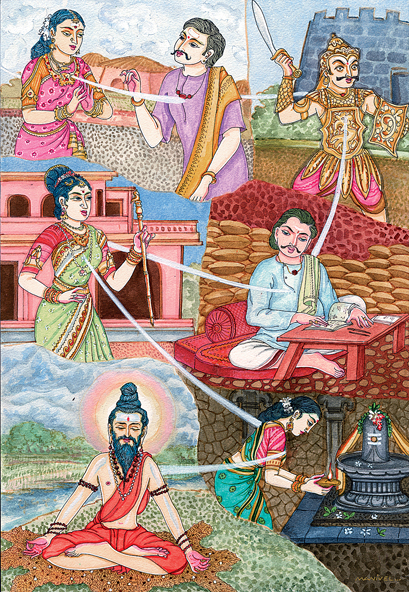
You are standing in a courtroom where the verdict has already been decided, where the accused knows the charge is true, and where everyone present understands that the real trial will not take place today. Socrates drinks the hemlock in 399 BCE not because he has lost an argument but because Athens has run out of patience with a man who kept insisting that dying badly is impossible for a just person. The statement is not consolation. It is a structural claim about how accountability operates across time, and Plato spends the rest of his career building the philosophical architecture to support it.
The Phaedo is not, despite two millennia of misreading, a text about the soul’s immortality as a spiritual comfort. It is a legal brief. Plato’s Socrates advances four distinct arguments for the soul’s survival — the cyclical argument, the recollection argument, the affinity argument, the final argument from the Form of Life — and each one is designed to establish a single juridical premise: that a life cannot be assessed by its terminus. If the soul continues, then moral consequence cannot be contained within a single biographical arc. Justice, which for Plato is the health of the soul rather than a social arrangement, requires a longer ledger. The doctrine of metempsychosis, which Plato inherited from Pythagorean sources and earlier Orphic communities, gives that ledger its mechanism.
The Myth of Er in the Republic, often dismissed as mythological decoration at the end of an otherwise rigorous political text, is in fact the payoff of the entire argument. Er, a soldier killed in battle and returned to life after twelve days, reports what he witnessed in the interlife: souls choosing their next incarnation from a display of available lives, guided — or misguided — by the habits of character they have already formed. The tyrant who reaches for another life of power, the man who spent a previous existence in ordered virtue choosing too hastily and poorly, the soul of Odysseus, exhausted by ambition, selecting the quiet life of a private man. What Plato is doing here is not writing mythology. He is proposing that character, not circumstance, is the only thing a soul carries between lives, which means that moral education is the only project with permanent stakes. Every other political priority — wealth, military strength, territorial expansion — belongs to the category of things that will not survive the ferry crossing.
The Pythagorean communities that preceded Plato by roughly a century had already drawn the practical consequences of this belief and organized daily existence around them. Pythagoras, whom Heraclides of Pontus reports claiming to remember four previous lives including that of the Trojan warrior Euphorbus, did not treat transmigration as a theological opinion held privately. His communities at Croton and later Metapontum operated under dietary restrictions — the prohibition on eating beans, the refusal of meat from certain animals — that were not arbitrary asceticism but applied ethics. If the soul of a dead human being might now inhabit the body of an ox, eating that ox is not an act of nourishment but a violation that carries forward into the soul’s ledger. The body on the plate is not a resource. It is a neighbor in a different phase of existence.
What this means politically is rarely examined. A community that genuinely believes in transmigration cannot treat the boundaries between persons as absolute or permanent. The slave across the agora may carry a soul that once governed a city. The beggar at the gate may be working through a moral debt older than the current social order has any record of. Pythagorean brotherhood — the koinonia, the shared life of the community — was not sentimental. It was an acknowledgment that hierarchies of birth are provisional, that the soul’s history dwarfs any single arrangement of power, and that the person you dismiss today may one day hold dominion over everything you value.
Reincarnation Suppressed: The Councils and the Erasure
You are sitting in a church that was built on a decision most Christians have never heard of, made by men whose names you were never taught, for reasons that had very little to do with the soul and everything to do with power.
In the spring of 553 CE, the Emperor Justinian I convened the Second Council of Constantinople, and among its fifteen anathemas was a condemnation so precise it required naming a man who had been dead for three hundred years. Origen of Alexandria, who had died around 254 CE and whose work De Principiis had shaped much of Christian intellectual life for generations, taught that souls existed before their bodies, that they fell into matter as a consequence of spiritual cooling, and that they moved across multiple lives toward eventual restoration in God. This was not fringe thinking. It was the theology of a man who had castrated himself for the sake of the Gospel, who had survived the Decian persecution, and whose commentaries on scripture were treated as authoritative in monasteries across Egypt, Syria, and Palestine. The anathema of 553 did not emerge from a sudden theological consensus. It emerged from a political climate in which Justinian needed ecclesiastical unity to hold together an empire fraying at every border, and in which a theology of pre-existent souls posed a structural problem no emperor could afford.
The problem was not metaphysical. It was institutional. If a soul arrives in this world carrying its own prior history, its own accumulated spiritual weight, then the church’s sacramental system — baptism as the singular threshold of spiritual identity, confession as the exclusive mechanism of absolution, last rites as the decisive border between damnation and salvation — loses its monopoly over the soul’s trajectory. A person who might return, who might work across lifetimes toward something that no priest can administer or withhold, is a person whose salvation cannot be managed. And a soul that cannot be managed cannot be taxed, conscripted into doctrinal loyalty, or held in the particular kind of existential fear that fills pews and funds cathedrals. The historian Henry Chadwick, in his 1967 study The Early Church, noted that the condemnation of Origenism was inseparable from the broader Justinianic project of theological standardization, and that many of the bishops who signed the anathemas did so under explicit imperial pressure. The Fifth Ecumenical Council, as it came to be known, was never universally accepted as binding even within Christendom — Pope Vigilius refused to attend and was physically detained in Constantinople for months before eventually, under duress, offering a partial endorsement.
What was erased was not merely a speculative idea about the soul’s origin. A lived pastoral tradition disappeared with it. Jerome, in the fourth century, had translated and transmitted Origen’s work across the Latin West while simultaneously distancing himself from its more radical implications — a move that reveals how deeply those implications were understood to be present and threatening. The monks of the Nitrian desert, the spiritual athletes of early Egyptian Christianity, had absorbed Origenist cosmology into their practice of contemplation. When the condemnation landed, it did not simply close a theological debate. It restructured the imaginative horizon within which ordinary Christians could understand their own lives. The question of why a child is born into suffering, which Origen had answered with an architecture of pre-existence and earned karma that predates the Sanskrit term by centuries, now had only two answers available: divine mystery, or original sin inherited from a couple in a garden. Both answers, conveniently, required the church to interpret them.
The forgetting was not passive. Manuscripts were not always burned, but they were rarely copied. Ideas that are not copied do not survive into the next century’s consciousness, and the slowest form of censorship is the one that simply lets a thing go unreproduced until no living mind remembers it well enough to miss it.
West Africa, the Americas, and the Plurality of Soul-Return
You are standing in a Yoruba compound sometime in the early twentieth century, and the infant who was just born has already been named before anyone asked the parents what they preferred — because the body of the child announced itself. The configuration of the face, a birthmark placed exactly where the last child who died in this family bore a scar, the way the newborn’s hands curl: these are read not as coincidence but as signature. The dead have returned, and they have left evidence.
The Yoruba concept of Àbíkú describes a category of soul that moves cyclically between the living world and a spirit realm called Ìkọlé Òrun, repeatedly incarnating into infancy and dying before maturity, tethering a family to grief across multiple generations. The Yoruba scholar Wande Abimbola, whose decades of fieldwork produced the landmark collection Ifá: An Exposition of Ifá Literary Corpus in 1976, documented how divination practices surrounding the Àbíkú were not merely ritual consolation but epistemological tools — ways of interrogating the logic of a soul that refuses to stay. The child’s serial return is not a punishment and not a blessing. It is understood as a negotiation still in progress between the incarnating spirit and the conditions of embodied life, a negotiation the living must enter through ceremony, sacrifice, and sometimes the deliberate scarring of the body so that the soul, if it returns again, can be identified and named.
What distinguishes this from the Greek metempsychosis of Pythagoras or the Sanskrit doctrine of samsara is not merely geography but architecture. The Yoruba framework is not primarily concerned with moral accumulation across lifetimes or with liberation from the cycle. The ethical stakes are relational and immediate: a community damaged by repeated infant death seeks to stabilize its covenant with a particular spirit. The cosmology is calibrated not toward the infinite but toward the local, the familial, the negotiable.
Across the Atlantic, among the Tlingit peoples of the Northwest Coast of North America, rebirth identification operates through a vocabulary of physical marks and behavioral inheritance that anthropologist Antonia Mills documented systematically in the 1990s alongside Ian Stevenson‘s cross-cultural survey work. Tlingit families report recognizing deceased relatives in newborns through birthmarks that correspond to wounds or distinctive features on the body of the dead person, through the child’s spontaneous knowledge of names, places, or relationships from the previous life, and through behavioral continuities that the community reads as persistence of personality. The return is expected, not exceptional. Death in Tlingit cosmology does not sever identity from lineage — it defers the identity’s next chapter.
The Amazon basin generates an entirely different grammar of soul-transit. Among several Amazonian peoples, particularly those studied by Eduardo Viveiros de Castro in his work on Amerindian perspectivism published in the late 1990s, the soul does not primarily return through birth but can be seized, displaced, or partially consumed by entities — animal predators, rival shamans, forest spirits — that impose their own perspective on the captured identity. The self is not a stable container traveling between bodies but a relational position that can be occupied, contested, or lost. What looks like reincarnation from the outside is actually something closer to an ontological struggle over who gets to claim a given perspective as their own.
What these three systems share is not doctrine but structure: the insistence that personal identity survives the biological event of death and that this survival is legible, traceable, and consequential for the living. They arrived at this insistence without Vedic texts, without Platonic dialogues, without any network of transmission connecting them to each other. The question this raises — whether human cognition systematically generates certain metaphysical conclusions regardless of cultural input — is one that neither comparative religion nor cognitive science has yet answered without importing assumptions that contaminate the inquiry from the first step.
A vision curated by a filmmaker, not an algorithm
In this video I explain our vision
The Theosophical Reinvention and Its Colonial Residue

You have probably never noticed the moment you absorbed it — the idea that souls advance, level by level, through successive lives toward something higher, that the universe is a kind of moral meritocracy where suffering indexes spiritual debt and elevation signals earned refinement. It feels ancient. It is not.
When Helena Petrovna Blavatsky co-founded the Theosophical Society in New York in 1875, she was not recovering a buried truth. She was manufacturing one. Her two foundational texts, Isis Unveiled in 1877 and The Secret Doctrine in 1888, claimed access to a perennial wisdom underlying all religions, but the architecture she built was distinctly Victorian: hierarchical, progressive, racially stratified, and saturated with the evolutionary fever that Darwin had unleashed on the European imagination just sixteen years earlier. Blavatsky did not simply borrow from Hindu and Buddhist sources — she processed them through a civilizational filter that placed Western consciousness at the apex of karmic development, with what she called “root races” arranged along a ladder in which darker-skinned peoples represented earlier, less evolved rungs. The language was cosmic. The logic was empire dressed in Sanskrit.
What made this synthesis so adhesive was that it gave the Western seeker exactly what colonial modernity had trained them to want: a universe that confirmed hierarchy while appearing to transcend it. The Brahmin conception of karma that Blavatsky selectively cited was not, in its classical articulation by Adi Shankara in the eighth century or in the Mimamsa school’s technical elaborations, a mechanism for measuring spiritual advancement across a single linear civilizational scale. It was embedded in a cosmology with its own internal logic, its own social tensions, its own critiques. Extracted from that matrix and reinserted into a Victorian frame, karma became something else entirely — a spiritual credit score, a metaphysical justification for existing inequalities that transformed the poor, the colonized, and the suffering into beings who had simply not yet done the inner work.
This was not incidental to Theosophy. It was structural. And when the Society’s influence spread through figures like Annie Besant, who became president of the organization in 1907 and was simultaneously active in Indian independence movements, the contradiction intensified without resolving. Besant could advocate for Indian self-rule while subscribing to a framework that positioned Indian spiritual traditions as raw material for Western synthesis — a position that Bal Gangadhar Tilak and later B.R. Ambedkar recognized as a form of appropriation wearing the costume of solidarity.
The twentieth century absorbed this residue without labeling it. By the time the New Age movement crystallized in the 1970s and 1980s, reincarnation had been fully domesticated into a grammar of personal evolution — past-life regression therapy, soul contracts, karmic relationships — that preserved Blavatsky’s core architecture while scrubbing its explicitly racial vocabulary. What remained was the soft skeleton: the assumption that where you are in life reflects where your soul is in its journey, that disadvantage is a lesson rather than a condition produced by specific economic and political forces, that the self is the primary unit of spiritual accounting. Shirley MacLaine’s 1983 memoir Out on a Limb sold millions of copies not despite this framework but because of it — it offered a cosmology in which nothing that happens to you is random and nothing that happens to others is your structural responsibility.
What no one in these lineages paused to ask was what it costs to make suffering legible as pedagogy — to look at a child born into famine or a population systematically dispossessed and reach, instinctively, for the vocabulary of karmic curriculum. The question is not whether consciousness persists or transforms after death. The question is who benefits when the answer you offer makes the present arrangement of the world feel like a classroom rather than
Empirical Pressure: Stevenson’s Cases and the Epistemological Impasse
You are handed a child’s medical file and told that the birthmark on his left shoulder corresponds, with a precision that anatomists found difficult to explain away, to the entry wound documented in the autopsy report of a man who died decades before the child was born, in a village the child’s family had never visited. This is not a parable. Ian Stevenson, a psychiatrist at the University of Virginia and a figure who held every credential secular academia demands, spent roughly forty years documenting cases of this kind, publishing his findings in peer-reviewed venues and in monographs that remain among the most methodologically careful bodies of anomalous research ever produced. His 1966 collection was only the beginning of an archive that would eventually encompass more than 2,500 cases across cultures as different as Lebanon, India, Sri Lanka, Alaska, and Brazil — a geographical spread deliberately chosen to prevent any single cultural belief system from acting as the sole engine of confabulation.
What made Stevenson’s methodology unusual was precisely its refusal of the extraordinary. He was not interested in hypnotic regression, mediumistic testimony, or any evidence that passed through an interpretive intermediary. He wanted children, typically between the ages of two and five, who spontaneously produced specific, verifiable claims about a previous life before any investigation had confirmed those claims — names, addresses, family relationships, the manner of death, the location of objects. His verification protocols involved interviewing the two families separately, mapping the statements made before and after contact, and flagging any case where contamination through prior knowledge could be demonstrated. His 1997 volume Reincarnation and Biology: A Contribution to the Etiology of Birthmarks and Birth Defects ran to over two thousand pages and documented more than two hundred cases in which physical anomalies on a living child corresponded to wounds, surgical incisions, or identifying marks on a deceased individual, with independent medical and autopsy records used as the measuring standard.
The epistemological pressure this data exerts is real, and the discomfort it produces in secular frameworks is not primarily a matter of evidence quality but of category. Science does not have a protocol for phenomena that fall outside its ontological commitments. Carl Sagan, who was not given to credulity, wrote in 1995 in The Demon-Haunted World that Stevenson’s cases represented one of the few areas of parapsychological research that he considered worth continued serious investigation — a sentence that is almost never quoted in either the skeptical or the credulous literature, because it fits neither tribe’s requirements. The cases are too rigorous to dismiss through the usual mechanisms of anecdote-contamination, yet they point toward something that materialism cannot assimilate without fracturing at the foundation.
The convenient move, repeated with remarkable consistency across academic dismissals, is to invoke the possibility of fraud or unconscious suggestion without demonstrating it in specific cases. This is not skepticism in any rigorous sense; it is the logical inverse of superstition, a refusal to follow evidence wherever it leads when the destination is inconvenient. Stevenson himself acknowledged the alternative hypotheses — cryptomnesia, genetic memory, cultural priming — and spent considerable methodological energy attempting to falsify his own findings before publishing them. The cases he retained were precisely those that survived his own attempts at demolition.
What the data demands, at minimum, is not belief in reincarnation as a metaphysical system. It demands the intellectual honesty to say that some children acquire verified, specific, non-inferrable information about deceased individuals through a mechanism that current neuroscience and psychology cannot account for. The nature of that mechanism — whether it involves personal continuity across death, some form of informational field, or something the existing vocabulary of science has not yet named — remains genuinely open. The discomfort is not that the mystery is unresolved. It is that resolving it in either direction requires a kind of epistemic courage that institutional knowledge production is structurally designed to avoid.
What the Living Do With the Dead Self
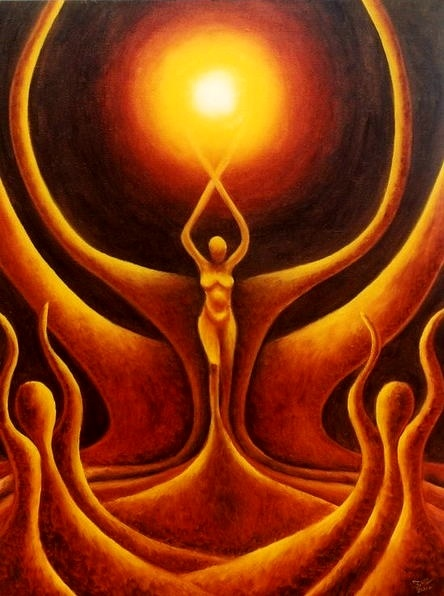
You are in the waiting room of a hospital that smells like ammonia and fear, and the man beside you is not afraid of dying. He tells you this calmly, almost cheerfully, the way someone might mention they have already booked their next flight. He believes he will return. And watching him, you cannot tell whether you are witnessing courage or a very sophisticated form of escape.
Ernest Becker argued in 1973, in The Denial of Death, that the entirety of human culture is an elaborately constructed defense against the knowledge of our own mortality — that our monuments, our ideologies, our religions are all, at their root, anxiety management systems built to make the unbearable fact of physical extinction feel provisional, negotiable, even reversible. What Becker identified was not weakness but engineering: the human mind does not simply fear death, it builds entire civilizations to metabolize that fear into something livable. Reincarnation belief is among the most structurally complete of these architectures, because it does not merely promise survival — it promises meaning retroactively applied to suffering, the idea that whatever is endured now accumulates into something that matters across a longer arc than a single lifetime can contain.
Paul Contos, working in the anthropology of identity and selfhood, observed that cultures organized around rebirth cycles tend to produce what he called distributed selfhood — a sense that the individual identity is not a sealed container but a permeable node in a larger sequence. This has measurable effects on how communities grieve, how they make decisions under duress, and how they relate to the elderly and the dying. The self that knows it has existed before and will exist again does not cling to the present configuration with the same desperation as one that believes this single life is the entire ledger. That loosening of grip is not always passivity — it can be the source of a particular kind of fearlessness, a willingness to act without the paralysis that comes from treating every choice as irreversible and total.
But the same architecture that liberates can also insulate. When suffering is folded into a karmic framework — when poverty, illness, or oppression is interpreted as the working out of debts incurred in previous existences — the urgency of present intervention dissolves. This is not a theoretical danger. The history of caste justification in South Asian contexts, documented extensively by scholars including Ambedkar in his 1948 treatise The Untouchables, shows precisely how rebirth cosmology was mobilized not as a spiritual framework but as a political sedative, persuading those at the bottom of a rigid social hierarchy that their position was the expression of their own prior moral failures rather than the outcome of enforced structural violence. The belief that offers the suffering individual a longer timeline within which their pain makes sense is the same belief that, in the wrong hands, tells the powerful they owe nothing to the afflicted because the afflicted are, in some cosmic sense, paying their dues.
This is where the psychological function becomes genuinely dangerous — not because the belief is false, which is a question no one can honestly answer, but because it is structurally available for both liberation and suppression simultaneously. Becker would have recognized this immediately: any symbolic system powerful enough to neutralize the terror of death is powerful enough to neutralize almost anything. The man in the waiting room who is not afraid to die may be someone who has genuinely transcended the ego’s stranglehold on existence, or he may be someone who has learned to outsource the urgency of his own life to a future self he will never meet. The distance between those two conditions is real, and it is not measured in belief but in what the belief allows him to do, or refuse to do, for the person sitting next to him who is very much afraid, and very much here, and running out of time in this single, unrepeatable body.
🔄 The Eternal Cycle: Death, Return, and the Soul's Journey
Reincarnation is one of humanity’s oldest and most persistent mysteries, woven into the fabric of philosophy, religion, and mythology across every continent. To understand it fully, one must explore the ideas that surround it — karma, eternal return, the myth of cyclical time, and the soul’s endless quest for meaning. These articles trace the deepest currents of thought that flow beneath the surface of the reincarnation belief.
Karma in Indian and Buddhist Philosophy
Karma is the invisible thread that ties reincarnation to moral consequence, making each new life a continuation of an unfinished moral story. This article explores how the concept of karma developed across Indian and Buddhist philosophy, shaping entire civilizations’ understanding of justice, suffering, and liberation. Without karma, reincarnation would be mere repetition; with it, each rebirth becomes a step in an evolving spiritual journey.
GO TO THE SELECTION: Karma in Indian and Buddhist Philosophy
Friedrich Nietzsche, the eternal return and the weight of the past
Nietzsche’s doctrine of the eternal return poses one of the most radical challenges in Western philosophy: what if every moment of your life were to recur infinitely? This article examines how Nietzsche transformed a cosmological idea into a powerful ethical demand — to live as though every choice echoes forever. The concept resonates deeply with reincarnation thought, reframing cyclical existence not as escape but as the ultimate affirmation of life.
GO TO THE SELECTION: Friedrich Nietzsche, the eternal return and the weight of the past
Eliade’s The Myth of the Eternal Return: Analysis
Mircea Eliade‘s analysis of the myth of eternal return reveals how archaic societies understood time as cyclical rather than linear, constantly renewing itself through ritual and cosmological repetition. This article unpacks Eliade’s foundational argument that the desire to return to sacred origins is one of the most universal impulses in human spiritual life. His work provides an essential anthropological framework for understanding why reincarnation narratives appear so consistently across world cultures.
GO TO THE SELECTION: Eliade’s The Myth of the Eternal Return: Analysis
Buddhism and Suffering: The Four Noble Truths
Buddhism’s Four Noble Truths offer one of the most systematic doctrinal contexts for the belief in reincarnation, grounding rebirth in the mechanics of desire, suffering, and liberation. This article explores how the Buddhist understanding of samsara — the endless cycle of death and rebirth — differs from and enriches the Hindu conception, while pointing toward nirvana as the ultimate escape from the cycle. Understanding Buddhist suffering is inseparable from understanding why reincarnation, in this tradition, is not a gift but a condition to be transcended.
GO TO THE SELECTION: Buddhism and Suffering: The Four Noble Truths
Explore the Soul's Mysteries on Indiecinema
If these themes of death, rebirth, and spiritual transformation stir something deep within you, Indiecinema’s streaming platform is the perfect place to continue your journey. From visionary documentaries to meditative independent films that explore the afterlife, consciousness, and the mysteries of existence, our catalog offers rare and powerful cinema you won’t find anywhere else. Step beyond the mainstream — discover films that dare to ask the questions that matter most.
👉 EXPLORE THE CATALOG: Watch Indie Films in Streaming
A vision curated by a filmmaker, not an algorithm
In this video I explain our vision

