The Unbearable Architecture of What Has Already Happened
You are lying in the dark rehearsing a conversation that ended three years ago. Not because you enjoy it. Not because you believe, even for a moment, that rehearsing it will change anything. You replay it because the mind has a kind of constitutional horror of closed doors, and that conversation is the most closed door you own. You said what you said. The other person heard what they heard. The room existed, the words left your mouth, and now that particular arrangement of cause and consequence is as fixed as the position of a star that burned out before you were born — you are still receiving its light, still navigating by it, still occasionally mistaking it for something alive.

This is not a feeling. That distinction matters more than it might seem. Western culture has spent considerable energy treating the weight of the past as a psychological problem, something to be processed, metabolized, released through the right therapeutic language or the right spiritual practice. The grief counselor, the confession booth, the meditation retreat — all operate on the implicit premise that what you carry from the past is a burden located inside you, and that the interior work of acceptance or forgiveness or reframing can, in some functional sense, lighten it. But the past is not inside you. It happened. It is woven into the causal fabric of everything that followed it. Your sense of being crushed by it is not a distortion; it is an accurate perception of something that is genuinely, irreversibly, structurally true.
The philosopher Derek Parfit spent much of his 1984 work Reasons and Persons probing what he called the asymmetry of time: the fact that we care about past suffering far less than future suffering, despite no logical justification for that difference. His analysis was careful, almost clinical, but it opened onto something he did not fully pursue — namely, that our indifference to past pain is not a rational achievement but a cultural one, a trained numbness that societies maintain because the alternative, taking the past with full ontological seriousness, is socially destabilizing. A person who genuinely reckoned with the immovability of what has already occurred would become, in the eyes of most modern institutions, dysfunctional. The economy requires forward orientation. Productivity metrics have no column for weight.
The Stoics understood something adjacent to this. Marcus Aurelius wrote, in the Meditations composed between 161 and 180 CE, that you suffer more in imagination than in reality — but he was speaking about anticipated futures, not accomplished pasts. The Stoic toolkit is remarkably well-designed for anxiety and remarkably ill-equipped for regret, because regret is not a misapprehension of probability; it is a correct apprehension of necessity. You cannot reframe a thing that has already become necessary. You can only change your relationship to its necessity, which is a different operation entirely, and a far more brutal one.
What makes the irreversibility of the past philosophically strange — and existentially vertiginous — is that it accumulates without your consent and at a rate you cannot control. Every second that passes adds another immovable stratum to the geological formation of your life. By the time you are forty years old, you are carrying approximately 1.26 billion seconds of fixed, unalterable fact. The decisions, the silences, the things you failed to say in rooms you can never reenter. Most philosophical systems offer you a way to make peace with this accumulation. Very few have the honesty to ask you to look directly at it and refuse the peace.
Redemption

Drama, by Maria Martinelli, Italy, 2023.
Hanna meets her lover in an isolated place, a refuge in the mountains. The present and the past intertwine in search of a possible redemption, while the choices to be made, such as that of a child on the way, can no longer wait. In that place, together and isolated, shreds of their past life appear in the room and seem to dance with their present life. An enigmatic mirror of their lives lived with other people, at other ages. In those fragments we see missed appointments, broken hopes, pieces of life like a cell phone ringing and no one answering and like in a puzzle, which slowly comes together, we sense something that unites their lives.
Is there a truth that we tell ourselves to others? Redemption is the story of a woman, of the complex life that she finds herself facing, of the moral choices that follow one another in her life. In romantic encounters we don't always talk about our experiences and perhaps loving each other refers exactly to this instinctive peculiarity, to the attempt to reconstruct an existence beyond our own past, which sometimes we even hide ourselves. But the past is often a threshold that we must cross if we want to start living in the present again.
LANGUAGE: Italian
SUBTITLES: English, Spanish, French, German, Portuguese
Nietzsche's Hammer Against the Consolation Industry
You already know the answer before the question finishes forming. If you had to live this exact day again — not a better version of it, not the corrected draft, but this one, with its particular silences and its specific failures — your first instinct would be to negotiate. To find the clause that allows revision. The thought experiment does not ask whether you are happy. It asks whether you are willing, and those are violently different questions.
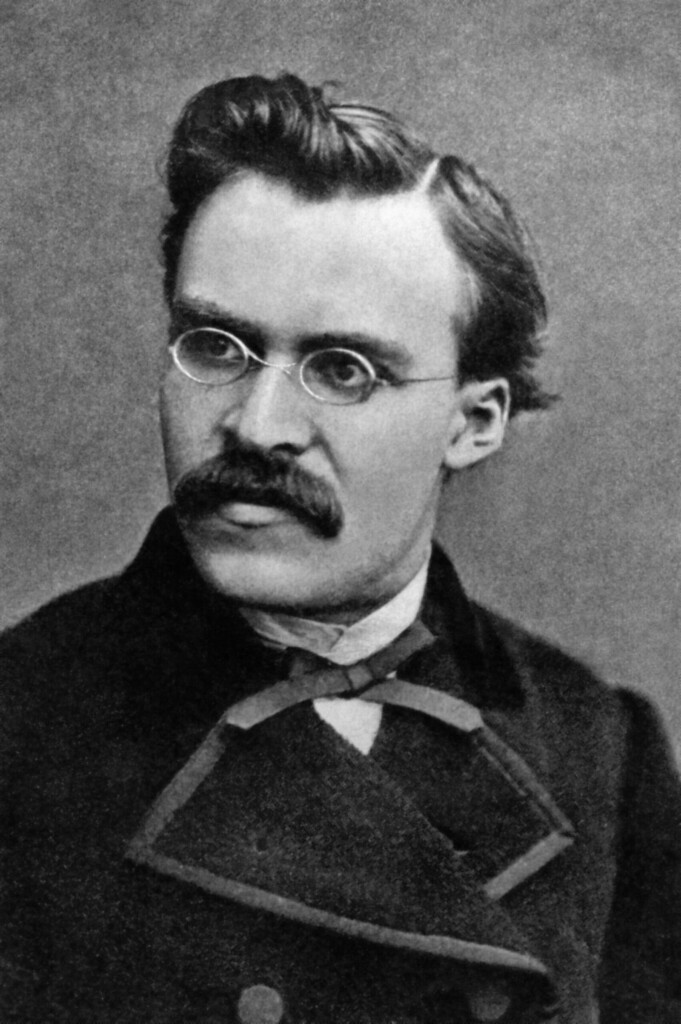
When Nietzsche published The Gay Science in 1882, the passage he considered the book’s gravitational center was not announced as philosophy. It arrived as a scenario: a demon crawls into your loneliest moment and tells you that every instant of your life will repeat, identically, in infinite succession, without memory, without alteration, without escape. He did not call this a fact about the universe. He called it a weight — das grösste Schwergewicht, the heaviest burden — and the question he attached to it was not cosmological but diagnostic: how would you receive it? With despair or with something that resembles desire?
The architecture of modern consolation rests almost entirely on the premise that suffering is temporary and error is correctable. Insurance, therapy, electoral cycles, career pivots, second marriages — the entire organizing grammar of contemporary life is built around the grammatical tense of the future perfect: by then, it will have been different. Nietzsche saw this not as resilience but as a postponement mechanism, a way of tolerating the present by secretly indicting it, by treating every moment as evidence in a case that will eventually be resolved in your favor. Thus Spoke Zarathustra, published in installments between 1883 and 1885, deepened this analysis into something almost clinical: the doctrine of eternal return was the knife Nietzsche used to cut open the invisible hope that functions as anesthesia.
What is most unsettling about this move is that it targets something most people would identify as virtue. The capacity to learn from the past, to do better, to hold the present lightly because the future remains open — this reads as maturity, as psychological health, as the correct response to finitude. Bernard Williams, in Shame and Necessity published in 1993, noted that moral progress narratives require a fiction of temporal distance from our worst moments, a belief that the self who acted badly is sufficiently separated from the self who reflects on it. Nietzsche’s eternal return destroys that distance. There is no future self who will have understood. There is only this self, in this configuration, permanently.
The consolation industry Nietzsche was dismantling was not primarily commercial — it was metaphysical. The Christianity of his cultural moment had distributed the damage across an afterlife: what you endure here will be redeemed there, the ledger balances at death. When that architecture collapsed under Enlightenment pressure, secular modernity built a structural equivalent using progress as its eschatology. History was moving toward something. Suffering had direction. Auguste Comte had already in the 1830s formalized this into a religion of humanity in which the present was always instrumental to a future that justified it. Nietzsche’s hammer was aimed precisely here — not at the suffering itself, but at the mechanism that converts suffering into a promissory note, at the psychological habit of treating your actual life as a rough draft.
To live as though the eternal return were true is not an instruction toward joy. It is a demand for honesty so severe that it functions like surgery without anesthesia. It asks you to stop treating your choices as contingent and your regrets as productive. It asks whether the life you are living is one you have actually chosen or simply one you have been enduring in the confident expectation that the real version is still ahead of you, waiting to begin.

Ressentiment and the Backward Gaze as Cultural Default
You have been wronged. You know this with the certainty that only the body carries — a tightening in the chest when a particular name surfaces, a story you have rehearsed so many times that the rehearsal itself has become the event. The original wound may have happened once. The telling of it has happened thousands of times, and somewhere along the way, the telling stopped being a response to the wound and became the wound’s entire justification for existing.
Nietzsche called this ressentiment, and when he traced its anatomy in On the Genealogy of Morality in 1887, he was not describing a personal pathology. He was diagnosing a civilizational posture — the way entire systems of value can be constructed not from an overflow of strength but from an inability to digest what has already occurred. The slave, unable to discharge reactive feeling outward, turns it inward and then transforms it into a worldview. What cannot be overcome becomes sacred. What cannot be metabolized becomes a moral identity. The person who has suffered does not simply suffer — they discover, gradually and with immense satisfaction, that suffering grants them a position in the social order that action never could.
What makes this posture so difficult to see is that it arrives wearing the language of justice. The nineteenth century built entire political architectures around the retroactive moral audit of history, and the twenty-first century has accelerated the project beyond anything Nietzsche could have measured. When a political movement’s primary coherence derives not from a vision of what it intends to build but from a meticulously maintained catalog of what was done to it, the backward gaze has become load-bearing. The grievance is no longer the origin of the mobilization — it is the mobilization’s continuous fuel, which means it cannot be resolved without dissolving the movement itself. Resolution becomes existential threat.
Therapeutic culture has absorbed this logic so completely that it no longer recognizes it as a logic. The language of trauma, weaponized in ways that bear almost no resemblance to the careful clinical work of figures like Bessel van der Kolk, has produced a popular framework in which the measure of authenticity is the depth of one’s wound. To have suffered greatly is to have access to a kind of moral epistemology unavailable to those who have not. The wound becomes a credential. This is not an argument against the reality of trauma — the neurological and somatic evidence for how the past inhabits the nervous system is overwhelming. It is an argument about what happens when the condition of having been harmed becomes the primary architecture through which a self relates to time, to others, and to its own possibilities.
Historical narratives operate under identical pressures. Nations that organize their collective identity around a founding injury — an occupation, a genocide, a colonial dispossession — face a structural temptation that has nothing to do with whether the injury was real and everything to do with what function the injury is being asked to perform. When the past is held not as a context for understanding the present but as a permanent indictment that forecloses the future, history stops being a sequence of events with causes and consequences and becomes instead a courtroom in permanent session. The verdict was reached before any argument began, and the only permissible testimony is testimony that confirms the original charge.
What Nietzsche identified as the mechanism underneath all of this is the reversal of temporal agency — the transformation of passivity into virtue. The one who acts is exposed to judgment; the one who has been acted upon accumulates credit. An entire civilization can organize itself around this reversal without ever naming it, because the reversal is always announced as something else entirely: as memory, as solidarity, as the refusal to forget.
The Historian's Trap and the Illusion of Linear Time

You are standing in a museum, staring at a photograph taken the year you were born. You have never seen this photograph before, yet you feel, with absolute certainty, that you remember it.
This is not a trick of sentiment. It is something more structurally disturbing: the past you carry with you is not stored the way an archive stores documents, sealed in acid-free folders and retrieved intact. In 1940, finishing what would be his final major manuscript before his death at the Spanish border, Walter Benjamin described history’s angel as a figure with its face turned toward the wreckage accumulating behind it, wings caught open by a storm blowing it inexorably forward into a future it cannot see. The angel does not choose to look backward — the catastrophe is simply what fills its entire field of vision. Benjamin was writing about the philosophy of historical progress, about how the ideology of advancement requires a willful blindness to the rubble it leaves behind. But there is a second reading of that image that Benjamin’s own century did not yet have the neuroscience to articulate: the storm is not blowing the angel away from the past. The storm is partly made of it.
Memory reconsolidation research — developed systematically through studies by Karim Nader and Joseph LeDoux at New York University in the early 2000s — demonstrated something that should have restructured the entire way Western culture discusses personal history and collective trauma. Every time a memory is recalled, it enters an unstable biochemical state. It must be rebuilt, protein by protein, before it is stored again. This means the act of remembering is simultaneously an act of rewriting. The past is not retrieved; it is reconstructed, and the reconstruction is contaminated by everything present in the brain at the moment of access — current mood, current need, current fear. What this means, metabolically, is that the weight of the past pressing on a person’s present is not the weight of something fixed. It is the weight of something they are, right now, actively manufacturing.
The historian’s professional conceit is precisely the belief in access — the faith that with enough rigor, enough primary sources, enough distance from ideology, you can recover what actually happened. This faith underwrites entire universities. It structures courtrooms, therapy rooms, political campaigns built on appeals to founding moments and original intentions. But the archive is a tool built to serve the present that funds it, and the memory is a tool built to serve the organism that carries it. What gets remembered, what gets emphasized, what gets quietly excised during reconsolidation — these are not neutral processes. They are purposeful ones, even when they operate below consciousness.
There is a population of people who have discovered, in the middle of a relationship or a career or a political conviction that had seemed solid for years, that the story they had been telling about their own past was shaped less by what happened than by what they needed to have happened. The childhood that explained everything. The founding injury. The moment of clarity that justified every subsequent choice. These narratives are not lies, exactly. They are better understood as ongoing renovations — structures constantly being modified to bear new loads. The philosopher Paul Ricoeur spent much of his late career, particularly in Time and Narrative published between 1984 and 1988, tracing how human identity is fundamentally narrative identity: the self is not a substance but a story being told in real time, and the past it claims as its foundation is always, at some level, being retroactively authored.
Which makes Nietzsche’s question considerably more vertiginous than it first appears. If the eternal return asks whether you could will your life to repeat exactly as it was, the hidden difficulty is not whether you are brave enough to say yes — it is whether you even know what you would be saying yes to.
Amor Fati as a Violence Against Comfort
You are sitting across a table from a notary you have never met, and there is a document in front of you that describes your life — the choices made, the years spent, the shape of what came out — and none of it is what you would have written. The notary does not look up. The pen is already in your hand. The question is not whether you agree. The question is whether you will sign.
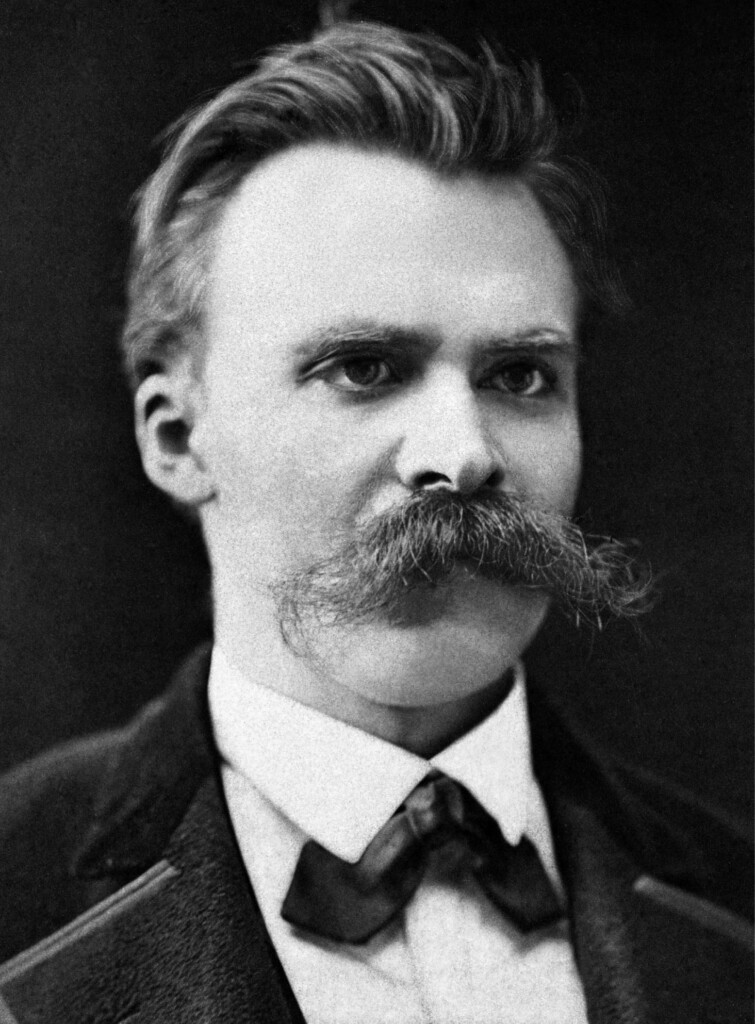
Nietzsche’s amor fati is not a philosophy of gratitude. It is not the wellness-industry repackaging it has suffered since the late twentieth century, the motivational poster that tells you to love what you cannot change because it made you who you are. That reading domesticates something feral. What Nietzsche actually proposed, first sketched in The Gay Science in 1882 and driven to its sharpest point in Ecce Homo in 1888, is closer to an act of internal demolition — the targeted destruction of the self that requires its history to have been otherwise in order to feel that its present existence is justified. That self, the one that lives on the condition that certain things are retroactively corrected, is not a wounded self waiting to heal. It is a structurally dependent self, one that has made contingency the foundation of its identity. Amor fati attacks the foundation, not the wound.
The difficulty is that this dependent structure is not felt as dependence. It is felt as intelligence, as discernment, as the reasonable recognition that some things should not have happened. William James, writing in 1884 in his paper “What Is an Emotion?” published in Mind, made an argument that cuts directly through this self-flattery: the body registers and commits to an emotional reality before the mind has constructed a narrative about it. We do not tremble because we are afraid, James argued — we are afraid because we tremble. The physiological event precedes the cognitive interpretation and in many ways determines it. Which means the mind’s elaborate justifications for its resistances — the intellectual architecture of why the past must be different — are frequently post-hoc rationalizations of a somatic refusal that happened before any reasoning began. The body already decided. The mind is writing the legal brief afterward.
This is where amor fati becomes violent rather than liberating. If the refusal of the past is embedded at a level prior to conscious thought, then accepting the past — truly, without the escape clause of “and yet it should have been otherwise” — requires overriding something the organism has already committed to. It is not an act of understanding. It is closer to what surgeons call a second incision: cutting through scar tissue that formed as protection in order to reach something that did not heal correctly underneath. The protection was not wrong to form. It served a function. But the function it serves now is the preservation of an incomplete life held in permanent suspension, waiting for a revision that will not come.
What Nietzsche could not resolve, and what makes Ecce Homo simultaneously the bravest and most unstable text in the Western philosophical canon, is that he himself could not fully sign the document. The grandiosity of that book — the chapter titles, the messianic register, the declared necessity of his own existence — reads less like a man who has achieved amor fati and more like a man performing it at maximum volume to drown out the part of himself that is still waiting for the notary to look up and say there has been a mistake, that another life is available, that the pen does not have to fall where it falls.
A vision curated by a filmmaker, not an algorithm
In this video I explain our vision
⚡ The Eternal Burden: Time, Will, and the Weight of Existence
Nietzsche’s concept of eternal return forces us to confront the most unsettling question a human being can face: what if every moment of your life had to be lived again, infinitely? This idea is not merely a philosophical provocation but a profound ethical demand that connects memory, identity, and the courage to affirm existence. The articles below trace the deepest intellectual currents that flow through Nietzsche’s thought and illuminate the labyrinth of time, selfhood, and the past.
Friedrich Nietzsche and Memory: On the Uses and Disadvantages of History
Nietzsche’s meditation on history and memory stands as one of the essential companion texts to understanding the eternal return. In this work, he warns against the paralysis that comes from excessive historical consciousness, arguing that life requires a certain forgetting to move forward. The tension between remembering and forgetting is at the very heart of what it means to bear the weight of the past.
GO TO THE SELECTION: Friedrich Nietzsche and Memory: On the Uses and Disadvantages of History
Eliade’s The Myth of the Eternal Return: Analysis
Mircea Eliade‘s analysis of the eternal return myth reveals how archaic cultures structured time as cyclical repetition rather than linear progression, offering a fascinating anthropological counterpoint to Nietzsche’s philosophical version of the same idea. For Eliade, the return to origins is a sacred act of regeneration, while for Nietzsche it is a terrifying and liberating affirmation of amor fati. Reading them together unveils the full depth of humanity’s obsession with cyclical time.
GO TO THE SELECTION: Eliade’s The Myth of the Eternal Return: Analysis
Mircea Eliade and the Myth of the Eternal Return
Mircea Eliade devoted his scholarly life to understanding how myth and the sacred structure human experience of time and cosmos. His concept of the eternal return, rooted in the religious imagination of ancient peoples, provides an indispensable backdrop against which Nietzsche’s radical philosophical reinterpretation must be measured. Both thinkers, from vastly different directions, arrive at the same threshold: the question of whether existence can be affirmed in its totality.
GO TO THE SELECTION: Mircea Eliade and the Myth of the Eternal Return
Proust’s In Search of Lost Time: Analysis
Proust’s monumental novel is perhaps the most sustained literary exploration of time, memory, and the redemptive power of the past ever written. Where Nietzsche demands that we say yes to the eternal recurrence of all things, Proust seeks to recover lost time and transform it into art, turning the weight of the past into a cathedral of consciousness. Together, Nietzsche and Proust define the two poles of modernity’s confrontation with time: the will that affirms and the memory that redeems.
GO TO THE SELECTION: Proust’s In Search of Lost Time: Analysis
Discover the Cinema That Asks the Hardest Questions
If these ideas resonate with you — the eternal return, the weight of the past, the courage to affirm existence — then independent cinema has something irreplaceable to offer. On Indiecinema you will find films that dare to explore time, memory, and identity with the same depth and uncompromising honesty as Nietzsche himself. Step into a different kind of screen experience, one that genuinely challenges you to think and feel beyond the ordinary.
👉 EXPLORE THE CATALOG: Watch Indie Films in Streaming
👉 Questo articolo fa parte dell'hub Psychology: The Complete Guide to Mind, Behavior, and Human Nature
A vision curated by a filmmaker, not an algorithm
In this video I explain our vision