
The Rat Appears Before the Man Dies
You step over it without stopping. A rat, dead on the landing of your apartment building, its grey body curved against the baseboard like something discarded rather than something that died. You register it — a flicker of mild distaste, the kind that passes before you reach the street — and then the morning absorbs you, the bread, the coffee, the ordinary machinery of a day that insists on its own continuity. You do not ask where it came from. You do not ask why it chose this particular landing to stop being alive. The question would require a stillness you are not prepared to offer.

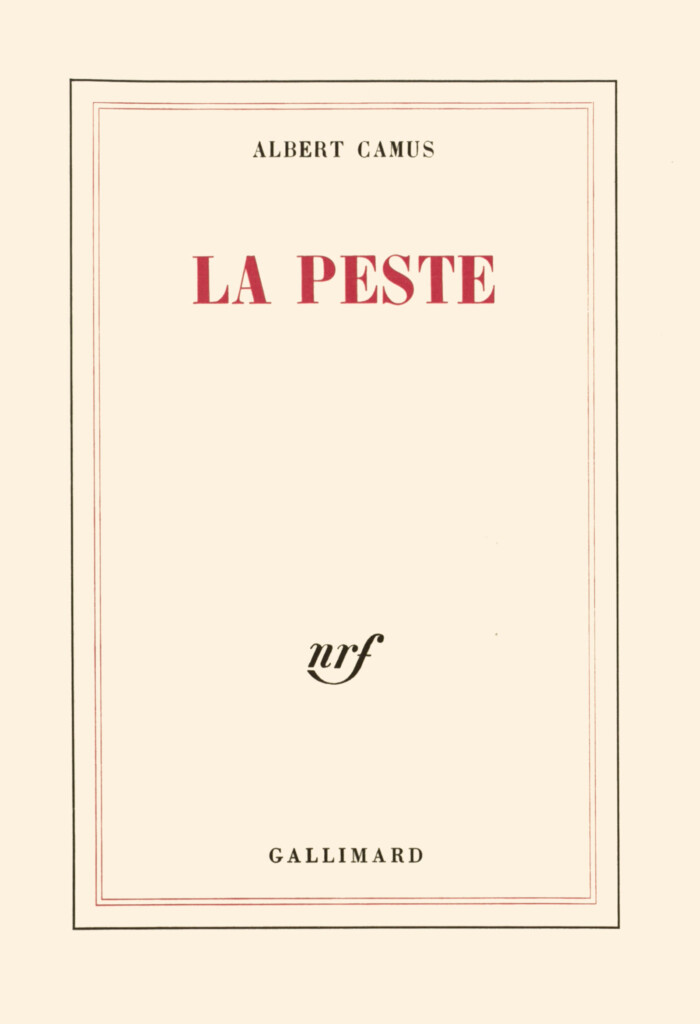
This is where Albert Camus begins La Peste, published in 1947, not with the horror but with the indifference. The novel opens on Oran, a city he describes as a place turned entirely toward commerce, a town without pigeons, without trees, without gardens — a city that has organized itself so completely around transaction that it has lost the habit of asking what things mean. The dead rat on the landing of Dr. Bernard Rieux’s building is not immediately a catastrophe. It is an inconvenience. Then there are two rats. Then there are dozens, pouring out of the walls, dying in the gutters, accumulating in the hallways until the smell becomes its own kind of argument. The city’s response is not alarm. It is irritation. The rats are a logistical problem before they are a sign.
Camus was writing about the Nazi occupation of France with the plausible deniability of allegory, but the structure of his metaphor reaches further than any single historical event. What he understood, with the cold precision that irritated Sartre and fascinated Barthes, is that collective evil does not arrive as itself. It arrives as an anomaly that becomes a pattern that becomes, finally, a fact that everyone has already normalized by the time it has a name. The mechanism is not ignorance. It is the particular human talent for registering a thing and choosing, in the same instant, not to process it fully. Hannah Arendt, writing about Adolf Eichmann in Jerusalem in 1963, called this the banality of evil — but the banality she described was not stupidity, it was the suspension of thinking as a deliberate, if unconscious, act. The man who steps over the rat and the bureaucrat who signs the transport order share the same cognitive mercy: they do not follow the thought to where it goes.
Incremental emergence is the design feature that makes collective catastrophe possible. In 1933, the year the Reichstag fire gave legal cover to emergency powers that were never relinquished, the escalation was visible in its components — the boycott of Jewish businesses in April, the book burnings in May — and yet the cumulative logic was not legible to most people living inside it because each step arrived as a discrete event rather than a chapter in a legible sequence. The historian Christopher Browning documented in Ordinary Men, published in 1992, how members of Reserve Police Battalion 101 — middle-aged German men, not ideologues — moved from discomfort to participation to routine across a matter of months. They did not become monsters through conviction. They became participants through repetition, through the slow erosion of the moment when refusal was still thinkable.
Recognition is not a passive act. This is what Camus understood and what his novel forces the reader to confront in the most uncomfortable possible way: the reader knows, from the first dead rat, what is coming. The dramatic irony is total and merciless. You read the denial of the Oran authorities, their reluctance to use the word plague, their bureaucratic hesitation in ordering the city sealed, and you feel the superiority of the informed observer — until you remember every sign you have stepped over in your own life, every dead rat you named something smaller than what it was, because naming it correctly would have obligated you to move differently through the world.
Children Of A Darker Dawn
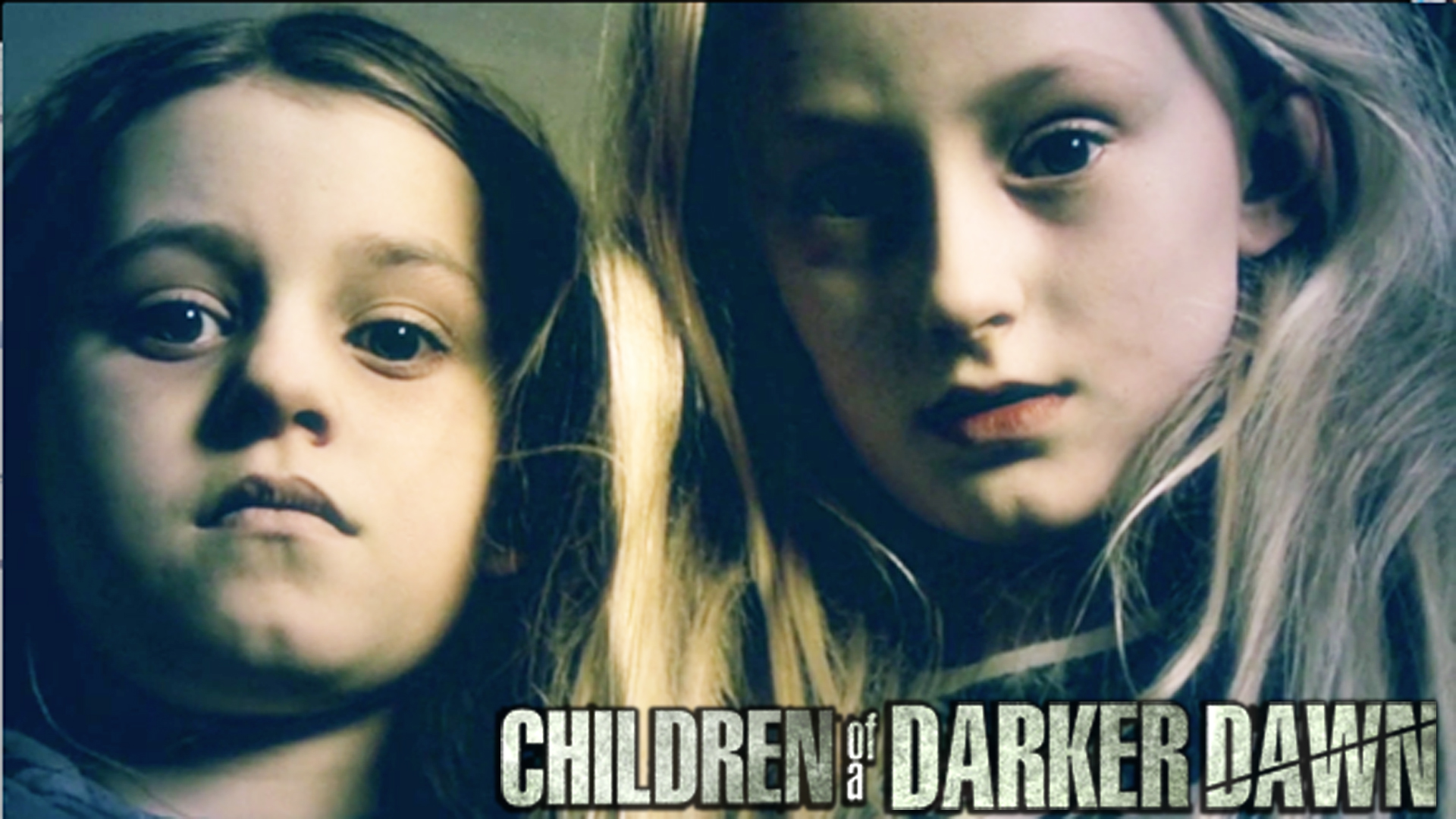
Drama, horror, sci-fi, by Jason Figgis, United States, 2012.
In a post-apocalyptic Ireland, a pandemic has wiped out the adult population, struck down by a mutant strain of flu that turns them paranoid and violent before killing them. Nine months later, the surviving children wander through abandoned buildings in search of food and shelter. Among them are Evie and her younger sister Fran, trying to survive while avoiding potentially dangerous groups of kids. Their only comfort is The Railway Children, the book their mother used to read to them. The arrival of Alice, a girl who has escaped from a gang led by her sister Kate, changes their path. After being betrayed by the gang, Evie decides to confront them, triggering a series of events that will lead to tensions and conflicts within the group.
The film, directed by Jason Figgis with limited resources but great sensitivity, is a post-apocalyptic drama that goes beyond horror, focusing on grief and the emotional fragility of its characters. The tone is somber, marked by melancholy, disturbing flashbacks, and unstable relationships. Though it recalls films like 28 Days Later, The Road, or Lord of the Flies, Children of a Darker Dawn finds its own voice through strong character development and powerful performances from its young cast.
LANGUAGE: English
SUBTITLES: Spanish, French, German, Portuguese
Camus Writes the Novel While Europe Burns
You are sitting in a café in Algiers in 1941, and the waiter who brings your coffee has already decided not to ask questions. The newspapers have been vetted. The radio speaks in a voice that sounds like certainty. You are twenty-eight years old, you have tuberculosis, and you have just begun to understand that silence is also a political act.
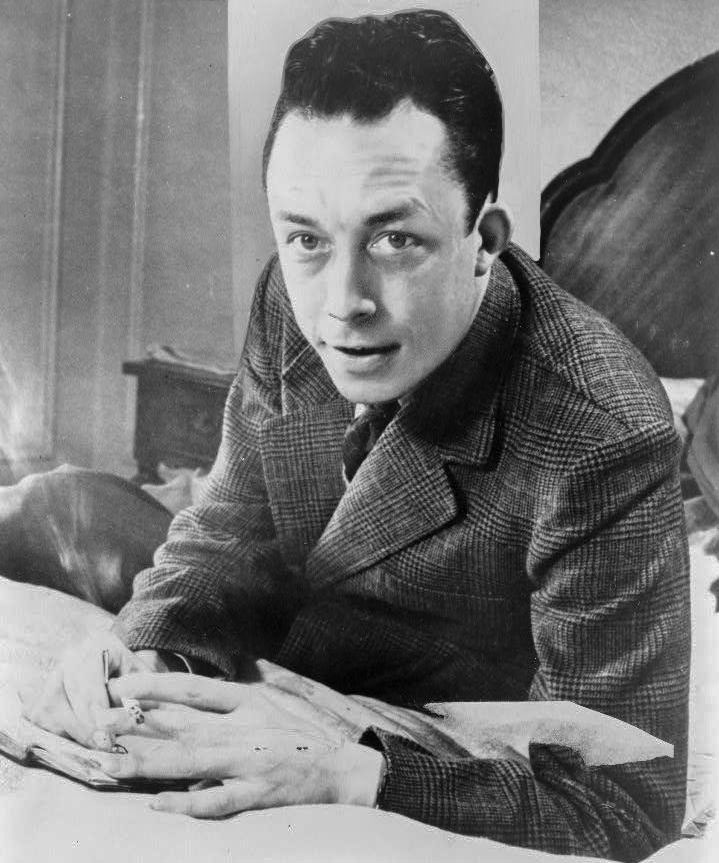
Albert Camus began drafting what would become La Peste in 1943, working through notes he had been accumulating since 1941, while Algeria was under Vichy administration and metropolitan France had been partitioned into a zone of open occupation and a zone of managed complicity. He was not writing allegory as a literary exercise. He was writing from inside the experience of a society that had learned to function normally while abnormality consumed it from within. He had joined the Resistance network Combat by 1943, editing its clandestine newspaper under the pseudonym that protected him while simultaneously exposing him to arrest, deportation, and execution. The plague he was imagining on the page was the plague he was already living.
What the novel performs that pure political reportage cannot is the grammar of contamination — the way a collective catastrophe rewires individual moral reasoning before the individual has consented to the rewiring. The inhabitants of Oran do not choose to become indifferent; indifference is the adaptation that the disease imposes on the survivors. Hannah Arendt, writing in The Origins of Totalitarianism in 1951, identified precisely this mechanism: totalitarian systems do not require true believers to function at scale, only the progressive normalization of procedures that, taken one at a time, each seem survivable. Camus had arrived at the same diagnosis through lived proximity rather than archival distance, and the result is a text that feels less like an argument than like a fever chart.
The character of Dr. Bernard Rieux is not a hero in any redemptive sense. He stays in Oran and treats the dying not because he has resolved some inner moral crisis, but because leaving would require an act of imagination he refuses to perform. This is the distinction Camus insists on throughout the novel: the difference between those who resist because they have constructed a principled ideology of resistance, and those who resist because capitulation never becomes thinkable. The Resistance itself, as a historical formation, was built largely from the latter category — people who did not resist fascism because they had read the right books, but because at some point the alternative crossed a threshold they had not previously known existed in themselves.
The quarantine in the novel is not metaphor layered over reality; it is reality rendered as the only form that could hold its full weight. Oran under plague and France under occupation share the same topology: a border you cannot cross, a bureaucracy that processes suffering through forms, an interior population learning to call the abnormal “the situation.” By 1944, two years before Camus completed the novel, the word “situation” had become the most politically loaded term in the French language — a word that meant everything happening that no one was willing to name directly.
What burns beneath the text is something Camus would later articulate in L’Homme Révolté in 1951: that there is a species of evil that does not announce itself as evil, that arrives through institutions and habits and the slow erosion of what seemed like permanent distinctions. The plague bacillus, he writes near the end of La Peste, never dies and never disappears. It can lie dormant for decades in furniture and linen. Camus knew that this was not a biological observation. He had watched the bacillus organize train schedules and sign administrative orders, and he had seen how many people mistook its efficiency for order.

The Metaphor That Is Not a Metaphor
You read the novel in school and someone told you it was about the Nazi occupation of France, and you nodded, because that explanation made everything easier — the rats, the quarantine, the slow bureaucratic indifference of a city learning to live with death. The allegory collapsed the distance between you and the text just enough to make you feel you understood something, and that feeling of understanding is precisely what Camus spent three hundred pages trying to make impossible.
Susan Sontag argued in 1978 that the metaphorization of illness is never innocent. When a disease becomes a symbol for something else — moral corruption, political tyranny, social decadence — the actual suffering of actual bodies gets laundered into abstraction. The plague victim stops being a person dying in a poorly ventilated room and becomes a figure in an argument about something grander and more bearable. Sontag was writing about cancer and tuberculosis, about the way Western culture had spent two centuries projecting character onto physical catastrophe, as if the body’s failure were a confession. But her logic cuts directly into the comfortable critical consensus around La Peste: every reading that reduces Oran’s epidemic to a metaphor for fascism simultaneously reduces its victims to props in an allegory they didn’t consent to inhabit.
What is genuinely strange about Camus’s novel is that it seems to invite the allegorical reading and then quietly destroys the conditions that would make it satisfying. The epidemic in Oran behaves like real epidemics behave — chaotically, without narrative justice, without any correspondence between virtue and survival. Dr. Rieux’s patients don’t die because they represent something; they die because the bacterium Yersinia pestis, which in historical outbreaks killed between thirty and sixty percent of infected populations in the medieval period and remained a credible biological threat well into the twentieth century, does not read character. The disease has no symbolic preferences. Camus understood this — he kept detailed notes on actual plague records from Oran, on the medical literature of epidemic management, on the specific physiological progression of bubonic infection — and he embedded that documentary fidelity into the novel’s texture precisely to make metaphor friction-producing rather than frictionless.
This is where Camus diverges sharply from the allegorical tradition he is so often conscripted into. When Kafka transforms a man into a vermin in 1915, the metamorphosis is complete and immediate — the symbolic displacement is the entire mechanism. When Orwell constructs a farm of politically representative animals in 1945, the allegory is engineered to be transparent, even pedagogical. Camus instead gives you a bacterium. He gives you swollen lymph nodes and high fever and the specific administrative chaos of a city whose health infrastructure was genuinely unprepared. He gives you the tedium of quarantine so accurately that readers living through the COVID-19 lockdowns of 2020 recognized something in his pages that was not metaphor but document.
The trap the novel sets is more sophisticated than it first appears. It permits the allegorical reading — permits you to say yes, the plague is fascism, the plague is totalitarianism, the plague is any collective evil that arrives without announcement and spreads through complicity and indifference. It permits this reading because Camus knew that readers would need it, that the psychic cost of sitting with a meaningless epidemic is higher than most people are willing to pay. But the novel also makes the allegorical reading feel slightly wrong whenever you hold it too firmly, slightly reductive, slightly dishonest to the weight of what is being described. There is a residue that allegory cannot absorb. Rieux’s exhaustion at the end of his shifts is not a symbol of antifascist resistance. It is exhaustion. That distinction, small as it looks on the page, is everything Camus was fighting to preserve against a century that had grown dangerously fluent in the conversion of human suffering into the currency of ideas.
Rieux and the Abolition of Heroism
You are sitting with someone who is dying and you have run out of things to say. Not because language has failed you, but because you understood an hour ago that language was never the point. You stay anyway. You adjust the pillow. You check the chart. You come back tomorrow.
This is the entirety of Bernard Rieux’s moral universe, and Camus constructed it with what can only be called deliberate impoverishment. In a literary tradition saturated with the heroic physician — the doctor as tragic vessel, as sacrificial intercessor between the living and the dead — Rieux refuses every offered crown. He is flat not because Camus lacked the imagination to deepen him, but because depth of a certain kind is precisely the corruption Camus was diagnosing. The plague-stricken Oran of 1947 needs a hero the way a war needs a poet: to make the unbearable legible, to convert raw attrition into meaning. Rieux declines the conversion. He keeps his hands moving and his sentences short.
What Camus understood, and what most readers misread as restraint or modesty, is that the heroic narrative structure is itself a form of extraction. When a person discovers themselves through catastrophe — when the suffering of others becomes the theater in which their own character crystallizes — something has been taken from the dead without their consent. The plague does not exist to produce Rieux. Rieux exists despite it, functionally, stubbornly, without the catastrophe making him more himself. This is not humility. It is a refusal to metabolize other people’s deaths into personal identity.
Hannah Arendt, reporting on the Eichmann trial in Jerusalem in 1963 for The New Yorker in what became Eichmann in Jerusalem: A Report on the Banality of Evil, arrived at a conclusion that unsettled far more people than she anticipated. The horror was not in the monster. The horror was in the clerk. Eichmann organized deportation schedules with the same cognitive architecture a mid-level bureaucrat uses to file procurement requests. Arendt’s concept did not excuse him — it indicted the entire framework that assumed evil required a demonic interiority. But the structural inverse of that insight has received almost no attention: if evil can be banal, so can decency. If atrocity does not require a special kind of person, neither does resistance to it.
Rieux is the proof Arendt never wrote. He does not resist the plague through an act of will that transforms him. He resists it the way someone with a particular competence and a particular position resists what is in front of him — because the alternative is to not do what he does, and that alternative has no dramatic weight for him, no existential gravity. The absence of gravity is the argument. Georges Bernanos, writing his Diary of a Country Priest in 1936, gave his priest’s suffering a luminous theological architecture; every wound pointed upward. Camus strips that architecture away and leaves the functional remainder. What you get is someone who shows up.
The Western imagination has an extraordinary tolerance for suffering when it is narrated as transformation. The cancer memoir, the war testimony, the disaster novel — all of them covertly promise the reader that meaning will be extracted from mass death, that the accumulated losses will crystallize into something transmissible, something that justifies the attention. This is not malicious. It is structural. Meaning is how consciousness processes scale. But Camus in 1947 had just lived through an occupation in which meaning-making had been weaponized on an industrial scale — by collaborators who found purpose in the new order, by resisters who needed their suffering to be cosmic, by everyone for whom the historical cataclysm was, on some level, also a self-definition project. Rieux’s flatness is the only honest position available after that.
There is a form of attention that does not need to be witnessed to remain itself.
Tarrou's Confession and the Complicity We Inherit
You are sitting across from someone at two in the morning, and they are telling you something they have never said aloud before. The words come slowly, not because the person is searching for them, but because they have been carrying them for so long that releasing them requires a kind of physical effort, like pulling a splinter from deep tissue. In the novel, this moment belongs to Tarrou, who speaks to Rieux on a terrace above the sealed city, and what he confesses is not a crime he committed but one he witnessed as a child: his father, in magistrate’s robes, rising to demand the death of a man in the dock. The son had been brought to court as a kind of initiation, an introduction to the family profession. He left understanding something his father never did — that the distance between the man who calls for death and the man who dies is not moral, it is merely administrative.
What Camus plants in that confession is a claim about inheritance that most ethical frameworks are not equipped to handle. We tend to think of guilt as something personally incurred, attached to an act, datable, attributable. Tarrou did nothing. He was a child in a gallery watching a civic ritual that his culture had dressed in ceremony precisely so that no single person would feel responsible for its outcome. The robes, the protocols, the Latin phrases, the elevated bench — all of it exists to distribute the weight of violence so thinly across so many participants that no one feels it land. And yet the weight lands somewhere. It always does.
Karl Jaspers published Die Schuldfrage in 1946, one year before La Peste appeared, and the coincidence is not accidental — both texts are responses to the same catastrophe, written by men who understood that the postwar question of guilt could not be answered by simply prosecuting the architects of atrocity. Jaspers drew a distinction that has never fully entered popular consciousness despite its precision: criminal guilt, moral guilt, metaphysical guilt, and political guilt are not the same category, and conflating them produces either false acquittal or false condemnation. Metaphysical guilt, in Jaspers’ framework, is the solidarity with humanity that makes every surviving person implicated in the death of every victim they did not prevent — not because they pulled a trigger, but because they remained part of a world in which the trigger was pulled. This is not an abstraction. It is the exact weight Tarrou carries out of that courtroom.
What makes Camus’s treatment more unsettling than Jaspers’ is that Camus refuses to let the inheritance be broken by awareness. Tarrou knows. He has known for decades. He has dedicated his life to opposing capital punishment in every form, has become a man who refuses to be complicit, and still he gets the plague. Knowledge does not confer immunity. The recognition of a trap does not automatically release you from it. This is where the novel stops being an allegory and starts being something more like a diagnosis — not of history, not of fascism as a past event safely bounded by dates, but of the structural condition of living inside any organized society that reserves the right to kill.
Every legal system in the world retains that right in some form, whether through execution, warfare, the policing of borders, or the bureaucratic administration of poverty. The citizen who pays taxes and votes and objects to nothing in particular is standing in a gallery watching robes and protocols perform violence on their behalf. The ceremony is different. The distance is the same. Tarrou’s father never believed he was a killer, and that belief was not hypocrisy — it was the precise product of a system designed to make such a belief possible, even inevitable, for the people it requires to function.
A vision curated by a filmmaker, not an algorithm
In this video I explain our vision
The Crowd That Does Not Know It Is a Crowd

You are standing in a queue at a pharmacy. You do not know the man in front of you. You have never spoken to the woman behind you. But you are already behaving like them — adjusting your posture to theirs, calibrating your impatience to the ambient anxiety of the line, absorbing a collective tempo that no one declared and no one could identify as its source. You entered as an individual. You are already something else.
Gustave Le Bon published Psychologie des foules in 1895 as a warning that most educated Europeans dismissed as sociology for the nervous. His central observation was not that crowds were dangerous in the way riots are dangerous — that was obvious enough — but that the crowd precedes its own visibility. A group of people sharing a condition, a fear, a contagion of affect, becomes a psychological crowd long before it assembles in any square or street. What binds them is not proximity but a shared unconscious orientation, what Le Bon called a collective mental unity, in which each person’s individual critical faculty is progressively suspended by the momentum of the group’s emotional current. The disturbing corollary — one Le Bon himself drew only halfway — is that you can be inside a crowd without knowing you are in one, and that this ignorance is not incidental but constitutive of how the crowd functions.
Camus understood this dynamic in 1947 as something the war had made empirically visible. The citizens of Oran do not gather, do not chant, do not march. They scatter. They barricade themselves in apartments, they ration food, they wait for news in silence. And yet they behave with a collective predictability so total that Rieux can describe the population’s psychological arc with statistical precision: the phases of anxiety, the plateau of resigned routine, the erosion of private grief into shared numbness. What looks like atomization is, in structural terms, a crowd — one organized not by proximity but by the shared logic of exposure to an invisible threat, one whose very dispersal becomes its mode of cohesion.
Elias Canetti, working across fifteen years before publishing Crowds and Power in 1960, pushed the analysis further into something more uncomfortable. For Canetti, what individuals most fear is the touch of the unknown — the sudden physical contact with a stranger that triggers revulsion and alarm. The crowd dissolves this fear not by resolving it but by inverting it: inside the crowd, the pressure of bodies becomes relief rather than threat, because everyone is equal in their subjection to the mass. What epidemic logic achieves is a version of this inversion at the epidemiological level. The body is now universally suspect, including one’s own. Touching and being touched become acts of potential murder. The crowd, in Canetti’s terms, no longer needs to assemble to function as a crowd — the fear of contamination has already created the psychic field in which individual moral calculation collapses into reflex.
This is the precise mechanism Camus dramatizes through the character of Cottard, the man who thrives during the plague because the general criminalization of existence normalizes what he already was. He is not made monstrous by the epidemic. He is made ordinary by it. His private guilt, his unnamed crime, his permanent condition of expecting arrest — all of this ceases to distinguish him once the whole city lives inside the same anticipation of punishment. The plague does not corrupt Cottard. It provides him with a crowd to disappear into, and what disappears with him is the very category of individual culpability that might otherwise have named him.
The question this raises — one Le Bon’s framework could not answer and Canetti’s only half-contained — is whether the dissolution of individual moral agency in a crowd requires the crowd’s members to consent to it, or whether the condition alone, the shared exposure to something that does not discriminate, is sufficient to perform the dissolution without anyone’s knowledge or agreement.
Quarantine as Political Technology
You receive a letter informing you that your father has been moved to a “designated care facility” in sector four, that visits are suspended until further notice, that all correspondence must pass through the administrative office on the third floor, and that his condition will be communicated to you through official channels during business hours. There is no sender’s name. There is a reference number. You are expected to file a form if you wish to contest the arrangement, and the form is available between nine and noon on Tuesdays.
This is not a failure of the system. This is the system working exactly as designed — and the design is far older than the emergency that activated it. When Michel Foucault published Discipline and Punish in 1975, he opened with a document that most readers assume is a curiosity: a late seventeenth-century French ordinance detailing the protocols for a plague-stricken town. Every street locked. Every inhabitant registered. Syndics appointed to surveil each block. The sick separated from the well, the dead recorded to the hour. Foucault’s argument was that this plague apparatus was not an aberration born of crisis but a laboratory, a blueprint, the first complete articulation of what disciplinary power looks like when it is permitted to operate without social friction. Catastrophe, he observed, produces consent. When people are afraid enough, they will not merely tolerate surveillance — they will demand it, will feel abandoned without it, will mistake its structures for care.
Camus understood this dynamic not as a political theorist but as a writer who had lived under occupation, who had watched the French administration of Algeria operate with bureaucratic serenity while enacting its violences in perfect procedural order. Oran in The Plague is not governed by a tyrant. It is governed by prefects, committees, communiqués, and categories. The population is not terrorized into submission; it is administered into it. The authorities do not suppress grief — they simply reclassify it, redirect it into queues and waiting rooms and official notifications, until the emotional fact of loss becomes illegible beneath its own paperwork. The dying are not abandoned; they are processed.
What Foucault called the “political dream of the plague” — the fantasy of a perfectly legible, perfectly controlled social body — finds its literary flesh in Camus’s quarantined city. The gates close not in a single dramatic moment of violence but through incremental logistical decisions, each one reasonable in isolation, each one announced in the calm register of public health management. By the time the population understands that the city is a prison, the walls are already complete, and the authority that built them has adopted the vocabulary of protection so thoroughly that to object to the walls feels like arguing against medicine itself.
There is a particular cruelty in how this vocabulary colonizes grief. Mourning requires language, requires the possibility of saying that something irreplaceable has been lost, that the dead person was singular and cannot be replaced by a statistic. Biopolitical governance — the management of populations as biological masses, as Foucault elaborated across the 1976 lectures published as Society Must Be Defended — is structurally incapable of processing singularity. It can count the dead. It can graph the mortality curves. It cannot, by definition, register what it means that this specific person died in this specific room without anyone allowed to hold their hand. The administrative form that reaches you in the mail does not contain a line for that. It was never designed to.
What Camus saw in the plague was that the epidemic does not invent this machinery — it simply makes it visible by accelerating it, by stripping away the social cushioning that ordinarily softens its edges enough to remain tolerable. In ordinary time, institutions process human beings slowly enough that the processing feels like service.
What the Plague Leaves Standing
You are standing in a city that has just been unlocked. The gates swing open, the trains begin running again, lovers who survived press their faces into the necks of people they had almost learned to forget. The music of reunion fills the streets, and somewhere in the celebration, a precise and terrible forgetting begins — not because the survivors are weak, but because forgetting is the first thing a living body does when the unbearable lifts.
Camus understood that the plague’s most disturbing moment is not its arrival but its departure. The novel ends not with transformation but with restoration — the old habits, the old commerce, the old hierarchies reassembling themselves with remarkable efficiency. Rieux watches the crowds celebrate and registers something closer to exhaustion than triumph. The city is not reborn. It is resumed. And the difference between those two words contains the entire weight of the book’s argument about what suffering does and does not teach.
Primo Levi spent the last years of his life trying to explain why Auschwitz produced neither a generation of saints nor a generation of monsters, but rather something far more difficult to metabolize: a population of people who had done what they needed to do to survive, and who could not quite account for that to themselves afterward. In The Drowned and the Saved, published in 1986, just one year before his death, he introduced the concept of the gray zone — the moral space where victims became partial collaborators, where the Sonderkommando cremated the bodies of people who had been their neighbors, where survival required the kind of compromise that no external tribunal could ever fully judge. What Levi showed is that extreme collective suffering does not purify moral categories. It dissolves them. The clarity people expect catastrophe to produce — the sharp line between good and evil, the legible lesson, the earned wisdom — is precisely what catastrophe takes away.
The plague in Oran does not leave its citizens morally sharpened. It leaves them morally exhausted, which is a different condition entirely, and one far more dangerous because it resembles resolution. The people who pour into the streets when the gates open are not the same people who entered the quarantine, but they are not wiser people. They are people who have metabolized fear into relief and are now metabolizing relief into normalcy with the same unconscious efficiency. The plague will be remembered as an event, catalogued, perhaps commemorated, and the commemorating will serve as the primary mechanism for ensuring that its actual psychological contents are never revisited.
This is the structural trap that historical catastrophe consistently sets. After 1918, Europe built monuments to its war dead on a scale never before attempted and then spent the next twenty years reconstructing every political condition that had made the war possible. The monument is not memory. The monument is the replacement for memory — the place where the feeling is deposited so that daily life need not carry it. Collective grief institutionalized becomes collective grief discharged, and what remains is the clean, navigable surface of shared narrative: we suffered, we endured, we survived. The verb that never appears in that sequence is we understood.
Rieux’s decision to write the chronicle he has been narrating all along is often read as an act of witness, a commitment to keeping the record against future forgetting. But Camus is too honest to let that gesture be redemptive. Rieux knows, even as he writes, that the testimony will be read by people who will receive it as history rather than warning, as a story about a place and time rather than a mirror held up to the permanent structure of how humans behave when the invisible enemy arrives and, more damningly, when it leaves.
🌑 When Evil Spreads: Literature, Absurdity and Collective Fate
Albert Camus‘s The Plague is not merely a novel about disease — it is a profound meditation on how collective evil tests human solidarity, meaning, and moral resistance. The articles below trace the philosophical and literary corridors that connect Camusian thought to the broader landscape of existentialism, political horror, and the absurd condition of modern humanity.
Albert Camus: Life and Philosophical Thought
Albert Camus built his entire philosophical edifice on the confrontation between human desire for meaning and the universe’s radical indifference. Understanding his life and thought is essential to grasping why The Plague functions simultaneously as historical allegory, existentialist manifesto, and ethical call to arms. Without this foundation, the novel’s moral weight risks being reduced to mere literary symbolism.
GO TO THE SELECTION: Albert Camus: Life and Philosophical Thought
Camus’s Myth of Sisyphus: The Absurd Explained
In The Myth of Sisyphus, Camus formulates the concept of the absurd as the irreconcilable tension between humanity’s hunger for clarity and the world’s stubborn silence. This philosophical framework directly underlies the collective suffering depicted in The Plague, where characters must choose between despair, false hope, and lucid revolt. The rolling boulder becomes the epidemic itself — endless, indifferent, yet somehow revealing of human dignity.
GO TO THE SELECTION: Camus’s Myth of Sisyphus: The Absurd Explained
Banal Evil and Radical Evil: Kant and Arendt
Hannah Arendt‘s distinction between banal and radical evil offers a powerful companion lens through which to read Camus’s vision of collective catastrophe. The Plague’s administrators, collaborators, and indifferent bystanders echo Arendt’s insight that evil often operates not through demonic will but through thoughtlessness and institutional complicity. Together, Camus and Arendt map the moral geography of societies that fail to recognize — or resist — the evil unfolding within them.
GO TO THE SELECTION: Banal Evil and Radical Evil: Kant and Arendt
Existentialist Noir: History and Meaning
Existentialist noir emerged as a cultural response to the same post-war disillusionment that shaped Camus’s literary universe, blending moral ambiguity with the desperate search for authenticity in a world stripped of transcendent values. The genre’s shadowed aesthetics and condemned protagonists mirror the quarantined citizens of Oran, each confronting fate with neither divine rescue nor rational certainty. Tracing this tradition illuminates how Camus’s metaphor of plague permeated not only philosophy but the darker arteries of twentieth-century storytelling.
GO TO THE SELECTION: Existentialist Noir: History and Meaning
Discover the Cinema That Dares to Ask the Same Questions
If these themes of collective suffering, moral resistance, and the search for meaning in a silent universe resonate with you, Indiecinema is the streaming platform where cinema dares to go as far as literature. Explore our curated selection of independent and auteur films that confront evil, absurdity, and human solidarity with the same unflinching courage Camus brought to the page.
👉 EXPLORE THE CATALOG: Watch Indie Films in Streaming
A vision curated by a filmmaker, not an algorithm
In this video I explain our vision

