
The Dirty Work of Becoming
There is a man in a workshop somewhere in the industrial outskirts of Turin, and his hands have not been clean in three weeks. He is trying to turn a piece of raw brass into something that behaves like gold — not chemically, not fraudulently, but aesthetically, structurally, in the way it catches light and holds heat and refuses to feel cheap under the finger. He has failed seventeen times. The alloy cracks, or it oxidizes wrong, or it simply looks like what it is: a lesser thing pretending. He knows this. He keeps going anyway. There is something in him that cannot accept the material as it arrives in the world. He needs it to become.

This is not a metaphor. This is the oldest human compulsion there is, and the Italian Renaissance did not invent it — it simply gave it a vocabulary sophisticated enough to almost conceal how desperate the whole enterprise was.
In the Florence of the 1460s, in the shadow of Cosimo de’ Medici’s extraordinary patronage, Marsilio Ficino was translating the Corpus Hermeticum — a collection of Greek texts attributed to the mythical Hermes Trismegistus — and finding in them not instructions for metallurgical procedure but a cosmology of transformation. The soul, Ficino argued in his Theologia Platonica of 1474, was not fixed. It occupied a middle position in a hierarchy of being, straining simultaneously downward toward matter and upward toward the divine. Alchemy, in this reading, was not chemistry. It was ontology. The furnace was the self. The base metal was the self. The gold, if it ever came, was the self — but transfigured, purified, released from the tyranny of its own contingency.
Giovanni Pico della Mirandola made this even more radical. In the Oration on the Dignity of Man, written in 1486 when he was barely twenty-three years old, Pico imagined God addressing the newly created human being with a kind of terrifying freedom: you have no fixed nature, you may shape yourself as you choose, downward toward the brutish or upward toward the divine. This was not optimism. Read it again. It was vertigo. The absence of a fixed nature is not liberation — it is the most frightening condition imaginable. The alchemist in his laboratory, surrounded by crucibles and sulphur and the persistent smell of failure, was not a scientist in the modern sense. He was a man made dizzy by Pico’s premise, trying to use matter as a mirror in which to watch himself change.
The laboratories were real. The equipment was real — athanors, alembics, pelicans, the whole baroque apparatus of transformation that filled the basements and back rooms of Neapolitan palaces and Florentine workshops alike. Giambattista della Porta, writing his Magia Naturalis in Naples in 1558, catalogued procedures of material transmutation with the methodical patience of someone who genuinely believed that the boundaries between substances were negotiable, that the world was porous at every level. But even della Porta’s most technical passages carry within them something that no modern chemistry textbook ever contains: a trembling at the fact of matter itself, a sense that to touch a substance deeply enough is to touch something that touches you back.
The man in Turin with the stained hands understands this, even if he has never read Ficino. He is not trying to deceive anyone. He is trying to make the material confess to a potential it is not yet expressing. He believes, against all practical evidence, that the gap between what a thing is and what it could be is not fixed. That belief is the oldest alchemical proposition there is, and it has never, in five centuries, stopped being both beautiful and slightly deranged.
The Medici Smell of Sulfur
There is a particular kind of room that history keeps reconstructing without ever quite admitting what happens inside it. Men of exceptional intelligence gathered around a single light source, speaking in lowered voices about the nature of matter, about whether the soul of the universe could be coaxed into revealing itself through the correct arrangement of symbols, substances, and intentions. The food on the table has gone cold. Someone is reading aloud from a manuscript so recently translated that the ink on certain pages has not fully dried. Outside, Florence conducts its commerce, its feuds, its marriages of convenience. Inside, the question on the table is whether lead can become gold — and whether the question itself is merely a metaphor for something far more dangerous to ask openly.
Cosimo de’ Medici founded the Platonic Academy in 1462, and the founding was not an act of philosophical generosity. It was an act of extraordinary political calculation dressed in the language of spiritual urgency. That same year, he commissioned Marsilio Ficino to interrupt his ongoing translation of Plato and turn instead to a recently acquired Greek manuscript — the Corpus Hermeticum, the collected texts attributed to Hermes Trismegistus, that legendary figure the Renaissance believed to be an Egyptian sage contemporary with Moses. Cosimo was dying. He wanted the translation finished before he did. This detail, documented and unremarkable to those who record it as biographical footnote, is in reality one of the most revealing transactions in the history of ideas. A banker, at the threshold of death, chooses to accelerate the recovery of an ancient wisdom tradition over the completion of Plato. He is not doing this because he has become a mystic. He is doing it because the Hermetic texts promised something Plato did not: a direct operative relationship between human intelligence and the transformation of matter and soul.
Ficino understood his role with precision. His synthesis of Neoplatonism and Hermeticism, which would crystallize in the Theologia Platonica of 1474 and the De vita libri tres of 1489, created an intellectual framework in which alchemy was not pseudo-science but cosmological necessity. If all matter participates in a hierarchy of being descending from the One, then the alchemist who accelerates the purification of base metals is not performing a trick. He is cooperating with the universe’s own teleology. The magus, in Ficino’s system, does not violate natural law. He fulfills it. This is the intellectual architecture the Medici funded, and it is worth sitting with the specificity of that choice. They did not fund it because they believed it. They funded it because an intellectual tradition that makes transformation synonymous with cosmic order is extraordinarily useful to a family whose entire power rests on the capacity to transform — currency, alliances, legitimacy itself.
Giovanni Pico della Mirandola, arriving in Florence in the 1480s and absorbing this atmosphere like a fever, would later write in his Oration on the Dignity of Man that the human being alone among creatures has no fixed nature, that man is the only entity capable of becoming what he chooses. This reads as Renaissance humanism at its most luminous. It is also, if you let the light fall at a different angle, the philosophical justification for a ruling class that rewrites its own origins continuously. The Medici were wool merchants who became bankers who became patrons who became princes. Alchemy, as intellectual prestige, provided the narrative logic for this sequence of transformations. Each stage was not social climbing. It was purification. It was the base metal approaching its true nature.
Power has always been willing to fund the transformation of reality, but only when it could be reasonably certain that the direction of that transformation would not escape its hands.

What the Alchemist Actually Did in the Room
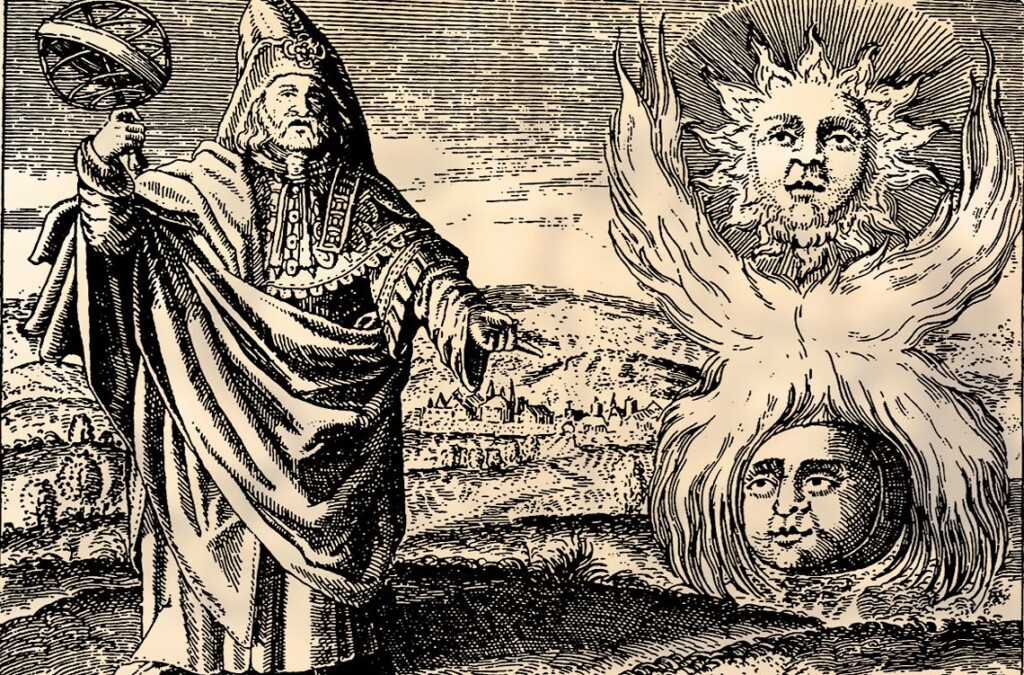
The smell arrived before everything else. Sulfur and mercury vapor and something underneath both of them — a sweetness that came from organic matter at high heat, from resins and animal fats and plant extracts being pushed past the point of their own tolerance. Anyone who entered the room would have registered it in the body before the mind could categorize it: this was a place where things were being undone.
The furnace, the athanor, stood at the center of everything. It was a tower-shaped structure, sometimes as tall as a man’s chest, designed to maintain a steady and graduated heat without constant intervention — an engineering problem disguised as a spiritual one, because the whole premise of the work was that transformation could not be rushed without being ruined. Around it: clay vessels, glass retorts, alembics with their long curved necks built to catch the ascending vapor and redirect it downward into collection flasks. The distillation apparatus was often handblown, fragile, expensive, and when a vessel cracked from thermal shock — which happened with a regularity that anyone who has kept a laboratory notebook will recognize with a hollow feeling in the chest — weeks of accumulated material were simply gone. The notebook itself, kept close, filled with a private language of planetary symbols and abbreviated Latin and diagrams that resembled nothing so much as the drawings of a man trying to map a country he has never visited.
Giovanni Battista della Porta approached all of this with the disposition of someone who found the distinction between natural philosophy and occult practice bureaucratically irritating. His Magia Naturalis, first published in 1558 and expanded dramatically in 1589 to twenty books, catalogued alchemical procedures, optical experiments, agricultural techniques and culinary chemistry in a single continuous gesture of curiosity, as if the cosmos had no internal borders worth respecting. He was not mystifying the work. He was doing the opposite: he was insisting that what other men called magic was simply nature operating at a register that careful attention could reach. The sulfur in the flask behaved according to laws. The mercury ascending through the neck of the alembic was not defying God’s order — it was demonstrating it.
And yet. Carl Gustav Jung, working through hundreds of alchemical manuscripts for what became his Psychologie und Alchemie in 1944, arrived at a conclusion that would have annoyed della Porta considerably and illuminated him completely. What Jung saw in the alchemical texts was not primarily chemistry or proto-science or even theology. What he saw was a theater of projection. The alchemist worked on the material in the flask, but the transformations he was tracking with such obsessive precision — the blackening, the whitening, the reddening, the moment of conjunction — were simultaneously the movements of his own interior life, externalized into matter because they could not be faced directly in the self. The laboratory was where you went when you could not sit still with what you were.
This is not a historical curiosity. The person who has spent eight months on a project that has no guaranteed outcome, who checks the progress compulsively at midnight and adjusts variables that may not be variables at all, who keeps a private notation system that no one else could decode — that person knows the laboratory from the inside. The obsessive project is always partly a displacement. Something else is being worked on, in the flask, in the code, in the month after month of incremental adjustment that never quite reaches the conclusion that was promised. The alchemist understood that the gold had to come eventually, because the alternative — that the work itself was the point, that transformation was not a destination but the only available motion — was a thought that could not be completed without changing the person who thought it.
The Heresy of Perfectibility
There is a particular kind of silence that comes over a man when he realizes that what he has written could kill him. Not the silence of doubt, not the pause of a thinker reconsidering his premises, but the absolute, animal stillness of someone who has said too much and now listens for footsteps. Giovanni Pico della Mirandola knew that silence. He was twenty-three years old when he composed his nine hundred theses for a public debate in Rome, and the Oration he wrote to introduce them contained a claim so radical that the Church convened a commission to examine it before the debate could even begin. The commission found thirteen of the theses heretical. Pico fled. The debate never happened.
What he had written was not, on its surface, inflammatory. It was almost beautiful in its simplicity: that the human being, unlike every other creature, had been given no fixed nature by God. The angels were angels. The beasts were beasts. But the human stood at the center of the cosmos as a kind of living indeterminacy, capable of descending into the merely animal or ascending toward the divine, not by grace, not by revelation, but by the exercise of its own transformative will. God, in Pico’s telling, says to Adam: “We have made you neither of heavenly nor of earthly stuff, so that with free choice and dignity, you may mold and fashion yourself into whatever form you prefer.” This was not a celebration. It was a detonation.
The alchemists had been saying the same thing for centuries, but in a language that moved through furnaces and retorts and the patient dissolution of metals. They had understood, long before Pico formalized it, that the logic of transmutation was not merely chemical but ontological. If lead could become gold through the correct application of heat and intention and time, then the human soul was equally subject to transformation. Matter was not fixed. The imperfect was not condemned to remain imperfect. This was the heresy encoded in every laboratory, the subversive core that Frances Yates identified when she traced the Hermetic tradition from its Egyptian origins through the Florentine translators and into the burning aftermath of Giordano Bruno‘s trial and execution in 1600. The Hermetic texts, which Cosimo de’ Medici had ordered Ficino to translate before Plato because he feared he would die before reading them, proposed a universe in which the human magus participates actively in cosmic processes, not as a servant of divine will but as a co-creator. The Church could tolerate Aristotle. It could barely tolerate Plato. The Hermetic magus was an entirely different kind of threat.
Aby Warburg spent decades mapping the symbolic systems through which Renaissance thinkers smuggled these ideas past institutional censorship, showing how the imagery of transformation, of figures caught mid-metamorphosis, of planets and metals and human temperaments arrayed in correspondence, functioned as a kind of philosophical encryption. The symbol was deniable. The fresco of Saturn devouring a world-age could be explained as allegory. The manuscript bound with an innocent title about distillation could be searched without yielding anything immediately prosecutable. Men became extraordinarily skilled at the gap between what they wrote and what they meant, and the gap itself became a kind of practice, a discipline of survival that paradoxically sharpened the thought it was designed to protect.
There is a scene that belongs to several lives simultaneously: a man at a desk in the hour before dawn, feeding pages into a small fire, watching the smoke rise and disperse into the dark above him, and understanding that what he is burning is not his failure but his most precise and dangerous thinking, the part that cannot yet be said aloud, the part that knows matter is not fixed and man is not finished and God, if there is one, never intended the categories to hold.
The Residue That Does Not Transmute
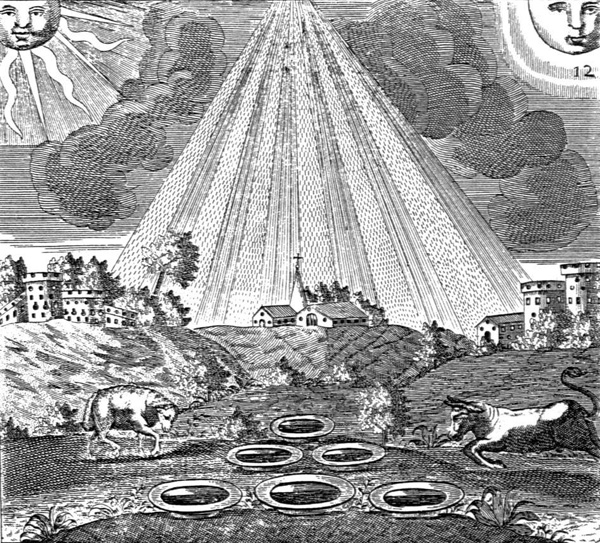
There is always something left at the bottom of the flask. Every serious practitioner of the Great Work knew this, and the tradition gave it a name with the gravity of a verdict: caput mortuum, the dead head, the skull of matter that refuses all invitation to become something else. You heat it, you dissolve it, you calcine it, you recombine it with mercury and sulfur and salt, you pray over it, you fast beside the furnace for three days, and it sits there, black and inert, indifferent to your theology and your hope. The residue does not mock you. That would be easier. It simply persists, patient in the way that only matter can be patient, outlasting the intentions projected onto it.
The alchemists of the Italian Renaissance were not naive men. Marsilio Ficino understood that the soul had its own dark sediment. Giovanni Pico della Mirandola, who died at thirty-one in 1494 having written himself into the center of European intellectual life, knew that the dignity of man he celebrated in his famous Oration rested on a capacity for self-transformation that was also a capacity for infinite self-deception. The gap between the two was precisely where the caput mortuum lived. What the tradition could not fully admit, what it dressed in the language of purification and stages and patient labor, was that some things do not transmute. That the residue is not a failure of technique but a feature of reality.
Max Weber, writing in 1917 in his lecture “Science as a Vocation,” gave this recognition its modern name: disenchantment. The world had been systematically stripped of the magical correspondences that made alchemy coherent, the sense that matter participated in meaning, that lead yearned toward gold the way the soul yearned toward God. What Weber saw, with the cold precision of a sociologist who had looked too long at his own century, was that disenchantment did not liberate us from the alchemical fantasy. It orphaned us inside it. We kept the belief in total transformation while losing the cosmological framework that had given it dignity. What remained was the procedure without the cosmos, the method without the meaning, the furnace without the prayer.
Walter Benjamin, working in the ruins of the same modernity Weber had diagnosed, developed what he called the dialectical image, that charged moment in which the past and the present collide so violently that the illusion of historical progress shatters and something true becomes briefly visible. The alchemical dream is precisely such an image when held in the right light. It shows us not a prescientific error that chemistry corrected, not a proto-psychology that Jung refined, but a structure of desire so durable that it survived the death of every system that once housed it. We no longer believe that sulfur and mercury are the masculine and feminine principles of creation, but we believe with the same fervor that the right methodology, the right therapy, the right productivity framework, the right political program, will finally accomplish what all previous attempts have not. We believe, with a faith that would have impressed Paracelsus, that the lead of ordinary life is always on the verge of becoming gold, if only we identify the missing step in the procedure.
That is the true bequest of Renaissance alchemy to the civilization it helped to form. Not the periodic table, not the unconscious, not natural philosophy. The habit of the furnace. The conviction that transformation is not only possible but imminent, that the residue at the bottom of the flask is a technical problem rather than a permanent condition of being alive, that the caput mortuum will yield if we only refine our understanding of heat.
And so it sits there still, unchanged, patient, waiting.
A vision curated by a filmmaker, not an algorithm
In this video I explain our vision
🔮 The Alchemical Roots of Renaissance Thought
Alchemy in the Italian Renaissance did not exist in isolation — it was woven into a rich tapestry of Hermetic philosophy, esoteric symbolism, and visionary thinkers who reshaped the Western imagination. These related articles trace the living threads that connect Renaissance alchemy to its deepest sources and most daring interpreters.
Giordano Bruno and the Hermetic Tradition
Giordano Bruno stands as one of the most radical inheritors of the Renaissance alchemical and Hermetic worldview. His fusion of memory arts, magical philosophy, and cosmic vision drew directly from the same Neoplatonic and Hermetic currents that animated Italian alchemical thought. Understanding Bruno means understanding the dangerous, luminous edge of Renaissance esotericism.
GO TO THE SELECTION: Giordano Bruno and the Hermetic Tradition
The Corpus Hermeticum: Guide to Esoteric Reading
The Corpus Hermeticum was the foundational text that ignited the Hermetic revival in Quattrocento Florence, directly fueling the alchemical imagination of the Renaissance. Translated by Marsilio Ficino under the patronage of Cosimo de’ Medici, it offered a vision of man as divine co-creator — the philosophical bedrock beneath Italian alchemical practice. Reading it today is to return to the source.
GO TO THE SELECTION: The Corpus Hermeticum: Guide to Esoteric Reading
Paracelsus: Life and Alchemical Thought
Paracelsus, though Swiss-German by origin, was profoundly shaped by the Italian Renaissance alchemical tradition and pushed it toward a revolutionary medical and spiritual synthesis. His insistence that alchemy was fundamentally about healing and transformation, not mere gold-making, echoed the spiritual currents circulating in Renaissance Italy. His life and thought form an essential bridge between Renaissance alchemy and early modern science.
GO TO THE SELECTION: Paracelsus: Life and Alchemical Thought
What Is Alchemy: History and Origins
To fully appreciate alchemy in the Italian Renaissance, one must first understand what alchemy actually was — its ancient roots, its dual nature as both material craft and spiritual discipline, and its long journey from Hellenistic Egypt through the Arab world into European consciousness. This foundational article provides the historical and philosophical framework that makes Renaissance alchemy legible. It is the essential starting point for any serious exploration.
GO TO THE SELECTION: What Is Alchemy: History and Origins
Discover the Cinema of the Unseen on Indiecinema
If these alchemical and esoteric journeys stir something deep in you, Indiecinema is the streaming home for films that dare to explore the hidden dimensions of human experience. From visionary documentaries to avant-garde cinema that transforms the way you see reality, our catalog is curated for those who seek more than entertainment. Begin your cinematic great work on Indiecinema.
👉 EXPLORE THE CATALOG: Watch Indie Films in Streaming
A vision curated by a filmmaker, not an algorithm
In this video I explain our vision

