
The Man Behind the Codification
You are sitting across a table that has just moved without being touched, and the man watching it from the corner of the room is taking notes. He is not frightened. He is not converted. He is doing what he has always done: classifying, cross-referencing, applying the same methodical patience he once brought to reforming French primary education. His name, at that moment in 1854 Paris, is still Hippolyte Léon Denizard Rivail, and he has spent three decades teaching arithmetic and grammar to children whose parents wanted them educated, not mystified. The table moves again. He writes something down.

Rivail was born in Lyon in 1804 into a family embedded in the legal and intellectual middle class of post-Revolutionary France, a milieu that had learned to distrust enthusiasm and reward systems. He was educated in Pestalozzian pedagogy in Yverdon, Switzerland, under Johann Heinrich Pestalozzi himself, whose method rested on observation over dogma, on the empirical sequencing of knowledge rather than its divine bestowal. This was not incidental background. When Rivail encountered the epidemic of table-turning that had swept across Europe from America in the early 1850s — séances held in drawing rooms from London to Vienna, tables rapping out messages attributed to the dead — he did not experience it as a spiritual awakening. He experienced it as a taxonomic problem.
The phenomenon of mesmerism had already been circulating in European culture for nearly a century by then, Franz Anton Mesmer’s 1779 theories of animal magnetism having generated both scientific controversy and theatrical performance in roughly equal measure. What the mid-nineteenth century added was democratization: spiritualist practice left the medical consulting room and entered the parlor, became entertainment, became grief management for families still processing the mass death of the Napoleonic wars, became, in the hands of certain American mediums who crossed the Atlantic in the early 1850s, a kind of telegraphic contact with the beyond. Europe was primed for it. The rationalist scaffolding of the Enlightenment had not eliminated the hunger for continuity between the living and the dead — it had merely driven that hunger underground, where it fermented.
Rivail attended séances the way a physician attends an outbreak — not to participate but to diagnose. He collected transcripts. He submitted written questions to different mediums across different sessions, then compared the answers for internal consistency, the way a researcher triangulates testimony. Over roughly two years he gathered and interrogated hundreds of such communications, and what he concluded was not that the spirits were speaking, but that if something was speaking, it warranted a coherent framework. His 1857 publication of Le Livre des Esprits — The Spirits’ Book — was the product of this framework-building. It appeared under the pseudonym Allan Kardec, a name he claimed to have received from spirits identifying a previous incarnation of his own soul, though even this he treated less as revelation than as a narrative device around which to organize a doctrinal structure.
The book’s format is itself revelatory: over a thousand questions answered by spirits through mediums, arranged into four parts covering God, the spirit world, moral law, and human hopes. It reads less like a gospel than like an annotated catechism or a parliamentary inquiry into the metaphysical. Kardec was explicit that he considered himself not a prophet but a compiler, a position that would have struck genuine mystics as oddly humble and genuine rationalists as oddly credulous. He occupied the narrow and uncomfortable space between those two refusals, which may explain why what he built has lasted in the places where both tendencies coexist most tensely — where the hunger for transcendence and the respect for procedure have never quite resolved their argument about what counts as evidence.
Cathnafola - A Paranormal Investigation
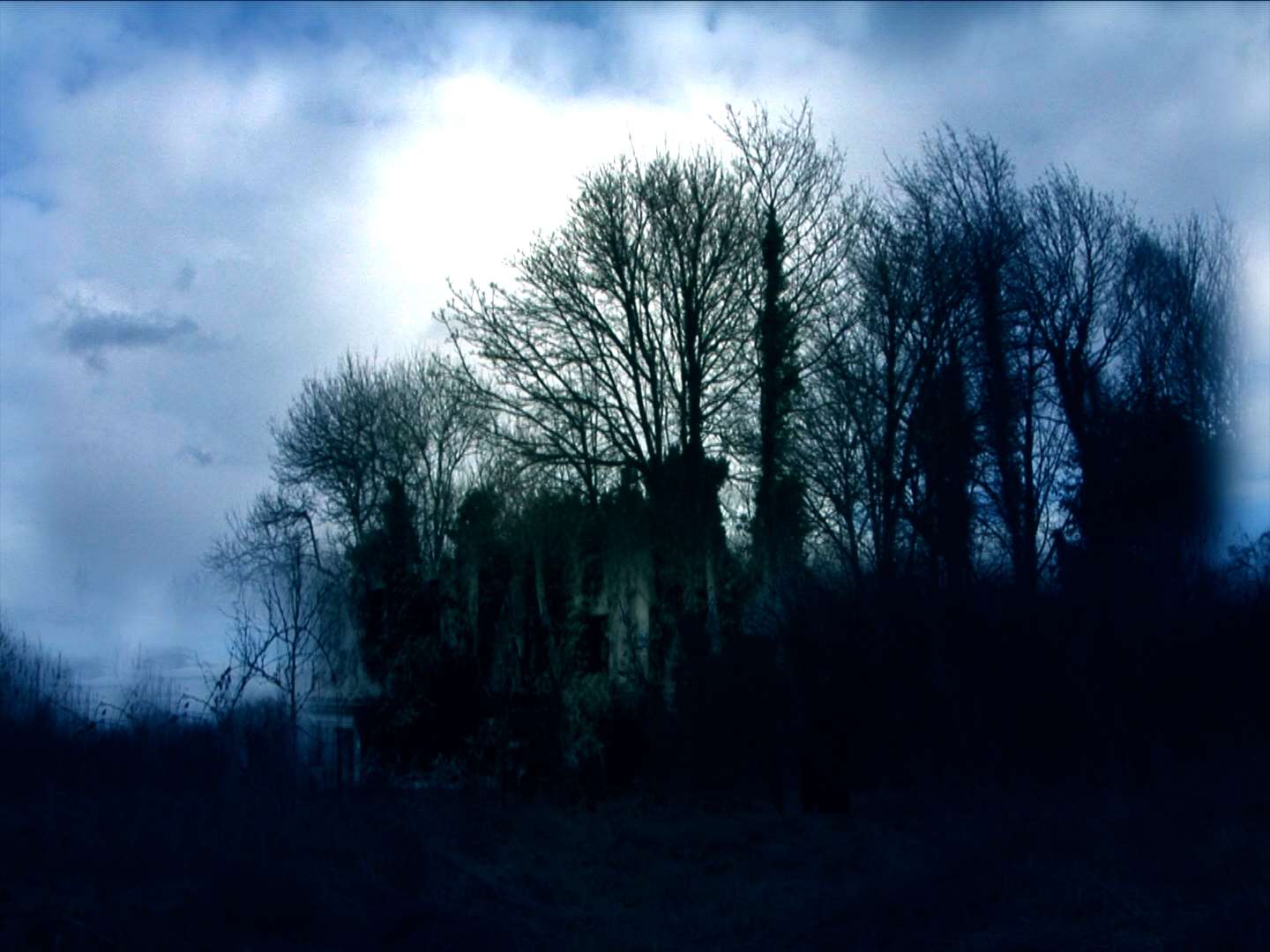
Documentary, horror, by Jason Figgis, USA, 2014.
In "Cathnafola", everything begins when renowned paranormal investigator Chris Halton of Haunted Earth UK receives footage filmed by three teenagers at the ruins of Cathnafola House in Ireland. Determined to unearth the truth behind the location’s bloody past, Halton embarks on a nighttime exploration of the infamous ruins—and soon uncovers terrifying and disturbing revelations.
LANGUAGE: English
SUBTITLES: Spanish, French, German, Portuguese
A Europe Trembling Between Science and the Beyond
You are sitting at a table that has begun to move beneath your hands, and you cannot decide whether to be afraid or to call for a witness.
This was not a metaphor in 1853. Across France, Britain, Germany, and the northeastern United States, parlor tables were tilting, rapping, rotating, allegedly spelling out messages from the recently dead through the arranged alphabets of grieving families. The phenomenon was so widespread, so socially cross-cutting — appearing in bourgeois drawing rooms and working-class kitchens alike — that it demanded an institutional response. Michael Faraday, whose discoveries about electromagnetism had already reshaped what educated Europeans thought the physical world capable of doing, published his investigation into table-turning in the same year. His conclusion was blunt and unsparing: the tables moved because the sitters pushed them, unconsciously, through what he termed ideomotor action. He even constructed a mechanical apparatus to demonstrate it. The debunking was rigorous, public, and almost entirely ineffective. The tables kept moving.
What Faraday could not account for was the emotional infrastructure that made table-turning irresistible in the first place. Europe in the 1850s was a continent metabolizing industrial death at a scale it had no prior vocabulary for. Child mortality rates in London’s slums hovered near forty percent before age five. Cholera epidemics moved through cities with an administrative indifference that felt almost personal. The gap between a life and its absence had narrowed to a matter of weeks, sometimes days, and the formal religious architecture meant to bridge that gap — the priest, the last rite, the assured resurrection — was visibly straining under pressure from geology, from comparative religion, from the fossil record that was making the earth’s timeline grotesquely longer than Genesis had promised. People were not turning to spirit communication because they were credulous. They were turning to it because the available alternatives were failing them in real time.
Auguste Comte had diagnosed the problem with clinical confidence in his Cours de philosophie positive, published between 1830 and 1842. Human thought, he argued, passed through three stages: theological, metaphysical, and finally positive — meaning scientific, empirical, verifiable. The third stage was not approaching; it had, in his account, already arrived. Religion was not wrong so much as it was obsolete, a cognitive technology appropriate to an earlier phase of development. What Comte could not anticipate, or perhaps chose not to acknowledge, was that stripping away theological certainty without replacing its emotional functions would not produce rational citizens. It would produce people desperate enough to sit in darkened rooms with their hands flat on mahogany, waiting for a knock from the other side.
This is precisely the crack into which Allan Kardec stepped in 1857, when he published Le Livre des Esprits. The timing was not accidental. Kardec — born Hippolyte Léon Denizard Rivail, a trained educator steeped in the pedagogical methods of Johann Heinrich Pestalozzi — understood that the crisis was not simply emotional but epistemological. People needed a framework that could honor both their grief and their newly scientific self-image, a system in which speaking to the dead was not a regression to superstition but an advance into unexplored empirical territory. He called it Spiritism rather than Spiritualism deliberately, investing the suffix with methodological weight: this was to be a doctrine, codified, internally consistent, subject to comparative verification across multiple mediums rather than the testimony of any single one.
The audacity of the move resided in its refusal to choose sides in the war between Comte and the parlor table. Kardec did not argue that science was wrong about the material world. He argued that the material world was simply smaller than science had so far measured, and that rigorous inquiry — his inquiry — was merely extending the perimeter of the knowable into terrain that sentiment alone had previously colonized.

What the Spirits Were Actually Saying
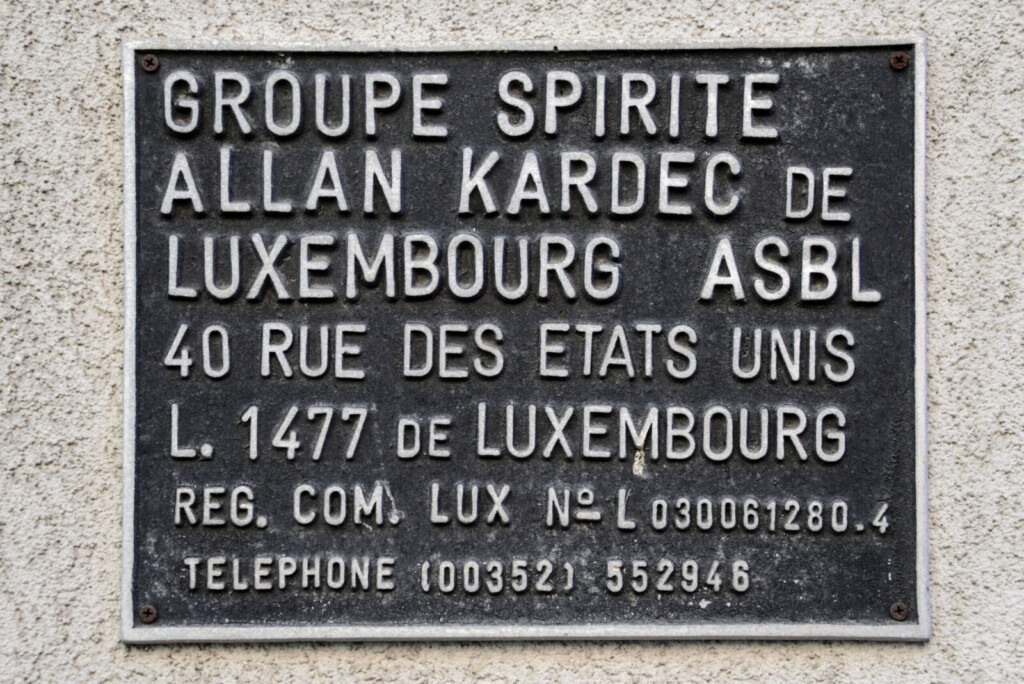
You have probably never questioned why the dead, when they finally got a chance to speak, turned out to agree so completely with the intellectual concerns of nineteenth-century France. Sit with that for a moment. The spirits summoned in Kardec’s séances did not arrive bearing alien cosmologies or disorienting revelations. They confirmed, with remarkable consistency, that the universe operated on a system of moral merit, progressive self-improvement, and hierarchical ascent — which happened to be precisely what educated Parisian liberals most wanted the universe to mean.
The doctrine Kardec assembled between 1857 and 1868, across five books he called the Spiritist Codification, rested on three pillars: souls reincarnate across multiple lives, spirits exist along a ranked hierarchy from impure to luminous, and each successive existence offers an opportunity for moral refinement. This is presented in The Spirits’ Book as received testimony — questions posed to disembodied intelligences, answers transcribed from the planchette. But the architecture of the ideas predates the séance room by roughly twenty-five centuries. Pythagoras taught in the sixth century BCE that the soul migrates through successive bodies as a consequence of its purity or corruption, a doctrine he almost certainly absorbed from Egyptian priestly traditions during his years in Memphis. The Phaedo has Socrates reasoning calmly toward the same conclusion in 399 BCE, treating reincarnation not as a mystical leap but as a logical consequence of the soul’s imperishable nature. What Kardec’s spirits were saying, stripped of their posthumous authority, was essentially Pythagorean metempsychosis retranslated into the vocabulary of bourgeois self-improvement.
The hierarchical dimension of his system does something more politically interesting. Kardec ranked spirits across nine categories, from the lowest — impure, attached to material existence — to the highest, described as pure spirits who have completed all necessary incarnations. This ladder maps with uncomfortable precision onto the caste assumptions embedded in Hindu transmigration doctrine, particularly as it had been filtered and partially misread by European Orientalists in the early nineteenth century. Anquetil-Duperron had translated the Upanishads into Latin in 1801, and by the time Kardec was writing, the idea of spiritual stratification drawn from Eastern sources was circulating freely in European intellectual culture, though rarely attributed honestly to its origins. The spirits, it turned out, had been reading the same books as everyone else.
What seals the ideological function of this system is how seamlessly it absorbed the Enlightenment’s faith in perfectibility. Condorcet, writing his Sketch for a Historical Picture of the Progress of the Human Mind in 1794 while hiding from the Terror that would kill him, argued that human reason was capable of indefinite improvement across historical time. Kardec simply transposed this horizontal, temporal faith in progress onto a vertical, metaphysical axis. Instead of civilization advancing across centuries, the individual soul advances across lifetimes. The mechanism is identical; only the stage has changed. Poverty, suffering, and social disadvantage could now be read not as historical injustices demanding structural remedy but as temporary stations in a cosmic curriculum — and this reframing had the convenient effect of making inequality spiritually meaningful rather than politically urgent.
A woman in a dim parlor in Lyon in 1862, pressing her fingertips to a wooden table and feeling it move, believed she was receiving transmissions from the beyond. What she was actually receiving was a coherent ideological package — ancient Greek metaphysics, selectively read Hindu cosmology, Enlightenment optimism about human perfectibility — repackaged as direct testimony from the dead, which gave it an authority that no philosopher and no political economist could match. The medium’s mouth was the delivery mechanism, but the content had been in circulation for millennia, waiting for a format that made it feel immediate, personal, and empirically verified by the simple fact that a table had moved.
The Social Architecture of Belief
You are sitting in a modest but respectable parlor somewhere in Lyon or Bordeaux in 1865, and the man across from you has just lost his factory position to a newer, cheaper machine. He is not angry. He is reflective. He tells you that this suffering is meaningful, that his soul chose this trial before incarnating, that the privation he endures now is burning off a debt accumulated in a life he cannot remember. He speaks with a serenity that unsettles you more than rage would.
Kardec published the Spirits’ Book in 1857, and by the time the Third Republic was consolidating the French bourgeoisie’s grip on public life, his doctrine had already solved one of modernity’s most awkward problems: how to justify a social order that produced spectacular inequality while simultaneously preaching human brotherhood. The answer Spiritism offered was elegant in its brutality. Poverty was not an accident of economic structure. It was a curriculum. Each soul arrived into its circumstances having, at some metaphysical level, consented to them. The destitute man in the Lyon street was not a victim of industrialization but a student enrolled in a particularly demanding semester. The wealthy merchant, by contrast, had presumably passed his earlier courses with distinction.
Émile Durkheim argued in The Elementary Forms of Religious Life, published in 1912, that religion functions primarily as a mechanism of social cohesion — that its gods and rituals are, at their operative core, a society worshipping its own collective structures under a sacred disguise. What Durkheim could not have fully anticipated was the precision with which a doctrine like Kardec’s would enact this logic, not at the level of tribal ritual but at the level of individual moral accounting. Spiritism did not merely bind people together; it distributed moral meaning vertically across an economic hierarchy, making each rung of the ladder feel cosmically authored rather than historically constructed. The doctrine was ideology wearing the costume of metaphysics.
The mechanism was self-sealing in a way that even sophisticated political ideologies rarely achieve. A worker who questioned whether his suffering was truly karmic could be told that his very doubt was evidence of spiritual immaturity — itself something to be worked through across future incarnations. A woman trapped in domestic immobility could be offered the consolation that her patience was accumulating spiritual credit invisible to the material eye. The framework produced no falsifiable claims and therefore no vulnerable ones. It metabolized dissent before dissent could organize itself into demand.
What made this particularly serviceable for the French bourgeoisie of the Second Empire and early Third Republic was that Spiritism arrived draped in the language of science and progress. Kardec was methodical, systematic, empirical in tone if not in practice. His doctrine did not smell of incense and superstition but of careful documentation and rational inquiry. This was crucial. A merchant class that had staked its cultural identity on Enlightenment rationalism could not afford to patronize something that looked like peasant mysticism. Spiritism gave them a supernatural framework that felt modern, that used the vocabulary of evolution and moral law at precisely the historical moment when Darwin’s ideas were forcing every educated European to reckon with what human purpose might mean inside a purely mechanical universe.
The French census data from the 1860s and 1870s shows Spiritist circles proliferating in urban professional environments — notaries, physicians, educators, small industrialists — not in the rural poor communities that official Catholicism still dominated. The geography of belief was itself diagnostic. This was a doctrine adopted by people who were already comfortable enough to theorize their comfort, who needed a cosmology that confirmed their elevation was earned rather than inherited, and whose sympathy for the suffering of others could remain warm and genuine precisely because it explained that suffering away before it demanded anything structural in return.
Brazil and the Radical Transplantation
You are standing in a room in Salvador in 1889, and the air smells of tobacco smoke and something older, something botanical and unnameable, and the man beside you is writing down the name of a spirit in a language that is neither Yoruba nor French but has borrowed shamelessly from both, and on the shelf above his head sits a plaster saint whose face has been rubbed smooth by decades of fingers, and next to that saint, a copy of O Livro dos Espíritos in Portuguese, its spine cracked from use.
Spiritism arrived in Brazil around the 1860s, carried by the educated urban elite who had read Kardec in the original and who understood themselves to be participating in a European scientific project. These were men who attended medical school in Coimbra or Paris, who believed in progress and positivism, who saw the communication with spirits as a rational extension of natural philosophy. They translated his works with precision. They founded federations. They argued bitterly about doctrine. And then something happened that no translation could contain: the ideas moved laterally, downward in the social hierarchy, sideways across racial and religious lines, and the container shattered.
Candomblé had survived the Middle Passage by disguising its orixás beneath Catholic saints — Ogum became Saint George, Iemanjá became Our Lady of the Navigators — and its practitioners were already fluent in a kind of spiritual bilingualism that the European Spiritist framework could not anticipate. When Spiritism entered this field, it did not conquer it; it was metabolized. The result was Umbanda, which crystallized formally around 1908 in Rio de Janeiro, a tradition that incorporated Kardec’s structure of spiritual evolution and mediumship while restoring the African deities and indigenous caboclo spirits that his codification had explicitly excluded. Kardec had insisted that spirits do not drink, do not smoke, do not dance. In Umbanda terreiros, spirits smoke cigars, drink cachaça, and move through the bodies of mediums in ways that bear no resemblance to the decorous pencil-in-hand automatic writing sessions of nineteenth-century Lyon.
What this reveals is not a corruption of the original but a demonstration of how religious ideas function under genuine contact with history. Kardec had built his system inside a particular European crisis of faith — the need to preserve transcendence without the Church, to keep the soul without surrendering to materialism — and that crisis had its own cultural signature, its own anxiety, its own aesthetics of restraint. Brazil had different historical wounds: three centuries of slavery, the violent suppression of African religious practice, the erasure of indigenous cosmologies, the peculiar Brazilian Catholicism that was itself already a syncretic improvisation. Spiritism did not land on neutral ground. It landed on scar tissue.
By the time the sociologist Cândido Procópio Ferreira de Camargo published his landmark 1961 study Kardecismo e Umbanda, the bifurcation was already institutionalized but the borders were porous in ways that defied clean taxonomy. Brazilians were moving fluidly between Spiritist centers and Umbanda terreiros and Sunday Mass, not because they were confused but because they were answering different questions with different instruments in the same week. The 2010 Brazilian census recorded nearly four million self-declared Spiritists, but sociologists consistently note that this figure drastically undercounts the population that regularly attends Spiritist sessions while identifying nominally as Catholic — a doubling that pushes the real number toward thirty million or beyond.
The demographic weight of that number reshapes what Spiritism is as a global phenomenon. France, where it was born, has a few thousand committed practitioners. Brazil built a network of more than thirteen thousand Spiritist centers in São Paulo state alone by the early 2000s, many of them running free medical clinics, psychiatric support groups, and food distribution programs under the theological framework that charity is a mechanism of spiritual evolution. The doctrine became social infrastructure.
A vision curated by a filmmaker, not an algorithm
In this video I explain our vision
The Medium as Epistemic Problem

You sit across from someone whose eyes have gone somewhere else. Their voice has changed register — lower, or stranger, or oddly archival, as if it carries sediment from a different century. Their hands rest on the table with a composure that does not belong to them. And you are expected to decide, in that moment, whether you are witnessing revelation or theater, spiritual contact or neurological event — and the problem is that neither framework quite fits what you are actually seeing.
William James spent years refusing to dismiss this figure, which made him unusual among scientists of his era and made his 1909 collection of essays on psychical research an uncomfortable book for everyone. He had sat with Leonora Piper across multiple sessions, had hired detectives to surveil her, had arranged for strangers to consult her without introduction, and had arrived at a conclusion that infuriated both believers and skeptics equally: that something was happening that he could not explain, but that the explanations on offer were worse than the mystery. What James identified in Piper — and in the broader phenomenon of trance mediumship — was not fraud and not proof of survival, but a demonstration that the self was far less unified than the nineteenth century preferred to believe. The medium’s body was not a telegraph station through which external signals passed. It was evidence that the boundaries of the self were permeable, inconsistent, dramatically negotiable.
Pierre Janet had arrived at an adjacent conclusion through an entirely different corridor. His clinical work at the Salpêtrière in the 1880s and his later theoretical synthesis in “L’Automatisme psychologique” published in 1889 described consciousness not as a unified field but as a coalition of semi-autonomous processes, any one of which could detach, reorganize, and begin behaving as if it were a separate person. Janet called this dissociation, and he documented it in patients who produced alter voices, automatic writing, and fugue states with an interiority so elaborate that the secondary personality often had its own memories, preferences, and moral commitments. He was not writing about mediums. He was writing about hysterics. But the structural similarity was so precise that it could not be accidental — and neither Janet nor his colleagues could fully decide whether the medium represented a pathological extreme of a normal psychological mechanism or a deliberately cultivated version of something that clinical patients fell into involuntarily.
What neither man could resolve was the question of agency. If a medium enters trance through practiced technique, years of training in Kardecian séance protocol, and deliberate cultivation of altered states, then the dissociation they achieve is not illness — it is skill. But if it is skill, then who is exercising it? The controlling personality that claims to be a deceased Brazilian farmer or an Enlightenment-era physician cannot be said to have chosen to appear. Yet the medium cannot be said to have chosen to produce it consciously either, because the entire claim of mediumship rests on the absence of conscious fabrication. The phenomenon collapses into a space where intentionality cannot be located, where authorship is structurally unavailable.
This is not a problem that belongs to the nineteenth century alone. It is a problem the nineteenth century merely made visible by building an entire social institution around it. The Spiritist movement in Brazil would eventually host tens of millions of practitioners and integrate mediumship into charitable hospitals, psychiatric alternatives, and civic life — not as fringe practice but as embedded infrastructure. The medium became a social role with recognized function, economic position, and community accountability. And in becoming that, the epistemological wound at the center of the practice did not heal — it was simply administered. The question of what was actually speaking through that altered body was handed to the institution to manage, which is what institutions exist to do with questions that cannot be answered.
Charity, Healing, and the Invisible Hospital
You walk into a building in São Paulo, Recife, or Porto Alegre — it does not matter which city — and the waiting room is full. Not full in the way a private clinic is full, where people check their phones and calculate what the appointment will cost. Full in the way a place is full when people have nowhere else to go. The consultations are free. The medication is free. The practitioners believe, with complete sincerity, that the prescriptions being written are sometimes dictated by the spirits of dead physicians.
By the middle of the twentieth century, Brazil had constructed one of the most extensive networks of religiously operated social welfare institutions in the Western Hemisphere, and the engine running a significant portion of it was Spiritism. The União das Sociedades Espíritas do Estado de São Paulo counted hundreds of affiliated centers by the 1950s, many of them operating hospitals, psychiatric facilities, and free pharmacies. The André Luiz hospitals — named after a spirit guide who supposedly narrated a series of afterlife accounts through the medium Francisco Cândido Xavier — became functioning medical institutions staffed by licensed professionals working alongside what the doctrine called “disobsession therapists.” Xavier himself, writing in Uberaba under what he insisted was spiritual dictation, produced more than four hundred published works, donated all royalties, and died in 2002 having never owned property. The Brazilian government considered nominating him for the Nobel Peace Prize.
The philosopher Charles Taylor, in his 2007 work A Secular Age, argued that disenchantment is not a neutral historical process but a particular social achievement — one that required the deliberate dismantling of older cosmologies. What Spiritism did in Brazil was refuse that dismantling while simultaneously adopting the institutional grammar of modernity: hospitals, records, licensed nurses, pharmaceutical protocols. The result was an architecture of care that the secular framework of public health could neither fully absorb nor honestly dismiss, because the outcomes were visible and the costs to the state were zero.
This is where the uncomfortable pressure builds. In 1965, a team of Brazilian psychiatrists led by Júlio Peres began preliminary studies that would eventually contribute to broader research into non-ordinary states and therapeutic outcomes in Spiritist psychiatric centers. What they found, and what subsequent researchers documented with increasing methodological rigor, was that patient populations discharged from Spiritist psychiatric facilities showed recurrence rates comparable to those of conventional institutions — in some categories, lower. The question this data presses against is not whether spirits exist. The question is whether the mechanism of healing — the sustained community attention, the narrative framework that transforms suffering into spiritual progress, the absolute removal of financial transaction from the care relationship — can be cleanly extracted from the metaphysical architecture that generated and maintains it.
Anthropologists have a name for the way ritual efficacy operates independently of propositional truth: they call it performative causation, the idea that the doing produces real effects regardless of whether the explanation accompanying the doing is factually accurate. But that framework, borrowed from figures like Stanley Tambiah in his 1990 study Magic, Science, Religion, and the Scope of Rationality, contains a quiet condescension — the assumption that the researcher stands outside the ritual, measuring it, while the participants are inside it, sustained by beneficial error. The Spiritist nurses changing bandages at midnight in a free ward did not experience themselves as performing a useful fiction. They experienced themselves as participating in a moral economy that extended beyond biological death, which meant that no act of care was ultimately thankless, unseen, or wasted.
Whether that belief was the cause of their extraordinary institutional persistence, or merely the language they used to describe a commitment that would have existed anyway, may be the kind of question that cannot be answered without first deciding what counts as an answer — and who gets to decide that.
The Persistence of the Unverifiable
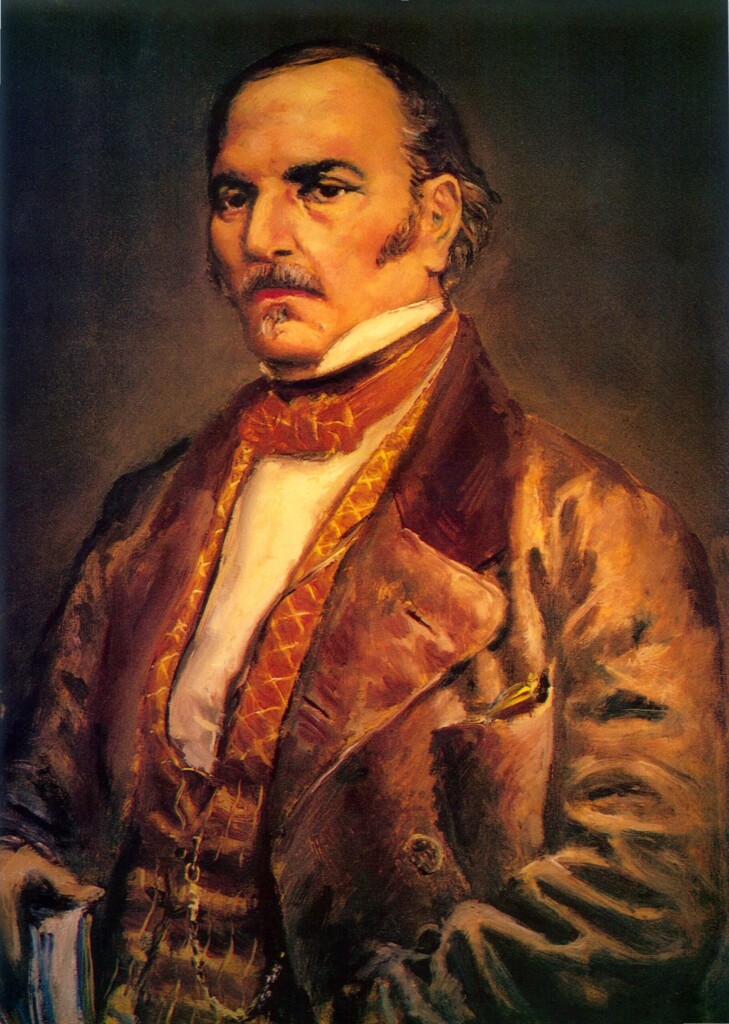
You are sitting with a box of someone else’s handwriting and the problem is not grief exactly — it is the specific, unbearable particularity of that person, the way they formed the letter g, the private jokes embedded in marginalia, the evidence of a mind that was here and processed the world and now is categorically not, and no general philosophical consolation about mortality touches that specificity at all.
The scientific demolitions of Spiritism have been thorough, documented, and entirely beside the point. When the Society for Psychical Research — founded in London in 1882 by figures including Henry Sidgwick and Frederic Myers — systematically exposed medium after medium, cataloguing the false cabinet bottoms, the luminous paint, the confederates planted in audiences, the public did not abandon the séance rooms. Attendance continued. New mediums replaced discredited ones. The debunking literature accumulated and the movement expanded simultaneously, reaching an estimated 35 million self-identified practitioners across Latin America alone by the mid-twentieth century. The rational model of belief, in which evidence updates conviction proportionally, predicts none of this. It never predicted any of it.
Pascal Boyer’s work in cognitive anthropology, particularly the framework developed in Religion Explained published in 2001, offers the more honest account. Boyer demonstrated through cross-cultural research that supernatural agents are not believed in despite their violation of ordinary expectations but precisely because of that violation. The mind has dedicated inferential systems for detecting agents, tracking social relationships, and monitoring the intentions of others — systems that fire automatically, below the threshold of deliberate reasoning, and that generate outputs which then feel like intuitions or perceptions rather than conclusions. When those systems are triggered by ambiguous stimuli — a creak, a coincidence, a dream with the face of the dead inside it — the resulting impression of presence does not wait for philosophical permission. It arrives first.
What Kardec’s doctrinal architecture accomplished, across the five volumes he produced between 1857 and 1869, was to give that involuntary impression a systematic address. The feeling of continued presence — which is not a choice and not a pathology — was met with a cosmology that treated it as information. This is not the same as exploiting grief, though exploitation certainly followed in the commercial séance industry. It is, more precisely, a structural fit between a cognitive output and a doctrinal input, each shaped by the same underlying problem: the impossibility of mentally representing a specific, known, irreplaceable person as simply terminated.
Thomas Nagel argued in Mortal Questions, published in 1979, that death is bad primarily for the person who dies, not for survivors — but this formulation, while philosophically careful, misses the phenomenology of loss as it is actually experienced by those left behind. The problem is not abstract mortality. The problem is that the cognitive systems which modeled that particular person — their preferences, their likely reactions, their voice, their judgment — do not shut down when the body does. They continue to generate outputs. People find themselves formulating opinions their dead mothers would have had about current events. They reach for phones to call someone who cannot receive the call. This is not metaphor. Neurologically, it reflects the fact that social models built over decades of intimacy have no off switch in the architecture.
Spiritism endures not because its adherents are scientifically illiterate or emotionally vulnerable in some exceptional way, but because it addresses a structural feature of the mind that scientific materialism leaves entirely unattended. The debunking cycles continue, and the doctrine continues to absorb them, because what is being debunked — the claim that the dead remain accessible — is not a conclusion anyone reasoned their way into in the first place.
🌿 Spirits, Souls, and the Invisible World
Allan Kardec’s codification of Spiritualism in the nineteenth century opened a vast dialogue between the visible and invisible worlds, drawing on philosophy, religion, and the science of consciousness. These related articles explore the spiritual traditions, esoteric thinkers, and metaphysical frameworks that share deep roots with Kardec’s vision of the soul’s journey.
The Theosophical Society: History, Principles and Influence on Western Culture
The Theosophical Society, founded by Helena Blavatsky in 1875, emerged in the same spiritual ferment that nourished Kardec’s Spiritism, both movements seeking to reconcile science, religion, and occult knowledge. Like Spiritism, Theosophy proposed a layered universe inhabited by invisible beings and guided by cosmic laws of evolution and reincarnation. Understanding the Theosophical project illuminates the broader nineteenth-century hunger for a spirituality beyond orthodox religion.
GO TO THE SELECTION: The Theosophical Society: History, Principles and Influence on Western Culture
Helena Blavatsky and Theosophy: the Woman Who Revolutionized Esoteric Thought
Helena Blavatsky stands as one of the most towering figures of modern esoteric thought, and her work intersects at many points with Kardec’s Spiritualism, particularly in its insistence on spirit communication, invisible planes of existence, and the immortality of the soul. Her synthesis of Eastern and Western mysticism challenged the materialist worldview of her era with the same boldness that Kardec brought to his codification of mediumistic phenomena. Studying Blavatsky alongside Kardec reveals how nineteenth-century esotericism was a vast, interconnected conversation about the nature of consciousness.
GO TO THE SELECTION: Helena Blavatsky and Theosophy: the Woman Who Revolutionized Esoteric Thought
Paramahansa Yogananda: Life and Works
Paramahansa Yogananda brought the ancient wisdom of Vedanta and Kriya Yoga to the West, offering a vision of the soul’s progressive evolution through multiple lives that resonates deeply with Kardec’s Spiritist doctrine. His life and teachings demonstrate how diverse spiritual traditions converged in the modern era around shared questions of reincarnation, karma, and the purpose of earthly existence. Reading Yogananda alongside Kardec enriches our understanding of the universal longing for continuity beyond death.
GO TO THE SELECTION: Paramahansa Yogananda: Life and Works
Spirituality: Movies to Watch
Cinema has long served as a privileged space for exploring questions of soul, afterlife, and spiritual awakening that lie at the heart of Kardec’s Spiritualism. From silent films to contemporary visionary works, movies have translated the invisible world into compelling images that invite audiences to reflect on the mystery of existence. This curated selection of spirituality films offers an ideal companion to any study of Kardec and the broader tradition of esoteric thought.
GO TO THE SELECTION: Spirituality: Movies to Watch
Discover the Cinema of the Invisible on Indiecinema
If these themes of spirit, consciousness, and the soul’s journey have moved something in you, Indiecinema is the streaming home for independent and visionary films that dare to explore what lies beyond the material world. From documentaries on mystical traditions to fiction films steeped in esoteric symbolism, our catalog is a living invitation to go deeper. Join us and let cinema become your guide through the infinite maze of the spirit.
👉 EXPLORE THE CATALOG: Watch Indie Films in Streaming
A vision curated by a filmmaker, not an algorithm
In this video I explain our vision

