
The Mirror You Cannot Put Down
You are at the wrong table and you know it. The wine being poured is better than anything you have tasted, the conversation moves in registers you can almost follow, and the woman across from you has already looked away twice in the particular manner that means she noticed you before you noticed her. You have no business being here. Your shirt is not quite right. Your hands, when they reach for the bread, betray something — a hesitation, a grabbiness quickly disguised as nonchalance. And yet you do not leave. You adjust your posture instead, you listen for the rhythms of how these people laugh, and somewhere beneath the performance a calculation is running that you would be ashamed to name aloud. You are not a villain. You are just paying very close attention.

Georges Duroy enters Guy de Maupassant‘s 1885 novel Bel-Ami in precisely this posture — not as a monster, not as a hero, but as a man acutely conscious of distance. He is a former military nobody adrift in Paris, surviving on almost nothing, when an old acquaintance pulls him into a world of newspaper editors and their wives, of salons where reputations are manufactured like bread, warm and daily and essential. What Maupassant understood, writing in the decade when the French Third Republic was consolidating its particular brand of bourgeois theater, was that social climbing is not fundamentally about greed. It is about the unbearable precision with which certain people perceive the gap between where they are and where the room assumes they should be. Duroy does not want wealth in any abstract sense. He wants the sensation of no longer being looked through.
The novel sold enormously and scandalized in equal measure, reaching its thirtieth thousand copy within months of publication, which tells you something about what readers recognized in it that they could not find the courage to name. Maupassant had spent years as a protégé of Flaubert, absorbing that merciless insistence on showing the human animal in motion without editorializing, without the sentimental rescue of moral framing. What emerged in Bel-Ami was something Flaubert’s own Frédéric Moreau in L’Éducation sentimentale had approached but ultimately avoided through ironic distance — a protagonist whose opportunism the reader inhabits from the inside, without the cushion of condemnation.
The discomfort the novel produces, and has continued to produce across translations and centuries, is not the discomfort of watching someone bad do bad things. It is the discomfort of watching someone navigate a system using the only tools the system respects, while the system simultaneously pretends those tools do not exist. Duroy seduces women who have power adjacent to men, writes articles under his own name that other people think for him, and advances through a media world in which the article is always in service of something other than the article. None of this is hidden. The novel does not expose corruption so much as it refuses to pretend that the non-corrupt alternative was ever available to a man in his position.
Pierre Bourdieu, writing nearly a century later in Distinction, would give this dynamic its sociological grammar — the conversion of social capital into cultural capital into economic capital, the endless laundering of advantage through forms that appear meritocratic. But Maupassant felt it first in the body, in the specific shame of a man who knows the rules have been written by people who no longer need to follow them. Duroy is not a critique of ambition. He is what ambition looks like when it has been honest enough to drop the apologetics.
The mirror Maupassant holds up does not flatter. It does not condemn either. It simply refuses to look away, and that refusal is the one thing most readers, in 1885 or now, find genuinely difficult to endure.
Crazy World
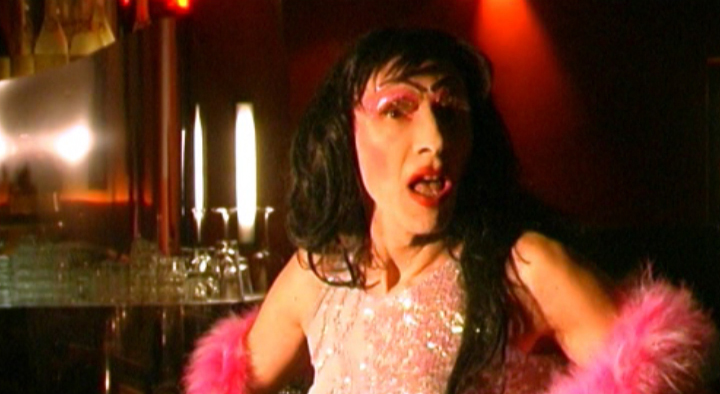
Drama, thriller, by Fabio Del Greco, Italy, 2010.
Luca is poor and works, precariously, as a waiter. He lives a problematic relationship with his girlfriend, and his life is full of doubts. One day Luca meets Chiara, a friend who had studied philosophy with him at university. She has realized her dream of opening a night and is now well-off. Luca leaves everything behind and starts a relationship with Chiara. He manages the nightclub with her and, thanks to the cocaine and call girls sold to politicians, he gets out of his hard economic situation. But Chiara does not manage to obtain the contract for an old furnace, so she blackmails Saverio, a member of the Parliament. Chiara owns a video in which Saverio has sexual intercourse with a transsexual.
LANGUAGE: Italian
SUBTITLES: English, French, Spanish, German, Dutch, Portuguese.
Seduction as Infrastructure
You are at a dinner party, and you are performing. Not lying, exactly — performing. You select which laugh to deploy, which silence to let breathe, which version of your past to summarize when the stranger beside you asks what you do. You leave the table believing you were simply yourself, and the stranger leaves believing they met someone fascinating. Nothing false was said. Everything was constructed.
This is the engine Maupassant understood before the sociologists arrived to name it. Georges Duroy does not seduce women through exceptional beauty or devastating wit. He seduces them the way a skilled professional navigates a room — through calibrated attunement, through the tactical deployment of vulnerability, through the precise management of what others are permitted to see. Erving Goffman, writing in 1959 in “The Presentation of Self in Everyday Life,” argued that all social interaction is performance in the theatrical sense: front stage and back stage, impression management, the studied naturalness of the well-rehearsed. What Goffman described as sociology, Maupassant had already rendered as fiction sixty years earlier, and with considerably less mercy toward his subject.
Duroy’s first conquest, Madeleine Forestier’s circle, is not won through seduction in the romantic sense but through the correct reading of what each person in the room requires from an encounter. He gives Madame de Marelle the sensation of danger without the cost of it. He gives Madeleine the sensation of shaping a man, which is its own form of flattery. He gives Forestier himself the comfortable fiction of a loyal friend. None of these offerings are false in the way a forged document is false. They are performances calibrated to the specific appetite of each audience, and their precision is what makes them devastating. The manipulation is not in the lie — it is in the accuracy.
What Maupassant exposes, and what makes the novel genuinely uncomfortable rather than merely cynical, is that Duroy’s technique is structurally identical to what every socially functional person does every day. The difference is not moral; it is stakes. When a person manages their impression at a job interview, we call it professionalism. When Duroy manages his impression in a widow’s drawing room, we call it predation. The behavior is the same. The discomfort arrives when the reader recognizes that the line between the two is not ethics but outcome, and that outcome is largely a matter of who had the power to define it. Maupassant is not interested in letting you stand outside that recognition.
The novel’s title itself is part of the infrastructure. “Bel-Ami” — beautiful friend — is a name given to Duroy by Madame de Marelle’s young daughter, a child who reads the performance at face value because she has not yet learned to read it any other way. But the name sticks, circulates, becomes the brand under which Duroy operates across Paris. The name is not his — it was assigned, then adopted, then leveraged. This is how social identity actually works: not self-generated but negotiated, conferred by others and then inhabited strategically. Goffman called this the “given” and “given off” dimensions of impression — what we actively project and what others involuntarily read. Duroy colonizes both channels simultaneously, which is what makes him not a seducer in the theatrical sense but a social technician of unusual efficiency.
What the novel refuses to provide is the reassuring category of the exceptional predator. Duroy is not a monster who has discovered something ordinary people cannot do. He is a man who does consciously and without embarrassment what most people do semiconsciously and with elaborate self-justification. The machinery of social climbing, romantic manipulation, and professional advancement operates through exactly the same mechanisms in every stratum of the society Maupassant depicts — in the newsroom, in the salon, in the ministry. Duroy simply runs the machinery without pretending it is something else.

The Newspaper as Power Machine
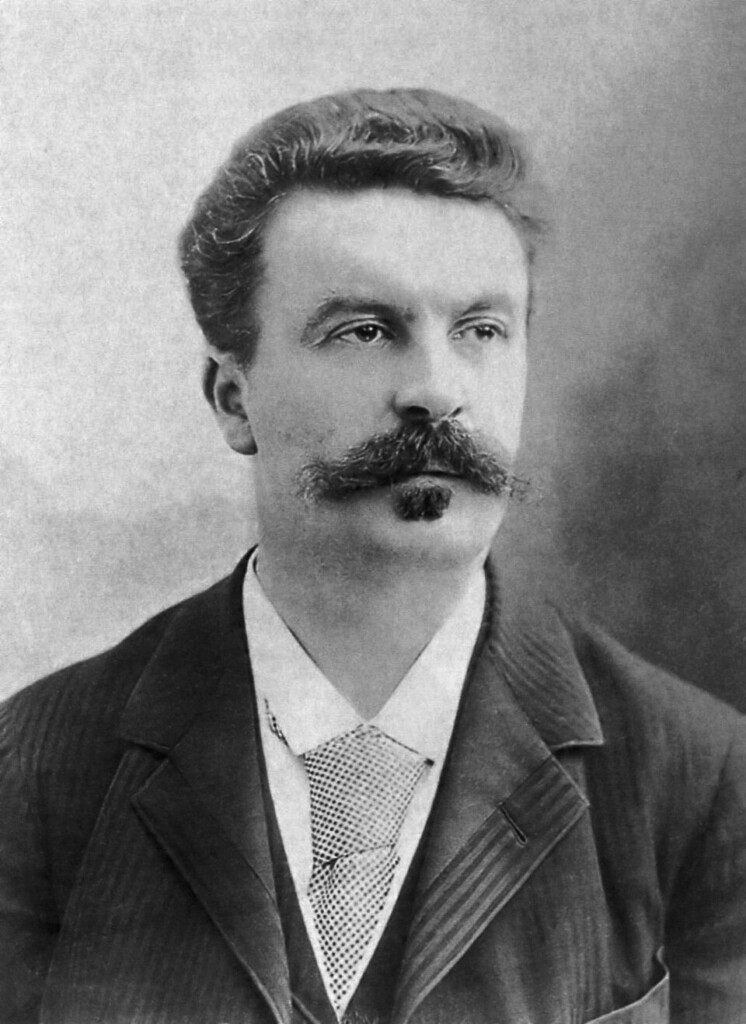
You are handed a press pass and told it means access. What it actually means is debt — to the editor who printed your name, to the financier who owns the building, to the minister who made a phone call so that your column ran without cuts. The pass is not a door. It is a leash made of paper.
Maupassant understood this from the inside. Between 1876 and 1891 he published hundreds of articles, chronicles, and short pieces in Gil Blas and Le Gaulois, two newspapers that operated in the same swamp he was draining onto the page. He was not observing the French press from a safe critical distance. He was sitting in the editorial room, watching which envelopes changed hands, which political names were permitted to appear in print and which were quietly retired. La Vie Française, the fictional newspaper at the center of Bel-Ami published in 1885, is not a satirical invention. It is a reconstruction.
The 1880s French press was not a marketplace of ideas. It was a marketplace, full stop. Newspaper shares were sold on the bourse. Editorial lines shifted with stock prices. The historian Pierre Albert documented that by 1880 Paris alone had over sixty daily newspapers, many of them financially insolvent and therefore structurally dependent on political subsidies, advertising from government-adjacent industries, and the kind of strategic silence that cost more than any article. In this environment, what a paper chose not to print was worth more than what it printed. Maupassant’s Walter, the proprietor of La Vie Française, is not a journalist. He is a speculator who keeps a printing press as his primary financial instrument.
The Panama affair — the catastrophic collapse of Ferdinand de Lesseps’s canal company between 1888 and 1892, which revealed that over a hundred French parliamentarians had accepted bribes to suppress negative coverage — did not come after Bel-Ami as a historical confirmation of the novel’s intuitions. The conditions that produced Panama were already visible in 1885 to anyone willing to read the financial pages alongside the political ones. Maupassant was not prophesying. He was reporting with a novelist’s precision what journalists at the time could not report directly, because the same mechanism of subsidy and silence that corrupted the Panama coverage was the mechanism that paid their salaries.
Georges Duroy’s rise inside La Vie Française follows a logic that has nothing to do with the quality of his prose. He is promoted because he is useful — first as a ghostwriter who gives Walter’s editorial ambitions a seductive surface, then as a man willing to deploy his social access to extract political intelligence from the drawing rooms his wife opens for him. What Maupassant renders with clinical precision is that the newspaper does not produce power. It converts power that already exists elsewhere — in marriage, in inheritance, in ministerial appointment — into a form that can circulate publicly without appearing as naked domination. The press, in this architecture, is a laundering operation.
This is why the novel’s most devastating scene of manipulation occurs not in a newsroom but in a bedroom, and its consequences are felt not in public opinion but in a stock price. The political article that Walter publishes about Morocco — written by Duroy, based on intelligence he obtained through marital proximity to a minister — triggers a financial maneuver that makes Walter wealthy overnight. No reader of La Vie Française understands what has happened to them. They have consumed a political opinion that was actually a financial instrument. The information appeared to be about foreign policy. It was about the bourse.
Duroy himself only partially understands the mechanism he has been inserted into. And this is perhaps the most precise thing Maupassant observed about institutional corruption: that it does not require full comprehension from its participants. It only requires their continued participation, which ambition supplies reliably, and which the press, in 1885 as in any year adjacent to it, had never found difficult to secure.
Women Who See Everything and Say Nothing
She hands him the article already written. Not a draft, not a suggestion — the finished piece, polished, ready for print. Madeleine Forestier places it in Georges Duroy’s hands the way a surgeon places a scalpel in the hands of someone who will take the credit for the incision, and she does it without bitterness, without theatrical resignation, with the calm efficiency of a woman who has understood the only architecture available to her intelligence. This is not submission. It is a form of leverage so precise it leaves no fingerprints.
The misreading of Madeleine is one of the more persistent failures in how Bel-Ami gets consumed. She is consistently absorbed into the novel’s moral ledger as either a cynical enabler or a tragic figure trapped by circumstance, and both readings accomplish the same thing: they make her passive. They transform what Maupassant renders as a kind of ferocious strategic intelligence into a symptom, a reaction, a response to male appetite. But Madeleine is not responding to anyone. She is operating — methodically, with remarkable patience — inside a structure that has made direct operation impossible for her. The distinction matters enormously, and it is the distinction that the novel’s male protagonists, including its narrator, consistently fail to make.
Simone de Beauvoir, writing in 1949 in The Second Sex, identified something that reaches backward across the century between her work and Maupassant’s novel with uncanny precision. She described how women under patriarchal arrangements are not simply excluded from the instruments of power but are trained — through repetition, through punishment, through the steady erosion of alternatives — to convert their intelligence into instrument, to make of their own capabilities a kind of currency that can only be spent through a male intermediary. The woman who thinks becomes, almost by structural necessity, the woman who makes a man appear to think. De Beauvoir was not describing victimhood. She was describing a specific and brutal form of adaptation, one that preserves the self by making the self invisible.
This is Madeleine’s position in the novel with an accuracy that should be uncomfortable. She is more literate than Duroy, more politically calibrated, more capable of reading the room in which Parisian journalism and finance conduct their mutual seductions. She knows who needs what, who owes whom, which editorial position will shift with the next government. And she translates all of this into copy that appears under a man’s name, first her dying husband’s, then Duroy’s, because the alternative to this arrangement is not freedom — it is silence and penury. The press of the 1880s did not ignore female intelligence; it simply refused to purchase it directly, which is a more sophisticated form of erasure.
What makes Madeleine unreducible to victimhood is that she extracts something from this arrangement. Not enough — never enough, and she knows it — but something real. Proximity to the press. Access to the conversations that shape political reality. A kind of authorship, however anonymous, over events that will be recorded as history. When the marriage to Duroy finally fractures, it fractures not because she has been deceived but because she has been caught exercising the same transactional intelligence that made her useful to him in the first place. The novel punishes her for the autonomy that was supposed to remain invisible. She is expelled from the arrangement the moment she ceases to be its instrument and reveals herself as its architect.
The other women in the orbit of Duroy’s rise — Clotilde, Virginie Walter — are often read as foils or conquests, emotional registers against which his advancement can be measured. But each of them is also managing something: a marriage, a reputation, a desire that the social surface of their lives has no legitimate vocabulary for. What they share with Madeleine is not weakness but the specific exhaustion of perpetual translation, of rendering everything they are into a form the world around them has agreed to receive.
The Colonial Dividend Nobody Names
You are watching a man get rich and you cannot quite locate the mechanism. The money arrives — in envelopes, in tips, in sudden reversals of fortune — and the novel grants you the surface of each transaction while the engine underneath runs without a name. This is not an accident of Maupassant’s craft. It is the craft itself.
The Morocco affair that drives the novel’s final movement is presented as financial speculation, a newspaper campaign, a political maneuver. Walter, the proprietor of La Vie Française, has advance knowledge that France will occupy Morocco. He buys the relevant bonds. He uses his newspaper to prepare public opinion, to manufacture the consent that will make the military operation feel inevitable, even necessary. By the time the Chamber votes and the troops move, the money has already been made. Duroy, who has married into the Walter orbit and positioned himself at precisely the right proximity, collects his share. The novel calls this success.
What Maupassant understood in 1885, without the conceptual vocabulary to fully name it, was the feedback structure Hannah Arendt would anatomize in The Origins of Totalitarianism, published in 1951. Arendt argued that imperialism was not merely an external project — territories seized, populations administered, resources extracted — but a domestic political technology. The surplus capital that had no productive outlet inside European economies in the late nineteenth century flowed outward into colonial ventures, and what flowed back was not only raw material and profit but a transformed relationship between money and power at home. The state became an instrument available to private financial interest. The press became a mechanism for manufacturing the public will that legitimized what had already been decided in private. Arendt dated this structure precisely: the 1880s and 1890s, the scramble for Africa, the moment when European bourgeoisies discovered that the real yield of empire was not foreign — it was domestic political capture.
Bel-Ami is a novel of that exact decade. The Franco-Moroccan speculative plot Maupassant constructs is not invented from pure imagination; it is assembled from the material conditions of the Tunisian campaign of 1881, the financial maneuvers around the Bardo Treaty, the documented entanglements between the French press and the parliamentary figures who voted to fund an expansion that certain investors had already priced in. The fictional Moroccan bonds are recognizable to any reader who had followed the financial press. What Maupassant added was the figure of Duroy — a man with no capital of his own, no ideology, no nationalist conviction, whose ascent runs precisely along the wire connecting colonial information to domestic financial gain.
The particular violence of this structure is its invisibility to those inside it. Duroy never thinks of himself as a colonial profiteer. He thinks of himself as a man who has finally learned how Paris works. The Morocco campaign appears in his consciousness as an opportunity, a piece of information, a lever — not as the dispossession of a population thousands of miles away whose land is being pledged as collateral for European bond markets. The novel never travels to Morocco. It does not need to. The colonial extraction is already fully present in the Paris drawing rooms, in the newspaper columns, in the envelopes passed between men who understand that the state is a financial instrument if you are positioned correctly relative to its decisions.
What makes this structurally important rather than merely morally interesting is that Duroy’s rise cannot be separated from this machinery without ceasing to make sense. Strip out the colonial speculation plot and you have a man of moderate talent and aggressive charm who rises — by what means, exactly? The Morocco affair is not a subplot. It is the load-bearing wall. Every ceiling Duroy breaks through is underwritten by an extraction the novel renders elegantly, almost tenderly, invisible.
A vision curated by a filmmaker, not an algorithm
In this video I explain our vision
Meritocracy’s Oldest Lie

You are told, from the moment you first encounter Georges Duroy, that you are watching a man pull himself up by sheer force of ambition. He arrives in Paris with forty-three francs in his pocket, a shabby suit, and nothing else. The novel seems to offer you this as evidence — look, here is a man who started with nothing and built everything. And you believe it, because you have been trained to believe it, because the entire architecture of modern societies rests on the premise that talent and will are the engines of ascent.
Pierre Bourdieu spent most of his intellectual life dismantling exactly this premise. In Distinction, published in 1979, he demonstrated with sociological precision what Maupassant had already shown fictionally a century earlier: that what appears as individual merit is almost always the conversion of pre-existing capital into socially legible form. Cultural capital — the accumulated dispositions, tastes, manners, and embodied competencies that a person carries — does not emerge from nowhere. It is inherited, absorbed, transferred. The self-made man is not a type of person. He is a narrative that societies tell themselves to justify the distribution of advantage.
Duroy does not build himself from nothing. He converts what he already has. His body is the first currency he spends — that particular ease of posture, the directness of his gaze, the physical confidence that announces a man accustomed to being looked at without flinching. This is not charm invented in Paris. It is something carried from his peasant origins, a bodily hexis Bourdieu would have recognized immediately: the physical self-possession of someone who has never been made to feel ashamed of taking up space. The bourgeois men around Duroy possess other kinds of capital — institutional credentials, refined tastes, inherited connections — but they often lack precisely this corporal authority, and they respond to it with an admiration they cannot fully explain.
What the novel traces, in its cold and surgical way, is not self-creation but translation. Each woman Duroy attaches himself to teaches him a different register of the language of power. Madeleine Forestier does not simply write his articles for him — she transmits a form of political literacy, an understanding of how information circulates among elites, how sentences must be constructed to produce influence rather than mere meaning. This is cultural capital in its most direct form of transfer: one body passing to another the symbolic tools required to move through a field. Duroy absorbs it without gratitude, as one absorbs air.
The scandal buried inside Maupassant’s novel is not that Duroy sleeps with powerful women. It is that he does what every successful person does — he leverages proximity to those who already possess what he needs — and the novel refuses to dress this up as anything other than what it is. Every apparent act of individual will in his ascent is, when examined without sentiment, a transaction. The dinner he must attend, the tone he must adopt, the opinions he must perform — none of these emerge from inside him. They are borrowed costumes that eventually fit so well he forgets they were borrowed.
Bourdieu called this misrecognition: the collective agreement to see structural reproduction as individual achievement, to read the inheritance of advantage as the proof of natural talent. The genius of the novel is that it does not allow misrecognition to settle. Duroy never becomes lovable enough, never sufficiently sympathetic, for the reader to relax into the fiction of his merit. Maupassant keeps him slightly too cold, slightly too aware of what he is doing, so that the transaction remains visible beneath the performance. You cannot quite believe in him as a self-made man because the novel will not let you look away from the machinery long enough to forget it is running.
A Second Scene: The Man Who Arrives
You have been in that room. Not the one with velvet curtains and candlelight, but the open-plan office, the networking dinner, the pitch meeting where someone offered you a drink before the conversation began and you understood immediately that the drink was not hospitality but choreography. Everyone in the room knew the rules. No one would say them aloud. The game was to perform ignorance of the game while playing it with surgical precision, and the first person to name what was happening would lose by the act of naming it.
Georges Duroy does not stride into the offices of La Vie Française in 1885 with a program. He arrives hungry, badly dressed, and electric with the specific alertness of someone who has learned to read rooms the way animals read weather. What Maupassant understood, and what makes the novel feel less like historical fiction than like something written last week, is that the social order does not announce itself. It communicates through texture — through who laughs first, who waits, who fills the silence and who manufactures it. Duroy is not intelligent in the conventional sense. He is perceptive in the animal sense, which is more dangerous and far more useful in the environments Maupassant constructs for him.
Pierre Bourdieu spent decades building the vocabulary to describe what Maupassant had already dramatized: the way cultural capital operates as currency in spaces that officially deny they are markets. In Distinction, published in 1979, Bourdieu documented how taste, posture, conversational fluency, and even the particular way one holds a wine glass function as class credentials invisible to those who possess them and agonizingly legible to those who do not. Duroy’s entire arc is an education in acquiring these credentials not through birth or study but through mimicry so precise it eventually becomes indistinguishable from the original. He does not learn to be cultured. He learns to perform culture for audiences who are themselves performing it.
What destabilizes the reader is not that this is cynical. It is that it is accurate. The professional landscape of the twenty-first century runs on exactly this grammar. Entire industries have been constructed around coaching people to decode unspoken hierarchies — executive presence seminars, personal branding consultants, the shelf of books that promise to teach you the secret language of rooms you were not born into. These industries would not exist if the social order were genuinely meritocratic. They exist precisely because it is not, and because admitting that openly would collapse the ideology that legitimizes it.
Maupassant wrote Bel-Ami at the precise moment when the French Third Republic was consolidating the myth of republican meritocracy — the idea that talent and effort determined position, that the old aristocratic hierarchies had been dissolved by revolution and reason. The novel functions as a forensic refutation of this myth. Every door that opens for Duroy opens because of a woman’s desire, a man’s vanity, a patron’s self-interest. The word merit appears nowhere in the logic of his ascent. What appears instead is leverage, timing, and the willingness to treat every human connection as a transaction without ever letting the transaction become visible.
This is not a portrait of an exceptional villain. It is a portrait of a system that produces this behavior and then condemns it in individuals to protect itself from condemnation as a whole. Duroy does not corrupt the press, the political class, or the marriages he moves through. He finds them already corrupted and simply fluent in their own corruption. His crime, if it is a crime, is honesty — not the spoken kind, but the structural kind, the refusal to pretend that the game has different rules than the ones actually governing it.
The contemporary figure who walks into that unspoken room and reads it correctly within thirty seconds is not Duroy’s descendant. He is Duroy, wearing different clothes, in a city that has forgotten it ever read the novel.
The Unfinished Cathedral and the Unfinished Self
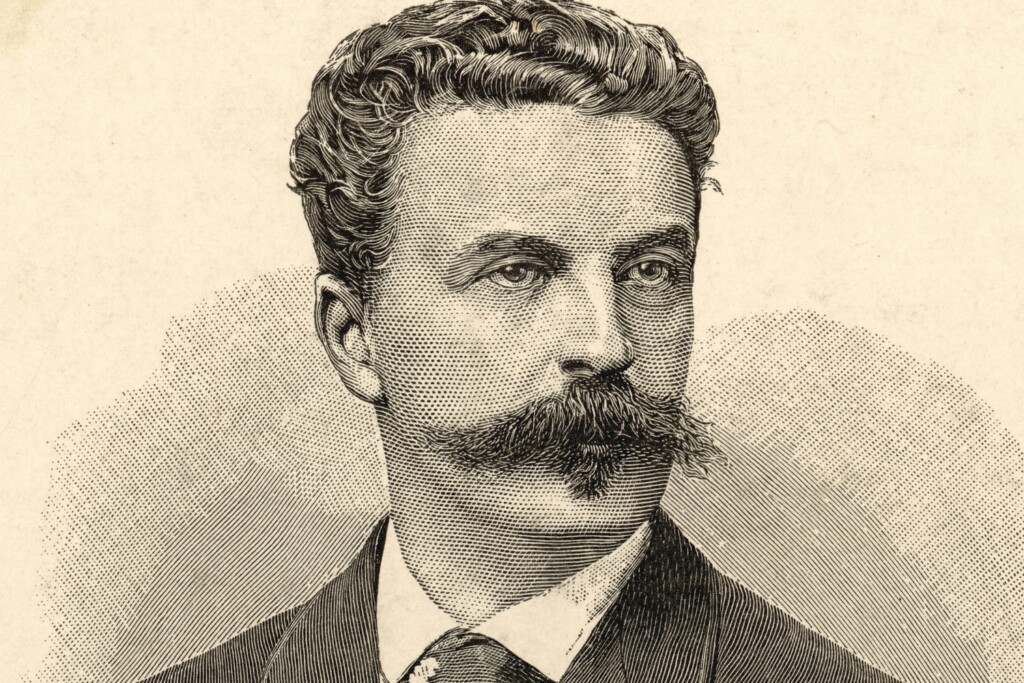
You are standing at the altar of La Madeleine on the day of your own wedding, and you are not looking at the person beside you. You are looking at the crowd. Not out of arrogance, not exactly out of vanity, but out of something closer to biological necessity — the way a plant doesn’t choose to turn toward the light, it simply cannot survive without doing so. Georges Duroy, renamed Du Roy de Cantel for the occasion, dressed in a suit that costs more than his entire first year in Paris, stands at the apex of everything he once wanted, and what he sees from that height is not arrival but audience.
La Madeleine itself is worth pausing over, because Maupassant chose it with the precision of someone who understood that architecture is ideology made stone. The church was begun under Napoleon as a temple to the glory of the French army, consecrated as a church only in 1842, its neoclassical columns more Roman imperial than Christian humble. It is a building that has never fully decided what it is for — military monument, political theater, house of worship — and its indecision is permanent, structural, carved into its foundations. Duroy marries inside an unfinished identity, inside a building whose very purpose was contested and redirected by successive regimes. The irony is not decorative. It is the argument.
What Maupassant understood about his protagonist — and what takes the novel beyond the satirical portrait of a social climber — is that Duroy does not have a self that he is concealing or corrupting. He has a self that has never cohered in the first place. The sociologist Erving Goffman, in The Presentation of Self in Everyday Life published in 1959, described social life as performance, every individual managing impressions before various audiences. But Goffman still assumed a backstage, a private region where the performer rests outside the role. Duroy has no backstage. The performance is the entire structure. Remove the audience and there is no interior to discover, only the echo of an empty room.
This is what separates him from the traditional literary hypocrite. Tartuffe knows he is pretending. Julien Sorel in Stendhal‘s Le Rouge et le Noir calculates, strategizes, feels the friction between his authentic ambitions and the masks he wears. Duroy experiences no such friction, because friction requires two surfaces, and there is only ever one surface to him. His success is genuinely his, which is precisely what makes it so philosophically disturbing — he has not sold a self, he has demonstrated that there was never one available for sale.
The philosopher Charles Taylor argued in Sources of the Self in 1989 that modern identity is constituted by what we are fundamentally oriented toward, what he called our moral framework or horizon. To lose that orientation is not merely to be confused — it is to suffer a kind of dissolution, to cease to exist as a self in any meaningful sense. Duroy has no such orientation except toward the faces looking back at him. His horizon is a mirror. And the tragedy — if it can be called that, because tragedy usually requires the loss of something once possessed — is that he will never know what he is missing, because the mirror never shows you the space behind your own eyes.
The crowd at La Madeleine applauds. The light through the columns falls across the congregation. Georges Duroy, war veteran, journalist, adulterer, husband, aristocrat by invention, looks out at everyone who is watching him become real, and somewhere in the stone and the light and the held breath of the witnesses, a man who does not quite exist achieves the closest thing he will ever have to a life.
🎭 Ambition, Society, and the Art of Rising
Maupassant’s Bel-Ami stands as one of literature’s sharpest portraits of social climbing, seduction, and moral compromise in bourgeois society. To fully appreciate its themes, it helps to explore the broader current of realist and naturalist fiction that examined ambition, class, and the corrosive hunger for power. These related articles trace the same labyrinthine corridors of desire and social calculation.
Stendhal and Social Climbing: The Red and the Black
Stendhal‘s Julien Sorel in The Red and the Black anticipates Duroy’s trajectory in Bel-Ami with striking precision: both protagonists are young men of provincial origin who weaponize charm and intelligence to infiltrate Parisian high society. Stendhal‘s novel dissects the psychology of the social climber with a clinical irony that deeply influenced Maupassant. Reading them together reveals how French realism built its defining obsession around ambition and its inevitable moral cost.
GO TO THE SELECTION: Stendhal and Social Climbing: The Red and the Black
Honoré de Balzac and Ambition: Père Goriot
Balzac’s Père Goriot introduces the Parisian boarding house as a crucible of naked ambition, where Rastignac’s famous challenge to the city — ‘It’s between the two of us now!’ — echoes the very spirit of Bel-Ami’s Georges Duroy. Balzac mapped the social machinery of bourgeois France with ruthless clarity, showing how affection, loyalty, and decency are sacrificed on the altar of advancement. His vision of Paris as a jungle of competing appetites remains the indispensable backdrop for understanding Maupassant’s world.
GO TO THE SELECTION: Honoré de Balzac and Ambition: Père Goriot
De Roberto’s The Viceroys: Analysis
De Roberto’s The Viceroys extends the naturalist inquiry into power and social reproduction to the Sicilian aristocracy of post-Unification Italy, offering a southern European counterpart to Maupassant’s Parisian cynicism. Like Bel-Ami, it portrays a world where idealism is a luxury none of the protagonists can afford, and where the mechanisms of family, politics, and seduction perpetuate an inescapable hierarchy. The novel stands as one of the most savage indictments of the ruling class in nineteenth-century European fiction.
GO TO THE SELECTION: De Roberto’s The Viceroys: Analysis
Bourdieu’s Distinction: Taste and Social Class
Bourdieu’s concept of distinction provides one of the most powerful theoretical tools for reading Bel-Ami: Duroy’s entire arc is a masterclass in the acquisition of cultural and social capital through imitation, strategic marriage, and symbolic violence. Bourdieu demonstrates how taste functions as a weapon of class domination, a dynamic Maupassant dramatizes through his protagonist’s calculated adoption of bourgeois manners. Understanding Bourdieu transforms Bel-Ami from a mere novel of manners into a sociological document of extraordinary precision.
GO TO THE SELECTION: Bourdieu’s Distinction: Taste and Social Class
Discover the Cinema of Ambition and Social Desire on Indiecinema
The themes that animate Bel-Ami — power, seduction, moral compromise, and the ruthless pursuit of social ascent — have inspired some of the most compelling works in independent and auteur cinema. On Indiecinema you can explore a curated streaming catalog of films that probe these same human depths with the courage and intelligence that mainstream cinema rarely allows. Let the maze continue on screen.
👉 EXPLORE THE CATALOG: Watch Indie Films in Streaming
A vision curated by a filmmaker, not an algorithm
In this video I explain our vision

