
The Name You Inherit
You are forty-three years old and you are sitting across from your father at a table you have sat across from your entire life, and you hear yourself make an argument you have always despised. Not borrowed, not performed — yours. The words arrive with the full conviction of personal discovery. The position you are defending, the instinctive hierarchy of loyalties you invoke, the precise moment at which you decide someone else’s suffering is political theater and yours is historical necessity — all of it lands with the authority of original thought. You do not recognize it as inheritance because inheritance, when it works properly, never announces itself. It does not dress in your father’s clothes. It wears yours.

Federico De Roberto published I Viceré in 1894, in a literary Italy still digesting the naturalist ambitions of Giovanni Verga, and almost no one noticed. The novel arrived too late for the optimism of the Risorgimento and too early for the disillusionment that would eventually make it look prophetic. It traces the Uzeda family of Catania across three generations, from the death of the matriarch Teresa in the years of Italian unification through the parliamentary maneuverings of her grandson Consalvo, who enters the new democratic Italy not as a convert to its values but as a technician of its procedures. What De Roberto understood — and what made the novel uncomfortable in ways its contemporaries could not quite articulate — is that political systems do not transform families. Families metabolize political systems and continue.
The critical tradition that finally caught up with De Roberto in the mid-twentieth century, helped largely by Tomasi di Lampedusa’s open acknowledgment of debt before writing Il Gattopardo, tends to frame I Viceré as a study in decadence, the aristocracy clinging to power through moral rot and strategic marriage. This framing is accurate but insufficient, because it preserves the comfortable distance of class analysis. It allows the reader to observe the Uzeda as specimens of a particular historical formation, a doomed feudal caste performing its last grotesque dances before the curtain of modernity falls. What it misses is the novel’s more unsettling argument: that the structure of dynastic selfhood is not a pathology of the nobility but a description of how personhood forms under any condition of inherited expectation.
Pierre Bourdieu spent much of his career trying to name the mechanism by which social structures reproduce themselves through bodies rather than through consciousness. In The Logic of Practice, published in 1980, he described the habitus as a system of durable, transposable dispositions — not rules internalized but postures acquired so early and so completely that they feel like nature. The person shaped by habitus does not follow the family script; they improvise fluently within a grammar they did not choose and cannot fully see. De Roberto was working novelistically toward the same territory a century earlier, and his means were more brutal. Where Bourdieu gave sociology a vocabulary, De Roberto gave literature a dynasty.
Consalvo Uzeda does not want to be his ancestors. This is one of the novel’s quiet devastations. He is educated, ironic, aware of the family’s history of manipulation and coercion with a clarity none of his predecessors possessed. His self-knowledge is genuine. It changes nothing. By the final pages he has secured a seat in the Italian parliament not despite the Uzeda legacy but through its complete internalization — the ruthlessness, the strategic compassion, the precise calibration of when to invoke principle and when to bury it. His awareness functions not as liberation but as lubrication. He moves through the new Italy more efficiently than his ancestors moved through the old one because he understands the machinery without being mystified by it.
The question the novel opens and never closes is whether that understanding constitutes a self at all, or whether it is simply the most sophisticated form the inheritance takes when it finally learns to speak in the first person.
Altin in the City

Drama, thriller, by Fabio Del Greco, Italy 2017.
Altin, aspiring Albanian writer arrived in Italy aboard a large ferry in the 90‘s, works in a butcher shop when he’s selected to audition for a reality of writers and finally sees a chance to be successful with his book “the journey of Ismail.” Unfortunately, this is the begin of the adventures which will lead him to learn about revenge, loneliness and extreme poverty, to the dark side of wealth and success.
The theme of Altin in the City should not lead to the assumption that it is merely the story of a young immigrant trying to integrate. In reality, it is a tale where greed, thirst for power and success, cynicism, and ambition intertwine, creating a sort of modern-day Faust and a new "pact with the devil" belonging to the 22nd century, which we could summarize as: show business. The reality show becomes the Mecca, the keystone, and the springboard for those who wish to achieve success without effort. Del Greco presents this world with subtle irony, characterized by kitsch nuances and parodic tones. However, success without effort comes at a price: Altin has sold his soul to the devil and, from being an easy prey of television showbiz, will soon become a victim of himself.
LANGUAGE: Italian
SUBTITLES: English, French, Spanish, German.
Federico De Roberto and the Anatomy of Aristocratic Decay
You are reading a novel about your family. Not your specific family, perhaps, but the organizational logic that produced you — the system of inheritance, obligation, and performance that taught you which desires were permissible and which had to be renamed before they could be acted upon. Federico De Roberto published I Viceré in 1894, and the critical establishment largely ignored it, preferring the warmer consolations of verismo’s peasant suffering to the colder, more unsettling spectacle of aristocratic self-perpetuation. That silence was itself diagnostic.
The novel arrives seventeen years after Italian unification, which means it arrives into a specific historical hangover. The Risorgimento had promised the transformation of a peninsula into a nation, the collapse of feudal structures into civic ones, the conversion of subject into citizen. By 1894, the bankruptcy of that promise was empirically demonstrable: the new Italian state had inherited the bureaucratic skeleton of the old kingdoms and filled it with the same families who had ruled before, now wearing the costume of parliamentary democracy rather than hereditary title. The Uzeda family of Catania, De Roberto’s central organism, simply adapted. They had always adapted. Adaptation was their genius.
What makes the Uzeda so difficult to condemn is that De Roberto refuses to write them as villains. The sociologist Norbert Elias, working decades later on what he called the “court society” in his 1969 study of the same name, described how aristocratic behavior was never primarily about cruelty or greed but about the internalized performance of distinction — a performance so total that it ceased to feel like performance at all. The Uzeda do not conspire against idealism; they simply cannot perceive it as anything other than a naive failure to understand how reality operates. When the young Consalvo Uzeda eventually enters democratic politics, mouthing liberal principles with perfect fluency, he is not being hypocritical in any meaningful psychological sense. He is doing what the Uzeda have always done: reading the available medium and transmitting through it.
This is the structural diagnosis De Roberto embeds in his architecture. The novel spans from the death of the Princess of Francalanza through the Risorgimento’s culmination, covering roughly the years between 1855 and 1882, and its chronological sweep is deliberately designed to demonstrate continuity where history promised rupture. Each generation of the Uzeda family produces different individual temperaments — the religious hysteric, the violent patriarch, the political operator — yet the family as a collective entity remains recognizably identical across every transformation of the external political landscape. Power does not reside in any single Uzeda; it resides in the pattern they collectively instantiate.
Émile Zola‘s Rougon-Macquart cycle, which De Roberto had read carefully and which he is too easily reduced to merely imitating, was still fundamentally committed to naturalism as a moral project — the exposure of vice as something that could, in theory, be socially corrected. De Roberto’s ambitions are colder. He is not exposing the Uzeda so that the reader can demand their reform. He is demonstrating that what looks like corruption is actually the normal functioning of a system that has never pretended, beneath its rhetoric, to operate on any other principle. The Risorgimento idealists who believed the nation could be reborn were not defeated by the Uzeda. They were metabolized by them — their language appropriated, their energy redirected, their moral urgency converted into electoral capital.
The reader who approaches I Viceré expecting a chronicle of aristocratic decline misreads the book entirely. The Uzeda do not decline. They translate. And the most disturbing page in the novel is not the one where a character commits an act of naked brutality but the one where Consalvo speaks, with apparent sincerity, about the future of Italy — and you cannot locate, anywhere in the prose, the seam between his belief and his calculation, because De Roberto has already shown you that for a certain kind of inherited intelligence, no such seam exists.

The Genealogy of the Will to Power
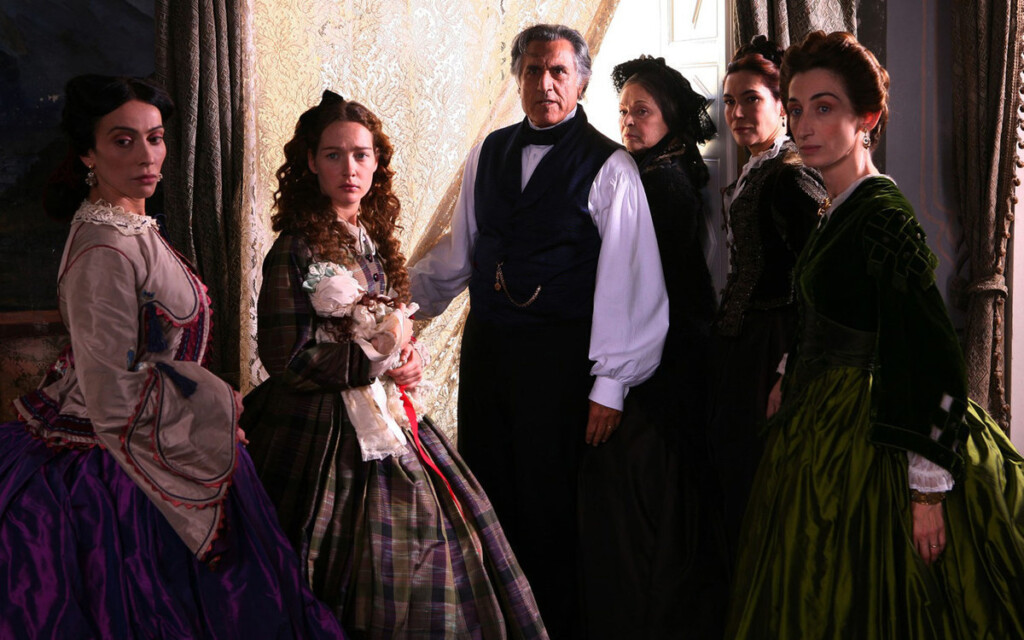
You are reading a family chronicle and slowly, with a discomfort you cannot name, you realize you recognize everyone in it. Not because the Uzeda of Catania are sympathetic or admirable or even particularly interesting as individuals, but because the machinery they operate is familiar — the way they speak of duty while seizing inheritances, the way they invoke God while crushing rivals, the way they translate raw appetite into the grammar of obligation without pausing to notice the translation has occurred. Federico De Roberto published I Viceré in 1894, and the Italian literary establishment largely ignored it, too unsettled perhaps by what it refused to do: it refused to condemn. There is no authorial voice stepping in to clarify that the Uzeda are wrong, that their hunger is aberrant, that the reader should feel safely superior to them. The novel withholds that mercy entirely.
What De Roberto understood — and what his contemporaries were not yet equipped to receive — is something Friedrich Nietzsche had begun dismantling in 1887, in Zur Genealogie der Moral, a book that does not argue that power is corrupt but rather that the very concepts used to call it corrupt were themselves generated by power. The genealogical method is not a moral critique but an archaeological one: it does not ask whether a value is good or evil but asks where it came from, whose interest it served at the moment of its invention, and what it cost the people who were made to internalize it. Nietzsche’s central finding — brutal in its clarity — is that moral language does not precede domination and then resist it; moral language follows domination and then consecrates it. The Uzeda do not violate this structure. They exemplify it so completely they have become invisible to themselves inside it.
Consider what happens when Giacomo Uzeda maneuvers through the post-unification political landscape of Sicily, aligning with the new Italian state not out of liberal conviction but out of an aristocrat’s instinct for institutional survival. He does not experience himself as cynical. He experiences himself as realistic, as responsible, as the kind of man serious enough to do what others are too sentimental to do. This is precisely what Nietzsche called the priest’s trick — not hypocrisy in the ordinary sense, which would require a consciousness split between public performance and private knowledge, but something far more sophisticated: the genuine internalization of a moral framework that was constructed, brick by brick, to make domination feel like stewardship. The Uzeda do not pretend to believe in their own legitimacy. They actually believe it, and that belief is not a personal failing but a structural achievement centuries in the making.
The novel’s timeline is not accidental. De Roberto anchors the Uzeda’s continuity precisely across the Risorgimento, that seismic national transformation that Italian culture had already begun to mythologize as a moral awakening. What the Uzeda demonstrate is that the transformation changed the available vocabulary without changing the underlying grammar. Where they once spoke the language of feudal obligation and divine right, they now speak the language of civic duty and national progress. The content of the words shifted; the function did not. Power reproduced itself through a new ideological wardrobe, and the families equipped to perform the translation quickly — aristocrats with enough social flexibility to dress a medieval hunger in Enlightenment clothing — emerged intact on the other side of history. Nietzsche would have recognized this without surprise, having written in the Genealogie that the strong do not abandon morality; they colonize it.
What makes De Roberto’s vision genuinely disquieting is not that the Uzeda win. It is that their winning requires no conspiracy, no exceptional cruelty, no secret knowledge unavailable to the rest of society. They win because the system does not reward the most virtuous but the most fluent — and fluency, in any era, means knowing which values are currently performing legitimacy and speaking them first, loudest, and with the most convincing sincerity.
When Revolution Becomes the New Coat of Arms
You are watching a man rehearse his own coronation. Consalvo Uzeda stands before a mirror that is not a mirror — it is a constituency, a campaign podium, a newspaper column — and he is perfecting the gesture of the people’s servant while wearing, beneath every syllable, the unmistakable posture of a prince. Federico De Roberto understood something in 1894, when The Viceroys was published to a silence so resounding it amounted to punishment, that the Italian liberal state did not want to hear: revolutions do not necessarily destroy the structures they overthrow. Sometimes they simply repaint them.
Consalvo is the novel’s final and most chilling figure precisely because he is the most modern. He does not cling to the old legitimacies of blood and ecclesiastical alliance the way his ancestors did. He speaks the language of progress, of the nation, of democratic renewal. And yet the logic animating every calculation he makes is identical to the dynastic logic that built the Uzeda fortune over centuries of feudal extraction. What has changed is the vocabulary. The substance — the conviction that power belongs to those shrewd enough to seize it and brutal enough to hold it — remains structurally intact. De Roberto gives us not a traitor to the revolution but its perfect product: someone who understood that in post-unification Italy, liberal rhetoric was not the enemy of aristocratic ambition but its most efficient new instrument.
Antonio Gramsci, writing from a Fascist prison cell in the 1930s, named this mechanism with the precision of a diagnostician who has seen the illness too many times. Transformismo, as he developed it in the Prison Notebooks, described the process by which the Italian ruling class systematically absorbed oppositional energies, neutralizing them not through repression but through incorporation. Agrarian reformers became parliamentary deputies. Socialist firebrands became ministers. The form of dissent was preserved; the structural challenge was dissolved. What Gramsci identified at the level of political history, De Roberto had already rendered as lived psychology decades earlier, in the slow rotations of a single family’s self-justification. Consalvo does not betray a cause. There was never a cause — only a strategy wearing a cause’s clothing.
The Italian Risorgimento, that luminous myth of national liberation, had united a peninsula while leaving its social architecture almost entirely undisturbed. By 1871 the unified state had absorbed the territorial question without resolving the class question. The transformative energies that had fed thirty years of insurrectionary politics were channeled into a parliamentary system designed, structurally, to reproduce the same networks of influence that had governed before unification but under new institutional names. The percentage of eligible voters in the first decades of the unified Italian state hovered around two percent of the population. Democracy was the name given to a remarkably narrow oligarchy that had learned to speak in universalist terms.
What makes De Roberto’s anatomy so unbearable to read is that Consalvo’s corruption is not the corruption of a man who has fallen from idealism. It is the corruption of a man who never needed idealism because he saw, with a clarity his era called cynicism and we might call realism, that the new system rewarded exactly the skills the old system had cultivated. Manipulation of family networks. Control of local patronage. The ability to present private interest as public necessity. These were not feudal survivals being dragged into modernity — they were the operational grammar of modernity itself, running beneath its emancipatory surface like groundwater beneath paving stones.
The Family as the First Ideological State Apparatus

You receive the house before you receive language. The rooms teach you which silences are dangerous, which doors you do not open, which relatives you address with lowered eyes. By the time you understand that these are rules, they have already become instincts, and the distinction has collapsed permanently.
Louis Althusser, writing in 1970 in his essay “Ideology and Ideological State Apparatuses,” made an argument that cut through the comfortable boundary between public and private life: the family is not a refuge from ideology but its earliest and most efficient transmission mechanism. The state does not need to knock on your door if it has already shaped the person who answers it. Althusser called these structures ideological state apparatuses precisely because their power operates not through force but through internalization — through the slow conversion of external demand into felt identity. Federico De Roberto, working without that theoretical vocabulary but with the precision of a novelist who has watched Sicilian aristocracy metabolize its own catastrophe, built the Uzeda household in I Viceré as the most exhaustive fictional proof of that argument.
What the Uzeda children inherit is not primarily wealth, though wealth circulates through the novel like blood through a diseased body. What they inherit is a pre-formatted grammar of wanting. Giacomo wants domination because domination is the only emotional language his formation left available to him. Chiara wants escape but can only conceptualize escape as another form of submission, trading the convent’s walls for a husband’s. The desire each character experiences as intimate and self-generated is in fact the family structure speaking in the first person. The household has already decided what counts as desirable, what counts as threatening, and what counts as inconceivable — and it has done this work so thoroughly that none of them experience it as a decision at all.
This is precisely what makes the Uzeda house more dangerous than any external institution in the novel. The Church, the state, the legal apparatus — these appear as adversaries that can at least be named and therefore partly resisted. The family operates at the level where resistance has not yet become thinkable, because resistance requires a position outside the structure from which to apply pressure, and the structure ensures that no such position is ever made available. Adolescent rebellion, in this architecture, is not a challenge to the grammar; it is conjugation in a minor key, using the same vocabulary to produce a slightly different sentence.
De Roberto extends this logic into the novel’s treatment of biological reproduction itself. The Uzeda obsession with bloodline is never simply vanity. It functions as a metaphysical claim: that the body carries obligation, that flesh is a form of contract, that being born into this name means the name owns the birth before the person can. By the time a child might refuse that contract, they have already been shaped by it for twenty years — shaped in appetite, in reflex, in the architecture of their fear. The body, by that point, is the argument. There is no position from which to say no that the family has not already pre-colonized.
A man sits at a long table surrounded by relatives who eat with the silent efficiency of people conducting a ritual they no longer understand but cannot stop performing. He looks at his hands. He does not know why he reached for the bread before his elder uncle finished speaking. He does not know where the impulse came from. He assumes it was hunger.
A vision curated by a filmmaker, not an algorithm
In this video I explain our vision
The Trap of Self-Knowledge
You are sitting in a meeting room on the fourteenth floor of a building that smells of recycled air and career ambition, listening to a senior partner explain the restructuring, and you notice yourself noticing the euphemisms. “Rightsizing.” “Talent reallocation.” You are aware of the machinery. You even say something quietly pointed at the end, a remark that draws a few appreciative glances from colleagues who recognize intelligence when they hear it, and the partner nods, absorbs the comment, and the meeting continues exactly as it would have without you. Your dissent has been processed. It was not suppressed. It was metabolized.
This is the more sophisticated trap, and Federico De Roberto understood it with a precision that should disturb anyone who has ever taken comfort in their own lucidity. The Uzeda who prove most dangerous in I Viceré are not the ones who operate the system blindly. They are the ones who see it, name it privately to themselves, perhaps even despise it, and then act within it with full consciousness. Giacomo, who will become deputy in the novel’s closing movement, does not deceive himself about what the political theater of post-Risorgimento Italy actually is. He has no illusions about the parliament he enters, no romantic faith in the national project that unified the peninsula between 1861 and the years in which the novel is set. He enters knowing. And it is precisely this knowing that makes him so effective, and so trapped, because he has foreclosed the psychological escape route that would require him to first become disillusioned.
Pierre Bourdieu, writing in The Logic of Practice in 1980, described how social fields reproduce themselves not through ignorance but through what he called the “feel for the game” — the embodied, pre-reflective competence that allows agents to act within structures while believing themselves to be acting freely. But De Roberto depicts something even more vertiginous than Bourdieu’s habitus, because his characters often possess explicit, conscious knowledge of the game and play it anyway. The critical awareness does not interrupt the reproduction. It becomes part of the performance, a sophisticated layer of self-presentation that makes the participant more credible, more untouchable, even more powerful within the structure they claim to see through.
This is what the modern mythology of the “critical insider” consistently refuses to admit. There is an entire professional identity built around the figure who works within institutions while maintaining an ironic distance from them, who critiques the organization in carefully calibrated registers, who positions themselves as the conscience of the system rather than its servant. The sociologist Luc Boltanski, in his work with Ève Chiapello published in 1999 as The New Spirit of Capitalism, documented exactly how capitalism absorbed the artistic and social critiques of the 1960s and 1970s, transforming demands for autonomy and authenticity into new management vocabularies of creativity, self-actualization, and flexible individualism. The critique did not weaken the structure. It furnished it with new justifications.
De Roberto’s genius is to have dramatized this absorption at the level of individual psychology rather than systemic description. The Uzeda do not need an external force to contain their rebellion. They contain it themselves, instinctively, because their identity is so completely sutured to the family’s survival and dominance that any genuine rupture would require them to cease to exist as subjects. Their self-knowledge is real. It is also perfectly inert. They can see the cage with extraordinary clarity because the cage and the self were constructed simultaneously, out of the same materials, by the same historical forces, across the same generations of calculated marriages and inherited properties and tactical devotions to whichever political wind was blowing from the mainland. Knowing this does not open the door. It makes the door invisible by confirming that there was never anywhere else to go.
Verismo’s Cold Eye and the Death of Redemption
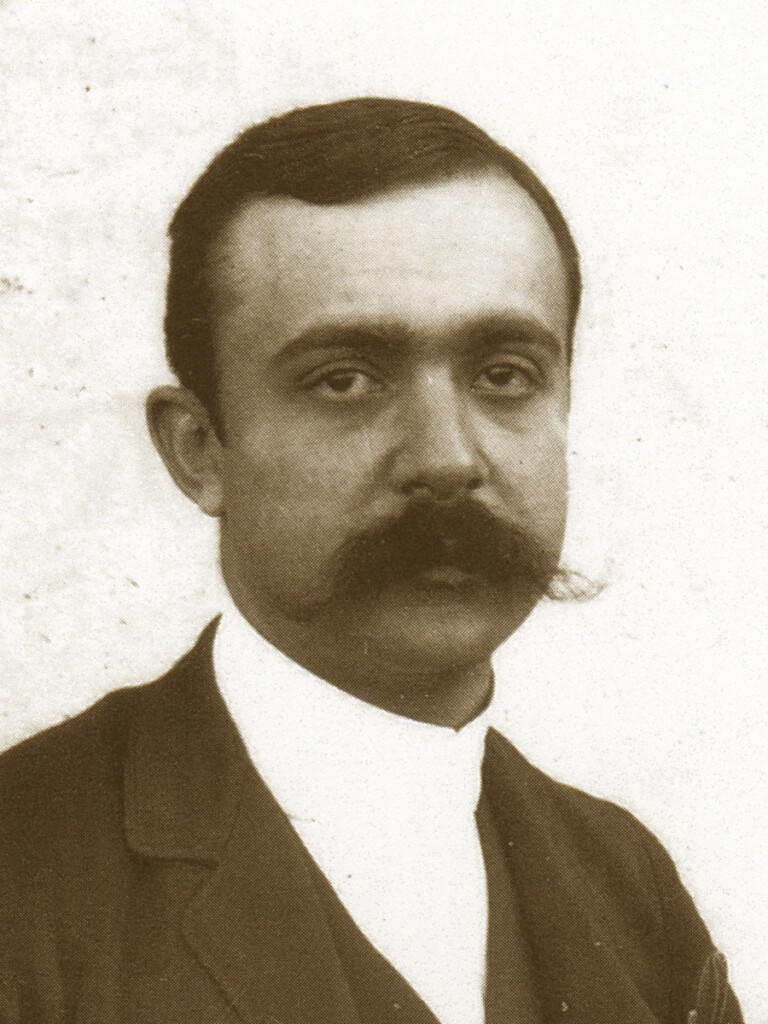
You are reading a novel and something keeps refusing to arrive. You wait for the character who will finally see clearly, the moment of rupture where the machinery slows and a human face looks back at you from the wreckage — and it never comes. Not because the author forgot, but because the refusal is the architecture.
Federico De Roberto published I Viceré in 1894, one year after Giovanni Verga had effectively gone silent as a novelist, the second volume of his projected Ciclo dei Vinti abandoned and never completed. The proximity is not incidental. Both men worked inside the verismo tradition, that late-nineteenth-century commitment to observational precision, to dialect and social texture, to the documentation of lives as they are materially lived rather than symbolically elevated. But the distance between them is the distance between a surgeon who weeps and one who does not. Verga, in I Malavoglia and in the stories collected under Vita dei campi, constructed a narrative universe saturated with loss, where the destruction of the Toscano family or the death of Rosso Malpelo carries the weight of elegy. His prose mourns even when it does not editorialize. The defeated are seen, which means they are given a form of dignity in the act of witnessing.
De Roberto withdraws that gift entirely. The Uzeda family of Catania, across three generations, is not witnessed with grief. It is catalogued with the dispassion of an entomologist who has long since stopped finding insects remarkable. The irony that runs through every page of I Viceré is not the irony of a disappointed romantic — it does not imply a world that should have been otherwise. It implies a world that was never going to be otherwise, and that the reader’s expectation of otherwise is itself the illusion being dissected. This is a structurally different operation than mourning. Mourning contains a residual faith in value, the belief that what was lost was worth losing. De Roberto’s cold eye does not grant that premise.
What makes this anticipatory rather than merely pessimistic is precisely its systematic quality. Robert Musil, writing The Man Without Qualities in the 1930s — a project he never finished, which may itself be the only honest conclusion available to that kind of vision — understood institutions not as containers of human behaviour but as producers of it. The Kakanian bureaucracy in Musil’s Vienna generates subjectivity; it does not merely constrain it. De Roberto arrives at an equivalent insight forty years earlier through the Uzeda bloodline: the aristocratic system does not corrupt its members, it constitutes them. Consalvo does not choose cynicism as a strategy. He discovers, through the progress of the novel, that cynicism is what the system calls realism, and realism is what the system calls success.
Giuseppe Tomasi di Lampedusa, reading De Roberto in the decade before he wrote Il Gattopardo in 1958, absorbed something that has not been sufficiently named. The famous Salina formula — that everything must change so that everything can remain the same — is often read as the melancholy wisdom of a dying class. But Lampedusa did not invent that insight; he elegized it. De Roberto had already shown the mechanism without the elegy, without the Prince’s autumnal self-awareness, without the beautiful resignation that allows the reader to feel something has been understood and therefore partly redeemed. The Uzeda do not understand themselves. That is the cruelty of the design.
This is why the question of a redemptive subject — the figure who steps outside the system and names it from a position of genuine freedom — simply does not arise in I Viceré. Not because De Roberto lacks the imagination for such a figure, but because his historical materialism, intuitive and pre-theoretical as it may be, has already foreclosed the ground on which that figure would have to stand. There is no outside from which to see the whole, because the whole is the condition of seeing.
What the Sicilian Baroque Conceals
You stand in a room where every surface has been covered so that no surface remains. The ceiling explodes upward in gilded plasterwork, saints contorted into postures of impossible grace, cherubs pressing their fat cheeks against the cornice as though afraid to fall. The floor beneath you is inlaid marble, cold and geometric, a pattern so intricate it could occupy a mathematician for a lifetime. Nothing in this room is accidental, and nothing in it is honest. The Uzeda palace in Federico De Roberto‘s novel operates precisely this way — not as a backdrop but as an argument, the walls themselves making a claim about what it costs a family, a class, a civilization, to survive.
The Baroque was never merely an aesthetic. When the Counter-Reformation church commissioned Bernini and his contemporaries in the seventeenth century, it was deploying visual excess as theological warfare — the overwhelming of the senses as a substitute for the convincing of the intellect. Sicily received this vocabulary and deepened it, because Sicily needed it more. A territory that had passed through Arab, Norman, Aragonese, and Spanish hands before arriving at the feet of the Bourbon monarchy had developed a particular genius for outlasting its conquerors by becoming more intensely itself than any conqueror could ever claim to be. The ornament was not decadence. It was armor.
De Roberto understood that the Uzeda family’s psychology is inseparable from the stone they inhabit. The pathologies the novel catalogs — the compulsive acquisition of titles, the sexual violence sublimated into religious devotion, the political cynicism so total it becomes a kind of purity — are not aberrations within the palace but extensions of its architecture. Guy Debord, writing in 1967 in The Society of the Spectacle, argued that in advanced capitalist societies all lived experience degrades into representation, that the image replaces the thing. De Roberto had reached a structurally identical conclusion eighty years earlier simply by watching an aristocratic family perform itself across generations. The Uzeda do not live inside their palace. They perform their lineage against it.
What this means for the novel’s famous pessimism is that it cannot be read as nihilism. Nihilism implies the absence of meaning. What De Roberto documents is the opposite: a suffocating surplus of meaning, every gesture freighted with dynastic implication, every marriage a territorial treaty, every religious conversion or political alliance a move in a game whose rules were set before anyone living was born. Lampedusa would later give this calculus its most quoted formulation, but De Roberto’s version is crueler because it lacks the melancholy aristocratic self-awareness that softens Lampedusa’s prince. The Uzeda do not mourn their condition. They have forgotten it is a condition at all.
The material excess of counter-reformational Catholicism that fills the novel’s spaces — the reliquaries, the monastic endowments, the processions, the tonnage of silver plate and embroidered vestments — functions as what the anthropologist Marcel Mauss described in his 1925 essay on the gift as a total social fact, an act that is simultaneously economic, religious, political, and psychological. When the Uzeda donate to the church, they are not being pious. They are purchasing permanence in the only currency the island recognizes. Eternity here is not a theological concept but a real estate strategy.
Sicily in De Roberto’s hands becomes the most honest map of how civilizations actually persist: not through progress, not through justice, not through the gradual refinement of institutions, but through the relentless aestheticization of power until power and beauty become indistinguishable. The baroque palace does not conceal the violence that built it. It transforms that violence into something you stand before in involuntary admiration, which is the more complete form of concealment — not hiding the crime, but making the crime the only thing beautiful enough to look at.
🏛️ Power, Decay, and the Sicilian Soul
Federico De Roberto‘s The Viceroys stands as one of the most devastating anatomies of aristocratic decline and political cynicism in Italian literature. The novel’s labyrinthine family saga, set against the backdrop of Italian unification, resonates with broader themes of memory, power, and social identity explored across Italian and European culture. These related articles deepen the context surrounding De Roberto’s masterwork.
Southern Identity in Italian Culture
Southern identity in Italian culture has long been shaped by a tension between myth and reality, between the weight of history and the desire for modernity. De Roberto’s portrayal of the Uzeda family is inseparable from this broader cultural fracture, where the South appears trapped in cyclical patterns of power and corruption. This article provides essential background for understanding the regional and ideological landscape that gave birth to The Viceroys.
GO TO THE SELECTION: Southern Identity in Italian Culture
Rome in Italian Literature: History and Imagery
Rome and its symbolic geography haunt Italian literature as a site of imperial memory and political ambition, much as Sicily functions in De Roberto’s novel. The tension between the eternal city and the provinces mirrors the Uzeda clan’s desperate attempt to preserve aristocratic relevance in a unified Italy. Exploring Rome’s literary imagery illuminates how place becomes destiny in the great novels of Italian realism.
GO TO THE SELECTION: Rome in Italian Literature: History and Imagery
Carlo Emilio Gadda: Life and Works
Carlo Emilio Gadda, like De Roberto, approached Italian society with a corrosive and disillusioned eye, dissecting its institutions through dense, baroque prose. Both writers share a commitment to exposing the grotesque contradictions hidden beneath respectable surfaces, whether familial or civic. Understanding Gadda’s life and works enriches the reader’s appreciation of the darker strand of Italian narrative tradition to which The Viceroys belongs.
GO TO THE SELECTION: Carlo Emilio Gadda: Life and Works
Niccolò Machiavelli: Life and Political Thought
Machiavelli’s political realism offers one of the most enduring frameworks for understanding how power is acquired, maintained, and corrupted across generations. De Roberto’s Uzeda family embodies precisely the Machiavellian calculus of political survival stripped of any moral pretense. Reading Machiavelli alongside The Viceroys reveals how deeply the Italian literary imagination has been haunted by the cold mechanics of domination.
GO TO THE SELECTION: Niccolò Machiavelli: Life and Political Thought
Discover the Cinema of Power and Memory on Indiecinema
If the themes of dynastic decline, political cynicism, and collective memory in De Roberto’s world speak to you, Indiecinema’s streaming catalog offers a curated selection of independent films that explore power, identity, and the weight of history with equal depth and courage. Step beyond mainstream narratives and discover the cinema that dares to tell the truth.
👉 EXPLORE THE CATALOG: Watch Indie Films in Streaming
A vision curated by a filmmaker, not an algorithm
In this video I explain our vision

