
The Psychiatrist Who Could Not Explain What He Heard
You are sitting across from someone who has spent eighteen months telling you about her fears — of water, of choking, of the dark — and nothing has worked. The medications, the talk therapy, the careful mapping of childhood trauma: all of it has left her exactly where she started, possibly worse. You are a Yale-trained psychiatrist, chief of psychiatry at Mount Sinai Medical Center in Miami, a man who has published, who has been published about, who has constructed an entire professional identity on the premise that the mind is a biological machine whose malfunctions can be diagnosed, categorized, and corrected. And then your patient, under hypnosis, begins describing a life she lived in Egypt four thousand years ago. She names a daughter who drowned. She names the weight of the water. And her symptoms begin to disappear.

This is not the opening of a novel. In 1980, Brian Weiss — Harvard Medical School graduate, former head of the psychiatry department at the University of Miami — was treating a patient he later called Catherine in his 1988 book Many Lives, Many Masters, which has now sold over four million copies and been translated into dozens of languages. The clinical file was straightforward until it was not. Under hypnotherapy intended to retrieve suppressed childhood memories, Catherine began accessing what she described, in precise and affecting detail, as prior incarnations. Weiss did not believe her. He believed he was witnessing some form of unconscious confabulation, the mind’s tendency to construct plausible narratives under pressure. He spent months attempting to debunk what he was hearing. He cross-referenced historical details. He consulted colleagues. He said nothing publicly for four years, because he understood with perfect clarity what it would cost him to say anything at all.
Thomas Kuhn argued in The Structure of Scientific Revolutions in 1962 that scientific communities do not revise their frameworks when confronted with anomalies — they absorb, dismiss, or quarantine the anomaly until the pressure of accumulated exceptions makes the old model structurally untenable. What Weiss experienced in that consulting room was not simply a clinical puzzle. It was a paradigm collision of the most intimate kind: one that did not happen in a laboratory or a journal, but in the silence between a therapist and a frightened woman, where no professional armor was thick enough to completely block what was happening. The violence of that collision was not physical but institutional. To take Catherine’s regressions seriously was to place his entire credentialed self — the Yale degree, the academic appointments, the peer-reviewed publications — in direct opposition to the epistemic architecture that had produced and legitimized him.
Western medicine after the Second World War developed a particular and aggressive relationship with anything that could not be operationalized. The Diagnostic and Statistical Manual, first published in 1952 and now in its fifth edition, is not merely a clinical reference tool — it is a document of exclusion, a formal declaration of what kinds of suffering count as real and what kinds of explanation are admissible. Past-life memory does not appear in the DSM. Neither does the soul. The framework operates on the unspoken agreement that consciousness is a product of the brain and terminates with it, and any clinical finding that troubles that agreement is reclassified before it can become a question. Dissociation. Cryptomnesia. Confabulation. The vocabulary of dismissal is technically sophisticated and professionally indispensable.
What made Weiss’s eventual decision to publish genuinely significant — not spiritually, but sociologically — was that he was not a fringe figure claiming validation from outside the institution. He was the institution. His defection carried a specific weight that a chiropractor’s or a homeopath’s never could, because he had been trusted precisely to police the boundary he was now crossing.
Beyond Our Lives

Drama, noir, by Fabio Martorana, Italy, 2021.
Alex and Claire have something in common, between recurring nightmares and restless memories; only time will allow them to understand what is happening. Where is the truth hidden? Perhaps in a time that the two protagonists don't even imagine. A sweet and complicated, painful and troubled love story, between a psychoanalyst and a woman who must fight a tough battle against herself and her introspective fears. Two soul mates that fate brought together after reliving distant experiences over time.
Dedicated to the world of noir, where lighting rich in chiaroscuro, the contrast between light and shadow symbolically represents the conflict between good and evil, the feature film tells of a sweet and complicated, painful and troubled love story. The film was shot between the provinces of Rome and Latina in the splendid settings of Circeo and Doganella di Ninfa.
LANGUAGE: Italian
SUBTITLES: English, Spanish, French, German, Portuguese
What Past-Life Memory Costs the Self That Remembers
You are lying on a table in a room that smells faintly of lavender and recirculated air, and a voice is counting backward from ten, and somewhere around seven you stop being the person who drove here.
That dissolution is not metaphysical decoration. It is the functional precondition of the entire enterprise, and its implications for what we call a self are far more violent than the therapeutic literature around hypnotic regression tends to acknowledge. When Brian Weiss first guided Catherine through what he documented in Many Lives, Many Masters in 1988, the clinical surprise he reported was not merely that she spoke of ancient Egypt or the American frontier — it was that she spoke from there, in a present tense, with an emotional immediacy that bore none of the grammatical distance of memory. She was not recalling. She was inhabiting. The difference is not poetic. It is the difference between a photograph and a wound.
Pierre Janet, working in Paris in the 1880s and 1890s at the Salpêtrière, had already mapped the territory that Weiss would wander a century later, though Janet had no interest in past lives. What he observed in his hysterical patients — documented rigorously in L’Automatisme psychologique in 1889 — was that traumatic experience does not integrate into the narrative stream of consciousness the way ordinary experience does. It splits off. It becomes what he called a fixed idea, a fragment of living experience that the psyche cannot metabolize, stored not in the past but in a kind of perpetual present, inaccessible to voluntary recall but capable of erupting without warning, undated and undead. The patient does not remember the trauma. The trauma remembers the patient.
What regression therapy, whether past-life or otherwise, appears to access is precisely this class of material: memories that escaped chronological filing, that were never submitted to the linear autobiography the ego constructs to make itself feel continuous. The Cartesian subject — the unified, rational, temporally coherent I that Descartes erected in the Meditations of 1641 and that psychiatry has quietly depended on ever since as the baseline of mental health — is not what shows up on the table. What shows up is something older and less organized, something that does not know it should have a single origin point.
This creates a cost that the vocabulary of healing tends to obscure. To access a memory that has been stored outside linear time is not simply to retrieve information. It is to temporarily dismantle the architecture that keeps the self recognizable to itself. Dissociation, which Janet understood as a failure of synthesis, is not a dysfunction that regression corrects — it is the method regression requires. The patient must become, for the duration of the session, precisely the kind of fragmented subject that psychiatry spends enormous resources trying to unify. The therapy weaponizes the wound in order to drain it.
Whether what surfaces in that fragmented state constitutes a genuine past life or a confabulation assembled from cultural residue, somatic metaphor, and the unconscious pressure of the therapist’s expectations is a question that cannot be settled here and perhaps cannot be settled at all. What can be said is that the psychological mechanism does not require the metaphysical claim to be real in order to produce real effects. Ian Stevenson spent forty years at the University of Virginia cataloguing cases of children who reported past-life memories — over 2,500 cases documented before his death in 2007, some containing verifiable historical detail — without ever resolving whether the mechanism was spiritual, genetic, or simply the mind’s most extreme strategy for externalizing what it cannot otherwise survive.
The self that emerges from a regression session has encountered something it was not designed to encounter: itself without a fixed address in time, without a singular body, without the story it tells every morning when it looks in the mirror and recognizes its own face.

Reincarnation as a Cultural Technology, Not a Metaphysical Claim
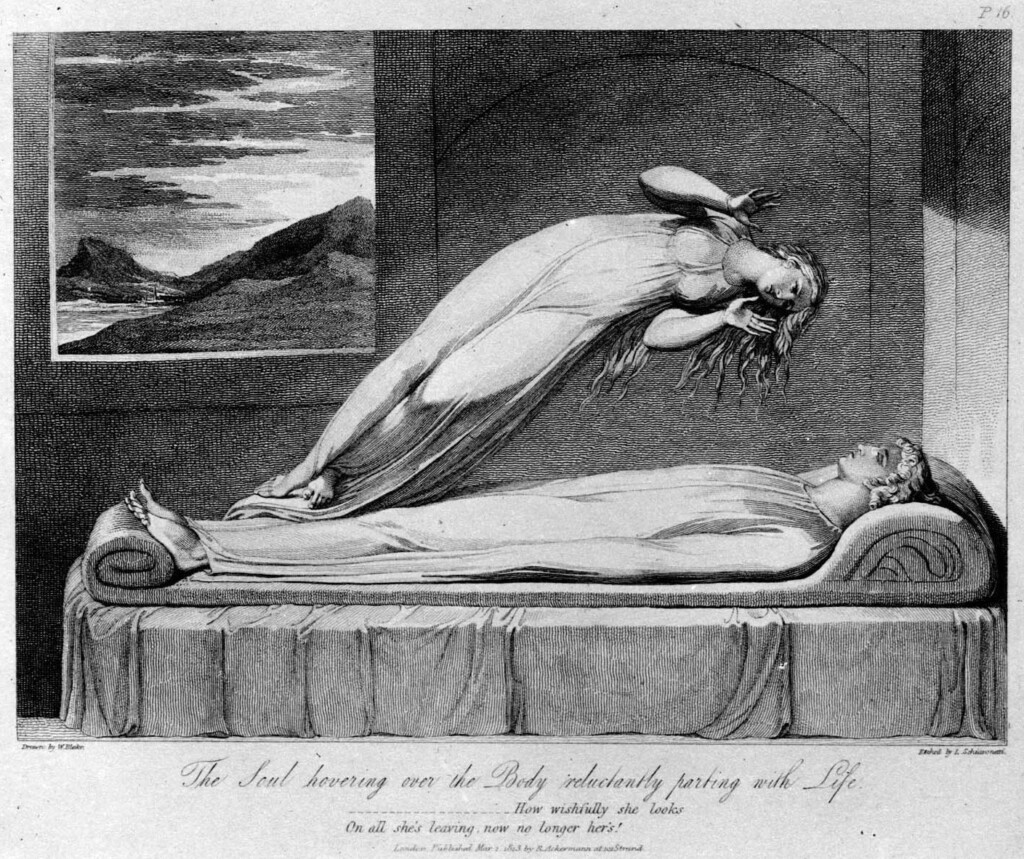
You are sitting with a story you were told before you could argue with it — that time moves in one direction, that a life begins at birth and ends at death, that what you do not resolve in this span simply dissolves. You received this architecture so early, embedded in the grammar of your language and the structure of your institutions, that questioning it feels less like intellectual disagreement and more like trying to doubt the ground beneath your feet.
Reincarnation, in the traditions that built it as a working system rather than a poetic comfort, was never primarily a claim about the afterlife. In the Vedic corpus that crystallized into the Upanishads around the eighth century BCE, the doctrine of samsara functioned as a mechanism of moral accounting — karma was not reward and punishment in the moralistic Western sense, but cause and consequence extended across a timeframe too vast for a single lifetime to contain. The Brihadaranyaka Upanishad presents this not as consolation but as a structural necessity: a cosmos in which actions outrun consequences is not a cosmos at all, but a theater of randomness. The soul’s passage through multiple lives was the architecture that made ethics coherent rather than arbitrary.
What the Pythagorean tradition absorbed when it encountered these currents — and there is genuine scholarly evidence, documented through the work of Walter Burkert in Lore and Science in Ancient Pythagoreanism, that Pythagoras transmitted a version of metempsychosis into early Greek thought — was precisely this structural function. Pythagoras did not present the soul’s journey through multiple bodies as a mystical fantasy; he presented it as an organizing principle, a way of binding the individual to consequences that exceeded the horizon of a single existence. Plato inherited this directly, and in the Phaedrus and the Republic he used it not to describe what happens after death but to answer the question of why justice matters when injustice so visibly succeeds.
Buddhist tradition complicated the picture in a philosophically radical way: by insisting that there is no fixed self persisting through these transmigrations, the anatman doctrine removed the very entity that Western readers assume must be doing the traveling. What continues is not a soul but a pattern, a stream of conditioned tendencies, dukkha moving through forms the way a flame moves through fuel. This is not a gentler version of the same idea — it is a structural critique of the assumption that identity is the point at all.
Mircea Eliade, in The Myth of the Eternal Return published in 1949, traced how cyclical time functioned in archaic and Eastern traditions as a technology for meaning-making, binding the individual to a pattern larger than biographical accident. What he identified, with a precision that makes the book uncomfortable reading, is that the Western shift toward linear, irreversible, progress-oriented time was not a philosophical discovery but a political and theological choice — one that Christianity consolidated and modernity inherited wholesale. Linear time makes the individual life the sole unit of moral accounting. It also makes grief permanent, failure final, and the unlived life an unrecoverable loss.
The erasure of cyclical architecture was not neutral. It produced a specific kind of subject: one whose existence is bounded, singular, and therefore infinitely anxious. A person who believes they have exactly one chance at love, one span in which to become who they are supposed to be, one window before the lights go out permanently, does not move through the world with the same quality of attention as one who understands their current configuration as one moment in a longer arc. The anxiety is not incidental — it is load-bearing. It keeps the subject productive, consuming, and governable in ways that a soul at ease in cyclical time simply is not.
The Pathologization of Anomalous Memory in Clinical History
You are sitting across from a seven-year-old boy in rural Sri Lanka who has never left his village, and he is describing, with the calm precision of someone reading from a document, the name of his previous mother, the location of a house he has never visited, and the exact manner in which he had died in a previous life — details that researchers later verified against death records and living family members who had never met the child. There were no theatrics, no trance, no performance. Just a small person reporting information the way you might report what you had for breakfast.
Ian Stevenson spent over four decades at the University of Virginia doing exactly this kind of work — interviewing, cross-referencing, traveling, verifying. By 1980 he had compiled accounts from more than three thousand children across cultures as structurally different as Lebanon, Alaska, India, and Turkey. His 1966 monograph “Twenty Cases Suggestive of Reincarnation,” published by the American Society for Psychical Research, was not a spiritual pamphlet but a methodological document that traced individual claims through birth records, geographic verification, and corroborating testimony from unconnected witnesses. He was a trained psychiatrist, a former chair of his department, a researcher with peer-reviewed credentials. None of this insulated him from what happened next.
What happened next had a precise institutional mechanism behind it. The Diagnostic and Statistical Manual, which first appeared in 1952 with 106 diagnostic categories, underwent successive revisions that accomplished something philosophically extraordinary: they redrew the boundary between memory and pathology in such a way that any mnemonic content not anchored to a verifiable personal past became, by definition, a symptom. The DSM-III in 1980 formalized the category of dissociative disorders with enough clinical architecture to absorb almost any anomalous experience of selfhood or memory. By the time DSM-IV arrived in 1994, the diagnostic language had become sufficiently elastic that vivid past-life recall could be reclassified as a dissociative episode, a depersonalization phenomenon, or an artifact of childhood suggestibility — not because new evidence demanded it, but because the categorical framework had been expanded to require it.
This is not a conspiracy. It is something far more ordinary and therefore far more difficult to resist: the routine operation of paradigm maintenance. Thomas Kuhn described in “The Structure of Scientific Revolutions” in 1962 how anomalous data is not usually confronted and refuted — it is simply rerouted into existing explanatory categories until the volume of anomalies becomes too large to reroute. Stevenson’s three thousand cases were not refuted. They were absorbed into the vocabulary of developmental psychology, trauma response, and fantasy elaboration, categories that explained the form of the phenomenon while leaving its actual content — the verified external facts, the names, the addresses, the scars corresponding to reported wounds — entirely untouched.
The marginalization was social as much as scientific. Stevenson published in mainstream journals including the Journal of Nervous and Mental Disease, and his methods were repeatedly described by skeptical reviewers as rigorous even when his conclusions were rejected. The rejection was not of his method but of the kind of question his method was designed to answer. Science does not merely evaluate evidence; it polices the categories of permissible inquiry, and a question that structurally cannot be answered within the materialist framework is not addressed — it is reclassified as the wrong kind of question. Stevenson was not dismissed as a fraud. He was dismissed as someone asking something categorically inappropriate, which is a subtler and more permanent form of erasure.
What the DSM accomplished, across its editions, was not a better understanding of anomalous memory. It accomplished the administrative disappearance of the phenomenon itself — not by disproving it, but by renaming it until the original question became invisible inside the new answer.
Trauma Without a Biographical Origin
You are sitting in a therapist’s office describing a fear you cannot source. Not a fear born from any accident, any loss, any specific afternoon that went wrong. A fear that arrived with you, fully formed, the way a language arrives in the mouth of a child who has never studied it. The therapist nods and writes something down, and you both agree, tacitly, that somewhere in your childhood the answer must be hiding.
But Rachel Yehuda’s work at the Icahn School of Medicine at Mount Sinai dismantled that agreement with cortisol measurements. Studying the children and grandchildren of Holocaust survivors, Yehuda found altered glucocorticoid receptor sensitivity — a biological signature of stress dysregulation — in people who had never experienced the events their bodies were still responding to. The wound was inherited. Not metaphorically, not as a story told at the dinner table, but as a measurable physiological deviation from baseline, passed through germline cells before the person existed as a conscious entity. The publication of these findings in Biological Psychiatry in 2015 was not a philosophical provocation — it was a clinical measurement. And its implications were more destabilizing than anything happening in the philosophy departments nearby.
What Yehuda’s data forces into view is a category of suffering for which Western therapeutic culture has no adequate container. Psychoanalysis requires a biographical origin: the trauma lives in a scene, a relationship, a developmental failure. Cognitive-behavioral therapy requires a distorted belief that can be identified and corrected. But if the nervous system is already configured toward hypervigilance before the first breath, before the first face, before the first word spoken in a particular language, the entire architecture of psychological cause-and-effect begins to crack. The suffering precedes the sufferer’s history. It belongs, in some technical and not merely poetic sense, to someone else.
Rupert Sheldrake’s concept of morphic resonance, developed across his 1981 work A New Science of Life and refined through decades of subsequent research, proposes something even stranger: that organisms are influenced by the accumulated habits of previous members of their species through a non-material field that crosses time. Sheldrake was not speaking of genetics. He was speaking of pattern inheritance at a level beneath DNA, a resonance between forms that share structure rather than direct biological lineage. The scientific establishment rejected this framework with a hostility disproportionate to its danger, which itself says something about how much the idea threatened. When Nature’s editor John Maddox called the book “fit for burning” in 1981, the fury was the kind reserved not for incompetent work but for genuinely unsettling propositions.
What both of these frameworks share — one empirically measured, one theoretically contested — is the recognition that identity is not sealed within the individual lifespan. The self carries sediment it did not personally deposit. This is not a comfortable idea, because it dissolves the boundary between what is yours and what was handed to you across a threshold you cannot remember crossing. And once that boundary becomes porous, the question of where suffering originates stops having a clean answer.
This is precisely the territory where Weiss operates, and why his clinical observations — whatever one thinks of their metaphysical interpretation — kept producing patients who improved after accessing material that could not have been encoded in their personal autobiographies. The woman who resolves a lifelong phobia after describing, under hypnosis, a drowning she did not survive in a life she cannot verify. The man whose chronic pain diminishes after narrating a battlefield death in a century he was not born into. Weiss documented these cases not as anomalies to be explained away but as patterns demanding a framework larger than individual biography. The therapeutic result was real. The origin of the wound remained, by every standard biographical measure, nowhere.
A vision curated by a filmmaker, not an algorithm
In this video I explain our vision
The Soul as a Unit of Continuity in a Culture of Disposability

You have probably never noticed the precise moment when you stopped believing your life was going anywhere in particular. Not a crisis, not a revelation — just a quiet, structural assumption that settled into your daily routine like furniture you stopped seeing: that you are a temporary configuration of preferences and purchases, that your depth is measured in the newness of your experiences, and that the idea of a self that persists, accumulates, and carries unfinished meaning across centuries is not merely unprovable but faintly embarrassing.
Max Weber named what produced this feeling long before it became ambient. In his 1917 lecture “Science as a Vocation,” he described the Entzauberung der Welt — the disenchantment of the world — not as a loss of religion but as the elimination of enchantment as a valid epistemological category. What died was not God but the premise that the universe holds meaning that precedes human measurement. Once that premise collapsed, the self was left without any architecture larger than its own lifespan. Weber understood this as a specifically modern tragedy: the iron cage was not built from oppression but from rationalization, from the relentless application of instrumental logic to domains that had previously resisted it, including the inner life.
What fills that cage is productivity. The self in late modernity is not a soul but a unit of output, assessed quarterly, optimized annually, replaced when obsolete. The individual is valuable insofar as they generate measurable returns — on their education investment, their relationship capital, their personal brand. This framework requires that the self have no history older than its last performance review. A soul that has spent twelve lifetimes learning patience, accumulating karmic debts, carrying forward unresolved grief from a death in fourteenth-century Florence — this entity is not merely metaphysically inconvenient. It is economically disruptive. It cannot be onboarded. It cannot be retargeted.
Consumer identity depends structurally on amnesia. The market does not sell to people who already know who they are; it sells to people who are perpetually becoming someone slightly different, someone who requires new objects to complete the transition. Zygmunt Bauman, in Liquid Modernity published in 2000, described how the flexible self of late capitalism must remain unfinished, porous, perpetually available for reinvention. Commitment — to a place, a community, a version of oneself — becomes a liability in a system that profits from restlessness. The soul, as Weiss describes it across thousands of regression sessions documented in his clinical work, is the precise opposite of this: it is a self so committed to its own unfolding that it returns repeatedly to complete what it started, indifferent to novelty, allergic to disposability.
This is the actual scandal of past-life memory. Not that it challenges neuroscience or offends theologians, but that it posits a subject who cannot be sold newness because they arrive already ancient. When Weiss’s patients, lying on a clinical couch in Miami in the 1980s, begin speaking in voices that recall ancient Egypt or medieval France, what they are doing — whatever the ontological status of those memories — is performing an identity that exceeds the consumer lifecycle. They are behaving as if they have a through-line, a cumulative meaning that does not reset at birth or expire at death. That behavior is, in the most precise sense, countercultural.
The violence of modernity toward the concept of the soul was never primarily theological. Churches adapted, compromised, survived. What could not survive was the soul as a continuity claim — the assertion that you are not a fresh product released into the market of the present moment, but a long and complicated story still in the middle of being told, carrying wounds that predate your parents, carrying gifts you don’t yet know how to spend, under no obligation whatsoever to be new.
Healing as Remembering Versus Healing as Overwriting
You are sitting in a therapist’s office and someone is trying to talk you out of what you remember. Not disputing the facts — they are more sophisticated than that — but reframing the emotional charge, restructuring the cognitive distortion, replacing the old response pattern with a more adaptive one. The language is clinical and warm at once, which is its most effective feature. By the end of the session, the memory is still there, technically, but it has been sanded down, made manageable, stripped of its insistence. You leave feeling lighter. What you may not notice is that something has also been made silent.
Cognitive behavioral therapy operates on a logic that is neither arbitrary nor cruel — it emerged from a genuine crisis in psychiatric efficacy, and its results in trials for anxiety and depression across the 1970s and 1980s were real enough to reshape entire healthcare systems. But embedded in its architecture is a philosophical assumption so foundational that it almost never gets named: that the problem is the pattern, not the origin. The symptom is the target. The past is relevant only insofar as it generates maladaptive cognitions in the present, and once those cognitions are restructured, the past can be released — which is another way of saying discarded. This is not simply a therapeutic technique. It is a particular theory of what a person is.
Paul Ricoeur spent decades — most visibly in his 1990 work Oneself as Another — building the case that personal identity is not a substance but a narrative. The self is not what persists beneath experience; it is what experience, when properly narrated, coheres into. Idem identity, the sameness of a thing across time, gives way in Ricoeur’s framework to ipse identity, the selfhood that is constituted through the act of keeping faith with one’s own story. What this means, in practical terms, is that a wound that cannot be traced — that exists without narrative context, without a legible origin — cannot be metabolized. It can only be managed, endlessly, like a debt that is never paid down but only refinanced.
The pharmacological project takes this a step further into territory that is no longer metaphorical. Research groups at MIT and Harvard, working through the mid-2000s, demonstrated in animal models that specific memories could be selectively weakened through the administration of protein synthesis inhibitors during reconsolidation windows — the brief period after recall when a memory becomes temporarily labile. The implications for trauma treatment were immediately visible to researchers and immediately disturbing to philosophers. A memory that is erased is not healed. The person who carries no trace of what happened to them is not free; they are simply amnesiac in a sanctioned direction. The suffering has been removed. So has the information.
What Weiss’s model proposes — and here the contrast becomes structurally rather than merely philosophically significant — is that resolution requires recognition, not replacement. The past-life regression framework, whatever one ultimately makes of its metaphysical claims, insists that the wound has a source, that the source is legible, and that legibility itself is the mechanism of release. The patient does not leave the session with the memory restructured into something less threatening. They leave having located the story that the symptom was trying to tell. This is precisely what Ricoeur would call narrative integration — the capacity to receive one’s own history as something authored rather than merely suffered.
The question that neither CBT protocols nor pharmacological erasure strategies are structured to ask is: what if the symptom is not the problem but the messenger? What if the anxiety, the inexplicable grief, the phobia with no traceable childhood source, is the psyche’s most faithful attempt to stay in contact with something it cannot afford to forget — not because forgetting would be dangerous, but because the memory is still waiting to be understood rather than overcome?
What the Regression Patient Knows That the Analyst Cannot Authorize

You are lying on a reclining chair in a dimly lit office, and something surfaces that you were not looking for — a grief so ancient it carries no name from this life, a terror attached to no childhood you can verify, a love whose object died before you were born. You do not know what to call it. But you know, with a certainty that bypasses argument, that it is real.
The clinical framework waiting on the other side of that experience has a word for what you just felt: confabulation. Or projection. Or hypnotic suggestibility. The DSM does not contain a diagnostic category for souls. And so the encounter between patient and practitioner becomes, almost immediately, a negotiation about whose language will govern the territory — not whose account is truer, but whose account is permissible.
Michel Foucault spent much of Discipline and Punish and the later lectures at the Collège de France mapping exactly this structure: the production of legitimate knowledge as an act of power over those whose experience falls outside the authorized vocabulary. The clinic is not a neutral space. It was built, historically and architecturally, to separate the one who knows from the one who is known. The patient arrives with raw data; the practitioner arrives with interpretive authority. What Foucault identified in the nineteenth-century asylum holds with uncomfortable precision in the twenty-first-century therapy room — the hierarchy is not dismantled by good intentions.
What makes the regression context particularly destabilizing is that the patient frequently reports not distress but resolution. They do not emerge confused; they emerge with a clarity they cannot justify through any conventional biographical narrative. The phobia that resisted eighteen months of cognitive behavioral therapy dissolves after a single session in which the patient relives a drowning that allegedly occurred in a previous century. The practitioner faces a structural problem: the outcome is positive, the mechanism is inadmissible. Clinical legitimacy requires that effective treatment operate through recognized pathways — neural plasticity, corrective emotional experience, cognitive restructuring. A cure that arrives via a route the framework cannot authorize is professionally embarrassing, and so it gets quietly reclassified as something else: symbolic processing, metaphorical release, the placebo of narrative coherence.
But this reclassification is itself a form of violence, subtle and institutional. It tells the patient that their experience was real only insofar as it can be translated into a language they did not generate. William James, writing in The Varieties of Religious Experience in 1902, called this the psychologist’s fallacy — the error of substituting the observer’s conceptual categories for the subject’s actual state. James was precise about the cost: you lose the phenomenon entirely. What remains after translation is not a cleaned-up version of the original; it is a different thing altogether, wearing the original’s clothes.
There is also a socioeconomic dimension that rarely enters the conversation. The patients who most consistently seek regression therapy are those for whom conventional psychiatry has already failed — people carrying chronic conditions, complex trauma, grief that will not metabolize. They are, disproportionately, people who have already been told that their suffering is resistant, treatment-refractory, personality-disordered. They arrive at the regression practitioner not as credulous believers but as exhausted survivors of a system that ran out of explanations. When their experience in that reclining chair produces results, the system does not update its model; it updates its skepticism about the patient.
What this reveals is not a debate about reincarnation. It is a debate about who holds the deed to the interior life. The regression patient knows something the analyst cannot authorize, and the refusal to authorize it is not epistemological caution — it is the oldest institutional reflex there is: the demand that experience justify itself before the tribunal of those who were not present for it, and who built the tribunal precisely so they would never have to be.
🌀 The Soul Remembers: Memory, Memory, Healing, and the Beyond
Brian Weiss’s work on past life regression invites us to reconsider the boundaries of memory, healing, and the eternal journey of the soul. These thematically connected articles explore the ideas, traditions, and psychological territories that surround his transformative vision — from reincarnation to the therapeutic power of regression.
Past life regression: history and practices
Past life regression, as both a historical practice and a therapeutic tool, forms the very core of Brian Weiss’s groundbreaking work. This article traces the origins and evolution of regression techniques across cultures and centuries, offering essential context for understanding how accessing buried memories can catalyze profound healing. It is an indispensable starting point for anyone drawn to the intersection of consciousness and the soul’s continuity.
GO TO THE SELECTION: Past life regression: history and practices
Reincarnation: history and beliefs across world cultures
Across every major civilization and spiritual tradition, the belief that the soul returns to inhabit new bodies has shaped ethics, art, and the understanding of suffering. This article surveys the rich and varied history of reincarnation beliefs, from ancient India and Egypt to Celtic and Pythagorean thought, illuminating the universal human intuition that death is not an ending. Understanding this cultural landscape deepens our appreciation of why Weiss’s clinical discoveries resonated so powerfully with readers worldwide.
GO TO THE SELECTION: Reincarnation: history and beliefs across world cultures
Overcoming trauma to live the present
Healing is never a purely intellectual process — it demands that we confront the weight of the past and choose to live fully in the present. This article examines the psychological pathways through which individuals recover from trauma, drawing on therapeutic frameworks that resonate strongly with Weiss’s approach to soul-level healing. The journey from past wounds to present liberation is the very heart of what regression therapy promises and delivers.
GO TO THE SELECTION: Overcoming trauma to live the present
Spiritualism: History and Origins
Spiritualism, as a historical and cultural movement, represents one of the most significant Western attempts to communicate with dimensions of existence beyond ordinary consciousness. This article traces its origins and foundational principles, providing crucial background for understanding the wider tradition within which past life therapy and soul memory have found their place. The desire to bridge the living and the departed is ancient, and spiritualism gave that desire an organized, modern voice.
GO TO THE SELECTION: Spiritualism: History and Origins
Discover More on Indiecinema
If these themes of soul, memory, and inner transformation speak to you, Indiecinema’s streaming platform is the place to go deeper. Explore a curated selection of independent films that dare to ask the questions mainstream cinema avoids — about life, death, consciousness, and the invisible threads that connect us across time. Join the community of curious minds and let independent cinema illuminate what words alone cannot reach.
👉 EXPLORE THE CATALOG: Watch Indie Films in Streaming
A vision curated by a filmmaker, not an algorithm
In this video I explain our vision

