
The Weight of the Page Before the First Word
You know the feeling before you have ever written a single line. You sit down, the surface in front of you blank and indifferent, and something in your chest tightens in a way that has nothing to do with inspiration failing to arrive. This is not absence. It is presence — a pressure, almost atmospheric, that tells you something is about to be demanded of you that you are not sure you can pay. The page does not wait. It exacts. And you have not even begun.

This is where Cesare Pavese lived. Not occasionally, not during difficult seasons, but as a permanent condition of his waking life. He was born in 1908 in Santo Stefano Belbo, in the Langhe hills of Piedmont, and he died by his own hand in a Turin hotel room in August 1950, and in between those two facts he spent an extraordinary portion of his conscious existence sitting exactly where you are now, in front of something that demanded everything and acknowledged nothing. He was not a man who found this romantic. He was a man who found it true.
When he gathered and published his first collection of poems in 1936, he gave it a title that most literary cultures would have dismissed as aggressively unpoetic: Lavorare stanca. Hard Labor. Not Songs of Solitude, not The Piedmontese Voice, not any of the thousand titles a young poet in 1930s Italy might have chosen to announce himself as an artist of feeling and vision. He chose instead a phrase from the working vocabulary of exhaustion. Lavorare stanca. Work wears you out. Work makes you tired. The labor itself is the problem.
This was not false modesty and it was not a provocation aimed at the literary establishment, though it certainly achieved both effects. It was something more precise and more unsettling: it was Pavese naming the experience accurately, at a time when the dominant culture of Italian poetry was still drowning in the hermetic tradition’s gorgeous obscurities, when Ungaretti and Montale were constructing their crystalline temples of compression and silence. Pavese arrived with something blunter and more brutal — long-lined, narrative, almost prosaic poems that moved across the page like a man walking a road he already knows is going nowhere pleasant. He did not dress the thing up. He reported it.
To call your life’s work “hard labor” is to indict the process that produces it. It is to say: this does not feel like inspiration descending. This feels like digging. The Romanian philosopher Emil Cioran, writing decades later about the nature of creative suffering, would observe that to write is always to falsify lived experience — that the act of putting language around pain necessarily domesticates it, makes it bearable, makes it a lie. Pavese would have recognized this without finding it reassuring. His title refuses the consolation that Cioran’s formulation still secretly offers, the consolation of being an artist who at least knows what the work costs. Pavese’s title does not celebrate the cost. It simply states it, with the flatness of a man reading a bill he cannot pay.
The blank page, then, is not a metaphor for creative anxiety in Pavese’s world. It is the actual terrain of a conflict that has no resolution available to it. Something compels you to write. That compulsion is not pleasurable and it is not chosen and it does not care about your preferences or your stamina. You sit down because you must, in the way you breathe because you must, and then you discover that this particular necessity carries inside it a weight that breathing mercifully does not. The work asks to be done and simultaneously reveals that doing it will damage you. And you reach for the pen anyway, because the alternative — the silence on the other side of not writing — is somehow more unbearable than the damage.
That is the first truth Pavese put his name to.
The Lost Poet
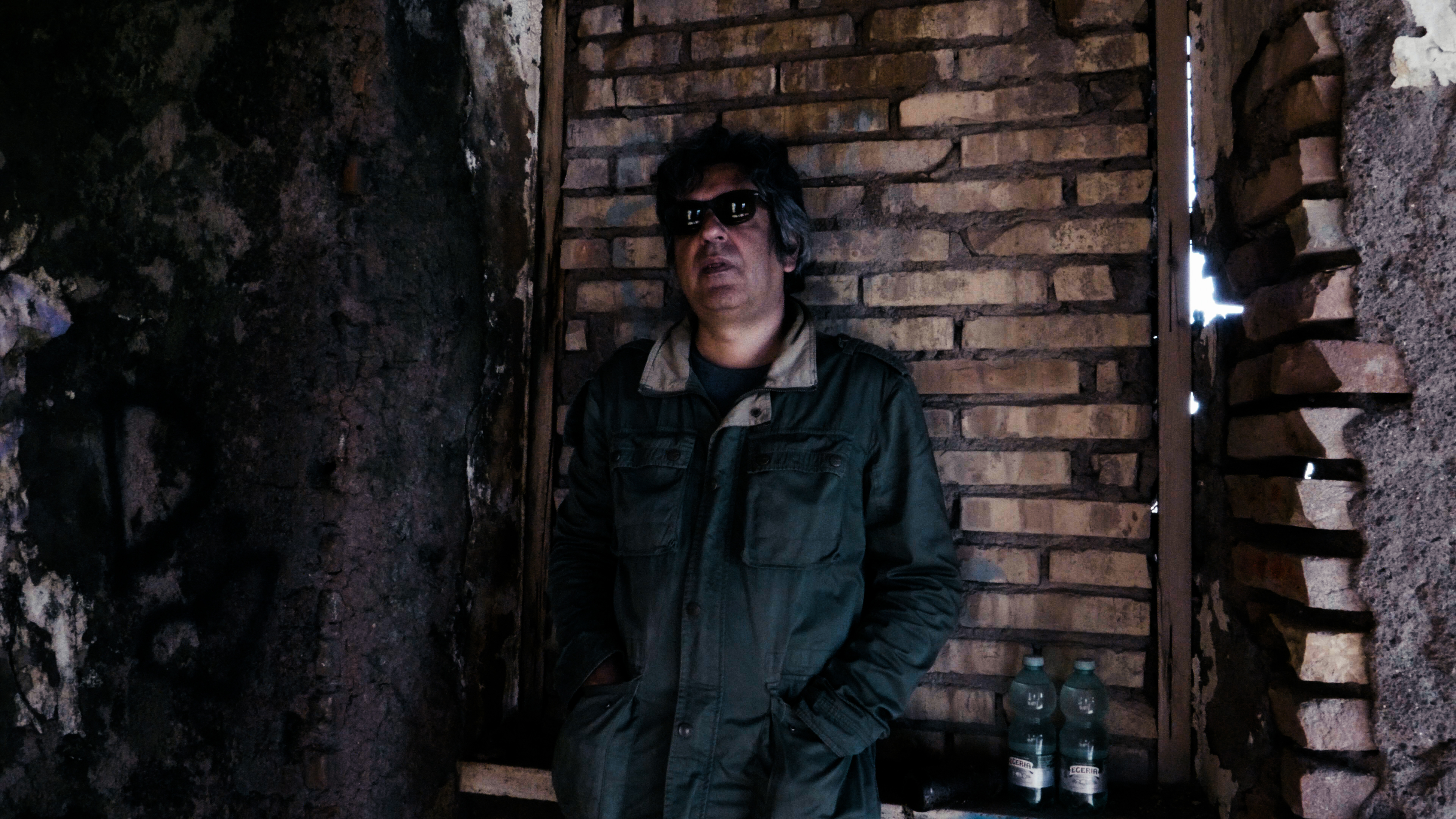
Drama, by Fabio Del Greco, Italy, 2024.
Dante Mezzadri wants to see an old friend, nicknamed the Iguana, whom he has lost sight of for many years, and who has managed to turn their shared youthful passion for poetry into a job, becoming a famous writer and poet. The man escapes from his bourgeois life and his wife to live homeless on the Roman coast, printing and trying to sell his poetry collections. At night he sleeps in a park of old carnival floats, inside a papier-mâché tank, and waits for the opportunity to meet his old friend, who however never shows up for appointments in the places they frequented when they were young, now in ruins. Dante's poetry books do not interest anyone and to support himself he is forced to "change product": he starts selling the infamous "cannibal pill" on behalf of young drug dealers, a new drug that sells like hot cakes and causes sensory and consumerist ecstasy. However, he realizes that this powerful drug is very dangerous for those who take it, he comes into conflict with his ethical conscience and throws all the pills into the sea. However, the dealers want to collect their money.
Shot over a period of 2 years, the film is a reflection on the cultural and artistic rubble of the society in which the protagonist lives, in an increasingly mechanized, consumerist and arid world. Dante Mezzadri is yet another human being who has renounced his inspiration and his creativity, but unlike many he is not willing to give his life to a system that distances him from his true identity. The physical world around him, however, seems constructed in such a way that it seems impossible to escape from this "invisible cage". The enthusiasm of the people he meets is ignited only by sensory gratification, by unreal visions of personal affirmation and success, by "metaverses" that offer an escape into an illusory and destructive reality. The poet's house on the coast, where he met with his friends as a young man, is just a pile of abandoned rubble. What happened to all those who wanted to become poets and ended up becoming something else? Are there internal forces with which that house can be "rebuilt"?
LANGUAGE: Italian
SUBTITLES: English, Spanish, French, German, Portuguese
What It Means to Name Your Work ‘Hard Labor’
There is a moment you may know without knowing you know it. You have been at it all day — not necessarily with your hands, but with your body, with the dull tonnage of hours spent doing what must be done so that other things can continue. You sit at a table. There is something in front of you that asks to be written, or thought through, or simply faced. And you cannot tell anymore whether the heaviness in your chest is fatigue or feeling, whether what moves through you is the residue of the day or something older, something that was always there waiting for the noise to stop. The notebook is open. The pen is in your hand. Nothing comes, and yet something is unmistakably present. You are not resting. You are not creating. You are doing the third thing, the one that has no clean name.
Cesare Pavese gave it one. In 1936, publishing a collection of poems under the title Lavorare stanca — translated as Hard Labor, though the Italian carries something more sustained, more grinding, more like a state than an event — he made a declaration that was simultaneously aesthetic, existential, and, in the context of Mussolini’s Italy, quietly subversive. To call poetry labor in a regime that celebrated heroic myth, monumental gesture, and the aestheticization of violence was to insist on something stubborn and anti-spectacular. Labor is what the body does when no one is celebrating it. Labor is what continues after the speeches end.
Hannah Arendt, writing two decades later in The Human Condition, drew one of modern philosophy’s most consequential distinctions. Labor, she argued, is the cyclical biological necessity, the endless reproduction of what is consumed, leaving no permanent trace. Work is fabrication, the production of durable objects that outlast their maker and build a shared world. Action is the unpredictable entry into public life, the realm where meaning is made between people, never by one person alone. These three categories, for Arendt, were not interchangeable. Collapsing them was a symptom of modernity’s deepest confusion, its tendency to reduce all human activity to the metabolism of production and consumption.
Pavese collapsed them deliberately, and this was the honesty of the gesture. His poems about peasants in the Langhe hills, about men walking roads at dawn, about the particular loneliness of those who work with their bodies and return to silence, refused to separate the biological grind from the making of something permanent, refused to pretend that meaning arrived from somewhere outside the exhaustion. The man at the table is not waiting for inspiration to descend from a separate realm. The exhaustion is the material. The confusion between tiredness and feeling is not a problem to be solved before writing begins. It is the writing’s very condition.
This is what made the title radical beyond its political context. In a literary culture that still traded heavily in the romantic mythology of the poet as visionary, as someone elevated above ordinary necessity, Pavese named the act of writing with the same word used for field work, factory work, the work of survival. He was thirty-one years old, recently returned from political exile in Calabria, where Fascist authorities had sent him for his associations with anti-regime intellectuals. He had spent months in a place not his own, watching people perform the daily labor of existing under conditions they had not chosen, and he came back understanding something about the indignity of pretending that making art was exempt from that same condition.
The notebook on the table does not ask whether you are ready. It asks only whether you are there. And the man who sits down after a day of physical work, whose hands still carry the memory of what they touched, whose mind cannot cleanly separate what happened to him from what he might make of it — he is not waiting to become a poet. He may already be one, without the luxury of knowing it yet.

Exile as the Condition of Seeing Clearly
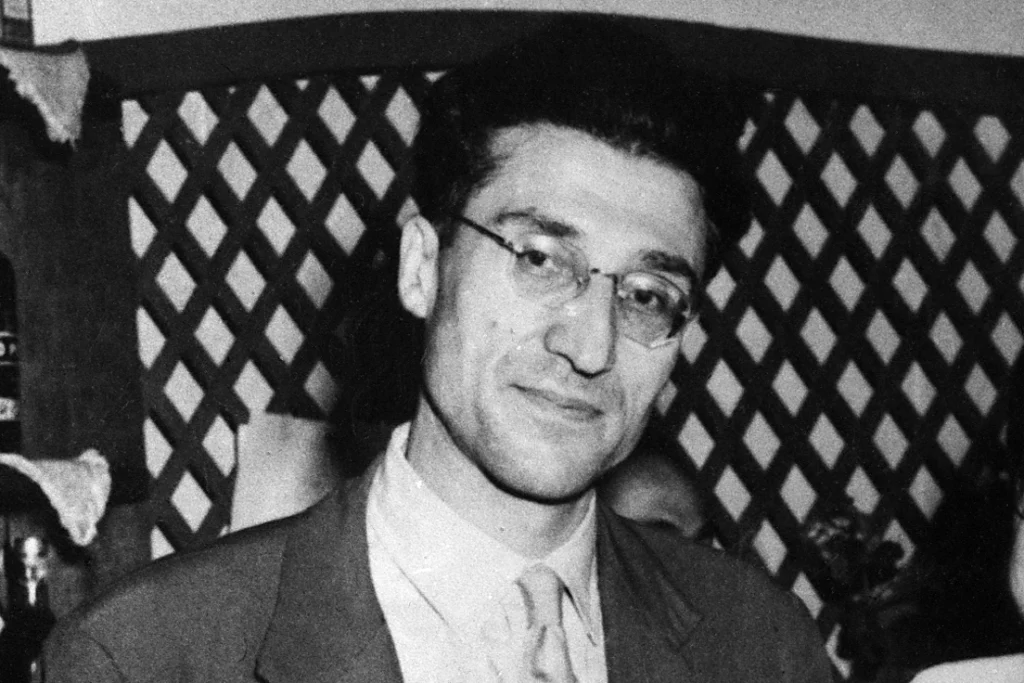
There is a particular way a stranger moves through a village that is not his. You have seen it, maybe you have been it — that slightly slowed walk, the eyes catching on details that belong to daily life for everyone else and to nobody’s life for you. A rusted hinge on a gate. The way a woman adjusts her shawl without looking down. The precise angle at which afternoon light falls between two buildings at four o’clock, casting a shadow that the people who live there have stopped registering somewhere around age seven. A man walks through a southern Italian village in the late 1930s with this exact quality of attention — unhurried, displaced, cataloguing the world with the hyper-clarity of someone who has no claim on it. He sees the children, the dogs, the dust, the rhythm of labor that repeats itself with no awareness of him. He is not invisible. He is simply irrelevant. And irrelevance, it turns out, is one of the cleanest forms of vision available to a human being.
Cesare Pavese arrived in Brancaleone Calabro in August 1935, sentenced to three years of confino by the Fascist regime — internal exile, the bureaucratic punishment of displacement, designed to remove a man from his networks, his usefulness, his sense of self. The charge was tenuous: letters found in the possession of a woman he loved, letters that contained compromising political material. The regime did not need certainty. It needed distance. What they could not have calculated was that the distance they imposed on Pavese would become the condition under which his most essential work crystallized. Lavorare stanca, the collection that had been gathering in him for years, was completed in that exile. The Calabrian coast did not inspire him in any romantic sense. It pressed on him. It made him see with the precision that only dislocation produces.
Edward Said, writing in Reflections on Exile in 2000, described the exiled consciousness as one that sees double — simultaneously inhabiting the world as it is and the world as it was, the present landscape and the absent homeland existing in permanent superimposition. This doubleness is not nostalgia, Said is careful to insist. It is something epistemologically sharper and more unsettling. The exile cannot afford the luxury of the single, unexamined frame. Every perception arrives already comparative, already qualified. The familiar has been stripped of its familiarity, which means the unfamiliar arrives with an almost unbearable specificity. You do not just see a hill. You see this hill against every other hill you have ever known, the contrast making both visible in ways that neither would be alone.
This is exactly the eye that moves through Pavese’s poems in Lavorare stanca. The hills of Piedmont that populate his verse are not described from within — they are described by someone who has been removed from them, who carries them as an internal geography against which the external one is perpetually measured. The Calabrian present sharpens the Turinese past. Each makes the other real in a way that comfortable belonging never could. The peasant life he had been writing about theoretically from the city now pressed against him physically, unavoidably, in the actual bodies and actual labors of people who had no interest in his literary project. They were simply living. He was simply watching. The gap between those two positions is where the poems live.
This is not the exile of the romantic outcast, the artist-in-suffering narrative that the twentieth century sold so efficiently. Pavese did not romanticize his displacement. He found it humiliating, isolating, sometimes unbearable. But humiliation has its own clarifying function. When you are stripped of the social scaffolding that tells you who you are, what remains is perception itself — raw, unmediated, slightly desperate. You look because there is nothing else to do. And in that looking, if you are Pavese, something accumulates that no comfort would ever have produced.
The Myth of Inspiration and the Reality of Repetition
There is a particular kind of listening that looks, from the outside, like absence. Two people at a kitchen table, coffee going cold between them, one speaking about something ordinary — a childhood memory, a recurring dream, the specific color of a sky they once saw — and the other so still, so completely arrested in the act of receiving, that the air around them seems to thicken. The listener is not waiting to respond. They are not formulating. They are doing something that has no comfortable name in ordinary social life, something that resembles attention so total it borders on self-annihilation.
This is not inspiration. This is work.
The Romantic inheritance runs so deep in how we conceive of creative making that we have almost entirely forgotten it is an inheritance, which is to say a choice made by dead people that we have mistaken for a law of nature. The image persists with remarkable tenacity: the poet seized by something from outside, visited, overcome, the pen moving almost involuntarily across the page while the conscious, laboring self steps aside. Byron performing himself. Keats writing Ode to a Nightingale supposedly in a single morning. Coleridge and his opium dream, interrupted by the man from Porlock. These stories are not simply false — they are myths functioning exactly as myths do, which is to say they conceal the actual mechanisms of production behind a screen of the miraculous.
Pavese never believed in the muse. Or rather, he believed in the muse the way a carpenter might believe in inspiration — as something that occasionally sweetens the labor but does not replace it, and whose arrival you can never afford to wait for. His journals, kept across fifteen years of almost uninterrupted discipline from 1935 until the summer of 1950, read less like the private confessions of a sensitive soul and more like the technical notes of someone trying to understand a stubborn material. He returns to the same problems compulsively: the relationship between image and rhythm, the danger of abstraction, the necessity of the concrete noun, the way a poem can feel finished and still be empty. He is not recording ecstasies. He is recording failures and the slow, grinding modifications that sometimes transform failure into something else.
Simone Weil, writing in roughly the same historical moment, arrived at a concept that illuminates Pavese from an unexpected direction. Her notion of attention — developed in the essays collected in Waiting for God, published in 1951, the year after Pavese’s death — describes a form of consciousness that is not passive but is rigorously non-aggressive. Attention, for Weil, requires the suspension of the self’s habitual projects and desires. It means looking at something long enough that what you bring to it stops contaminating what is actually there. This is, she insists, a form of labor more demanding than muscular effort precisely because it demands the erasure of the laboring subject. You cannot will your way into genuine attention. You can only remove the obstacles to it, which means removing yourself, repeatedly, from your own field of vision.
Pavese understood this as a craftsman understands the grain of wood. The long, grinding discipline of noticing that his journals document is not the accumulation of raw material for later use — it is not stockpiling. It is the progressive education of a perceptual faculty that most people allow to atrophy the moment childhood ends. The listener at the kitchen table, the one whose stillness is almost painful to be near, is doing exactly this: practicing an erasure so complete that the other person’s words can arrive without distortion, without the interference of the listener’s own need to be seen, to respond, to exist loudly in the exchange.
The myth of inspiration is, at its core, a myth about effortlessness. And effortlessness is what we reach for when the real thing — which is contact, sustained and costly — becomes too much to bear.
Language as a Foreign Country
There is a particular silence that falls when you reach for a word you know perfectly well — you learned it in childhood, used it ten thousand times — and it arrives in your mouth already hollowed out. You say it. It lands. And the person across from you nods, and you feel the distance between what you meant and what was heard as something almost spatial, a gap you could fall into. Not a failure of vocabulary. Not a failure of grammar. Something stranger and more unsettling: the sense that the language you are speaking is technically yours but has been shaped, over decades, by pressures and conventions and inherited elegances that have nothing to do with what you actually need to say. The words fit. The meaning slides.
Pavese lived in this condition structurally, not as a crisis but as a working method. Before he published a single collection, before Hard Labor existed even as a manuscript, he had spent years inside American prose — Melville’s oceanic sentences, the staccato sociology of Dos Passos, Faulkner’s hypnotic and suffocating interior clauses. He translated not as an exercise but as a practice of inhabitation, entering rhythms that Italian literary culture had systematically refused. The vernacular hardness of those American voices, their refusal of ornament, their willingness to let syntax break and restart, had become his primary experience of what language could do. When he returned to Italian, he returned as someone slightly displaced from it. And displacement, Roland Barthes argued in Writing Degree Zero in 1953, is not incidental to writing — it is its condition. There is no innocent language, Barthes insisted. Every word arrives carrying the sediment of all its previous uses, all its social contracts, all the power arrangements that have made certain phrasings feel natural and others feel crude. The writer who pretends otherwise is not being honest. The writer who acknowledges it must find a form that carries the weight of that knowledge.
Hard Labor is that form. Its verse is angular the way a badly healed fracture is angular — it works, it holds, but the original break is still visible in the shape. Pavese stripped Italian poetry of its melodic inheritance with something close to surgical deliberateness. The musicality that runs from Petrarch through Leopardi through D’Annunzio — the long vowel sounds, the recursive cadences, the lines that close like doors clicking softly shut — all of it was cut. What remained was a verse that moved in the rhythms of work: repetitive, slightly blunt, carrying weight without elegance. The hills appear in his poems not as romantic landscape but almost as physical resistance, as something to be crossed rather than admired. The sea is labor. The body is labor. Even the act of remembering, in Pavese, is something you do with your hands rather than your soul.
This did not come from poverty of means. It came from a deliberate choice to make the language foreign to itself, to introduce into Italian poetry the same estrangement he had learned from American prose. Think of someone trying to describe grief in the language their family used for administrative matters — tax forms, school enrollment, doctor’s appointments. The language works. It is theirs. But its texture is wrong for what they need to carry, and that wrongness becomes visible in the sentences, in the places where the syntax strains slightly, where the word chosen is the right word and yet something in its sound is off. This is not failure. This is honesty made structural.
Pavese understood that the Italian literary language of his moment was, in Barthes’ terms, complicit — complicit with beauty, with consolation, with the pretense that feeling could be translated into form without remainder. He refused the complicity. The roughness of Hard Labor is not incidental style. It is the philosophical position itself, worn on the surface of every line.
A vision curated by a filmmaker, not an algorithm
In this video I explain our vision
The Body in the Landscape, the Landscape in the Body

There is a particular hour in late October when the hills above Canelli stop being scenery. You have walked the same path a dozen times, past the same rows of stripped vines, the same pale clay banks cut by rain, and then without warning something shifts — not in the landscape but in you, or rather the distinction stops making sense. Your legs are tired. The cold is in your hands. The light has gone from gold to gray in the space of twenty minutes, and you are no longer someone walking through a place. You are the walking, and the place is walking through you.
Pavese knew this hour. He returned to it obsessively, not because it was beautiful — the Piedmontese hills in Hard Labor are almost never beautiful in any comfortable sense — but because it was the hour when the body stopped pretending to be a visitor. The vineyards in his poems are not backdrop. They are not the picturesque countryside of the Romantic tradition, not Wordsworth’s restorative nature, not the pastoral balm that urban poets administer to themselves on weekend excursions. They are dirt and fatigue and the specific quality of light over a specific ridge at a specific season, rendered so concretely that the abstraction called “self” begins to dissolve against them.
Maurice Merleau-Ponty, writing in 1945 in Phenomenology of Perception, argued that the body is not an instrument the mind uses to move through space, but the very condition through which space becomes possible at all. Perception is not a mental event that happens to have a physical address. It is fundamentally corporeal — the world takes shape through the particular weight and orientation of a body that is always already somewhere, always already leaning toward something. There is no view from nowhere. There is only the view from here, from these legs that ache, from this cold that enters through the collar. Merleau-Ponty called this the lived body, le corps vécu, the body not as object observed from outside but as the continuous medium of being in the world.
Pavese was not reading Merleau-Ponty. But he was writing the same discovery in verse. A figure in one of his poems walks at dusk across open ground — not striding with purpose, not searching for anything, just moving with the particular heaviness of someone who has worked all day and is going nowhere except back. The hills receive him without ceremony. The light does not respond to his presence. And yet somewhere in the rhythm of the walking, in the repetition of the same gesture across the same terrain, something that looked like interiority begins to become indistinguishable from exteriority. The boundary does not collapse dramatically. It simply ceases to be maintained. The man and the hillside share the same fatigue.
This is the central drama of Hard Labor, and it is not a consolation. The Romantic tradition offered landscape as mirror — nature reflecting the soul back to itself, enlarged and clarified. What Pavese offers is more unsettling: nature as the site where the soul discovers it was never entirely separate to begin with. The hills do not comfort the self. They absorb it. The self does not find its depth in nature; it finds that the depth was never only its own.
This is why the physicality of his poems has such insistence. The clay, the vines, the river, the cold — these are not decorative. They are epistemological. They are the argument. Each concrete noun is a small proof that the boundary between perceiving subject and perceived world is a convenience, a social fiction, a story the mind tells itself to stay organized. The body, left alone long enough in a landscape it knows in its muscles rather than its thoughts, stops believing the story.
And the story, once you have stopped believing it, is very difficult to start again.
Solitude as Work, Solitude as Trap
There is a man standing at the edge of a room. Not far from him, a woman leans slightly toward the lamp on the table, adjusting something, unaware or indifferent to being watched. The distance between them is perhaps four meters. It might as well be a geological era. He understands everything about her — the angle of her shoulders, the small fatigue in her wrist — and this understanding is precisely what makes the crossing impossible. He knows too much and feels too little of the right thing. What moves in him is not desire but something closer to cartography: he has mapped the territory of connection with obsessive accuracy and cannot enter it.
This is the specific anguish that Cesare Pavese circled for his entire adult life, in his journals, in his letters, in the negative space of his poems. It is not loneliness in the common sentimental sense. It is something more structural, more architectural. Solitude, for Pavese, was not a mood but a condition of production — the atmospheric pressure inside which the work became possible. He understood this clearly and recorded it with the precision of someone who has made peace with a wound by making it useful. And yet he also understood, with equal clarity, that usefulness does not equal survival.
Erich Fromm, writing in 1956 in The Art of Loving, made an argument that cuts directly into Pavese’s predicament. Fromm distinguished between the productive solitude that feeds creative life and the self-consuming isolation that results when the creative person has no relational roots to return to. The artist who withdraws to work and then returns — to a person, to a community, to some form of living reciprocity — uses solitude as a tool. But the artist who withdraws and finds, upon lifting their head, that there is nowhere and no one to return to, begins to feed on themselves. The work continues but the worker diminishes. Fromm called this a failure not of talent but of love — not romantic love specifically, but the practiced capacity for relatedness, the discipline of existing in genuine contact with another consciousness. It is, he argued, a skill that atrophies without exercise, like a muscle that has been immobilized so long it no longer knows how to bear weight.
Pavese knew this. He wrote it down in different registers across decades. His journals from the late 1930s and through the 1940s return again and again to the gap between what he understood intellectually about intimacy and what he could not access in his body, in real time, with a real person present. His relationships — with the actress Constance Dowling most devastatingly — did not fail because he was indifferent. They failed because his attention arrived in the wrong form: too concentrated, too analytical, carrying the same quality of focus he brought to a line of verse, which is not what a person needs from someone who is supposed to love them.
The poems in Lavorare stanca are filled with this. Figure after figure exists in proximity without contact. A man and a woman share a table, share a silence, share a morning, and the sharing never becomes communion. They are always on the verge of reaching each other, always suspended in the moment just before arrival. The structure of the poems themselves enacts this — the long lines, the accumulation of concrete detail, the careful building toward a connection that the syntax approaches but never completes. It is not a stylistic choice, or not only. It is a report from inside a particular kind of consciousness, one that experiences the world with almost unbearable vividness and cannot find the passage from vivid experience to shared life.
The only joy in the world is to begin, he wrote. Which means: the only joy is the moment before the work demands to be inhabited fully, before the solitude required to finish it also begins its slow, patient work on you.
The Business of Living and the Accounting That Never Balances
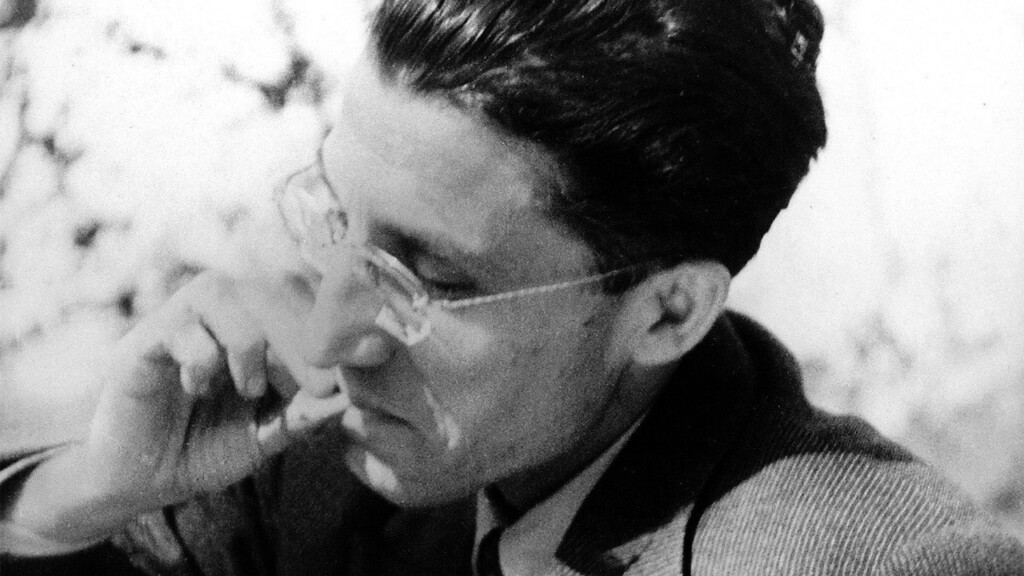
He checked into the Roma hotel in Turin on a Tuesday. He had been celebrated weeks before, had stood in the light of the most prestigious literary recognition his country could offer, had received the kind of validation that is supposed to make the arithmetic work out. And then he went to a hotel room and did not come back. The note he left was almost domestic in its brevity, apologizing and forgiving in the same breath, asking only that people not make too much noise about it. There is something in that final sentence — not too much gossip — that tells you everything about how he had lived: always watching the gap between what experience actually is and what language pretends to do with it, always aware that even his own death would become material, would be processed, would be turned into meaning by others who had no access to the original cost.
It is too easy, and therefore wrong, to read this as the conclusion of a doomed temperament. Temperament is what we say when we want to individualize something that is actually structural, when we want to locate the failure inside the person rather than inside the arrangement they were forced to inhabit. Albert Camus, who was reading Pavese and thinking alongside him across the distance that separated Turin from Paris, had already mapped this territory in 1942: the absurd is not a property of sensitive souls, it is what happens when the human need for clarity meets a world that refuses to provide it. Camus called the question of suicide the only truly serious philosophical question precisely because it is the one that cannot remain theoretical — it lands, eventually, in a specific body, in a specific room, on a specific Tuesday. What Camus argued, and what the trajectory of Pavese’s work makes devastating retroactively, is that the response to absurdity must be revolt, not surrender, a continued insistence on meaning-making in the full knowledge that meaning will not be given back. But Camus was writing prescriptions from the outside of a suffering he understood philosophically. Pavese was inside it, writing it from the marrow.
Hard Labor is the account book of that interior life, and what it records is not a series of poems but a series of exchanges in which the self is spent and the return is always partial. You write the darkness down hoping the act of writing creates a distance between you and the darkness, hoping the form holds what the life cannot. Sometimes it does. Rilke believed it, Celan attempted it until he too could not, Sylvia Plath turned the attempt itself into her most electric work. But the wager carries no guarantee, and the longer you make it, the more of yourself you have placed on the table. By 1950, Pavese had been making that wager for twenty years — through exile, through fascism, through the war, through failed love after failed love, through the slow accumulation of recognition that never reached wherever the wound actually was.
The Strega Prize did not save him because prizes address the public self, and the public self was never where the problem lived. The problem lived somewhere below language, in the place that language kept circling but never quite touching, which is why he kept writing, which is why the poems kept returning to the same images of hills and silence and the body’s stubborn animal presence. Writing was not therapy and he knew it. It was closer to testimony — evidence that the interior life had been real, that the damage had actually occurred, that someone had been present to witness it even if that someone was only himself.
What Hard Labor leaves open, for anyone who has ever tried to make language do the work of survival, is not the question of why Pavese stopped but the question of what it costs to continue — not as a poet, not as an Italian, not as a figure of the mid-twentieth century, but as anyone who has decided, each morning, to convert the raw fact of their own damage into something that might, against all evidence, hold.
🌿 Between Silence and the Word: Literature and the Inner Life
Cesare Pavese’s Hard Labor stands at the crossroads of poetic craftsmanship, existential solitude, and the search for authentic expression. These related articles explore the philosophical and literary territories that run parallel to Pavese’s voice: the body, memory, the absurd, and the radical dignity of creative work.
Albert Camus: Life and Philosophical Thought
Albert Camus, like Pavese, confronted the silence of the world and the stubborn human need to speak into it. His philosophical thought on the absurd resonates deeply with Pavese’s poetic vision of labor as both burden and meaning. Understanding Camus illuminates the broader existential landscape in which Hard Labor was written.
GO TO THE SELECTION: Albert Camus: Life and Philosophical Thought
Paul Ricœur: Life and Philosophy of Memory
Paul Ricœur‘s philosophy of memory offers a profound framework for reading Pavese’s poetry, in which personal and collective past are constantly excavated and re-examined. Memory, for Ricœur, is not passive recall but an active and ethical act of interpretation. This perspective sheds new light on the temporal weight that runs through every line of Pavese’s verse.
GO TO THE SELECTION: Paul Ricœur: Life and Philosophy of Memory
Montaigne: Life and Essays
Montaigne's Essays represent one of the founding gestures of Western introspective writing, turning inward observation into a literary form. Like Pavese, Montaigne made of his own restlessness and contradictions the raw material of his work. Reading Montaigne alongside Hard Labor reveals how self-examination can become a rigorous and even heroic poetic act.
GO TO THE SELECTION: Montaigne: Life and Essays
Virginia Woolf: Life and Works
Virginia Woolf‘s life and works explore with rare intensity the relationship between interiority, solitude, and literary language — themes that echo powerfully in Pavese’s poetic universe. Both writers transformed personal suffering and isolation into luminous literary forms. Woolf’s struggle for a creative space of one’s own finds a moving parallel in Pavese’s daily battle with words.
GO TO THE SELECTION: Virginia Woolf: Life and Works
Discover Cinema That Speaks the Language of Poetry
If Pavese’s Hard Labor has stirred something in you — that sense of beauty earned through struggle — then independent cinema has much more to offer. On Indiecinema streaming you will find films that share this same courage: intimate, uncompromising, and alive with meaning. Explore our catalog and let the images continue where the words left off.
👉 EXPLORE THE CATALOG: Watch Indie Films in Streaming
A vision curated by a filmmaker, not an algorithm
In this video I explain our vision

